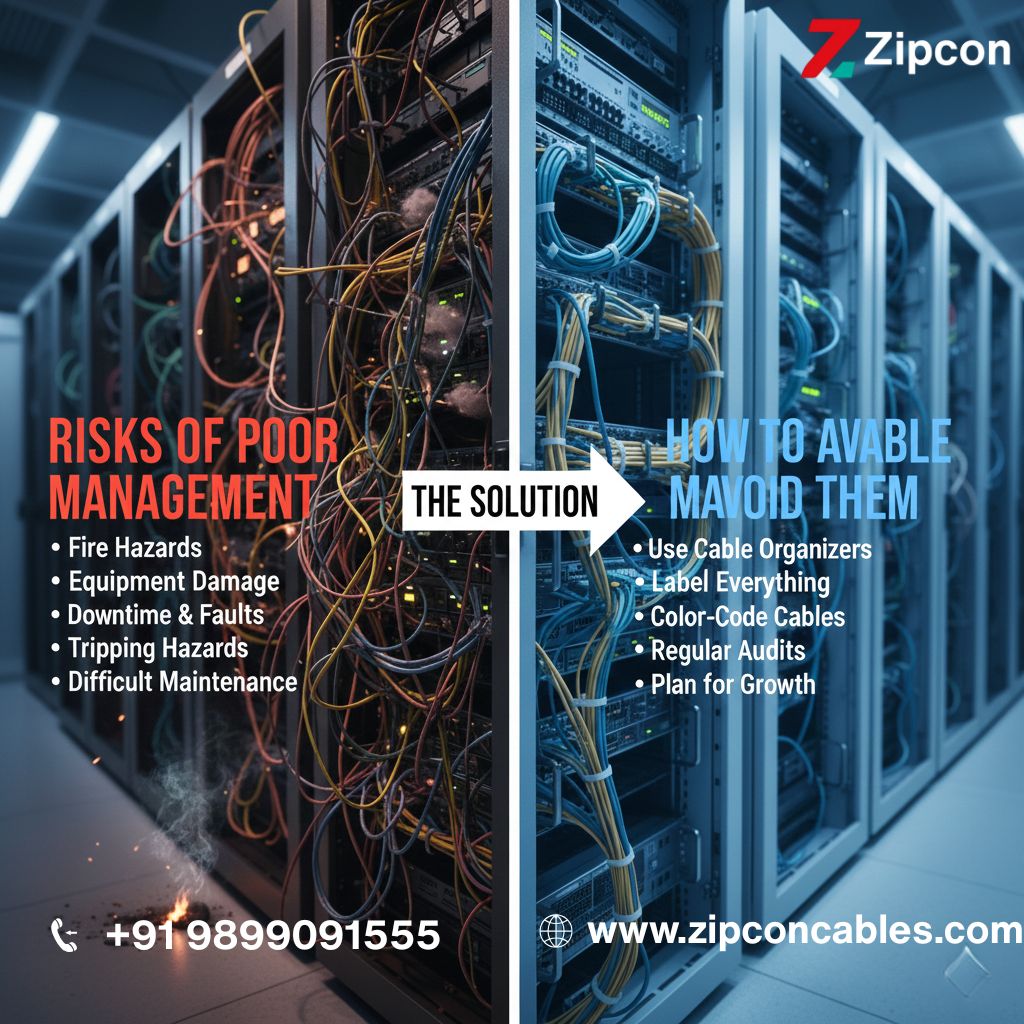
Effective cable management is often an overlooked aspect of electrical and construction projects, but poor cable organization can lead to several significant issues. These range from safety hazards to reduced cable life, higher operational costs, and even system failure. This article focuses on the risks associated with poor cable management and provides practical tips for avoiding them. By understanding key factors like conductivity, durability, weight, cost, safety, installation needs, and typical use cases, you can make informed decisions on cable choice and management, ensuring the efficiency and longevity of your systems.
This is especially critical when working with cables like those offered by Zipcon Cables, which are engineered for performance and reliability.
1. Conductivity: Ensuring Efficient Power Flow
Conductivity refers to the ability of the cable to allow electrical current to flow efficiently. Poor cable management, such as twists, tangles, or excessive bending, can impede conductivity, leading to energy loss and potential overheating. For projects requiring high power or continuous current flow, ensuring the cables are free from physical stress is essential to maintain optimal performance.
Copper vs. Aluminum Cables:
- Copper cables, like those offered by Zipcon, are known for their excellent conductivity and are preferred for high-demand applications such as data centers, industrial machinery, or high-power installations.
- Aluminum cables, though more cost-effective, don’t conduct as efficiently as copper and may not be suitable for environments requiring stable, continuous power delivery.
2. Durability: Protecting Your Investment
Cables exposed to environmental factors or excessive wear are more prone to damage, reducing their lifespan. Poor cable management—whether cables are loosely hanging or exposed to friction—can cause external damage to insulation, resulting in electrical hazards.
Real-World Scenario:
In a factory setting, cables often run along floors, walls, and ceilings, subjecting them to abrasion. Without proper cable management solutions like trays or conduits, the wear and tear can cause the cables to fail prematurely, increasing maintenance costs and downtime.
Zipcon Cables’ Durability:
Zipcon’s cables are designed for longevity, but proper cable management solutions—such as cable trays or conduit systems—are still necessary to prevent damage in high-traffic environments.
3. Weight: Reducing Strain on Structures
Cable weight can strain installation structures, especially in large setups like stadiums, commercial buildings, or power stations. Poorly managed cables can cause sagging or bending, leading to additional stress on both the cables and the supporting infrastructure, which could result in installation failure or safety hazards.
Choosing the Right Cable:
- For lighter applications, aluminum cables are a good choice due to their reduced weight, but they may require additional support structures.
- For heavy-duty applications, Zipcon’s copper cables provide the strength needed but require secure management systems to prevent strain on mounting structures.
4. Cost: Balancing Quality and Budget
While copper cables, like those offered by Zipcon, may come at a higher initial cost, they tend to offer better performance and durability. Poor cable management can further increase costs due to the need for more frequent repairs or replacements.
Cost-Effective Cable Management:
Investing in quality cable management tools—such as clips, trays, and cable ties—can significantly reduce the likelihood of cable damage, saving you money in the long run by extending the lifespan of your cables and preventing costly repairs.
Copper vs. Aluminum Cost Comparison:
- Copper cables are more expensive upfront but provide better conductivity and durability, leading to long-term cost savings.
- Aluminum cables are more budget-friendly and better for lower-demand applications, though they may require more frequent replacements in harsher environments.
5. Safety: Preventing Electrical Hazards
Improperly managed cables pose significant safety risks, including electrical shocks, short circuits, and fire hazards. Loose or damaged cables are more likely to expose live wires, increasing the risk of accidents. Keeping cables well-organized and properly insulated ensures safety for both the installation and users.
Real-World Scenario:
In a commercial office, cables strewn across the floor can cause tripping hazards. Additionally, exposed cables in high-traffic areas can lead to accidental electrical contact, posing a fire risk. Proper cable management using Zipcon’s durable cables and protective casings ensures both safety and a cleaner, more professional environment.
6. Installation Needs: Streamlining the Setup Process
Proper cable management not only reduces future maintenance costs but also facilitates easier installation. When cables are organized and bundled effectively, installation becomes quicker and more straightforward, reducing labor time and associated costs. Furthermore, troubleshooting becomes simpler, as clearly labeled and properly routed cables are easier to access and repair.
Practical Tips for Easy Installation:
- Use Zipcon’s cables in combination with cable management systems to ensure straightforward installation.
- Label all cables clearly and ensure they are securely fastened using clips or conduit systems to reduce confusion during setup.
7. Typical Use Cases for Copper and Aluminum Cables
Choosing between copper and aluminum cables depends on the application:
- Copper cables are best suited for applications with high power requirements, such as industrial machinery, high-frequency data transmission, or areas where space is constrained and cable weight is a concern.
- Aluminum cables work well for long-distance power transmission and less-demanding applications where cost reduction is more important than performance.
Real-World Comparison:
- Copper cables (Zipcon Cables) excel in applications like server rooms or factories, where performance and durability are critical.
- Aluminum cables are often used in power transmission lines or large-scale electrical setups where weight and cost are the primary concerns.
8. Recommendation: How to Choose the Right Cable for Your Application
When selecting cables for your project, consider both the application requirements and the environment. If performance, durability, and safety are your primary concerns, opt for copper cables from Zipcon. These cables are ideal for environments where high power, high conductivity, and safety are essential.
For projects that focus more on cost and weight efficiency, aluminum cables may be more suitable, but be mindful of their limitations in performance and durability.
Final Tip:
Always invest in quality cable management solutions to protect your cables from wear and tear, ensure proper insulation, and maintain the longevity of your system. Proper management, combined with the right choice of cable, ensures both safety and efficiency in the long run.