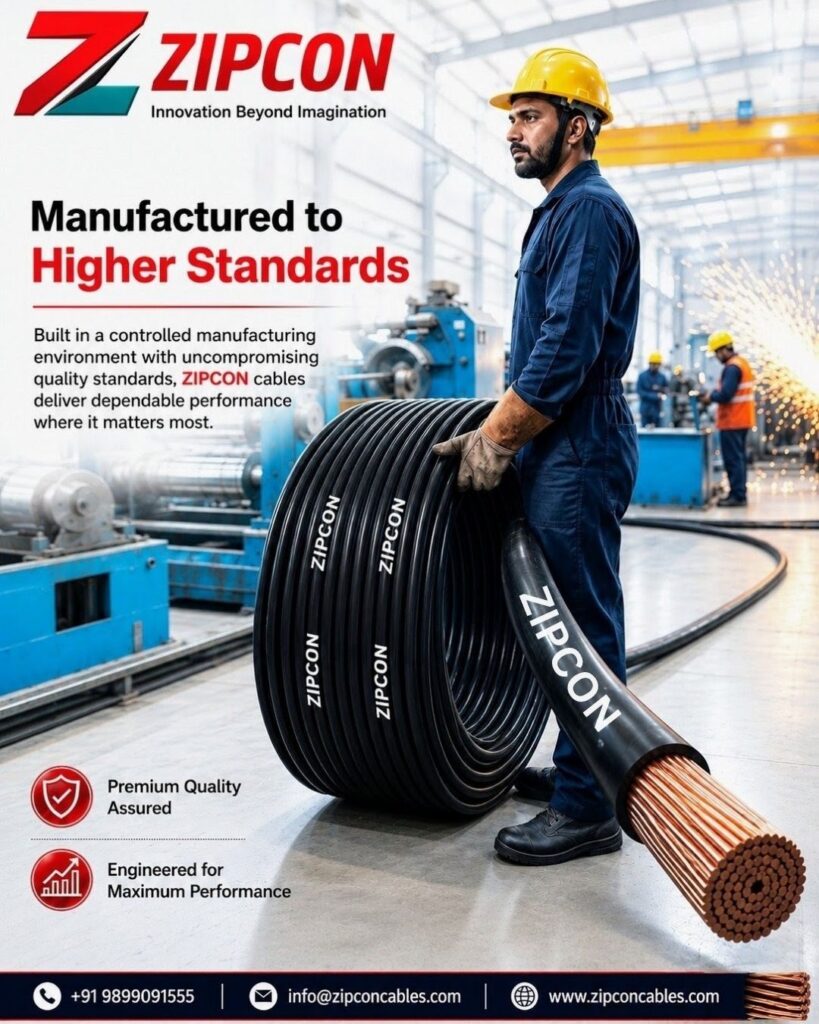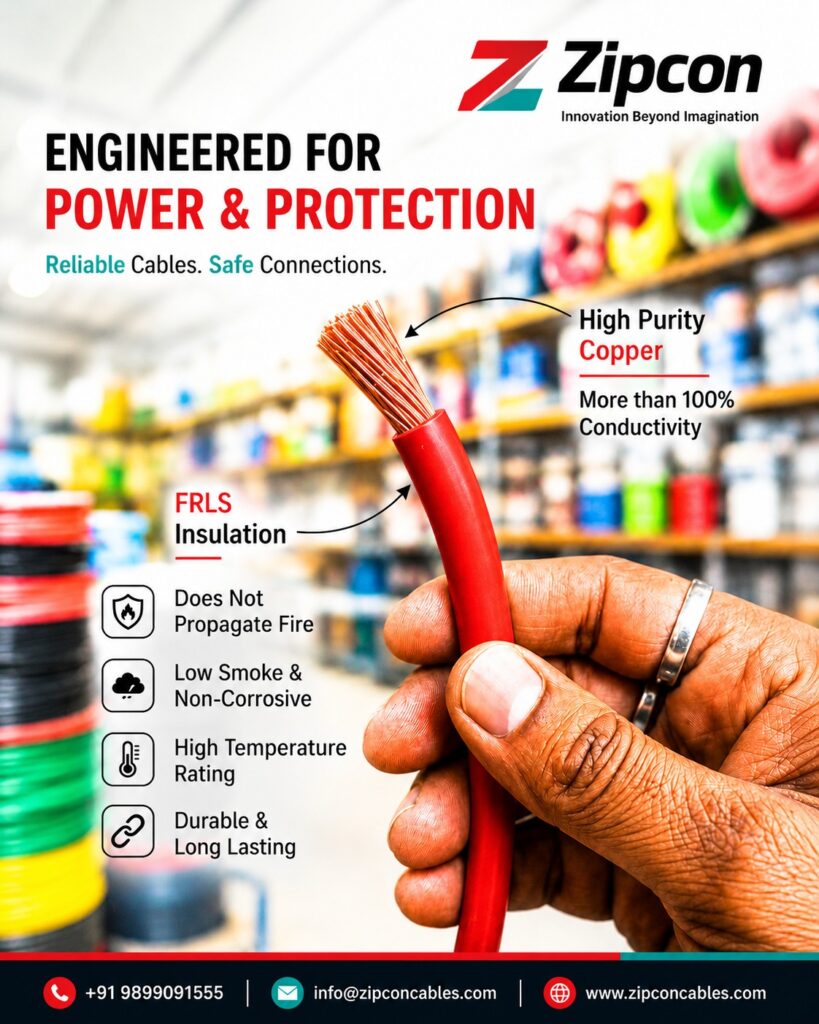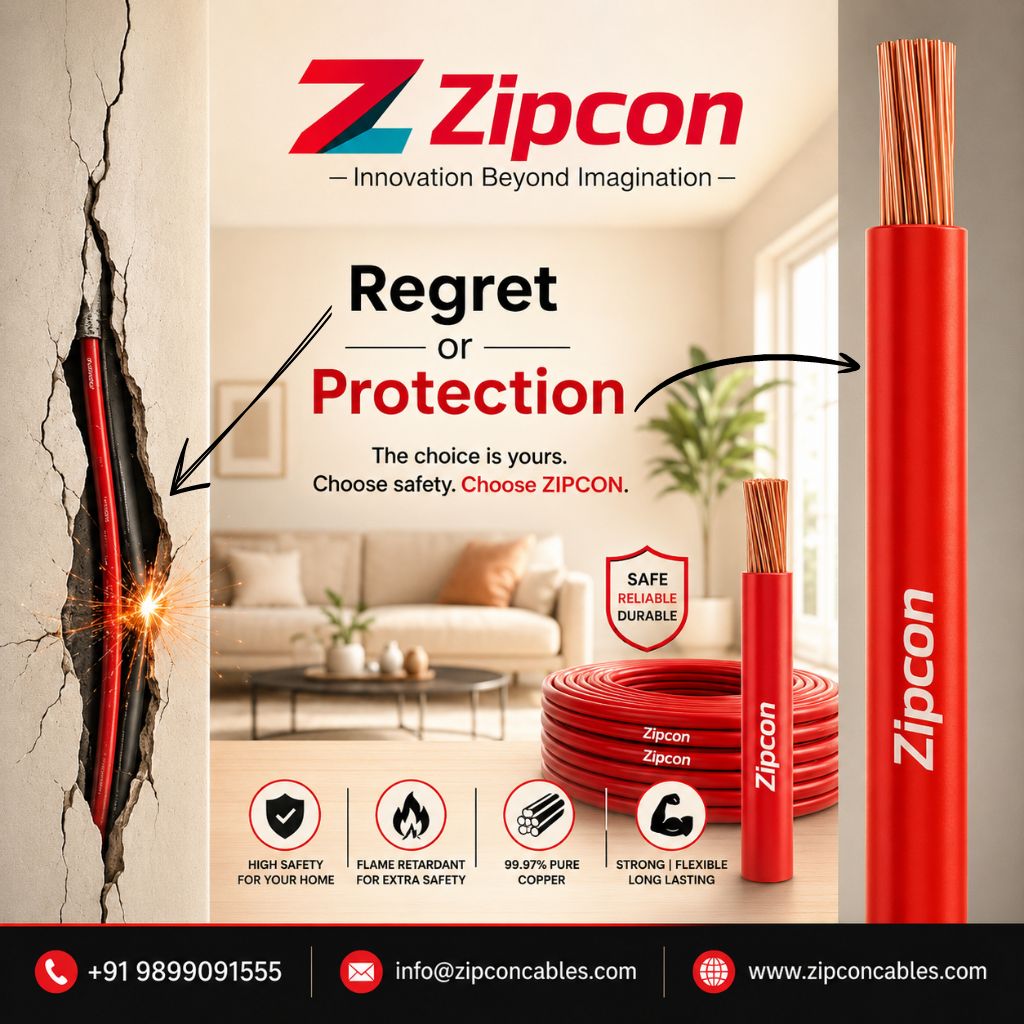
Reliable electrical infrastructure starts with the right cable. For factories, commercial buildings, construction projects, machinery, water systems and industrial facilities, choosing the top industrial cable in Kozhikode is essential for stable power transmission, operational safety and long-term performance.
Kozhikode has a growing mix of industrial, commercial and infrastructure projects that require dependable electrical systems. Industrial cables must handle continuous loads, environmental exposure, mechanical stress and demanding operating conditions without compromising electrical performance.
Zipcon Cables offers a range of quality-focused cable solutions designed for applications where dependable power transmission matters. From multicore cables and flexible wires to specialised power and submersible cable solutions, selecting the right specification can significantly improve the reliability of an electrical installation.
For inquiries or assistance:– https://zipconcables.com/contact-us/
Why Industrial Cable Quality Matters in Kozhikode
Industrial cables are exposed to considerably higher demands than ordinary household wiring. A cable used in a factory or commercial facility may carry high electrical loads for extended periods while being exposed to heat, moisture, vibration, chemicals or mechanical movement.
A properly selected industrial cable helps maintain efficient current transmission while reducing the risk of excessive heating, insulation failure and unexpected electrical interruptions. Cable quality therefore directly affects equipment performance, maintenance requirements and workplace safety.
For businesses in Kozhikode, the cable should also be suitable for the local installation environment. Indoor factory wiring, outdoor power distribution, underground installations and water-pump applications require different cable characteristics.
Types of Industrial Cables Used for Power Solutions
Multicore Cables
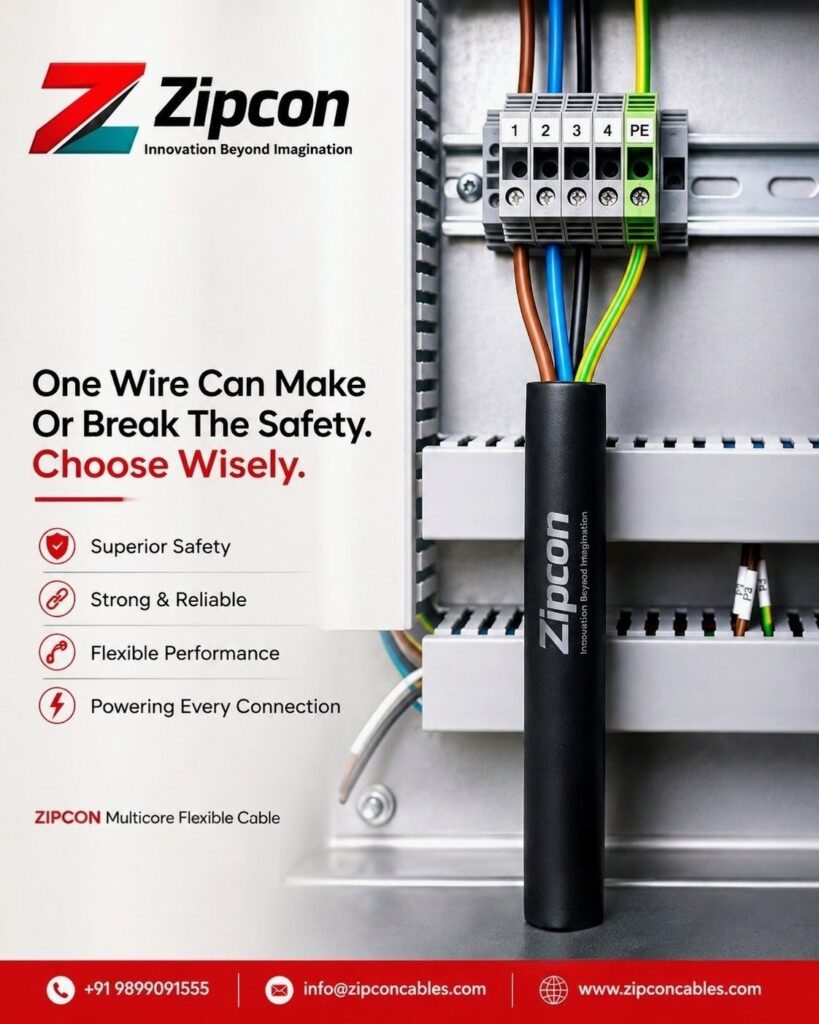
Multicore cables contain multiple insulated conductors within a common outer sheath. They are useful when several electrical connections need to be organised within a single cable assembly.
Multicore cables are commonly used in control panels, industrial machinery, automation systems, commercial installations and power distribution applications. They can simplify installation and help maintain a more organised electrical system.
Zipcon’s multicore cable solutions can be considered where dependable multi-conductor power or control connections are required.
Industrial Power Cables
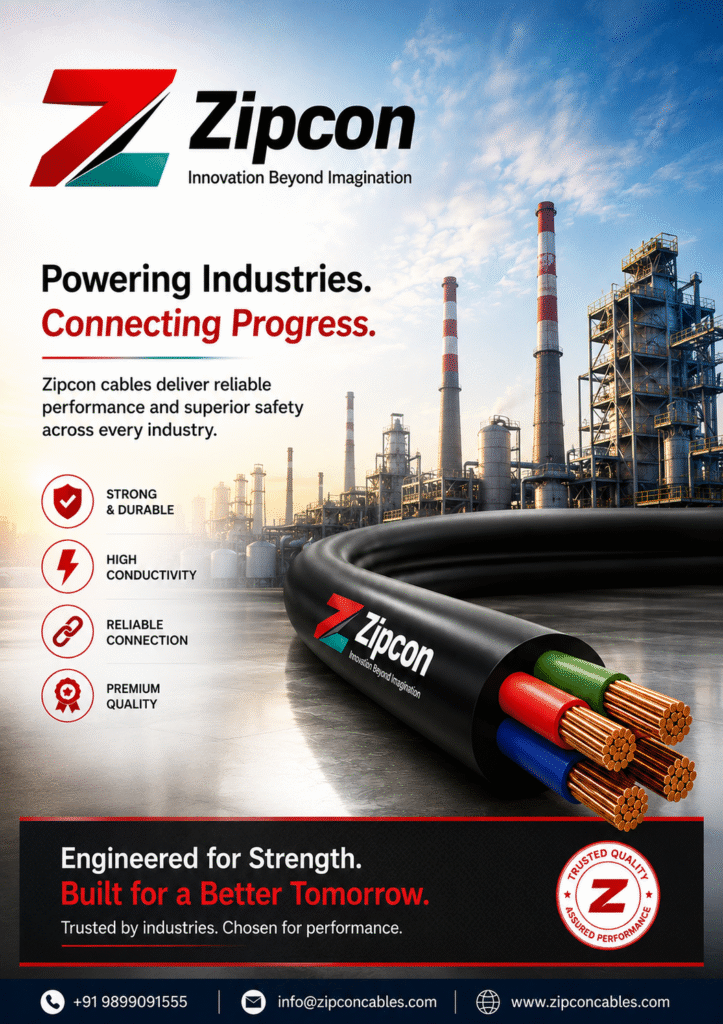
Industrial power cables are designed for transmitting electrical power between distribution systems, machinery and other equipment. The appropriate cable depends on factors such as voltage, current, installation method, conductor size and operating environment.
For high-load applications, selecting the correct conductor cross-section is particularly important. Undersized cables can experience excessive voltage drop and heating, while correctly sized cables support safer and more efficient operation.
Flexible Cables
Industrial equipment often involves movement or vibration. Flexible cables are designed for applications where the cable needs to bend or move during operation.
They can be useful for machinery, equipment connections and installations where rigid cabling would be impractical. The flexibility, insulation and conductor construction should be matched with the actual application.
Submersible Flat Cables
Water-pump and borewell systems require cables specifically designed for submerged environments. Submersible flat cables are commonly used with submersible pumps because their construction is suited to installations where the cable remains in contact with water.
Zipcon offers submersible flat cable solutions in different conductor sizes and configurations, making them relevant for agricultural, residential, commercial and industrial pumping requirements.
How to Choose the Top Industrial Cable in Kozhikode
Choosing a cable based only on price can create problems later. The correct selection should consider the complete electrical application.
1. Check the Required Current Capacity
Determine the maximum current the cable needs to carry under normal operating conditions. Cable size should be selected according to the expected electrical load and applicable installation requirements.
For example, a machine drawing significantly more current than standard equipment may require a larger conductor cross-section to control heating and voltage drop.
2. Consider Cable Size
Cable size is normally expressed in square millimetres, such as 1.5 sq mm, 2.5 sq mm, 4 sq mm, 6 sq mm or higher sizes.
The appropriate size depends on load, cable length, installation conditions and permissible voltage drop. A larger cable is not automatically better; it should be correctly matched to the electrical system.
3. Select the Right Conductor Material
Copper and aluminium are common conductor materials, each offering different characteristics.
Copper generally provides excellent electrical conductivity and is widely preferred for applications requiring efficient current transmission and compact cable construction. Aluminium can be useful in applications where weight and cost considerations are important.
The conductor material should be selected according to the project specification rather than price alone.
4. Examine Insulation Quality
Cable insulation protects the conductor from electrical leakage, short circuits and environmental exposure. Industrial applications may require insulation capable of handling heat, moisture, abrasion and other stresses.
Before purchasing, check the cable’s insulation specification and suitability for the intended installation environment.
5. Consider Installation Conditions
A cable installed inside a control panel has different requirements from one installed outdoors, underground or inside a water source.
Consider:
- Indoor or outdoor installation
- Ambient temperature
- Moisture exposure
- Mechanical stress
- Cable movement
- Installation length
- Direct or conduit installation
- Exposure to chemicals or industrial contaminants
These factors can influence the appropriate cable construction.
Zipcon Cables for Industrial Applications in Kozhikode
For businesses searching for a reliable industrial cable supplier or cable brand for Kozhikode projects, Zipcon Cables can be considered for a variety of electrical requirements.
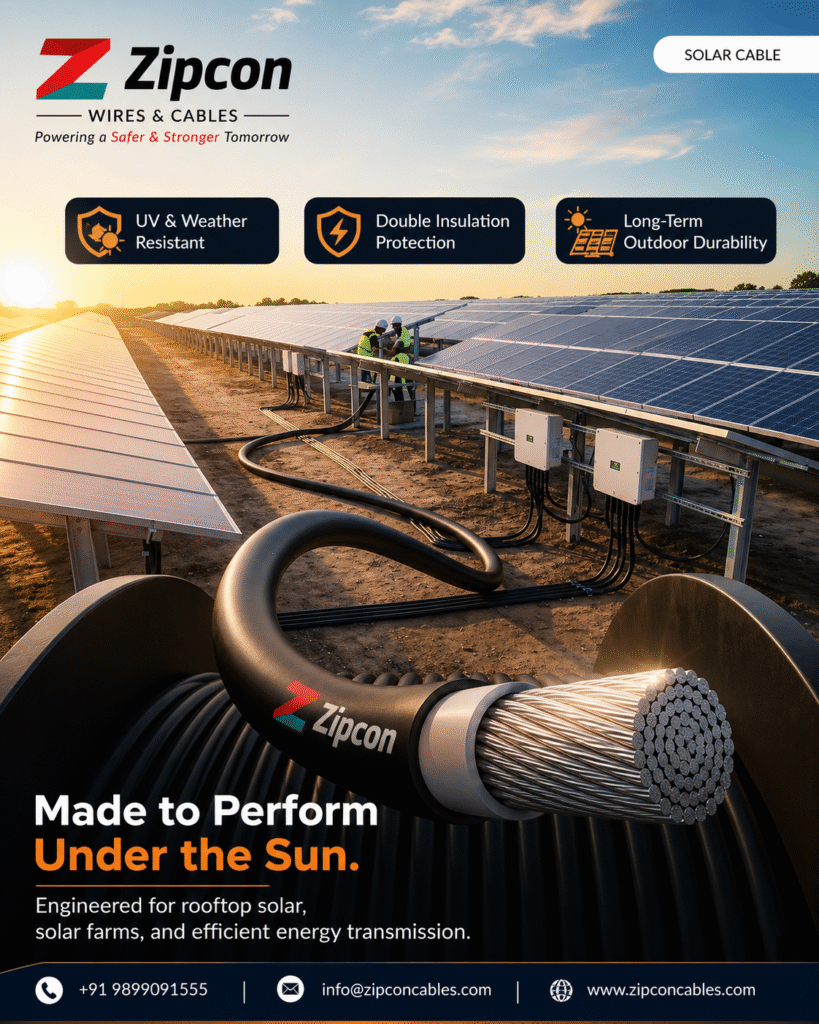
The range includes solutions such as multicore round cables, submersible flat cables, solar cables, flexible wires, house wires and other electrical cable products.
For an industrial project, the most suitable Zipcon cable should be selected based on conductor size, number of cores, application, voltage requirements, installation environment and expected load.
Rather than selecting a cable solely by brand or price, project engineers, contractors and electrical professionals should match the product specification with the actual operating conditions.
Industrial Cable Applications in Kozhikode
Industrial cables have applications across several sectors.
Manufacturing Units
Factories depend on stable electrical connections for motors, machines, control systems, panels and production equipment. Cable selection should account for continuous operating loads and the surrounding industrial environment.
Commercial Buildings
Shopping complexes, offices, warehouses and commercial facilities require organised electrical distribution. Appropriate cables can support lighting, equipment, HVAC systems and other electrical loads.
Construction Projects
Construction sites need reliable temporary and permanent electrical connections. Cable selection should account for mechanical handling, environmental exposure and the expected electrical load.
Water and Pumping Systems
Submersible cables are essential for pump installations where the cable operates underwater. Correct cable sizing and construction are important for maintaining safe and reliable pump operation.
Solar Power Systems
Solar installations require cables designed for photovoltaic applications. Solar cables should be suitable for outdoor exposure, temperature variations and long-term operation.
Example: Selecting an Industrial Cable
Consider a small manufacturing unit installing a new motor and control system.
Instead of selecting a cable based simply on conductor size, the electrical contractor should first determine the motor’s rated current, starting conditions, cable length, installation method and ambient temperature.
If the cable run is long, voltage drop becomes an important consideration. If the cable is exposed to mechanical movement, a suitable flexible cable may be more appropriate. This application-based approach results in a more reliable electrical installation.
Expert Tips for Buying Industrial Cables
Buy according to application: Identify the electrical load and installation conditions before choosing the cable.
Do not compromise on cable quality: Low-quality cables may increase the possibility of overheating, insulation problems and premature replacement.
Check conductor size: Always verify the actual cross-sectional area instead of relying only on general product descriptions.
Consider future requirements: If an electrical system may be expanded later, discuss the expected additional load with a qualified electrical professional.
Choose the correct cable type: Multicore, flexible, power, solar and submersible cables are designed for different applications.
Purchase from reliable sources: Genuine products with clear specifications make it easier to verify suitability and maintain consistent project quality.
Common Mistakes When Choosing Industrial Cables
Choosing Only on Price
The cheapest cable may not provide the required electrical or mechanical performance. Initial savings can become expensive if frequent replacements or electrical failures occur.
Using the Wrong Cable Size
An undersized cable can experience excessive heating and voltage drop. Cable sizing should be based on load calculations and installation conditions.
Ignoring Environmental Conditions
A cable suitable for a dry indoor installation may not be appropriate for outdoor, wet or submerged applications. Environmental exposure must be considered before selection.
Buying Without Checking Specifications
Conductor material, cross-sectional area, insulation type, number of cores and application rating should be verified before purchasing.
Treating Every Industrial Cable as the Same
Industrial cable requirements vary significantly between motors, control panels, pumps, solar systems and power distribution. Selecting a product according to the actual application provides better results.
Why Choose Zipcon Cables for Reliable Power Solutions?
A dependable cable solution should combine suitable construction, appropriate conductor sizing and application-specific performance. Zipcon Cables provides multiple cable categories that can support different electrical and industrial requirements.
For customers in Kozhikode, selecting the right Zipcon product should begin with the project’s electrical specifications. Whether the requirement involves industrial power cables, multicore cables, flexible wires, solar cables or submersible flat cables, the product should be matched to the expected load and installation environment.
This approach helps contractors, industries and project owners build electrical systems that are safer, more organised and better suited to long-term operation.
Conclusion
Finding the top industrial cable in Kozhikode is not simply about choosing a popular cable or the lowest available price. The right cable must match the electrical load, conductor requirement, insulation characteristics, installation method and operating environment.
For industrial and commercial power solutions, Zipcon Cables offers a range of cable products suitable for different applications, including multicore, flexible, solar and submersible cable requirements.
For your next Kozhikode electrical project, start with the application and technical specifications, then select the appropriate Zipcon cable based on load, cable size, environment and installation requirements. The right cable choice can contribute to dependable power transmission, reduced electrical problems and better long-term system performance.
Top 5 FAQs
1. Which is the top industrial cable in Kozhikode?
The best industrial cable depends on the application’s voltage, current, conductor size, installation environment and operating conditions. Zipcon Cables offers different cable categories that can be selected according to specific industrial requirements.
2. Which cable is suitable for industrial machinery?
The appropriate cable depends on the machinery’s electrical load and whether the installation requires fixed, flexible, multicore or specialised cabling. Flexible and multicore cables can be suitable for applications involving equipment movement or multiple connections.
3. How do I select the correct industrial cable size?
Cable size should be selected according to current capacity, cable length, voltage drop, installation method, ambient temperature and applicable electrical requirements. A qualified electrical professional should verify the final selection for critical installations.
4. Are submersible cables suitable for pump applications?
Yes. Submersible cables are specifically designed for electrical connections in submerged pump installations. The cable should have the appropriate construction, conductor size and insulation for the pump and installation conditions.
5. Why consider Zipcon Cables for industrial projects?
Zipcon Cables offers multiple cable solutions, including multicore cables, flexible wires, solar cables and submersible flat cables. The suitable product can be selected according to the project’s electrical load and installation requirements.