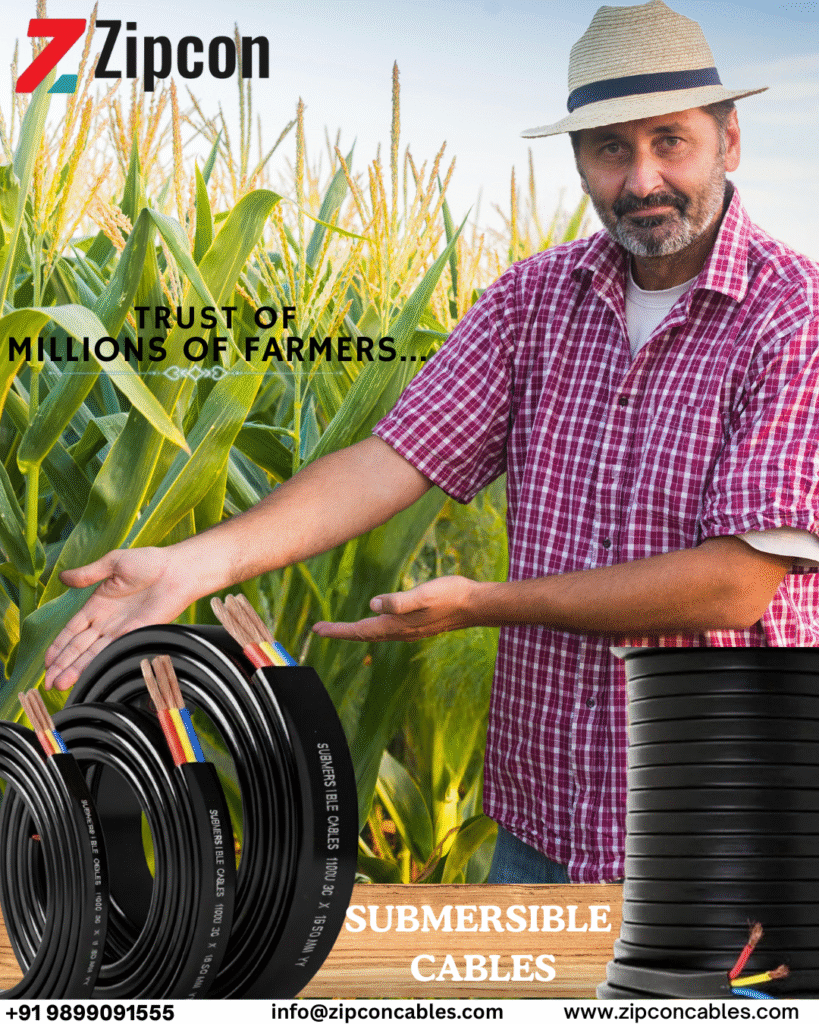
When selecting submersible cables, the stakes are high. These cables are critical for reliable power delivery to submersible pumps in domestic, agricultural, and industrial settings. Poor cable choice can lead to energy loss, overheating, frequent failures, and safety hazards. This article explains what matters most — conductivity, durability, weight, cost, safety, installation practices, and use‑case fit — and offers a clear comparison between copper and aluminum conductors. We also highlight Zipcon Cables as the leading best submersible cable manufacturer in Delhi and provide specific buying recommendations based on application.
What Makes a Good Submersible Cable?
Choosing the right submersible cable means balancing performance, longevity, and cost. These are the key factors to consider:
Conductivity
Conductivity determines how efficiently the cable carries current. High conductivity means less energy loss and lower heat generation.
Durability
Submersible cables operate in wet, corrosive environments, often buried or submerged. They must resist water ingress, chemical attack, mechanical stress, and temperature variation.
Weight and Flexibility
Cables that are overly heavy or stiff are harder to handle and install, especially in deep wells or long runs.
Cost
Total cost includes purchase price, installation effort, and life‑cycle costs from losses or failures. A cheaper cable with high losses or short life can cost more over time.
Safety
Insulation quality, thermal performance, and resistance to short circuits and grounding issues directly impact safety.
Installation Requirements
Ease of installation reduces labor costs and errors. Good labeling, flexibility, and compatibility with connectors matter.
Why Choose Zipcon Cables in Delhi
Among manufacturers in Delhi, Zipcon Cables stands out for high‑quality submersible cables engineered to meet real‑world requirements. Here’s what makes Zipcon a top choice:
Balanced Performance & Durability
Zipcon’s submersible cables offer excellent conductivity and robust insulation, ensuring minimal losses and long service life — especially important in wet, buried, or submerged environments.
Compliance & Safety Standards
Products follow strict quality and safety standards, reducing the risk of failures due to insulation breakdown or overheating.
Range of Options
Zipcon offers a variety of cables suited to different loads and applications — from residential pumps to heavy agricultural and industrial installations.
Support & Availability
Local presence in Delhi ensures quick availability and reliable post‑sale support, which matters when downtime means lost productivity.
How to Select the Right Submersible Cable
Here’s a practical guide based on your application:
Domestic Use (Home & Residential Pumps)
- Recommended Material: Copper
- Why: Short‑to‑medium run lengths, need consistent performance, and frequent on‑off cycles.
- Key Specs:
- Choose cables with robust insulation and good flexibility.
- Match cable cross‑sectional area to motor size and run length to minimize voltage drop.
Agricultural & Irrigation Systems
- Recommended Material: Copper (preferred), or Aluminum (where budgets are tight and runs are short)
- Why: Long operating hours and exposure to moisture and soil stress demand durability.
- Key Specs:
- Water‑proof and chemically resistant insulation.
- Select cables with appropriate thickness for motor rating and pump depth.
Industrial Use (Manufacturing & Heavy Duty Pumps)
- Recommended Material: Copper
- Why: Industrial systems often demand high reliability, low losses, and long life under continuous use.
- Key Specs:
- High conductivity, high‑temperature insulation, and rugged mechanical strength.
- Sizing based on load analysis and safety margins per industry standards.
Temporary or Low‑Load Projects
- Recommended Material: Aluminum (if cost is a key constraint)
- Why: Lower upfront cost and lighter weight help short‑term installations where performance demands are modest.
- Key Specs:
- Ensure corrosion‑resistant protection.
- Size correctly to avoid excessive voltage drop.
Installation Tips for Longevity
Good installation ensures your submersible cable delivers on its performance promise:
- Avoid Sharp Bends: Protect conductors from mechanical stress.
- Use Proper Seals & Connectors: Water‑tight joints prevent moisture ingress.
- Follow Code Standards: Adhere to electrical codes for grounding and protection.
- Plan Cable Length Carefully: Too much slack increases cost; too little stresses the cable.
Conclusion
Selecting the right submersible cable isn’t just about price — it’s about performance, safety, and long‑term reliability. Copper cables generally outperform aluminum in conductivity, durability, and heat tolerance, making them suitable for most residential, agricultural, and industrial applications. Aluminum can be a cost‑effective alternative in limited scenarios.
For buyers in Delhi looking for quality, performance, and support, Zipcon Cables represents a reliable choice. By matching cable type, material, and specifications to your specific use case, you ensure efficient pump operation and fewer maintenance headaches down the line.