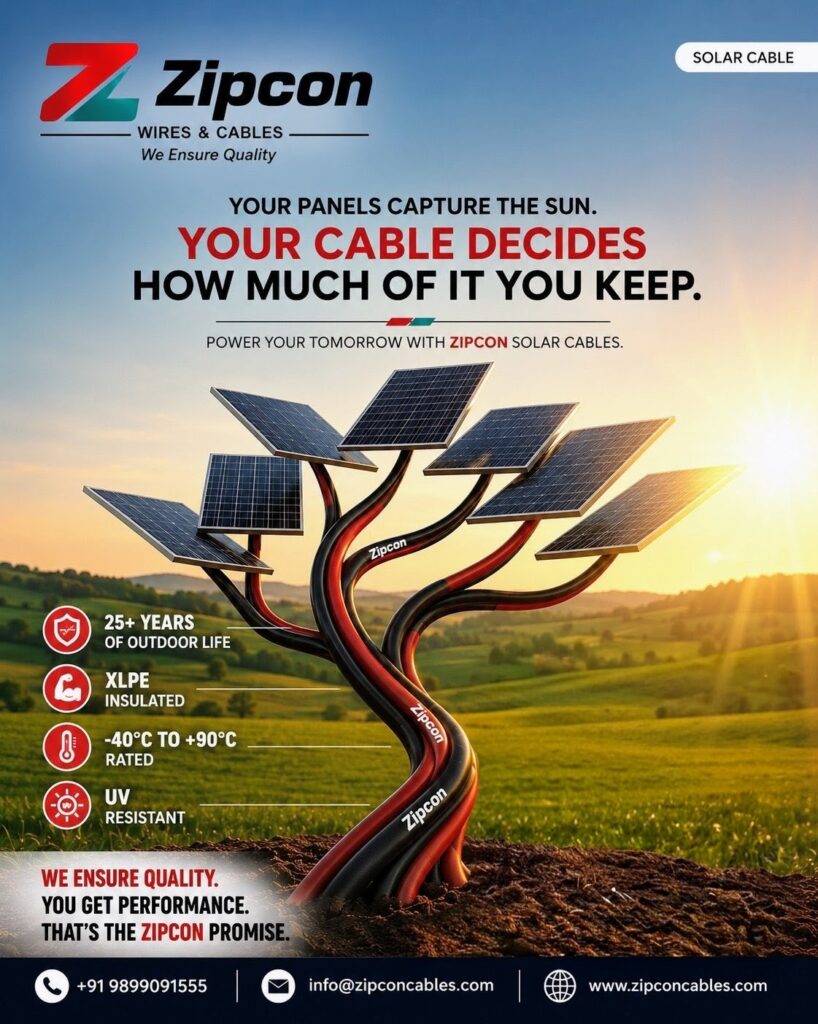
Choosing the best solar cable in Kochi is essential for maintaining safe and efficient power transmission in a solar PV system. Solar cables connect photovoltaic panels with other system components and remain exposed to electrical loads, heat, sunlight and changing environmental conditions throughout their service life.
Kochi’s coastal climate brings high humidity, strong sunlight and frequent monsoon conditions. A cable selected without considering these factors can experience insulation deterioration, moisture-related issues and reduced service reliability. Using a properly specified solar cable helps protect the electrical system and supports consistent solar power generation.
Zipcon Cables offers cable solutions for applications where dependable insulation, durability and reliable electrical performance are important. Selecting the correct conductor size, voltage rating, insulation properties and cable construction is critical for any residential, commercial or industrial solar installation.
Get a Quote:- @https://zipconcables.com/contact-us/
What Is a Solar Cable?
A solar cable, also known as a photovoltaic or PV cable, is specifically designed for electrical connections in solar power systems. It carries DC electricity generated by solar panels to components such as solar inverters, combiner boxes and other parts of the PV system.
Unlike ordinary electrical wires, solar cables are designed for outdoor and solar-specific operating conditions. They may need to withstand prolonged exposure to sunlight, temperature variations, moisture and mechanical stress.
The correct cable specification depends on factors such as system voltage, current, cable length, installation method and environmental conditions.
Why Is Solar Cable Important for Solar Installations in Kochi?
A solar installation depends on reliable connections from the photovoltaic modules through the DC side of the system. Cable quality directly affects electrical safety, energy losses and long-term system performance.
Kochi’s climate makes environmental resistance particularly important. High humidity, rain, UV exposure and heat can place additional demands on cable insulation and outer protection.
A suitable solar cable in Kochi should therefore provide:
- Reliable electrical conductivity
- Strong insulation
- Resistance to UV exposure
- Suitable moisture resistance
- Good temperature performance
- Mechanical durability
- Long-term outdoor suitability
- Compatibility with the solar system’s electrical requirements
Key Features of a Quality Solar Cable
1. UV-Resistant Insulation
Solar cables are commonly installed outdoors, where continuous sunlight can affect unsuitable insulation materials. UV-resistant insulation helps maintain cable integrity during prolonged solar exposure.
This is particularly important for rooftop solar systems where cables may remain exposed for many years.
2. Reliable DC Power Transmission
Solar panels generate DC electricity, so the cable must be appropriately designed and rated for the system’s DC voltage and current.
Correct conductor sizing helps minimize resistive losses and excessive voltage drop between system components.
3. Temperature Resistance
Solar cables can experience elevated temperatures because they are installed near photovoltaic modules and exposed to direct sunlight. The cable’s temperature rating should match the expected operating conditions.
Selecting the correct temperature-rated cable helps maintain insulation performance under normal solar operating conditions.
4. Moisture and Weather Resistance
Kochi receives substantial rainfall and has a humid coastal environment. Solar cable insulation and outer construction should therefore be suitable for the expected moisture and weather exposure.
Proper installation and sealing of connections are equally important because cable quality alone cannot compensate for poorly protected terminations.
5. Mechanical Strength
Solar cables may be routed across rooftops, cable trays, conduits and mounting structures. They can experience bending, movement and installation stress.
A durable cable construction helps reduce the possibility of physical damage when correctly installed.
Types of Solar Cable Applications
Solar Panel to Inverter
One of the primary uses of solar cable is connecting photovoltaic modules or strings to the inverter’s DC input. The cable must be correctly rated for the system’s voltage and current.
Solar Panel Interconnections
Solar panels are connected in series or parallel depending on the system design. Appropriate PV cable helps establish secure electrical connections between modules.
Rooftop Solar Systems
Residential and commercial rooftop installations often require cables that can tolerate sunlight, heat, rain and changing weather conditions.
Solar Water Pump Systems
Solar-powered water pumping systems require reliable DC connections between PV modules and associated electrical equipment. Proper cable selection helps support stable power transmission.
Solar Farms
Large solar installations involve extensive cable runs. Correct conductor sizing, voltage rating and installation practices become increasingly important as system size increases.
How to Choose the Best Solar Cable in Kochi
Selecting the right solar cable requires evaluating the complete solar installation rather than choosing a cable based only on its price or conductor size.
Check the System Voltage
The cable voltage rating must be suitable for the maximum DC voltage of the solar installation. Always verify the system design and cable specification before installation.
Calculate Current Requirements
Determine the expected operating current and select an appropriate conductor cross-sectional area. A cable that is too small for the application may experience excessive heating and energy losses.
Consider Cable Length
Longer cable runs can increase voltage drop. For larger distances between solar panels, combiner boxes and inverters, conductor size should be selected with voltage-drop considerations in mind.
Evaluate Temperature Conditions
Rooftop cables can become significantly warmer than the surrounding air because of direct solar exposure. The cable should have a suitable temperature rating for the installation environment.
Consider UV and Weather Exposure
Outdoor solar cables should be selected with appropriate resistance to UV radiation, moisture and environmental conditions. This is especially relevant in Kochi’s humid and rainy climate.
Check Compatibility With Connectors
Cable and connector compatibility is critical for a reliable PV installation. Connections should be properly matched, crimped and protected according to the manufacturer’s requirements.
Solar Cable vs. Ordinary Electrical Cable
A standard electrical cable may not be suitable for outdoor photovoltaic applications. Solar cables are designed around the specific environmental and electrical demands of PV installations.
| Feature | Solar Cable | Ordinary Electrical Cable |
|---|---|---|
| PV application | Specifically designed | Not necessarily designed |
| UV exposure | Suitable designs available | Depends on construction |
| Outdoor use | Designed for suitable applications | Depends on cable type |
| DC solar systems | Appropriate when correctly rated | Must be specifically verified |
| Temperature conditions | Solar-rated options available | Varies |
| Moisture exposure | Suitable designs available | Depends on insulation |
The important point is not simply choosing a cable labeled “solar”; the cable must also have the correct electrical and environmental specifications for the particular PV system.
Benefits of Using a Quality Solar Cable
Improved Electrical Efficiency
Properly sized conductors reduce unnecessary resistance and help limit power losses during transmission.
Better Long-Term Reliability
Suitable insulation and cable construction can help maintain performance under outdoor operating conditions.
Enhanced Electrical Safety
Correct voltage and temperature ratings help ensure that the cable is suitable for the electrical conditions it will experience.
Lower Maintenance Requirements
A cable appropriately selected for its environment is less likely to require premature replacement caused by unsuitable insulation or installation conditions.
Better Solar System Performance
Reliable DC connections support efficient energy transfer between PV modules and other system components.
Examples of Solar Cable Selection
Example 1: Residential Rooftop Solar
A residential rooftop system may have PV panels connected to an inverter installed at a different location. The cable size should be selected based on the array current, system voltage and cable length.
Because the cable is exposed to rooftop conditions, UV and temperature resistance are also important.
Example 2: Commercial Solar Installation
A commercial building may have a larger PV array with longer cable routes. Voltage drop and current-carrying capacity become more important as the system size and cable distance increase.
A properly designed cable system can help maintain reliable power transmission across the installation.
Example 3: Solar Water Pump
A solar water pumping system requires dependable DC connections between the solar array and pumping equipment. The cable should be selected according to the pump system’s electrical requirements and installation environment.
Why Choose Zipcon Cables for Solar Cable?
Zipcon Cables can be considered when sourcing solar cable solutions for installations where dependable electrical performance and durable insulation are important.
For solar projects in Kochi, cable selection should account for outdoor exposure, humidity, rainfall, temperature, system voltage, current and cable length. Zipcon cable specifications should be matched to these requirements before ordering.
Whether the application is a rooftop solar system, commercial PV project or solar water pumping installation, selecting the appropriate cable specification is essential for long-term system reliability.
Expert Tips for Buying Solar Cable in Kochi
- Determine maximum system voltage before selecting the cable.
- Calculate operating and expected maximum current accurately.
- Consider voltage drop for long cable runs.
- Select suitable conductor size rather than choosing solely by price.
- Use cables designed for the intended outdoor solar environment.
- Check UV and temperature resistance for rooftop installations.
- Protect cables from unnecessary mechanical stress.
- Use compatible connectors and proper termination techniques.
- Avoid excessive cable loops that can create unnecessary installation complexity.
- Purchase from a reliable manufacturer such as Zipcon Cables and verify the product specification before installation.
Common Mistakes When Buying Solar Cable
Choosing Cable Based Only on Price
The cheapest cable may not provide the required electrical or environmental performance. Compare conductor size, insulation properties, voltage rating and intended application.
Using an Incorrect Cable Size
An undersized conductor can increase resistance, heating and voltage drop. Cable sizing should be based on system current and installation conditions.
Ignoring UV Exposure
Rooftop cables can remain exposed to sunlight for years. Using a cable that is not suitable for the expected UV environment can affect insulation longevity.
Neglecting Cable Length
Long cable runs can create additional voltage drop. The complete route from the PV array to the relevant equipment should be considered during system design.
Poor Connector Installation
Even a high-quality solar cable can perform poorly if connectors are incorrectly crimped or inadequately secured. Proper termination is an essential part of PV installation quality.
Leaving Cables Unsupported
Cables should be routed and secured appropriately to prevent unnecessary movement, sharp bends and mechanical damage.
Conclusion
The best solar cable in Kochi should be selected according to the complete requirements of the solar installation. System voltage, current, conductor size, cable length, temperature, UV exposure, moisture and installation method all influence cable performance.
Kochi’s humid, rainy and coastal conditions make durable insulation and appropriate outdoor performance especially important. A properly specified solar cable can help reduce electrical losses, support safe operation and improve the long-term reliability of a photovoltaic system.
For residential rooftops, commercial PV projects and solar water pumping applications, Zipcon Cables is a practical option to consider. Match the cable specification with the solar system’s actual electrical and environmental requirements to build a safer and more reliable solar installation.
Top 5 FAQs
1. What is a solar cable used for?
A solar cable is primarily used to transmit DC electricity between photovoltaic panels and other components of a solar power system, such as inverters and combiner boxes.
2. Why should I use a solar cable instead of a normal cable?
Solar cables are designed for the specific electrical and environmental conditions associated with photovoltaic systems. Depending on their specification, they can provide suitable resistance to UV exposure, temperature and outdoor conditions.
3. Which solar cable is suitable for Kochi?
A solar cable suitable for Kochi should have the correct voltage and current ratings along with appropriate insulation and environmental resistance for humid, rainy and sunny outdoor conditions.
4. How do I select the correct solar cable size?
Cable size depends on factors including operating current, maximum current, system voltage, cable length, allowable voltage drop, installation method and ambient temperature. Proper electrical design should determine the final size.
5. Is Zipcon Cables suitable for solar installations?
Zipcon Cables can be considered for solar cable requirements where reliable electrical performance and suitable insulation are important. Always verify the specific cable’s voltage, conductor size, temperature and environmental specifications for your solar project.