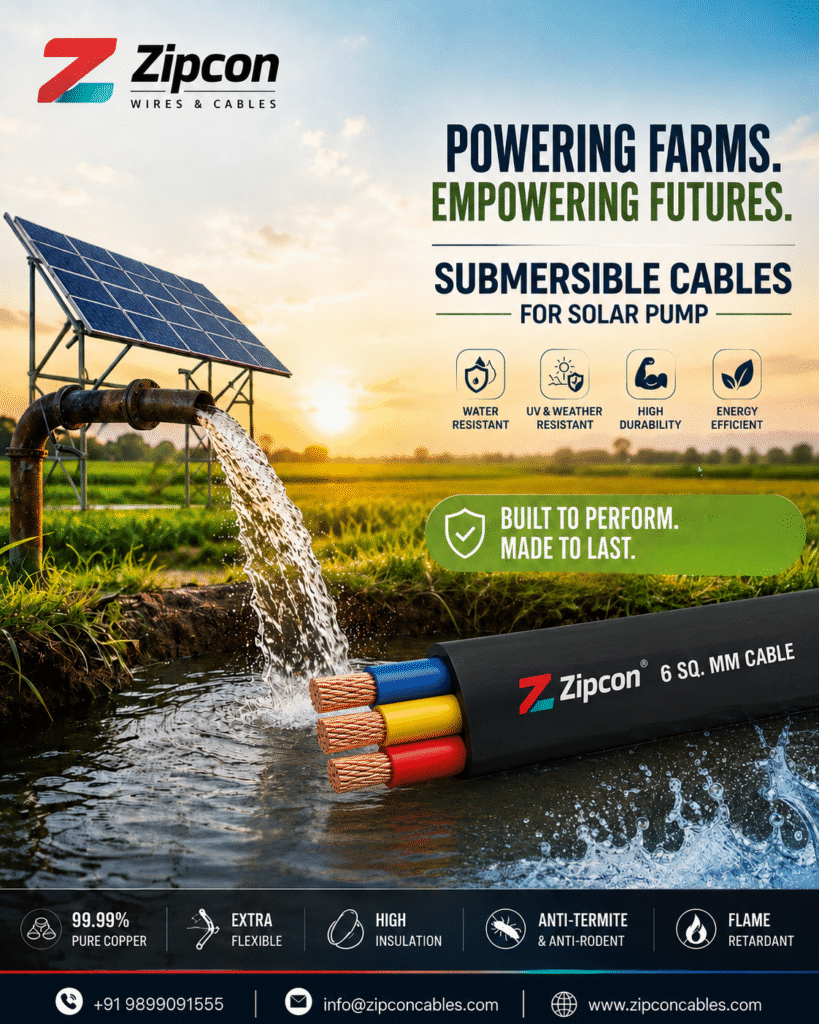
A reliable solar pump submersible cable in Thiruvananthapuram is essential for maintaining stable power transmission between a solar-powered pump and its control system. Since these cables operate in demanding environments such as borewells, water tanks and agricultural pumping systems, they must withstand moisture, heat, electrical stress and continuous operation.
Solar pumping systems are increasingly used for agriculture, irrigation, residential water supply and commercial applications. However, the efficiency of the complete system depends not only on the solar panels and pump but also on the quality of the cable connecting them.
Choosing a properly designed solar pump cable helps reduce voltage loss, protects against insulation failure and supports consistent pump performance. For applications requiring dependable performance in wet environments, Zipcon Cables offers durable cable solutions designed for demanding electrical and submersible applications.
For inquiries or assistance:– https://zipconcables.com/contact-us/
Why Solar Pump Submersible Cable Quality Matters
A solar water pump can operate for several hours every day, particularly in agricultural applications. The cable remains exposed to electrical load, moisture and temperature variations during this operation. A poor-quality cable can develop insulation damage, increased resistance or voltage-drop problems.
A high-quality submersible pump cable provides dependable electrical conductivity while protecting the conductor from water and environmental exposure. This becomes particularly important when the cable is installed inside a borewell, where replacing a damaged cable can require significant time and labour.
The right cable therefore contributes to:
- Stable power transmission
- Better pump performance
- Reduced electrical losses
- Improved insulation protection
- Longer service life
- Safer underwater operation
- Lower maintenance requirements
What Is a Solar Pump Submersible Cable?
A solar pump submersible cable is an electrical cable specifically used to supply power to submersible pumps operating in water-based environments. Depending on the system configuration, the cable connects the pump with the solar pumping system, controller or associated electrical equipment.
Unlike ordinary electrical wires, submersible cables are designed for environments where exposure to moisture and water is unavoidable. Their insulation must provide adequate protection while maintaining flexibility and electrical performance.
For borewell and solar pumping applications, 3 core submersible cable configurations are commonly used with suitable three-phase pump systems. The exact cable size and construction should be selected according to the pump rating, installation length, voltage and current requirements.
Key Features of a Good Solar Pump Cable
1. Strong Insulation
The insulation is one of the most important parts of a submersible cable. It protects the conductor from moisture, electrical leakage and physical damage.
For long-term pumping applications, high-quality insulation helps maintain the cable’s electrical properties under demanding operating conditions.
2. Water Resistance
A waterproof pump cable must be capable of functioning reliably in wet and submerged environments. Water-resistant construction helps reduce the risk of insulation deterioration and electrical faults.
This is particularly important for borewell pumps because the cable can remain underwater for extended periods.
3. Good Electrical Conductivity
The conductor should provide efficient current transmission with minimum unnecessary resistance. Proper conductor selection helps control voltage drop, particularly when the distance between the solar pumping equipment and the submersible pump is significant.
Using the correct conductor size is therefore just as important as selecting a quality cable brand.
4. Flexibility
Installation inside borewells and water systems can require the cable to bend around equipment and follow the pump installation path.
A flexible cable makes installation easier while reducing unnecessary mechanical stress during handling and positioning.
5. Heat Resistance
Solar pumping systems operate during periods of strong sunlight, when temperatures can rise significantly. Cable insulation must withstand the expected operating temperature without premature deterioration.
Heat-resistant construction becomes especially valuable in outdoor solar installations.
Choosing the Right Solar Pump Submersible Cable in Thiruvananthapuram
Selecting a cable only by price can result in higher maintenance costs later. The cable should be selected according to the electrical and installation requirements of the pumping system.
Consider Pump Capacity
Start by checking the pump’s voltage, current and power rating. A higher-powered pump generally requires a suitable conductor size capable of safely carrying the required current.
For example, a small agricultural pump and a high-capacity commercial borewell pump should not automatically use the same cable size.
Consider Cable Length
Cable length directly affects voltage drop. Longer cable runs can create greater electrical losses if the conductor size is inadequate.
If the solar pump is installed far from the borewell, proper cable sizing becomes particularly important for maintaining efficient operation.
Consider Installation Depth
A cable installed deep inside a borewell needs reliable insulation and mechanical durability. The deeper installation can make cable replacement difficult, so choosing a suitable cable at the initial installation stage is important.
Consider Environmental Conditions
Thiruvananthapuram’s humid and tropical conditions make moisture protection an important consideration for electrical installations. Solar pump cables should be selected for the actual environmental conditions in which they will operate.
Solar Pump Cable vs Ordinary Electrical Cable
| Feature | Solar Pump Submersible Cable | Ordinary Electrical Cable |
|---|---|---|
| Submerged application | Designed for suitable submersible use | Generally unsuitable |
| Moisture protection | High importance | Application dependent |
| Borewell installation | Suitable when correctly specified | Not recommended unless specifically rated |
| Insulation requirements | Designed for demanding environments | General-purpose |
| Flexibility | Important for pump installation | Depends on construction |
| Long-term water exposure | Designed for suitable applications | Usually not intended |
The major difference is application suitability. A standard electrical cable should not be substituted for a properly specified submersible pump cable simply because it is cheaper.
Applications of Solar Pump Submersible Cables
A quality solar water pump cable can be used across several applications where solar energy powers water pumping equipment.
Agricultural Irrigation
Farmers can use solar-powered borewell pumps to move groundwater for irrigation. Reliable cabling helps maintain continuous electrical transmission from the solar pumping system to the pump.
Borewell Water Pumping
Submersible pumps installed inside borewells require cables capable of handling submerged conditions. A properly selected cable helps support reliable operation without frequent cable-related interruptions.
Residential Water Supply
Solar pumping systems can be used to move water for homes, farmhouses and other residential properties where conventional electricity may be expensive or unreliable.
Commercial Water Systems
Commercial properties, institutions and other facilities may use solar-powered pumping systems for water management. Correct cable selection helps improve operational reliability.
Why Choose Zipcon Cables for Solar Pump Applications?
Zipcon Cables focuses on cable solutions designed for demanding electrical applications where durability and reliable performance matter.
For solar pump and submersible applications, the cable needs to combine dependable conductivity, suitable insulation and resistance to challenging operating conditions. Zipcon’s product-focused approach makes it a practical option for customers looking for reliable solar pump submersible cables.
When selecting Zipcon cable for a particular pump, the cable specification should be matched with the pump’s voltage, current, power rating, cable length and installation conditions.
Examples: Selecting Cable for Different Pump Applications
Example 1: Agricultural Borewell
Suppose a farmer operates a solar-powered borewell pump for irrigation. The pump is installed deep inside the borewell and the cable runs from the pump to the electrical control system.
In this situation, the cable should be selected based on pump current, installation depth, cable length and the manufacturer’s recommended specifications.
Example 2: Residential Solar Water Pump
A residential property may use a smaller solar pump to move water from a borewell or underground tank.
The cable size should not simply be selected based on physical appearance. The pump’s electrical specifications and cable run should determine the appropriate cable.
Example 3: Long-Distance Pump Installation
If the pump is located far from the solar control equipment, voltage drop becomes a more important consideration.
A correctly sized conductor can help maintain more stable voltage at the pump and reduce unnecessary electrical losses.
Expert Tips for Buying Solar Pump Submersible Cable
- Check the pump manufacturer’s electrical specifications before selecting the cable.
- Calculate cable length accurately, including the vertical borewell section and horizontal route.
- Select the conductor size according to current and voltage-drop requirements.
- Use cable specifically intended for the installation environment.
- Prioritize insulation quality for submerged applications.
- Avoid selecting cable only by price.
- Buy from a reliable cable manufacturer or supplier to ensure consistent product quality.
- Inspect the cable before installation for cuts, cracks or visible insulation damage.
- Use appropriate installation accessories and proper termination methods.
- Follow professional electrical installation practices for safe and reliable operation.
Common Mistakes to Avoid
Choosing an Undersized Cable
An undersized cable can experience excessive voltage drop and heating. This can affect pump performance and increase electrical losses.
Using General-Purpose Wire
Ordinary household wiring is not automatically suitable for submerged pump applications. Cable construction must match the installation environment.
Ignoring Cable Length
A cable that works effectively at a short distance may not provide the same performance over a substantially longer run.
Focusing Only on Price
Low initial cost does not always mean lower total cost. Cable replacement inside a borewell can involve additional labour and downtime.
Poor Termination
Even a high-quality cable can perform poorly if connections are not properly made. Correct termination and insulation protection are essential for maintaining system reliability.
How a Good Cable Supports Solar Pump Efficiency
Solar pump efficiency depends on several components working together, including solar panels, controllers, electrical connections, pump selection and cabling.
A correctly selected cable helps minimize avoidable electrical losses between the power source and pump. When conductor size, insulation and cable construction are appropriate for the application, the system can deliver power more reliably.
This is why cable selection should be treated as part of the overall solar pump design rather than as a minor installation accessory.
Why Zipcon Is a Smart Choice for Thiruvananthapuram
For customers searching for a solar pump submersible cable in Thiruvananthapuram, the priority should be reliable performance in wet, outdoor and demanding pumping environments.
Zipcon Cables can be considered for applications where dependable insulation, suitable construction and long-term cable performance are important. From agricultural borewell systems to residential and commercial solar pumping applications, selecting the correct Zipcon cable specification can help create a more dependable pumping installation.
The best results come from matching the cable precisely with the pump and installation requirements rather than selecting a cable based only on size or price.
Conclusion
Choosing the right solar pump submersible cable in Thiruvananthapuram is essential for maintaining reliable power transmission, reducing electrical losses and supporting long-term pump performance. A suitable cable should be selected based on pump capacity, current, voltage, cable length, installation depth and environmental conditions.
For borewell, agricultural and solar water pumping applications, Zipcon Cables offers a dependable option for customers seeking quality cable solutions. Before installation, always verify the required cable specification with the pump manufacturer or a qualified electrical professional.
Choose the right cable today to build a safer, more efficient and more reliable solar pumping system with Zipcon Cables.
Top 5 FAQs
1. Which cable is best for a solar submersible pump?
A properly rated solar pump submersible cable designed for submerged applications is the appropriate choice. The conductor size should be selected according to pump capacity, current, voltage, cable length and installation conditions.
2. Can ordinary electrical wire be used for a submersible pump?
Ordinary electrical wire should not be used unless it is specifically rated and approved for the intended submerged application. Submersible pump installations require suitable insulation and cable construction.
3. Why is cable size important for a solar water pump?
Cable size affects current-carrying capacity and voltage drop. An incorrectly sized cable can cause excessive electrical losses, heating and reduced pump performance.
4. Is a 3 core cable suitable for a submersible pump?
A 3 core submersible cable can be suitable for compatible three-phase pump systems. The final selection should always be based on the pump’s electrical specifications and installation requirements.
5. Why choose Zipcon Cables for solar pump applications?
Zipcon Cables provides cable solutions focused on reliable electrical performance and demanding applications. For solar pump systems, customers should select the appropriate Zipcon cable specification according to the pump and installation requirements.