

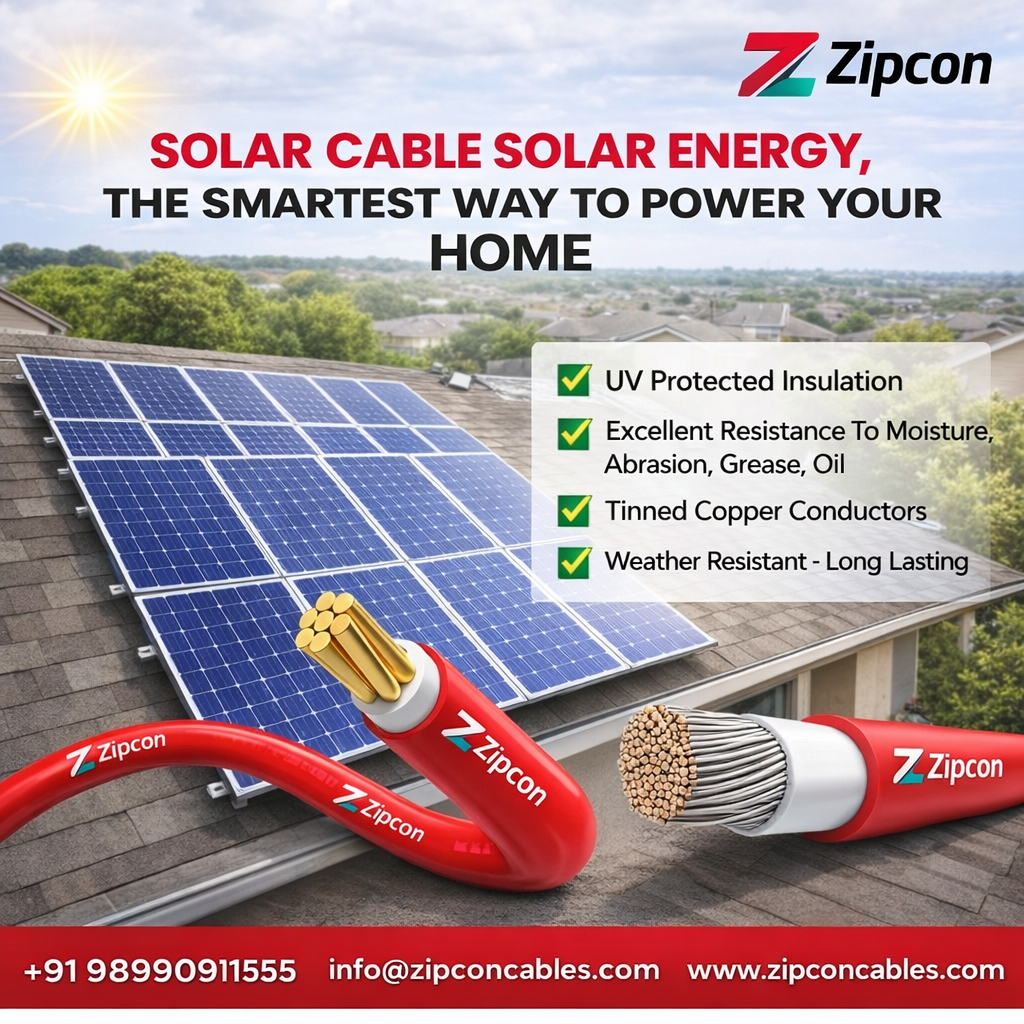
Choosing the right solar cables in Bhopal is essential for building a safe, efficient, and long-lasting solar power system. Solar cables continuously carry electrical power between solar panels, inverters, batteries, and other system components, often while exposed to heat, moisture, dust, and changing weather conditions.
A cable that is unsuitable for solar applications can increase electrical losses, deteriorate faster, and create avoidable maintenance issues. The right solar wiring should provide dependable insulation, suitable current-carrying capacity, mechanical strength, and resistance to environmental conditions.
For residential rooftops, commercial installations, agricultural solar systems, and industrial projects, Zipcon Cables offers reliable solar cable solutions designed for demanding electrical applications. Selecting the appropriate cable size and construction can help maintain stable power transmission and improve overall system reliability.
For inquiries or assistance:– https://zipconcables.com/contact-us/
Why Quality Solar Cables Matter in Bhopal
Bhopal’s solar installations can experience high temperatures, strong sunlight, monsoon moisture, dust, and outdoor exposure. Solar cables therefore need to withstand more than ordinary indoor wiring conditions.
A good-quality solar cable is designed to maintain its electrical and physical properties under continuous outdoor use. Proper insulation helps protect the conductor from moisture, heat, abrasion, and other environmental stresses.
Reliable solar wiring also helps reduce unnecessary energy losses between components. When the cable is correctly selected for the system’s voltage, current, installation method, and distance, it can support more consistent power transmission.
Key Benefits of Reliable Solar Cables
- Better protection against outdoor conditions
- Reliable electrical power transmission
- Suitable insulation for solar applications
- Improved durability and service life
- Reduced risk of insulation deterioration
- Better suitability for rooftop and outdoor installations
- Easier and safer professional installation
What Are Solar Cables?
Solar cables are specialized electrical cables used in photovoltaic power systems. They connect solar panels with other components such as string connections, junction boxes, charge controllers, inverters, and battery systems, depending on the system design.
Unlike general-purpose house wiring, solar cables are selected for the electrical and environmental demands of photovoltaic installations. Their construction is intended to provide dependable performance during prolonged outdoor exposure.
The cable must be selected according to factors such as conductor material, cross-sectional area, voltage rating, current capacity, insulation properties, temperature conditions, and installation environment.
Important Features to Look for in Solar Cables
1. Suitable Conductor
The conductor carries electrical current through the solar system. Copper is commonly selected where high conductivity and flexibility are required, while aluminium can be used in applications where its characteristics and system requirements make it appropriate.
The conductor size should match the expected current and installation conditions. Using an incorrectly sized cable can increase voltage drop and electrical losses.
2. Durable Insulation
Solar cables require insulation capable of handling outdoor exposure. Quality insulation helps protect the conductor from moisture, heat, mechanical stress, and environmental deterioration.
For long-term solar installations, insulation quality should not be treated as a secondary consideration. It directly affects cable safety and durability.
3. Resistance to Heat and Sunlight
Solar cables installed near panels can remain exposed to high temperatures and continuous sunlight. Cable construction should therefore be appropriate for the expected operating environment.
Heat-resistant and weather-resistant cable designs can help maintain performance over extended periods when installed correctly.
4. Mechanical Strength
Solar wiring may run across rooftops, cable trays, conduits, or outdoor structures. During installation and maintenance, cables can experience bending, pulling, and mechanical stress.
A durable cable construction helps reduce the possibility of physical damage when proper installation practices are followed.
5. Correct Cable Size
Cable size is one of the most important selection factors. Common solar cable sizes include 2.5 sq mm, 4 sq mm, and 6 sq mm, although the correct size depends on the system’s current, cable length, voltage drop requirements, and installation conditions.
For example, a short connection carrying relatively low current may require a different cable size from a longer connection carrying higher current. Cable selection should therefore be based on the actual system design rather than simply choosing the largest available size.
Solar Cable vs Regular Electrical Cable
Solar cables and regular electrical cables may look similar, but their intended applications can differ significantly.
| Feature | Solar Cable | Regular Electrical Cable |
|---|---|---|
| Primary application | Photovoltaic systems | General electrical wiring |
| Outdoor exposure | Designed for solar environments | Depends on cable type |
| Sunlight exposure | Important consideration | May not be suitable |
| Temperature conditions | Selected for solar operating conditions | Application-dependent |
| Installation | Panels, DC circuits, outdoor routes | Homes, buildings, equipment |
| Selection criteria | Voltage, current, environment, distance | Load, installation, application |
The important point is that not every electrical cable is automatically suitable for solar applications. Solar wiring should be selected according to the requirements of the photovoltaic system.
Where Solar Cables Are Used
Solar cables have applications across different types of solar installations.
Residential Solar Systems
Rooftop solar systems require dependable connections between photovoltaic panels and the inverter or other system components. Correct cable selection helps support safe and consistent energy transmission.
Commercial Solar Projects
Commercial installations often involve larger systems, longer cable routes, and higher electrical loads. Cable selection becomes particularly important because voltage drop and installation conditions can have a greater impact.
Industrial Solar Systems
Industrial solar projects require cables capable of supporting demanding operating environments. Proper conductor sizing, insulation, routing, and protection should be considered during system design.
Agricultural and Solar Pump Applications
Solar-powered agricultural systems and solar pump installations may operate in outdoor environments with considerable exposure to heat, moisture, dust, and mechanical conditions. Suitable solar wiring can help maintain dependable connections in these applications.
How to Choose the Right Solar Cable in Bhopal
Check the Current Requirement
Determine the maximum expected current of the circuit before selecting the cable. The conductor’s current-carrying capacity should be appropriate for the application and installation conditions.
Consider Cable Length
Longer cable runs can produce greater voltage drop. If the distance between solar panels and other equipment is significant, cable size should be selected accordingly.
Consider Installation Conditions
Determine whether the cable will be installed on a rooftop, inside conduit, along a cable tray, underground, or in another environment. Temperature, ventilation, grouping, and physical protection can influence cable selection.
Verify Voltage Rating
The cable should have an appropriate voltage rating for the photovoltaic system. The system designer or qualified installer should verify compatibility before installation.
Select From a Reliable Manufacturer
Cable quality can vary significantly between manufacturers. Choosing a reliable brand helps reduce the risk associated with inconsistent materials, insulation quality, or manufacturing standards.
Zipcon Cables can be considered for solar wiring requirements where durability, dependable electrical performance, and application suitability are priorities.
Examples: Choosing Solar Wiring for Different Applications
Example 1: Residential Rooftop System
A homeowner installing rooftop solar may have relatively short cable routes between panels and the inverter. The installer should consider the system current, cable length, environmental exposure, and applicable electrical requirements before selecting the conductor size.
Example 2: Commercial Solar Installation
A commercial building may have multiple panel strings with longer cable routes. In this situation, voltage drop calculations and cable routing become increasingly important.
Choosing a cable solely because it has a higher or lower cross-sectional area without considering the complete installation can lead to inefficient selection.
Example 3: Agricultural Solar Application
An agricultural solar system may be exposed to direct sunlight, moisture, dust, and temperature variations. Here, outdoor durability and appropriate insulation become especially important alongside electrical capacity.
Why Consider Zipcon Cables for Solar Applications?
Zipcon Cables focuses on electrical cable solutions designed for dependable performance across residential, commercial, agricultural, and industrial applications.
For solar installations, the emphasis should be on selecting cable that matches the system’s electrical requirements and operating environment. Zipcon solar cable solutions can be considered when durability, reliable insulation, and consistent power transmission are important selection criteria.
Before purchasing, customers should confirm the required cable size, conductor material, voltage rating, installation environment, and project specifications with a qualified electrical professional.
Expert Tips for Solar Cable Selection
- Do not select cable size based only on price. The correct size should match the electrical load and installation conditions.
- Calculate voltage drop for longer runs. Longer connections can require careful sizing to maintain efficient power transmission.
- Use cables intended for the application. Solar circuits require cable characteristics appropriate for photovoltaic installations.
- Protect exposed wiring. Use suitable routing, clips, conduits, or other protection where required by the installation.
- Avoid unnecessary sharp bends. Follow the cable manufacturer’s recommended bending and installation practices.
- Inspect cables during maintenance. Look for signs of physical damage, insulation deterioration, loose connections, or improper routing.
- Buy from a dependable manufacturer or authorized supplier. Product authenticity and consistent manufacturing quality matter for long-term installations.
Common Mistakes to Avoid
Using the Wrong Cable Size
An undersized cable can contribute to excessive voltage drop, heating, and energy losses. Cable sizing should be calculated according to the actual electrical and installation requirements.
Choosing a Cable Only by Price
The lowest-cost cable is not necessarily the most economical choice over the life of a solar system. Poor durability can result in premature replacement and additional maintenance.
Ignoring Environmental Conditions
Solar cables are often exposed to sunlight, heat, rain, dust, and mechanical stress. These conditions should be considered before selecting the cable.
Poor Cable Routing
Loose, unsupported, sharply bent, or poorly protected cables can be more vulnerable to physical damage. Proper routing and fastening are essential.
Mixing Incompatible Components
Connectors, cables, and other solar system components should be compatible and installed according to their specifications. Improper connections can compromise system safety and performance.
Why Bhopal Solar Installations Need Reliable Wiring
Solar panels generate electricity, but the quality of the electrical connection between system components also influences how reliably that electricity reaches the intended equipment.
Bhopal’s outdoor solar installations can encounter high temperatures and seasonal weather changes. Reliable solar cables provide an important layer of protection between the photovoltaic equipment and the electrical network.
For homeowners, businesses, industries, and agricultural users, choosing appropriate solar wiring is therefore a practical investment in system reliability rather than simply a component purchase.
Conclusion
Choosing the right solar cables in Bhopal is essential for safe electrical connections, reliable power transmission, and long-term solar system performance. Cable size, conductor type, insulation, voltage rating, environmental resistance, cable length, and installation conditions should all be evaluated before making a purchase.
For dependable solar wiring, Zipcon Cables is a strong option to consider for residential, commercial, industrial, and agricultural solar applications. Select the cable according to your system specifications and have installation carried out using proper electrical practices.
Choose the right solar cable today with Zipcon Cables for safer connections and dependable solar power performance.
Top 5 FAQs
1. Which solar cable is best for solar panels?
The best solar cable depends on the system voltage, current, cable length, installation environment, and applicable specifications. A qualified installer should determine the appropriate cable size and type for the specific solar system.
2. What size solar cable is commonly used?
Common sizes include 2.5 sq mm, 4 sq mm, and 6 sq mm, but the correct size depends on current, cable distance, voltage drop, installation conditions, and system design.
3. Can regular electrical wire be used for solar panels?
A regular electrical cable should not automatically be assumed suitable for photovoltaic applications. Solar wiring should be selected based on the environmental and electrical requirements of the solar system.
4. Why is solar cable quality important?
Quality solar cables can provide reliable electrical transmission and better resistance to environmental and mechanical stresses when properly selected and installed. This can support long-term system reliability.
5. Why choose Zipcon Cables for solar wiring?
Zipcon Cables offers cable solutions for demanding electrical applications. For solar projects, customers can consider Zipcon based on the required cable size, conductor type, insulation characteristics, and project specifications.