

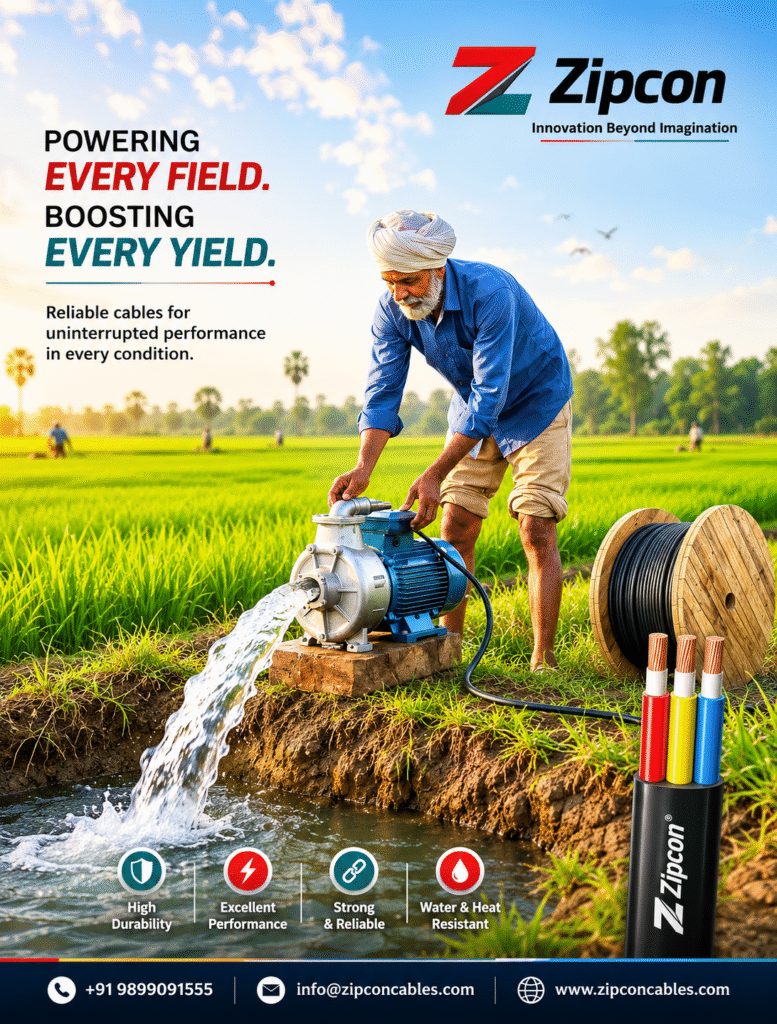
A reliable submersible cable in Jabalpur is essential for maintaining consistent pump performance in borewells, agricultural fields, homes, and commercial water systems. Because the cable remains exposed to moisture and may operate for long hours, its insulation, conductor quality, flexibility, and overall construction directly affect electrical safety and pump reliability.
Choosing a low-quality cable can lead to insulation damage, leakage, voltage drop, overheating, or unexpected pump failure. Zipcon Cables provides durable submersible cable solutions designed for demanding water-pumping applications, helping users achieve dependable electrical connections and long-lasting performance.
For inquiries or assistance:– https://zipconcables.com/contact-us/
Why the Right Submersible Cable Matters
A submersible pump cable works in a much more demanding environment than a standard electrical wire. It may remain inside a borewell or water-filled environment for extended periods, making resistance to moisture and insulation degradation critical.
The cable must also handle the electrical load of the connected pump without excessive heating. A properly selected cable helps maintain stable power delivery while reducing the risk of electrical faults and premature cable replacement.
Protection Against Moisture
Water exposure is one of the biggest challenges for submersible pump wiring. Quality insulation creates a protective barrier around the conductor and helps prevent moisture from reaching the electrical core.
For borewell and water-pumping installations, selecting a cable specifically designed for submersible applications is more appropriate than using ordinary house wiring.
Better Electrical Performance
The conductor size should match the pump’s power requirements and cable length. If the cable is undersized, resistance can increase, potentially causing voltage drop and additional heating.
For this reason, cable selection should consider pump capacity, installation depth, distance from the power source, and the electrical characteristics of the installation.
Why Choose Zipcon Submersible Cables in Jabalpur?
Zipcon Cables focuses on cable solutions where durability, insulation quality, and dependable electrical performance are important. Its submersible cables are suitable for applications involving water pumps, borewell systems, agricultural irrigation, and residential water supply.
The combination of suitable conductor construction and protective insulation helps the cable withstand demanding installation conditions. This makes Zipcon a practical choice for customers looking for a submersible cable in Jabalpur for regular and long-term pump operation.
Suitable for Different Pump Applications
A quality submersible cable can be used across several pumping requirements, including:
- Borewell submersible pumps
- Agricultural irrigation pumps
- Residential water pumps
- Commercial water-supply systems
- Deep-well pumping installations
- Solar-powered pumping systems
- Industrial water applications
The correct cable specification should always be selected according to the pump’s electrical requirements and installation conditions.
Key Features to Look for in a Submersible Cable
Before purchasing a submersible pump cable, evaluate more than just the price. The following characteristics have a direct impact on service life and performance.
1. High-Quality Conductor
The conductor is responsible for carrying electrical current to the motor. A properly manufactured conductor provides efficient current transmission and supports consistent pump operation.
Copper conductors are commonly preferred where conductivity and reliable electrical performance are important. The appropriate conductor material and cross-sectional area should be selected according to the application.
2. Durable Insulation
The insulation must protect the conductor from moisture, mechanical stress, and electrical leakage. Premium PVC insulation can provide the required protection when manufactured for the intended submersible application.
For long-term installations, insulation quality is particularly important because replacing a damaged borewell cable can involve significant labour and downtime.
3. Flexibility
Submersible cables need sufficient flexibility for installation around pumps, pipes, bends, and borewell equipment. A flexible cable is easier to handle and can reduce installation difficulties.
However, flexibility should not come at the expense of mechanical and electrical strength. The cable construction needs to balance both requirements.
4. Resistance to Harsh Conditions
A pump cable may encounter moisture, pressure, temperature changes, and physical movement during operation. A durable outer construction helps protect the cable under these conditions.
This is especially relevant for agricultural and borewell installations where equipment may operate for extended periods.
Choosing the Correct Submersible Cable Size
Cable size is not simply a matter of choosing the thickest available option. It should be determined according to the motor’s rated current, voltage, cable length, installation conditions, and permissible voltage drop.
For example, a small residential pump may require a different cable size from a high-capacity agricultural pump installed deep inside a borewell. Using the same cable size for both applications can result in poor performance or unnecessary cost.
Consider These Factors
Before selecting a cable, check:
- Pump horsepower or kW rating
- Rated operating current
- Supply voltage
- Total cable length
- Borewell depth
- Installation environment
- Number of cores required
- Applicable electrical standards and installation requirements
For an exact size recommendation, the pump manufacturer’s electrical specifications and a qualified electrician’s assessment should be followed.
3 Core Submersible Cable for Pump Applications
A 3 core submersible cable is commonly used with three-phase submersible motors and other suitable pump configurations. Its three conductors provide the electrical connections required by the particular motor system.
Zipcon offers submersible cable solutions designed for applications where reliable connections and durable insulation are essential. The specific core configuration and cable size should be matched to the pump and electrical system rather than selected solely by appearance or price.
Submersible Cable vs Ordinary Electrical Wire
Ordinary house wire and submersible cable serve different purposes. House wiring is generally designed for building installations, while a submersible cable is constructed for applications where the cable can be exposed to moisture and demanding installation conditions.
| Feature | Submersible Cable | Ordinary House Wire |
|---|---|---|
| Water-exposed applications | Designed for suitable applications | Generally unsuitable |
| Insulation requirements | Higher protection for demanding environments | Designed for building wiring |
| Pump installation | Suitable when correctly specified | Not recommended for submersible use |
| Borewell applications | Commonly used | Unsuitable |
| Flexibility | Designed for installation requirements | Varies by product |
| Application | Pumps and water systems | Indoor electrical circuits |
The key point is simple: use a cable designed and rated for the environment in which it will operate.
Applications of Submersible Cables in Jabalpur
Jabalpur’s residential, agricultural, and commercial water requirements make reliable pumping systems important. A properly selected submersible cable can support several types of water-pumping installations.
Agricultural Irrigation
Farmers depend on submersible pumps for lifting groundwater and supplying irrigation systems. The cable must be capable of handling the pump’s electrical load while remaining suitable for the installation environment.
Residential Water Supply
Homes using borewell pumps need dependable electrical connections for regular water supply. A quality submersible cable can help reduce failures associated with unsuitable wiring and poor insulation.
Commercial and Industrial Use
Commercial buildings, institutions, and industrial facilities may operate pumps for water supply, storage tanks, processing, or other purposes. Cable selection should account for operating hours, motor load, installation length, and environmental conditions.
Examples: Selecting the Right Cable
Example 1: Residential Borewell
Suppose a home uses a submersible pump installed at considerable depth. The cable length from the control panel to the motor and the pump’s rated current should be considered before selecting the conductor size.
A properly sized Zipcon submersible cable can provide a suitable connection when its specifications match the pump and installation requirements.
Example 2: Agricultural Pump
An agricultural pump may operate for several hours during irrigation. Longer cable runs can make voltage-drop considerations more important.
In this situation, simply choosing a cable based on horsepower is not enough. The electrician should also account for cable length, operating current, supply voltage, and installation conditions.
Expert Tips for Buying Submersible Cable in Jabalpur
1. Match cable size with the pump:
Always check the motor’s rated current and manufacturer’s recommendations before purchasing.
2. Consider cable length:
Longer runs can increase voltage drop. Cable selection should account for the complete distance between the electrical source and pump.
3. Prioritize insulation quality:
For water-based installations, insulation is a critical component of electrical safety and cable life.
4. Buy from a reliable manufacturer:
A recognized cable brand such as Zipcon Cables can provide product specifications that make selection easier and more reliable.
5. Avoid selecting only on price:
A cheaper cable may become expensive if it results in repeated replacement, pump downtime, or difficult borewell maintenance.
6. Follow proper installation practices:
Even a high-quality cable can fail if it is damaged during installation, improperly connected, or exposed to conditions outside its intended rating.
Common Mistakes to Avoid
Using Ordinary Wire for a Submersible Pump
Standard house wire is not automatically suitable for underwater or borewell applications. Always select a cable specifically intended and rated for the pump environment.
Choosing an Undersized Cable
An undersized conductor can contribute to voltage drop and heating, particularly over longer distances or with higher motor loads. Cable sizing should be based on electrical calculations and manufacturer recommendations.
Ignoring Cable Length
Two pumps with the same power rating may require different cable considerations if their installation depths and cable lengths differ significantly.
Focusing Only on Copper Content
Conductor quality matters, but so do insulation, construction, cable size, flexibility, manufacturing quality, and suitability for the application. Evaluate the complete cable rather than one feature alone.
Poor Cable Joints
Improper joints can become a major weak point in a pump installation. Connections should be properly insulated, sealed, and completed using appropriate installation methods by a qualified professional.
Why Zipcon Is a Practical Choice
For customers searching for the best submersible cable in Jabalpur, Zipcon Cables offers a product-focused option for demanding pump applications. Its emphasis on durable construction and protective insulation makes its cables suitable for residential, agricultural, and commercial water-pumping requirements when the correct specification is selected.
The right cable is an investment in the complete pumping system. Choosing a suitable Zipcon cable, matching its specifications to the motor, and ensuring professional installation can help support dependable pump operation and reduce avoidable electrical problems.
Conclusion
A submersible pump can only perform reliably when its electrical connection is equally dependable. Choosing the right submersible cable in Jabalpur means considering conductor quality, insulation, cable size, pump load, cable length, installation depth, and operating conditions.
Zipcon Cables provides submersible cable solutions for applications where reliable electrical performance and durable insulation are important. For your next borewell, agricultural, residential, or commercial pump installation, select the cable according to the pump’s actual requirements rather than choosing based on price alone.
Top 5 FAQs
1. Which is the best submersible cable in Jabalpur?
The best submersible cable depends on the pump’s power, rated current, voltage, cable length, installation depth, and environmental conditions. Zipcon Cables offers submersible cable options that can be selected according to these requirements.
2. Can ordinary house wire be used for a submersible pump?
Ordinary house wire should not be used simply because it has a suitable conductor size. Submersible pump installations require cable designed and rated for the relevant wet or submerged environment.
3. What size cable is required for a submersible pump?
Cable size depends on motor capacity, operating current, voltage, cable length, installation conditions, and permissible voltage drop. The pump manufacturer’s specifications and proper electrical calculations should be used to determine the appropriate size.
4. Why is insulation important in a submersible cable?
Insulation protects the conductor from moisture, electrical leakage, and environmental exposure. High-quality insulation is particularly important because submersible cables can remain in demanding conditions for long periods.
5. Why choose Zipcon submersible cables?
Zipcon Cables focuses on durable cable construction and protective insulation for demanding applications. Its submersible cables can be used for suitable residential, agricultural, commercial, and water-pumping installations when the correct cable specification is selected.