

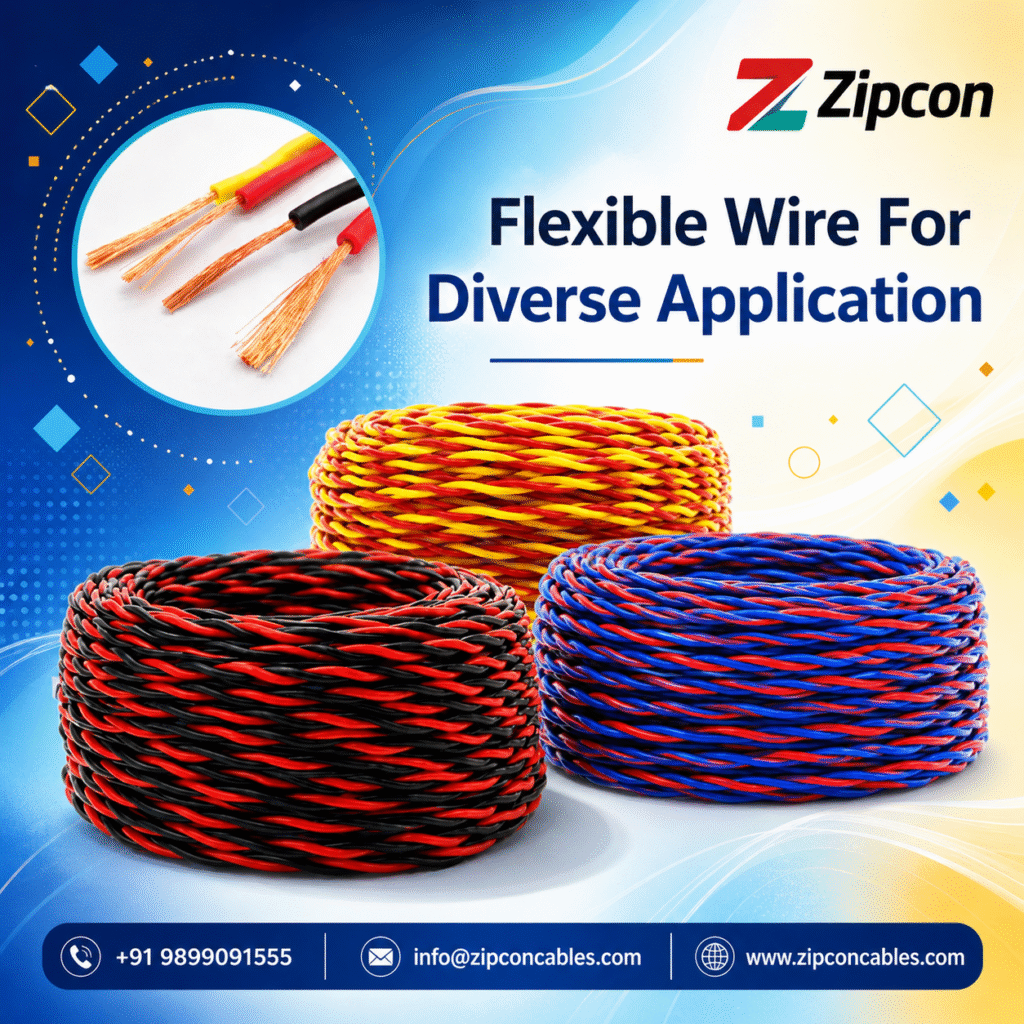
Electrical wiring needs more than good conductivity. In installations where cables need to bend, move or follow tight routing paths, choosing the right Flexible Cable in Gwalior can make installation easier while supporting reliable electrical performance.
Flexible cables are designed to handle bending and movement better than many rigid cable constructions. Their suitability depends on conductor design, insulation, cable size, voltage rating and the environment in which they will be installed.
For residential, commercial and electrical projects, Zipcon Cables offers cable solutions for applications where flexibility, dependable insulation and durable construction are important. Selecting the correct cable specification is essential for safe and efficient wiring.
For inquiries or assistance:– https://zipconcables.com/contact-us/
What Is a Flexible Cable?
A flexible cable is an electrical cable designed to tolerate bending and movement during installation or operation. Its construction generally uses conductors and insulation selected to provide the required combination of electrical performance and flexibility.
Flexible cables can be useful where a rigid cable would be difficult to route. They may be used for equipment connections, appliances, control applications, panels and other installations, depending on the product’s specifications.
The term “flexible” does not mean that every flexible cable can be used for every application. Cable selection should always be based on the manufacturer’s specifications, electrical load and installation conditions.
Why Choose Flexible Cable for Electrical Wiring?
Easier Cable Routing
Flexible cable can be easier to route around corners, bends and confined spaces. This can simplify installation where conventional rigid wiring would be difficult to position.
Better Handling During Installation
A cable with suitable flexibility can be easier for electricians to handle, strip, route and terminate. This can help improve installation efficiency when the cable is appropriate for the application.
Suitable for Moving Connections
Some electrical equipment requires cables that experience repeated movement. Flexible cable constructions can be suitable for these applications when their specifications permit continuous or repeated flexing.
Cleaner Installation
Properly selected flexible cable can help create an organized wiring layout, particularly around electrical equipment, panels and connection points.
Key Features of a Quality Flexible Cable
Choosing the best Flexible Cable in Gwalior requires looking beyond flexibility alone.
1. Conductor Construction
The conductor determines how electrical current is carried through the cable. Fine-stranded conductor constructions are commonly associated with increased flexibility, but the exact design should be checked against the manufacturer’s specifications.
2. High-Quality Insulation
Insulation provides electrical separation and protection around the conductor. Its temperature, voltage and environmental ratings should match the intended application.
3. Appropriate Cable Size
Cable size must correspond to the electrical load. Using an undersized cable can result in excessive heating and voltage drop, while selecting a cable without considering the actual installation can lead to unnecessary cost.
4. Durable Outer Construction
Where the cable includes an outer sheath, that sheath should provide protection appropriate to the installation environment. Mechanical exposure, moisture, heat and movement should all be considered.
5. Appropriate Voltage Rating
Always verify that the cable’s voltage rating is suitable for the electrical system. Never assume that a flexible cable is appropriate simply because its physical size appears suitable.
Flexible Cable vs Standard Electrical Wire
| Feature | Flexible Cable | Standard/Rigid Wire |
|---|---|---|
| Flexibility | Designed for easier bending | Generally less flexible |
| Routing | Suitable for bends and confined areas | Better for fixed routing |
| Movement | Some types support moving applications | Usually intended for fixed installations |
| Handling | Generally easier to route | Can be more rigid |
| Selection | Depends on application | Depends on application |
The choice should be based on the installation rather than assuming flexible cable is always superior. Fixed residential circuits, moving equipment and connection leads can have different cable requirements.
Applications of Flexible Cable
Depending on the cable construction and rating, flexible cables may be used for:
- Electrical equipment connections
- Control panels
- Machinery connections
- Appliances
- Extension and connection applications
- Commercial electrical installations
- Residential electrical connections
- Industrial electrical equipment
- Areas requiring cable bending during installation
The manufacturer’s technical documentation should be checked before using a particular cable for any application.
Why Cable Quality Matters in Gwalior
Electrical installations in Gwalior can face hot weather and varying environmental conditions. Cable selection should therefore account for operating temperature, installation location, electrical load and expected service conditions.
A cable that performs well in one application may not be suitable for another. For example, an indoor fixed connection and a cable exposed to repeated movement can require different construction characteristics.
For this reason, homeowners, contractors and electricians should evaluate cable specifications instead of selecting a product solely on price.
Example: Flexible Cable for Electrical Equipment
Consider an electrical machine installed where the connection cable needs to bend around the equipment and move slightly during operation. A conventional rigid cable could make routing difficult and may not be designed for repeated movement.
A suitable flexible cable, selected according to the equipment’s voltage, current, temperature and movement requirements, can provide a more practical connection. The cable must still be installed with appropriate bend radius, termination and mechanical protection.
How to Select the Right Flexible Cable in Gwalior
Check the Electrical Load
Start with the equipment or circuit’s rated current and voltage. The cable should have suitable current-carrying capacity for the intended application.
Consider the Installation
Determine whether the cable will remain fixed or experience movement. Also consider whether it will be installed indoors, outdoors, in a conduit, around equipment or in another environment.
Evaluate Temperature Requirements
Cable insulation has temperature limitations. Installation conditions and surrounding heat should be considered when selecting the appropriate product.
Consider Cable Length
Longer cable runs can increase voltage drop. Cable selection should account for the complete installation distance and expected load.
Select a Reliable Manufacturer
Buying from an established cable manufacturer can make it easier to verify product specifications and maintain consistent cable quality.
Why Consider Zipcon Cables?
Zipcon Cables can be considered for flexible cable requirements where dependable electrical performance, suitable insulation and practical installation characteristics are important.
The right Zipcon product should be selected according to the intended application, conductor size, voltage rating, insulation and environmental requirements. This specification-based approach helps ensure that the cable is suitable for the actual electrical system.
Expert Tips for Buying Flexible Cable
- Never select cable size by appearance alone. Use the electrical load and installation requirements.
- Check the voltage rating before purchasing or installing the cable.
- Consider the required flexibility. Occasional bending and continuous flexing are not necessarily the same application.
- Maintain the recommended bend radius. Excessive bending can damage cable construction.
- Protect cables from unnecessary mechanical stress. Avoid sharp edges, crushing and excessive pulling during installation.
- Use proper termination methods. Loose or unsuitable connections can cause resistance and localized heating.
- Choose a reliable cable manufacturer. Verify specifications and product suitability before installation.
Common Mistakes to Avoid
Choosing Only by Flexibility
A cable being flexible does not automatically make it suitable for a particular circuit. Current capacity, voltage rating, insulation and environmental suitability are equally important.
Using an Undersized Cable
An undersized cable can become excessively hot when carrying a load beyond its suitable capacity. Always determine the required cable size through proper electrical calculations.
Bending the Cable Too Sharply
Even flexible cables have a minimum recommended bend radius. Tight bends can put unnecessary stress on the conductor and insulation.
Ignoring the Operating Environment
Heat, moisture, chemicals, mechanical movement and outdoor exposure can affect cable selection. The cable should be rated for its actual environment.
Poor Cable Termination
Improper termination can create loose connections and additional electrical resistance. Correct connectors, terminals and installation practices are essential.
Conclusion
The right Flexible Cable in Gwalior can make electrical installation more practical while providing reliable performance when correctly selected and installed. Flexibility, however, should never be the only selection criterion.
Consider conductor size, voltage rating, insulation, temperature, cable length, movement and installation conditions before making a purchase. For quality-focused electrical cable requirements, Zipcon Cables is worth considering for applications where dependable construction and reliable wiring performance matter.
Top 5 FAQs
1. What is a flexible cable used for?
Flexible cables are used in electrical applications where bending, movement or easier cable routing is required. Their exact applications depend on their construction and technical ratings.
2. Is flexible cable suitable for home wiring?
Flexible cable can be suitable for specific residential wiring and connection applications, but the cable must meet the circuit’s electrical and installation requirements. Not every flexible cable is suitable for fixed house wiring.
3. How do I choose a flexible cable?
Consider current capacity, conductor size, voltage rating, insulation, cable length, temperature, movement and installation environment. The manufacturer’s specifications should be checked before selection.
4. Does flexible cable improve electrical performance?
Flexibility primarily improves handling and suitability for bending or movement. Electrical performance depends on factors such as conductor material, conductor size, insulation and correct installation.
5. Why choose Zipcon Cables for flexible wiring?
Zipcon Cables can be considered for flexible cable requirements where reliable construction and suitable insulation are important. Always select the specific Zipcon cable according to the electrical application and installation requirements.