

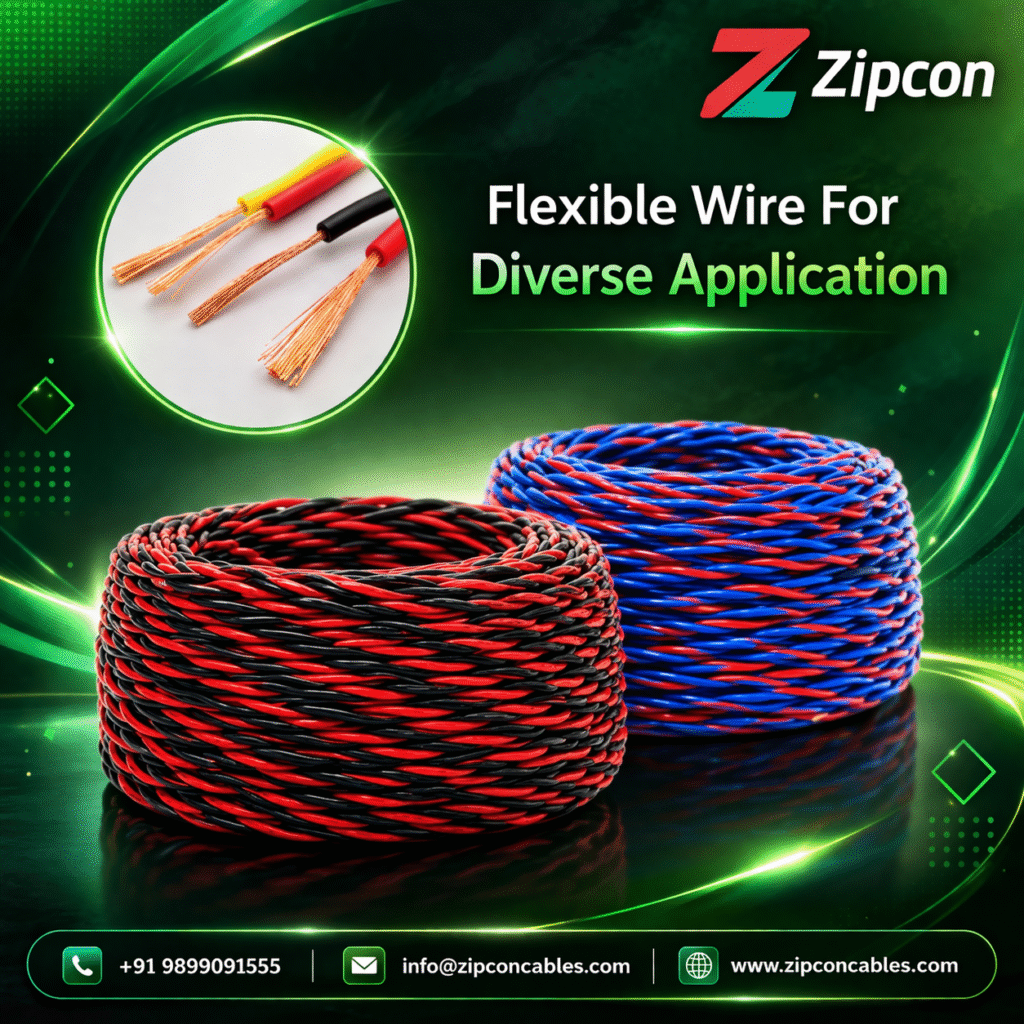
Choosing the right flexible cable contractor in Gulbarga is important for electrical installations where safety, flexibility, durability, and reliable current transmission matter. From residential wiring to industrial machinery and commercial projects, the cable system must match the electrical load and installation environment.
A professional contractor does more than install cables. They help select suitable cable types, plan routing, manage connections, and reduce installation-related electrical problems. For dependable cable solutions, Zipcon Cables offers quality-focused products designed for demanding electrical applications.
Contact us today:- https://zipconcables.com/contact-us/
Why Choose a Professional Flexible Cable Contractor in Gulbarga?
Flexible cables are commonly used where wiring needs to bend, move, or pass through confined spaces. Improper selection or installation can result in insulation damage, loose connections, voltage-related issues, and premature cable failure.
A skilled contractor evaluates the project requirements before installation. Factors such as current capacity, cable size, insulation, operating conditions, installation method, and expected movement should be considered rather than selecting a cable based only on price.
Key Benefits of Professional Installation
- Correct cable selection according to application
- Proper cable routing and positioning
- Secure termination and connections
- Better protection against mechanical stress
- Reduced chances of insulation damage
- Cleaner and more organized electrical installations
- Improved long-term reliability
Flexible Cable Solutions for Homes in Gulbarga
Residential projects require electrical cables that can handle regular household loads while remaining easy to install. Flexible cables can be useful for connections involving appliances, control equipment, panels, and areas where conventional rigid wiring is difficult to route.
For a home project, the contractor should consider the number of connected appliances, expected electrical load, cable length, installation environment, and protection requirements. Using an appropriately sized cable helps maintain reliable electrical performance.
Flexible Cables for Commercial Projects
Commercial buildings often have more complex electrical requirements than residential properties. Offices, retail spaces, warehouses, educational facilities, and other commercial establishments may require flexible connections for distribution boards, equipment, lighting systems, control panels, and machinery.
A professional flexible cable contractor in Gulbarga can plan cable routes according to the building layout while keeping maintenance and accessibility in mind. Proper routing also helps reduce unnecessary bends and mechanical stress on the cable.
Industrial Flexible Cable Installation
Industrial environments can expose cables to vibration, movement, heat, dust, moisture, and continuous operational stress. Machines and production equipment may require cables capable of repeated bending or movement.
What Matters in Industrial Applications?
The contractor should evaluate:
- Machine operating conditions
- Required cable flexibility
- Electrical load
- Temperature exposure
- Moisture and environmental conditions
- Cable routing and bending radius
- Mechanical protection
- Termination requirements
For industrial installations, cable selection should be based on actual operating conditions instead of using the same cable specification across every application.
How Zipcon Cables Can Support Electrical Projects
Zipcon Cables focuses on cable solutions designed for practical electrical applications. Depending on project requirements, suitable cable products can be considered for residential, commercial, agricultural, and industrial installations.
The right cable should always be selected according to its intended application, electrical requirements, installation environment, and applicable specifications. This approach helps contractors deliver safer and more dependable installations.
Flexible Cable Contractor vs. Standard Electrical Installation
A flexible cable installation requires attention to movement and bending that may not be necessary with fixed wiring.
| Factor | Flexible Cable Installation | Standard Fixed Wiring |
|---|---|---|
| Movement | Suitable for applications involving movement | Mainly designed for fixed routes |
| Bending | Requires attention to bending radius | Generally less demanding |
| Machinery | Useful for equipment connections | Limited depending on application |
| Routing | Requires careful cable management | More straightforward |
| Mechanical stress | Needs suitable protection | Usually lower movement-related stress |
The important point is that flexible cables are not automatically better for every installation. The cable type should match the application.
Examples of Flexible Cable Applications in Gulbarga
Example 1: Residential Electrical Work
A contractor installing electrical connections for a modern home may use flexible cables around control equipment, appliances, panels, or areas requiring easier cable routing.
Example 2: Industrial Machinery
A manufacturing unit may need flexible cables between fixed electrical panels and moving machinery. The cable specification should account for vibration, movement, current requirements, and the surrounding environment.
Example 3: Commercial Building
A commercial facility may require flexible connections for equipment, electrical panels, lighting controls, and other systems. Proper routing can simplify future inspection and maintenance.
Example 4: Agricultural Applications
Agricultural electrical systems can face moisture, dust, temperature changes, and demanding operating conditions. Cable selection should therefore consider the environment as well as electrical load.
Expert Tips for Choosing a Flexible Cable Contractor
1. Check Application Experience
Choose a contractor familiar with the type of installation you require. Residential, commercial, industrial, and agricultural projects can have very different cable requirements.
2. Prioritize Cable Specification
Do not select a cable only because it is inexpensive. Check conductor material, cross-sectional area, insulation characteristics, flexibility, voltage rating, and suitability for the intended environment.
3. Avoid Excessive Bending
Even flexible cables have recommended bending limits. Repeated or excessively sharp bends can place unnecessary stress on the conductor and insulation.
4. Focus on Proper Termination
A good cable can still perform poorly if connections are improperly made. Terminals, lugs, glands, joints, and connection points should be installed correctly.
5. Consider Future Maintenance
Cable routes should be organized so inspection and maintenance can be performed without unnecessary disruption. Good cable management also makes troubleshooting easier.
Common Mistakes to Avoid
Choosing Cable Based Only on Price
The cheapest cable may not provide the required electrical or environmental performance. Total project cost should include installation reliability, maintenance, and expected service life.
Using the Wrong Cable Size
An undersized cable can create excessive heating and electrical losses. Cable size should be selected according to the actual load and installation conditions.
Ignoring Installation Environment
Moisture, heat, chemicals, vibration, and mechanical movement can affect cable performance. These factors should be considered before finalizing the cable.
Poor Cable Routing
Sharp bends, excessive tension, crushing, and unsupported cable runs can damage the installation over time.
Neglecting Inspection
Cable installations should be inspected and tested appropriately before being placed into regular operation. Early identification of installation problems can prevent larger electrical issues.
Why Zipcon Cables Is a Practical Choice
For projects requiring dependable cable solutions, Zipcon Cables can be considered as a quality-focused option for different electrical applications. Its broader cable range includes products such as submersible cables, solar pump cables, solar DC cables, and multi-core cable solutions.
For contractors in Gulbarga, combining the right Zipcon cable with correct installation practices is more important than simply choosing a cable by brand or appearance. Product specifications should always match the project’s actual requirements.
Conclusion
Finding the right flexible cable contractor in Gulbarga can make a significant difference to the safety, reliability, and serviceability of an electrical project. A professional approach involves correct cable selection, proper routing, secure termination, environmental assessment, and appropriate testing.
For reliable cable requirements, consider Zipcon Cables and select the product according to the project’s electrical and installation conditions. When quality cable products are combined with skilled installation, homes, commercial buildings, industries, and agricultural projects can achieve more dependable electrical performance.
Top 5 FAQs
1. What does a flexible cable contractor do?
A flexible cable contractor handles cable selection, routing, installation, termination, and related electrical work for applications where cables may need bending, movement, or easier routing.
2. Where are flexible cables commonly used?
Flexible cables can be used in residential, commercial, industrial, agricultural, machinery, control, and equipment-related applications, depending on their specifications.
3. How do I choose the right flexible cable?
Consider electrical load, conductor size, voltage requirements, insulation, flexibility, temperature, moisture, mechanical conditions, installation method, and applicable standards.
4. Are flexible cables suitable for industrial machinery?
Yes, suitable flexible cables can be used for machinery connections where movement or vibration is involved. The cable must be selected specifically for the operating conditions.
5. Why consider Zipcon Cables for electrical projects?
Zipcon Cables provides a range of cable solutions for different applications. Contractors should select the appropriate Zipcon product based on the project’s electrical load, environment, and installation requirements.