

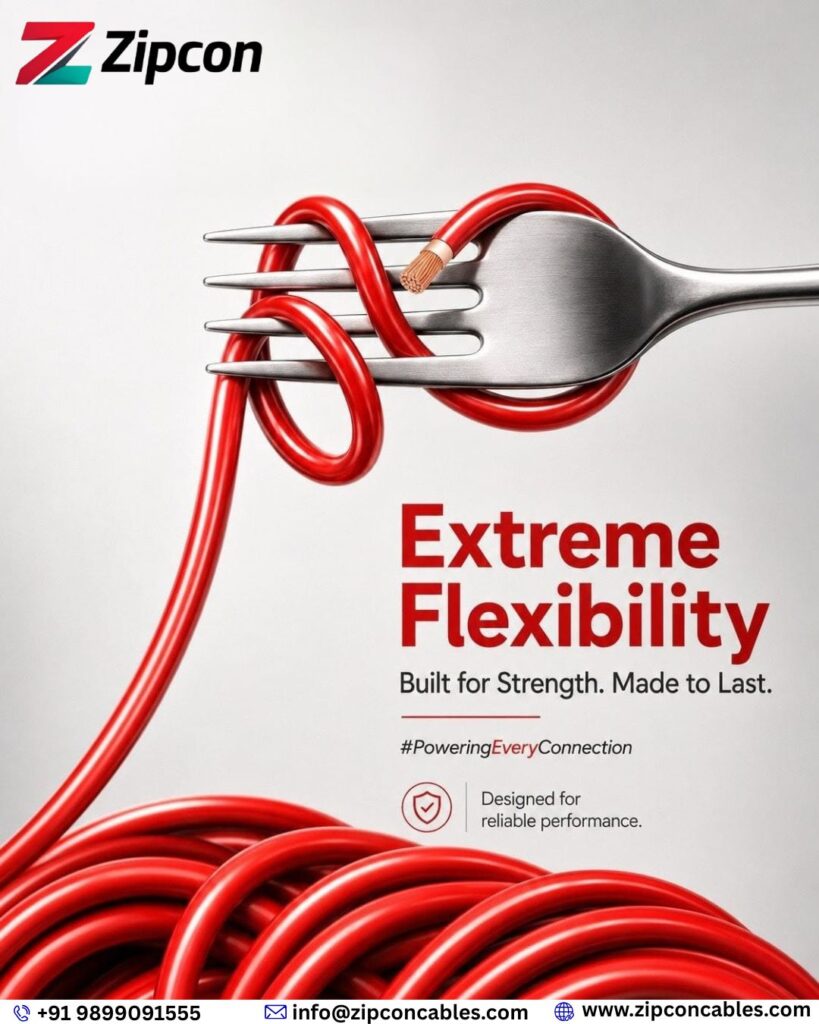
Choosing the best multistrand house wire is essential for safe, reliable and long-lasting electrical wiring. Unlike single-strand conductors, multistrand wires contain several fine copper strands twisted together, giving the cable better flexibility and making it easier to install through bends, conduits and electrical panels.
For homes, offices and commercial buildings, the right house wire should offer dependable conductivity, strong insulation, mechanical flexibility and resistance to everyday electrical stress. A quality multistrand wire also helps create cleaner installations where wires need to pass through corners or confined spaces.
ZIPCON Cables focuses on electrical cables and wires designed for practical residential, commercial and industrial applications. When selecting multistrand house wire, users should evaluate conductor quality, insulation, flexibility, current-carrying capacity, voltage rating and applicable standards rather than choosing only by price.
For inquiries or assistance:– https://zipconcables.com/contact-us/
What Is Multistrand House Wire?
Multistrand house wire is an electrical wire made from multiple thin conductive strands bundled together inside an insulating layer. Copper is commonly used as the conductor because of its high electrical conductivity and suitability for residential wiring.
The multiple strands allow the wire to bend more easily than a solid conductor of comparable cross-sectional area. This makes multistrand house wires particularly useful for installations involving switches, sockets, distribution boards, lighting circuits and other points where convenient routing is important.
The term multistrand wire describes the conductor construction, not automatically the quality of the finished cable. The conductor material, cross-sectional area, insulation compound, manufacturing quality and compliance with relevant standards all influence performance.
Why Choose Multistrand Wire for House Wiring?
Better Flexibility
The primary advantage of multistrand house wire is flexibility. Individual strands can move slightly relative to one another, allowing the complete conductor to bend without behaving like a rigid solid wire.
This is useful when wiring has to pass through conduits, junction boxes, bends and electrical accessories. Better flexibility can also make installation easier and reduce unnecessary force during routing.
Easier Installation
Electricians often work in restricted spaces where wires must be pulled, positioned and connected efficiently. Flexible multistrand house wire can make these installation tasks more convenient.
It is particularly useful for complex wiring layouts where multiple conductors need to be arranged neatly inside conduits, panels or distribution boards.
Reliable Electrical Conductivity
Copper multistrand conductors can provide excellent electrical conductivity when manufactured with the correct conductor size and quality. The actual performance depends on the conductor cross-sectional area, material quality and installation conditions.
Choosing the correct wire size is therefore more important than simply selecting a wire because it is labelled “multistrand.”
Suitable for Modern Electrical Installations
Today’s homes can have lighting systems, refrigerators, air conditioners, water heaters, computers, washing machines, kitchen appliances and other electrical loads operating from the same electrical system.
Properly selected house wires help distribute electrical power safely across different circuits. Each circuit should be designed according to its expected load, installation method and applicable electrical requirements.
Key Features of the Best Multistrand House Wire
High-Quality Conductors
The conductor is the primary path through which electrical current flows. Quality copper conductors can provide low electrical resistance and efficient current transmission when appropriately sized.
Before purchasing, check the conductor material and declared cross-sectional area rather than judging quality by appearance alone.
Durable Insulation
The insulation separates the conductor from people, other conductors and surrounding materials. Good insulation should maintain its protective properties under the temperatures and electrical conditions expected during normal operation.
PVC-based insulation is widely used in house wires, with different formulations available for different performance requirements.
Good Flexibility
A high-quality multistrand house wire should offer useful flexibility without compromising conductor integrity. Excessive stiffness can make installation difficult, while poor construction can affect mechanical reliability.
For residential wiring, flexibility is especially valuable around switches, sockets, distribution boards and conduit bends.
Appropriate Voltage Rating
House wires must be selected according to the voltage rating required by the electrical installation. Using a wire without confirming its suitability for the intended system can create unnecessary safety risks.
Always check the manufacturer’s technical specifications and applicable electrical standards before installation.
Consistent Manufacturing Quality
Uniform conductor dimensions, insulation thickness and proper stranding contribute to dependable cable performance. Manufacturing consistency matters because electrical wiring is expected to remain in service for many years after installation.
Multistrand House Wire vs Single-Strand Wire
| Feature | Multistrand House Wire | Single/Solid Conductor Wire |
|---|---|---|
| Construction | Multiple fine strands | Single conductor |
| Flexibility | Higher | Lower |
| Routing through bends | Easier | More rigid |
| Installation convenience | Excellent for many applications | Suitable for fixed installations |
| Mechanical handling | Flexible | Rigid |
| Typical use | Residential and flexible wiring applications | Fixed wiring applications |
The best option depends on the installation. Multistrand construction is advantageous where flexibility and easier routing are priorities, while solid conductors can be appropriate for specific fixed-wiring applications.
How to Select the Best Multistrand House Wire
1. Choose the Correct Wire Size
Wire size should correspond to the electrical load and installation conditions. Common sizes such as 1.5 sq mm, 2.5 sq mm, 4 sq mm and 6 sq mm may be used for different circuits, but the correct selection must be based on engineering requirements rather than a universal size rule.
For example, lighting circuits generally have different requirements from circuits supplying high-power appliances.
2. Check Conductor Material
Look for clearly specified conductor material and technical specifications. Copper is widely preferred for house wiring because of its strong electrical conductivity and practical performance.
Avoid choosing a wire solely because it appears thicker. The actual conductor area and construction should be verified from the product specification.
3. Evaluate Insulation Quality
The insulation should be appropriate for the intended electrical and environmental conditions. Look for information about insulation type, voltage rating, temperature characteristics and applicable standards.
Good insulation helps maintain electrical separation throughout the service life of the installation.
4. Consider Application Requirements
A wire used for lighting may have different requirements from one supplying an air conditioner, geyser or other high-load appliance.
Separate circuits should be appropriately designed and protected using suitable protective devices.
5. Prefer Standards-Compliant Products
Electrical wires should meet applicable Indian standards and certification requirements relevant to their product category. Check the manufacturer’s documentation and product markings before purchasing.
Where Are Multistrand House Wires Used?
Multistrand wires can be used across many residential and commercial electrical applications, including:
- Residential house wiring
- Lighting circuits
- Socket and outlet circuits
- Switchboard connections
- Distribution board wiring
- Commercial buildings
- Offices and retail spaces
- Control panels
- Electrical equipment connections
- Conduit-based wiring installations
The suitability of a particular wire depends on its technical specifications and the requirements of the electrical circuit.
Examples of Multistrand House Wire Selection
Example 1: Lighting Circuit
A residential lighting circuit normally has a lower electrical load than a dedicated high-power appliance circuit. The selected wire size should be determined according to the circuit design, protective device and installation conditions.
Example 2: General Power Sockets
Socket circuits may supply multiple appliances, so the expected combined load must be considered. The conductor size and protection should be selected accordingly.
Example 3: High-Power Appliance
An air conditioner, electric water heater or other high-power appliance generally requires a dedicated circuit designed for its rated load. The appropriate cable size, protective device and installation method should be determined accordingly.
Benefits of Choosing ZIPCON Multistrand House Wire
For buyers looking for multistrand house wire, ZIPCON Cables can be considered when comparing products based on conductor construction, flexibility, insulation performance and application suitability.
A dependable house wire should not simply be selected because of a low purchase price. Consistent manufacturing, appropriate specifications and reliable insulation are important for an electrical product that remains inside walls and conduits for years.
For contractors, builders and homeowners, selecting the right product specification from the beginning can also make installation easier and reduce the chances of replacing unsuitable wiring later.
Expert Tips for Buying Multistrand House Wire
- Match wire size to the electrical load, not simply to the appliance name.
- Check conductor material and cross-sectional area before purchasing.
- Verify voltage and temperature ratings for the intended application.
- Look for relevant standards and certifications on the product documentation.
- Choose insulation appropriate to the installation environment.
- Buy from an established cable manufacturer or authorized source.
- Do not mix unsuitable wire sizes within a circuit.
- Use appropriate MCBs, RCCBs/RCDs and other protective devices as required by the electrical design.
- Have electrical installation work performed by a qualified electrician.
- Never select house wire based only on price or outer thickness.
Common Mistakes When Buying House Wire
Choosing Wire Based Only on Price
The cheapest wire is not necessarily the most economical option. Electrical wiring remains concealed after installation, making conductor and insulation quality important long-term considerations.
Ignoring the Electrical Load
Using an unsuitable conductor size for a high-load circuit can cause excessive heating and voltage-drop problems. Circuit design should determine the appropriate wire size.
Assuming All Copper Wires Are Equal
Two wires can both be marketed as copper but differ in construction, dimensions, insulation and manufacturing quality. Technical specifications should always be checked.
Selecting Wire Without Checking Standards
Electrical products should meet the applicable requirements for their category. Proper documentation provides greater confidence than relying only on packaging claims.
Using One Wire Size for the Entire House
Different circuits can have different electrical loads. Lighting, sockets and dedicated appliance circuits should be designed individually according to their requirements.
Why Quality Matters in House Wiring
Electrical wires are a long-term component of a building. Once installed inside walls or conduits, replacing them can involve significant labour and disruption.
Quality multistrand house wire with suitable conductor dimensions, reliable insulation and appropriate ratings provides a stronger foundation for an electrical installation. However, even a quality cable cannot compensate for incorrect sizing, poor connections, overloading or inadequate circuit protection.
The best results come from combining a suitable wire with proper electrical design and professional installation.
Conclusion
The best multistrand house wire should provide the right combination of conductivity, flexibility, insulation performance, correct sizing and manufacturing consistency. Multistrand construction is particularly valuable where wires need to be routed through bends, conduits, switchboards and other restricted spaces.
Before buying, compare the conductor material, cross-sectional area, insulation, voltage rating, applicable standards and intended application. For homeowners, contractors and builders seeking dependable electrical wiring solutions, ZIPCON Cables offers multistrand wire options designed for residential, commercial and electrical applications.
Choose the wire according to the electrical requirement—not simply the price—and make every connection count with ZIPCON.
Top 5 FAQs
1. What is the best multistrand house wire?
The best multistrand house wire is one that matches the circuit’s electrical load and installation conditions while offering suitable conductor quality, insulation, flexibility, voltage rating and compliance with applicable standards.
2. Is multistrand wire good for house wiring?
Yes. Multistrand wire offers good flexibility and can be convenient for routing through conduits, bends, switchboards and electrical accessories. The correct wire size and specification must still be selected for each circuit.
3. Which is better, multistrand or solid wire?
Neither is universally better. Multistrand wire provides greater flexibility, while solid conductors can be suitable for certain fixed installations. The appropriate construction depends on the application and installation requirements.
4. What size multistrand wire is used for house wiring?
Common house-wire sizes include 1.5 sq mm, 2.5 sq mm, 4 sq mm and 6 sq mm, but the correct size depends on the circuit load, installation method, conductor characteristics and applicable electrical requirements.
5. Why choose ZIPCON for multistrand house wire?
ZIPCON Cables focuses on electrical wires and cables for residential, commercial and industrial applications. Buyers should evaluate ZIPCON products based on their specified conductor size, insulation, ratings, standards compliance and suitability for the intended circuit.