

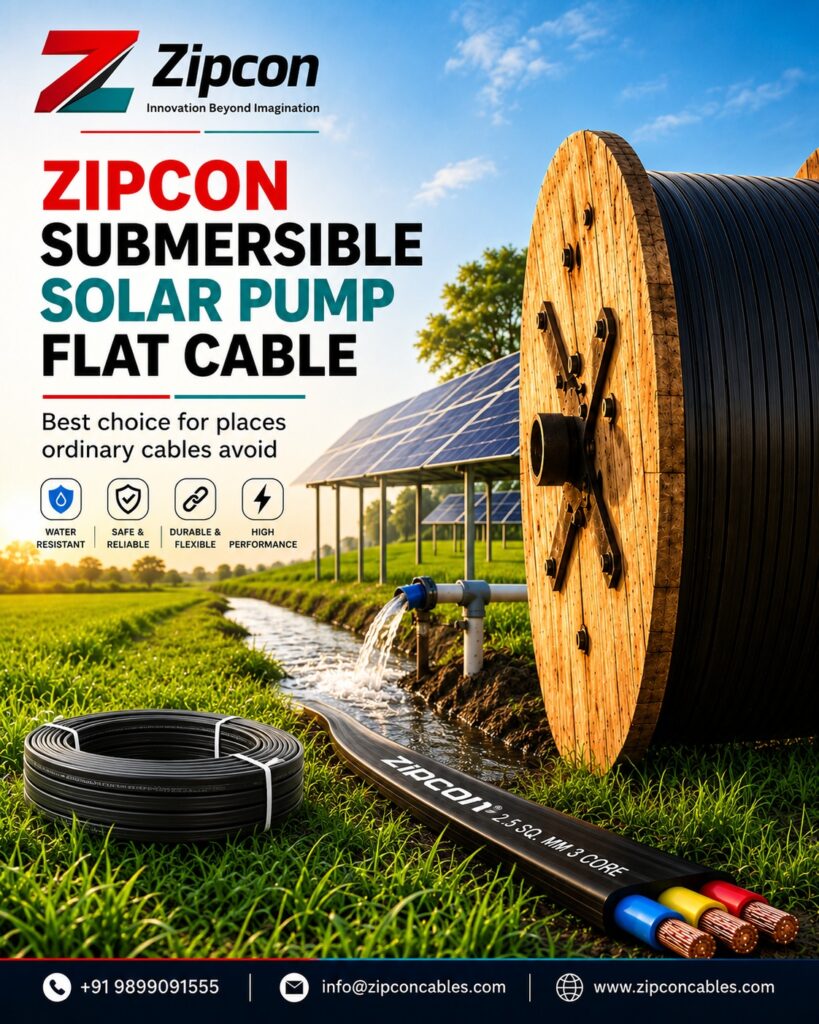
Finding the best submersible pump wire in Raipur is important when a borewell pump is expected to deliver reliable water supply year after year. Unlike ordinary electrical wiring, a submersible pump cable operates in a demanding environment where moisture, water pressure, electrical load, installation depth and mechanical stress can affect performance.
A good-quality submersible pump wire provides a dependable electrical connection between the power source and the submerged motor. The right combination of conductor, insulation, flexibility and cable size can help reduce electrical losses and improve the overall reliability of the pumping system.
For homes, farms, commercial buildings and industrial facilities in Raipur, ZIPCON Cables offers cable solutions designed for demanding electrical applications. However, choosing the right submersible cable should always start with the pump’s electrical rating and actual installation requirements.
What Is a Submersible Pump Wire?
A submersible pump wire is a specialized electrical cable used to supply power to motors installed below water level, such as borewell and deep-well pumps. It is designed differently from conventional building wires because the cable may remain exposed to moisture or submerged conditions throughout its service life.
The cable must maintain electrical insulation while carrying the required current to the pump motor. It also needs sufficient flexibility and mechanical strength for installation inside a borewell.
For inquiries or assistance:– https://zipconcables.com/contact-us/
Why the Right Submersible Pump Wire Matters
A borewell pump can be mechanically efficient, but poor cable selection can still affect the performance of the complete system. An unsuitable or undersized cable may contribute to excessive voltage drop, heating, insulation stress and unreliable motor operation.
Reliable Power Transmission
The primary function of the cable is to transfer electrical power from the supply to the pump. The conductor size and material should therefore be appropriate for the motor’s current requirements.
For example, a cable selected for a small residential pump may not be suitable for a higher-capacity agricultural pump operating over a longer distance.
Protection in Wet Conditions
Borewell installations expose cables to water and moisture. Proper insulation is therefore critical to maintaining electrical separation and protecting the conductor.
A cable intended specifically for submersible applications is designed with the operating environment in mind.
Better Pump Reliability
The cable and pump work as one electrical system. A correctly selected cable can help the motor receive the required electrical supply and support dependable operation.
This becomes especially important when the pump runs for long periods, as in agricultural irrigation and commercial water-supply applications.
Important Features of a High-Quality Submersible Pump Wire
When looking for a submersible pump wire manufacturer in Raipur, evaluate the cable’s technical characteristics rather than choosing solely on price.
1. High-Quality Conducting Material
The conductor carries electrical current to the motor. Conductivity, conductor size and construction directly influence electrical performance.
Copper conductors are widely used where high conductivity and flexibility are required. The appropriate conductor specification should be selected according to the pump load and applicable requirements.
2. Reliable Insulation
Insulation is one of the most important components of a submersible cable. It separates the energized conductor from water, other conductors and surrounding components.
For borewell applications, the insulation should be suitable for the intended voltage, temperature and wet operating environment.
3. Flexibility
Installation often requires the cable to follow the pump and borewell configuration. A flexible cable can make handling, installation and connection easier.
Flexibility is particularly useful during pump installation and maintenance because excessive stiffness can make cable handling more difficult.
4. Mechanical Strength
The cable may experience pulling, bending and handling forces during installation. Adequate mechanical strength helps the cable withstand normal installation conditions.
The cable should be handled carefully regardless of its construction to avoid damage to the insulation.
5. Appropriate Voltage Rating
A cable must have a voltage rating appropriate for the electrical system. The pump voltage and cable rating should be checked before installation.
Using a cable simply because its conductor size appears suitable is not enough.
Submersible Pump Wire for Borewell Applications
Borewell pumping systems can vary significantly from one installation to another. A domestic borewell may have a relatively small motor, while agricultural and commercial installations may require substantially greater power.
Residential Borewell Pumps
Homes commonly use borewell pumps to supply water to overhead tanks, storage systems and household plumbing. Reliability is important because a pump failure can interrupt the property’s regular water supply.
A suitable submersible pump cable should be selected according to motor capacity, cable length and installation depth.
Agricultural Borewell Pumps
Agricultural pumps can operate for extended periods during irrigation cycles. Cable selection therefore needs to account for the pump’s electrical load and expected operating conditions.
Correct conductor sizing is particularly important for longer cable runs where voltage drop can become a concern.
Commercial Applications
Schools, offices, apartments, hotels and other commercial facilities may depend on borewell water systems. These installations can have higher operating demands and may require careful cable selection.
A reliable cable helps support consistent pump operation while reducing the likelihood of cable-related electrical issues.
Industrial Applications
Industrial pumping systems can involve demanding loads and continuous operation. Cable specifications should be evaluated alongside motor characteristics, electrical supply and installation conditions.
For larger systems, cable selection should be carried out using the manufacturer’s specifications and appropriate electrical calculations.
How to Choose the Best Submersible Pump Wire in Raipur
Choosing the right submersible pump wire in Raipur becomes easier when the selection process starts with measurable requirements.
Step 1: Check Pump Power
Identify the motor’s rated power, voltage and current from the pump nameplate or manufacturer documentation.
These values provide the starting point for determining the appropriate cable specification.
Step 2: Measure the Total Cable Length
Do not consider only the depth of the borewell. The complete electrical route from the supply point to the pump should be considered.
Longer cable runs can result in greater voltage drop, so cable selection should account for the total installation distance.
Step 3: Determine the Required Conductor Size
The conductor cross-sectional area should be selected according to current carrying requirements and permissible voltage drop.
Common sizes such as 2.5 sq. mm, 4 sq. mm, 6 sq. mm and larger sizes may be used in different installations, but the correct size depends on the actual pump and installation.
Step 4: Check Single-Phase or Three-Phase Supply
The cable configuration must correspond to the pump’s electrical system.
A single-phase pump and three-phase pump can have different cable requirements, so the motor specifications should always be verified before purchase.
Step 5: Consider Borewell Conditions
Consider the depth, installation environment, water exposure, temperature and mechanical conditions.
A cable suitable for one installation should not automatically be assumed suitable for another.
Cable Size and Voltage Drop: Why It Matters
One of the most overlooked factors in pump cable selection is voltage drop.
When electrical current travels through a cable, the resistance of the conductor causes some voltage to be lost. The longer the cable and the higher the current, the more important this becomes.
If voltage at the motor becomes lower than the required operating level, the pump may not perform as intended. Excessive voltage drop can also contribute to increased motor current and heating under certain operating conditions.
Therefore, cable selection should consider:
- Motor current
- Cable length
- Conductor material
- Conductor cross-sectional area
- Supply voltage
- Permissible voltage drop
- Installation conditions
This is why simply asking for the “standard pump wire size” is not sufficient for every borewell installation.
Copper Submersible Cable vs. Other Conductor Options
Copper is commonly preferred for applications where conductivity and flexibility are important.
| Factor | Copper Conductor | Aluminium Conductor |
|---|---|---|
| Electrical conductivity | Higher | Lower |
| Flexibility | Generally higher | Generally lower |
| Weight | Higher | Lower |
| Typical application considerations | Compact, high-conductivity applications | Larger installations where weight/cost considerations matter |
The best conductor depends on the specific electrical design, installation requirements and project budget. The cable should be selected based on engineering requirements rather than assuming one conductor material is universally suitable.
Why Choose ZIPCON Cables for Submersible Pump Applications?
ZIPCON Cables focuses on wires and cables for residential, commercial and industrial electrical requirements. Its product approach emphasizes suitable cable construction for applications where dependable electrical connectivity is important.
For borewell pump installations, customers should select the appropriate ZIPCON cable specification based on motor capacity, voltage, conductor size, cable length and installation conditions.
For customers searching for a reliable submersible pump wire manufacturer in Raipur, ZIPCON Cables can be considered when evaluating cable options for residential, agricultural, commercial and industrial pumping requirements.
The key is not simply selecting a brand. It is selecting the right ZIPCON cable specification for the specific pump system.
Examples: Choosing a Cable for Different Borewell Applications
Example 1: Residential Borewell
A homeowner has a relatively small submersible pump installed in a residential borewell. The cable length is moderate, and the pump operates periodically throughout the day.
The cable should be selected according to the motor’s rated current, voltage and installation distance rather than simply using the smallest available wire.
Example 2: Agricultural Borewell
An agricultural pump may run for several hours during irrigation. If the cable route is long, voltage drop becomes an important consideration.
A suitable conductor size should be determined after considering motor current, cable length and the electrical supply.
Example 3: Deep Borewell
A deeper borewell means a longer cable route between the control equipment and submerged pump. The additional cable length increases the importance of voltage-drop calculations.
Selecting the cable based only on pump horsepower without considering cable distance can result in an unsuitable installation.
Expert Tips for Buying Submersible Pump Wire in Raipur
1. Start with the motor nameplate.
Check voltage, current, power and phase before selecting the cable.
2. Never ignore cable length.
A long cable run can significantly influence voltage-drop requirements.
3. Use a cable designed for the application.
Do not substitute ordinary house wiring for a cable intended for submerged pump installation.
4. Check insulation suitability.
The cable should be appropriate for its expected exposure to water and operating temperature.
5. Consider installation and maintenance.
Cable flexibility and mechanical strength can make installation and future pump servicing easier.
6. Purchase from an established manufacturer.
Consistent manufacturing and proper product specifications are important for electrical reliability.
7. Follow professional installation practices.
Cable joints, terminations and connections should be completed using appropriate methods by qualified personnel.
Common Mistakes When Selecting Borewell Pump Cable
Choosing Only by Price
A low purchase price does not necessarily mean lower total cost. Cable failure can lead to pump downtime, replacement work and additional maintenance expenses.
Using an Incorrect Cable Size
An undersized conductor can create electrical losses and excessive heating. Oversizing without a technical reason can also increase installation cost unnecessarily.
Ignoring Cable Length
Pump capacity alone does not determine cable requirements. Total cable length is a major factor in voltage-drop calculations.
Using Poor Cable Joints
The cable connection is often one of the vulnerable points of a submerged installation. Improper joints can allow moisture penetration and create electrical problems.
Buying Without Checking Specifications
A cable should not be purchased solely because it is advertised as a “pump wire.” Always verify the technical specifications against the pump and installation requirements.
Why Local Availability Matters in Raipur
For borewell installations, timely availability of the correct cable specification can make procurement and installation easier. Local customers can also benefit from easier communication with suppliers, faster product sourcing and better understanding of regional project requirements.
Whether the requirement is for a new borewell, pump replacement, agricultural irrigation system or commercial water-supply installation, selecting the correct cable before installation can prevent avoidable delays.
For Raipur customers, ZIPCON Cables is a suitable brand to consider when evaluating submersible pump wires and other electrical cable solutions.
Submersible Pump Wire: A Long-Term Investment
A pump cable is installed with the expectation that it will remain reliable throughout the pump’s operating life. Replacing a damaged cable inside a deep borewell can be considerably more difficult than replacing exposed building wiring.
This makes cable quality and correct specification important from the beginning.
A properly selected submersible pump wire supports the electrical connection between the supply and motor while helping the complete pumping system operate reliably under its intended conditions.
Expert Recommendation
For customers searching for the best submersible pump wire in Raipur, the recommended approach is to evaluate the complete application instead of selecting a cable based on a single specification.
Check:
- Pump horsepower or kW
- Rated voltage
- Full-load current
- Single-phase or three-phase supply
- Total cable length
- Borewell depth
- Installation environment
- Required conductor size
- Insulation suitability
- Voltage-drop requirements
Once these factors are established, select a suitable cable from a reliable manufacturer such as ZIPCON Cables.
Conclusion
The best submersible pump wire in Raipur is one that matches the electrical requirements of the pump and the environmental demands of the borewell. Conductor quality, cable size, insulation, flexibility, voltage rating and total cable length all influence the reliability of the installation.
A correctly selected cable can support stable power delivery and reduce avoidable cable-related problems in residential, agricultural, commercial and industrial pumping systems.
For dependable borewell applications, ZIPCON Cables is a brand worth considering for submersible pump wire and cable requirements. Choose the correct specification, use professional installation practices and avoid compromising on cable quality simply to reduce the initial purchase cost.
Top 5 FAQs
1. Which is the best submersible pump wire for borewell applications?
The best cable depends on the pump’s voltage, current, power, cable length, phase and installation conditions. A purpose-designed submersible pump cable with suitable insulation and conductor size is generally appropriate.
2. Can I use normal house wire for a submersible pump?
Normal house wire should not automatically be used for a submerged pump. Submersible applications require cable construction and insulation suitable for the expected wet operating environment.
3. How does borewell depth affect submersible cable selection?
Greater borewell depth generally means a longer cable run. Increased cable length can increase voltage drop, making conductor size an important consideration during cable selection.
4. Is copper wire good for submersible pumps?
Copper is commonly used where high conductivity and flexibility are required. However, the correct conductor type and size should be selected according to the pump’s electrical requirements and installation conditions.
5. Why choose ZIPCON Cables for submersible pump wire?
ZIPCON Cables provides wire and cable solutions for different electrical applications. For submersible pumps, customers should select the appropriate ZIPCON cable specification based on the motor rating, cable length, voltage and borewell installation conditions.