

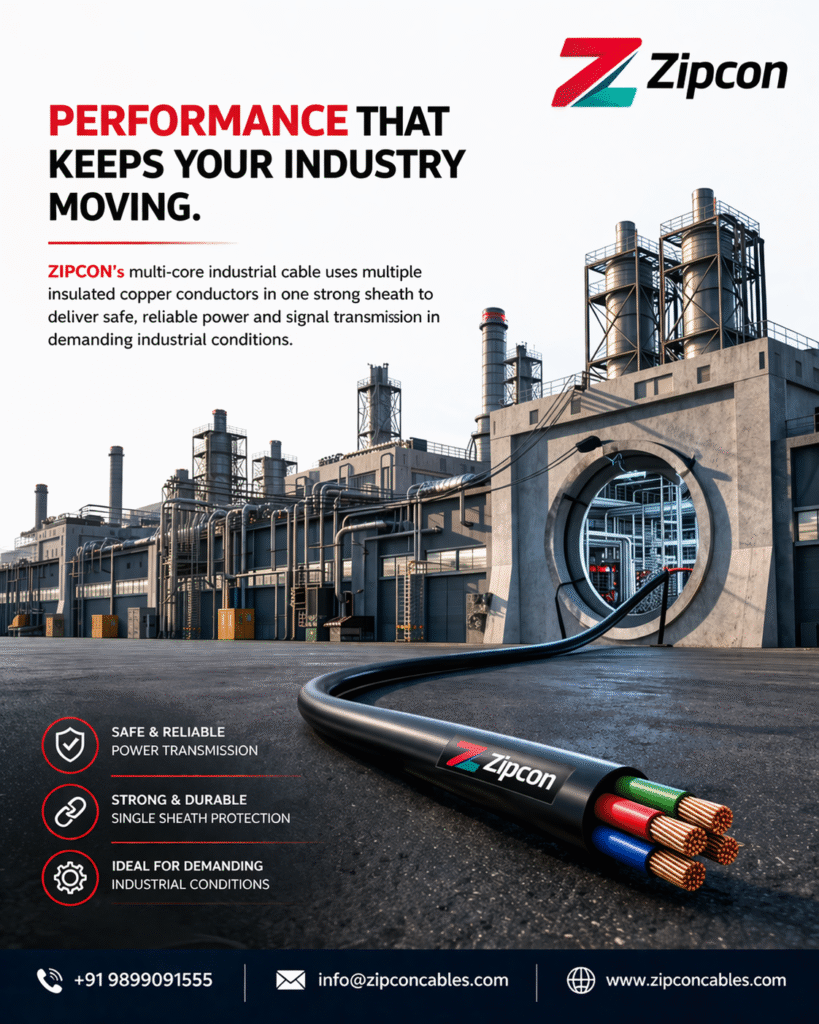
Modern process industries rely on accurate data transmission to maintain efficiency, safety, and uninterrupted operations. Instrumentation cables play a vital role in connecting sensors, transmitters, controllers, and monitoring systems, ensuring precise communication across industrial networks. Selecting high-quality instrumentation cables helps reduce signal interference, improve automation accuracy, and enhance overall plant performance.
Zipcon Cables is a trusted supplier of reliable instrumentation cables in Chhattisgarh, delivering advanced cable solutions for industries that require stable signal transmission and long-term durability. Designed with premium conductors, high-performance insulation, and effective shielding, Zipcon instrumentation cables perform consistently even in demanding industrial environments.
For inquiries or assistance:– https://zipconcables.com/contact-us/
What Are Instrumentation Cables?
Instrumentation cables are low-voltage cables specifically designed to transmit measurement and control signals between field instruments and control equipment. Unlike power cables, these cables focus on delivering accurate signal transmission with minimal interference.
They are commonly used to connect:
- Pressure transmitters
- Temperature sensors
- Flow meters
- PLC systems
- DCS systems
- Control panels
- Monitoring equipment
- Industrial automation devices
Reliable instrumentation cables help maintain process accuracy and support efficient plant operations.
Why Process Industries Need High-Quality Instrumentation Cables
Industrial automation systems depend on precise signal transmission. Even small signal disturbances can affect production quality, process control, and equipment performance.
High-quality instrumentation cables provide:
- Accurate signal transmission
- Reduced electromagnetic interference (EMI)
- Stable communication between devices
- Enhanced system reliability
- Improved process efficiency
- Long service life
These advantages are essential for industries operating continuously under demanding conditions.
Why Choose Zipcon Cables for Instrumentation Cables
Zipcon Cables manufactures instrumentation cables using premium materials and advanced production techniques. Every cable is designed to deliver reliable performance in industrial environments where signal accuracy is critical.
Key features include:
- High-conductivity copper conductors
- Superior insulation materials
- Excellent shielding against interference
- Durable outer sheath
- Moisture resistance
- Chemical resistance
- Heat-resistant construction
- Long operational life
These features make Zipcon instrumentation cables suitable for modern process industries.
Applications of Instrumentation Cables
Oil and Gas Industry
Instrumentation cables support monitoring and control systems throughout production facilities, refineries, and storage terminals.
Applications include:
- Pressure monitoring
- Process control
- Flow measurement
- Control panels
Chemical Processing Plants
Chemical industries require stable signal transmission despite exposure to corrosive environments and high operating temperatures.
Instrumentation cables are used for:
- Automation systems
- Monitoring equipment
- Safety systems
- Process control networks
Steel Plants
Steel manufacturing involves complex automation systems where reliable communication between equipment is essential.
Instrumentation cables connect:
- Temperature sensors
- PLC systems
- Production monitoring equipment
- Motor control systems
Cement Manufacturing
Cement plants rely on instrumentation cables for continuous monitoring of machinery and production processes.
Typical applications include:
- Kiln monitoring
- Conveyor automation
- Process control
- Motor monitoring
Power Generation Plants
Power stations use instrumentation cables to maintain communication between monitoring equipment and control systems.
Applications include:
- Turbine monitoring
- Generator controls
- Protection systems
- SCADA communication
Water Treatment Plants
Instrumentation cables ensure accurate monitoring of water quality, flow rates, and pump control systems.
Types of Instrumentation Cables
Shielded Instrumentation Cables
Shielding protects signals from electromagnetic interference generated by nearby electrical equipment.
Benefits include:
- Improved signal quality
- Reduced data errors
- Reliable communication
Armoured Instrumentation Cables
Armoured cables provide additional mechanical protection in harsh industrial environments.
Suitable for:
- Underground installations
- Outdoor industrial plants
- Heavy-duty applications
Multi-Pair Instrumentation Cables
These cables carry multiple signal circuits within a single cable, simplifying installation and reducing cable management complexity.
XLPE Insulated Instrumentation Cables
XLPE insulation offers superior heat resistance and long-term electrical stability.
Advantages include:
- High temperature tolerance
- Excellent insulation
- Extended cable life
Key Features of Zipcon Instrumentation Cables
Superior Signal Integrity
High-quality shielding minimizes electrical noise and ensures accurate signal transmission.
High Conductivity
Premium copper conductors improve communication efficiency while reducing signal loss.
Excellent Insulation
Advanced insulation protects signal circuits from leakage and environmental damage.
Heat Resistance
Designed to operate efficiently under elevated industrial temperatures.
Chemical and Moisture Resistance
Durable outer sheaths withstand exposure to chemicals, oils, humidity, and moisture.
Long Service Life
Premium manufacturing standards reduce maintenance and replacement costs.
Benefits of Using Reliable Instrumentation Cables
Selecting high-quality instrumentation cables offers several operational advantages:
- Accurate process monitoring
- Reduced communication failures
- Better automation performance
- Lower maintenance expenses
- Improved equipment reliability
- Increased production efficiency
- Enhanced operational safety
- Longer cable lifespan
How to Select the Right Instrumentation Cable
Consider the Installation Environment
Choose cables suitable for indoor, outdoor, underground, or hazardous industrial environments.
Evaluate Shielding Requirements
Industrial areas with high electrical noise require shielded instrumentation cables.
Check Temperature Ratings
Select cables capable of handling the operating temperatures of the installation.
Assess Mechanical Protection
Armoured cables are recommended where mechanical damage is possible.
Verify Industry Standards
Choose instrumentation cables manufactured according to recognized quality standards.
Industries That Trust Zipcon Cables
Zipcon instrumentation cables are suitable for:
- Oil and gas facilities
- Chemical industries
- Steel plants
- Cement factories
- Pharmaceutical industries
- Food processing plants
- Water treatment facilities
- Power generation plants
- Engineering industries
- Industrial automation projects
Instrumentation Cable vs Power Cable
| Feature | Instrumentation Cable | Power Cable |
|---|---|---|
| Primary Purpose | Signal Transmission | Power Transmission |
| Voltage | Low Voltage | Medium to High Voltage |
| Shielding | Essential | Optional |
| Signal Accuracy | High | Not Applicable |
| Automation Systems | Yes | No |
| Control Applications | Yes | Limited |
Instrumentation cables are specifically designed for communication and control, making them essential for process industries.
Example Applications
Chemical Plant
Shielded instrumentation cables provide interference-free communication between sensors and distributed control systems, improving production accuracy.
Steel Manufacturing Unit
Instrumentation cables connect temperature sensors and monitoring equipment, helping maintain consistent production quality.
Water Treatment Facility
Reliable instrumentation cables transmit accurate signals from flow meters and monitoring devices to the central control system.
Power Plant
Instrumentation cables ensure continuous communication between protection relays, control panels, and automation systems.
Expert Tips
- Use shielded instrumentation cables in electrically noisy environments.
- Select armoured cables for outdoor and underground installations.
- Match cable specifications with process control requirements.
- Purchase instrumentation cables from trusted manufacturers like Zipcon Cables.
- Follow recommended cable routing practices to reduce signal interference.
- Schedule periodic inspections for long-term reliability.
Common Mistakes to Avoid
- Using power cables for signal transmission.
- Ignoring shielding requirements.
- Choosing cables with inadequate temperature ratings.
- Installing cables near high-voltage power lines without protection.
- Selecting cables based only on price.
- Using uncertified industrial cables.
- Neglecting regular maintenance and inspections.
Why Zipcon Cables is a Trusted Choice in Chhattisgarh
Zipcon Cables delivers instrumentation cable solutions that combine advanced manufacturing, premium materials, and rigorous quality control. Every cable is engineered to provide reliable signal transmission, effective shielding, and long-term durability for demanding industrial environments.
From steel plants and chemical industries to power generation and water treatment facilities, Zipcon Cables supports process industries across Chhattisgarh with dependable instrumentation cable solutions that improve automation efficiency and operational reliability.
Conclusion
Reliable instrumentation cables are essential for maintaining accurate communication between industrial instruments and control systems. High-quality cables improve process efficiency, reduce signal interference, enhance safety, and support uninterrupted plant operations.
Zipcon Cables offers premium instrumentation cables in Chhattisgarh designed for process industries that demand precision, durability, and dependable performance. With superior shielding, advanced insulation, and robust construction, Zipcon Cables is a trusted partner for modern industrial automation and control applications.
Top 5 FAQs
1. What is an instrumentation cable used for?
Instrumentation cables are used to transmit low-voltage control and measurement signals between sensors, transmitters, PLCs, DCS systems, and other industrial automation equipment.
2. Which industries use instrumentation cables?
Instrumentation cables are widely used in oil and gas, chemical processing, steel plants, cement manufacturing, power generation, water treatment, pharmaceutical, and food processing industries.
3. Why is shielding important in instrumentation cables?
Shielding protects signal transmission from electromagnetic interference (EMI), ensuring accurate communication and reliable process control in industrial environments.
4. What is the difference between instrumentation cables and power cables?
Instrumentation cables are designed for signal transmission and control systems, while power cables are intended for transmitting electrical power to equipment and machinery.
5. Why choose Zipcon Cables for instrumentation cables in Chhattisgarh?
Zipcon Cables manufactures high-quality instrumentation cables with premium copper conductors, advanced insulation, effective shielding, and durable construction, making them ideal for process industries that require reliable and accurate signal transmission.