Zipcon Cables
Best Submersible Cable for Solar Pump in Kochi: A Smart Choice for Borewell and Water Pump Performance
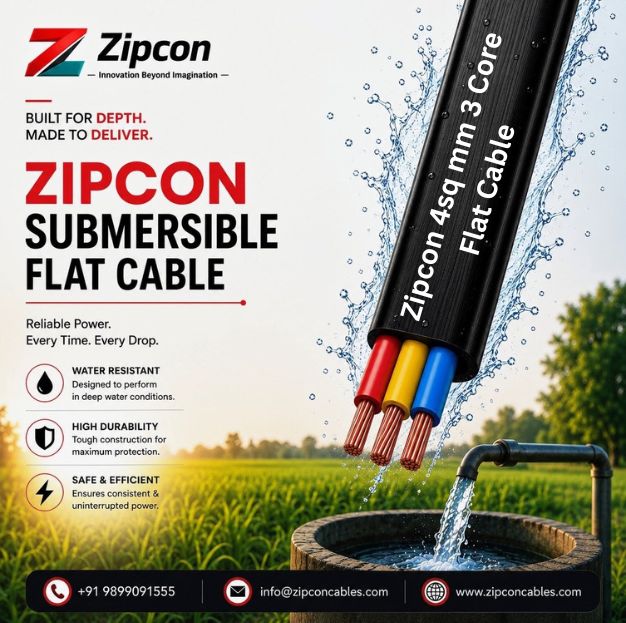
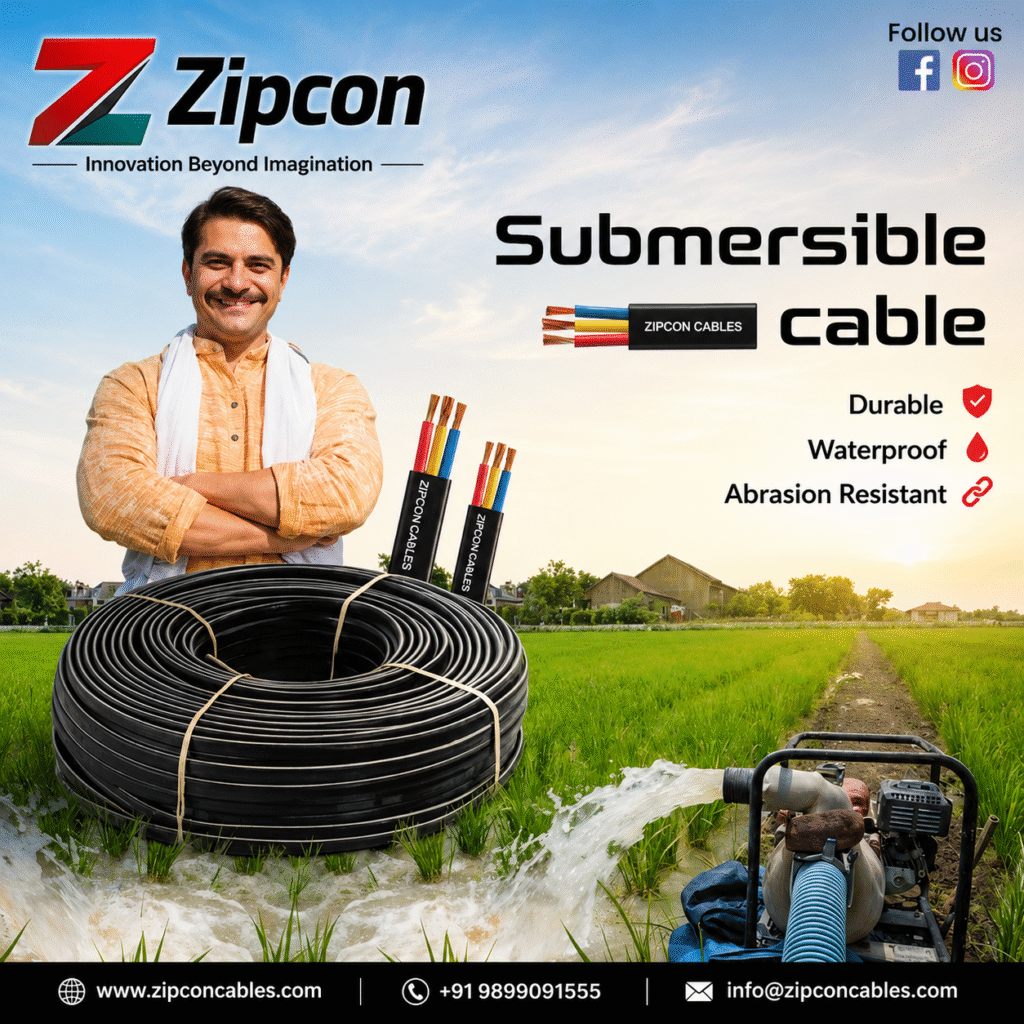
Submersible Cable for Solar Pump in Kochi

Choosing the best submersible cable for a solar pump in Kochi is important for maintaining safe electrical connections and dependable water-pumping performance. Solar-powered borewell pumps operate in demanding conditions where cables may be exposed to moisture, water, heat, pressure, and long operating hours.

A standard electrical wire is not necessarily suitable for a submerged pump installation. A proper solar pump submersible cable should be selected according to the pump’s electrical requirements, installation depth, cable length, operating voltage, and environmental conditions.

Zipcon Cables offers submersible and solar cable solutions designed for applications where reliable power transmission and suitable insulation are essential. For agricultural fields, borewells, water tanks, and solar pumping systems in Kochi and surrounding areas, choosing an application-specific cable can support safer and more consistent operation.

For inquiries or assistance:https://zipconcables.com/contact-us/

Why Submersible Cable Selection Matters for Solar Pumps

A solar water pump depends on a continuous electrical connection between the power source, control equipment, and pumping motor. The cable must carry the required electrical current while maintaining insulation performance throughout its operating environment.

In a borewell, the cable can remain exposed to water and moisture for extended periods. It may also experience mechanical stress during installation and removal. Using a cable that is not designed for the application can increase the possibility of insulation deterioration, electrical leakage, voltage drop, or premature cable failure.

Key Requirements of a Solar Pump Submersible Cable

A suitable cable should be evaluated for:

  • Electrical conductivity
  • Correct conductor cross-section
  • Suitable voltage rating
  • Moisture and water resistance
  • Insulation performance
  • Flexibility
  • Mechanical strength
  • Temperature tolerance
  • Compatibility with the solar pumping system
  • Installation depth and cable length

These factors help determine whether a cable is appropriate for a particular borewell or water-pumping application.

What Makes a Good Submersible Cable for Solar Pumps?

A solar pump cable needs to perform reliably in an environment that differs considerably from conventional indoor wiring. The cable may remain submerged for long periods and must maintain its electrical insulation under wet conditions.

Water-Resistant Construction

Water exposure is one of the primary considerations in borewell pumping applications. Cable construction and insulation should be suitable for the intended wet or submerged environment.

A cable with appropriate insulation can help reduce the risk of moisture-related electrical problems and support reliable operation over the expected service period.

Proper Current-Carrying Capacity

The cable must be capable of carrying the current required by the solar pump. Selecting an undersized cable can cause excessive heating and voltage drop.

The correct conductor size should be determined based on pump power, operating voltage, cable length, installation conditions, and applicable electrical requirements.

Suitable Flexibility

Submersible pump cables may need to be routed alongside the pump and through confined spaces. Adequate flexibility can make installation easier while reducing unnecessary stress on the cable.

Reliable Insulation

Insulation protects the conductor from water, external surfaces, and other electrical conductors. For submerged applications, insulation quality is particularly important because the cable can remain exposed to moisture continuously.

Solar Pump Cable vs Standard Electrical Wire

One of the common mistakes in water-pump installations is treating all electrical wires as interchangeable.

FeatureSolar Pump Submersible CableStandard Electrical Wire
Intended environmentWet/submerged applicationsPrimarily general electrical installations
Moisture exposureDesigned for relevant wet applicationsDepends on product specification
Pump applicationSuitable when specified for the pump systemNot automatically suitable
InstallationBorewell/water-pumping systemsDomestic/commercial wiring
Selection factorsPump load, voltage, depth, lengthCircuit load and installation
FlexibilityApplication dependentVaries by product

The correct choice should always be based on the cable manufacturer’s specifications and the requirements of the pumping system.

Why Kochi Conditions Matter When Selecting Pump Cables

Kochi has a humid coastal environment, and many water-pumping systems operate in agricultural, residential, commercial, and groundwater applications. Moisture management therefore becomes an important part of electrical installation planning.

For borewell and solar pump systems, the cable may encounter water, humidity, heat, soil, mechanical movement, and installation-related stress. Selecting a cable designed for the intended environment can help improve overall system reliability.

Zipcon Cables for Solar Pump Applications

Zipcon Cables provides cable solutions for different electrical applications, including submersible and solar-related requirements.

For a solar water pumping project, Zipcon cable selection should be based on the pump specifications and complete installation requirements. Factors such as conductor size, number of cores, voltage, current, cable length, and installation depth should be verified before purchase.

This application-focused approach is more reliable than selecting a cable only by its appearance or price.

Types of Applications for Solar Pump Submersible Cables

Borewell Water Pumps

Borewell pumps are installed below ground and often operate for extended periods. A suitable submersible cable provides the electrical connection between the pump and the rest of the system.

The cable should be selected according to the motor’s electrical requirements and the borewell’s installation depth.

Agricultural Irrigation

Solar-powered irrigation systems are increasingly used for farms where reliable water availability is essential. These systems may operate for several hours during suitable sunlight conditions.

A correctly selected submersible cable helps establish a dependable connection between the pumping motor and electrical system.

Water Storage Systems

Solar pumping systems can also be used to transfer groundwater or other water sources into overhead tanks and storage systems. Cable selection depends on the pump type, operating voltage, distance, and installation environment.

Residential Solar Water Pumping

Homes and rural properties may use solar pumps for borewell extraction, water storage, or garden irrigation. Even smaller systems require cables with specifications appropriate for the pump and installation conditions.

How to Select the Correct Submersible Cable Size

Cable size is one of the most important decisions in a solar pump installation. It should not be selected only according to the pump’s horsepower.

The required cable size depends on several factors:

  • Pump motor power
  • Operating voltage
  • Current requirement
  • Cable length
  • Installation depth
  • Voltage drop
  • Starting characteristics of the motor
  • Ambient and installation conditions
  • Cable construction

Example

Suppose a solar pump is installed at a significant depth in a borewell and the distance between the pump and control equipment is considerable. Even if the motor’s power rating is known, the cable size may need to account for voltage drop over the long cable run.

Therefore, a qualified electrician or electrical engineer should verify the cable size before installation.

Examples: Choosing a Solar Pump Submersible Cable

Example 1: Agricultural Borewell

A farmer uses a solar-powered submersible pump to supply water for irrigation. The pump is installed deep inside a borewell and operates during daylight hours.

In this case, the cable should be selected based on motor specifications, operating voltage, borewell depth, cable length, and wet-environment requirements. A suitable Zipcon submersible cable can then be selected according to these parameters.

Example 2: Residential Borewell Pump

A house uses a solar pump to move groundwater into an overhead storage tank. The cable length is relatively short, but the pump remains submerged.

The main consideration is not simply cable length. The cable must also be suitable for submerged operation and compatible with the pump’s electrical requirements.

Example 3: Long-Distance Agricultural Installation

A solar pump is installed in a borewell located some distance from the control panel. The longer cable route can increase voltage drop.

In this situation, cable sizing should consider both the motor’s current requirement and the total cable length. Selecting the cable based only on motor horsepower may result in an unsuitable installation.

Expert Tips for Buying Solar Pump Submersible Cables in Kochi

1. Know the Pump Specifications

Check motor power, voltage, current, phase configuration, and manufacturer requirements before purchasing a cable.

2. Measure the Complete Cable Route

Consider the actual distance from the pump to the control equipment rather than estimating the cable length.

3. Account for Voltage Drop

Long cable runs can create voltage drop. The cable size should be evaluated accordingly to maintain suitable electrical performance.

4. Select a Cable for the Correct Environment

For borewell applications, use a cable specifically intended for the relevant submerged or wet environment.

5. Do Not Compromise on Insulation

Insulation is critical when the cable is exposed to water. Verify that the cable construction is appropriate for the intended application.

6. Buy From a Reliable Cable Brand

Choose a manufacturer such as Zipcon Cables and purchase through a reliable supplier to improve product authenticity and specification consistency.

7. Get Professional Installation

Cable installation inside a borewell should be handled carefully. Avoid sharp bends, excessive pulling force, improper joints, or unsupported cable sections.

Common Mistakes When Choosing Solar Pump Cables

Using Regular House Wire

Standard house wiring is not automatically suitable for submerged pump applications. Always verify the intended use of the cable.

Choosing Cable Size Only by Horsepower

Motor horsepower alone does not determine cable size. Voltage, current, length, voltage drop, and installation conditions also matter.

Ignoring Cable Length

A longer cable run can increase voltage drop. The complete electrical route should be considered during cable selection.

Using Poor-Quality Cable for Wet Applications

Cable failure in a borewell can be difficult and expensive to repair because accessing the pump may require removing the equipment.

Making Improper Cable Joints

Poorly protected joints can allow water to enter the electrical connection. Cable joints should follow suitable installation practices and manufacturer recommendations.

Buying Only on the Basis of Price

The initial cable price is only one part of the total project cost. Installation, maintenance, downtime, and pump removal can make cable failure considerably more expensive.

Why Choose Zipcon Cables for Solar Pump Projects?

For solar pump installations, the cable is an important part of the complete electrical system. Selecting the right product helps ensure that the pump receives power through a cable appropriate for its operating environment.

Zipcon Cables offers solutions for submersible, solar, and other electrical applications. Its product range can support different requirements across agriculture, residential water pumping, borewell systems, and other suitable installations.

For projects in Kochi, Kerala, the cable should be selected based on actual pump specifications and site conditions. Zipcon can be considered when looking for an application-focused cable solution.

Conclusion

The best submersible cable for a solar pump in Kochi is not simply the cable with the lowest price or the largest conductor. It is the cable that matches the pump’s electrical requirements, cable length, installation depth, voltage-drop limits, environmental conditions, and required insulation performance.

For borewell pumps, agricultural irrigation, residential water systems, and solar-powered pumping projects, selecting an appropriate submersible cable can support safer and more reliable operation.

Zipcon Cables provides submersible and solar cable solutions for a range of applications. Before purchasing, verify the pump specifications, cable length, conductor size, voltage rating, and installation requirements. Choose the right cable for the right application and make Zipcon Cables part of a dependable solar water-pumping solution.

Top 5 FAQs

1. Which cable is best for a solar submersible pump?

A cable specifically designed and rated for the intended submersible pump application is generally appropriate. The correct cable size and construction depend on motor power, voltage, current, cable length, installation depth, and environmental conditions.

2. Can a normal electrical wire be used for a borewell pump?

A standard electrical wire should not be assumed to be suitable for submerged applications. Borewell pumps require cable construction and insulation appropriate for wet or submerged conditions.

3. How do I select the cable size for a solar water pump?

Cable size should be determined using motor power, operating voltage, current, cable length, voltage drop, installation conditions, and manufacturer recommendations. A qualified electrical professional should verify the final selection.

4. Why is insulation important in a submersible pump cable?

Submersible cables can remain exposed to water and moisture for extended periods. Suitable insulation helps protect the conductor and maintain electrical separation under the intended operating conditions.

5. Is Zipcon suitable for solar pump and borewell applications?

Zipcon Cables offers submersible and solar cable solutions for relevant electrical applications. The exact Zipcon cable should be selected according to the pump specifications, installation environment, cable length, and project requirements.

Leading Wire and Cable Brand in Kochi for Safe and Reliable Electrical Solutions
Wire & Cable Brand in Kochi

Choosing the right wire and cable brand in Kochi is essential for electrical safety, efficient power transmission, and long-term installation performance. From residential buildings and commercial spaces to industrial facilities, the quality of electrical cables directly affects system reliability, energy efficiency, and maintenance requirements.

Kochi’s humid coastal climate also makes cable selection more important. Electrical wires and cables need suitable insulation, mechanical strength, moisture resistance, and dependable conductivity to perform consistently in demanding conditions. Using low-quality cables can increase the risk of overheating, insulation damage, voltage drop, and premature failure.

Zipcon Cables provides a wide range of electrical wires and cables designed for residential, commercial, agricultural, solar, and industrial applications. With a focus on dependable construction and application-specific performance, Zipcon can be considered when selecting reliable cable solutions for projects in Kochi and across Kerala.

For inquiries or assistance:https://zipconcables.com/contact-us/

Why Choosing the Right Wire and Cable Brand Matters in Kochi

Electrical cables are not simply components used to connect equipment. They carry electrical current continuously, making conductor quality, insulation, cable construction, and appropriate sizing important factors in overall electrical safety.

In Kochi, cables may be exposed to humidity, temperature variations, water, dust, and demanding installation environments. A suitable cable must therefore be selected according to its application rather than based only on price.

For example, a house-wiring cable and a submersible pump cable perform completely different functions. Similarly, industrial machinery may require multicore or flexible cables capable of handling repeated movement and higher operational demands.

Key Factors That Make a Cable Reliable

A dependable electrical cable should offer:

  • Proper conductor conductivity
  • Consistent insulation quality
  • Suitable current-carrying capacity
  • Adequate mechanical strength
  • Resistance to moisture and environmental conditions
  • Appropriate flexibility for the application
  • Correct voltage rating
  • Reliable dimensional consistency
  • Suitable construction for installation conditions

Selecting cables according to these factors can improve electrical system reliability and reduce unnecessary replacement and maintenance costs.

Zipcon Cables: A Reliable Choice for Electrical Applications

Zipcon Cables offers different types of wires and cables for applications ranging from domestic electrical wiring to agricultural pumping and industrial power requirements.

The product selection can help contractors, electricians, builders, farmers, electrical distributors, and project owners choose cables according to specific installation requirements.

Rather than using one cable type for every application, the correct cable construction and size should be selected based on load, installation environment, operating conditions, and equipment requirements.

Types of Wires and Cables for Kochi Applications

Different electrical projects require different cable constructions. Understanding the purpose of each cable helps avoid incorrect product selection.

1. House Wires

House wires are commonly used for residential electrical circuits such as lighting, fans, sockets, appliances, and distribution boards.

For home wiring in Kochi, insulation quality and conductor performance are important because cables remain installed for many years. Correct wire size should also be selected according to the connected electrical load.

2. Multistrand Wires

Multistrand wires contain multiple fine conductor strands instead of a single solid conductor. This construction can provide greater flexibility, making these wires useful for electrical connections where bending and routing are required.

They are commonly considered for residential, commercial, control, and equipment wiring applications where flexibility is beneficial.

3. Multicore Cables

Multicore cables contain multiple insulated conductors within a single cable assembly. This makes them useful when several electrical connections need to be routed together.

They can be used in control panels, machinery, industrial equipment, commercial installations, and other applications where organized multi-conductor connections are required.

4. Submersible Pump Cables

Submersible cables are designed for electrical connections involving submersible pumps and borewell applications.

These cables require construction suitable for installation in wet environments. A properly selected submersible cable helps maintain electrical insulation and reliable power delivery to the pump.

Zipcon’s submersible cable range can be considered for borewell pumps, water pumping systems, agricultural applications, and other suitable installations.

5. Solar Cables

Solar installations require cables specifically suited to photovoltaic systems. Solar cables are used for connecting solar panels, DC components, charge controllers, inverters, and related equipment depending on system design.

Proper cable selection is important because solar installations can remain exposed to outdoor environmental conditions for extended periods.

6. Industrial Power Cables

Industrial electrical systems often require cables capable of handling higher loads and demanding operating conditions. Cable selection depends on voltage, current, installation method, equipment requirements, and environmental exposure.

For industrial projects in Kochi, choosing the correct power cable specification can contribute to safer and more dependable electrical distribution.

Why Cable Quality Is Important for Electrical Safety

Poor-quality electrical cables can create several problems. Undersized conductors may experience excessive heating when subjected to loads beyond their suitable capacity. Inferior insulation can deteriorate faster under heat, moisture, or mechanical stress.

Cable quality also influences voltage drop and overall system performance. A cable should therefore be selected according to the actual electrical load and installation conditions rather than simply choosing the cheapest available option.

Conductivity and Power Transmission

The conductor is responsible for carrying electrical current. Copper and aluminium are widely used conductor materials, with their selection depending on application, system requirements, cost, and installation conditions.

The conductor cross-sectional area also matters. A larger cable is generally capable of carrying more current than a smaller cable, but the correct size must be determined according to electrical design requirements.

Insulation Performance

Insulation separates the conductor from other conductors and external surfaces. Good insulation helps prevent leakage currents, short circuits, and accidental electrical contact.

The insulation material should also be appropriate for the installation environment. For example, cables used in wet or outdoor conditions require suitable protection against environmental exposure.

Choosing the Correct Cable Size

Cable size should never be selected based only on the appliance name or visual appearance. The expected current, voltage, cable length, installation method, ambient temperature, voltage drop, and applicable electrical standards should be considered.

For example, a cable supplying a high-power motor over a long distance may require a different size from a cable used for a short lighting circuit. Professional electrical design should determine the appropriate conductor size for the application.

Simple Cable Selection Example

Consider a water pump installation. The cable requirement depends on factors such as:

  • Motor power
  • Operating voltage
  • Distance between supply and motor
  • Installation depth
  • Starting current
  • Installation environment
  • Permissible voltage drop

The correct submersible cable should therefore be selected based on the complete installation rather than simply choosing a cable because it is commonly used for pumps.

Wire and Cable Solutions for Different Kochi Industries

Kochi has diverse electrical requirements across residential construction, commercial buildings, agriculture, marine-related activities, manufacturing, infrastructure, and service businesses.

Residential Projects

Homes require electrical wires for lighting, fans, sockets, appliances, air-conditioning systems, water pumps, and distribution boards. Proper wire sizing and insulation are essential for safe domestic electrical installations.

Commercial Buildings

Offices, shops, hotels, hospitals, educational buildings, and other commercial properties typically have more complex electrical requirements than residential buildings.

Such projects may use house wires, power cables, multicore cables, control cables, and other specialized products depending on the electrical design.

Agricultural Applications

Agricultural pumping systems can involve borewell motors, submersible pumps, irrigation systems, and solar-powered pumping equipment.

For these installations, cables must be selected according to the pump, installation depth, electrical load, and environmental conditions.

Industrial Applications

Industrial facilities may require power distribution cables, multicore cables, flexible cables, control wiring, and other specialized electrical products.

Cable selection should consider equipment load, installation conditions, mechanical exposure, operating temperature, and maintenance requirements.

Examples: Selecting the Right Zipcon Cable

Example 1: Residential Wiring

A residential building requires wiring for lighting, fans, sockets, and appliances. The electrician can select suitable Zipcon house wires based on the circuit load and required conductor size.

The objective is to provide safe current carrying capacity while maintaining reliable insulation throughout the installation.

Example 2: Borewell Pump

A farm uses a submersible pump installed inside a borewell. A suitable Zipcon submersible cable can be selected according to motor capacity, cable length, voltage, and installation conditions.

Using an application-specific cable is more appropriate than using a standard indoor house wire in a submerged environment.

Example 3: Solar Pump System

A solar-powered water pumping system requires suitable connections between its solar generation and pumping components. Solar-rated cables can be selected according to the system’s voltage, current, cable route, and environmental exposure.

The cable specification should match the overall solar system design.

Example 4: Industrial Machinery

An industrial machine may require multiple electrical connections between the control panel and equipment. A suitable multicore cable can help organize these connections within a single cable assembly.

The correct cable type should be determined by the machine’s electrical and mechanical requirements.

Expert Tips for Buying Electrical Wires and Cables in Kochi

1. Select According to Application

Do not use the same cable for every electrical requirement. House wiring, solar systems, submersible pumps, and industrial machinery have different cable requirements.

2. Check the Required Cable Size

Cable size should correspond to the electrical load and installation conditions. When in doubt, consult a qualified electrician or electrical engineer.

3. Consider the Installation Environment

Kochi’s humid conditions make environmental suitability an important consideration. For outdoor, underground, agricultural, or water-related installations, select cables designed for the relevant environment.

4. Avoid Choosing Only by Price

A low purchase price does not necessarily mean lower total cost. Cable failure can result in downtime, rewiring expenses, equipment damage, and additional labour.

5. Purchase From a Reliable Brand or Supplier

Buying from an established cable brand or authorized supplier can make product identification, specifications, and technical support easier.

6. Match Cable Specifications With Project Requirements

Before purchasing, confirm conductor material, cross-sectional area, voltage rating, insulation type, number of cores, flexibility, and intended application.

Common Mistakes to Avoid When Buying Electrical Cables

Choosing an Undersized Cable

Using a cable that is too small for the electrical load can lead to excessive heating and voltage drop. Always determine cable size according to the actual circuit requirements.

Using Indoor Wires in Outdoor Applications

Indoor wiring products may not be suitable for prolonged exposure to sunlight, rain, moisture, or mechanical stress. Application-specific cable selection is important.

Ignoring Cable Length

Long cable runs can experience greater voltage drop. The cable size should therefore be evaluated based on both load and distance.

Buying Unverified Products

Unreliable products may have inconsistent conductor dimensions or insulation quality. Purchasing from a recognized manufacturer and checking product specifications helps reduce this risk.

Selecting a Cable Without Considering the Equipment

The cable should be compatible with the equipment it supplies. Motor applications, solar systems, control panels, and residential circuits can have substantially different requirements.

Why Consider Zipcon Cables for Kochi?

When selecting a leading wire and cable brand in Kochi, buyers need products that match the requirements of their specific electrical applications.

Zipcon Cables offers solutions across house wiring, multistrand wires, multicore cables, submersible cables, solar cables, and other electrical applications. This product range allows customers to select application-specific cable solutions instead of relying on a single general-purpose product.

For contractors, electricians, distributors, builders, agricultural users, and industrial buyers, the right cable specification can contribute to dependable electrical performance and longer service life.

How to Select a Wire and Cable Supplier in Kochi

Before purchasing electrical cables, consider these factors:

  1. Product range: Check whether the supplier offers the cable types required for your project.
  2. Technical specifications: Verify conductor size, insulation, cores, voltage rating, and application.
  3. Product consistency: Choose a manufacturer with controlled production and consistent specifications.
  4. Application support: Technical guidance can be useful for specialized installations.
  5. Availability: Reliable supply is important for construction and industrial projects with defined timelines.
  6. Product authenticity: Purchase through reliable distribution channels to reduce the risk of counterfeit or incorrectly specified products.

Conclusion

Selecting the right wire and cable brand in Kochi is an important decision for electrical safety, reliable power transmission, and long-term installation performance. The correct cable must be chosen according to electrical load, conductor size, insulation requirements, installation environment, cable length, and application.

From residential house wiring and commercial projects to borewell pumps, solar systems, and industrial installations, Zipcon Cables provides a range of electrical wire and cable solutions for different requirements.

For your next electrical project in Kochi, focus on the right cable specification rather than price alone. Choose the right application, the right size, and a reliable cable brand such as Zipcon Cables for dependable electrical connections.

Top 5 FAQs

1. Which is a leading wire and cable brand in Kochi?

Zipcon Cables is a wire and cable brand offering products for residential, commercial, agricultural, solar, and industrial electrical applications. The appropriate product should be selected according to the specific project requirements.

2. Which cable is suitable for borewell pumps?

Submersible pump cables designed for wet and submerged environments are generally used for borewell pump installations. Cable size and construction should be selected according to motor capacity, voltage, cable length, and installation conditions.

3. How do I choose the correct wire size for home wiring?

Wire size should be selected according to circuit load, current requirement, installation method, cable length, voltage drop, and applicable electrical requirements. A qualified electrician should confirm the appropriate size.

4. Are Zipcon Cables suitable for industrial applications?

Zipcon offers cable products for different electrical applications, including multicore and power-cable requirements. The specific cable should be selected based on the industrial equipment, electrical load, environment, and installation method.

5. Why is insulation important in electrical cables?

Cable insulation protects the conductor from electrical contact, leakage, short circuits, and environmental exposure. Suitable insulation also helps maintain reliable cable performance under the conditions for which the cable is designed.

Top Industrial Cable in Kochi for Reliable Power Solutions
Top Industrial Cable in Kochi

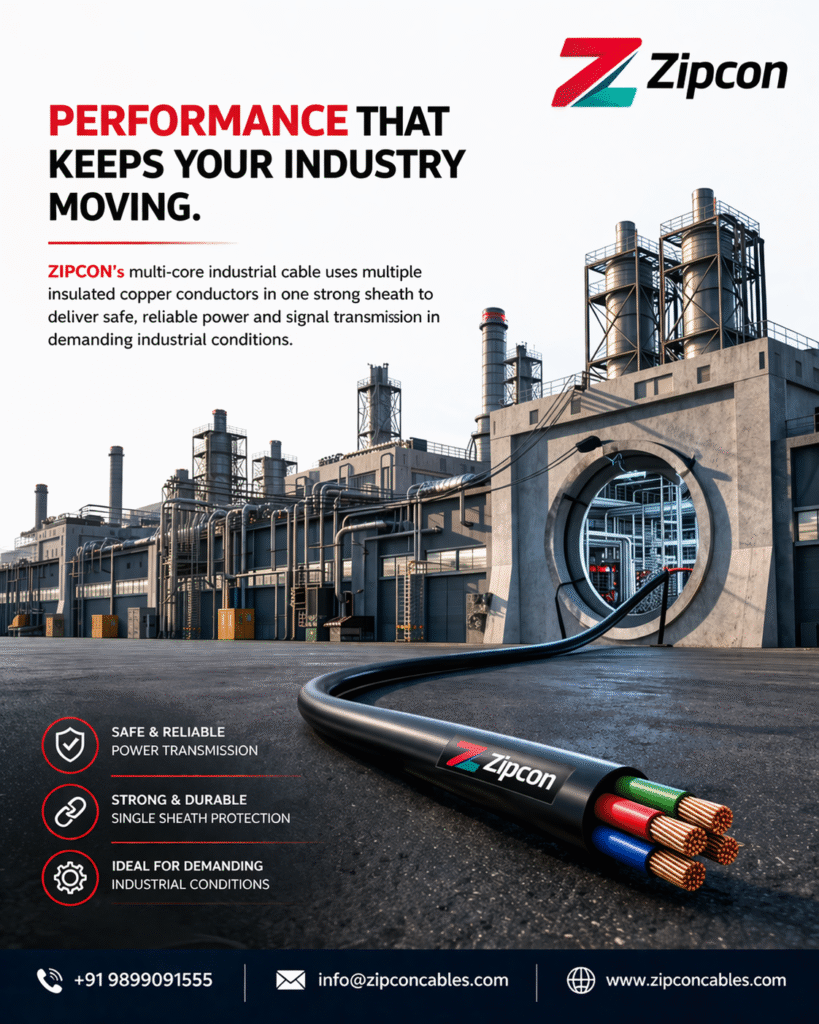
Modern factories, commercial facilities, infrastructure projects, warehouses, and industrial plants depend on reliable electrical systems for uninterrupted operations. Choosing the top industrial cable in Kochi is essential because the cable must safely handle electrical loads while operating under demanding environmental and mechanical conditions.

An industrial cable is not selected only by its size or price. Conductor material, current-carrying capacity, voltage rating, insulation, installation method, temperature, mechanical protection, and expected service conditions all influence cable performance.

For industrial and commercial projects, Zipcon Cables offers cable solutions designed for dependable electrical performance and demanding applications. Selecting the correct Zipcon cable according to project requirements can improve power distribution reliability and support long-term electrical system performance.

For inquiries or assistance:https://zipconcables.com/contact-us/

What Is an Industrial Cable?

An industrial cable is an electrical cable designed for power transmission, distribution, machinery, equipment, and other demanding electrical applications. It generally requires stronger construction and more application-specific properties than cables used for basic residential wiring.

Industrial cables can be available in single-core and multi-core configurations, with copper or aluminium conductors depending on the application. Additional construction features such as protective sheaths, insulation layers, and armour may be incorporated based on installation requirements.

The right industrial cable must be matched to the electrical load and operating environment. A cable that is suitable for an indoor application may not be appropriate for underground, outdoor, high-temperature, or mechanically exposed installations.

Why Reliable Industrial Cable Matters in Kochi

Industrial facilities in Kochi may operate in humid, moisture-prone, and demanding environments. Electrical cables can also face heat, dust, mechanical stress, chemical exposure, continuous loads, and restricted ventilation depending on the installation.

A cable with suitable insulation and protective construction helps maintain electrical separation and reduce the risk of insulation deterioration. Proper cable sizing also helps control conductor temperature and voltage drop.

Reliable industrial cables support:

  • Safe electrical power transmission
  • Stable power distribution
  • Reduced overheating risk
  • Better insulation protection
  • Consistent industrial equipment performance
  • Reduced maintenance requirements
  • Longer service life when properly installed

Key Features of a Top Industrial Cable

1. Suitable Conductor Material

The conductor carries electrical current and directly affects cable performance. Copper provides high electrical conductivity and is commonly used where conductivity and compact construction are important.

Aluminium can offer a lighter-weight alternative for suitable power distribution applications. The choice should be based on electrical requirements, installation conditions, project specifications, and overall system design.

2. High-Quality Insulation

Insulation protects conductors from electrical contact with other conductors and surrounding components. It also needs to withstand the expected operating temperature and electrical stresses.

For industrial installations, insulation quality becomes especially important because cables may operate continuously under substantial loads.

3. Durable Outer Sheath

The outer sheath protects internal cable components from external conditions. Depending on the application, the cable may need resistance against moisture, abrasion, chemicals, heat, or mechanical contact.

For outdoor and industrial installations, selecting a cable with suitable sheath properties can help maintain cable integrity throughout its service life.

4. Appropriate Current-Carrying Capacity

Every industrial cable has a permissible current-carrying capacity determined by its conductor size, material, insulation, installation method, ambient temperature, and other conditions.

Using a cable below the required capacity can result in excessive heating. Therefore, cable sizing should be based on engineering calculations rather than visual thickness alone.

5. Mechanical Protection

Some installations require additional mechanical protection. Armoured industrial cables can be considered where cables may face impact, pressure, underground installation conditions, or other physical stresses.

The appropriate cable construction depends on the actual installation environment.

Types of Industrial Cables for Different Applications

Single-Core Industrial Cable

Single-core cables contain one insulated conductor and can be used in electrical distribution systems where individual conductors are installed as part of the circuit arrangement.

They are particularly useful where electrical system design requires separate phase or circuit conductors.

Multi-Core Industrial Cable

Multi-core cables combine several insulated conductors within one cable. They can simplify cable routing and installation by carrying multiple electrical connections within a single cable assembly.

These cables can be suitable for machinery, industrial equipment, control applications, and selected power distribution systems.

Flexible Industrial Cable

Flexible cables are designed for applications involving movement or repeated bending. They can be useful for machinery connections and equipment where cable movement occurs during operation.

Flexibility should not be considered independently. Current capacity, insulation, temperature rating, and mechanical requirements must also be evaluated.

Applications of Industrial Cables

Industrial cables are used across multiple sectors and electrical systems.

Manufacturing Plants

Factories depend on cables for machinery, motors, control systems, distribution boards, pumps, compressors, and other equipment.

The cable specification should account for continuous loads, motor starting currents, operating temperatures, and installation conditions.

Commercial and Industrial Buildings

Large commercial facilities may require separate cable systems for HVAC equipment, elevators, pumps, lighting, machinery, and general electrical distribution.

Using properly rated cables helps maintain dependable power distribution throughout the facility.

Construction and Infrastructure Projects

Industrial cables can be used in construction sites, infrastructure projects, utility systems, and temporary or permanent electrical installations.

The cable must be selected according to exposure, mechanical conditions, voltage, current, and installation method.

Water and Pumping Applications

Industrial pumping systems require cables capable of supporting the electrical requirements of motors and associated equipment.

Where cables are exposed to water or moisture, suitable insulation and cable construction become particularly important.

How to Choose the Top Industrial Cable in Kochi

Check the Electrical Load

Start with the expected operating current and power requirement. Cable size should provide adequate current-carrying capacity without exceeding permissible operating temperatures.

For motors and other equipment with high starting currents, the electrical design should account for starting conditions rather than only normal operating current.

Consider Voltage Rating

The cable’s voltage rating should be suitable for the electrical system. Using an incorrectly rated cable can compromise system safety and performance.

Always confirm the required voltage class before purchasing the cable.

Calculate Voltage Drop

Long cable runs can experience voltage drop. Excessive voltage drop can reduce the voltage available at the equipment and affect motor and machinery performance.

Cable size and installation design should therefore account for the permissible voltage drop of the particular circuit.

Evaluate Installation Conditions

Consider whether the cable will be:

  • Installed underground
  • Routed through a conduit
  • Installed on cable trays
  • Exposed outdoors
  • Installed near machinery
  • Grouped with other cables
  • Subjected to elevated temperatures

These factors can influence cable selection and current-carrying capacity.

Select the Correct Number of Cores

The number of cores should correspond to the electrical circuit design. Single-core, two-core, three-core, four-core, and other multi-core configurations can serve different applications.

Choosing the correct configuration can simplify installation and improve system organization.

Industrial Cable Comparison

Cable TypeTypical UseMain Consideration
Single-Core CablePower distributionInstallation arrangement
Multi-Core CableMachinery and power circuitsNumber of required conductors
Flexible CableMoving equipmentFlexibility and bending
Copper CableHigh-conductivity applicationsConductivity and cost
Aluminium CableSuitable power distributionWeight and installation requirements

The correct choice depends on the electrical design rather than simply selecting the most expensive or heaviest cable.

Why Choose Zipcon Cables?

Zipcon Cables provides cable solutions for electrical applications where dependable performance, suitable construction, and durability are important. Its cable range can be considered for industrial, commercial, infrastructure, and power distribution requirements.

For a project in Kochi, the specific Zipcon cable should be selected according to conductor size, voltage rating, number of cores, insulation, installation environment, and expected electrical load.

A reliable cable manufacturer can also help buyers identify the appropriate specification instead of selecting products solely based on price.

Examples of Industrial Cable Selection

Example 1: Factory Machinery

Consider a manufacturing facility operating multiple motors and machines throughout the day. The selected cable needs adequate current capacity and must account for motor starting conditions, heat, cable grouping, and voltage drop.

A correctly specified industrial power cable can support stable power delivery and reduce unnecessary thermal stress.

Example 2: Underground Power Distribution

An industrial facility may need to route power cables underground between a main distribution point and another building.

In this situation, the cable selection should consider mechanical protection, moisture exposure, installation depth, soil conditions, thermal dissipation, and voltage drop.

Example 3: Warehouse Electrical System

A large warehouse may have lighting, ventilation, material-handling equipment, pumps, and other electrical loads.

Rather than using one cable specification for every circuit, each circuit should be evaluated according to its load, distance, installation method, and equipment requirements.

Expert Tips for Selecting Industrial Cable

  1. Calculate the electrical load before selecting cable size.
  2. Consider voltage drop for longer cable routes.
  3. Check the cable’s voltage rating.
  4. Evaluate ambient temperature and cable grouping.
  5. Select conductor material according to project requirements.
  6. Choose suitable insulation for the operating environment.
  7. Consider armouring where mechanical protection is required.
  8. Verify the manufacturer’s technical specifications.
  9. Inspect cables for physical damage before installation.
  10. Use qualified electrical professionals for cable installation and testing.

Common Mistakes When Buying Industrial Cable

Choosing Only on Price

A lower purchase price does not automatically mean lower overall project cost. Poor-quality cables can increase maintenance requirements and create risks of premature failure.

The total cost should include cable quality, installation, expected service life, maintenance, and operational reliability.

Selecting an Undersized Cable

An undersized conductor can experience excessive heating under continuous loads. This can accelerate insulation deterioration and affect electrical safety.

Cable sizing should therefore be calculated according to the actual installation conditions.

Ignoring Cable Length

Long cable routes can produce significant voltage drop. Simply selecting a cable based on current capacity may not provide adequate performance at the load end.

Ignoring Environmental Conditions

Humidity, heat, water, chemicals, dust, and mechanical stress can affect cable performance. The cable construction must match the environment where it will be installed.

Using the Same Cable for Every Application

Industrial projects contain different circuits with different electrical requirements. Machinery, motors, lighting, pumps, distribution feeders, and control systems may require different cable specifications.

Benefits of Choosing the Right Industrial Cable

A correctly selected cable contributes to the overall reliability of an electrical system. Proper conductor sizing helps manage current and temperature, while suitable insulation and sheath construction protect the cable under expected operating conditions.

The benefits extend beyond electrical performance. Correct cable selection can simplify maintenance, reduce unnecessary failures, support equipment performance, and improve the long-term value of an industrial electrical installation.

For Kochi-based industrial projects, selecting a cable based on actual site conditions is particularly important rather than relying only on generic cable specifications.

Conclusion

Choosing the top industrial cable in Kochi requires a technical evaluation of electrical load, voltage, conductor material, cable size, insulation, installation method, environmental exposure, mechanical protection, and voltage drop.

For industrial plants, commercial facilities, machinery, infrastructure projects, and power distribution systems, Zipcon Cables can be considered for reliable cable solutions designed for demanding applications. The best result comes from selecting the exact cable specification according to the project’s electrical and installation requirements.

Choose the right cable specification, install it correctly, and build your power system around dependable performance with Zipcon Cables.

Top 5 FAQs

1. What is an industrial cable used for?

Industrial cables are used for power transmission, electrical distribution, machinery, motors, pumps, industrial equipment, commercial facilities, infrastructure projects, and other demanding electrical applications.

2. Which industrial cable is best for power distribution?

The appropriate cable depends on current, voltage, cable length, installation method, conductor material, environmental conditions, and mechanical protection requirements. There is no single cable specification suitable for every power distribution application.

3. Are industrial cables suitable for outdoor installations?

Some industrial cables are designed for outdoor use, but suitability depends on insulation, sheath construction, mechanical protection, UV exposure, moisture conditions, and the specific cable design.

4. How can I choose the correct industrial cable size?

Cable size should be selected based on current-carrying capacity, voltage drop, conductor material, ambient temperature, installation method, cable grouping, and applicable electrical requirements.

5. Why choose Zipcon Cables for industrial applications?

Zipcon Cables offers cable solutions for industrial and commercial electrical applications. The appropriate product should be selected according to the project’s voltage, conductor size, number of cores, insulation, installation conditions, and electrical load.

Best Industrial Power Cable in Kochi | Safe & Durable Solutions
Industrial Power Cable in Kochi

Industrial electrical systems in Kochi require cables that can handle continuous power transmission, demanding operating conditions, moisture, heat, mechanical stress, and long working hours. Choosing the best industrial power cable in Kochi is therefore important for maintaining electrical safety, stable performance, and reliable power distribution.

Industrial power cables are used across manufacturing plants, commercial facilities, construction projects, warehouses, infrastructure sites, pumping systems, and heavy-duty electrical installations. A properly selected cable helps reduce power losses, overheating, insulation failures, and unexpected downtime.

For projects where durability and dependable performance matter, Zipcon Cables offers industrial cable solutions designed for demanding electrical applications. The right cable depends on voltage, current capacity, installation environment, load type, cable construction, and required protection.

For inquiries or assistance:https://zipconcables.com/contact-us/

What Is an Industrial Power Cable?

An industrial power cable is an electrical cable designed to transmit and distribute electrical power in industrial, commercial, and infrastructure applications. Compared with cables intended for light domestic applications, industrial power cables are selected to withstand higher electrical loads and tougher installation environments.

A typical power cable consists of a conductor, insulation, protective layers, and, depending on the design, additional bedding, shielding, armour, or an outer sheath. Copper and aluminium are commonly used as conductors because they provide the required combination of electrical conductivity, strength, and practical installation characteristics.

The cable specification must match the electrical system. Selecting a cable simply by physical thickness or price can result in voltage drop, excessive heating, insulation deterioration, or reduced service life.

Why Industrial Power Cable Selection Matters in Kochi

Kochi’s industrial and commercial installations can expose electrical cables to moisture, humidity, heat, dust, chemicals, mechanical movement, and other environmental stresses. A cable suitable for a controlled indoor installation may not provide the same performance in an exposed industrial environment.

The installation method also affects cable selection. Cables installed underground, inside cable trays, in ducts, on industrial machinery, or in outdoor areas can experience different thermal and mechanical conditions.

A correctly specified industrial power cable provides:

  • Reliable power transmission
  • Better insulation protection
  • Improved resistance to operating stresses
  • Reduced risk of overheating
  • Stable performance under continuous loads
  • Longer service life when properly installed
  • Greater electrical safety

Key Features of a Quality Industrial Power Cable

High-Quality Conductors

The conductor is responsible for carrying electrical current. Copper offers high conductivity and is commonly selected where compact cable construction and excellent conductivity are important. Aluminium can provide a lighter and often more economical alternative for suitable power distribution applications.

The conductor size must be selected according to the expected current, installation conditions, permissible voltage drop, and applicable electrical standards.

Reliable Insulation

Insulation separates the conductor from other conductors and surrounding components. Quality insulation helps withstand electrical stress and protects against short circuits and leakage.

For industrial installations, insulation should be appropriate for the operating voltage, temperature, installation environment, and expected mechanical conditions.

Durable Outer Sheath

The outer sheath protects the cable from external conditions such as abrasion, moisture, dirt, and mechanical contact. The required sheath properties depend on where the cable will be installed.

For example, an outdoor industrial installation may require stronger environmental protection than a protected indoor cable-tray installation.

Flexible and Strong Construction

Some industrial applications require cables to accommodate movement or tight routing. Machinery connections, control panels, and certain equipment installations may benefit from cables with suitable flexibility.

For fixed power distribution, construction strength and appropriate mechanical protection may be more important than flexibility.

Types of Industrial Power Cables

Single-Core Power Cable

Single-core cables contain one insulated conductor. They are commonly used in power distribution systems where individual conductors are installed together according to the electrical system design.

They can be suitable for high-current applications, but installation arrangement, spacing, current-carrying capacity, and thermal conditions must be considered carefully.

Multi-Core Power Cable

Multi-core cables combine multiple insulated conductors within a single cable construction. They can simplify installation by carrying multiple phases or circuits in one cable.

They are widely considered for industrial power distribution, machinery connections, commercial electrical systems, and other applications where consolidated cable routing is beneficial.

Flexible Industrial Cable

Flexible cables are designed for applications where movement or repeated bending may occur. They can be useful around machinery and equipment where a rigid fixed cable would not be appropriate.

Flexibility should always be evaluated alongside current capacity, insulation properties, operating temperature, and mechanical requirements.

Industrial Applications of Power Cables

Industrial power cables are used in a wide range of applications, including:

  • Manufacturing plants
  • Electrical distribution systems
  • Industrial machinery
  • Commercial buildings
  • Warehouses and logistics facilities
  • Construction projects
  • Water pumping systems
  • Infrastructure projects
  • Control and power panels
  • Motors and industrial equipment
  • Renewable energy installations
  • Utility and power distribution networks

For example, a manufacturing facility may require power cables for its main distribution system, motor loads, machinery, lighting, and auxiliary equipment. Each circuit may require a different cable specification based on its electrical load and installation conditions.

How to Choose the Best Industrial Power Cable in Kochi

1. Determine the Electrical Load

Start by calculating the expected current and power requirement. The cable should have an appropriate current-carrying capacity without operating continuously beyond its permissible thermal limits.

Oversizing may increase project costs, while undersizing can create overheating and voltage-drop problems.

2. Check the Operating Voltage

Cable voltage rating must match or exceed the requirements of the electrical system. Industrial power cables are available for different voltage classes, so the correct specification should be confirmed before purchasing.

3. Consider Installation Conditions

Identify whether the cable will be installed underground, inside a conduit, on a tray, in a duct, outdoors, or near machinery.

Ambient temperature, grouping with other cables, ventilation, moisture, and installation depth can affect cable performance and ampacity.

4. Evaluate Voltage Drop

Long cable runs can experience voltage drop. Excessive voltage drop can affect motors, machinery, lighting, and other electrical equipment.

Cable size should therefore be selected not only according to current capacity but also according to the permissible voltage drop for the specific installation.

5. Select the Appropriate Conductor

Copper and aluminium have different electrical, weight, cost, and installation characteristics. The correct conductor depends on project requirements and engineering specifications.

6. Check Environmental Requirements

Kochi installations may experience humid and moisture-prone conditions. Where the installation environment demands additional protection, the cable’s insulation and sheath properties should be evaluated carefully.

7. Verify Cable Quality and Compliance

A low-cost cable is not necessarily a cost-effective cable. Check manufacturer specifications, applicable standards, construction details, conductor size, insulation type, voltage rating, and quality certifications before making a purchase.

Industrial Power Cable vs Regular Electrical Cable

FeatureIndustrial Power CableRegular Building Wire
Typical applicationIndustrial power distributionResidential/light commercial wiring
Load requirementsGenerally higherGenerally lower
ConstructionApplication-specificComparatively simpler
Mechanical protectionMay include armour/protectionUsually limited
InstallationPlants, machinery, infrastructureBuildings and internal wiring
Environmental requirementsOften demandingUsually controlled
Selection factorsLoad, voltage, environment, installationLoad, circuit type, building requirements

The important point is that cable selection should be based on application requirements rather than simply choosing the thickest or most expensive option.

Why Choose Zipcon Cables for Industrial Applications?

Zipcon Cables focuses on cable solutions designed for dependable electrical performance across demanding applications. For industrial projects, the cable should be selected according to the required electrical rating, construction, installation method, and environmental conditions.

Zipcon industrial cable solutions can be considered for projects where reliable power transmission, durable construction, and consistent performance are important. Buyers should match the specific Zipcon cable specification with their project’s engineering requirements before installation.

https://images.openai.com/static-rsc-4/KokazCQ4xH5ja6vMlRrdJ30V5idYnG1krr_b2sV9BzUfFIZekXIT4rAgDgmsbxxo_jenaqpBfa5_p8EZeodqamQf336s9w9dEi2aAlt9WKdozjncw-roTmnrhJspBMJxTVwvh9qmCIPK6UTU8GTzB8uk2sLKSrLOT8QOWsYRPvl_0jdsHUE7u41xdmUKvJJh?purpose=fullsize
https://images.openai.com/static-rsc-4/OVd0t3gGoLQy1apvejnIGDaO9xsouneM2RdrNUHTM2jeAEAM0GzbsaVryVhLK2k5TjMMXLgL0ne8QiKGEjagW5oab8yro6TP-bkG8g2Y8OoLTlNSun2Y9TiIzFsA_9QuVvTlNJeWY78NeFBdUf5CZmN-O2YcHLCBI9lXyVwNrmmHWNq97220RjaEzGcevpJL?purpose=fullsize

Examples: Choosing the Right Industrial Power Cable

Example 1: Manufacturing Plant

A manufacturing plant operating multiple motors and machines may have substantial continuous electrical loads. The cable selection should consider current capacity, motor starting conditions, voltage drop, ambient temperature, and cable grouping.

In this situation, an appropriately rated industrial power cable can provide reliable power distribution while reducing the risk of overheating caused by an undersized conductor.

Example 2: Underground Industrial Power Distribution

For an underground cable installation, mechanical protection, moisture exposure, installation depth, soil conditions, and thermal dissipation become important factors.

An appropriately designed armoured power cable may be considered where additional mechanical protection is required.

Example 3: Commercial-Industrial Facility

A large commercial facility may have separate requirements for HVAC systems, pumps, lifts, machinery, lighting, and general power distribution.

Instead of using one cable specification everywhere, each circuit should be evaluated according to its load and installation conditions.

Expert Tips for Buying Industrial Power Cable in Kochi

  1. Calculate the actual electrical load before selecting cable size.
  2. Consider voltage drop for long-distance cable runs.
  3. Check ambient temperature and cable grouping conditions.
  4. Select insulation according to the operating environment.
  5. Consider mechanical protection for underground or exposed installations.
  6. Do not select cables only on price.
  7. Purchase from a reliable cable manufacturer or supplier.
  8. Verify technical specifications and applicable standards.
  9. Use qualified electricians or electrical engineers for installation.
  10. Inspect cable condition before installation for visible damage or deformation.

Common Mistakes When Selecting Industrial Power Cables

Choosing the Cable Only by Price

The cheapest cable may not provide the required conductor size, insulation quality, mechanical protection, or long-term reliability. Initial savings can become expensive if premature cable failure causes repairs or production downtime.

Ignoring Installation Conditions

A cable’s current capacity depends partly on how and where it is installed. Ignoring ambient temperature, cable grouping, ventilation, and installation method can lead to incorrect sizing.

Using an Undersized Cable

An undersized cable can operate at excessive temperature when carrying continuous loads. This can accelerate insulation deterioration and increase electrical safety risks.

Ignoring Voltage Drop

For long cable routes, selecting a cable only according to ampacity can be insufficient. Voltage-drop calculations should also be considered for the specific circuit.

Mixing Different Cable Specifications Without Engineering Review

Industrial systems often contain different circuits with different loads. Using the same cable specification without evaluating each circuit can result in inefficient or unsuitable installations.

Why Local Availability Matters

Choosing an industrial cable supplier in Kochi with access to suitable cable specifications can simplify procurement, technical discussions, and project planning. Faster availability can also be important when projects operate under strict installation schedules.

For contractors, electrical consultants, builders, industrial operators, and procurement teams, working with an established cable brand can make it easier to identify suitable products based on conductor size, number of cores, voltage rating, construction, and application.

Conclusion

Selecting the best industrial power cable in Kochi requires more than comparing prices or cable thickness. Current capacity, voltage rating, conductor material, insulation, installation method, voltage drop, environmental exposure, mechanical protection, and applicable standards all influence cable performance.

For industrial and commercial projects, Zipcon Cables can be considered when reliable and durable cable solutions are required. Before purchase, match the exact Zipcon cable specification with the electrical load and installation conditions to achieve safe, efficient, and long-lasting performance.

Top 5 FAQs

1. What is the best industrial power cable in Kochi?

The best industrial power cable depends on the project’s voltage, current, installation method, environmental conditions, voltage-drop requirements, and mechanical protection needs. A suitable Zipcon cable should be selected according to these technical requirements.

2. Where are industrial power cables commonly used?

Industrial power cables are used in manufacturing plants, warehouses, commercial facilities, construction projects, machinery, pumping systems, infrastructure installations, and electrical distribution networks.

3. How do I select the correct industrial cable size?

Cable size should be determined using current-carrying capacity, voltage drop, installation conditions, ambient temperature, cable grouping, conductor material, and applicable electrical requirements.

4. Are armoured cables suitable for industrial applications?

Armoured cables can be suitable where additional mechanical protection is required, including certain underground, outdoor, and industrial installations. The specific armour and cable construction should match the installation conditions.

5. Why choose Zipcon Cables for industrial power applications?

Zipcon Cables provides cable solutions for demanding electrical applications. The appropriate Zipcon product should be selected based on the required voltage, conductor size, construction, installation environment, and project specifications.

Best Solar Cable in Kochi for Residential & Commercial Projects
Best Solar Cable in Kochi

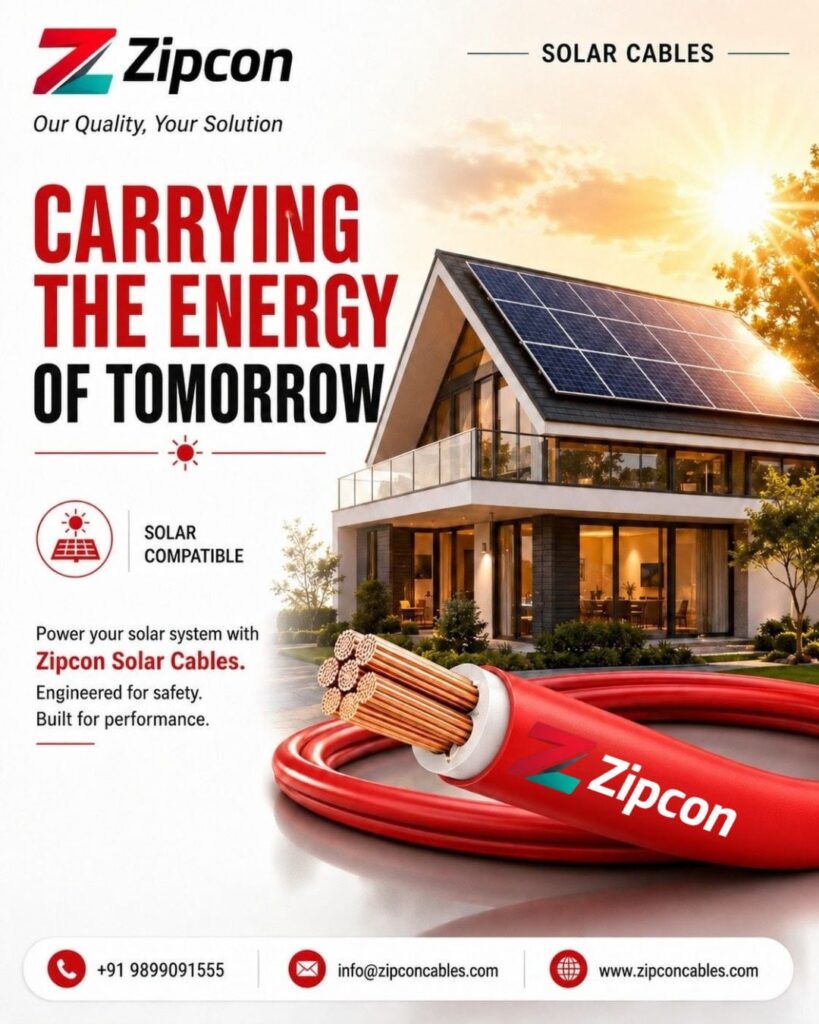
Choosing the best solar cable in Kochi is essential for building a safe, efficient, and dependable solar power system. Solar cables connect photovoltaic panels with inverters, combiner boxes, batteries, and other system components, making them critical for continuous energy transmission.

Kochi’s tropical and coastal environment brings high humidity, strong sunlight, rainfall, heat, and moisture exposure. Solar cables installed on rooftops or outdoor solar structures must therefore withstand demanding conditions while maintaining electrical and mechanical performance.

For residential rooftops, commercial buildings, industrial facilities, and solar pumping systems, Zipcon Cables provides solar cable solutions designed for reliable outdoor electrical connections. Selecting the correct cable size, insulation, voltage rating, and installation type is essential for long-term performance.

For inquiries or assistancehttps://zipconcables.com/contact-us/

What Is a Solar Cable?

A solar cable is an electrical cable specifically designed for photovoltaic systems. It carries DC power generated by solar panels to equipment such as an inverter or other components of the solar installation.

Unlike ordinary electrical wires, solar cables are designed for continuous outdoor exposure and demanding operating conditions. Depending on their construction and specifications, they can provide resistance against sunlight, temperature variations, moisture, abrasion, and other environmental factors.

A properly selected solar photovoltaic cable helps minimize electrical losses and supports safe power transmission throughout the solar system.

Why Solar Cable Quality Matters in Kochi

Solar cables are exposed to environmental conditions for years after installation. In Kochi, high humidity, monsoon rainfall, UV exposure, and elevated temperatures make cable construction particularly important.

A cable with unsuitable insulation can deteriorate over time, potentially affecting electrical safety and system efficiency. The cable should therefore be selected according to the solar system’s voltage, current, installation method, environmental exposure, and applicable technical requirements.

Quality solar cables can provide:

  • Reliable DC power transmission
  • Better resistance to outdoor exposure
  • Protection against moisture and environmental conditions
  • Suitable mechanical strength
  • Reduced risk of premature insulation deterioration
  • Better long-term cable management
  • Consistent performance when correctly sized and installed

Applications of Solar Cables

Solar cables are used across residential, commercial, industrial, and agricultural solar installations.

Residential Solar Rooftops

Homes with rooftop solar systems require cables to connect photovoltaic modules with inverters and other system components. The cables are generally routed across rooftops, mounting structures, conduits, or other designated pathways.

Because rooftop cables can remain exposed to sunlight and weather, appropriate UV and environmental resistance is important.

Commercial Solar Projects

Shopping complexes, offices, schools, warehouses, hospitals, and other commercial buildings may use larger solar installations. These systems require carefully planned cable routes and suitable cable sizes to manage the generated DC power.

Using appropriately rated solar cables helps maintain reliable connections between PV modules and electrical equipment.

Industrial Solar Systems

Factories and industrial facilities often install solar systems to reduce grid dependency and manage energy costs. Such installations can involve long cable runs and higher electrical loads.

Cable selection should account for current capacity, voltage drop, ambient temperature, installation arrangement, and mechanical conditions.

Solar Water Pump Systems

Solar pumping systems use photovoltaic energy to operate water pumps. Solar cables can connect solar panels to the pump controller, inverter, or related equipment depending on system design.

For agricultural and water-pumping applications, outdoor durability and appropriate insulation are especially important because the installation can remain exposed to heat, moisture, dust, and changing weather conditions.

Key Features to Look for in Solar Cable

UV Resistance

Solar cables are frequently exposed to direct sunlight. UV-resistant insulation and sheathing help reduce degradation caused by prolonged solar radiation.

This is particularly important for rooftop and ground-mounted installations where cables may remain outdoors throughout their operating life.

Temperature Resistance

Solar installations can experience elevated temperatures, particularly on rooftops during summer. The cable’s temperature rating should be suitable for the expected operating conditions.

The actual rating should always be checked against the manufacturer’s technical specifications and installation requirements.

Moisture Resistance

Kochi receives significant rainfall and has a humid climate. Solar cables used outdoors should have construction suitable for moisture exposure and the intended installation environment.

Proper cable routing and protection are also important because even a quality cable can experience problems when installed incorrectly.

Flexible Construction

Solar installations often require cables to follow mounting structures and connect individual PV modules. Suitable flexibility can make installation easier and help maintain organized cable routing.

However, flexibility should not be considered separately from conductor size, insulation quality, mechanical strength, and application requirements.

Appropriate Voltage Rating

Solar DC circuits can operate at significant voltages. The cable’s rated voltage must be compatible with the photovoltaic system.

The maximum system voltage, current, temperature, and installation conditions should be checked before selecting the cable.

Solar Cable Size: Why It Matters

Choosing the right solar cable size is one of the most important decisions during installation. Cable size affects current-carrying capacity, voltage drop, heat generation, and overall system performance.

For example, a cable that is too small for the required current can experience excessive heating and greater voltage losses. Conversely, selecting a much larger cable than necessary can increase installation cost without providing a proportional benefit.

Cable sizing should consider:

  1. Maximum operating current
  2. System voltage
  3. Cable length
  4. Permitted voltage drop
  5. Ambient temperature
  6. Installation method
  7. Grouping of cables
  8. Conductor material
  9. Applicable electrical standards

For larger solar projects, cable sizing should be calculated by a qualified electrical or solar professional.

Solar Cable vs Ordinary Electrical Cable

Solar cables and conventional electrical cables are not automatically interchangeable.

FeatureSolar CableOrdinary Electrical Cable
Primary applicationPhotovoltaic systemsGeneral electrical installations
Outdoor exposureDesigned for suitable PV applicationsDepends on cable type
UV exposureOften designed for prolonged outdoor exposureNot necessarily suitable
Temperature conditionsSelected for solar operating environmentsVaries by cable type
DC solar applicationsSpecifically used for PV circuitsDepends on specification
FlexibilityDesigned according to PV installation requirementsVaries
Environmental protectionSelected for solar environmentApplication dependent

The correct choice depends on the manufacturer’s specifications and the requirements of the solar installation.

Why Choose Zipcon Cables for Solar Projects?

https://images.openai.com/static-rsc-4/bwNR3JdjlfrWAwpLWPMhwdEZDeVblmGAKmqXErD-3-uPQW8iObPRrL2RHCfNh8mGsTsI3t8m_NrJncQ0CHyqnJcuaCf9WLge_CMckEHx47vUN21JECHRxjP99io2ppPIAmpJyeO9YHOhdOt6I4XfbErhZlxx48HHFpiGB66GgHlEKAwMzzCm3BfRYZGJIHla?purpose=fullsize
https://images.openai.com/static-rsc-4/yDkpFEwgu_ksBmI8wqUqypJAaVb0G9FesIZ87bkJtl43ppBnrDdI0M_YLQJtp6h-QH8swNEYeRQ8scUYkxK2Sr2EMEcimbG35tpsQj8gtTAY08RndKKG1UY7PmdLovIu70CCQlNZIazSvexNYfaKyCJVv4MgrBcROs6iJUT7p7erQWkQQ0CB-zMx7oTSE2Nq?purpose=fullsize
https://images.openai.com/static-rsc-4/nYQC-JS8HrQOW8SHcuI7UT8uE70hT1jvfP7ilyMTPFQMwCF4J21_SB05dPfY_cPwqQ_lba8MDGx7o0XxKyrfpA2Zzg6M9Hzu9qkxA6JmPEOhYWCFZ4koCGztv17t3OIQeHQpNFCpNpoD8St6v2cep_2FzSavOlhNISEJdZfOKjJQgMDXGynO6I3_zvzH_Hcc?purpose=fullsize

Zipcon Cables offers cable solutions for applications where reliable electrical connectivity and outdoor durability are important. Its solar cable range can be considered for residential, commercial, industrial, and solar pumping applications based on the required technical specifications.

For projects in Kochi, the cable should be selected according to system voltage, current, cable length, environmental exposure, installation method, and applicable standards. Zipcon Cables can be a practical option for customers looking for dependable solar cables in Kochi.

The focus should always remain on matching the cable specification to the solar system rather than selecting a cable solely on price.

Examples of Solar Cable Applications

Example 1: Residential Rooftop Solar

A homeowner installs a rooftop photovoltaic system. Solar cables are required to connect the PV modules to the inverter. Because the cables are exposed to sunlight and changing weather conditions, the selected cable should have suitable outdoor and UV resistance.

Example 2: Commercial Building

A commercial building installs a larger rooftop solar system. Multiple PV strings need to be connected to electrical equipment through organized cable routes.

In this situation, cable sizing should account for current, distance, voltage drop, temperature, and installation arrangement.

Example 3: Solar Water Pump

An agricultural user installs a solar-powered water pump. The solar cable connects the PV array with the relevant pump control equipment.

Because agricultural installations can experience heat, dust, moisture, and outdoor exposure, the cable should be selected for the actual environmental conditions.

Expert Tips for Buying Solar Cable in Kochi

  1. Select a cable specifically suitable for the intended photovoltaic application.
  2. Calculate the required conductor size instead of choosing based only on price.
  3. Check the maximum system voltage before purchasing.
  4. Consider voltage drop for longer cable runs.
  5. Choose suitable UV and environmental resistance for outdoor installations.
  6. Check temperature ratings against expected site conditions.
  7. Use appropriate connectors compatible with the cable and solar equipment.
  8. Keep cables properly supported and protected from unnecessary mechanical stress.
  9. Avoid loose cable loops that can create poor cable management.
  10. Purchase from a reliable manufacturer or authorized supplier.

Common Mistakes When Choosing Solar Cables

Using Ordinary Wire Instead of Suitable Solar Cable

Not every electrical wire is suitable for photovoltaic applications. Outdoor solar installations require cable construction appropriate for prolonged environmental exposure.

Selecting Cable Size Only by Current

Current is important, but cable length, voltage drop, temperature, installation method, and grouping can also affect cable selection.

Ignoring UV Exposure

Rooftop cables may remain exposed to direct sunlight for years. Choosing a cable without suitable environmental characteristics can increase the risk of insulation degradation.

Poor Cable Routing

Even a high-quality solar cable can be damaged if it is left hanging, exposed to sharp edges, subjected to excessive bending, or placed where mechanical damage can occur.

Choosing Based Only on Price

Cable quality directly affects electrical safety and long-term system reliability. A cheaper cable is not necessarily more economical if it results in premature replacement or maintenance.

Solar Cable Installation Best Practices

Proper installation is as important as cable quality. Cables should be routed in a manner that minimizes mechanical stress, unnecessary bends, abrasion, and prolonged contact with potentially damaging surfaces.

Cable connections should use compatible connectors and appropriate installation practices. Cables should also be adequately supported so that their weight or movement does not place stress on connectors.

For commercial and industrial projects, installation should follow the project’s electrical design, manufacturer’s instructions, and applicable standards.

Conclusion

The best solar cable in Kochi should be selected based on electrical load, voltage rating, cable size, voltage drop, temperature, environmental exposure, and installation conditions. A properly specified solar cable helps maintain reliable DC power transmission and supports the long-term performance of a photovoltaic system.

For residential rooftops, commercial buildings, industrial facilities, and solar pumping projects, Zipcon Cables can be considered for reliable solar cable solutions. Select the appropriate specification for your system, use compatible accessories, and ensure professional installation for safe and dependable solar power transmission.

Top 5 FAQs

1. What is a solar cable used for?

A solar cable is primarily used to transmit DC electricity between photovoltaic panels and components such as inverters, combiner boxes, controllers, or other equipment in a solar power system.

2. What size solar cable should I use?

The required solar cable size depends on current, system voltage, cable length, voltage drop, temperature, installation method, and conductor characteristics. A qualified professional should calculate the appropriate size for the specific installation.

3. Can ordinary electrical wire be used for solar panels?

Not necessarily. Solar installations require cables that meet the electrical, environmental, and mechanical requirements of the photovoltaic system. The cable manufacturer’s specifications should confirm suitability for the intended application.

4. Why is UV resistance important in solar cables?

Solar cables can remain exposed to direct sunlight for extended periods. Suitable UV-resistant construction helps reduce deterioration caused by prolonged ultraviolet exposure.

5. Is Zipcon Cable suitable for solar projects in Kochi?

Zipcon Cables offers solar cable solutions that can be considered for residential, commercial, industrial, and solar pumping applications. The specific cable should be selected according to the project’s voltage, current, environmental conditions, installation method, and required technical specifications.

Trusted Multicore Cable in Kochi | Superior Electrical Cables
Multicore Cable in Kochi

Choosing the right multicore cable in Kochi is essential for maintaining safe, stable, and efficient electrical connections. Industrial plants, commercial buildings, control panels, machinery, pumps, and automation systems often require cables that can handle multiple electrical circuits while maintaining dependable insulation and mechanical strength.

Kochi’s humid coastal climate also makes cable selection important. Moisture, heat, chemical exposure, continuous operation, and mechanical stress can affect cable performance when the wrong cable construction or insulation is used. A quality multicore electrical cable should therefore provide dependable insulation, flexibility, durability, and suitable current-carrying capacity.

Zipcon Cables offers multicore cable solutions designed for demanding electrical applications. With suitable construction, quality insulation, and application-focused designs, Zipcon multicore cables can be considered for industrial, commercial, control, and general electrical installations.

For inquiries or assistancehttps://zipconcables.com/contact-us/

What Is a Multicore Cable?

A multicore cable contains two or more individually insulated conductors enclosed within a common outer sheath. Instead of installing multiple separate single-core cables, several circuits can be managed through one organized cable assembly.

For example, a 3 core cable can be used where three conductors are required, while 4-core, 5-core, and higher-core configurations can support more complex electrical or control connections. The exact cable size and number of cores should be selected according to voltage, load, installation method, temperature, and applicable standards.

How Multicore Cables Work

Each conductor carries an electrical function such as phase, neutral, earth, signal, or control connection depending on the application. Individual conductor insulation prevents unwanted contact between cores, while the overall sheath provides additional protection against external conditions.

This construction helps simplify installation and cable management, particularly where multiple connections need to run between equipment, panels, machines, or distribution points.

Why Choose Multicore Cable in Kochi?

Kochi presents specific environmental conditions that should be considered when selecting electrical cables. High humidity, moisture, heat, and industrial exposure can place additional demands on cable insulation and outer protection.

A suitable multicore cable can offer several practical advantages:

  • Organized wiring: Multiple conductors are combined into one cable.
  • Simplified installation: Fewer individual cables can reduce routing complexity.
  • Better cable management: A single multicore cable can keep installations neater.
  • Mechanical protection: The outer sheath provides an additional layer of protection.
  • Reliable electrical performance: Proper conductor sizing helps maintain stable power transmission.
  • Application flexibility: Multicore cables are available in different core configurations and sizes.

For industrial and commercial projects, selecting the cable based on the actual electrical load and installation environment is more important than simply choosing the lowest-cost option.

Applications of Multicore Electrical Cables

Multicore cables are used across several electrical and industrial applications because they combine multiple conductors into a compact cable arrangement.

Industrial Machinery

Manufacturing equipment often requires several electrical connections between motors, control panels, sensors, and other components. Multicore cables can help simplify these connections while reducing cable-routing complexity.

Control Panels

Control systems frequently require multiple conductors for control signals, auxiliary circuits, and equipment connections. A properly selected multicore control cable can provide an organized connection between panels and field equipment.

Commercial Buildings

Commercial facilities may use multicore cables for equipment connections, control systems, electrical distribution, and other fixed installations, depending on the system design and cable specification.

Automation Systems

Industrial automation requires reliable communication and control connections. Multicore cables can be used in suitable control and instrumentation applications where their electrical characteristics meet the system requirements.

Pumps and Industrial Equipment

Equipment installed in factories, commercial facilities, and infrastructure projects may require multiple conductors. The appropriate multicore cable construction can help provide a dependable connection between equipment and electrical control systems.

Multicore Cable vs Single-Core Cable

The choice between multicore and single-core cable depends on the application rather than one cable being universally better.

FeatureMulticore CableSingle-Core Cable
ConductorsMultiple in one sheathOne conductor per cable
InstallationMore organized for multiple circuitsMay require several individual cables
Cable managementEasier for grouped connectionsMore routing space may be required
FlexibilityDepends on construction and core countGenerally easier to handle individually
Typical useControl, machinery, equipment connectionsDistribution and individual circuits
Space requirementCompact for multiple connectionsCan require more cable arrangement

For installations involving several related connections, multicore construction can provide a cleaner and more efficient cabling arrangement.

How to Select the Right Multicore Cable

Selecting the correct multicore cable requires more than checking the number of cores. Several technical factors influence cable performance and service life.

1. Determine the Number of Cores

Start by identifying how many conductors the electrical system requires. Common configurations include 2-core, 3-core, 4-core, and 5-core cables, while specialized industrial applications may require higher core counts.

2. Select the Correct Conductor Size

Conductor cross-sectional area must be selected according to the expected current, installation conditions, voltage drop, conductor material, and applicable electrical requirements.

Using an undersized conductor can result in excessive heating and voltage drop. Therefore, cable sizing should be verified using the actual installation parameters.

3. Consider Insulation Material

Cable insulation protects the conductor from electrical leakage, short circuits, moisture, and environmental exposure. The insulation type should match the operating temperature, voltage, flexibility requirements, and installation environment.

4. Check Voltage Rating

The cable’s voltage rating should be suitable for the electrical system. A cable designed for one voltage application should not automatically be assumed suitable for a different system.

5. Evaluate Environmental Conditions

Kochi’s humid environment makes moisture resistance and suitable outer protection important considerations. Industrial installations may also involve oils, chemicals, heat, abrasion, or mechanical stress.

6. Consider Installation Method

Cables installed indoors, outdoors, in conduits, cable trays, machinery, or other locations can experience different mechanical and environmental conditions. The cable construction should match the installation method.

Why Zipcon Cables for Multicore Cable Applications?

https://images.openai.com/static-rsc-4/4GoLJhu4cdH8R7m7229tY6eBy6tToqEz50f7F7st6VmcFrZ85B8DKhXwsRKvVe3y6bBxNw8Ecg78PE_41GvBDHeCgF3LqcHN2y6zp7knxB5-vyJkJKv0jkoneJXtPl-VTMzzrEr_c6aJdQQpl9GAe49tnHFCAuAdsHQ_cwefNRpdfT4o1rh5Ktk07vO_DYLv?purpose=fullsize
https://images.openai.com/static-rsc-4/hr36D36ptw963YYAQAXx16ZGrQ64iFFE2GZURqlEyMBL0IPJDgNSJzsavL-Cb6iG-8ek1369BLIuSbt7_3scJsHG4Fi13mtSTlVKdDUJhGqSfBv_bSl6aWWZ1yKQPQAiEIx0k4swzoer-isvy0wysEvj5icSyAykYrqhiEPp3tG30s8tmdxP08wiU5peLGQv?purpose=fullsize

6

Zipcon Cables focuses on electrical cable solutions designed for practical industrial and commercial requirements. Its multicore cable range can be considered when customers need dependable construction, suitable insulation, and organized multi-conductor connectivity.

For projects in Kochi, cable selection should consider the operating environment, electrical load, installation method, required core configuration, and applicable technical specifications. Choosing a cable based on these factors helps improve installation reliability and reduce avoidable cable-related problems.

Zipcon can be a suitable choice for businesses, contractors, electrical professionals, and industrial users looking for multicore electrical cables in Kochi.

Examples of Multicore Cable Applications

Example 1: Industrial Control Panel

Suppose an industrial machine requires multiple control connections between a control panel and field equipment. Using individually routed wires could increase installation complexity. A correctly specified multicore cable can combine the required conductors into a single organized cable route.

Example 2: Commercial Equipment

A commercial facility may have equipment requiring several electrical connections. A suitable multicore cable can reduce cable clutter and provide a more organized connection between the equipment and electrical panel.

Example 3: Industrial Automation

An automated production line may require several control connections. Depending on the electrical design, multicore cables can help route multiple conductors between automation equipment and control systems.

Expert Tips for Buying Multicore Cable in Kochi

  1. Calculate the electrical load before selecting cable size.
  2. Choose the required number of cores based on the actual circuit design.
  3. Check the cable’s voltage and temperature ratings.
  4. Consider Kochi’s humidity when selecting insulation and sheath construction.
  5. Select conductor material according to project requirements.
  6. Check relevant specifications and certifications before bulk purchasing.
  7. Buy from a reliable cable manufacturer or supplier.
  8. Avoid selecting cables only on the basis of price.
  9. For industrial projects, verify voltage drop and current-carrying capacity.
  10. Use qualified electrical professionals for cable sizing and installation.

Common Mistakes When Buying Multicore Cables

Choosing the Wrong Cable Size

Selecting a cable based only on physical dimensions or price can lead to electrical performance problems. Current capacity and installation conditions should always be evaluated.

Ignoring Environmental Conditions

A cable suitable for a dry indoor installation may not be appropriate for a humid, outdoor, chemical, or high-temperature environment.

Selecting Too Few Cores

Replacing a required multicore configuration with fewer conductors can create installation limitations. The complete electrical circuit should be assessed before purchasing.

Focusing Only on Initial Price

A low-cost cable may not provide the required insulation, mechanical protection, or service performance. Total installation value should include reliability and expected service life.

Buying Without Technical Verification

Cable markings, voltage rating, conductor size, insulation type, applicable standards, and manufacturer specifications should be verified before ordering, especially for industrial projects.

Why Quality Matters in Kochi’s Electrical Installations

A cable is an essential part of an electrical system, not simply a connection accessory. Poor-quality or incorrectly specified cables can contribute to overheating, voltage drop, insulation deterioration, and unplanned maintenance.

In Kochi, where humidity and moisture are common environmental considerations, choosing an appropriately constructed cable becomes even more important. Quality insulation and suitable outer protection can help maintain reliable performance when the cable is correctly selected and installed.

Conclusion

Finding a trusted multicore cable in Kochi requires attention to conductor size, core configuration, insulation, voltage rating, environmental conditions, and installation requirements. The right cable can simplify wiring, improve cable management, and support dependable electrical performance across industrial and commercial applications.

For businesses and electrical professionals looking for reliable multicore cable solutions, Zipcon Cables is a brand worth considering. Choose the cable according to your application’s technical requirements rather than price alone, and ensure proper sizing and installation by a qualified professional.

Top 5 FAQs

1. What is a multicore cable used for?

Multicore cables are used where multiple electrical conductors need to be routed together. Common applications include industrial machinery, control panels, automation systems, commercial equipment, and electrical connections.

2. How many cores are available in multicore cables?

Multicore cables are available in different core configurations, including 2-core, 3-core, 4-core, 5-core, and higher-core designs. The required configuration depends on the electrical application.

3. How do I choose a multicore cable in Kochi?

Consider the number of cores, conductor size, current requirement, voltage rating, insulation, temperature, installation method, and environmental conditions before selecting a cable.

4. Are multicore cables suitable for industrial applications?

Yes. Properly specified multicore cables are widely used for industrial machinery, control panels, automation, equipment connections, and other applications where multiple conductors are required.

5. Why choose Zipcon Cables for multicore cable requirements?

Zipcon Cables offers electrical cable solutions designed around practical performance requirements. Customers should select the appropriate Zipcon multicore cable specification based on their application, electrical load, installation conditions, and required technical standards.

Best Multicore Cable in Kochi for Industrial & Commercial Applications
 Multicore Cable in Kochi

Finding the right multicore cable in Kochi is important for industrial plants, commercial buildings, control panels, machinery, automation systems, and power distribution networks. A suitable multicore cable simplifies wiring, improves connection reliability, and helps electrical systems operate safely under demanding conditions.

Kochi’s industrial and commercial environments often require cables that can handle continuous operation, temperature variations, moisture, mechanical stress, and complex electrical installations. Choosing a cable only by price can result in insulation failures, difficult maintenance, frequent replacements, and unnecessary downtime.

Zipcon Cables offers multicore cable solutions designed for applications where dependable electrical connectivity, insulation performance, flexibility, and long service life matter. Selecting the right conductor material, number of cores, cross-sectional area, insulation, voltage rating, and installation type can significantly improve overall system performance.

For inquiries or assistancehttps://zipconcables.com/contact-us/

What Is a Multicore Cable?

A multicore cable contains multiple individually insulated conductors enclosed within a common outer sheath. Instead of installing several separate single-core cables, multiple electrical circuits or signals can be routed through one organized cable assembly.

For example, a four-core cable can be used where four electrical conductors are required within the same installation. Larger multicore configurations are commonly used for control systems, industrial machinery, automation equipment, instrumentation, and commercial electrical networks.

The construction of the cable depends on its intended application. Conductor material, insulation compound, sheath material, conductor size, number of cores, voltage rating, and flexibility all influence its suitability for a particular electrical system.

Why Multicore Cables Are Important in Kochi

Industrial and commercial installations in Kochi can involve challenging operating conditions. Manufacturing facilities, warehouses, commercial complexes, workshops, processing units, and infrastructure projects may require cables to operate continuously while exposed to heat, humidity, dust, vibration, and mechanical movement.

A properly selected industrial multicore cable keeps multiple connections organized and reduces the complexity associated with installing numerous individual cables. This can make installation, identification, inspection, and maintenance more manageable.

Multicore cables can also help create cleaner electrical layouts. When the cable specification matches the application’s current, voltage, environmental, and mechanical requirements, it can contribute to dependable long-term operation.

Key Applications of Multicore Cable in Industrial & Commercial Projects

1. Industrial Machinery

Industrial machines frequently require several electrical connections for motors, controls, sensors, switches, and auxiliary equipment. Multicore cables can consolidate these connections into a structured cable arrangement.

This is particularly useful in manufacturing environments where equipment is installed in compact areas and wiring must remain organized.

2. Control Panels

Control panels often contain multiple circuits connecting switches, relays, indicators, controllers, and other components. Multicore cables can simplify these connections and reduce the number of separate cable runs.

Proper core identification is particularly important in control-panel installations because it makes troubleshooting and maintenance easier.

3. Automation Systems

Modern industrial automation requires reliable connections between machines, controllers, sensors, and other equipment. Depending on the system, multicore cables can be used for power, control, or signal-related applications.

The cable should be selected according to the electrical characteristics of the connected equipment rather than simply choosing the largest available cable.

4. Commercial Buildings

Commercial buildings can use multicore cables in electrical distribution, equipment connections, control systems, HVAC-related installations, and other electrical infrastructure.

In larger projects, organized cable routing becomes increasingly important because maintenance teams need clear and accessible electrical connections.

5. Pumps and Industrial Equipment

Pumping systems and industrial equipment can require multiple conductors for power and control functions. A correctly specified multicore cable can provide a practical wiring solution where several conductors need to be routed together.

The actual cable construction should always be matched to the equipment manufacturer’s electrical requirements and installation environment.

Multicore Cable vs Single-Core Cable

Both multicore and single-core cables have important applications, but their practical advantages differ.

FeatureMulticore CableSingle-Core Cable
ConstructionMultiple insulated conductors in one sheathOne insulated conductor
Wiring organizationMore compactRequires multiple cable runs
InstallationConvenient for multiple connectionsUseful for individual circuits
MaintenanceEasier core groupingIndividual cables are easy to replace
Typical applicationsControl, machinery, commercial and industrial wiringPower distribution and specialized installations
Space requirementGenerally more organizedCan require additional routing space

For installations requiring several conductors in the same route, multicore cable can provide a cleaner and more organized solution.

How to Choose the Best Multicore Cable in Kochi

Choosing the best cable requires more than checking the number of cores. The following specifications should be evaluated before purchasing.

1. Number of Cores

Determine how many conductors the application actually requires. Common configurations include 2-core, 3-core, 4-core, and higher-core arrangements.

Selecting the correct number of cores avoids unnecessary wiring and allows the installation to remain organized.

2. Conductor Material

Copper and aluminium are commonly used conductor materials, depending on the application and required electrical characteristics.

Copper generally provides high conductivity and is widely selected for applications where compact construction and efficient current transmission are important. Aluminium can be considered for applications where weight and cost considerations are significant.

3. Cable Size

Cable size should be selected according to current carrying capacity, voltage drop, installation conditions, conductor material, and applicable electrical requirements.

For example, a motor installation with a higher current demand may require a larger conductor size than a low-current control circuit. Oversizing or undersizing without proper calculation can create unnecessary cost or performance problems.

4. Insulation Quality

The insulation protects conductors from electrical contact, moisture, environmental exposure, and physical damage.

For industrial and commercial applications, insulation must be suitable for the expected temperature, voltage, installation conditions, and mechanical environment.

5. Voltage Rating

The cable’s voltage rating must match or exceed the requirements of the electrical system.

Using a cable without considering its rated voltage can compromise electrical safety and system reliability.

6. Flexibility

If the cable will be installed in equipment that experiences movement or vibration, flexibility becomes an important consideration.

Flexible multicore cables can be more suitable for applications involving repeated movement, bending, or equipment operation.

7. Environmental Conditions

Kochi’s humid coastal environment makes environmental suitability particularly important for many installations. Cables may encounter moisture, heat, dust, chemicals, or mechanical stress depending on the location.

The insulation and outer sheath should therefore be selected according to actual installation conditions.

Benefits of Using Quality Multicore Cables

Organized Electrical Installation

Multiple conductors are contained within one cable assembly, helping reduce cable clutter and making routing more systematic.

Easier Identification and Maintenance

When cores are properly identified, electricians and maintenance teams can trace individual connections more efficiently during inspection or troubleshooting.

Better Space Utilization

A multicore arrangement can reduce the number of separate cable runs required for systems involving multiple connections.

Reliable Electrical Performance

A properly designed cable with suitable conductor size and insulation can provide stable electrical performance under its intended operating conditions.

Reduced Installation Complexity

Using one appropriate multicore cable instead of several individual cables can simplify certain installations and improve overall cable management.

Why Zipcon Cables for Multicore Cable Requirements?

Zipcon Cables focuses on cable solutions for applications where electrical reliability, insulation performance, durability, and practical installation are important.

For industrial and commercial users, the right multicore cable should be selected based on the actual application rather than using a generic specification. Factors such as core configuration, conductor size, insulation, voltage rating, flexibility, and operating environment should be considered before final selection.

Zipcon’s cable solutions can be considered for applications requiring dependable connectivity across industrial equipment, commercial installations, control systems, machinery, and other electrical applications.

Examples of Multicore Cable Selection

Example 1: Industrial Control Panel

Suppose a control panel requires several connections between switches, indicators, relays, and control equipment. Instead of routing numerous independent wires across the installation, an appropriately configured multicore cable can consolidate the required conductors.

This produces a more organized wiring arrangement and can make future troubleshooting easier.

Example 2: Commercial Equipment

A commercial facility may have equipment requiring multiple electrical connections in a limited routing space. A suitable multicore cable can keep these connections grouped together while reducing cable congestion.

The final cable selection should consider the equipment’s current, voltage, installation route, and environmental conditions.

Example 3: Industrial Machinery

A machine may require multiple conductors for power and control functions. The cable must be selected based on the machine manufacturer’s requirements, operating temperature, movement, current demand, and installation method.

In such applications, flexibility and mechanical durability can be as important as electrical capacity.

Expert Tips for Buying Multicore Cable in Kochi

1. Calculate the electrical requirement first.
Do not select a cable simply because it has a larger conductor size. Current capacity and voltage drop should be evaluated according to the installation.

2. Consider the installation environment.
Indoor, outdoor, humid, high-temperature, chemically exposed, and mechanically demanding installations can require different cable constructions.

3. Check the complete specification.
Review conductor material, number of cores, conductor size, insulation, voltage rating, sheath, temperature rating, and applicable standards.

4. Avoid choosing solely by price.
A low initial purchase price can become expensive if poor-quality insulation or unsuitable construction results in premature failure.

5. Buy from a reliable cable manufacturer or supplier.
Consistent manufacturing quality and proper technical specifications are important when cables are being used in critical industrial or commercial systems.

6. Match the cable to the equipment.
Always verify the equipment manufacturer’s cable requirements before finalizing the product.

Common Mistakes When Choosing Multicore Cable

Choosing the Wrong Cable Size

A cable that is too small for the required current can experience excessive heating and voltage drop. Cable sizing should be based on the actual electrical load and installation conditions.

Ignoring Voltage Drop

Long cable runs can experience voltage drop. This is particularly important for installations where equipment is located far from the electrical source.

Selecting Cable Only by Core Count

The number of cores is only one part of cable selection. Conductor size, insulation, voltage rating, temperature, flexibility, and environmental suitability also matter.

Ignoring Humidity and Moisture

In coastal and humid environments, environmental conditions should be considered when selecting insulation and sheath construction.

Using an Industrial Cable for the Wrong Application

Not every multicore cable is suitable for every industrial application. Power, control, instrumentation, and flexible applications may require different cable constructions.

Focusing Only on Initial Cost

Cable replacement, downtime, maintenance, and installation costs can exceed the initial price difference between a low-cost and properly specified cable.

Why Quality Matters More in Industrial Applications

Industrial cable failure can affect much more than an individual electrical connection. It can interrupt production, damage equipment, increase maintenance requirements, and create safety concerns.

For this reason, industrial users should evaluate the complete cable specification instead of choosing based on price alone. A cable selected for the correct current, voltage, environment, and mechanical conditions is more likely to deliver dependable service.

For businesses in Kochi, selecting a reliable multicore cable supplier in Kochi and verifying the cable’s technical specifications before purchase can help prevent avoidable installation and maintenance issues.

Multicore Cable for Kochi’s Commercial & Industrial Growth

Kochi has a wide range of commercial, infrastructure, manufacturing, logistics, marine-related, and industrial activities. These environments require electrical systems that can remain dependable under continuous operating conditions.

From machinery and control panels to commercial equipment and industrial installations, multicore cables provide a practical way to organize multiple electrical connections. However, the best cable is always the one that matches the specific electrical and environmental requirements of the application.

Choosing a trusted manufacturer such as Zipcon Cables can help businesses focus on cable quality, appropriate specifications, and application-based selection rather than making decisions based only on price.

Conclusion

The best multicore cable in Kochi is not simply the cable with the highest number of cores or the lowest price. It should provide the right combination of conductor size, core configuration, insulation, voltage rating, flexibility, mechanical strength, and environmental suitability for the intended application.

For industrial plants, commercial buildings, machinery, control panels, automation systems, and equipment installations, proper cable selection can improve wiring organization and long-term electrical reliability.

If you are sourcing multicore cables for an industrial or commercial project, evaluate your load requirements, installation environment, cable route, required cores, and applicable specifications before purchasing. Zipcon Cables can be considered when dependable cable construction and application-focused solutions are priorities.

Top 5 FAQs

1. What is a multicore cable used for?

A multicore cable is used when multiple insulated conductors need to be routed together. It is commonly used in industrial machinery, control panels, automation systems, commercial equipment, and electrical installations.

2. How do I choose the right multicore cable?

Consider the number of cores, conductor material, conductor size, current requirement, voltage rating, insulation, flexibility, installation method, temperature, and environmental conditions before selecting a cable.

3. Is multicore cable suitable for industrial applications?

Yes. Multicore cables are widely used in industrial applications such as machinery, control panels, automation equipment, pumps, and electrical systems, provided the cable specification matches the application.

4. Why is insulation important in multicore cables?

Insulation separates individual conductors and protects them against electrical contact and environmental factors. Suitable insulation is essential for safe and reliable cable operation.

5. Why choose Zipcon Cables for multicore cable requirements?

Zipcon Cables provides cable solutions focused on dependable electrical performance, insulation quality, durability, and application suitability. The appropriate Zipcon cable should be selected according to the project’s specific electrical and environmental requirements.

Kochi’s Trusted Submersible Cable for Borewell Pumps
Submersible Cable for Borewell Pumps in Kochi

A borewell pump depends on a reliable electrical connection to deliver consistent water flow. Choosing a trusted submersible cable for borewell pumps in Kochi is therefore essential for safe operation, stable power transmission, and long-term performance. The cable must withstand moisture, continuous electrical loads, bending, and installation conditions inside or around a borewell.

Kochi’s humid and moisture-rich environment makes cable selection even more important. A cable designed specifically for submersible pump applications can provide better suitability than ordinary electrical wires when used according to its rated specifications.

Zipcon Cables offers submersible cable solutions for borewell pumps and water-pumping applications, with options designed around important requirements such as insulation, flexibility, conductor performance, and durability.

For inquiries or assistancehttps://zipconcables.com/contact-us/

Why Submersible Cable Quality Matters for Borewell Pumps

A borewell pump may operate for several hours at a time, placing a continuous electrical load on its cable. The cable carries power from the electrical supply to the submerged motor, so its conductor size and insulation must be appropriate for the pump’s requirements.

A poor-quality or incorrectly sized cable can contribute to voltage drop, overheating, insulation damage, or unreliable pump operation. Replacing a cable installed deep inside a borewell can also involve additional labor and equipment.

For this reason, cable selection should be treated as part of the complete pump system rather than as a low-cost accessory.

What Is a Submersible Cable?

A submersible cable is an electrical cable designed for applications where the cable may be exposed to water or high-moisture conditions. It is commonly used to connect submersible pump motors with their electrical supply.

Unlike standard house wiring, submersible cables are constructed with insulation and cable characteristics appropriate for their intended application. The exact suitability depends on the cable’s voltage rating, conductor size, insulation system, construction, and manufacturer’s specifications.

For borewell pumps, the cable should be selected according to the pump’s electrical characteristics and installation requirements.

Why Kochi Requires Reliable Borewell Pump Cables

Kochi’s coastal environment creates conditions where moisture management is an important consideration for electrical installations. Borewell pumps themselves operate in wet environments, making suitable cable insulation essential.

A borewell pump cable in Kochi should be selected based on more than the local climate. The pump’s depth, cable length, power rating, current requirement, voltage, and installation method all influence the appropriate cable specification.

Choosing a cable that matches these conditions can help maintain dependable pump performance and reduce unnecessary maintenance.

Key Features of a Reliable Submersible Cable

1. Quality Conductors

The conductor is responsible for carrying electrical power to the pump motor. Appropriate conductor material and cross-sectional area are essential for efficient power transmission.

Cable sizing should be based on the motor’s rated current, cable length, voltage, and applicable electrical requirements. A larger cable is not automatically better; the correct size is the one appropriate for the specific installation.

2. Effective Insulation

Insulation separates the electrical conductor from the surrounding environment. For submersible applications, the insulation must be suitable for prolonged exposure to moisture and the operating conditions specified by the manufacturer.

Good insulation helps maintain electrical integrity and reduces the risk of leakage or insulation-related failure when the cable is correctly installed.

3. Water Resistance

A borewell pump cable can remain in a wet environment for extended periods. Its construction should therefore be suitable for the intended water-exposure conditions.

This is one of the key reasons why ordinary electrical wire should not be substituted for a properly specified submersible cable.

4. Flexibility

Cable flexibility matters during installation because the cable may need to follow the pump assembly through a borewell.

A 3 core flat submersible cable, for example, can provide a practical flat construction for compatible pump installations where cable positioning and available space are considerations.

5. Mechanical Strength

During installation, the cable can experience pulling, bending, and other mechanical stresses. A suitable cable construction can help withstand these conditions when handled and installed correctly.

The cable should also be protected from sharp edges, excessive bending, and other mechanical hazards during installation.

Types of Submersible Cables for Borewell Pumps

Different pump systems require different cable configurations. The correct choice depends on the motor and electrical system.

3 Core Flat Submersible Cable

A 3 core flat submersible cable is commonly used for compatible three-conductor pump systems. Its flat profile can be useful for certain borewell installations.

Available conductor sizes can vary depending on the product range. Options such as 2.5 sq mm, 4 sq mm, and 6 sq mm may be used for different applications, but the correct size must be determined from the pump’s electrical requirements.

3 Core Round Submersible Cable

A 3 core round submersible cable provides a round cable construction for compatible pump applications. It can be considered when the installation configuration and equipment requirements favor a round design.

The conductor size and voltage rating should always match the pump specifications.

Multi-Core Submersible Cable

Multi-core cables combine multiple conductors within one cable construction. They can be useful for systems that require several conductors for power or associated control requirements.

The required number of cores should be determined from the pump and control system rather than selected based on appearance or availability.

How to Choose a Borewell Pump Cable in Kochi

Check Motor Power

Start by checking the pump motor’s horsepower or kilowatt rating. Also note the rated voltage, current, and phase configuration.

These specifications provide the basic information required to determine a suitable cable.

Calculate the Total Cable Length

Cable length should include the complete distance between the electrical supply point and the pump.

Longer cable runs can increase voltage drop, making conductor sizing particularly important for deep borewell installations.

Consider Voltage Drop

Voltage drop occurs when electrical resistance in the cable causes the voltage available at the motor to decrease.

For example, a cable that is suitable for a short installation may not be appropriate for a significantly longer borewell. The cable size should therefore be selected based on the complete installation rather than pump power alone.

Match the Cable to the Pump

A cable should be compatible with the pump’s voltage, current, phase, installation conditions, and manufacturer’s requirements.

Do not select a cable solely because its conductor size appears suitable. The complete cable specification matters.

Consider Installation Conditions

Borewell depth, water exposure, cable routing, temperature, mechanical stress, and installation method can all affect cable selection.

Professional installation can help prevent damage caused by improper handling or excessive bending.

Why Choose Zipcon Cables for Borewell Pumps?

Zipcon Cables provides cable solutions for water-pumping and electrical applications where dependable performance is important. Its submersible cable range can be considered for compatible borewell pump installations in residential, agricultural, commercial, and other water-pumping applications.

For buyers searching for a trusted submersible cable in Kochi, Zipcon provides an option to evaluate based on cable specifications, construction, conductor size, insulation, and application suitability.

The right Zipcon cable should be selected according to the pump manufacturer’s recommendations and the actual installation requirements.

Submersible Cable vs Ordinary Electrical Wire

FeatureSubmersible CableOrdinary Electrical Wire
Intended applicationSuitable for compatible wet/submersible applicationsGeneral electrical applications
Water exposureDesigned for specified water-exposure conditionsUsually not designed for submerged use
InsulationApplication-specificDepends on wire type
Pump connectionSuitable for compatible submersible pumpsGenerally unsuitable
Borewell installationDesigned for relevant applicationsNot normally recommended
ConstructionAvailable in suitable flat/round configurationsPrimarily intended for general wiring

The important point is application suitability. A wire designed for household wiring should not be treated as an equivalent replacement for a submersible pump cable.

Example: Choosing Cable for a Deep Borewell

Consider a residential building using a submersible pump installed deep inside a borewell. The pump operates several hours each day to fill an overhead water tank.

Before selecting the cable, the installer should identify the motor’s power, rated current, operating voltage, phase configuration, and total cable length. The required conductor size can then be evaluated based on these factors and the applicable electrical requirements.

If the cable length is substantial, voltage drop becomes particularly important. Selecting the appropriate cable size can help ensure that the pump receives suitable operating voltage.

This example demonstrates why the best borewell pump cable cannot be determined by cable size or price alone.

Benefits of Using a Properly Selected Submersible Cable

Reliable Power Transmission

A correctly specified cable provides an appropriate electrical path between the power supply and pump motor.

Suitable Moisture Protection

Application-specific insulation helps the cable operate in the wet conditions for which it is designed.

Better Pump Performance

Correct cable sizing can help reduce excessive voltage drop and support stable motor operation.

Reduced Replacement Requirements

A suitable cable combined with correct installation can help reduce premature cable-related problems.

Long-Term Cost Efficiency

A reliable cable can reduce the frequency of maintenance and replacement, helping improve the overall value of the pumping system.

Expert Tips for Buying Submersible Cable in Kochi

  1. Check the motor nameplate first: Note horsepower, voltage, current, and phase before buying the cable.
  2. Measure the complete cable route: Do not use borewell depth alone when calculating cable length.
  3. Consider voltage drop: Long-distance installations require careful cable-size selection.
  4. Use application-specific cable: Do not replace a submersible cable with ordinary house wire.
  5. Verify the conductor size: Confirm whether the required application calls for 2.5 sq mm, 4 sq mm, 6 sq mm, or another size.
  6. Inspect insulation before installation: Avoid cables showing cuts, cracks, abrasions, or other visible damage.
  7. Follow proper installation practices: Prevent excessive bending, pulling, or mechanical damage during installation.
  8. Choose a reliable manufacturer: Consider product specifications and manufacturing consistency along with price.

Common Mistakes When Buying Borewell Pump Cable

Buying Based Only on Price

A lower purchase price does not necessarily mean better value. Cable construction, electrical capacity, insulation, and suitability should be evaluated first.

Selecting the Wrong Cable Size

An undersized cable can increase voltage drop and heating. Cable sizing should be calculated according to the actual installation.

Ignoring Cable Length

Deep borewell installations often require long cable runs. Ignoring cable length can result in an inappropriate cable selection.

Using House Wire for a Submersible Pump

Standard house wires are not automatically suitable for submerged environments. Always use a cable specifically rated for the intended application.

Ignoring Manufacturer Recommendations

The pump manufacturer provides important electrical specifications. These should be checked before selecting the cable.

Improper Cable Installation

Even a good cable can be damaged by excessive pulling, sharp bends, abrasion, or improper handling. Installation quality is therefore as important as cable selection.

Why Zipcon Is a Practical Choice for Kochi Borewell Applications

A reliable borewell pumping system requires every component to match the operating conditions, and the cable is a critical part of that system.

Zipcon Cables offers submersible cable options that can be evaluated for compatible borewell and water-pumping applications. Customers can compare conductor sizes, core configurations, insulation, voltage ratings, and application requirements to select the appropriate product.

For Kochi’s residential, agricultural, commercial, and water-pumping requirements, choosing a properly specified Zipcon submersible cable can provide a practical solution for establishing a dependable connection to the pump.

Conclusion

Selecting a trusted submersible cable for borewell pumps in Kochi requires more than comparing prices or cable sizes. Pump power, current, voltage, cable length, installation depth, voltage drop, insulation, and environmental conditions should all be considered before purchase.

Zipcon Cables provides submersible cable solutions for compatible borewell and water-pumping applications. By choosing the correct cable specification and following proper installation practices, users can support reliable power transmission and consistent pump operation.

For your next borewell installation, start with the pump manufacturer’s electrical specifications, calculate the complete cable requirement, and select a Zipcon submersible cable that matches the application.

Top 5 FAQs

1. Which submersible cable is best for borewell pumps in Kochi?

The best cable depends on the pump’s power, voltage, current, phase, cable length, and installation conditions. Zipcon Cables offers submersible cable options that can be evaluated for compatible borewell pump applications.

2. Can I use ordinary house wire for a borewell pump?

Ordinary house wire should not be used simply because it fits the required conductor size. Borewell pumps require cables specifically suitable for the intended wet or submersible application and compatible with the pump manufacturer’s specifications.

3. What size cable is required for a submersible pump?

Cable size depends on the motor’s rated current, voltage, power, cable length, voltage-drop requirements, and installation conditions. Sizes such as 2.5 sq mm, 4 sq mm, and 6 sq mm may be suitable for different systems, but the correct size must be determined for the specific pump.

4. Is a 3 core flat cable suitable for a borewell pump?

A 3 core flat submersible cable can be suitable for compatible three-conductor pump systems. Its suitability depends on the motor configuration, conductor size, voltage rating, and installation requirements.

5. Why is cable length important when selecting a submersible cable?

Longer cable runs can produce greater voltage drop because of electrical resistance. Deep borewell installations therefore require careful cable sizing to ensure appropriate voltage reaches the pump motor.

Best Submersible Cable Brand in Kochi for Reliable Water Pumping
Submersible Cable Brand in Kochi

Choosing the best submersible cable brand in Kochi is important for maintaining reliable water pumping performance in homes, farms, commercial buildings, and industrial applications. A submersible pump cable operates in demanding conditions where moisture, water exposure, mechanical stress, and continuous electrical loads can affect cable performance.

A suitable submersible pump cable in Kochi should provide dependable electrical conductivity, effective insulation, flexibility, and resistance to water exposure. The cable must also match the pump’s voltage, current, installation depth, and operating conditions.

Zipcon Cables offers submersible cable solutions designed for applications where dependable electrical connections and long-term performance are important. From borewell pumping to agricultural water supply, selecting the right cable can help improve pump reliability and reduce avoidable electrical problems.

For inquiries or assistancehttps://zipconcables.com/contact-us/

Why Choosing the Right Submersible Cable Matters

The cable connecting a submersible pump to the electrical supply is continuously exposed to demanding operating conditions. Unlike ordinary electrical wires, submersible cables are designed for installation in or around water and must maintain insulation performance under moisture exposure.

An unsuitable cable can contribute to insulation deterioration, voltage drop, overheating, electrical leakage, or premature failure. These issues can increase maintenance requirements and may interrupt water supply.

For example, a borewell pump installed at considerable depth requires a cable with appropriate electrical capacity and physical durability. Selecting the correct cable specification according to the pump rating and installation conditions is therefore essential.

What Makes a Good Submersible Cable Brand in Kochi?

The best submersible cable is not determined by brand name alone. Cable construction, conductor quality, insulation, size, voltage rating, application suitability, and manufacturing consistency all influence performance.

1. Reliable Electrical Conductivity

The conductor should provide efficient transmission of electrical power from the supply to the pump motor. Proper conductor selection helps minimize unnecessary electrical losses and supports stable pump operation.

The cable size should be selected according to the motor’s current requirement, cable length, installation conditions, and applicable electrical practices. Using an undersized cable can increase voltage drop and heating.

2. Strong Insulation

Submersible pump cables require insulation capable of handling prolonged moisture exposure. Effective insulation helps protect the conductor and maintain electrical separation during operation.

For water-pumping applications, insulation quality is particularly important because the cable may remain exposed to moisture for extended periods.

3. Water and Moisture Resistance

A waterproof submersible cable is designed for environments where water exposure is unavoidable. The cable construction should provide suitable protection against moisture penetration while maintaining its electrical properties.

This becomes particularly important for borewell and deep-water pumping installations where replacing a damaged cable can require significant time and labor.

4. Flexibility for Installation

Submersible cables often need to follow the pump installation path through borewells or other confined spaces. Excessively rigid cable construction can make installation more difficult.

A suitable submersible flat cable can provide practical handling and installation advantages, particularly where the available space is restricted.

5. Mechanical Durability

The cable can experience pulling, bending, movement, and installation-related stress. A durable outer construction helps the cable withstand these conditions when properly installed.

Cable selection should therefore consider not only electrical specifications but also the physical environment in which the cable will operate.

Why Submersible Cables Are Important for Kochi Applications

Kochi experiences a humid coastal climate with significant moisture exposure. Water pumping systems used in residential, agricultural, commercial, and industrial environments therefore require electrical components suitable for demanding conditions.

A submersible cable in Kochi should be selected according to the pump application rather than simply based on price. Proper cable construction and insulation are particularly important when the installation involves borewells, underground water sources, tanks, or other wet environments.

For long-term performance, users should consider the complete application: pump capacity, cable length, operating voltage, current, installation depth, temperature, and environmental exposure.

Types of Submersible Cables for Water Pumping

Different pumping systems may require different cable constructions and sizes.

3 Core Flat Submersible Cable

A 3 core flat submersible cable is commonly associated with three-phase or three-conductor pump applications, depending on the specific motor and electrical system.

Its flat construction can be useful in installations where space and cable positioning are important. The appropriate cross-sectional area should always be selected according to the pump’s electrical requirements and installation conditions.

3 Core Round Submersible Cable

A 3 core round submersible cable provides a round cable construction suitable for compatible pump installations. Round cable designs can be selected where the installation and equipment configuration make this construction appropriate.

The correct cable size, voltage rating, insulation system, and conductor configuration should be verified before installation.

Multi Core Submersible Cable

Multi-core cables can be used where multiple electrical conductors are required within a single cable construction. They can simplify installation by keeping the required conductors together.

The exact core configuration should be selected according to the pump motor and control system.

How to Choose the Right Submersible Pump Cable in Kochi

Choosing a cable should begin with the pump specifications rather than the cable price.

Check the Pump Power Rating

First identify the motor’s power rating, operating voltage, phase configuration, and rated current. These specifications provide the starting point for cable selection.

For example, a higher-power pump generally requires a suitable conductor cross-section to safely handle its operating current.

Consider Cable Length

Cable length has a direct relationship with voltage drop. As the distance between the electrical supply and pump increases, proper cable sizing becomes increasingly important.

A cable that may perform adequately for a short installation may not be the right choice for a considerably longer borewell installation.

Consider Installation Depth

The depth of the pump installation affects the total cable length and physical installation requirements. Deep borewell applications should therefore be evaluated carefully before selecting the cable.

Select the Correct Cross-Section

Submersible cables are available in different conductor sizes, such as 2.5 sq mm, 4 sq mm, 6 sq mm and other sizes depending on the application.

The correct size should be determined using the pump manufacturer’s recommendations and applicable electrical design requirements rather than selecting a size based only on availability or price.

Check the Voltage Rating

The cable’s voltage rating should be compatible with the electrical system in which it will be installed. Using the correct voltage-rated cable helps maintain safe and reliable operation.

Zipcon Cables: A Reliable Choice for Submersible Pump Applications

Zipcon Cables focuses on cable solutions for applications where dependable electrical performance and durable insulation are important. Its submersible cable range can be considered for water pumping applications including borewell pumps and other compatible pump installations.

Zipcon submersible cables are positioned around important application requirements such as insulation performance, flexibility, durability, and resistance to demanding operating environments.

For buyers searching for the best submersible cable brand in Kochi, Zipcon Cables can be considered when comparing cable construction, specifications, application suitability, and overall value.

Submersible Cable vs Ordinary Electrical Wire

FeatureSubmersible CableOrdinary Electrical Wire
Water exposureDesigned for suitable wet applicationsGenerally not intended for submerged use
Pump installationSuitable for compatible submersible pump systemsNot normally recommended
Insulation requirementsDesigned for demanding environmentsApplication-dependent
FlexibilityDesigned for practical pump installationVaries by wire type
Borewell useSuitable when specifications matchGenerally unsuitable
ApplicationWater pumps and related systemsGeneral electrical installations

The key difference is application suitability. An ordinary house wire should not automatically be substituted for a cable specifically designed for submersible pump applications.

Example: Selecting Cable for a Borewell Pump

Consider a farm using a submersible pump to transport groundwater from a deep borewell to an overhead storage tank.

The cable selection should consider the pump’s horsepower, rated current, operating voltage, phase configuration, total cable length, installation depth, and environmental conditions.

If the cable run is long, voltage drop becomes an important consideration. Selecting the correct conductor size based on the electrical requirements can help maintain appropriate voltage at the motor and support reliable operation.

This example shows why buying a cable solely because it is inexpensive or readily available may not provide the best long-term result.

Benefits of Using a Quality Submersible Cable

Better Electrical Reliability

A properly specified cable provides a dependable electrical connection between the power source and pump motor.

Improved Installation Performance

Suitable cable construction can make installation easier, especially in borewell and confined-space applications.

Reduced Maintenance Problems

Appropriate insulation and cable construction can help reduce problems associated with moisture exposure, mechanical stress, and incorrect cable sizing.

Consistent Pump Operation

When the cable is correctly matched to the pump and installation, it supports stable power transmission and dependable pumping performance.

Long-Term Value

The initial cable price is only one part of the total cost. Installation labor, pump downtime, replacement expenses, and maintenance should also be considered when evaluating cable value.

Expert Tips for Buying Submersible Cable in Kochi

  1. Match the cable with the pump rating: Check voltage, current, horsepower, and phase requirements before purchasing.
  2. Calculate the complete cable length: Include the distance from the electrical supply to the pump rather than estimating only the borewell depth.
  3. Consider voltage drop: Long cable runs may require a larger conductor size.
  4. Choose application-specific insulation: Avoid using ordinary wires where the installation requires a dedicated submersible cable.
  5. Buy from a reliable cable manufacturer: Consistent manufacturing quality is important for critical electrical applications.
  6. Inspect the cable before installation: Check the outer surface for cuts, cracks, abrasions, or other visible damage.
  7. Follow professional installation practices: Cable installation should be carried out according to the pump manufacturer’s recommendations and applicable electrical requirements.

Common Mistakes to Avoid

Choosing Cable Only by Price

The lowest-priced cable may not provide the required construction or electrical capacity for a specific pumping system. Compare specifications and application suitability before comparing prices.

Using an Undersized Cable

An undersized conductor can contribute to excessive voltage drop and heating. Cable sizing should be based on the actual electrical load and installation conditions.

Ignoring Cable Length

A long-distance pump installation requires more careful consideration of voltage drop than a short installation.

Using Ordinary House Wire

House wiring products and submersible pump cables are designed for different applications. A standard house wire should not be used in a submerged environment unless it is specifically rated and approved for that application.

Overlooking Installation Conditions

Borewell depth, moisture exposure, temperature, mechanical stress, and installation method can all influence cable selection.

Buying Without Checking Specifications

Always verify the cable’s conductor size, core configuration, voltage rating, insulation type, and suitability for the intended pump system.

Why Zipcon Cables Can Be Considered for Kochi

For customers looking for a submersible cable brand in Kochi, the focus should be on dependable specifications, suitable construction, insulation performance, and application compatibility.

Zipcon Cables provides submersible cable solutions intended for water-pumping applications where reliable electrical connections are essential. Its products can be considered for residential, agricultural, commercial, and compatible industrial pumping requirements.

Rather than choosing a cable solely based on brand popularity or price, compare the technical specifications with your pump requirements. The right Zipcon cable, selected in the correct size and configuration, can support a dependable water-pumping installation.

Conclusion

Finding the best submersible cable brand in Kochi starts with understanding the actual requirements of your water-pumping system. Cable size, conductor configuration, voltage rating, cable length, insulation quality, installation depth, and environmental conditions should all be considered before purchase.

For borewell pumps, agricultural water systems, residential pumping, and other compatible applications, Zipcon Cables offers submersible cable solutions designed with durability and reliable electrical performance in mind.

Choose the cable according to the pump manufacturer’s specifications and installation requirements—not simply according to price. With the right cable, proper installation, and suitable pump selection, your water-pumping system can achieve dependable performance over the long term.

Top 5 FAQs

1. Which is the best submersible cable brand in Kochi?

Zipcon Cables can be considered among the options for submersible pump applications. The best choice ultimately depends on the pump rating, cable size, voltage, installation length, and environmental requirements.

2. Which cable is suitable for a borewell pump?

A suitable submersible pump cable designed for water-pumping applications should be selected according to the motor’s voltage, current, phase, cable length, and installation depth. A 3 core flat or round cable may be suitable for compatible pump systems.

3. Is a 3 core flat cable good for a submersible pump?

A 3 core flat submersible cable can be suitable for compatible pump systems. However, the correct conductor size and cable specifications should be matched with the motor’s electrical requirements.

4. How do I select the right submersible cable size?

Cable size should be selected based on the pump’s rated current, voltage, power, cable length, voltage-drop requirements, installation conditions, and applicable electrical practices. Common sizes include 2.5 sq mm, 4 sq mm, and 6 sq mm, but the appropriate size depends on the specific installation.

5. Why is insulation important in a submersible cable?

Submersible cables operate in environments where moisture and water exposure are significant concerns. Proper insulation helps maintain electrical separation and protects the conductor, supporting safe and reliable operation when the cable is correctly specified and installed.

Top Multistrand House Wires in Kochi for Safe Home Wiring
Multistrand House Wires in Kochi

Choosing the best multistrand house wires in Kochi is important for residential electrical systems that require reliable current transmission, flexibility and durable insulation. Home wiring remains concealed behind walls, ceilings and conduits for years, so selecting a properly specified wire can help reduce overheating, electrical faults and maintenance problems.

Multistrand wires use several thin strands of conductor twisted together instead of one solid conductor. This construction provides greater flexibility, making the wire easier to route through conduits, bends and electrical boxes. For modern homes with complex wiring layouts, flexibility can simplify installation.

Kochi’s humid coastal environment also makes insulation quality an important consideration. Moisture, heat and demanding electrical loads can affect wiring performance when unsuitable products are used. Zipcon Cables offers house-wire solutions for applications where reliable conductivity, flexible construction and durable insulation are required.

Get a Quote:- @https://zipconcables.com/contact-us/

What Are Multistrand House Wires?

A multistrand house wire contains multiple thin metallic strands that together form the electrical conductor. The strands work collectively to carry current while giving the wire greater flexibility than a comparable solid conductor.

This flexibility is useful when wires need to pass through conduits, bends, junction boxes and electrical panels. The exact construction, strand count, conductor material and insulation should be verified from the manufacturer’s technical specifications.

For residential wiring, multistrand conductors are commonly selected where ease of routing and handling are important alongside electrical performance.

Why Choose Multistrand House Wires in Kochi?

Residential electrical wiring in Kochi may encounter humidity, moisture, heat and frequent use of high-power appliances. A properly specified multistrand wire can provide the flexibility needed for practical installation while maintaining reliable electrical conductivity.

Key advantages include:

  • Flexible conductor construction
  • Easier routing through conduits
  • Reliable electrical conductivity
  • Durable insulation
  • Convenient installation around bends
  • Suitable options for residential circuits
  • Reduced handling difficulty during installation
  • Long-term performance when correctly sized and installed

The wire must still be selected according to the electrical load, conductor size, voltage rating and installation conditions.

Key Features of Quality Multistrand House Wires

1. Flexible Conductor Construction

Multiple fine strands allow the conductor to bend more easily than a single solid conductor of comparable cross-sectional area. This can make installation easier in conduits and tight electrical spaces.

Flexibility is particularly useful during renovation projects or installations with multiple bends.

2. High-Quality Conductors

The conductor determines how efficiently electrical current is carried. Copper is widely used for residential wiring because of its high electrical conductivity and suitability for flexible conductor construction.

Conductor purity, cross-sectional area and manufacturing consistency should be considered when selecting a wire.

3. Reliable Insulation

The insulation separates the energized conductor from other conductors and surrounding materials. Consistent insulation quality helps protect against electrical contact and supports safe operation.

For concealed house wiring, insulation quality is especially important because the cable may remain inaccessible after installation.

4. Consistent Strand Construction

The strands should be consistently formed and properly assembled to provide uniform conductor performance. Poorly manufactured strands can affect flexibility, termination quality and electrical reliability.

5. Durable Outer Insulation

The insulation should be appropriate for the intended voltage, temperature and installation conditions. In humid areas such as Kochi, selecting a suitable insulation specification is important for long-term wiring performance.

Applications of Multistrand House Wires

Residential Lighting Circuits

Multistrand wires can be used for suitable lighting circuits where the selected conductor size matches the circuit load and installation requirements.

Socket and Power Circuits

Power outlets may supply multiple household devices. Correct conductor sizing and circuit protection are essential when using multistrand house wires for socket circuits.

Fan and Appliance Wiring

Fans and other household appliances require appropriately sized conductors. Flexible multistrand construction can simplify routing around electrical boxes and conduits.

Modular Electrical Installations

Modern homes often have compact distribution boards, modular switches and organized conduit systems. Flexible wires can make routing and termination easier when correctly specified.

Home Renovation

Renovation work frequently involves routing wires through existing conduits with bends and restricted access. The flexibility of multistrand construction can make these installations more manageable.

How to Choose the Best Multistrand House Wires in Kochi

Choosing the right wire requires evaluating the electrical circuit rather than simply selecting the most flexible or lowest-priced product.

Check the Conductor Size

House wires are available in different cross-sectional areas, such as 1.0 sq mm, 1.5 sq mm, 2.5 sq mm, 4 sq mm and higher sizes.

The appropriate size depends on the expected load, circuit length, installation method and applicable electrical requirements.

Match the Wire to the Load

Different circuits require different conductor capacities. A lighting circuit, general socket circuit and high-load appliance circuit should not automatically use the same wire size.

An undersized conductor can experience excessive heating, while correctly sized wiring supports safer operation.

Consider Cable Length

Longer circuits can experience voltage drop. When a circuit runs over a significant distance, conductor size should be selected with voltage-drop considerations in mind.

Check Voltage Rating

The wire’s voltage rating should be suitable for the intended residential electrical system. Always verify the manufacturer’s specifications before installation.

Evaluate Flexibility Requirements

If the wire must pass through multiple bends or confined conduits, flexibility can be an important selection factor. However, flexibility should not be considered separately from conductor size, insulation and electrical load requirements.

Consider Kochi’s Climate

Humidity and moisture exposure should be considered when selecting house-wire insulation. The wire should be suitable for its actual installation environment and protected appropriately during installation.

Multistrand House Wires vs. Solid Core Wires

Both multistrand and solid conductors have suitable applications. The main practical difference is flexibility and handling.

FeatureMultistrand House WireSolid Core House Wire
ConstructionMultiple fine strandsSingle solid conductor
FlexibilityHigherLower
Routing through bendsEasierMore rigid
HandlingGenerally easier for flexible routingCan be harder around tight bends
TerminationRequires suitable termination techniqueStraightforward in suitable applications
Residential useSuitable for applicable circuitsSuitable for applicable circuits

The choice should depend on the installation method, electrical requirements and product specification rather than flexibility alone.

Benefits of Using Premium Multistrand House Wires

Easier Installation

Flexible conductors can be easier to route through conduits and around bends, potentially reducing installation effort.

Better Handling

Electricians can generally manipulate flexible multistrand wires more easily when working inside electrical boxes, distribution boards and compact spaces.

Reliable Electrical Performance

When the conductor is correctly sized and manufactured to the required specification, multistrand construction can provide dependable current transmission.

Suitable for Complex Wiring Routes

Homes with multiple bends, long conduits and compact electrical layouts can benefit from flexible wiring where permitted by the installation requirements.

Long-Term Value

Selecting quality wiring during construction or renovation can help reduce premature replacement and electrical maintenance issues.

Examples of Multistrand House Wire Selection

Example 1: Residential Lighting

A lighting circuit typically has a lower load than a high-power appliance circuit. The appropriate wire size should be determined from the circuit design and applicable requirements.

A suitable multistrand wire can make routing through ceiling conduits and switch boxes easier.

Example 2: Socket Circuit

A socket circuit may supply several household appliances. The expected load should be assessed before selecting the conductor size.

Flexible multistrand construction can simplify routing through conduits while maintaining the required electrical performance when correctly specified.

Example 3: Home Renovation

During renovation, electricians may need to pull new wires through existing conduits containing multiple bends. A flexible multistrand conductor can make cable pulling and routing more manageable.

The conductor size and insulation rating must still match the circuit requirements.

Why Choose Zipcon Cables for Multistrand House Wires?

Zipcon Cables is a brand worth considering for house-wiring applications where reliable conductivity, flexible conductor construction and durable insulation are important.

For customers searching for multistrand house wires in Kochi, Zipcon products can be evaluated according to conductor material, cross-sectional area, voltage rating, insulation characteristics and intended circuit application.

A quality brand is only one part of safe wiring. Correct sizing, appropriate circuit protection, proper earthing and professional installation are equally important for long-term electrical reliability.

Expert Tips for Buying Multistrand House Wires in Kochi

  1. Calculate the expected circuit load before selecting wire size.
  2. Choose the correct conductor cross-sectional area.
  3. Check the wire’s voltage and temperature ratings.
  4. Consider cable length and potential voltage drop.
  5. Choose flexible construction where the installation requires frequent bends.
  6. Verify conductor material and manufacturing specifications.
  7. Consider Kochi’s humidity when evaluating insulation requirements.
  8. Use suitable circuit breakers and protective devices.
  9. Ensure proper termination to avoid loose connections.
  10. Purchase from a reliable manufacturer such as Zipcon Cables.

Common Mistakes When Buying Multistrand House Wires

Choosing Wire Size Based Only on Flexibility

A flexible wire is not automatically suitable for every circuit. Electrical load and conductor size should always determine the final selection.

Using One Wire Size Throughout the Home

Different circuits have different electrical loads. Lighting, sockets, air conditioners, heaters and pumps may require different conductor sizes.

Ignoring Voltage Drop

Long cable runs can cause voltage drop. Selecting a conductor without considering circuit length can affect equipment performance.

Poor Termination

Multistrand conductors require proper termination. Loose or poorly prepared connections can increase contact resistance and heating.

Ignoring Insulation Quality

Conductor quality alone is not enough. The insulation must also be appropriate for the voltage, temperature and installation environment.

Buying Only on Price

Low initial cost does not necessarily indicate better value. Compare conductor specifications, insulation quality, manufacturer information and suitability for the application.

Conclusion

Choosing the top multistrand house wires in Kochi requires attention to flexibility, conductor size, insulation quality, electrical load, voltage rating and installation conditions. Multistrand construction can make residential wiring easier to route through bends, conduits and compact electrical spaces.

Kochi’s humid environment also makes appropriate insulation and installation practices important. Selecting the right wire specification can help support reliable current transmission, reduce wiring problems and improve the long-term performance of a residential electrical system.

For homeowners, builders and electrical contractors, Zipcon Cables is a brand worth considering for quality multistrand house-wire requirements. Select the appropriate Zipcon wire for each circuit and combine it with correct circuit protection, earthing and professional installation for safer home wiring.

Top 5 FAQs

1. What are multistrand house wires?

Multistrand house wires contain several thin conductor strands combined to carry electrical current. This construction generally provides greater flexibility than a comparable solid conductor.

2. Why are multistrand wires useful for home wiring?

Their flexibility makes them easier to route through conduits, bends, electrical boxes and compact spaces. They can be particularly useful where residential wiring requires frequent changes in direction.

3. Which multistrand wire size is best for home wiring?

There is no single size suitable for every circuit. The correct size depends on electrical load, conductor material, cable length, installation method and applicable electrical requirements.

4. Are multistrand wires better than solid wires?

Neither construction is universally better. Multistrand wires generally offer greater flexibility, while solid conductors can be suitable for specific fixed installations. The choice should depend on the application and installation requirements.

5. Why choose Zipcon Cables for multistrand house wires in Kochi?

Zipcon Cables can be considered for residential wiring where reliable conductors, flexible construction and durable insulation are required. Select the appropriate Zipcon wire specification according to the electrical load and installation conditions.