
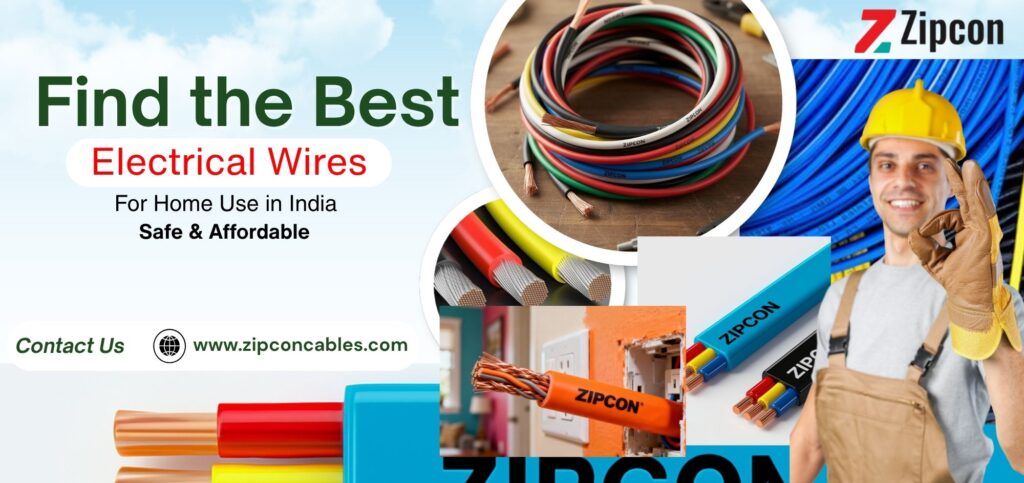
Choosing the best ZIPCON electrical wires for Indian homes is an important decision for electrical safety, reliable power delivery, and long-term performance. The right wire should match the electrical load, installation environment, appliance requirements, and circuit type.
Indian homes commonly use electrical wiring for lighting, fans, sockets, air conditioners, refrigerators, washing machines, water pumps, geysers, and other high-load appliances. Using an appropriately sized and properly insulated wire helps reduce overheating, voltage drop, and electrical faults.
ZIPCON offers electrical cable solutions designed for different residential applications. However, selecting the right product is not simply about choosing the thickest or most expensive wire. Conductor material, cross-sectional area, insulation quality, flexibility, current-carrying capacity, and installation conditions all matter.
Contact us today:- https://zipconcables.com/contact-us/
Why Choosing the Right Electrical Wire Matters
Electrical wire carries current from the distribution board to individual circuits and appliances. If the wire is unsuitable for the connected load, it can generate excessive heat and increase the risk of insulation damage or electrical failure.
A properly selected wire provides dependable electrical performance while supporting the safe operation of household appliances. The wire size should be selected according to the expected load, circuit length, installation method, and applicable electrical standards.
For homeowners, electricians, and builders, this makes wire selection an important part of residential electrical planning rather than a minor purchasing decision.
Best ZIPCON Electrical Wires for Different Home Applications
Different circuits require different types and sizes of electrical wires. A lighting circuit, general socket circuit, and air-conditioner circuit do not necessarily have the same electrical requirements.
ZIPCON House Wires for Lighting Circuits
Lighting circuits generally carry lower loads than heavy appliance circuits. A suitable house wire should provide dependable conductivity, good insulation, and enough flexibility for installation through conduits and electrical boxes.
ZIPCON house wires can be considered for residential lighting applications where the selected conductor size is appropriate for the circuit load and installation requirements.
ZIPCON Wires for Fans and General Appliances
Fans, televisions, computers, refrigerators, and other everyday appliances may be connected through residential socket circuits. The appropriate wire size depends on the combined load and circuit design.
For these applications, homeowners should avoid selecting wire purely on appearance or price. The conductor cross-section and electrical specifications are more important indicators of suitability.
ZIPCON Wires for Air Conditioners
Air conditioners can place considerably higher loads on a residential circuit, particularly during startup and sustained operation. They should normally have appropriately designed circuits rather than being treated like ordinary lighting points.
The wire size should be selected according to the AC’s rated electrical requirements, circuit length, protective device, and installation conditions. An electrician should verify the complete circuit before installation.
ZIPCON Wires for Geysers and Other High-Load Appliances
Geysers, electric ovens, induction cooktops, and similar appliances can require dedicated circuits because of their higher power consumption.
For such installations, selecting the correct conductor size and protection is essential. The cable should be compatible with the expected current and installation environment, while the circuit should have suitable protective equipment.
Key Features to Consider in ZIPCON Electrical Wires
1. Conductor Quality
The conductor is responsible for carrying electrical current. Copper is widely used in residential wiring because of its good electrical conductivity and suitability for flexible house-wiring applications.
When comparing electrical wires, check the conductor specification rather than judging quality only by the outside appearance of the cable.
2. Correct Wire Size
Wire size is one of the most important selection factors. Common residential sizes include 1.0 sq mm, 1.5 sq mm, 2.5 sq mm, 4 sq mm, and 6 sq mm, although the appropriate size depends on the circuit and load.
A larger conductor generally has greater current-carrying capability, but that does not mean every home circuit requires the largest available size.
3. Insulation Quality
Good insulation separates the conductor from the surrounding environment and helps protect against accidental contact and electrical faults.
For residential installations, the insulation should be suitable for the expected voltage, temperature, mechanical conditions, and installation method.
4. Flexibility
House wiring often passes through conduits, bends, junction boxes, switches, and distribution boards. Flexible wire can make installation easier and help electricians route the conductor through residential wiring systems.
Flexibility should, however, be considered alongside conductor construction and overall cable specifications.
5. Heat and Environmental Performance
Electrical wires can experience heat during normal operation. Poorly selected or overloaded wiring can experience excessive temperature rise.
For Indian residential conditions, the cable’s insulation and temperature characteristics should be appropriate for the installation environment, especially in areas exposed to heat or restricted ventilation.
How to Choose the Right ZIPCON Wire Size
Wire selection should start with the electrical load, not with the physical thickness of the cable.
A simple selection process is:
- Identify the appliance or circuit load.
- Determine the expected operating current.
- Consider the circuit length and possible voltage drop.
- Check the installation method, such as conduit or concealed wiring.
- Select an appropriate conductor size.
- Match the circuit with suitable protective devices.
- Have the installation checked by a qualified electrician.
For example, a basic lighting circuit and a high-power appliance circuit should not automatically use the same wire size. The electrical design determines the appropriate conductor.
ZIPCON Electrical Wires vs. Ordinary Low-Quality Wiring
The cheapest wire is not necessarily the most economical choice for a home. Electrical wiring remains inside walls, conduits, ceilings, and electrical panels for years, making replacement difficult and expensive.
A quality-focused approach considers conductor consistency, insulation performance, appropriate sizing, manufacturing quality, and compliance with relevant standards.
The better comparison is therefore not simply low price vs. high price. It is suitable specifications, dependable construction, and correct installation vs. unsuitable wiring.
Examples of Residential Wire Selection
Example 1: Bedroom Lighting and Fan
A bedroom may contain LED lights and a ceiling fan. The circuit load is generally lower than that of heavy appliances, so an appropriately sized house wire can be selected based on the circuit design.
The exact size should still be confirmed from the calculated load and electrical installation requirements.
Example 2: Kitchen Socket Circuit
A kitchen can simultaneously have appliances such as a microwave, mixer, refrigerator, induction cooktop, and other equipment.
Because the potential load is higher and variable, the circuit needs careful planning. Wire size, breaker rating, socket arrangement, and circuit segregation should be considered together.
Example 3: Air Conditioner Circuit
An AC should be evaluated based on its rated capacity and electrical specifications. The electrician should consider operating current, starting characteristics, circuit length, protective device, and installation conditions before choosing the cable.
This approach is more reliable than selecting a wire based only on the appliance name.
Expert Tips for Buying ZIPCON Electrical Wires
Check the actual wire size:
Do not rely only on cable appearance. Confirm the marked cross-sectional area and product specifications.
Match wire size with the load:
A wire should be selected according to the expected current and installation conditions.
Use separate circuits for major loads:
High-power appliances often require dedicated circuits designed specifically for their electrical requirements.
Inspect insulation and markings:
Look for clear product identification and specifications on the cable.
Buy from reliable sources:
Purchase genuine ZIPCON products through authorized or trusted channels to reduce the risk of substandard or counterfeit material.
Get professional installation:
Even a high-quality electrical wire cannot compensate for incorrect termination, undersized protection, loose connections, or poor installation practices.
Common Mistakes to Avoid
Choosing Wire Only by Price
The lowest-cost option may not provide the specifications required for the intended application. Residential wiring should be selected based on performance and suitability rather than price alone.
Using the Same Wire Size Everywhere
Different circuits have different loads. Using one wire size throughout an entire house without proper electrical calculations can result in unsuitable circuit design.
Ignoring Circuit Length
Longer cable runs can increase voltage drop. For longer circuits, the electrician may need to consider a larger conductor depending on the load and permissible voltage drop.
Overloading a Circuit
Connecting several high-power appliances to a circuit that was not designed for their combined load can cause excessive heating and nuisance tripping.
Mixing Poor-Quality Accessories With Good Wires
Switches, sockets, breakers, terminals, junctions, and distribution equipment also affect electrical safety. A reliable wiring system requires compatible and properly rated components throughout.
Why ZIPCON Can Be Considered for Residential Wiring
ZIPCON focuses on electrical cable solutions for applications ranging from residential wiring to specialized cable requirements. For homeowners and electrical contractors, the important consideration is selecting the right ZIPCON product for the specific application, rather than treating every wire as interchangeable.
When buying ZIPCON electrical wires, compare conductor size, insulation specifications, application suitability, relevant standards, and manufacturer information. Proper product selection combined with professional installation creates a more dependable residential electrical system.
Conclusion
The best ZIPCON electrical wires for Indian homes are not determined by brand name or thickness alone. The right choice depends on the electrical load, conductor size, insulation, circuit length, installation conditions, and intended application.
For lighting, fans, sockets, kitchens, air conditioners, geysers, and other appliances, each circuit should be designed according to its actual requirements. Choosing the appropriate ZIPCON wire and pairing it with correctly rated protection can support safer and more reliable home electrical installations.
Before purchasing, verify the required wire size and specifications with a qualified electrician, and choose genuine ZIPCON products from a reliable source. Good electrical wiring is a long-term investment in the safety and performance of your home.
Top 5 FAQs
1. Which ZIPCON electrical wire is best for home wiring?
The best ZIPCON wire depends on the application and electrical load. Lighting, sockets, air conditioners, geysers, and other appliances may require different conductor sizes and circuit designs.
2. What wire size is commonly used for residential wiring?
Common residential wire sizes include 1.0 sq mm, 1.5 sq mm, 2.5 sq mm, 4 sq mm, and 6 sq mm. The correct size should be selected according to the circuit load, length, installation method, and applicable electrical requirements.
3. Is copper wire suitable for Indian homes?
Copper is widely used for residential electrical wiring because of its good conductivity and suitability for house-wiring applications. The final selection should consider the complete cable specification and intended use.
4. Can one ZIPCON wire size be used for the entire house?
It is generally not appropriate to assume that one wire size suits every circuit. Different loads require different circuit designs, and wire size should be selected accordingly.
5. How can I ensure that ZIPCON electrical wires are installed safely?
Use the correct wire size, suitable protective devices, proper terminals and accessories, and professional installation. The completed wiring should be checked by a qualified electrician before the electrical system is put into regular use.