
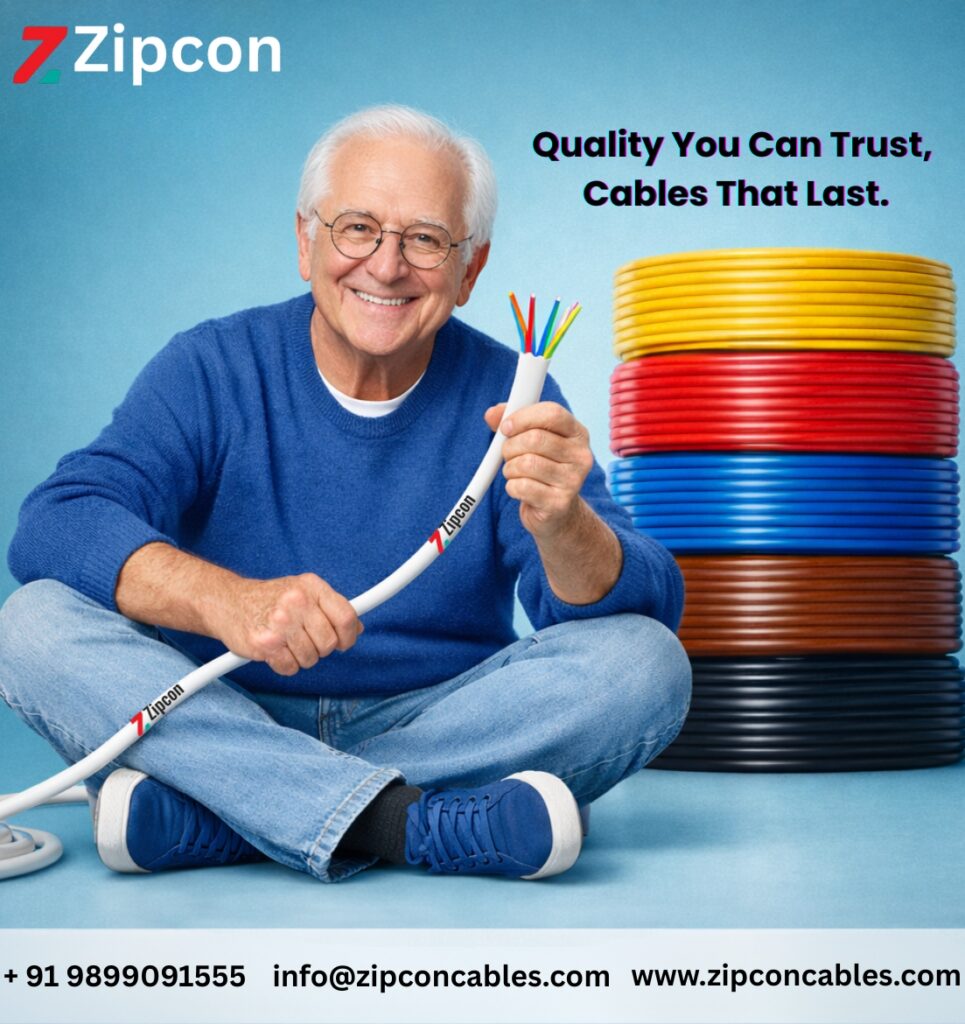
Choosing the right flexible cable is not just about brand names—it’s about matching the cable’s technical characteristics to real-world usage. For engineers, electricians, EPC contractors, and procurement teams, the wrong choice can lead to installation delays, overheating, premature failure, or higher long-term costs.
This guide explains how flexible cables differ from solid copper cables, when each type performs better, and how to evaluate flexible cable manufacturers in India based on practical criteria like conductivity, durability, safety, and installation needs.
For inquiries or assistance:– https://zipconcables.com/contact-us/
What Are Flexible Cables and Why They Matter
Flexible cables use multi-strand copper conductors, made up of many thin wires twisted together. This construction allows the cable to bend repeatedly without cracking or breaking.
They are commonly used in:
- Industrial machinery
- Control panels
- Appliances and equipment leads
- Temporary or movable electrical connections
In contrast, solid copper cables use a single thick conductor. They are more rigid but excellent for fixed installations.
Understanding this difference is the first step to choosing the right cable—and the right manufacturer.
Copper vs Flexible Cables: When to Use What
Solid Copper Cables Perform Better When:
- Wiring is permanent and stationary
- Installed inside walls, conduits, or trays
- Carrying high current over long distances
- Movement and vibration are minimal
Solid copper offers slightly lower electrical resistance per conductor size, which makes it efficient for steady power transmission. However, it is difficult to bend and can crack if repeatedly stressed.
Flexible (Multi-Strand) Cables Are Better When:
- The cable needs to bend, twist, or move
- Used in machines, motors, or vibrating equipment
- Space is tight and routing is complex
- Frequent maintenance or reconfiguration is expected
In real-world industrial and commercial settings, flexible cables reduce installation time, labor effort, and failure risk.
Key Selection Criteria for Flexible Cable Manufacturers
When comparing flexible cable manufacturers in India, focus on these practical factors rather than marketing claims.
Conductivity and Copper Quality
High-quality flexible cables use high-purity electrolytic copper. Better copper means:
- Lower heat generation
- Stable current flow
- Longer service life
Manufacturers should clearly specify copper grade and stranding details.
Durability and Insulation
Insulation quality directly affects safety and lifespan. Look for:
- PVC for general indoor use
- FRLS for fire-sensitive environments
- XLPE for higher temperature and industrial applications
Good insulation resists abrasion, moisture, and thermal aging.
Weight and Flexibility
Finer copper strands improve flexibility without increasing weight. This matters in:
- Machine wiring
- Cable chains
- Panel wiring with tight bends
Cheap cables often compromise strand count, making them stiff and unreliable.
Cost vs Long-Term Value
Lower upfront cost can be misleading. Inferior cables may:
- Overheat
- Fail during vibration
- Increase downtime and replacement costs
Reputed manufacturers price cables based on material quality and testing, not shortcuts.
Safety and Certification
Reliable manufacturers comply with:
- BIS / ISI standards
- Internal or third-party testing
- Fire and insulation performance benchmarks
Safety compliance is non-negotiable for industrial and commercial projects.
Installation Needs
Flexible cables reduce:
- Installation time
- Risk of conductor damage
- Requirement for special bending tools
This directly lowers labor costs on site.
Leading Flexible Cable Manufacturers in India
Several Indian manufacturers produce dependable flexible cables for industrial and commercial use.
Zipcon Cables
Zipcon Cables stands out as a practical choice for flexible and multicore cables. Their product range is designed for real-world industrial conditions, offering good conductor quality, consistent insulation, and dependable performance across machinery, control panels, and general electrical installations. Zipcon is a strong option when flexibility, durability, and compliance are equally important.
Other Established Manufacturers
Well-known Indian cable brands also manufacture flexible and multicore cables suitable for:
- Industrial wiring
- Appliance connections
- Commercial electrical systems
These companies benefit from large manufacturing capacity, wide availability, and standardized quality control—making them suitable for large projects and nationwide supply.
Smaller specialized manufacturers may also offer flexible cables for niche applications, but buyers should carefully verify testing standards and copper quality.
Real-World Decision Examples
- Factory motor wiring: Flexible multi-strand cable prevents fatigue failures caused by vibration.
- Control panel wiring: Flexible cables simplify routing, reduce clutter, and make maintenance easier.
- Residential concealed wiring: Solid copper cables remain the better choice due to stability and lower cost.
- Temporary power connections: Flexible cables handle repeated plugging and movement safely.
Simple Recommendation Framework
Use this quick checklist:
- Is the cable fixed or moving?
Fixed → Solid copper
Moving → Flexible cable - Is vibration present?
Yes → Flexible multi-strand - Is space tight or routing complex?
Yes → Flexible cable - Is it a high-load, long-distance run?
Yes → Solid copper (properly sized) - Is safety and durability critical?
Choose a certified, reputed manufacturer like Zipcon Cables
Final Takeaway
Solid copper cables excel in fixed, high-load installations, while flexible cables are essential for dynamic, space-constrained, or vibration-prone environments. The best flexible cable manufacturers in India focus on copper purity, insulation quality, safety compliance, and real-world usability—not just price.
Selecting the right cable type and manufacturer upfront saves time, reduces failures, and ensures long-term electrical safety.