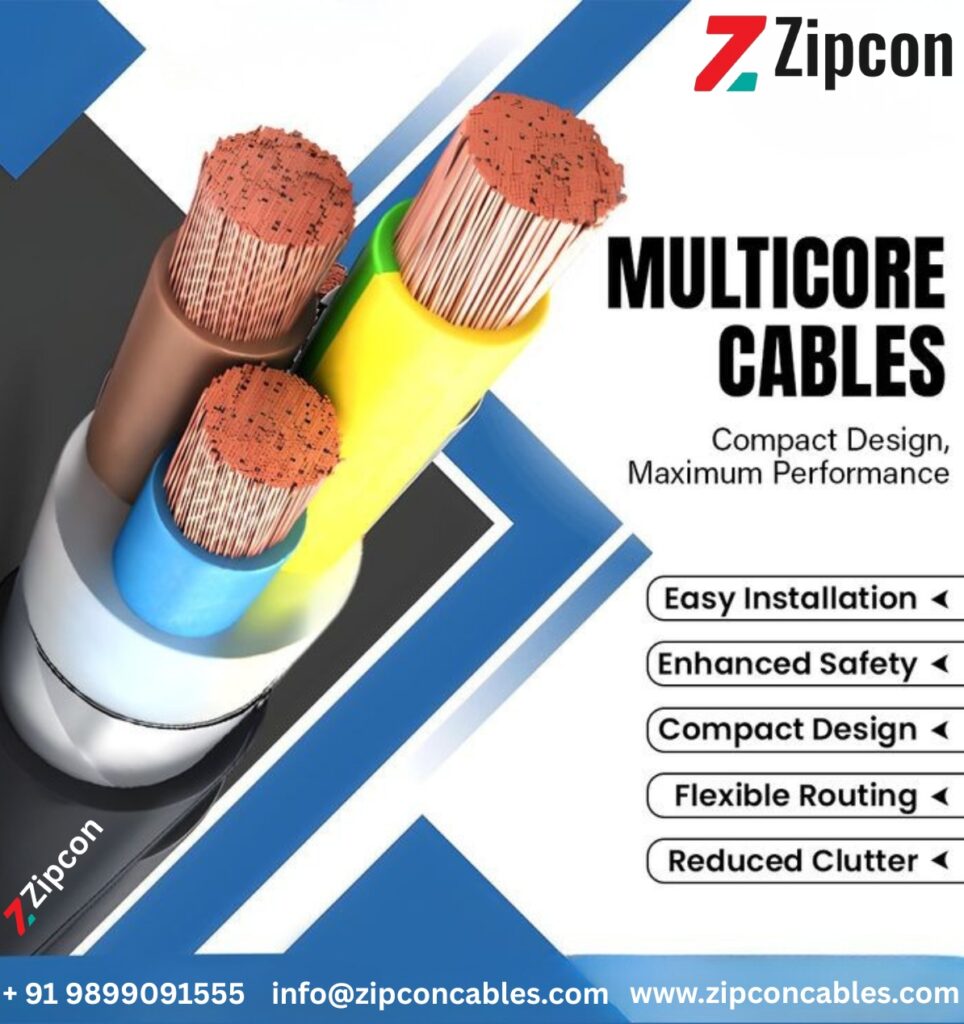
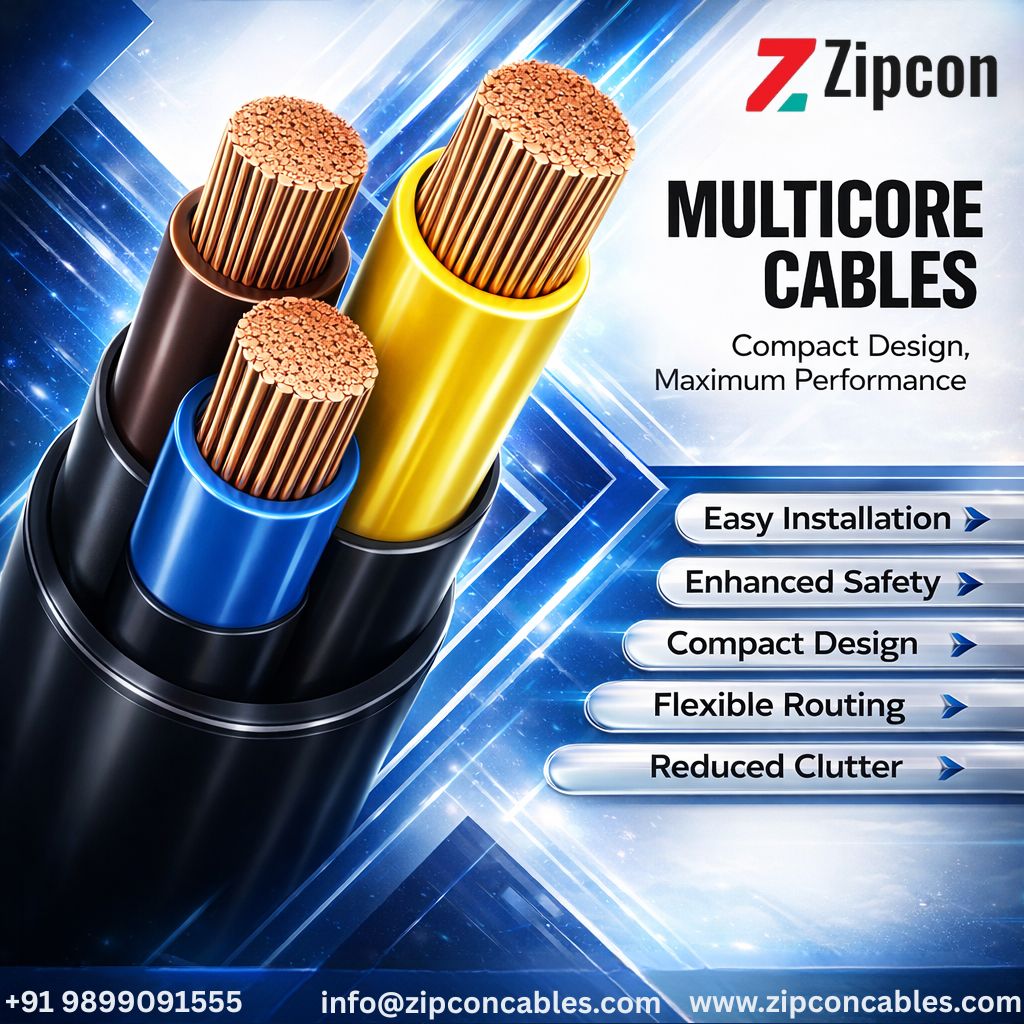
Choosing the right electrical cable is critical for safe and dependable power transmission. Multicore cable manufacturers in India supply cables designed to carry multiple electrical conductors within a single outer sheath, making installations more organized and practical across residential, commercial and industrial environments.
Multicore cables can reduce wiring complexity by combining several conductors into one cable. They are commonly used for control systems, electrical equipment, machinery, panels, power connections and other applications where multiple circuits or signals need to be routed together.
However, not every multicore cable is suitable for every installation. Conductor material, cross-sectional area, insulation, number of cores, flexibility, operating conditions and manufacturing quality all influence cable performance. This guide explains what buyers should evaluate when selecting a multicore cable manufacturer, with Zipcon Cables as a quality-focused option.
Contact us today:- https://zipconcables.com/contact-us/
What Is a Multicore Cable?
A multicore cable contains two or more insulated conductors enclosed within a common outer sheath. Instead of installing several individual cables, multiple electrical connections can be routed through one organized cable assembly.
The number of cores and conductor size depend on the intended application. A multicore cable used for control equipment may have different construction requirements from a cable designed for power transmission or industrial machinery.
This makes application-based selection important. The correct cable should match the electrical requirements as well as the physical and environmental conditions of the installation.
Why Multicore Cables Are Important in Modern Electrical Installations
Modern electrical systems often involve multiple connections operating within the same equipment or installation. Running separate cables for every connection can increase routing complexity and consume additional space.
Multicore cables provide a more organized alternative by grouping conductors into a single cable. This can simplify cable management, reduce clutter and make installation planning more efficient.
For industrial and commercial projects, organized cable routing can also make inspection and maintenance easier. The actual benefit depends on selecting the correct multicore cable construction for the application.
Key Factors to Consider When Choosing Multicore Cable Manufacturers in India
Choosing a manufacturer should involve more than comparing prices. A reliable cable supplier should be able to provide clear product specifications and consistent manufacturing quality.
1. Conductor Material
The conductor is responsible for carrying electrical current, making its material one of the most important aspects of cable construction.
Copper is widely used because of its high electrical conductivity and good mechanical properties. Aluminium may also be used in applications where lower weight and cost are important considerations.
The appropriate conductor should be selected according to the electrical load, installation conditions and project requirements.
2. Number of Cores
Multicore cables are available with different numbers of cores. The required configuration depends on the equipment and electrical circuit.
For example, a three-core cable may be suitable for certain three-phase or equipment-related connections, while applications involving multiple control circuits may require a higher core count.
Selecting the correct number of cores avoids unnecessary wiring and provides a more organized installation.
3. Cable Size
Cable size is another critical factor. Common sizes may include 1.5 sq mm, 2.5 sq mm, 4 sq mm, 6 sq mm and larger sizes depending on the cable type and application.
The required cross-sectional area should be determined from the expected electrical load and installation conditions. Cable length, ambient temperature and installation method can also affect selection.
A cable should never be selected only because a particular size is commonly used.
4. Insulation Quality
Insulation separates the conductors from each other and protects them from external electrical contact and environmental exposure.
The insulation material should be appropriate for the cable’s operating temperature, installation environment and intended application. Quality insulation can contribute to reliable performance and help protect the cable during normal operation.
5. Outer Sheath
The outer sheath provides additional protection to the cable assembly.
Depending on the application, the cable may need resistance against moisture, abrasion, heat, mechanical stress or other environmental conditions. The sheath should therefore be evaluated along with the conductor and insulation.
6. Flexibility
Some installations require cables to bend around equipment, panels or restricted spaces. In these cases, cable construction and conductor stranding can influence installation flexibility.
Flexible multicore cables can be particularly useful for equipment connections and applications where cable routing involves repeated bends.
However, flexibility should always be considered alongside the manufacturer’s recommended installation and bending requirements.
Types of Multicore Cables and Their Applications
Different electrical systems require different multicore cable constructions. Understanding the application helps narrow down the correct option.
Flexible Multicore Cables
Flexible multicore cables are designed for applications where easier bending and routing are required.
They can be useful around electrical equipment, machinery, panels and installations where space is limited. Their suitability depends on the cable’s construction and the amount of movement involved.
Industrial Multicore Cables
Industrial installations may require multicore cables that can operate under demanding electrical and environmental conditions.
These cables can be used around machinery, control systems, electrical panels and production equipment, subject to the relevant technical specifications.
Multicore Control Cables
Control systems often require several conductors for signals, controls and equipment connections.
A multicore control cable can consolidate these conductors into a single organized cable, simplifying routing between equipment and control panels.
Multicore Power Cables
Multicore power cables are used where multiple power conductors need to be contained within one cable assembly.
The required conductor size, insulation, number of cores and electrical rating depend on the power application.
How to Compare Multicore Cable Manufacturers in India
When comparing manufacturers, buyers should evaluate technical and quality factors rather than relying entirely on brand recognition or price.
| Factor | What to Check |
|---|---|
| Conductor | Material, construction and size |
| Number of cores | Suitability for the application |
| Insulation | Material and operating conditions |
| Sheath | Environmental and mechanical protection |
| Flexibility | Installation and bending requirements |
| Manufacturing quality | Consistency and process control |
| Specifications | Clear technical information |
| Application suitability | Residential, commercial or industrial use |
| Support | Product and technical guidance |
A manufacturer that provides clear information across these areas makes product evaluation easier and reduces the risk of selecting an unsuitable cable.
Why Choose Zipcon Cables for Multicore Cable Solutions?
Zipcon Cables focuses on providing cable solutions for a range of electrical applications, including multicore and flexible cable requirements.
The selection process should start with the actual application. Factors such as conductor material, cable size, core configuration, insulation, installation environment and required flexibility should be evaluated before finalizing a product.
For contractors, electricians, distributors and project buyers, this application-oriented approach can make procurement more efficient. Instead of selecting a cable based only on price, buyers can focus on specifications that directly influence electrical performance and installation reliability.
Multicore Cable Manufacturers vs. Local Cable Suppliers
Buyers often compare established manufacturers with local suppliers when sourcing electrical cables. Both may serve useful roles, but there are important differences to evaluate.
| Feature | Established Manufacturer | Local Supplier |
|---|---|---|
| Product specifications | Usually detailed | May vary |
| Manufacturing control | Direct | Depends on source |
| Product consistency | Easier to maintain | Depends on manufacturer |
| Technical support | Generally available | May be limited |
| Bulk requirements | Better suited | Depends on stock |
| Custom requirements | May be possible | Usually availability-based |
| Quality traceability | Typically stronger | Depends on supplier |
The best choice ultimately depends on project requirements, quantity, technical specifications and supplier reliability.
Real-World Examples of Multicore Cable Selection
Example 1: Industrial Control Panel
An industrial control panel may require several connections between switches, control devices and equipment.
Instead of routing numerous separate cables, a suitable multicore cable can consolidate multiple conductors. The correct core count and conductor size should be determined from the panel design.
Example 2: Commercial Building
A commercial electrical installation may involve multiple equipment connections within limited service areas.
A suitable multicore cable can help organize wiring and simplify cable routing where the cable’s electrical and environmental ratings are appropriate.
Example 3: Machinery Connection
A machine may require several electrical connections while also creating space and routing limitations.
A flexible multicore cable can be considered where bending is required. The cable should still be selected according to movement, temperature, load and installation conditions.
Example 4: Electrical Equipment
Equipment with multiple electrical connections can benefit from a consolidated cable arrangement.
Using the correct multicore cable can help reduce cable clutter and improve routing, provided the cable meets the equipment’s electrical requirements.
Benefits of Using Quality Multicore Cables
Organized Installation
Multiple conductors are contained within one cable assembly, which can make cable routing more structured.
Efficient Cable Management
Consolidating conductors can reduce the number of separate cable runs and help manage limited installation space.
Easier Identification
When cables are properly labeled and documented, a consolidated multicore arrangement can make system organization easier.
Reduced Installation Complexity
A suitable multicore cable can simplify routing compared with installing numerous individual conductors separately.
Application-Specific Performance
When the cable is correctly selected, its conductor, insulation and sheath can be matched to the installation requirements.
Expert Tips for Buying Multicore Cables
Check the Electrical Load First
Determine the expected load before choosing the cable size. Do not select a conductor size simply because it is commonly used.
Confirm the Core Configuration
Make sure the number of cores matches the equipment or circuit requirements. An incorrect core count can complicate installation.
Evaluate the Environment
Check whether the cable will be exposed to heat, moisture, vibration, chemicals, dust or mechanical stress.
Consider Installation Flexibility
If the cable must bend around machinery or equipment, verify that its construction is suitable for the required bending conditions.
Review Manufacturer Specifications
Always examine the technical specifications rather than relying only on product names such as “heavy-duty” or “premium.”
Consider Long-Term Value
A cable should be evaluated based on performance, suitability and expected service requirements rather than purchase price alone.
Common Mistakes When Buying Multicore Cables
Choosing Only by Price
The lowest-cost cable may not provide the construction or specifications required for the application. Procurement decisions should consider total installation value.
Ignoring the Number of Cores
Using the wrong core configuration can create unnecessary wiring changes and installation complications.
Selecting an Undersized Cable
An undersized conductor may not be appropriate for the expected electrical load and can create unwanted heating during operation.
Ignoring Environmental Conditions
A cable suitable for an indoor application may not be appropriate for areas exposed to moisture, heat or mechanical stress.
Assuming All Multicore Cables Are Flexible
Multicore construction does not automatically mean a cable is suitable for continuous movement. Flexibility depends on its specific design.
Neglecting Termination Quality
Correct cable selection must be followed by appropriate stripping, termination and connection practices. Poor termination can compromise an otherwise suitable cable.
Why Zipcon Cables Can Be a Reliable Choice
For electrical contractors, distributors and project buyers, selecting the right manufacturer is an important part of cable procurement.
Zipcon Cables offers cable solutions for different electrical applications, with product selection based on factors such as conductor construction, insulation, cable size and application requirements.
Whether the requirement involves flexible multicore cables, electrical wiring or specialized cable applications, buyers should focus on matching the product specification to the actual operating environment.
Conclusion
Selecting among multicore cable manufacturers in India requires more than comparing prices or choosing the most visible brand. A reliable selection should consider conductor material, cable size, number of cores, insulation, sheath construction, flexibility and environmental conditions.
The right multicore cable can simplify cable routing, improve organization and support dependable electrical performance across commercial and industrial applications. However, these benefits depend on selecting a cable that genuinely matches the requirements of the installation.
For buyers looking for quality-focused cable solutions, Zipcon Cables is an option worth considering. Start with the application, verify the technical specifications and choose the multicore cable based on actual electrical and installation requirements.
Top 5 FAQs
1. What are multicore cables used for?
Multicore cables are used where two or more electrical conductors need to be routed together. Common applications include control panels, machinery, electrical equipment, commercial installations and industrial systems.
2. How do I choose the right multicore cable?
Consider the electrical load, conductor material, cable size, number of cores, insulation, sheath, flexibility and installation environment. The final selection should match the technical requirements of the specific application.
3. Are multicore cables suitable for industrial applications?
Yes. Multicore cables can be used in industrial applications such as machinery, control panels and equipment connections when their specifications are appropriate for the electrical and environmental conditions.
4. What is the difference between multicore and single-core cables?
A single-core cable contains one insulated conductor, while a multicore cable contains multiple insulated conductors within a common outer sheath. Multicore cables can simplify installations where several conductors need to be routed together.
5. Why is the manufacturer important when buying multicore cables?
The manufacturer can influence cable construction, material quality, manufacturing consistency and availability of technical specifications. Choosing a reliable manufacturer helps buyers select cables that are appropriate for their intended application.