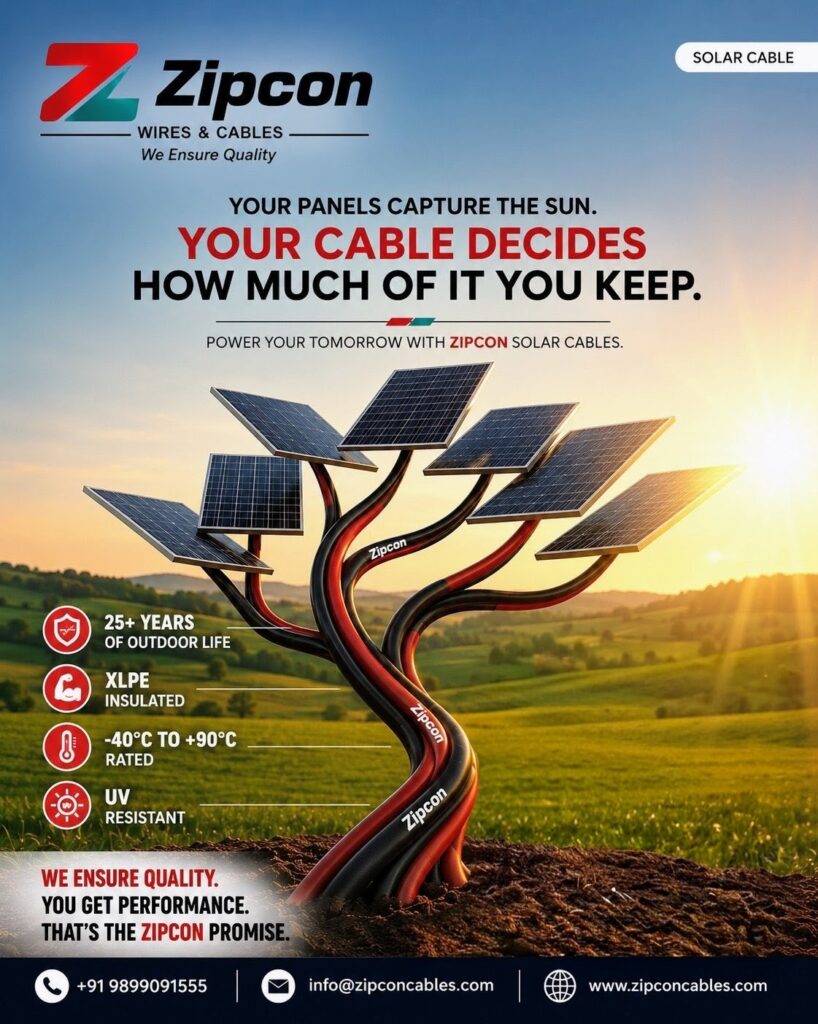
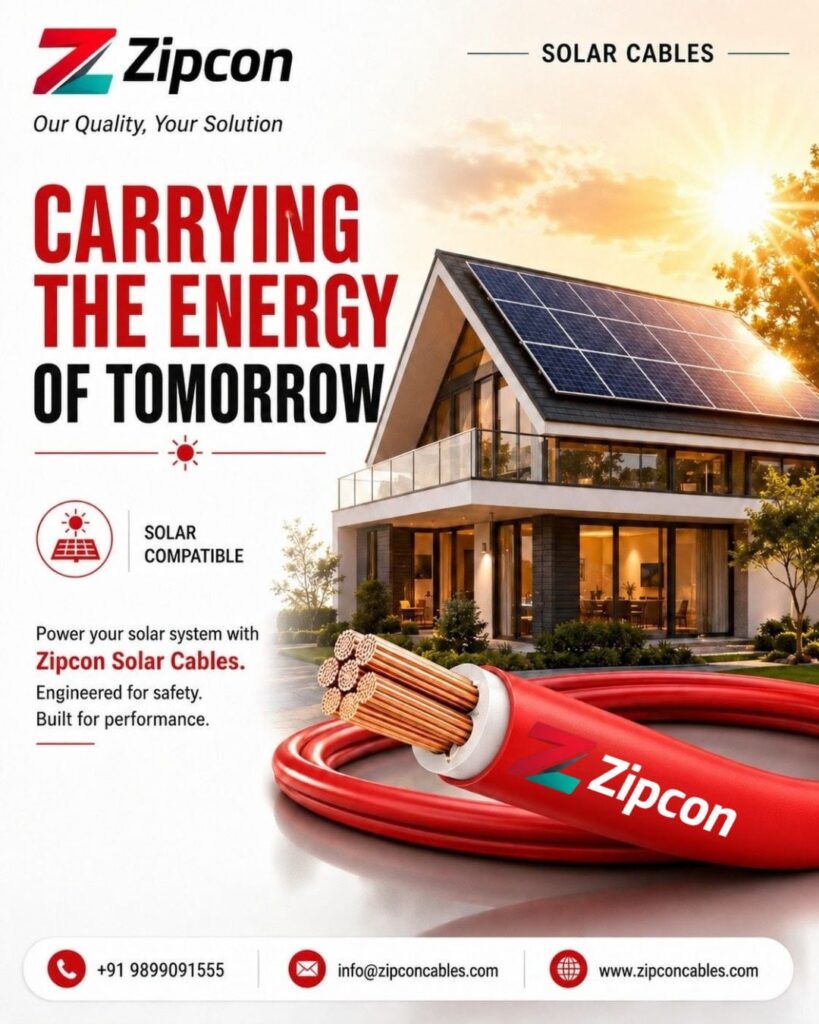
Choosing the best solar cable in Kochi is essential for building a safe, efficient, and dependable solar power system. Solar cables connect photovoltaic panels with inverters, combiner boxes, batteries, and other system components, making them critical for continuous energy transmission.
Kochi’s tropical and coastal environment brings high humidity, strong sunlight, rainfall, heat, and moisture exposure. Solar cables installed on rooftops or outdoor solar structures must therefore withstand demanding conditions while maintaining electrical and mechanical performance.
For residential rooftops, commercial buildings, industrial facilities, and solar pumping systems, Zipcon Cables provides solar cable solutions designed for reliable outdoor electrical connections. Selecting the correct cable size, insulation, voltage rating, and installation type is essential for long-term performance.
For inquiries or assistance: https://zipconcables.com/contact-us/
What Is a Solar Cable?
A solar cable is an electrical cable specifically designed for photovoltaic systems. It carries DC power generated by solar panels to equipment such as an inverter or other components of the solar installation.
Unlike ordinary electrical wires, solar cables are designed for continuous outdoor exposure and demanding operating conditions. Depending on their construction and specifications, they can provide resistance against sunlight, temperature variations, moisture, abrasion, and other environmental factors.
A properly selected solar photovoltaic cable helps minimize electrical losses and supports safe power transmission throughout the solar system.
Why Solar Cable Quality Matters in Kochi
Solar cables are exposed to environmental conditions for years after installation. In Kochi, high humidity, monsoon rainfall, UV exposure, and elevated temperatures make cable construction particularly important.
A cable with unsuitable insulation can deteriorate over time, potentially affecting electrical safety and system efficiency. The cable should therefore be selected according to the solar system’s voltage, current, installation method, environmental exposure, and applicable technical requirements.
Quality solar cables can provide:
- Reliable DC power transmission
- Better resistance to outdoor exposure
- Protection against moisture and environmental conditions
- Suitable mechanical strength
- Reduced risk of premature insulation deterioration
- Better long-term cable management
- Consistent performance when correctly sized and installed
Applications of Solar Cables
Solar cables are used across residential, commercial, industrial, and agricultural solar installations.
Residential Solar Rooftops
Homes with rooftop solar systems require cables to connect photovoltaic modules with inverters and other system components. The cables are generally routed across rooftops, mounting structures, conduits, or other designated pathways.
Because rooftop cables can remain exposed to sunlight and weather, appropriate UV and environmental resistance is important.
Commercial Solar Projects
Shopping complexes, offices, schools, warehouses, hospitals, and other commercial buildings may use larger solar installations. These systems require carefully planned cable routes and suitable cable sizes to manage the generated DC power.
Using appropriately rated solar cables helps maintain reliable connections between PV modules and electrical equipment.
Industrial Solar Systems
Factories and industrial facilities often install solar systems to reduce grid dependency and manage energy costs. Such installations can involve long cable runs and higher electrical loads.
Cable selection should account for current capacity, voltage drop, ambient temperature, installation arrangement, and mechanical conditions.
Solar Water Pump Systems
Solar pumping systems use photovoltaic energy to operate water pumps. Solar cables can connect solar panels to the pump controller, inverter, or related equipment depending on system design.
For agricultural and water-pumping applications, outdoor durability and appropriate insulation are especially important because the installation can remain exposed to heat, moisture, dust, and changing weather conditions.
Key Features to Look for in Solar Cable
UV Resistance
Solar cables are frequently exposed to direct sunlight. UV-resistant insulation and sheathing help reduce degradation caused by prolonged solar radiation.
This is particularly important for rooftop and ground-mounted installations where cables may remain outdoors throughout their operating life.
Temperature Resistance
Solar installations can experience elevated temperatures, particularly on rooftops during summer. The cable’s temperature rating should be suitable for the expected operating conditions.
The actual rating should always be checked against the manufacturer’s technical specifications and installation requirements.
Moisture Resistance
Kochi receives significant rainfall and has a humid climate. Solar cables used outdoors should have construction suitable for moisture exposure and the intended installation environment.
Proper cable routing and protection are also important because even a quality cable can experience problems when installed incorrectly.
Flexible Construction
Solar installations often require cables to follow mounting structures and connect individual PV modules. Suitable flexibility can make installation easier and help maintain organized cable routing.
However, flexibility should not be considered separately from conductor size, insulation quality, mechanical strength, and application requirements.
Appropriate Voltage Rating
Solar DC circuits can operate at significant voltages. The cable’s rated voltage must be compatible with the photovoltaic system.
The maximum system voltage, current, temperature, and installation conditions should be checked before selecting the cable.
Solar Cable Size: Why It Matters
Choosing the right solar cable size is one of the most important decisions during installation. Cable size affects current-carrying capacity, voltage drop, heat generation, and overall system performance.
For example, a cable that is too small for the required current can experience excessive heating and greater voltage losses. Conversely, selecting a much larger cable than necessary can increase installation cost without providing a proportional benefit.
Cable sizing should consider:
- Maximum operating current
- System voltage
- Cable length
- Permitted voltage drop
- Ambient temperature
- Installation method
- Grouping of cables
- Conductor material
- Applicable electrical standards
For larger solar projects, cable sizing should be calculated by a qualified electrical or solar professional.
Solar Cable vs Ordinary Electrical Cable
Solar cables and conventional electrical cables are not automatically interchangeable.
| Feature | Solar Cable | Ordinary Electrical Cable |
|---|---|---|
| Primary application | Photovoltaic systems | General electrical installations |
| Outdoor exposure | Designed for suitable PV applications | Depends on cable type |
| UV exposure | Often designed for prolonged outdoor exposure | Not necessarily suitable |
| Temperature conditions | Selected for solar operating environments | Varies by cable type |
| DC solar applications | Specifically used for PV circuits | Depends on specification |
| Flexibility | Designed according to PV installation requirements | Varies |
| Environmental protection | Selected for solar environment | Application dependent |
The correct choice depends on the manufacturer’s specifications and the requirements of the solar installation.
Why Choose Zipcon Cables for Solar Projects?


Zipcon Cables offers cable solutions for applications where reliable electrical connectivity and outdoor durability are important. Its solar cable range can be considered for residential, commercial, industrial, and solar pumping applications based on the required technical specifications.
For projects in Kochi, the cable should be selected according to system voltage, current, cable length, environmental exposure, installation method, and applicable standards. Zipcon Cables can be a practical option for customers looking for dependable solar cables in Kochi.
The focus should always remain on matching the cable specification to the solar system rather than selecting a cable solely on price.
Examples of Solar Cable Applications
Example 1: Residential Rooftop Solar
A homeowner installs a rooftop photovoltaic system. Solar cables are required to connect the PV modules to the inverter. Because the cables are exposed to sunlight and changing weather conditions, the selected cable should have suitable outdoor and UV resistance.
Example 2: Commercial Building
A commercial building installs a larger rooftop solar system. Multiple PV strings need to be connected to electrical equipment through organized cable routes.
In this situation, cable sizing should account for current, distance, voltage drop, temperature, and installation arrangement.
Example 3: Solar Water Pump
An agricultural user installs a solar-powered water pump. The solar cable connects the PV array with the relevant pump control equipment.
Because agricultural installations can experience heat, dust, moisture, and outdoor exposure, the cable should be selected for the actual environmental conditions.
Expert Tips for Buying Solar Cable in Kochi
- Select a cable specifically suitable for the intended photovoltaic application.
- Calculate the required conductor size instead of choosing based only on price.
- Check the maximum system voltage before purchasing.
- Consider voltage drop for longer cable runs.
- Choose suitable UV and environmental resistance for outdoor installations.
- Check temperature ratings against expected site conditions.
- Use appropriate connectors compatible with the cable and solar equipment.
- Keep cables properly supported and protected from unnecessary mechanical stress.
- Avoid loose cable loops that can create poor cable management.
- Purchase from a reliable manufacturer or authorized supplier.
Common Mistakes When Choosing Solar Cables
Using Ordinary Wire Instead of Suitable Solar Cable
Not every electrical wire is suitable for photovoltaic applications. Outdoor solar installations require cable construction appropriate for prolonged environmental exposure.
Selecting Cable Size Only by Current
Current is important, but cable length, voltage drop, temperature, installation method, and grouping can also affect cable selection.
Ignoring UV Exposure
Rooftop cables may remain exposed to direct sunlight for years. Choosing a cable without suitable environmental characteristics can increase the risk of insulation degradation.
Poor Cable Routing
Even a high-quality solar cable can be damaged if it is left hanging, exposed to sharp edges, subjected to excessive bending, or placed where mechanical damage can occur.
Choosing Based Only on Price
Cable quality directly affects electrical safety and long-term system reliability. A cheaper cable is not necessarily more economical if it results in premature replacement or maintenance.
Solar Cable Installation Best Practices
Proper installation is as important as cable quality. Cables should be routed in a manner that minimizes mechanical stress, unnecessary bends, abrasion, and prolonged contact with potentially damaging surfaces.
Cable connections should use compatible connectors and appropriate installation practices. Cables should also be adequately supported so that their weight or movement does not place stress on connectors.
For commercial and industrial projects, installation should follow the project’s electrical design, manufacturer’s instructions, and applicable standards.
Conclusion
The best solar cable in Kochi should be selected based on electrical load, voltage rating, cable size, voltage drop, temperature, environmental exposure, and installation conditions. A properly specified solar cable helps maintain reliable DC power transmission and supports the long-term performance of a photovoltaic system.
For residential rooftops, commercial buildings, industrial facilities, and solar pumping projects, Zipcon Cables can be considered for reliable solar cable solutions. Select the appropriate specification for your system, use compatible accessories, and ensure professional installation for safe and dependable solar power transmission.
Top 5 FAQs
1. What is a solar cable used for?
A solar cable is primarily used to transmit DC electricity between photovoltaic panels and components such as inverters, combiner boxes, controllers, or other equipment in a solar power system.
2. What size solar cable should I use?
The required solar cable size depends on current, system voltage, cable length, voltage drop, temperature, installation method, and conductor characteristics. A qualified professional should calculate the appropriate size for the specific installation.
3. Can ordinary electrical wire be used for solar panels?
Not necessarily. Solar installations require cables that meet the electrical, environmental, and mechanical requirements of the photovoltaic system. The cable manufacturer’s specifications should confirm suitability for the intended application.
4. Why is UV resistance important in solar cables?
Solar cables can remain exposed to direct sunlight for extended periods. Suitable UV-resistant construction helps reduce deterioration caused by prolonged ultraviolet exposure.
5. Is Zipcon Cable suitable for solar projects in Kochi?
Zipcon Cables offers solar cable solutions that can be considered for residential, commercial, industrial, and solar pumping applications. The specific cable should be selected according to the project’s voltage, current, environmental conditions, installation method, and required technical specifications.