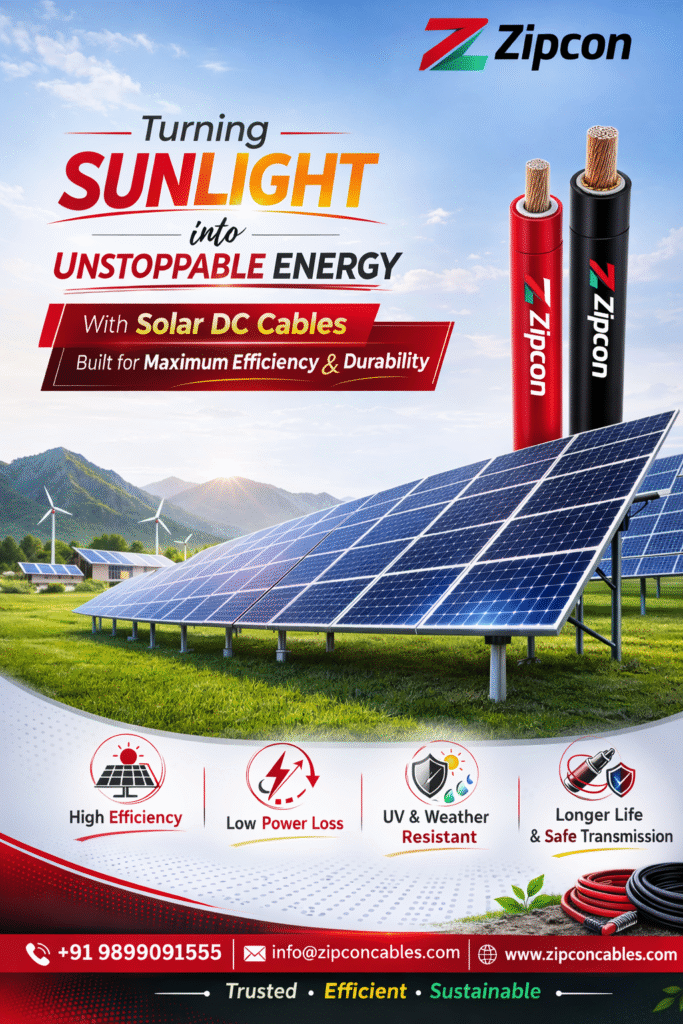
Top-quality solar cables in Mumbai play a direct role in system efficiency, safety, and long-term durability. In rooftop installations across housing societies and large industrial solar plants in MIDC zones, cable performance determines how reliably power flows from panels to inverters and distribution boards. Inferior wiring leads to voltage drops, overheating, and frequent maintenance.
Mumbai’s coastal humidity, high temperatures, and dense infrastructure demand solar cables built for harsh environmental conditions. Selecting the right solar DC cable or solar AC cable ensures optimal energy transmission, insulation stability, and compliance with Indian electrical standards. Brands like ZIPCON Cables offer solutions engineered specifically for residential and industrial solar installations.
For technical support or project inquiries: https://zipconcables.com/contact-us/
Why Solar Cable Quality Matters in Mumbai
Solar cables are not ordinary electrical wires. They are exposed to UV radiation, rainfall, dust, temperature fluctuations, and mechanical stress for decades. In Mumbai’s climate, poor-quality insulation cracks faster, leading to current leakage and system downtime.
High-performance solar cables maintain conductivity even under prolonged sunlight exposure. They are designed with UV-resistant compounds, flame-retardant insulation, and robust copper conductors. For industrial installations where load capacity is high, premium cables prevent overheating and reduce transmission losses.
Key Features of Top-Quality Solar Cables
1. Tinned Copper Conductors
Tinned copper enhances corrosion resistance, which is essential in coastal regions like Mumbai. It ensures stable conductivity and longer cable life in humid conditions.
2. XLPO or XLPE Insulation
Cross-linked polyolefin insulation offers high thermal stability and resistance to abrasion. It withstands temperatures ranging from -40°C to 120°C, ideal for rooftop exposure.
3. UV and Weather Resistance
Solar cables must resist UV degradation. Premium-grade compounds prevent cracking and brittleness even after years of exposure.
4. Flame Retardant and Low Smoke Properties
In residential buildings and industrial facilities, safety compliance is critical. Flame-retardant solar cables reduce fire risk and emit minimal smoke during combustion.
5. Low Voltage Drop Performance
High-quality solar DC cables minimize energy loss between solar panels and inverters. Reduced voltage drop improves overall solar system efficiency.
ZIPCON Cables integrates these features into its product range, ensuring durability and consistent output performance.
Residential Solar Installations: Cable Requirements
In residential rooftop systems, cable routing is compact but exposed. Cables run across terraces, walls, and shafts. They must handle moderate current loads while remaining flexible for installation.
A typical 5 kW rooftop solar system uses solar DC cables between panels and inverter, and solar AC cables from inverter to the main distribution board. Using certified cables prevents energy loss and ensures smooth net metering integration.
ZIPCON solar cables are designed for easy handling, strong insulation, and long service life, making them suitable for housing societies and independent homes across Mumbai.
Industrial Solar Installations: Higher Demands
Industrial solar installations in warehouses, factories, and manufacturing units require heavy-duty solar cables. These systems operate at higher voltages and currents, often spread over large areas.
Industrial-grade solar cables must offer:
- Higher current carrying capacity
- Mechanical strength against physical stress
- Enhanced insulation thickness
- Resistance to oil, chemicals, and industrial pollutants
Poor cable selection in industrial plants leads to overheating and operational disruptions. ZIPCON Cables provides high-capacity solutions tailored for industrial solar EPC contractors and developers.
Solar DC vs Solar AC Cables
Solar DC Cables
Used between solar panels and inverter. These cables handle direct current and must withstand continuous outdoor exposure. They require double insulation and high UV resistance.
Solar AC Cables
Used between inverter and distribution system. They carry alternating current and must comply with electrical safety norms for internal wiring.
Both cable types must meet BIS and IEC standards for reliable solar power transmission.
Why ZIPCON Cables is a Trusted Choice in Mumbai
ZIPCON Cables focuses on durability, compliance, and performance. Their solar cables are manufactured using high-grade copper and advanced insulation compounds suited for Indian climatic conditions.
Key advantages include:
- Strict quality control processes
- Consistent conductor purity
- Enhanced thermal resistance
- Compliance with national safety standards
- Suitable for residential, commercial, and industrial solar projects
Their presence in Mumbai ensures easy availability and reliable after-sales support for installers and contractors.
Example: Residential vs Industrial Cable Selection
A residential 3 kW system in Andheri requires flexible 4 sq mm or 6 sq mm solar DC cable depending on layout distance. The focus remains on UV protection and ease of installation.
An industrial 500 kW rooftop plant in Navi Mumbai demands thicker cross-sections, higher insulation grades, and cables capable of managing heavy current loads. Mechanical strength and thermal stability become priority factors.
Choosing the wrong specification in either scenario affects efficiency and system lifespan.
Expert Tips for Choosing Solar Cables
- Always check conductor material purity before purchase.
- Verify insulation temperature rating for Mumbai’s heat conditions.
- Ensure compliance with IEC and BIS certifications.
- Calculate voltage drop before selecting cable size.
- Buy from established brands like ZIPCON Cables for long-term reliability.
Common Mistakes to Avoid
- Using regular electrical wires instead of certified solar cables.
- Ignoring voltage drop calculations in long cable runs.
- Choosing lower cross-section to reduce cost.
- Overlooking UV resistance in rooftop installations.
- Purchasing from unverified suppliers without compliance documentation.
These mistakes reduce system efficiency and increase maintenance costs.
Conclusion
Top-quality solar cables in Mumbai are critical for safe and efficient residential and industrial solar installations. Proper insulation, high-grade conductors, and compliance with safety standards ensure long-term performance.
ZIPCON Cables offers durable and reliable solar cable solutions engineered for Mumbai’s climate and infrastructure needs. Selecting the right cable today safeguards system output, reduces risk, and maximizes return on solar investment.
Top 5 SEO FAQs
1. What makes solar cables different from normal electrical cables?
Solar cables are designed for UV exposure, high temperature tolerance, and outdoor durability, unlike regular wires meant for indoor use.
2. Which solar cable size is suitable for residential systems?
Cable size depends on system capacity and distance between components. Most residential systems use 4 sq mm or 6 sq mm solar DC cables.
3. Why is UV resistance important for solar cables in Mumbai?
Continuous sunlight and coastal humidity can degrade poor insulation. UV-resistant cables maintain performance over long periods.
4. Are industrial solar cables different from residential ones?
Industrial cables handle higher current loads and require thicker insulation and stronger mechanical protection.
5. Why choose ZIPCON Cables for solar installations in Mumbai?
ZIPCON Cables provides certified, durable, and high-performance solar cables suitable for both residential and industrial applications.