
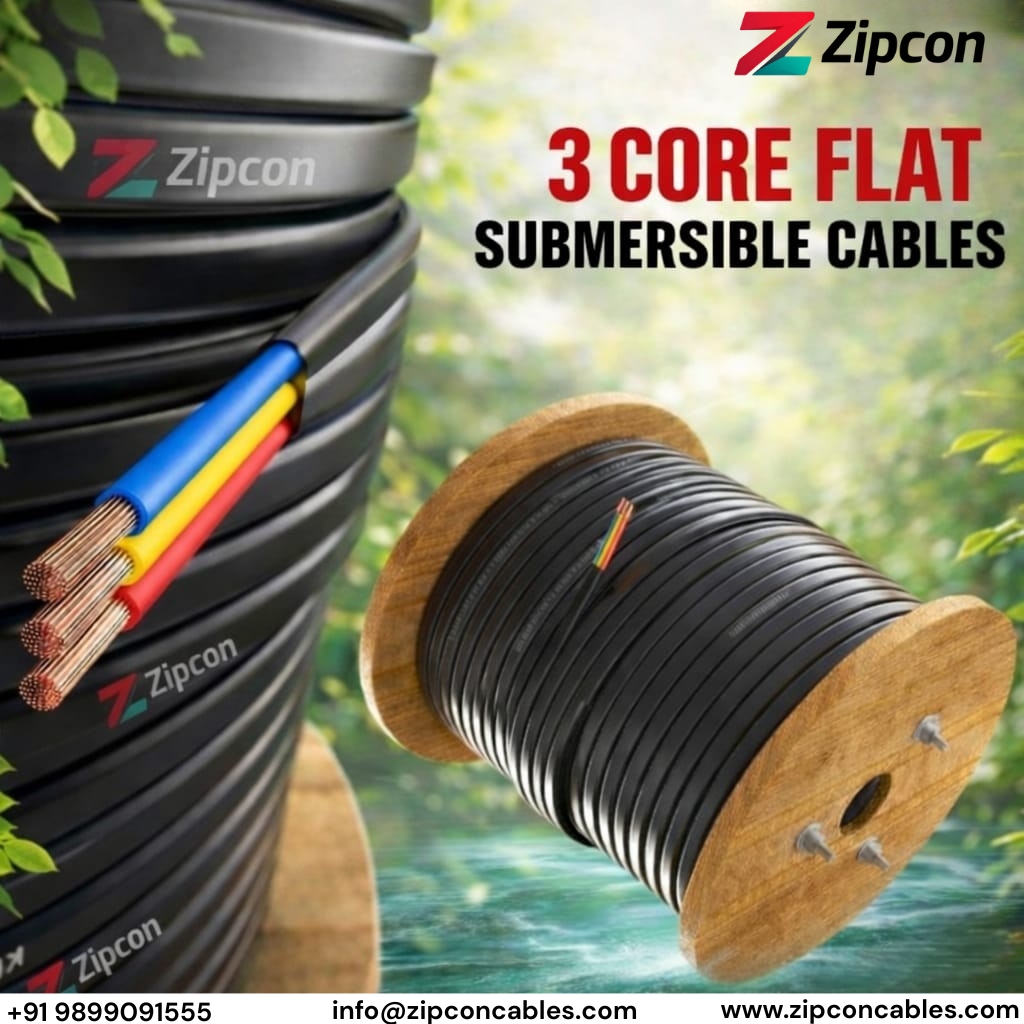
Finding the best submersible cables in Mumbai is not just about brand recognition. It is about selecting a cable that maintains conductivity, resists water damage, handles load efficiently, and protects your pump for years. In borewell systems, irrigation setups, and industrial water lines, cable quality directly affects motor life and electricity efficiency.
Zipcon Cables has established itself as a dependable manufacturer known for durable insulation, high-purity copper conductors, and consistent performance in submerged environments. For electricians, contractors, and buyers, choosing the right submersible cable means reducing voltage drop, preventing overheating, and avoiding frequent maintenance.
For technical support or project inquiries: https://zipconcables.com/contact-us/
Electrical Conductivity and Power Efficiency
Electrical conductivity determines how effectively current reaches the submersible pump. Copper submersible cables offer low resistance and stable current flow, making them suitable for deep borewells and higher horsepower motors. Reduced resistance means lower voltage drop, which directly improves pump efficiency and reduces motor stress.
In Mumbai installations where borewell depths can exceed 200 feet, voltage fluctuation is common. A high-conductivity copper cable ensures smooth motor starting and steady torque. Lower-grade conductors may increase power loss, causing frequent overload trips and motor heating.
Zipcon Cables uses high-grade copper conductors to maintain consistent electrical performance, especially in long-distance cable runs.
Durability, Insulation, and Water Resistance
Submersible cables operate continuously underwater. Insulation quality defines their lifespan. A reliable cable must resist moisture penetration, abrasion, soil pressure, and chemical exposure.
High-quality PVC or specialized insulation compounds prevent water ingress and cracking. In coastal regions like Mumbai, high humidity accelerates insulation damage if materials are inferior. Proper insulation maintains insulation resistance and prevents leakage current.
Zipcon submersible cables are built with durable outer sheathing and strong insulation layers designed for long-term underwater usage, reducing the risk of short circuits and premature failure.
Weight, Flexibility, and Handling
Cable weight and flexibility affect installation ease, especially in deep borewell systems. Copper cables are slightly heavier due to material density, yet well-stranded copper conductors provide flexibility and reduce stress during installation.
Flexible cables allow smoother pump lowering and reduce strain on joints. Lightweight alternatives may simplify handling but can compromise durability if conductor cross-section or insulation thickness is reduced.
For professional installations, flexibility combined with mechanical strength ensures safer and longer-lasting operation.
Cost Comparison and Long-Term Value
Submersible cable price varies based on conductor material, insulation quality, and manufacturing standards. Budget cables may reduce initial investment, but they often increase long-term operational costs through energy loss and maintenance.
Copper submersible cables generally cost more upfront. However, lower resistance means better energy efficiency and fewer motor failures. Over several years, this translates into lower electricity bills and reduced service calls.
Zipcon Cables balances cost and performance by offering reliable, standards-compliant cables suited for residential, agricultural, and industrial applications.
Safety Standards and Installation Requirements
Safety remains critical in submerged electrical systems. Reliable submersible cables must offer high insulation resistance, flame-retardant properties, and proper conductor stranding to avoid overheating.
Cable selection should match pump capacity, supply voltage, and cable length. Undersized cables increase resistance and cause heating. Proper gauge selection prevents voltage drop and protects motor windings.
Zipcon provides multiple size options to suit 1 HP residential pumps to higher HP agricultural and industrial motors, helping electricians choose correctly without guesswork.
Copper vs Other Cable Types: Practical Comparison
Where Copper Submersible Cables Perform Better
- Deep borewells with long cable runs
- High HP agricultural pumps
- Continuous industrial operations
- Areas with voltage fluctuation
Copper offers better conductivity, load handling, and reduced power loss. It maintains performance stability even under frequent starting cycles.
Where Other Cable Options May Be Suitable
- Short cable runs under 20–30 meters
- Low HP domestic pumps
- Temporary installations
- Strict budget-focused projects
In light-duty scenarios, alternative cables may function adequately. For permanent or heavy-duty systems, copper remains the safer choice.
Real-World Examples
Residential Borewell Installation
A housing society in Mumbai uses a 1.5 HP pump at 180 feet depth. Copper submersible cable maintains steady voltage at the motor terminal. The pump starts smoothly, and overheating issues reduce significantly compared to lower-grade alternatives.
Agricultural Irrigation Pump
A 5 HP pump in a peri-urban farm runs daily for irrigation. Long cable distance from the power source increases voltage drop risk. A copper cable with appropriate cross-section reduces energy loss and extends motor life.
Industrial Water System
An industrial unit uses submersible pumps for continuous water circulation. Stable conductivity ensures uninterrupted operations. Frequent breakdowns due to inferior cables can halt production and increase maintenance costs.
Expert Tips for Choosing the Right Submersible Cable
- Match cable gauge to pump horsepower and distance.
- Choose copper conductors for deep or high-load installations.
- Check insulation thickness and water resistance rating.
- Avoid undersized cables to prevent voltage drop.
- Buy from manufacturers with consistent quality standards like Zipcon Cables.
Common Mistakes to Avoid
- Selecting cable based only on price.
- Ignoring voltage drop in long-distance runs.
- Using low-grade insulation in high-moisture soil.
- Installing undersized cables for high HP pumps.
- Mixing incompatible jointing methods.
These errors often lead to overheating, frequent rewinding, and higher maintenance expenses.
Conclusion
Choosing the best submersible cables in Mumbai requires practical evaluation of conductivity, durability, safety, and installation conditions. Copper submersible cables remain the preferred option for deep borewells, agricultural pumps, and industrial systems due to superior efficiency and load handling.
Zipcon Cables offers a dependable solution with high-quality copper conductors, strong insulation, and performance designed for submerged environments. For long-term reliability and reduced maintenance, selecting the right cable from a trusted manufacturer ensures safe and efficient pump operation.
Top 5 SEO FAQs
1. Which is the best submersible cable for borewells in Mumbai?
Copper submersible cables with strong insulation and proper gauge selection are ideal for deep borewells and consistent performance.
2. Why is copper preferred in submersible pump cables?
Copper provides higher conductivity, lower resistance, better load handling, and reduced voltage drop.
3. How do I select the correct size of submersible cable?
Cable size depends on pump horsepower, distance from power source, and operating voltage.
4. Are cheaper submersible cables reliable?
They may work for short, low-load installations but can increase energy loss and maintenance in long-term use.
5. What makes Zipcon Cables suitable for submersible applications?
Zipcon Cables offers durable insulation, high-purity copper conductors, and consistent quality suited for residential, agricultural, and industrial water systems.