
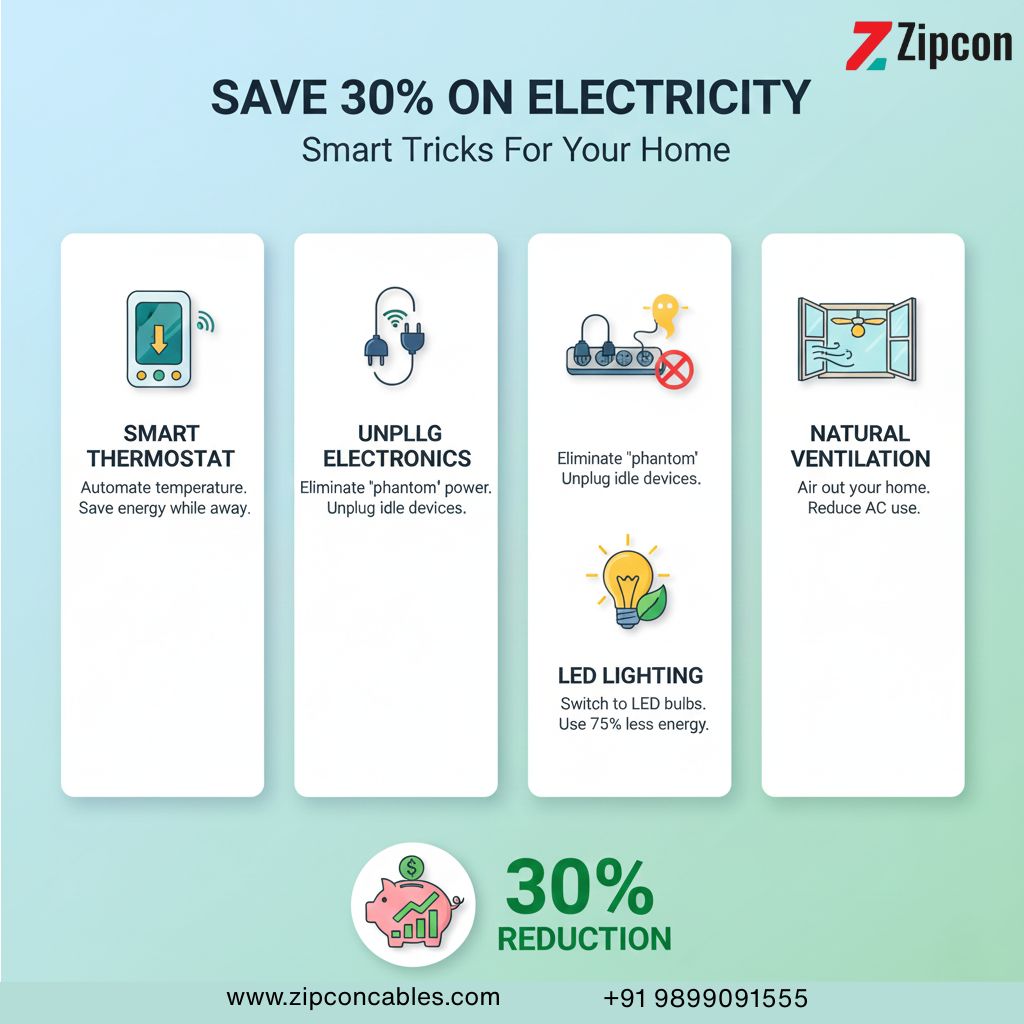
Cutting your electricity bill by 30% sounds ambitious, but it’s realistic when you combine smart habits with technically sound choices. Many people focus only on appliances, but the wiring behind those appliances often has just as much impact on power consumption. Zipcon Cables Provides Better Conductivity Wire & Cables, lower voltage drop, and safer installation all add up to cleaner, more efficient energy use. With the right cables and a few everyday adjustments, both homeowners and professionals can achieve significant savings without expensive upgrades.
Use Better Cables to Reduce Power Loss
A major portion of electricity loss happens in the wiring itself. When current flows through a cable, resistance converts some of that energy into heat. Higher resistance means more heat and higher bills. This is where cable quality matters, especially in high-load circuits like air conditioners, water heaters, and heavy appliances.
Copper cables naturally have better conductivity than aluminium. They carry current smoothly with lower resistance, which reduces voltage drop and improves appliance performance. Aluminium cables can still be efficient when sized correctly, but they need a larger diameter to match the performance of copper.
Zipcon Cables are engineered to reduce these losses by maintaining strong conductivity, heat resistance, and long-term stability. Their insulation handles high temperatures without degrading, which keeps resistance predictable and prevents energy waste.
Copper vs Aluminium: Where Each One Works Best
Copper performs better when the load is high or when the wiring distance is long. Homes with rooftop solar systems, large HVAC units, or indoor-to-outdoor connections benefit from the higher efficiency of copper cables. Copper also maintains its strength over time, which means fewer loose joints and lower fire risk.
Aluminium cables are lighter and more cost-friendly. They work well for long trunk lines and overhead connections where weight matters. In commercial buildings with long cable trays, aluminium becomes a practical choice if sized one or two gauges higher.
A simple comparison helps:
- Copper: Higher conductivity, stronger, safer, ideal for home appliances, HVAC, and short to medium distances.
- Aluminium: Cheaper, lighter, good for long industrial runs and areas where frequent maintenance is available.
Engineers and electricians often choose Zipcon’s copper-based cables for high-load equipment because they maintain stable voltage and reduce compressor stress, which directly cuts electricity use.
Ensure Proper Installation to Avoid Hidden Energy Losses
Even the best cable wastes energy if installed incorrectly. Loose joints create micro-sparks and heat, increasing consumption and posing safety risks. Sharp bends increase resistance. Oversized or undersized cables also cause unnecessary loss.
A well-installed circuit maintains steady current flow and keeps appliances running smoothly at their peak efficiency. This is why professionals value Zipcon Cables—they hold their flexibility and strength during installation, reducing the chance of bends, cracks, or poor terminations.
Reduce Load on Heavy Appliances
Air conditioners, refrigerators, washing machines, and heaters consume the most electricity. A few smart adjustments can lower their usage by 15–20% alone:
- Keep ACs at 24–26°C instead of 18–20°C.
- Clean air filters regularly to reduce compressor strain.
- Avoid overloading washing machines.
- Turn off appliances fully instead of leaving them on standby.
When appliances run with stable voltage (thanks to good wiring), they complete cycles faster and draw less current. Zipcon’s low-loss cables help maintain that stability.
Fix Voltage Drop in Long Runs
Voltage drop becomes a major issue in long cable paths—for example, from your main panel to the outdoor AC unit or rooftop solar inverter. If voltage drops too low, the motor or inverter compensates by drawing more current, increasing your bill.
Copper reduces this drop significantly. Aluminium can do the job but needs thicker sizing. In small homes, the difference between using a cheap cable and a Zipcon copper cable can translate to hundreds of rupees saved each month.
Optimize Lighting and Daily Use
Small changes in lighting can save up to 10% each month:
- Replace old CFLs and tube lights with LEDs.
- Use daylight whenever possible.
- Install motion sensors in low-traffic areas.
Running lights and fans on stable voltage reduces wear and extends their life. Consistent power delivery from Zipcon Cables supports this kind of long-term efficiency.
Use Smart Power Management
Plug-in timers, power strips with master switches, and smart plugs help eliminate standby losses. Refrigerators, routers, TV boxes, and chargers consume power even when idle.
A high-quality cable system reduces fluctuations, allowing smart devices to operate in their most efficient mode.
Choose Copper or Aluminium Based on Application
A simple recommendation makes this choice easy:
- For home appliances, HVAC units, kitchen circuits, solar systems, and all short-to-medium runs — choose copper. It ensures lower voltage drop and better long-term savings.
- For long-distance feeder lines, rooftop-to-ground connections, and industrial cable trays — aluminium works well when sized properly.
Zipcon’s copper cables are the preferred choice for energy-saving installations because they maintain high efficiency even under heavy load.
Final Thoughts
Reducing your electricity bill by 30% doesn’t require drastic changes. It comes from choosing the right cables, maintaining stable voltage, preventing energy loss, and using appliances wisely. With reliable options like Zipcon Cables and a few smart habits, any home or small business can cut costs, improve safety, and enjoy long-term performance without spending much.