
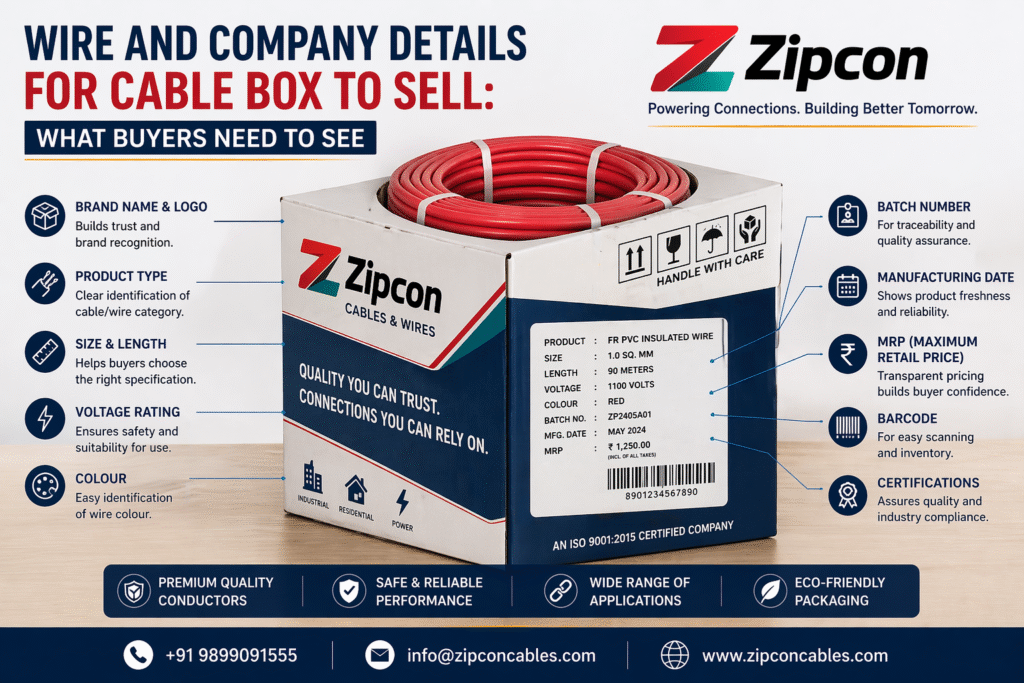
If you want to improve cable sales, the information printed on the cable box matters more than many sellers realize. Buyers do not just look at the wire inside. They also judge the packaging, product details, company credibility, and the clarity of information shown on the box. That is why getting the right wire and company details for cable box to sell is important for trust, compliance, and faster purchase decisions.
A cable box works like a silent salesperson. It tells distributors, electricians, contractors, retailers, and end users whether the product looks reliable, safe, and professionally made. For a brand like Zipcon Cables, strong cable box design with the right technical and company details can improve shelf appeal, reduce buyer confusion, and support repeat sales.
Contact us today: https://zipconcables.com/contact-us/
Why Cable Box Details Matter in Sales
A cable box is not only for packaging and transport. It plays a direct role in product communication. When buyers compare multiple wire brands, the box often becomes one of the first things they notice. If the information is clear and useful, it builds confidence. If the packaging looks incomplete or confusing, the product may appear low quality even before the wire is checked.
This is especially important in the wire and cable market, where buyers want quick answers. They need to know wire size, application, safety standards, brand identity, and manufacturer details without wasting time. A well-designed cable box helps them make a decision faster and improves the perceived value of the product.
Primary Information Every Cable Box Should Include
The most important part of wire and company details for cable box to sell is product identification. Buyers should be able to understand what the cable is, where it can be used, and who made it. These details should be easy to read and placed in a clean, visible format.
A cable box should clearly display the product name, wire type, cable size, voltage rating, insulation type, conductor material, length, and intended application. Along with this, the company name, logo, address, contact details, and brand identity should also be printed properly. This basic information creates the first layer of trust and helps the buyer confirm product suitability.
Product Details That Help a Cable Box Sell Better
Product Name and Wire Type
The box should clearly state the wire category, such as house wire, flexible cable, power cable, or control cable. Buyers often make quick decisions based on this first label. If the wire type is not immediately clear, the product may be ignored or confused with another one.
For Zipcon Cables, using product names that are simple and application-focused can help. A buyer should not have to decode technical jargon just to understand what the cable is meant for.
Wire Size and Length
Wire size is one of the first technical checks buyers make. Whether it is measured in square millimetres or another accepted format, the size should be easy to spot. Cable length should also be clearly printed because it affects pricing, usage planning, and buyer expectations.
A clearly printed size and length reduce friction at the point of sale. Retailers and electricians appreciate this because it saves time and avoids disputes or confusion later.
Voltage Rating and Application Use
Voltage rating tells the buyer where the cable is suitable. A cable box should mention whether the product is designed for residential, commercial, industrial, or light electrical use. This gives context and helps prevent misuse.
This section should be brief but practical. Buyers do not need long explanations on the box, but they do need enough information to feel confident about product fit.
Conductor Material and Insulation
Mentioning whether the conductor is copper or aluminum is important because it directly affects performance and value perception. Insulation details also matter because buyers often connect insulation quality with safety and durability.
These details are especially useful for technical buyers and electricians who compare brands carefully. Clear information here helps the product stand out against generic or weak packaging.
Company Details That Build Buyer Trust
When discussing wire and company details for cable box to sell, company information is just as important as product details. Many buyers want to know who manufactured the cable before they trust the product. A box that only focuses on the wire but ignores company identity can look incomplete.
The cable box should include the company name, registered office or manufacturing address, customer care number, email address, and website. A QR code can also be added to direct buyers to the product page, catalog, or verification page. For Zipcon Cables, this can strengthen brand trust and make the company look more established and accessible.
Branding Elements That Improve Shelf Appeal
A cable box should not look overloaded, but it also should not look plain or forgettable. Strong branding makes the product easier to identify and remember. This includes the logo, brand colors, typography, and a clear visual hierarchy that helps buyers scan information quickly.
For Zipcon Cables, packaging should balance technical clarity with strong brand recall. The company name should be visible from multiple angles. Brand consistency across all box sizes and product lines helps create recognition in retail stores, distributor warehouses, and project supply chains.
What Retailers and Distributors Want to See on a Cable Box
Retailers and distributors usually handle multiple brands at once. They prefer packaging that helps them manage stock easily and explain the product quickly to customers. This means the cable box should not only look good but also support practical selling.
They often look for visible wire size, product category, MRP or price-related structure if applicable, batch number, and fast identification markers. If the packaging supports smooth handling and simple identification, it becomes easier for dealers to promote and stock the product confidently.
How Packaging Can Influence Perceived Product Quality
In the wire industry, buyers often judge quality before opening the box. A neat and professional cable box gives the impression that the manufacturer pays attention to standards and consistency. Weak printing, cluttered design, or missing information can make even a decent wire product look questionable.
This is where Zipcon Cables can create a stronger impression. Good packaging does not need to be overly expensive. It needs to be clear, sharp, informative, and aligned with the product’s market position. When the cable box reflects reliability, it supports better conversions at the dealer and end-user level.
Details That Help Different Buyer Segments
Electricians
Electricians want quick access to size, insulation, conductor material, and application details. They often recommend products to end users, so packaging should help them trust the brand quickly.
Retail Buyers
Retail customers are more influenced by visible branding, safety claims, usage clarity, and company trust signals. If the box looks professional and easy to understand, they feel safer buying it.
Contractors
Contractors often buy in larger quantities and focus on consistency, product fit, and manufacturer credibility. They appreciate packaging that reduces confusion during material handling and site use.
Distributors
Distributors need easy stock identification, strong branding, and packaging durability. A cable box that supports warehousing and transport without losing readability is more practical for them.
Examples of Effective Cable Box Information
A house wire box can mention the product name, copper conductor, flame-retardant insulation, voltage suitability, and company details in a clean front-and-side layout. This gives a retail buyer enough information to compare it quickly with another brand.
A flexible cable box meant for industrial or workshop use can focus on flexibility, conductor quality, cable size, and handling suitability. This works better for electricians and technical buyers. In both cases, the product sells more effectively when the right information is visible without crowding the design.
What Zipcon Cables Should Highlight on the Box
Zipcon Cables should highlight brand trust, product clarity, and technical relevance. The box should make it easy to understand the wire type, size, conductor, insulation, and use case within seconds. This improves confidence among buyers and sellers alike.
The company should also ensure its logo, contact information, and website are clearly visible. A short positioning line focused on reliability, safety, or performance can strengthen recall. Zipcon should avoid generic packaging and instead create a clean, recognizable format that feels professional and easy to trust.
Expert Tips
Keep product details prominent and readable from a distance. If the buyer has to search for wire size or type, the box is not doing its job well.
Use simple language for application details. Technical accuracy is important, but the wording should still be easy for retailers and end users to understand.
Maintain branding consistency across all packaging. A recognizable design system helps build stronger market presence.
Add verification or support elements like QR codes, website links, or helpline details. These improve trust and make the company look more credible.
Design the cable box for both shelf display and warehouse handling. Good packaging should work in retail as well as bulk distribution environments.
Common Mistakes
One common mistake is overloading the box with too much text. When everything looks important, nothing stands out clearly.
Another mistake is hiding key product details like wire size or type in small print. This frustrates retailers, electricians, and buyers during quick comparisons.
Many brands also ignore company identity. If the company name, contact details, and website are missing or poorly placed, the product loses trust value.
A weak visual layout is another problem. Poor color choices, low-quality printing, or inconsistent branding can make the product look less reliable than it actually is.
Conclusion
The right wire and company details for cable box to sell can directly improve customer trust, product clarity, and shelf performance. Buyers want cable packaging that quickly tells them what the product is, how it can be used, and who stands behind it. A strong cable box supports sales by reducing confusion and improving brand perception.
For Zipcon Cables, this is a clear opportunity. By combining sharp branding with practical wire information and visible company details, the brand can make its cable boxes work harder in the market. Good packaging is not just a visual tool. It is a sales asset that can help turn interest into purchase.
Top 5 SEO FAQs
1. What details should be printed on a cable box?
A cable box should include product name, wire type, wire size, length, voltage rating, conductor material, insulation type, and company details like name, address, and contact information.
2. Why are company details important on cable packaging?
Company details build trust and help buyers verify the manufacturer. They also make customer support and product identification easier.
3. How does cable box design affect sales?
A clear and professional cable box improves shelf appeal, helps buyers compare products faster, and creates a stronger impression of quality and reliability.
4. What should Zipcon Cables highlight on its packaging?
Zipcon Cables should highlight wire type, technical specifications, safety-related information, brand identity, and accessible company details to improve trust and visibility.
5. How can cable packaging attract distributors and retailers?
Packaging should make stock easy to identify, display strong branding, include key product details clearly, and remain durable during transport and storage.