Zipcon Cables
Best FR House Wires in Jabalpur for Safe and Durable Wiring
FR House Wires in Jabalpur

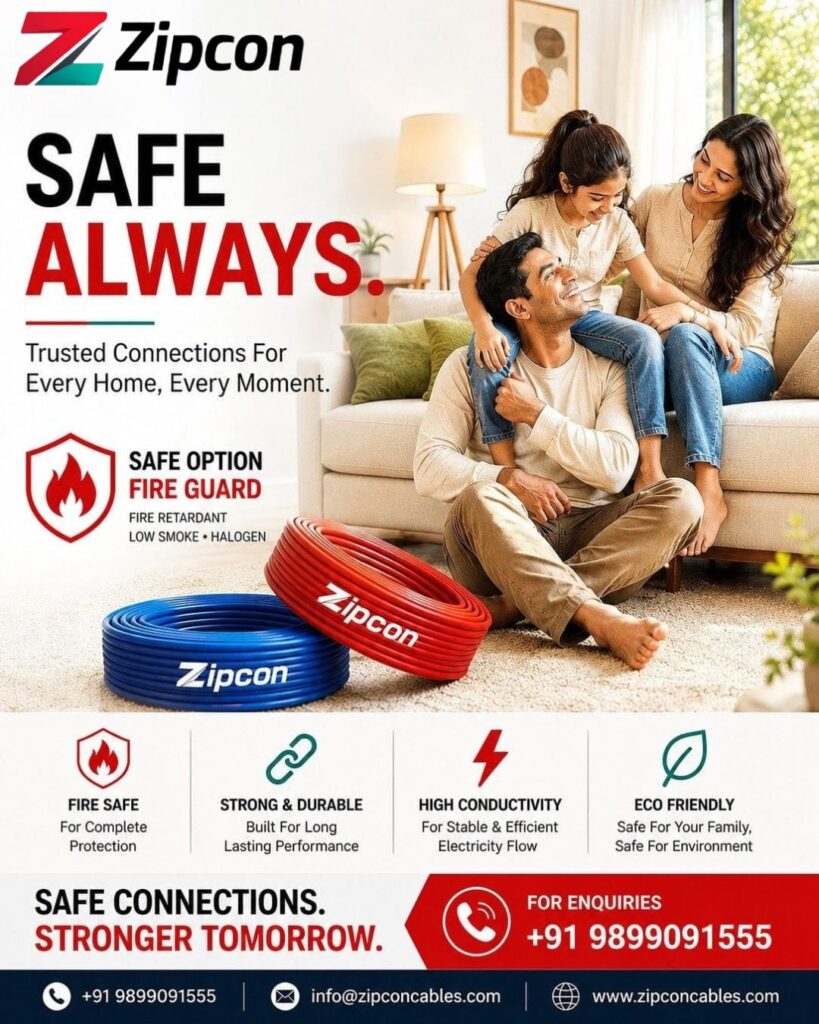
Choosing the best FR house wires in Jabalpur is essential for building a safe and dependable electrical system. House wires carry electricity throughout the property, so their conductor quality, insulation, flexibility, and load capacity directly affect electrical performance and safety.

FR, or Flame Retardant, house wires are designed with insulation that helps resist the spread of flame. This makes them a suitable option for residential wiring where electrical safety is an important consideration.

However, choosing the right FR wire involves more than simply looking for an “FR” label. Wire size, conductor quality, insulation, electrical load, installation method, and product reliability all need to be considered. Zipcon Cables offers wiring solutions for customers looking for dependable performance and durable electrical connections.

For inquiries or assistance:https://zipconcables.com/contact-us/

What Are FR House Wires?

FR house wires are electrical wires manufactured with flame-retardant insulation. Their insulation is designed to resist the spread of flame, which can provide an additional safety advantage if excessive heat or an electrical fault occurs.

These wires are commonly used in homes, apartments, offices, shops, and other buildings. Different wire sizes are available for applications ranging from lighting and fans to sockets and dedicated circuits for higher-power appliances.

It is important to understand that flame-retardant insulation is only one part of a safe electrical system. The conductor must be suitable for the required load, the wire size must be correctly selected, and the installation should follow proper electrical practices.

Why Choose FR House Wires for Homes in Jabalpur?

Electrical wiring can remain inside walls, ceilings, conduits, and distribution systems for many years. During operation, wires can be exposed to heat, electrical loads, bending, connections, and other installation conditions.

A quality FR house wire provides flame-retardant insulation that can help limit the spread of flame along the wire. Combined with correct circuit protection and professional installation, this makes FR wiring a practical choice for residential electrical systems.

1. Improved Flame Resistance

The key feature of an FR house wire is its flame-retardant insulation. In the event of excessive heating or certain electrical faults, suitable FR insulation can help resist the spread of flame.

FR insulation does not make an electrical installation fireproof. MCBs, RCCBs/RCDs where applicable, proper earthing, correct wire sizing, and good-quality connections remain essential for overall electrical safety.

2. Reliable Current Transmission

A good house wire should deliver dependable electrical performance under its intended operating conditions. Conductor material and cross-sectional area influence resistance, heating, voltage drop, and the amount of current the wire can safely carry.

Choosing a wire only because it is inexpensive can create problems later. The wire should instead be selected according to the actual electrical load and installation requirements.

3. Durable Insulation

House wires are often concealed inside walls or installed through conduits, making replacement difficult and expensive. Durable insulation helps protect the conductor during normal use and installation.

Good insulation should maintain its protective properties under the conditions for which the wire is designed. Proper handling during installation is also necessary to prevent damage.

4. Suitable for Different Home Circuits

FR house wires can be used for various residential circuits when the correct specification and size are selected. Lighting, fans, sockets, kitchen appliances, air conditioners, pumps, and other equipment may have different electrical requirements.

Using one wire size throughout an entire house is not always appropriate. Each circuit should be designed according to its expected load.

Key Features to Check When Choosing FR House Wires in Jabalpur

The best FR house wire should not be selected based on appearance or price alone. Before purchasing, evaluate the construction and specifications of the product.

High-Quality Conductor

The conductor carries the electrical current and is one of the most important parts of the wire. Quality copper conductors are widely used for house-wiring applications because of their electrical conductivity and flexibility.

A properly manufactured conductor can also make installation and termination easier, helping electricians create secure electrical connections.

Reliable Flame-Retardant Insulation

The insulation surrounds the conductor and provides electrical and physical protection. For an FR wire, the insulation should have appropriate flame-retardant properties and be suitable for the intended operating environment.

This becomes particularly important when wiring is concealed inside walls, ceilings, conduits, or other areas where inspection and replacement can be difficult.

Correct Wire Size

Wire size should be selected according to the expected electrical load, circuit length, installation conditions, and applicable electrical requirements.

For example, a lighting circuit normally has different requirements from a circuit supplying a high-power appliance. Using an undersized wire for a heavy load can increase heating and create unnecessary safety concerns.

Good Flexibility

House wires often need to pass through conduits, bends, junction boxes, switches, and distribution boards. Suitable flexibility makes installation easier and helps reduce unnecessary stress on the conductor and insulation.

Consistent Manufacturing Quality

Look for consistent conductor construction, insulation quality, product identification, and clear markings. Manufacturing consistency matters because electrical wires are expected to provide reliable performance over a long service period.

FR House Wires vs Conventional House Wires

When comparing different house wires, consumers often focus mainly on price. A better approach is to compare the insulation characteristics, conductor construction, intended application, and overall product specifications.

FeatureFR House WiresConventional House Wires
Flame resistanceDesigned with flame-retardant insulationDepends on insulation type
Safety characteristicsProvides additional flame-resistance propertiesVaries by product
Home applicationsSuitable for various residential circuitsDepends on product specifications
PerformanceDepends on conductor and insulation qualityDepends on construction and materials
Selection factorsLoad, conductor, insulation and safetyLoad, conductor, insulation and safety

The important point is that the “FR” designation alone should not determine the purchase. Product specifications and suitability for the intended circuit should always be evaluated.

Why Wire Size Matters in Home Electrical Wiring

Selecting the correct wire size is directly related to electrical performance and safety. A conductor that is too small for the current flowing through it can experience increased resistance and heating.

For example, a circuit supplying several high-power appliances may require a larger conductor than a basic lighting circuit. The electrician should calculate or assess the expected load before selecting the appropriate wire.

Circuit length also matters. Longer wiring runs can experience voltage drop, so the installation should be designed accordingly. The final wire selection should follow applicable electrical standards and professional installation practices.

Applications of FR House Wires

FR house wires can be used for a variety of residential and commercial electrical applications, depending on their specifications and size.

Common applications include:

  • Independent houses
  • Apartments and flats
  • Residential buildings
  • Offices
  • Shops and retail spaces
  • Lighting circuits
  • Fan circuits
  • Socket circuits
  • Distribution board connections
  • Dedicated appliance circuits
  • Renovation projects
  • Rewiring applications

The correct wire size and product specification should always be matched with the electrical load and installation conditions.

Why Choose Zipcon Cables for House Wiring?

For customers searching for FR house wires in Jabalpur, Zipcon Cables is a brand worth considering for dependable wiring solutions.

Zipcon Cables focuses on wire and cable products designed for different electrical applications. When selecting house wires, important factors include conductor quality, insulation performance, appropriate sizing, manufacturing consistency, and suitability for the intended installation.

For homeowners, contractors, and electricians, choosing a reliable brand is only the first step. The specific wire size and product should also be selected according to the electrical requirements of the project.

Examples of Selecting FR House Wires

Example 1: Lighting and Fan Circuits

Lighting and fan circuits generally have different requirements from circuits supplying heavy electrical appliances. The expected load should be considered before selecting the wire size.

An appropriately selected FR house wire can provide the required flame-retardant insulation characteristics while supporting reliable electrical connectivity.

Example 2: Kitchen Wiring

A modern kitchen may include refrigerators, microwave ovens, mixers, induction appliances, water heaters, and other electrical equipment.

Instead of placing several high-load appliances on an unsuitable circuit, the wiring should be divided and planned appropriately. Suitable wire sizes and circuit protection should be selected according to the electrical load.

Example 3: Air Conditioner Wiring

An air conditioner can place a substantial load on an electrical circuit. The wire should therefore be selected according to the equipment rating, circuit length, installation conditions, and applicable electrical requirements.

Reducing installation costs by using an undersized wire can create avoidable heating and performance issues.

Expert Tips for Buying FR House Wires in Jabalpur

1. Select the Wire According to Electrical Load

Do not select a wire simply because it is cheaper or commonly used. Determine the expected load and choose an appropriate wire size for each circuit.

2. Check the Conductor

Pay attention to conductor material and construction. The conductor should meet the required specifications for the intended electrical application.

3. Evaluate Insulation Quality

FR performance depends significantly on the insulation system. Check the product specifications rather than relying solely on general marketing claims.

4. Use Proper Circuit Protection

Quality wiring should be combined with appropriately selected protective devices, proper earthing, and suitable electrical installation practices.

5. Purchase Genuine Products

Buy from a reliable supplier or authorized source. Genuine products with proper identification and specifications reduce the risk of using substandard wiring.

6. Use Professional Installation

Even a quality house wire can perform poorly if installed incorrectly. Proper routing, termination, connections, earthing, and circuit design are essential.

Common Mistakes to Avoid When Choosing House Wires

Choosing Only on Price

The lowest-priced wire may not provide the best long-term value. Conductor quality, insulation, safety characteristics, and suitability should be considered together.

Using the Same Wire Size for Every Circuit

Different appliances and circuits have different loads. Lighting, sockets, kitchen appliances, air conditioners, water heaters, and pumps may require different circuit designs and wire sizes.

Ignoring Voltage Drop

Long wiring runs can result in voltage drop. This should be considered when planning circuits that are located far from the distribution board.

Overloading a Circuit

FR insulation does not eliminate the risks associated with overloading. A circuit should not be continuously operated beyond its intended capacity.

Making Poor Connections

Loose or improper connections can generate heat and affect electrical performance. Proper termination is as important as selecting a good-quality wire.

Buying Unverified Wiring

Unclear markings, inconsistent construction, suspiciously low prices, or unreliable packaging can indicate a product that requires further verification. Always check the product specifications and authenticity before installation.

How to Choose the Right FR House Wire for Your Home

Begin by identifying the electrical requirements of each circuit. Separate lighting, general sockets, kitchen appliances, air conditioners, water heaters, pumps, and other higher-load equipment according to the electrical design.

Next, consider conductor material, wire size, insulation type, circuit length, installation method, and applicable electrical requirements. A qualified electrician can help determine the appropriate wire specifications for each circuit.

For homeowners in Jabalpur, selecting a dependable brand such as Zipcon Cables can support a more reliable approach to residential electrical wiring.

Conclusion

The best FR house wires in Jabalpur are not determined by the FR label alone. Safe and durable wiring depends on the right combination of conductor quality, flame-retardant insulation, correct wire size, suitable circuit protection, professional installation, and proper maintenance.

Whether you are building a new home, renovating an existing property, or replacing old wiring, avoid choosing electrical wires based only on price. Review the product specifications, match the wire to the electrical load, and choose a dependable brand such as Zipcon Cables.

For safer and more durable home wiring, choose the right FR house wire for every circuit and ensure it is installed correctly from the start.

Top 5 FAQs

1. What are FR house wires?

FR house wires are electrical wires manufactured with flame-retardant insulation designed to resist and limit the spread of flame along the wire. They can be used for residential and commercial electrical wiring applications according to their specifications.

2. Why are FR house wires suitable for residential wiring?

FR house wires offer flame-retardant insulation characteristics that can provide an additional safety feature in electrical installations. However, safe wiring also depends on correct wire sizing, circuit protection, earthing, connections, and professional installation.

3. Which wire size is best for house wiring?

There is no single wire size suitable for every household circuit. The appropriate size depends on factors such as electrical load, circuit length, installation conditions, and applicable electrical requirements.

4. Are FR house wires better than conventional wires?

FR house wires provide flame-retardant insulation characteristics that may offer an additional safety advantage compared with products without equivalent flame-retardant properties. Overall wire quality should also be evaluated based on conductor construction, insulation, manufacturing quality, and specifications.

5. Why choose Zipcon Cables for FR house wiring?

Zipcon Cables can be considered by homeowners, electricians, and contractors looking for dependable wire and cable solutions. The specific Zipcon product and wire size should be selected according to the electrical requirements of the intended installation.
Best Multistrand House Wires in Jabalpur for Safe Home Wiring
Multistrand House Wires in Jabalpur

multistrand house wires in Jabalpur is essential for creating a reliable electrical system in modern homes. Residential wiring must handle lighting, fans, sockets, kitchen appliances, air conditioners, pumps, and other electrical loads while remaining safe and dependable for years.

Multistrand house wires contain multiple fine strands of conductor material instead of one solid conductor. This construction provides greater flexibility, making the wire easier to route through conduits, bends, switchboards, junction boxes, and other areas where installation flexibility is important.

For homeowners, electricians, builders, and contractors, Zipcon Cables offers house wiring solutions that can be evaluated according to conductor size, insulation, electrical load, installation environment, and applicable requirements. Selecting the right Zipcon multistrand wire for each circuit helps create a more organized and reliable wiring system.

For inquiries or assistance:https://zipconcables.com/contact-us/

What Are Multistrand House Wires?

Multistrand house wires are electrical wires made with multiple individual strands of conductive material grouped together to form the conductor.

Unlike a solid conductor, which consists of a single continuous piece of conductive material, a multistrand conductor contains several smaller strands. This construction increases flexibility without requiring the entire conductor to be a single rigid piece.

The number and size of strands can vary depending on the product design and conductor cross-sectional area. Therefore, buyers should always check the manufacturer’s technical specifications rather than judging quality by strand count alone.

Why Multistrand Wires Are Suitable for Home Wiring

Residential electrical installations frequently involve bends and changes in direction. Wiring may need to pass through conduits, switch boxes, distribution boards, ceilings, and other confined spaces.

The flexibility of multistrand conductors can make these installations easier to route and terminate. This is one reason they are commonly considered for residential wiring applications.

However, flexibility is only one selection factor. The conductor size, insulation quality, voltage rating, current capacity, installation method, and circuit protection must also be appropriate.

Key Benefits of Multistrand House Wires

Greater Flexibility

The individual strands allow the conductor to bend more easily than a comparable solid conductor.

This can simplify routing through conduits and around corners, especially in residential installations where wiring paths may involve multiple bends.

Easier Installation

Flexible wires can be easier for electricians to route and terminate in switchboards, distribution boxes, and electrical accessories.

Proper installation practices are still necessary to prevent excessive bending, strand damage, or poor connections.

Suitable for Complex Wiring Routes

Modern homes can have complicated wiring paths due to concealed conduits, multiple distribution points, and electrical equipment.

Multistrand construction can make cable handling more convenient in these situations.

Reliable Electrical Conductivity

A properly manufactured multistrand conductor can provide dependable electrical conductivity when its cross-sectional area and material are suitable for the circuit.

The electrical performance depends on the complete conductor construction rather than flexibility alone.

What to Check When Buying Multistrand House Wires in Jabalpur

Finding the best multistrand house wires in Jabalpur requires checking several technical factors.

1. Conductor Material

Copper is widely used in house wiring because it offers high electrical conductivity and good flexibility.

The conductor should have consistent construction and dimensions appropriate for the specified application.

2. Cross-Sectional Area

Wire sizes are commonly specified in square millimetres, such as 1.5 sq mm, 2.5 sq mm, 4 sq mm, and larger sizes.

The correct size should be selected according to current, connected load, circuit length, installation conditions, and applicable requirements.

3. Strand Construction

A multistrand conductor consists of several individual strands. Consistent strand construction helps provide the expected flexibility and electrical performance.

Do not assume that a greater number of strands automatically means better quality. The overall conductor design and manufacturer’s specifications are more important.

4. Insulation Quality

The insulation protects the conductor and maintains electrical separation from surrounding materials.

Check insulation type, voltage rating, temperature characteristics, and applicable product specifications before purchasing.

5. Flexibility

The wire should provide the flexibility required for its intended installation without sacrificing conductor integrity.

Proper bending and termination practices should be followed during installation.

Multistrand vs Solid House Wires

Both multistrand and solid conductors can be useful in different electrical applications.

FeatureMultistrand House WireSolid House Wire
ConstructionMultiple conductor strandsSingle conductor
FlexibilityGenerally higherGenerally lower
RoutingEasier through bendsMore rigid
InstallationConvenient for complex routesUseful for simpler routes
TerminationRequires proper strand handlingStraightforward conductor structure
ApplicationSuitable where flexibility is usefulSuitable where rigidity is acceptable

The best option depends on the electrical design, installation method, product specifications, and local requirements.

Common Multistrand House Wire Sizes

Different circuits require different conductor sizes. The following sizes are commonly encountered in residential wiring, but the final selection should be based on actual electrical calculations.

1.5 Sq mm

1.5 sq mm wires are commonly considered for selected lighting and fan circuits where the expected load is appropriate.

The final size should be confirmed based on the circuit design and installation conditions.

2.5 Sq mm

2.5 sq mm wires are commonly used for general-purpose socket and moderate-load circuits.

The expected load and circuit protection should be evaluated before selecting the wire.

4 Sq mm

4 sq mm conductors may be considered for higher-load residential circuits and selected equipment applications.

The appropriate size depends on current requirements, circuit length, installation method, and applicable electrical standards.

Larger Sizes

Higher-load applications may require larger conductors. These can include selected heavy appliances, pumps, or dedicated electrical equipment.

A qualified electrical professional should determine the appropriate conductor size for the actual installation.

Why Choose Zipcon Multistrand House Wires?

Zipcon Cables provides house wiring solutions designed for different residential electrical requirements. Its products can be evaluated according to conductor size, construction, insulation characteristics, electrical load, and installation conditions.

For customers searching for multistrand house wires in Jabalpur, Zipcon Cables can be considered when flexibility, reliable construction, and appropriate electrical specifications are important.

The right Zipcon wire should always be selected according to the circuit rather than using the same specification throughout an entire property.

Applications of Multistrand House Wires

Residential Home Wiring

Multistrand wires can be considered for suitable lighting, fan, socket, appliance, and other household electrical circuits.

The conductor size and insulation should match the requirements of each circuit.

Apartments

Apartments often have multiple concealed wiring routes with bends and confined spaces. Flexible multistrand wiring can make routing through suitable conduits more convenient.

Commercial Interiors

Offices, shops, and other commercial spaces can also require flexible wiring for electrical accessories and equipment.

The selected wire must be suitable for the electrical and installation requirements of the specific project.

Renovation Projects

During renovation, old wiring may be replaced or new circuits may be added. Multistrand house wires can be considered where flexible routing is beneficial.

Existing electrical loads should be reassessed before installing replacement wiring.

Examples of Multistrand Wire Selection

Example 1: Lighting and Fan Circuits

A homeowner is rewiring a house with separate lighting and fan circuits. The electrician calculates the expected load and selects an appropriately sized Zipcon multistrand house wire.

The flexible construction can make routing through the home’s conduit system easier.

Example 2: Socket Wiring

A room contains multiple electrical sockets for appliances and electronic equipment. Because the expected load is higher than a simple lighting circuit, the electrician evaluates the appropriate conductor size and circuit protection.

A suitable Zipcon multistrand wire can then be selected based on the calculated requirements.

Example 3: Home Renovation

An older property is being renovated and additional appliances are being introduced. The electrician checks the existing distribution system and identifies circuits that require upgrading.

New Zipcon multistrand house wires are selected according to the updated load requirements rather than simply replacing old wires with the same size.

Expert Tips for Buying Multistrand House Wires in Jabalpur

  • Choose the wire size according to the actual electrical load.
  • Check the conductor material before purchasing.
  • Verify the cross-sectional area and product specifications.
  • Inspect insulation quality and condition.
  • Consider flexibility requirements for conduit routing.
  • Check applicable standards and testing information.
  • Purchase from a reliable dealer or authorized source.
  • Avoid cables with damaged insulation or packaging.
  • Use suitable circuit breakers and protection devices.
  • Have installation and testing performed by a qualified electrician.

Common Mistakes to Avoid

Choosing Only by Strand Count

More strands do not automatically mean a better wire. Conductor material, cross-sectional area, strand construction, insulation, and manufacturing quality all matter.

Selecting the Wrong Wire Size

A flexible wire can still be unsuitable if its conductor size does not match the circuit load.

Always determine cable size based on the electrical requirements.

Excessive Bending

Although multistrand wires are flexible, they should not be bent beyond the manufacturer’s recommended limits.

Excessive mechanical stress can affect the conductor or insulation.

Poor Termination

If individual strands are damaged or improperly connected, the electrical connection may become unreliable.

Proper terminals, connectors, and installation techniques should be used.

Overloading Circuits

Installing a quality multistrand wire does not eliminate the risk associated with circuit overload.

Electrical loads should be distributed appropriately and protected with correctly selected devices.

Buying From Unverified Sources

Counterfeit or incorrectly specified products can compromise an electrical installation.

Buy from trusted suppliers and verify product information before installation.

Multistrand House Wires for Modern Homes

Modern residential electrical systems are more demanding than traditional home wiring systems. Multiple appliances can operate simultaneously, while smart devices, entertainment systems, kitchen equipment, HVAC systems, pumps, and other loads add to the overall electrical requirement.

This makes proper wiring design increasingly important. Multistrand house wires can provide useful flexibility, but the correct conductor size and insulation characteristics must be selected for each circuit.

For Jabalpur homeowners and electrical professionals, Zipcon Cables provides options that can be evaluated according to specific residential wiring requirements.

Conclusion

Choosing the best multistrand house wires in Jabalpur requires more than looking for a flexible wire or selecting the lowest-priced product. Conductor material, cross-sectional area, strand construction, insulation quality, electrical load, circuit length, and installation conditions should all be considered.

Zipcon Cables offers multistrand house wiring solutions that can be considered for residential, renovation, apartment, and selected commercial applications. The right Zipcon wire should be matched to the requirements of each individual circuit.

For reliable home wiring, select the correct conductor size, verify product specifications, use suitable circuit protection, and ensure professional installation. Choosing the right Zipcon multistrand house wire can provide a practical foundation for safe and dependable electrical performance.

Top 5 FAQs

1. Which are the best multistrand house wires in Jabalpur?

The best multistrand house wire depends on conductor material, size, insulation, electrical load, flexibility requirements, and installation conditions. Zipcon Cables is a suitable brand to consider for multistrand residential wiring solutions.

2. What is a multistrand house wire?

A multistrand house wire contains multiple individual conductive strands grouped together to form the conductor. This construction generally provides greater flexibility than a solid conductor.

3. Are multistrand wires good for home wiring?

Yes, multistrand wires can be suitable for home wiring when their specifications match the circuit requirements. Their flexibility can make conduit routing and installation easier.

4. Which size multistrand wire is suitable for home wiring?

The required size depends on the electrical load, circuit length, installation method, ambient conditions, voltage-drop considerations, and applicable requirements. Common residential sizes include 1.5 sq mm, 2.5 sq mm, and 4 sq mm, but the final size should be determined for each circuit.

5. Why choose Zipcon multistrand house wires in Jabalpur?

Zipcon Cables offers house wiring solutions that can be evaluated based on conductor size, insulation, construction, flexibility, and application requirements. Selecting the appropriate Zipcon multistrand wire can support reliable residential wiring when correctly sized and professionally installed.

Best HRFR House Wires in Jabalpur | Safe & Durable Wiring by Zipcon Cables
HRFR House Wires in Jabalpur

Choosing the best HRFR house wires in Jabalpur is an important decision for homeowners, builders, electricians, and contractors planning safe residential wiring. Electrical wiring remains in service for years, often inside walls and conduits, so the quality of the wire can directly influence the reliability of the electrical system.

HRFR generally refers to Heat Resistant Flame Retardant wire characteristics. These wires are designed for applications where resistance to heat and flame-related conditions is an important consideration. However, selecting a suitable HRFR wire also requires attention to conductor size, insulation, current capacity, voltage rating, installation method, and applicable standards.

Zipcon Cables provides house wiring solutions that can be evaluated for residential and commercial requirements. By selecting the appropriate Zipcon HRFR wire according to the circuit load and installation conditions, property owners can build a more dependable electrical wiring system.

For inquiries or assistance:https://zipconcables.com/contact-us/

What Are HRFR House Wires?

HRFR house wires are electrical wires designed with insulation characteristics intended to provide heat resistance and flame-retardant performance under specified conditions.

The conductor carries electrical current, while the insulation protects the conductor and provides electrical separation from surrounding materials. Both components need to be appropriate for the intended application.

HRFR properties can be useful in electrical installations where wiring may be exposed to elevated operating temperatures or where flame-retardant characteristics are desired. These properties should be considered alongside proper circuit design and electrical protection.

Why HRFR House Wires Are Important for Home Wiring

Modern homes can have substantial electrical loads from air conditioners, refrigerators, washing machines, geysers, kitchen appliances, lighting, fans, pumps, and electronic equipment.

As electrical demand increases, the wiring must be selected according to the expected load and installation conditions. A wire with appropriate heat-resistant and flame-retardant characteristics can be a useful part of an overall electrical safety strategy.

However, HRFR insulation does not make an electrical system immune to overheating or fire. Correct conductor sizing, circuit protection, proper connections, and professional installation remain essential.

Key Features of Quality HRFR House Wires

When looking for the best HRFR house wires in Jabalpur, consider the complete construction of the product rather than focusing on a single feature.

Heat-Resistant Insulation

Electrical wires can generate heat during normal operation, particularly when carrying higher currents. Suitable insulation should withstand the expected operating temperature within its specified limits.

Heat-resistant characteristics can help the insulation maintain its intended performance under appropriate operating conditions.

Flame-Retardant Properties

Flame-retardant insulation is designed to resist the propagation of flame along the wire under specified testing conditions.

This can provide an additional safety consideration for residential electrical installations.

Quality Conductors

The conductor is responsible for carrying electrical current. Copper is widely used in house wiring because of its high conductivity and flexibility.

Consistent conductor construction is important for predictable electrical performance.

Flexibility

House wiring often requires routing through conduits, bends, switchboards, junction boxes, and distribution points.

Flexible construction can make installation and termination easier while reducing unnecessary stress on the cable.

Reliable Insulation

The insulation should provide appropriate electrical separation and protection for the intended voltage and operating environment.

Before purchasing, check the manufacturer’s technical specifications rather than judging insulation quality by appearance alone.

Benefits of HRFR House Wires

Better Resistance to Heat

HRFR wires are designed for applications where heat resistance is an important requirement. Appropriate insulation can help maintain performance within its specified operating temperature range.

This is particularly relevant for electrical systems with sustained loads.

Flame-Retardant Performance

The flame-retardant characteristic can help limit flame propagation under specified conditions.

This makes HRFR wiring an option for projects where enhanced fire-related cable characteristics are desired.

Suitable for Modern Electrical Loads

Homes today operate more appliances than many older properties. Properly selected HRFR house wires can form part of a wiring system designed to handle modern electrical requirements.

The conductor size must still be selected according to the actual load.

Long-Term Wiring Reliability

Good-quality construction and appropriate installation can support dependable service over time.

Cable quality should be considered together with correct sizing, protection, installation, and maintenance.

HRFR vs FR vs FRLS House Wires

These terms describe different insulation characteristics and should not be treated as interchangeable.

FeatureHRFRFRFRLS
Heat-Resistant CharacteristicYes, according to specificationNot necessarilyDepends on product
Flame-Retardant CharacteristicYes, according to specificationYesYes
Low-Smoke CharacteristicNot necessarilyNot necessarilyYes
Main ConsiderationHeat + flame-related performanceFlame retardanceFlame retardance + reduced smoke
ApplicationBased on product specificationBased on project requirementBased on project requirement

The correct wire should be selected according to the building’s electrical design and the technical characteristics required for the installation.

How to Choose the Best HRFR House Wires in Jabalpur

1. Determine the Electrical Load

Start by identifying the expected load on each circuit. Lighting, fans, sockets, air conditioners, geysers, pumps, and kitchen appliances can have different electrical requirements.

Cable sizing should be based on calculated load rather than a general rule applied to the entire property.

2. Select the Correct Conductor Size

House wires are commonly available in sizes such as 1.5 sq mm, 2.5 sq mm, 4 sq mm, and larger sizes.

The correct size depends on current, circuit length, installation method, ambient temperature, voltage-drop considerations, and applicable requirements.

3. Check HRFR Insulation Specifications

Do not rely only on the HRFR label. Check the manufacturer’s specifications for insulation properties, voltage rating, temperature performance, and relevant testing.

This provides a more accurate basis for comparing products.

4. Consider the Installation Environment

A wire installed inside a protected conduit has different environmental exposure from wiring routed through areas subject to heat, moisture, mechanical stress, or other conditions.

The selected product should be suitable for the actual installation environment.

5. Verify Product Standards

Check the applicable standards, certifications, testing information, and manufacturer documentation before purchasing.

Reliable technical documentation helps electricians and contractors select products more accurately.

HRFR House Wire Sizes for Different Applications

The appropriate wire size depends on the circuit design and electrical load. The following examples are general application categories rather than fixed sizing rules.

1.5 Sq mm

This size is commonly considered for selected lighting and fan circuits with appropriate loads.

The final selection should be based on the actual circuit design and installation conditions.

2.5 Sq mm

2.5 sq mm wires are commonly considered for general-purpose socket circuits and moderate residential loads.

Circuit protection and expected load should be evaluated before installation.

4 Sq mm and Larger

Larger conductor sizes may be required for higher-load circuits or specific equipment.

The final conductor size should be determined through appropriate electrical calculations rather than selected only from the appliance name.

Why Choose Zipcon HRFR House Wires?

Zipcon Cables offers house wiring solutions for customers looking for dependable electrical cable products for residential and other applications.

For buyers searching for HRFR house wires in Jabalpur, Zipcon products can be evaluated based on conductor material, wire size, insulation characteristics, electrical rating, and intended application.

The advantage of choosing a suitable Zipcon product is not simply the HRFR designation. The complete cable specification should match the circuit requirement to provide reliable electrical performance.

Applications of HRFR House Wires

Residential Homes

HRFR wires can be considered for residential circuits where their heat-resistant and flame-retardant characteristics match the project’s requirements.

They can be used across appropriately designed circuits for lighting, fans, sockets, appliances, and other household electrical loads.

Apartments and Housing Projects

Large residential projects require consistent wiring specifications across multiple units.

Zipcon HRFR house wires can be evaluated according to the project’s electrical design, procurement requirements, and applicable standards.

Offices and Commercial Spaces

Commercial properties may operate multiple electrical systems simultaneously. Suitable wiring can support organized and reliable electrical distribution.

The selected cable should meet the specific requirements of the commercial installation.

Renovation Projects

Older homes may require replacement wiring due to deterioration, changing electrical loads, or system upgrades.

HRFR house wires can be considered during renovation when their specifications meet the updated electrical design.

Examples of HRFR House Wire Selection

Example 1: New Home Construction

A homeowner is constructing a new house with separate circuits for lighting, sockets, kitchen appliances, air conditioning, and water heating.

Instead of selecting one wire size for every circuit, the electrician calculates the expected load and selects suitable Zipcon HRFR wires for each circuit.

Example 2: High-Load Appliance Circuit

A home has a dedicated circuit for a high-power appliance. Because the appliance places a greater load on the circuit, conductor size and circuit protection need to be selected accordingly.

An appropriately specified Zipcon HRFR wire can then be used if its technical characteristics meet the circuit requirements.

Example 3: Residential Renovation

During renovation, an electrician finds old wiring that needs replacement. The new electrical system also includes additional appliances that were not present when the original wiring was installed.

The electrician reassesses the load and replaces the old wiring with appropriately sized Zipcon house wires.

Expert Tips for Buying HRFR House Wires in Jabalpur

  • Choose the wire according to the actual electrical load.
  • Verify the conductor material and cross-sectional area.
  • Check the manufacturer’s HRFR specifications.
  • Review voltage and temperature ratings.
  • Consider circuit length and voltage-drop requirements.
  • Buy through a reliable dealer or authorized source.
  • Inspect the insulation and packaging before installation.
  • Use suitable circuit breakers and protective devices.
  • Avoid overloading electrical circuits.
  • Have wiring installed and tested by a qualified electrician.

Common Mistakes to Avoid

Selecting Wire Only by Thickness

A physically thicker-looking wire is not automatically the best choice. Conductor dimensions, material, insulation, and technical specifications all matter.

Using the Same Wire Size Everywhere

Different circuits have different electrical loads. Using one wire size throughout a house can result in an unsuitable electrical design.

Ignoring Heat Conditions

Areas near high-temperature equipment or locations with restricted ventilation may require additional consideration during cable selection.

Assuming HRFR Means Fireproof

HRFR wires are designed with specific heat-resistant and flame-retardant characteristics. They are not completely fireproof.

Overall electrical safety still depends on circuit design, protection, installation, and maintenance.

Ignoring Voltage Drop

Long cable runs can create voltage-drop concerns. Cable length should be considered when determining the appropriate conductor size.

Poor Electrical Connections

Loose terminals and improperly made joints can increase resistance and create localized heating.

Even high-quality Zipcon wires require proper termination and installation.

Why Cable Quality Matters in Jabalpur

Electrical wiring is a long-term component of a property. Once installed inside walls or conduits, replacing it can be disruptive and expensive.

Choosing a suitable HRFR house wire at the beginning can help reduce the likelihood of premature wiring problems. However, product quality must be combined with proper sizing and professional installation.

For residential and commercial projects in Jabalpur, Zipcon Cables can be considered when dependable house wiring solutions are required. Selecting the appropriate product according to the electrical application is the key to getting the intended performance.

Conclusion

Finding the best HRFR house wires in Jabalpur requires a practical evaluation of conductor quality, wire size, insulation characteristics, heat resistance, flame-retardant performance, electrical load, and installation conditions.

Zipcon Cables provides house wiring solutions that can be considered for residential, renovation, apartment, and commercial applications. The right Zipcon HRFR wire should always be selected according to the requirements of the individual circuit.

For a dependable electrical installation, do not choose wires based only on price or appearance. Check the specifications, select the correct conductor size, use appropriate circuit protection, and ensure professional installation. Choose Zipcon Cables for wiring solutions built around quality and reliable performance.

Top 5 FAQs

1. Which are the best HRFR house wires in Jabalpur?

The best HRFR house wire depends on conductor size, electrical load, insulation specifications, temperature requirements, installation conditions, and applicable standards. Zipcon Cables is a suitable brand to consider for HRFR house wiring solutions.

2. What does HRFR mean in electrical wires?

HRFR generally refers to Heat Resistant Flame Retardant characteristics. Such wires are designed for applications where resistance to elevated temperatures and flame-retardant performance are important according to their specifications.

3. Are HRFR wires suitable for home wiring?

HRFR wires can be suitable for residential wiring when their technical specifications match the requirements of the circuit and installation. Correct sizing, circuit protection, and professional installation are also essential.

4. Which HRFR wire size is suitable for a house?

There is no single wire size suitable for every circuit. The required size depends on electrical load, circuit length, installation method, ambient temperature, voltage drop, and applicable requirements. A qualified electrician should determine the final size.

5. Why choose Zipcon HRFR house wires in Jabalpur?

Zipcon Cables offers house wiring solutions that can be selected according to conductor size, insulation characteristics, electrical requirements, and installation conditions. For Jabalpur projects, the appropriate Zipcon HRFR wire can provide a dependable option when correctly specified and professionally installed.

Best FRLS House Wires in Jabalpur for Safe and Reliable Wiring
FRLS House Wires in Jabalpur

Choosing the best FRLS house wires in Jabalpur is an important part of creating a safe and dependable electrical system. Modern homes use multiple electrical appliances, lighting systems, air conditioners, kitchen equipment, pumps, and other loads, making the quality of wiring increasingly important.

FRLS stands for Flame Retardant Low Smoke. FRLS house wires are designed to provide flame-retardant characteristics while limiting smoke generation under fire conditions. This makes them a practical option for residential and other building applications where electrical safety is a key consideration.

For homeowners, builders, electricians, and contractors, Zipcon Cables offers house wiring solutions that can be evaluated according to conductor size, insulation requirements, electrical load, and installation conditions. Selecting the correct FRLS wire specification is essential for achieving reliable performance.

For inquiries or assistance:https://zipconcables.com/contact-us/

What Are FRLS House Wires?

FRLS house wires are electrical wires manufactured with insulation designed to resist flame propagation and produce comparatively lower smoke under fire conditions.

The conductor carries electrical current, while the insulation provides electrical separation and protection. The overall performance of the wire depends on both the conductor construction and insulation properties.

FRLS wiring is particularly relevant in buildings where reducing smoke and improving fire-related electrical performance are important considerations. However, FRLS does not mean a wire is completely fireproof, so correct installation and circuit protection remain essential.

Why FRLS House Wires Matter for Residential Wiring

Electrical wiring is installed throughout a home, often inside walls, conduits, ceilings, and distribution systems. Because much of the wiring remains inaccessible after construction, selecting appropriate-quality wires at the installation stage is important.

A suitable FRLS house wire can provide flame-retardant and low-smoke characteristics in addition to the electrical performance required from a building wire. This can make FRLS wiring an important consideration for residential electrical planning.

However, wire quality alone does not guarantee electrical safety. Proper cable sizing, circuit protection, connections, routing, and installation practices must work together.

Key Benefits of FRLS House Wires

Flame-Retardant Characteristics

FRLS wires are designed to resist the propagation of flame along the insulation. This characteristic can help limit the spread of fire through electrical wiring under specified test conditions.

For residential installations, this provides an additional safety consideration when selecting wiring materials.

Lower Smoke Generation

Smoke can create visibility and breathing hazards during a fire. FRLS insulation is designed to generate comparatively less smoke than conventional materials under specified conditions.

This characteristic can be particularly valuable in enclosed spaces and buildings where occupant safety is important.

Reliable Electrical Performance

A quality FRLS house wire should provide suitable electrical conductivity and insulation performance when correctly selected and installed.

The conductor size must still correspond to the circuit’s expected electrical load. FRLS properties do not compensate for an undersized conductor.

Suitable for Modern Homes

Today’s homes often have multiple electrical circuits for lighting, sockets, appliances, HVAC systems, pumps, and other equipment. FRLS house wires can be considered as part of a wiring strategy focused on electrical safety and dependable performance.

What to Check When Buying FRLS House Wires in Jabalpur

Finding the best FRLS house wires in Jabalpur requires checking technical specifications instead of choosing solely on price or brand familiarity.

1. Conductor Material

Copper is commonly used for house wiring because of its high conductivity and flexibility. The conductor should have consistent construction and appropriate dimensions.

The selected conductor material should meet the electrical requirements of the intended application.

2. Cross-Sectional Area

Wire sizes are commonly specified in square millimetres, such as 1.5 sq mm, 2.5 sq mm, 4 sq mm, and larger sizes.

The correct size depends on the expected load, circuit length, installation method, ambient conditions, and applicable electrical requirements.

3. Insulation Quality

FRLS performance depends significantly on the insulation system. Check the manufacturer’s specifications for insulation characteristics, voltage rating, temperature performance, and relevant testing.

Good insulation should maintain electrical separation throughout the expected service conditions.

4. Flexibility

House wiring frequently involves bends through conduits, switchboards, junction boxes, and distribution points. A sufficiently flexible wire can make routing and termination easier.

Multistrand conductor construction can provide useful flexibility for residential installation work.

5. Standards and Testing

Before purchasing, verify the applicable product standards, testing information, and manufacturer specifications. Reliable documentation provides a better basis for comparing different FRLS house wire products.

FRLS House Wire Sizes and Their Applications

Different circuits require different conductor sizes. The exact selection should always be determined according to electrical load and installation requirements.

1.5 Sq mm FRLS Wire

This size is commonly considered for lower-load circuits such as selected lighting and fan applications, subject to the electrical design.

It should not automatically be used for every lighting or fan circuit because actual load and installation conditions still need to be evaluated.

2.5 Sq mm FRLS Wire

2.5 sq mm wiring is commonly considered for general-purpose socket and moderate-load residential circuits.

The actual suitability depends on the connected load, circuit protection, cable length, and installation method.

4 Sq mm and Larger FRLS Wires

Larger conductor sizes may be required for higher-load circuits, including certain heavy appliances and dedicated electrical equipment.

The correct size should be calculated by a qualified electrician or electrical engineer rather than selected solely based on appliance type.

FRLS vs FR House Wires

FR and FRLS wires are related but are not identical.

FeatureFR WireFRLS Wire
Flame RetardantYesYes
Low-Smoke CharacteristicNot necessarilyYes
Residential ApplicationsSuitable where specifiedSuitable where specified
Fire-Safety ConsiderationImproved flame resistanceFlame resistance plus lower smoke characteristics
SelectionBased on project requirementsBased on project requirements

The choice between FR and FRLS should depend on the building design, safety requirements, applicable standards, and electrical specifications.

FRLS vs Standard House Wires

Standard house wires and FRLS wires can differ in their insulation characteristics.

For applications where flame-retardant and reduced-smoke properties are priorities, FRLS may offer advantages over conventional wiring materials designed without those specific characteristics.

However, electrical safety also depends on conductor sizing, circuit breakers, installation quality, load management, and maintenance.

Why Choose Zipcon FRLS House Wires?

Zipcon Cables provides house wiring solutions that can be considered for residential electrical applications where dependable construction and appropriate insulation characteristics are important.

For customers searching for FRLS house wires in Jabalpur, Zipcon products can be evaluated based on conductor size, insulation type, electrical requirements, installation conditions, and applicable specifications.

The right Zipcon FRLS wire should be selected for the specific circuit rather than using a single size throughout an entire property. Proper selection combined with professional installation provides a stronger foundation for safe and reliable home wiring.

Applications of FRLS House Wires

Residential Homes

FRLS wires can be considered for lighting, fan, socket, appliance, and other residential circuits where their specifications match the installation requirements.

Apartments

Apartment buildings often contain numerous electrical circuits in relatively compact spaces. FRLS wiring can be considered where flame-retardant and low-smoke characteristics are part of the project’s electrical safety requirements.

Offices and Commercial Buildings

Commercial buildings can have high occupancy and extensive electrical systems. Appropriate FRLS wiring can be considered for relevant building circuits based on the project specifications.

Schools and Institutional Buildings

Buildings with larger numbers of occupants can place greater emphasis on fire-safety planning. Electrical wiring is one component of the overall safety strategy.

The selected FRLS product should meet the requirements specified for the particular project.

Examples of FRLS Wire Selection

Example 1: Residential Lighting Circuit

A homeowner is rewiring a property with separate circuits for lighting and fans. The electrician assesses the expected load and installation method before selecting the appropriate Zipcon FRLS wire size.

This approach is better than selecting a wire solely based on its physical thickness.

Example 2: Kitchen Wiring

A modern kitchen can operate refrigerators, microwave ovens, induction cooktops, mixers, chimneys, and other equipment.

Because different appliances can have different loads, the wiring should be divided into appropriate circuits and sized accordingly.

Example 3: Apartment Project

A builder working on an apartment project needs consistent wiring across multiple units. FRLS house wires can be evaluated based on project specifications, conductor sizes, safety requirements, and installation practices.

Using a consistent, documented product specification can simplify procurement and installation.

Expert Tips for Buying FRLS House Wires in Jabalpur

  • Select the wire based on electrical load, not appearance.
  • Check the conductor size before purchasing.
  • Verify FRLS specifications from the manufacturer.
  • Check applicable standards and test information for the product.
  • Purchase through reliable dealers or authorized channels.
  • Inspect insulation and packaging before installation.
  • Consider circuit length when determining cable requirements.
  • Use suitable circuit breakers and protective devices.
  • Avoid overloading residential circuits.
  • Use qualified electricians for installation and testing.

Common Mistakes to Avoid

Choosing FRLS Wire Only Because of the Name

FRLS is an important insulation characteristic, but it does not replace proper cable sizing and electrical design.

The conductor must still be suitable for the expected load.

Using the Same Size Throughout the House

Lighting, sockets, air conditioners, geysers, pumps, and other circuits can have different requirements.

Each circuit should be evaluated separately.

Ignoring Voltage Drop

Long cable runs can experience voltage drop, particularly under higher loads. Cable length should therefore be considered during electrical design.

Buying Without Checking Specifications

Two products may look similar while having different conductor dimensions, insulation properties, or ratings.

Always compare technical specifications before purchasing.

Poor Termination

Loose terminals and improper joints can increase resistance at connection points and compromise reliability.

Professional termination is essential for any quality house wiring installation.

Overloading Circuits

Even a good-quality FRLS wire can become unsuitable if the circuit is overloaded. Proper load distribution and circuit protection are essential.

How Zipcon Supports Reliable Home Wiring

A dependable electrical system requires more than a quality wire. It requires the right combination of conductor size, insulation, circuit design, protection, installation, and maintenance.

Zipcon Cables can be considered for residential projects in Jabalpur where customers are looking for FRLS house wiring solutions with appropriate technical specifications.

Homeowners, builders, electricians, and contractors can evaluate Zipcon FRLS wires according to the individual requirements of each circuit. This application-based approach helps avoid unnecessary purchases and supports better electrical planning.

Conclusion

Choosing the best FRLS house wires in Jabalpur is an important step toward creating a safer and more reliable residential electrical system. FRLS wires provide flame-retardant characteristics and reduced-smoke performance under specified conditions, making them a valuable option for applications where these properties are required.

Zipcon Cables offers house wiring solutions that can be selected according to conductor size, insulation requirements, electrical load, and installation conditions. For a new home, renovation, apartment project, or commercial property, the correct wire specification is more important than simply choosing the thickest or cheapest option.

Before installation, verify the wire size, conductor material, FRLS specifications, voltage rating, applicable standards, and circuit requirements. Pair quality Zipcon FRLS house wires with proper circuit protection and professional installation for dependable electrical performance.

Top 5 FAQs

1. Which are the best FRLS house wires in Jabalpur?

The best FRLS house wire depends on conductor size, electrical load, insulation characteristics, product specifications, and installation requirements. Zipcon Cables is a suitable brand to consider for FRLS residential wiring solutions in Jabalpur.

2. What does FRLS mean in electrical wires?

FRLS means Flame Retardant Low Smoke. FRLS wires are designed to resist flame propagation and produce comparatively lower smoke under specified fire-test conditions.

3. Are FRLS wires suitable for home wiring?

Yes, FRLS wires can be used for residential wiring when their specifications are appropriate for the application. The correct conductor size, voltage rating, installation method, and circuit protection should also be considered.

4. Which FRLS wire size is suitable for home wiring?

The appropriate size depends on the electrical load, circuit length, installation method, ambient conditions, voltage-drop requirements, and applicable electrical standards. A qualified electrician should determine the final size for each circuit.

5. Why choose Zipcon FRLS house wires in Jabalpur?

Zipcon Cables provides house wiring solutions that can be evaluated for residential applications based on conductor size, insulation, electrical load, and installation conditions. Choosing the appropriate Zipcon FRLS wire can support safe and dependable home wiring when combined with proper installation and circuit protection.

Best Multicore Round Cable in Jabalpur for Reliable Electrical Solutions
Multicore Round Cable in Jabalpur

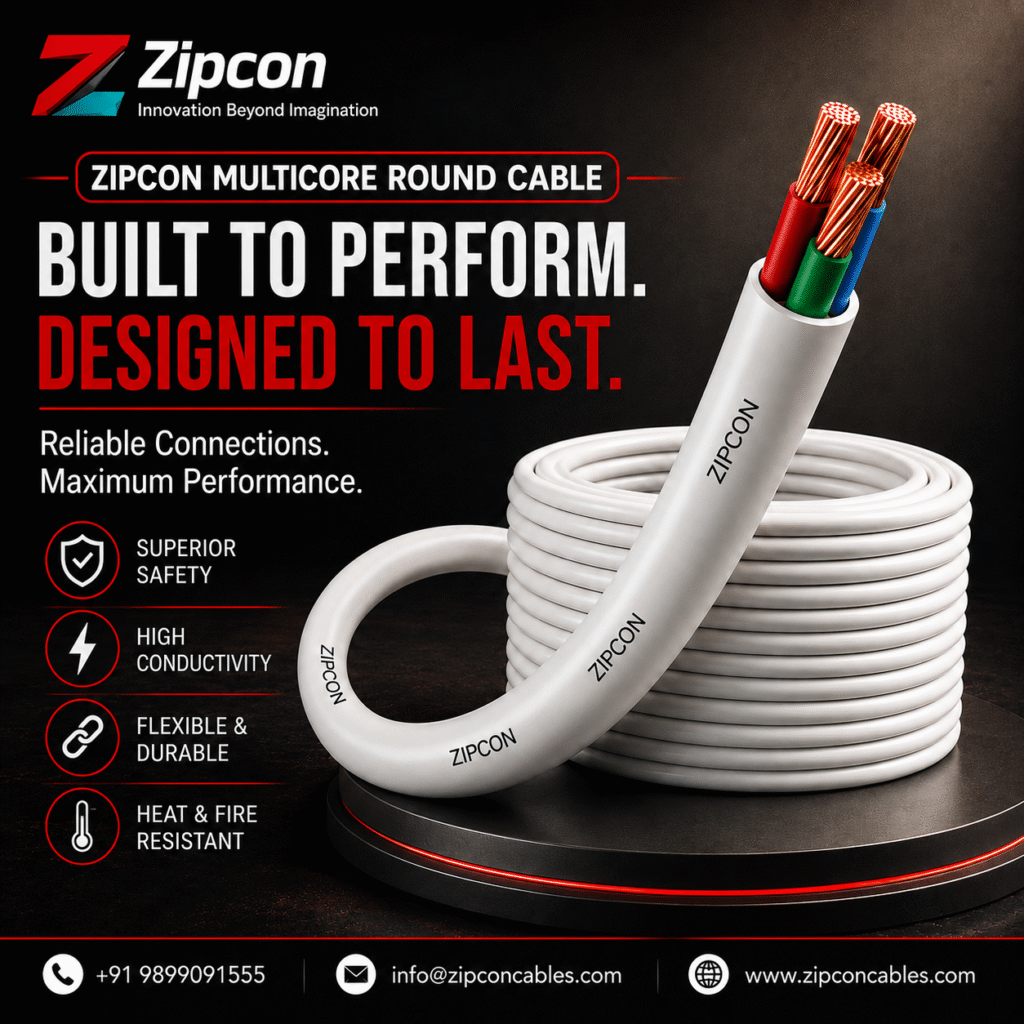
Choosing the best multicore round cable in Jabalpur is important for electrical installations that require multiple conductors within a single, organized cable. Multicore round cables can simplify wiring, improve cable management, and provide a practical solution for residential, commercial, industrial, and equipment-related applications.

A multicore cable combines individually insulated conductors inside a common outer sheath. The round construction provides a compact and manageable profile, while the number and size of cores determine how the cable can be used. Selecting the correct cable requires attention to conductor material, core configuration, cross-sectional area, insulation, voltage rating, current capacity, and installation conditions.

Zipcon Cables offers multicore cable solutions designed for applications where reliable electrical connectivity, organized installation, and durable cable construction are important. For projects in Jabalpur, choosing the right Zipcon multicore round cable according to the electrical requirement can support consistent long-term performance.

For inquiries or assistance:https://zipconcables.com/contact-us/

What Is a Multicore Round Cable?

A multicore round cable contains two or more insulated electrical conductors enclosed within a common outer sheath. Each core is electrically separated from the others, allowing multiple circuits or electrical connections to be managed through a single cable assembly.

The round outer construction helps the cable maintain a compact form and makes it practical for routing through suitable conduits, cable trays, equipment connections, and other installations. The exact application depends on the cable’s construction and technical specifications.

For example, a multicore cable may be used where several electrical conductors need to travel between two points without installing multiple separate single-core cables.

Why Multicore Round Cables Are Used

Multicore round cables provide several practical advantages when the application requires multiple conductors.

Organized Cable Management

Instead of routing multiple individual cables separately, several conductors can be grouped within one outer sheath. This can create a cleaner and more organized installation.

This is particularly useful in installations where space is limited or where cable routing needs to remain structured.

Easier Installation

Using one multicore cable can simplify cable routing compared with managing several separate cables. This can reduce installation complexity when the cable specification is appropriate for the application.

However, cable weight, bending radius, route length, and installation method should always be considered.

Reduced Cable Clutter

Multiple individual wires can create unnecessary congestion around electrical panels and equipment. A multicore round cable provides a consolidated wiring arrangement.

This can make identification, routing, and maintenance more manageable when the cable cores are properly marked and terminated.

Suitable for Multiple Applications

Depending on the construction, multicore round cables can be used across residential, commercial, industrial, control, power, and equipment-related applications.

The cable should always be selected based on its specified purpose rather than assuming that every multicore cable is suitable for every electrical installation.

Key Features to Consider in a Multicore Round Cable

Finding the best multicore round cable in Jabalpur requires comparing technical characteristics rather than focusing only on price.

Conductor Material

The conductor determines the cable’s ability to carry electrical current. Copper is commonly used where high conductivity and flexibility are required, while aluminium is also used in applications where its specific characteristics and cost advantages are suitable.

The conductor material should match the project’s electrical and installation requirements.

Number of Cores

Multicore cables are available with different core configurations. The required number of cores depends on the equipment, circuit arrangement, control requirements, and electrical design.

Choosing the correct core configuration prevents unnecessary wiring changes during installation.

Cross-Sectional Area

The cross-sectional area, commonly specified in square millimetres, affects the current-carrying capability of the conductor.

A cable that is too small for the expected load may not be suitable for the application. Cable sizing should be calculated according to load, installation conditions, cable length, and applicable electrical requirements.

Insulation Quality

Each conductor needs suitable insulation to maintain electrical separation. The overall cable construction also requires an appropriate outer sheath for its intended installation environment.

Good insulation should be compatible with the expected operating voltage, temperature, moisture exposure, and mechanical conditions.

Outer Sheath

The outer sheath protects the internal cores and provides additional mechanical and environmental protection.

For demanding installations, the sheath material and construction should be evaluated according to factors such as abrasion, moisture, temperature, and installation conditions.

Applications of Multicore Round Cables

Multicore round cables can be used in a variety of electrical installations when their specifications match the application.

Residential Applications

They may be used for selected equipment connections, control arrangements, power distribution, and other residential electrical applications where multiple conductors need to be routed together.

The exact cable type and size should be selected according to the circuit design.

Commercial Buildings

Offices, retail properties, hotels, institutions, and other commercial buildings often have complex electrical systems involving multiple equipment and distribution points.

A suitable multicore cable can help organize connections and simplify cable routing in appropriate applications.

Industrial Applications

Industrial environments can require cables for equipment, control systems, machinery, power connections, and other electrical functions.

Industrial cable selection requires additional attention to mechanical stress, temperature, chemical exposure, vibration, installation method, and operating conditions.

Electrical Panels and Equipment

Multicore cables can provide a practical way to connect equipment where multiple electrical conductors are required between connection points.

Correct core identification and termination are important to maintain reliable electrical connections.

Multicore Round Cable vs Single-Core Cable

Both multicore and single-core cables have their own applications.

FeatureMulticore Round CableSingle-Core Cable
ConductorsMultiple cores in one cableOne conductor per cable
Cable ManagementMore organized for multi-conductor connectionsRequires separate cable routing
InstallationCan simplify multi-core routingUseful where individual conductors are preferred
Space RequirementConsolidated cable arrangementMultiple cables may require more routing space
ApplicationMulti-conductor systems and equipmentIndividual circuits and specific wiring arrangements
MaintenanceRequires proper core identificationIndividual cable identification is straightforward

The choice should depend on the electrical design rather than treating one construction as universally better.

How to Choose the Best Multicore Round Cable in Jabalpur

Step 1: Identify the Application

First determine whether the cable will be used for power, control, equipment connection, distribution, or another purpose.

The application determines the required cable construction and technical specifications.

Step 2: Determine the Number of Cores

Calculate how many conductors are required for the installation. Avoid choosing a core configuration simply because it is readily available.

Step 3: Calculate the Electrical Load

Determine the expected current and electrical load before selecting the conductor size. This is especially important for power applications.

Step 4: Consider Cable Length

Long cable runs can introduce voltage-drop considerations. The installation length should therefore be included in the cable selection process.

Step 5: Evaluate the Installation Environment

Indoor, outdoor, underground, conduit, tray, machinery, and moisture-prone environments can have different requirements.

Choose a cable construction that is suitable for the actual environment.

Step 6: Check Manufacturer Specifications

Before purchasing, verify conductor material, core size, number of cores, insulation, voltage rating, temperature rating, sheath construction, and applicable standards.

Why Choose Zipcon Multicore Round Cables?

Zipcon Cables provides cable solutions for electrical applications where dependable construction and consistent performance are important. Its multicore round cable range can be considered for projects requiring multiple conductors within a single cable arrangement.

For customers searching for a multicore round cable in Jabalpur, Zipcon provides an option to evaluate based on the project’s actual electrical requirements. Selecting the correct core configuration and conductor size is essential for achieving the intended performance.

Zipcon cables can be considered by electricians, contractors, builders, industrial users, electrical dealers, and project buyers looking for practical cable solutions.

Examples: Selecting a Multicore Round Cable

Example 1: Equipment Connection

Suppose electrical equipment requires several conductors between a control panel and the equipment. Routing separate cables for each connection may create unnecessary cable clutter.

A suitably specified multicore round cable can consolidate those conductors into a single cable route.

Example 2: Commercial Installation

A commercial facility may have several equipment connections that require organized cable routing. Using appropriate multicore cables can help keep wiring structured.

The cable must still be selected according to load, core requirements, environmental conditions, and applicable standards.

Example 3: Industrial Machinery

Industrial machinery can require multiple conductors for power, control, or auxiliary functions. Cable selection should account for vibration, temperature, mechanical movement, and other operating conditions.

A cable designed for the relevant environment can provide more dependable service than a general-purpose product used outside its intended application.

Expert Tips for Buying Multicore Round Cable in Jabalpur

  • Check the number of cores: Make sure the cable has the required conductor configuration.
  • Choose the correct conductor size: Base sizing on electrical load and installation conditions.
  • Verify insulation specifications: Insulation should be suitable for the expected voltage and operating environment.
  • Consider cable length: Longer runs may require additional attention to voltage drop.
  • Check the outer sheath: The sheath should provide suitable protection for the installation environment.
  • Buy from a reliable manufacturer or authorized dealer: This helps reduce the risk of unsuitable or counterfeit products.
  • Use qualified installation: Correct termination, routing, bending, and support are essential for reliable performance.
  • Inspect the cable before installation: Do not use cable with damaged insulation or visible physical defects.

Common Mistakes to Avoid

Selecting Only by Price

The cheapest cable may not provide the required construction or performance. Total value should be evaluated through specifications, quality, service life, and application suitability.

Ignoring the Number of Cores

Using a cable with fewer cores than required can create installation limitations. Determine the complete wiring requirement before purchasing.

Choosing an Undersized Conductor

Conductor size should correspond to the expected electrical load. Undersizing can lead to excessive heating and voltage-drop concerns.

Ignoring the Installation Environment

A cable suitable for a protected indoor installation may not be suitable for outdoor, wet, high-temperature, or mechanically demanding conditions.

Incorrect Termination

Loose terminals, poor stripping, incorrect connectors, and improper termination can affect electrical reliability and create unnecessary connection problems.

Excessive Bending

Cables have recommended bending limitations. Excessive bending can damage the construction or affect long-term performance.

Why Quality Matters for Electrical Projects in Jabalpur

Electrical installations are expected to operate reliably for years, making cable quality an important part of project planning. Replacing an incorrectly selected cable after installation can require additional labour, downtime, and material costs.

Jabalpur’s residential, commercial, and industrial projects can involve different electrical environments. Therefore, the right cable should be selected according to the actual application rather than using the same product specification for every project.

With Zipcon Cables, buyers can evaluate multicore round cable solutions based on conductor configuration, size, insulation, construction, and application requirements.

Conclusion

The best multicore round cable in Jabalpur is not simply the cable with the lowest price or the highest number of cores. It is the cable whose specifications match the electrical load, installation environment, core requirements, and expected operating conditions.

Zipcon Cables can be considered for residential, commercial, industrial, and equipment-related electrical applications where organized multi-conductor wiring and dependable cable construction are required.

Before purchasing, confirm the number of cores, conductor material, cross-sectional area, insulation, voltage rating, cable length, installation environment, and applicable specifications. Choose the right Zipcon multicore round cable for the application and ensure professional installation for reliable electrical performance.

Top 5 FAQs

1. Which is the best multicore round cable in Jabalpur?

The best multicore round cable depends on the application, number of cores, electrical load, conductor size, insulation, installation environment, and required specifications. Zipcon Cables offers multicore cable solutions that can be selected according to project requirements.

2. What is a multicore round cable used for?

A multicore round cable is used where multiple insulated conductors need to be routed together inside a common outer sheath. Applications can include equipment connections, control systems, commercial installations, industrial systems, and selected power applications.

3. How do I select the correct multicore cable size?

Select the cable based on the expected current, number of cores, conductor material, cable length, installation method, ambient conditions, voltage drop, and applicable requirements. A qualified electrical professional should determine the final cable size for a specific installation.

4. Is a multicore cable better than a single-core cable?

Neither construction is universally better. Multicore cables are useful when several conductors need to be routed together, while single-core cables can be more appropriate for individual circuits or installations designed around separate conductors.

5. Why choose Zipcon multicore round cables?

Zipcon Cables provides multicore cable solutions that can be evaluated for different electrical applications. Buyers can select the appropriate Zipcon cable according to core configuration, conductor size, insulation, installation conditions, and project requirements.

Best House Wire Brand in Jabalpur: Quality You Can Trust
House Wire Brand in Jabalpur

Choosing the best house wire brand in Jabalpur is an important decision when building, renovating, or upgrading a home. Electrical wires remain inside walls, conduits, ceilings, and distribution systems for years, so their quality directly affects the safety and reliability of the entire electrical installation.

A good house wire should offer dependable conductivity, strong insulation, suitable flexibility, and consistent performance under everyday electrical loads. Simply choosing a wire because it is cheaper can create problems later, especially when the wiring needs to handle modern appliances such as air conditioners, refrigerators, washing machines, geysers, and other high-load equipment.

Zipcon Cables provides house wiring solutions designed for residential electrical applications. With the right wire size, insulation type, and installation method, Zipcon house wires can be considered for homeowners, electricians, contractors, builders, and dealers looking for dependable wiring solutions in Jabalpur.

For inquiries or assistance:https://zipconcables.com/contact-us/

Why House Wire Quality Matters

House wires carry electrical current throughout a property, connecting the main distribution system with lights, fans, sockets, appliances, and other electrical equipment. A poor-quality wire can compromise electrical performance and may deteriorate faster when exposed to excessive load, heat, moisture, or mechanical stress.

Quality should therefore be evaluated through measurable characteristics rather than appearance alone. Conductor material, conductor size, insulation quality, flexibility, current-carrying capacity, voltage rating, and compliance with applicable standards are important factors.

For example, a wire used for a lighting circuit may have different requirements from one used for an air conditioner or high-load appliance. Proper selection ensures that each circuit receives a cable appropriate for its expected electrical demand.

What Makes the Best House Wire Brand in Jabalpur?

The best house wire brand in Jabalpur should provide products that balance electrical performance, safety, durability, and installation convenience. Brand reputation is useful, but the actual specifications of the wire should always be checked before purchase.

1. High-Quality Conductors

The conductor is the part of the wire responsible for carrying electrical current. Copper is commonly used in house wiring because of its high electrical conductivity and flexibility.

A consistent conductor construction helps provide stable electrical performance. The conductor size should also match the expected current and circuit requirements.

2. Reliable Insulation

Insulation separates the conductor from surrounding materials and helps prevent accidental electrical contact. It also protects the conductor from environmental and mechanical factors.

Good insulation should be suitable for the intended voltage, temperature, and installation conditions. For residential wiring, insulation quality is one of the key factors to consider when comparing different house wire brands.

3. Flexibility for Easy Installation

Modern homes often require wiring through conduits, corners, switchboards, distribution boxes, and other restricted spaces. A sufficiently flexible wire can make installation easier without compromising electrical performance.

Multistrand construction is particularly useful where flexibility and convenient routing are required.

4. Suitable Current-Carrying Capacity

Every electrical circuit has a specific load requirement. The wire must be capable of carrying the expected current without excessive heating under normal operating conditions.

Using the correct wire size is therefore just as important as selecting a reputable brand. A high-quality wire that is incorrectly sized is still unsuitable for an electrical circuit.

5. Consistent Manufacturing Quality

A reliable cable manufacturer should maintain consistency across conductor dimensions, insulation thickness, electrical characteristics, and overall construction.

For contractors and electricians, consistent product quality makes installation and project planning more predictable.

Types of House Wires for Residential Wiring

Different residential circuits can require different types and sizes of wires. Understanding the options helps homeowners make better purchasing decisions.

FR House Wires

FR, or Flame Retardant, house wires are designed to resist the propagation of flame along the insulation. They can be considered for residential applications where additional flame-retardant characteristics are required.

The wire should still be selected according to the electrical load, installation environment, and relevant technical requirements.

FRLS House Wires

FRLS stands for Flame Retardant Low Smoke. These wires are designed to provide flame-retardant properties while limiting smoke generation under fire conditions.

FRLS wiring can be considered for homes and buildings where electrical safety and smoke reduction are important considerations.

Multistrand House Wires

Multistrand wires use several strands within the conductor, providing greater flexibility compared with a solid conductor of equivalent cross-section.

This makes them practical for routing through conduits, bends, switchboards, and other residential wiring arrangements.

Why Zipcon Cables Is a Strong Choice for Home Wiring

Zipcon Cables offers wiring solutions for residential applications with a focus on dependable construction and practical electrical performance. Its range can be evaluated for different house wiring requirements based on conductor size, insulation, application, and installation conditions.

For customers searching for the best house wire brand in Jabalpur, the selection process should go beyond brand recognition. A suitable Zipcon wire should be chosen according to the specific circuit requirements and electrical design of the property.

Whether the project involves a new home, renovation, apartment, independent house, or residential development, selecting the appropriate Zipcon house wire can help create a reliable electrical wiring system.

How to Choose the Right House Wire Size

Wire size is normally expressed by its cross-sectional area, such as 1.5 sq mm, 2.5 sq mm, 4 sq mm, or larger sizes. The correct size depends on the electrical load and installation conditions.

Lighting and Fan Circuits

Lighting and fan circuits generally have lower loads than circuits serving heavy appliances. A suitably sized house wire can be used according to the electrical design and applicable requirements.

Socket Circuits

General-purpose sockets may supply multiple appliances, so the expected load should be considered before selecting the conductor size. Circuit protection and wire sizing should work together.

High-Load Appliances

Air conditioners, geysers, induction cooktops, water heaters, pumps, and other high-load appliances can require dedicated circuits with appropriately sized conductors.

The final wire size should be determined by a qualified electrician or electrical professional based on the actual load, circuit length, installation method, and applicable requirements.

House Wire Comparison: What Should You Check?

When comparing house wire brands, avoid judging products only by price or outer appearance.

FactorWhy It Matters
Conductor MaterialDetermines electrical conductivity and performance
Wire SizeAffects current-carrying capacity
InsulationProvides electrical and environmental protection
FlexibilityMakes routing and installation easier
Temperature PerformanceHelps the wire operate reliably under expected conditions
Manufacturing ConsistencySupports predictable performance
Standards & TestingHelps verify technical and safety requirements
Application SuitabilityEnsures the wire matches the intended circuit

A reliable brand should provide clear technical specifications so buyers, electricians, and contractors can make an informed choice.

Examples of House Wire Selection

Example 1: New Residential Construction

Suppose a new home is being constructed in Jabalpur. The electrical system may include separate circuits for lighting, sockets, kitchen appliances, air conditioners, water heaters, and pumps.

Instead of selecting one wire size for the entire house, each circuit should be assessed individually. Zipcon house wires can then be selected according to the required specifications.

Example 2: Home Renovation

During renovation, old wiring may be replaced because of deterioration, changes in electrical loads, or expansion of the electrical system.

This is an opportunity to reassess the existing circuits and choose appropriate Zipcon wiring based on current and anticipated appliance loads.

Example 3: Apartment Wiring

Apartments generally have multiple circuits operating within a relatively compact electrical distribution system. Good-quality insulated wires with suitable flexibility can make conduit installation and termination more convenient.

Proper circuit segregation and protection should accompany the use of quality house wires.

Expert Tips for Buying House Wires in Jabalpur

Check the Technical Specifications

Before purchasing, verify conductor material, cross-sectional area, insulation type, voltage rating, and other relevant specifications. Do not rely solely on packaging claims.

Buy From an Authorized Source

Purchasing through a reliable dealer or authorized channel can reduce the risk of receiving counterfeit, damaged, or incorrectly specified products.

Match the Wire to the Load

Do not choose a wire size simply because it is commonly used. Electrical load and circuit conditions should determine the appropriate size.

Consider Future Electrical Loads

Modern homes often add air conditioners, electric vehicles, water heaters, kitchen appliances, and other equipment over time. Discuss future requirements with an electrical professional during the initial wiring design.

Inspect Before Installation

Check the cable surface, printing, packaging, and overall condition before installation. Damaged insulation should not be used.

Common Mistakes When Buying House Wires

Choosing Only on the Basis of Price

A lower initial price does not automatically mean better value. Replacing defective wiring or correcting an unsuitable installation can cost substantially more later.

Using Undersized Wires

An undersized conductor may not be appropriate for the expected load and can lead to excessive heating and voltage-drop concerns.

Ignoring Cable Length

Longer cable runs can increase voltage drop. Cable sizing should therefore consider both the electrical load and circuit length.

Mixing Poor-Quality and Quality Wiring

Using different-quality wires without considering their specifications can make the electrical system inconsistent. A coordinated wiring plan is preferable.

Improper Termination

Loose connections, poor joints, excessive stripping, and incorrect termination can reduce the reliability of even a good-quality wire.

Ignoring Professional Installation

Electrical wiring should be installed and tested by qualified professionals following applicable electrical practices and safety requirements.

Why Choose Zipcon Cables for Residential Wiring?

For homeowners and electrical professionals, a house wire should provide a practical combination of conductivity, insulation quality, flexibility, durability, and application suitability.

Zipcon Cables offers house wiring solutions that can be selected for different residential electrical requirements. Its product range allows customers to consider options based on the type of circuit, conductor size, insulation characteristics, and installation environment.

For Jabalpur residential projects, the objective should be simple: select the right Zipcon cable specification for each circuit and ensure professional installation. This approach provides a stronger foundation for safe and dependable electrical performance.

Conclusion

Finding the best house wire brand in Jabalpur requires more than comparing prices or choosing the most familiar name. The right house wire should have suitable conductor construction, reliable insulation, adequate current-carrying capacity, appropriate flexibility, and specifications matched to the electrical application.

Zipcon Cables is a suitable brand to consider for residential wiring requirements where quality, durability, and dependable performance are important. From new construction to renovation projects, choosing the correct Zipcon house wire according to the circuit requirements can support a more reliable electrical installation.

Before purchasing, check the required wire size, insulation type, technical specifications, and application. For professional results, combine quality Zipcon house wires with correct circuit design, suitable protection, and expert installation.

Top 5 FAQs

1. Which is the best house wire brand in Jabalpur?

The best brand depends on product specifications, application requirements, quality consistency, and suitability for the electrical system. Zipcon Cables is a brand worth considering for residential house wiring solutions in Jabalpur.

2. Which wire is best for home electrical wiring?

The appropriate wire depends on the circuit load, installation method, conductor size, insulation requirements, and applicable standards. Zipcon offers different house wire options that can be selected according to the specific application.

3. Is copper wire good for house wiring?

Copper is widely used for house wiring because of its high electrical conductivity and flexibility. The appropriate copper conductor size should still be selected according to the electrical load and installation requirements.

4. What is the difference between FR and FRLS house wires?

FR wires are designed with flame-retardant properties, while FRLS wires combine flame-retardant characteristics with reduced smoke generation under fire conditions. The appropriate type depends on the building and project requirements.

5. How do I choose the correct house wire size?

Wire size should be determined according to the expected electrical load, circuit length, installation method, temperature conditions, voltage-drop considerations, and applicable electrical requirements. A qualified electrician or electrical engineer should determine the final size for a specific installation.

Top Electrical Cables in Jabalpur for Residential and Commercial Use
Top Electrical Cables in Jabalpur

Choosing the right electrical cables in Jabalpur is important for safe, efficient, and long-lasting electrical installations. Whether you are wiring a new home, upgrading an existing property, setting up a commercial building, or handling an industrial project, cable quality directly affects electrical performance and safety.

Jabalpur properties can require cables for different applications, from concealed house wiring and lighting circuits to power distribution and heavy-duty commercial installations. A cable that works well for a lighting circuit may not be suitable for high-load equipment, so selecting the correct type, conductor size, insulation, and construction is essential.

Zipcon Cables offers reliable cable solutions designed for applications where conductivity, insulation quality, durability, and consistent performance matter. The right cable can reduce voltage-related problems, minimize maintenance requirements, and provide dependable performance over years of use.

For inquiries or assistance:https://zipconcables.com/contact-us/

Why Choosing the Right Electrical Cable Matters

Electrical cables are responsible for safely carrying current from the power source to appliances, equipment, lighting systems, and distribution points. Using an unsuitable cable can result in excessive voltage drop, overheating, insulation damage, or premature failure.

Cable selection should therefore be based on the actual electrical load and installation conditions rather than price alone. Factors such as conductor material, cross-sectional area, insulation, installation method, ambient temperature, and expected load should all be considered.

For example, a residential lighting circuit generally has different requirements from a commercial motor, air-conditioning system, or high-load distribution circuit. Choosing a cable according to the application helps maintain stable performance and improves overall electrical safety.

Types of Electrical Cables Used in Jabalpur

Different electrical installations require different cable constructions. Understanding the common options makes it easier to select the right product for a particular project.

1. House Wires

House wires are commonly used for residential electrical installations, including lights, fans, sockets, switches, and other household circuits. Flexible copper conductors with suitable insulation are widely preferred because they provide good conductivity and are easier to route during installation.

For modern homes, the wire should also offer reliable insulation performance and resistance against everyday electrical and environmental stresses.

2. Multistrand Wires

Multistrand wires contain multiple fine conductor strands rather than one solid conductor. This construction provides greater flexibility, making the wire suitable for installations involving bends and tight routing spaces.

They can be useful in residential and commercial wiring where ease of installation and dependable electrical conductivity are important.

3. FR House Wires

Flame-retardant wires are designed to provide improved resistance to the spread of flame compared with standard insulation. They are commonly considered for residential and commercial wiring where enhanced safety is a priority.

When selecting FR wires, buyers should still verify the appropriate specification, conductor size, insulation quality, and certification for the intended installation.

4. FRLS Wires

FRLS stands for Flame Retardant Low Smoke. These wires are designed to limit flame propagation while producing comparatively lower smoke under fire conditions.

FRLS cables can be particularly relevant for buildings where electrical safety and smoke reduction are important considerations, such as residential complexes, offices, commercial spaces, and public buildings.

5. Multicore Cables

Multicore cables contain multiple insulated conductors within a common outer construction. They can simplify installations where several circuits or conductors need to be routed together.

Depending on their construction and specifications, multicore cables can be used for power, control, and other electrical applications.

6. Submersible Cables

Submersible cables are designed specifically for electrical equipment operating in or around water, such as submersible pumps. Their construction needs to provide suitable insulation and protection against moisture and the operating environment.

Zipcon Cables also offers submersible cable solutions for applications where dependable performance in demanding conditions is required.

Electrical Cables for Residential Use in Jabalpur

Residential electrical wiring requires cables that can safely handle everyday loads while maintaining reliable insulation over extended periods. Common applications include lighting, ceiling fans, sockets, refrigerators, air conditioners, water pumps, and other household equipment.

The required cable size depends on the connected load and circuit design. High-power appliances generally require appropriately sized conductors rather than simply using the same wire throughout the house.

What to Consider for Home Wiring

When selecting electrical wires for a home, consider:

  • Conductor material and conductivity
  • Required cable size
  • Current-carrying capacity
  • Insulation quality
  • Flexibility
  • Installation method
  • Expected electrical load
  • Applicable safety and quality standards

Using the correct cable for each circuit can help reduce unnecessary heating and maintain consistent electrical performance.

Electrical Cables for Commercial Applications

Commercial buildings typically have more diverse and demanding electrical requirements than individual homes. Offices, retail stores, hotels, warehouses, educational buildings, and other commercial properties may operate lighting systems, computers, HVAC equipment, pumps, machinery, and multiple high-load appliances.

This makes proper cable selection especially important. Commercial electrical systems should be designed around calculated loads, distribution requirements, circuit protection, and installation conditions.

For larger projects, cable selection should be coordinated with qualified electrical professionals rather than based solely on the cable’s appearance or price.

How to Choose the Best Electrical Cables in Jabalpur

Selecting the best electrical cable is not about choosing the most expensive option. It is about matching the cable’s specifications to the application.

Check the Conductor

Copper and aluminium are common conductor materials, with each offering different characteristics, costs, and applications. For many building-wire applications, copper is preferred because of its high conductivity and flexibility.

The conductor should have consistent construction and should match the required electrical load.

Select the Correct Cable Size

Cable size is one of the most important selection factors. A conductor that is too small for the load can experience excessive heating and voltage drop.

For example, a circuit powering a high-load air conditioner or motor should not automatically use the same conductor size as a low-load lighting circuit. Cable sizing should be determined according to the actual installation requirements.

Evaluate Insulation Quality

The insulation protects the conductor from electrical contact, moisture, mechanical damage, and environmental conditions. Poor-quality insulation can deteriorate over time and compromise the reliability of the installation.

Look for cables manufactured with suitable insulation materials and specifications for the intended application.

Consider Installation Conditions

A cable installed inside a wall, conduit, cable tray, outdoor environment, or wet location may face different operating conditions. Temperature, moisture, mechanical stress, and exposure should therefore be considered before selecting the cable.

A technically suitable cable for one installation may not be appropriate for another.

Zipcon Cables: A Reliable Choice for Electrical Applications

Zipcon Cables focuses on cable solutions for residential, commercial, and specialized electrical applications. Its product range includes house wires, multistrand wires, submersible cables, multicore cables, and other wiring solutions.

For customers looking for electrical cables in Jabalpur, the priority should be dependable construction, appropriate specifications, good insulation, and suitability for the intended application. Zipcon Cables can be considered when these factors are central to the purchasing decision.

The right cable is an investment in the overall reliability of an electrical system. Instead of selecting a product only because it is inexpensive, compare its construction, specifications, application suitability, and expected service performance.

Examples: Choosing the Right Cable for Different Applications

Example 1: Residential Lighting

A standard lighting circuit has a relatively lower electrical load compared with heavy appliances. A suitable house wire with the correct conductor size can provide reliable performance when installed according to the electrical design.

Example 2: Home Air Conditioner

An air conditioner can place a significantly higher load on an electrical circuit. The cable should therefore be selected according to the appliance’s rated current, circuit length, installation method, and applicable electrical requirements.

Example 3: Commercial Office

An office may operate lighting, computers, networking equipment, air conditioning, printers, and other appliances simultaneously. Proper distribution and correctly sized cables are important to maintain safe and reliable operation.

Example 4: Borewell Pump

A borewell pump requires a cable designed for its specific operating environment. A suitable submersible cable should be selected based on pump requirements, installation depth, electrical load, and environmental conditions.

Expert Tips for Buying Electrical Cables in Jabalpur

  1. Never select cable size based only on price. Match it with the calculated electrical load.
  2. Buy from a reliable manufacturer or authorized seller. Product authenticity and consistent manufacturing quality matter.
  3. Check specifications before purchasing. Verify conductor material, size, insulation type, voltage rating, and intended application.
  4. Consider future load requirements. If additional appliances or equipment may be installed later, discuss capacity planning with an electrical professional.
  5. Use appropriate circuit protection. Good cables cannot compensate for incorrectly selected breakers, fuses, or other protective devices.
  6. Follow proper installation practices. Correct routing, termination, bending, jointing, and protection are essential for long-term performance.
  7. Use specialized cables for specialized environments. Wet locations, pumps, outdoor installations, and industrial applications may require purpose-built cable constructions.

Common Mistakes to Avoid

Choosing the Cheapest Cable

The lowest purchase price does not necessarily mean the lowest overall cost. Cable failure can lead to repairs, downtime, replacement work, and potential safety issues.

Using One Cable Size Everywhere

Different circuits have different loads. Using the same wire size for lighting, sockets, air conditioners, motors, and other equipment can result in an unsuitable installation.

Ignoring Voltage Drop

Long cable runs can experience voltage drop. This becomes more important for higher loads and longer distances, so circuit length should be considered during cable selection.

Buying Without Checking Specifications

A cable may look similar to another product while having different electrical characteristics. Always check the manufacturer’s specifications before purchasing.

Poor Installation

Even a high-quality cable can perform poorly if it is damaged during installation, improperly terminated, excessively bent, or installed in unsuitable conditions.

Why Zipcon Cables Can Be Considered for Jabalpur Projects

For residential and commercial electrical work, cable selection should balance safety, conductivity, durability, insulation performance, application suitability, and long-term reliability.

Zipcon Cables provides a range of wiring and cable solutions that can be evaluated for different electrical requirements. From house wiring to submersible and multicore applications, selecting the appropriate Zipcon product according to the project requirements can help create a dependable electrical installation.

For contractors, electricians, builders, dealers, and homeowners in Jabalpur, the best approach is to identify the application first and then choose the appropriate cable specification.

Conclusion

The right electrical cables in Jabalpur can make a significant difference to the safety, efficiency, and long-term reliability of residential and commercial electrical systems. Cable size, conductor material, insulation, installation conditions, current capacity, and application should all be considered before making a purchase.

Zipcon Cables offers solutions for different electrical requirements, including house wires, multistrand wires, FR/FRLS wiring, multicore cables, and submersible cables. Choosing the right Zipcon cable for the specific application can provide a practical foundation for reliable electrical performance.

Whether you are wiring a new home, renovating a commercial property, installing equipment, or planning a larger electrical project, choose the cable according to the load and application—not just the price. Choose the right specifications. Choose reliable cables. Choose Zipcon Cables.

Top 5 FAQs

1. Which are the best electrical cables in Jabalpur?

The best electrical cable depends on the application, load, installation environment, and required specifications. For residential and commercial applications, Zipcon Cables offers different cable solutions that can be selected according to specific project requirements.

2. Which cable is suitable for home wiring?

Suitable house wires should provide adequate current-carrying capacity, reliable insulation, flexibility where required, and compatibility with the electrical installation. The correct size should be selected according to the circuit load and installation conditions.

3. How do I select the correct electrical cable size?

Cable size should be selected based on factors such as electrical load, current, cable length, installation method, ambient conditions, voltage drop, and applicable electrical requirements. A qualified electrician or electrical engineer should determine the final sizing for an installation.

4. Are FRLS cables suitable for commercial buildings?

FRLS cables can be suitable for applications where flame-retardant performance and reduced smoke generation are important. The appropriate cable should be selected according to the building design, applicable standards, and project requirements.

5. Why choose Zipcon Cables for electrical wiring?

Zipcon Cables provides multiple cable and wiring solutions for residential, commercial, and specialized applications. Buyers can select the appropriate Zipcon product based on conductor size, insulation, construction, electrical load, and installation environment.

Best Cable Brand in Jabalpur for Safe and Reliable Electrical Wiring
Best Cable Brand in Jabalpur

Choosing the best cable brand in Jabalpur is important for building electrical systems that remain safe, efficient, and dependable over time. Whether the requirement is for residential wiring, commercial buildings, agricultural applications, or industrial installations, the quality of the cable directly affects electrical performance and safety.

Jabalpur’s electrical installations can face heat, dust, moisture, voltage fluctuations, and demanding operating conditions. A cable with suitable insulation, conductor quality, flexibility, and mechanical strength can reduce the risk of overheating, insulation damage, voltage loss, and premature replacement.

Zipcon Cables offers a practical range of electrical cables designed for reliable performance across different applications. From house wiring to specialized cables, choosing the right Zipcon cable according to load and installation conditions can support safer and more durable electrical systems.

For inquiries or assistance:https://zipconcables.com/contact-us/

Why Choosing the Right Cable Brand Matters in Jabalpur

A cable is not simply a conductor covered with insulation. Its construction determines how effectively it carries electrical current and how well it handles heat, moisture, mechanical stress, and everyday usage.

Poor-quality cables can develop excessive heating, insulation deterioration, loose connections, or higher electrical losses. These issues may increase maintenance requirements and can create serious safety concerns when cables are incorrectly selected or installed.

A dependable cable brand should therefore offer consistent manufacturing quality, suitable insulation, reliable conductors, and products designed for different electrical requirements.

What Makes a Cable Brand Reliable?

1. Quality Conductors

The conductor carries electrical current, so its material and construction are critical. Copper and aluminium conductors are commonly selected according to application, current requirement, installation method, and budget.

A good cable should provide consistent conductor dimensions and construction so that its electrical performance remains dependable during regular operation.

2. Strong Insulation

Insulation separates the conductor from external surfaces and helps prevent short circuits and electrical leakage. Quality PVC or other application-specific insulation should withstand the expected operating environment.

For installations exposed to heat, moisture, or mechanical stress, selecting a cable with suitable insulation properties is particularly important.

3. Proper Current-Carrying Capacity

Cable selection must match the expected electrical load. Using an undersized cable for a high-load application can increase heating and voltage drop.

For example, a cable supplying heavy equipment should not be selected only because it is inexpensive. Its conductor size, installation conditions, length, and expected load should all be considered.

4. Consistent Manufacturing

Consistency matters when cables are installed across an entire building or project. Uniform construction helps electricians work with predictable cable characteristics and supports reliable installation.

This is one reason buyers should consider established cable manufacturers instead of selecting cables based only on the lowest price.

Why Consider Zipcon Cables in Jabalpur?

Zipcon Cables can be considered when the priority is dependable electrical performance combined with practical product selection. The brand offers cable solutions for different applications, allowing customers to select products according to their wiring requirements.

For residential projects, suitable house wires can be selected for circuits such as lighting, fans, sockets, and appliances. For specialized applications, cables such as submersible and solar cables can be chosen according to the installation environment.

The key advantage is not simply choosing a brand name. It is selecting the right Zipcon cable for the electrical load, installation conditions, and intended application.

Types of Cables to Consider for Different Applications

House Wires for Residential Wiring

House wiring requires cables that can handle everyday electrical loads while providing dependable insulation and flexibility. The correct wire size should be selected according to the circuit load and applicable electrical practices.

Zipcon house wires can be considered for residential electrical installations where safe and organized wiring is required.

FR House Wires

Flame-retardant (FR) wires are designed with insulation properties intended to reduce the spread of flame along the cable under specified conditions.

They can be useful in residential and commercial wiring where additional attention is given to fire-related performance.

FRLS House Wires

FRLS stands for Flame Retardant Low Smoke. These cables are designed to combine flame-retardant characteristics with reduced smoke emission compared with conventional materials under specified test conditions.

They can be considered for buildings where occupant safety and smoke management are important considerations.

Multistrand House Wires

Multistrand wires contain multiple smaller conductor strands rather than one solid conductor. This construction can provide greater flexibility, which can make routing and installation easier in suitable applications.

They are particularly useful when wiring involves bends or requires easier handling during installation.

Submersible Cables

Submersible cables are designed for electrical connections involving submersible pumps and equipment operating in or around water.

The cable must be appropriate for the pump, voltage, installation depth, environmental conditions, and manufacturer’s specifications. Zipcon submersible cables can be considered for agricultural, residential, and water-pumping applications where suitable cable construction is required.

Solar Cables

Solar installations require cables designed for the environmental conditions associated with photovoltaic systems. Exposure to sunlight, temperature variations, moisture, and outdoor installation makes appropriate cable selection important.

Zipcon solar cables can be considered for solar power and solar pumping applications when the cable specifications match the system requirements.

How to Select the Best Cable for Your Requirement

Choosing the best cable brand in Jabalpur is only the first step. The actual cable should be selected according to the application.

Check the Electrical Load

Determine the approximate current demand before choosing the conductor size. High-load equipment generally requires a cable with an appropriate current-carrying capacity.

Avoid choosing cable size based only on what was used in another installation because electrical loads can differ significantly.

Consider Cable Length

Long cable runs can experience voltage drop. The longer the cable, the more carefully conductor size and electrical load should be evaluated.

For example, an installation with a short connection may have different cable requirements from equipment located far away from the main distribution point.

Check the Installation Environment

Consider whether the cable will be installed indoors, outdoors, underground, in a conduit, near heat sources, or in a wet environment.

A cable suitable for indoor house wiring may not be the correct choice for a submersible pump or outdoor solar installation.

Choose the Correct Construction

Flat, round, single-core, multicore, flexible, and specialized cables are designed for different installation requirements.

Selecting the appropriate construction can make installation easier and improve the suitability of the cable for its intended use.

Zipcon Cables vs. Generic Low-Cost Cables

FactorZipcon CablesGeneric Low-Cost Cables
Product selectionApplication-specific optionsMay be limited
InsulationDesigned for specified applicationsQuality can vary
Conductor consistencyFocus on consistent constructionCan vary by manufacturer
Application suitabilityDifferent cable categories availableOften selected primarily by price
Long-term planningBetter suited to specification-based selectionHigher uncertainty

The comparison shows why cable selection should focus on quality, specifications, application suitability, and installation requirements, rather than price alone.

Examples: Choosing the Right Cable

Example 1: New Home Wiring

Suppose a homeowner is wiring a new house in Jabalpur. Lighting circuits, fan circuits, socket circuits, and heavier appliance circuits may have different electrical requirements.

Instead of using one cable size everywhere, the electrician should calculate the expected load for each circuit and select an appropriate Zipcon house wire accordingly.

Example 2: Borewell Pump

A borewell pump requires a cable capable of operating in the relevant water and installation conditions. The cable size should be selected based on motor power, voltage, cable length, installation conditions, and manufacturer recommendations.

A suitable Zipcon submersible cable can be evaluated based on these requirements rather than simply choosing the cheapest available option.

Example 3: Solar Pump System

A solar pump installation involves outdoor exposure and specialized electrical connections. The cable must be appropriate for the photovoltaic system and environmental conditions.

Here, a suitable Zipcon solar cable or solar pump cable can be selected after considering system voltage, current, cable length, routing, and environmental exposure.

Expert Tips for Buying Electrical Cables in Jabalpur

  1. Calculate the load before selecting cable size. Do not rely only on visual thickness or previous installations.
  2. Choose cables according to the environment. Indoor, outdoor, wet, underground, and solar applications can require different cable characteristics.
  3. Check cable specifications before purchasing. Look at conductor material, cross-sectional area, insulation type, voltage rating, and applicable standards.
  4. Avoid buying solely on price. A lower initial price can become expensive if the cable requires premature replacement or creates installation problems.
  5. Purchase through reliable channels. This helps reduce the risk of receiving incorrectly specified or questionable products.
  6. Use qualified electricians for installation. Even a good cable can perform poorly when incorrectly sized, routed, terminated, or protected.

Common Mistakes to Avoid

Choosing Cable Size Only by Appliance Wattage

Appliance wattage is important, but cable selection can also depend on voltage, current, cable length, installation method, ambient temperature, grouping, and other factors.

Using the Same Wire Size Everywhere

Different circuits can have very different loads. A lighting circuit and a high-power appliance circuit should not automatically be treated the same way.

Ignoring Voltage Drop

Long cable runs can result in voltage drop. This is particularly important for motors, pumps, and other equipment where operating voltage affects performance.

Using Indoor Wires for Unsuitable Outdoor Applications

Outdoor and wet environments can expose cables to conditions that ordinary indoor wiring may not be designed to withstand. Always select cable construction according to the environment.

Mixing Poor-Quality Accessories With Good Cables

Cable quality alone does not guarantee a reliable electrical installation. Terminals, connectors, breakers, conduits, junction boxes, and other components should also be suitable for the system.

Why Zipcon Is a Practical Choice for Jabalpur Electrical Projects

Jabalpur has a mix of residential construction, commercial properties, agricultural activity, water-pumping requirements, and developing infrastructure. This creates demand for cable products suited to different electrical applications.

Zipcon Cables provides options across house wiring, submersible cable, solar cable, and other electrical cable categories. This allows customers and electrical professionals to choose products based on the specific requirements of their projects.

For the best results, however, the brand should be paired with correct cable sizing, proper installation, suitable protection devices, and professional electrical practices.

Conclusion

Finding the best cable brand in Jabalpur should not be based only on brand recognition or price. A reliable electrical cable needs the right conductor, insulation, size, construction, voltage rating, and application suitability.

Zipcon Cables is a strong option to consider for residential, commercial, agricultural, solar, and specialized electrical applications. Whether you need house wires, FR/FRLS wires, multistrand wires, submersible cables, or solar cables, selecting the correct product for the actual electrical requirement is the key to safe and reliable performance.

For your next electrical project in Jabalpur, evaluate the load, cable length, installation environment, and required specifications first—then choose the appropriate Zipcon Cable for the job.

Top 5 FAQs

1. Which is the best cable brand in Jabalpur?

Zipcon Cables is a reliable option to consider for electrical wiring in Jabalpur. The appropriate Zipcon product should be selected according to the application’s electrical load, installation environment, and required specifications.

2. Are Zipcon Cables suitable for home wiring?

Yes, suitable Zipcon house wires can be considered for residential wiring. The correct wire size should be selected according to the load and circuit requirements.

3. Which cable is suitable for a submersible pump?

A purpose-designed submersible cable should be used for submersible pump installations. Selection depends on motor power, voltage, cable length, installation depth, and environmental conditions.

4. How do I choose the right cable size?

Cable size should be selected after considering current load, voltage, cable length, installation method, ambient conditions, and permissible voltage drop. A qualified electrician can help determine the appropriate size.

5. Why should I choose a branded cable instead of a cheap generic cable?

A reputable cable brand can provide more consistent manufacturing, product specifications, and application-specific options. However, the most important factor is still choosing a cable that meets the technical requirements of the particular installation.

Best Multicore Round Cable Brands in Jabalpur for Reliable Electrical Solutions
Multicore Round Cable Brands in Jabalpur

Choosing among multicore round cable brands in Jabalpur requires more than comparing prices. Electrical cables carry power or control signals through homes, commercial buildings, equipment, and industrial systems, so conductor quality, insulation, construction, and application suitability directly affect performance.

Multicore round cables contain multiple individually insulated conductors inside a common outer sheath. This construction keeps several electrical connections together, helping simplify cable routing and management where multiple conductors are required.

For electrical contractors, builders, businesses, and homeowners, Zipcon Cables is a brand worth considering for suitable multicore cable applications. The right product should be selected according to conductor size, number of cores, voltage, current, cable length, installation environment, and applicable requirements.

For inquiries or assistance:https://zipconcables.com/contact-us/

What Is a Multicore Round Cable?

A multicore round cable consists of multiple insulated conductors enclosed within a common outer sheath. Each core is electrically separated, allowing the cable to carry multiple circuits or electrical connections within a single cable assembly where the design permits.

The round construction provides a compact cable profile that can simplify routing and cable management. Depending on its specifications, a multicore cable can be used for power transmission, equipment connections, control systems, and other electrical applications.

Multicore cables are available in different conductor materials, cross-sectional areas, core counts, insulation types, voltage ratings, and constructions. Choosing the correct specification is more important than simply selecting the cable with the highest number of cores or the lowest price.

Why Cable Brand Matters in Jabalpur

Cable quality can influence electrical reliability, installation performance, and service life. A dependable manufacturer should maintain consistent conductor dimensions, insulation, sheath construction, and product specifications.

This consistency is particularly important when contractors purchase cables for larger projects. Uniform cable construction can make installation and termination more predictable across different sections of an electrical system.

For buyers searching for multicore round cable in Jabalpur, selecting an established cable brand such as Zipcon can provide a practical starting point, while technical specifications should remain the primary basis for the final product selection.

Key Features of a Quality Multicore Round Cable

1. Quality Conductors

The conductors carry electrical current through the cable. Copper and aluminium are common conductor materials, with the appropriate choice depending on the application, required conductivity, installation conditions, and project specifications.

Conductor cross-sectional area is also important. A cable should be capable of carrying the expected load without exceeding its appropriate operating limits.

2. Reliable Insulation

Each core requires insulation to maintain electrical separation. Proper insulation helps prevent unwanted contact between conductors and provides protection against the operating environment.

The insulation should be appropriate for the cable’s voltage rating, temperature range, and intended application.

3. Strong Outer Sheath

The outer sheath protects the internal cores from external mechanical and environmental influences. Its characteristics depend on the cable design and intended use.

For installations where cables may experience abrasion, movement, moisture, or other stresses, the sheath should be selected according to those conditions.

4. Correct Number of Cores

Multicore round cables are available with different core configurations. The required number of cores depends on the equipment or electrical circuit.

Selecting the correct core count can simplify installation and reduce the need for multiple separately routed cables.

5. Suitable Flexibility

Some multicore round cables are designed to offer greater flexibility than rigid cable constructions. This can be useful for equipment connections and applications requiring controlled bending.

However, standard flexible cable should not automatically be used for continuous movement. Dynamic applications may require cables specifically designed for repeated flexing.

Common Multicore Round Cable Configurations

2 Core Round Cable

A two-core cable can be suitable for applications requiring two electrical conductors. Its exact use depends on the electrical system and cable specifications.

3 Core Round Cable

A 3 core round cable can be used in suitable three-phase applications and other circuits requiring three conductors. The required conductor size depends on the load and installation conditions.

4 Core Round Cable

A four-core cable provides four insulated conductors within one outer sheath. It can be suitable for specific power and control applications where four conductors are required.

Higher-Core Cables

Applications involving multiple control or power conductors may require higher-core-count cables. The cable should be selected based on the actual circuit design rather than choosing extra cores unnecessarily.

Multicore Round Cable vs Separate Single-Core Cables

Both approaches have valid applications. The decision depends on the circuit design, installation method, space, flexibility requirements, and applicable electrical practices.

FeatureMulticore Round CableSeparate Single-Core Cables
ConductorsMultiple cores in one sheathIndividual cables
Cable managementMore compactRequires multiple routes
InstallationConvenient for multi-conductor circuitsFlexible configuration
Physical arrangementOrganizedCan require more space
Equipment connectionsUseful for suitable applicationsApplication-dependent
SelectionBased on core count and loadBased on individual circuit requirements

A multicore cable can be particularly useful when several conductors need to travel along the same route.

Where Multicore Round Cables Are Used

Residential Electrical Applications

Suitable multicore cables can be used for specific equipment and electrical connections in residential environments. The cable must be selected according to the circuit design rather than used as a universal replacement for house wiring.

Commercial Buildings

Offices, retail facilities, institutions, and other commercial buildings may require multicore cables for equipment, control, and electrical connections.

Industrial Equipment

Industrial machinery often contains multiple electrical connections. A suitable multicore cable can simplify routing and help keep associated conductors together.

Control Panels

Control systems can involve multiple conductors connecting different components. Multicore cable can provide an organized connection where its electrical and mechanical specifications are suitable.

Pumps and Electrical Equipment

Some pumps and equipment require multiple conductors between the power source and equipment. A suitable multicore cable can provide a practical wiring arrangement.

How to Choose Among Multicore Round Cable Brands in Jabalpur

Check the Conductor Material

Determine whether copper or aluminium is appropriate for the application. Consider conductivity, weight, flexibility, termination requirements, and project specifications.

Verify Cable Size

Cable size should be selected according to the expected current, installation method, temperature, grouping, and allowable voltage drop.

Never select a cable simply because a particular size is commonly used.

Check the Number of Cores

Identify the number of conductors required by the circuit or equipment. The core configuration should match the electrical design.

Consider Cable Length

Longer cable runs can increase voltage drop. The cable’s conductor size should therefore account for the total installation distance.

Evaluate the Environment

Consider whether the cable will be installed indoors, outdoors, underground, in conduit, in a tray, near machinery, or in an area exposed to moisture or heat.

Compare Technical Specifications

When comparing multicore round cable brands in Jabalpur, look beyond brand name and price. Compare conductor construction, insulation, voltage rating, temperature characteristics, sheath properties, available sizes, and application suitability.

Consider Zipcon Cables

Zipcon Cables can be considered for multicore round cable requirements where reliable construction and application-specific electrical performance are important.

Examples of Multicore Round Cable Selection

Example 1: Residential Equipment

A homeowner needs to connect electrical equipment requiring several conductors along a single route. A suitably rated multicore cable can keep the conductors organized and simplify cable management.

The required core count and conductor size should be determined from the equipment and circuit specifications.

Example 2: Commercial Installation

A commercial building may have equipment located some distance from an electrical panel. A multicore cable can provide a practical route for multiple conductors.

For a longer run, voltage drop and installation conditions should be included in cable-size calculations.

Example 3: Industrial Control Panel

An industrial control panel may require several conductors between control components. A multicore cable can help keep related connections together.

If the cable will experience vibration or movement, its mechanical characteristics should also be considered.

Example 4: Pump Connection

A pump installation may require multiple conductors between the control equipment and motor. A suitable multicore cable can simplify the route when the cable’s electrical and environmental ratings match the installation.

Why Consider Zipcon Cables?

Zipcon Cables provides cable solutions for residential, commercial, and industrial electrical applications. For customers looking for reliable multicore round cables in Jabalpur, Zipcon can be considered based on the specific cable size, core configuration, conductor material, insulation, and installation requirements.

The best cable is not necessarily the most expensive product. It is the product whose specifications match the electrical and mechanical demands of the application.

For contractors and electrical professionals, selecting a consistent cable product can also simplify procurement and installation across multiple project requirements.

Expert Tips for Buying Multicore Round Cable

  1. Start with the electrical load. Determine the expected current before selecting conductor size.
  2. Calculate voltage drop where necessary. Cable length can affect electrical performance.
  3. Select the correct number of cores. Match the cable configuration to the circuit design.
  4. Check the voltage rating. Ensure the cable is suitable for the electrical system.
  5. Consider installation conditions. Temperature, moisture, grouping, mechanical exposure, and routing can affect cable selection.
  6. Check bending requirements. Follow the manufacturer’s recommended bending radius.
  7. Use compatible cable accessories. Proper glands, terminals, connectors, and protective equipment contribute to reliable installation.
  8. Buy from a dependable manufacturer. Consistent specifications can make project procurement and installation easier.
  9. Use qualified electrical professionals. Proper installation is essential for electrical safety and reliable operation.

Common Mistakes to Avoid

Choosing Only by Price

The cheapest cable may not have the required conductor size or construction. Compare technical specifications before making a purchasing decision.

Selecting the Wrong Core Count

Using too few cores can make installation impractical, while unnecessarily selecting more cores can increase cost and cable size.

Ignoring Voltage Drop

Long cable runs can experience increased voltage drop. This should be considered when selecting conductor size.

Using the Cable Outside Its Intended Environment

A cable designed for one environment may not be suitable for another. Always check temperature, moisture, mechanical, and installation requirements.

Overloading the Cable

Every cable has operating limits. The connected load should remain within the cable’s suitable current-carrying capacity.

Poor Termination

Loose terminals or incorrectly prepared conductors can increase electrical resistance and heating. Proper termination is essential.

Ignoring Cable Routing

Sharp bends, excessive pulling, crushing, and unsupported cable runs can damage the cable. Installation practices should follow the manufacturer’s requirements.

Multicore Cable for Reliable Electrical Solutions

A reliable electrical system requires more than a good cable brand. Cable sizing, circuit protection, installation quality, connections, earthing, and environmental suitability all contribute to overall system performance.

Multicore round cable can provide an organized solution when several conductors need to be routed together. Its effectiveness depends on selecting the right construction for the intended application.

For projects in Jabalpur, buyers should compare cable specifications carefully and select products that meet the actual electrical and installation requirements.

Why Choose Zipcon Multicore Round Cable in Jabalpur?

For homeowners, contractors, builders, and electrical professionals searching for multicore round cable brands in Jabalpur, Zipcon Cables is an option worth considering for suitable electrical applications.

Its cable solutions can be evaluated based on conductor size, core configuration, insulation, voltage rating, construction, and intended use. This specification-based approach helps ensure that the selected cable matches the project rather than relying only on marketing claims.

Whether the requirement is residential equipment wiring, commercial electrical work, control applications, or suitable industrial installations, choosing the correct multicore cable specification remains the priority.

Conclusion

Choosing the right multicore round cable brands in Jabalpur requires careful attention to conductor quality, cable size, core count, insulation, voltage rating, cable length, installation environment, and mechanical requirements.

Zipcon Cables can be considered for reliable multicore round cable solutions across suitable residential, commercial, and industrial applications. Compare technical specifications, select the correct cable for the actual load, and ensure installation is completed by a qualified electrical professional.

Choose Zipcon Cables for dependable multicore round cable solutions designed to support safe and reliable electrical performance.

Top 5 FAQs

1. What is a multicore round cable?

A multicore round cable contains multiple individually insulated conductors enclosed within a common outer sheath. It is used where several conductors need to be routed together for suitable electrical or control applications.

2. Which multicore round cable is best for electrical applications?

The best cable depends on the required current, voltage, number of cores, conductor material, cable length, installation environment, and mechanical requirements. There is no single multicore cable suitable for every application.

3. What is the advantage of a multicore cable?

A multicore cable keeps multiple conductors within one cable assembly, which can simplify routing and cable management. It can be useful where several conductors follow the same route.

4. How do I choose a multicore round cable brand in Jabalpur?

Compare conductor material, cross-sectional area, core count, insulation, voltage rating, sheath construction, temperature characteristics, manufacturer specifications, and suitability for the intended application. Zipcon Cables can be considered as one option.

5. Why choose Zipcon Cables for multicore round cable?

Zipcon Cables offers cable solutions for different electrical applications. Customers can select an appropriate Zipcon multicore round cable based on the required conductor size, number of cores, electrical rating, construction, and installation environment.

Trusted Flexible Wire Brand in Jabalpur for Reliable Electrical Performance
Flexible Wire Brand in Jabalpur

Selecting a flexible wire brand in Jabalpur is an important decision when electrical wiring requires easy bending, dependable connections, and consistent performance. Flexible wires are commonly used for equipment connections, appliances, control applications, and other installations where rigid wiring may be difficult to route.

A quality flexible wire should offer the right combination of conductor quality, insulation, flexibility, current-carrying capacity, and mechanical strength. Choosing only by price can result in unsuitable wiring and higher maintenance requirements over time.

For residential, commercial, and suitable industrial applications, Zipcon Cables offers electrical wire solutions focused on reliable performance and practical installation. The right wire should always be selected according to the load, voltage, environment, and intended application.

For inquiries or assistance:https://zipconcables.com/contact-us/

What Is a Flexible Wire?

A flexible wire is generally made using multiple fine conductor strands rather than a single solid conductor. This construction allows the wire to bend more easily and makes it suitable for applications where some movement or routing flexibility is required.

The conductor is surrounded by electrical insulation that separates it from other conductive surfaces. Depending on the product, flexible wires can be available in different conductor sizes, materials, insulation types, and configurations.

Flexible wire should not be considered a universal replacement for every type of electrical wiring. Its suitability depends on the installation method, electrical load, movement, temperature, and other application requirements.

Why Choose a Quality Flexible Wire Brand in Jabalpur?

Electrical wiring is expected to perform reliably for years. The quality of the conductor and insulation can influence electrical performance, installation convenience, and durability.

A dependable wire brand generally provides consistent manufacturing, defined product specifications, and suitable options for different electrical applications. This makes product selection easier for homeowners, electricians, builders, and contractors.

For customers searching for flexible wire in Jabalpur, selecting a reliable manufacturer such as Zipcon Cables can be a practical step toward obtaining suitable cable and wire solutions.

Key Benefits of Quality Flexible Wire

  • Easy routing around suitable bends
  • Convenient equipment connections
  • Good conductor flexibility
  • Reliable electrical insulation
  • Organized wiring
  • Suitable options for different electrical loads
  • Practical installation in confined spaces
  • Long-term performance when correctly selected

Important Features of Reliable Flexible Wire

1. High-Quality Conductor

The conductor carries electrical current through the wire. Copper is widely used in flexible electrical wiring because of its electrical conductivity and flexibility.

The conductor’s cross-sectional area should match the expected load. A quality conductor combined with correct sizing helps support reliable current transmission.

2. Fine-Stranded Construction

Flexible wires commonly use multiple smaller conductor strands. This construction allows the conductor to bend more readily than a solid conductor of similar size.

The degree of flexibility depends on the number, size, and arrangement of strands as well as the complete wire construction.

3. Reliable Insulation

Insulation provides electrical separation and helps protect the conductor from external contact. Its quality is important for safe and dependable operation.

The insulation should be suitable for the cable’s voltage rating, operating temperature, and intended installation environment.

4. Consistent Manufacturing

Consistency matters when purchasing electrical wires for an entire project. Variations in conductor dimensions, insulation thickness, or construction can affect installation and performance.

A reliable manufacturer should maintain consistent product specifications across its production.

5. Appropriate Mechanical Strength

Flexible wires need to bend without compromising their electrical insulation or conductor structure. However, flexibility does not mean that a wire can withstand unlimited bending or pulling.

The wire should be used within its specified mechanical and installation limits.

Flexible Wire vs Solid Wire

Flexible and solid wires serve different purposes. The right choice depends on the application rather than simply selecting the wire that is easier to handle.

FeatureFlexible WireSolid Wire
ConductorMultiple strandsUsually one solid conductor
FlexibilityHighLower
BendingEasierMore limited
Equipment connectionsOften convenientApplication-dependent
Fixed wiringApplication-dependentCommon for suitable installations
MovementSuitable for specified applicationsGenerally less suitable

For equipment connections or installations involving controlled movement, flexible wire can offer practical advantages. For fixed wiring, the appropriate wiring standard and installation method should determine the choice.

Applications of Flexible Wire

Residential Applications

Flexible wires can be used for suitable appliance and equipment connections in homes. They can make routing easier where connections need to bend around equipment or fit into restricted areas.

For permanent house wiring, the selected wire should meet the requirements of the electrical installation rather than being chosen solely for flexibility.

Commercial Applications

Offices, retail spaces, hotels, and other commercial facilities may use flexible wires for equipment connections and electrical systems requiring convenient routing.

Industrial Applications

Industrial equipment can involve vibration and controlled movement. A cable specifically designed for the operating conditions can help accommodate these requirements.

Continuous flexing applications should use cables specifically designed for dynamic movement rather than assuming that every flexible wire is suitable.

Control and Equipment Wiring

Electrical panels, machines, and equipment can contain connections where multiple bends are required. Flexible wiring can provide easier routing when its specifications match the application.

How to Choose the Right Flexible Wire in Jabalpur

Check the Current Requirement

Start by determining the expected current of the connected equipment or circuit. The wire’s conductor size should be appropriate for the load and installation conditions.

An undersized conductor can cause excessive heating and voltage drop. Proper cable sizing is therefore essential.

Verify Voltage Rating

The wire should have a voltage rating appropriate for the electrical system. Always compare the product specifications with the requirements of the intended application.

Consider Cable Length

Longer wiring runs can result in greater voltage drop. Conductor sizing should account for the length of the installation where applicable.

Evaluate the Environment

Consider whether the wire will be exposed to heat, moisture, chemicals, vibration, abrasion, or outdoor conditions. Different environments can require different insulation and sheath characteristics.

Determine the Required Flexibility

A wire used for occasional bending has different requirements from one exposed to repeated movement. Choose the product according to the actual mechanical demands.

Choose a Reliable Brand

For customers searching for a trusted flexible wire brand in Jabalpur, Zipcon Cables can be considered for suitable residential, commercial, and industrial electrical applications.

Examples of Flexible Wire Applications

Example 1: Home Appliance Connection

An appliance may require a connection that bends around furniture or fits into a restricted area. A suitably rated flexible wire can make the installation easier while maintaining the required electrical connection.

The wire must still match the appliance’s voltage and current requirements.

Example 2: Equipment Connection

Electrical equipment can have terminals positioned in areas where rigid wiring is difficult to route. Flexible wire can provide a practical connection when its specifications are appropriate.

Proper termination is important to prevent loose connections and excessive resistance.

Example 3: Small Machine

A small machine may experience vibration during operation. A suitable flexible cable can accommodate this movement better than a rigid conductor.

If the machine creates continuous or repeated flexing, a purpose-designed flexible cable should be selected.

Example 4: Confined Electrical Panel

Inside an electrical panel, wiring may need to follow short routes and multiple bends. Flexible wire can simplify routing and help create a more organized installation.

The minimum bending radius and termination requirements should be followed during installation.

Why Consider Zipcon Cables?

Zipcon Cables provides electrical cable and wire solutions for residential, commercial, and industrial applications. Its product selection can be considered by customers looking for dependable flexible wiring solutions.

When choosing a flexible wire, the brand is only one part of the decision. Conductor material, cross-sectional area, insulation, voltage rating, number of strands, temperature range, and intended application should also be verified.

For customers in Jabalpur, choosing a suitable Zipcon product based on the actual electrical requirements can help create more dependable electrical connections.

Expert Tips for Buying Flexible Wire

  1. Determine the load first. Never choose wire size only from appearance or price.
  2. Check the voltage rating. Confirm compatibility with the electrical system.
  3. Choose suitable conductor material. Consider conductivity, flexibility, and application requirements.
  4. Check insulation quality. It should be appropriate for the intended operating environment.
  5. Consider the cable length. Longer runs may require additional voltage-drop calculations.
  6. Match flexibility to movement. Continuous movement requires a cable specifically designed for that duty.
  7. Buy from a reliable manufacturer. Consistent specifications are important for electrical projects.
  8. Use qualified electricians. Proper installation, termination, circuit protection, and earthing are essential for electrical safety.

Common Mistakes to Avoid

Buying Only on Price

The cheapest flexible wire may not provide the right conductor size or construction for the intended application. Compare technical specifications before making a purchasing decision.

Using an Undersized Wire

An undersized conductor may become excessively hot when carrying a load beyond its suitable capacity. Always match the wire size to the expected current.

Assuming All Flexible Wires Are the Same

Different flexible wires have different constructions and ratings. A wire suitable for an appliance connection may not be appropriate for industrial machinery or continuous movement.

Ignoring Voltage Drop

Longer cable runs can create additional voltage drop. This should be considered during cable selection, especially for higher-load applications.

Excessive Bending

Flexible wire has limits. Tight bends, repeated twisting, or pulling can damage the conductor or insulation.

Poor Termination

Loose terminals and improperly prepared conductors can create resistance and heating. Correct stripping, crimping, and termination are essential.

Flexible Wire for Safer Electrical Performance

Electrical safety depends on more than the wire alone. Correct conductor sizing, suitable insulation, circuit protection, proper connections, earthing, and installation practices all work together to create a safe electrical system.

Flexible wire can provide practical advantages where bending or equipment connections are required. However, its selection should always be based on the actual electrical and mechanical requirements.

Choosing a dependable product from a recognized cable manufacturer can simplify procurement while providing clear product specifications for electricians and contractors.

Why Choose Zipcon Flexible Wire in Jabalpur?

For homeowners, contractors, and electrical professionals looking for flexible wire in Jabalpur, Zipcon Cables is an option to consider for suitable wiring requirements.

The focus should remain on matching the product to the application. A properly selected wire can support dependable electrical performance, easier installation, and long-term reliability.

Whether the requirement is residential equipment wiring, commercial electrical connections, or suitable industrial applications, Zipcon Cables can be considered as part of a reliable electrical wiring solution.

Conclusion

Choosing a trusted flexible wire brand in Jabalpur requires more than comparing prices. Conductor quality, wire size, insulation, voltage rating, flexibility, cable length, environmental conditions, and intended use should all be evaluated before purchase.

Zipcon Cables is a suitable brand to consider for flexible wire requirements across residential, commercial, and industrial applications. Select the correct specification for your electrical load and installation conditions, and ensure the wiring is installed professionally.

Choose Zipcon Cables for dependable flexible wiring and build electrical connections designed for reliable performance.

Top 5 FAQs

1. What is flexible electrical wire?

Flexible electrical wire uses stranded conductors that allow it to bend more easily than solid-conductor wire. It is commonly used for suitable equipment, appliance, control, and connection applications.

2. Is flexible wire suitable for home electrical wiring?

Flexible wire can be suitable for specific home applications, particularly equipment and appliance connections. Permanent fixed wiring should use the cable type specified for the electrical installation.

3. How do I choose the right flexible wire size?

Consider the expected current, voltage, cable length, installation conditions, temperature, and applicable electrical requirements. A qualified electrician can determine the appropriate conductor size.

4. Can flexible wire be used for continuously moving equipment?

Only if the cable is specifically designed and rated for continuous movement. Standard flexible wire should not automatically be assumed suitable for repeated flexing.

5. Why choose Zipcon Cables for flexible wire in Jabalpur?

Zipcon Cables offers electrical cable and wire solutions for different applications. Customers can select a suitable Zipcon flexible wire based on conductor size, insulation, voltage rating, flexibility requirements, and installation conditions.