
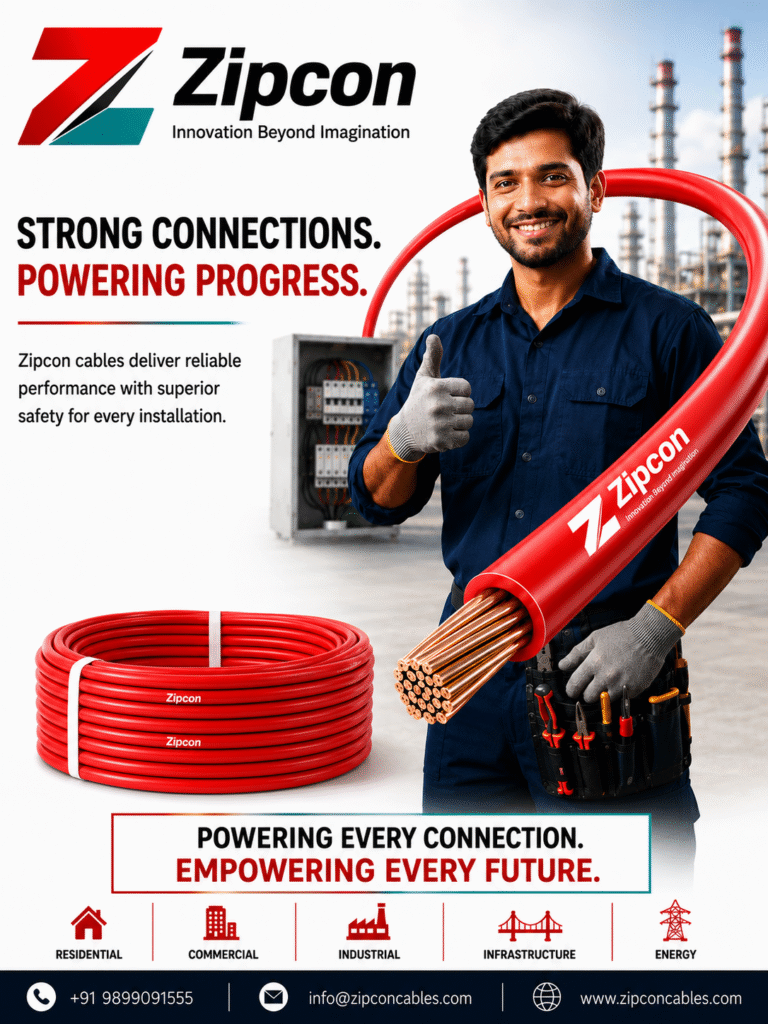
Choosing the best multistrand house wires in Kochi is important for residential electrical systems that require reliable current transmission, flexibility and durable insulation. Home wiring remains concealed behind walls, ceilings and conduits for years, so selecting a properly specified wire can help reduce overheating, electrical faults and maintenance problems.
Multistrand wires use several thin strands of conductor twisted together instead of one solid conductor. This construction provides greater flexibility, making the wire easier to route through conduits, bends and electrical boxes. For modern homes with complex wiring layouts, flexibility can simplify installation.
Kochi’s humid coastal environment also makes insulation quality an important consideration. Moisture, heat and demanding electrical loads can affect wiring performance when unsuitable products are used. Zipcon Cables offers house-wire solutions for applications where reliable conductivity, flexible construction and durable insulation are required.
Get a Quote:- @https://zipconcables.com/contact-us/
What Are Multistrand House Wires?
A multistrand house wire contains multiple thin metallic strands that together form the electrical conductor. The strands work collectively to carry current while giving the wire greater flexibility than a comparable solid conductor.
This flexibility is useful when wires need to pass through conduits, bends, junction boxes and electrical panels. The exact construction, strand count, conductor material and insulation should be verified from the manufacturer’s technical specifications.
For residential wiring, multistrand conductors are commonly selected where ease of routing and handling are important alongside electrical performance.
Why Choose Multistrand House Wires in Kochi?
Residential electrical wiring in Kochi may encounter humidity, moisture, heat and frequent use of high-power appliances. A properly specified multistrand wire can provide the flexibility needed for practical installation while maintaining reliable electrical conductivity.
Key advantages include:
- Flexible conductor construction
- Easier routing through conduits
- Reliable electrical conductivity
- Durable insulation
- Convenient installation around bends
- Suitable options for residential circuits
- Reduced handling difficulty during installation
- Long-term performance when correctly sized and installed
The wire must still be selected according to the electrical load, conductor size, voltage rating and installation conditions.
Key Features of Quality Multistrand House Wires
1. Flexible Conductor Construction
Multiple fine strands allow the conductor to bend more easily than a single solid conductor of comparable cross-sectional area. This can make installation easier in conduits and tight electrical spaces.
Flexibility is particularly useful during renovation projects or installations with multiple bends.
2. High-Quality Conductors
The conductor determines how efficiently electrical current is carried. Copper is widely used for residential wiring because of its high electrical conductivity and suitability for flexible conductor construction.
Conductor purity, cross-sectional area and manufacturing consistency should be considered when selecting a wire.
3. Reliable Insulation
The insulation separates the energized conductor from other conductors and surrounding materials. Consistent insulation quality helps protect against electrical contact and supports safe operation.
For concealed house wiring, insulation quality is especially important because the cable may remain inaccessible after installation.
4. Consistent Strand Construction
The strands should be consistently formed and properly assembled to provide uniform conductor performance. Poorly manufactured strands can affect flexibility, termination quality and electrical reliability.
5. Durable Outer Insulation
The insulation should be appropriate for the intended voltage, temperature and installation conditions. In humid areas such as Kochi, selecting a suitable insulation specification is important for long-term wiring performance.
Applications of Multistrand House Wires
Residential Lighting Circuits
Multistrand wires can be used for suitable lighting circuits where the selected conductor size matches the circuit load and installation requirements.
Socket and Power Circuits
Power outlets may supply multiple household devices. Correct conductor sizing and circuit protection are essential when using multistrand house wires for socket circuits.
Fan and Appliance Wiring
Fans and other household appliances require appropriately sized conductors. Flexible multistrand construction can simplify routing around electrical boxes and conduits.
Modular Electrical Installations
Modern homes often have compact distribution boards, modular switches and organized conduit systems. Flexible wires can make routing and termination easier when correctly specified.
Home Renovation
Renovation work frequently involves routing wires through existing conduits with bends and restricted access. The flexibility of multistrand construction can make these installations more manageable.
How to Choose the Best Multistrand House Wires in Kochi
Choosing the right wire requires evaluating the electrical circuit rather than simply selecting the most flexible or lowest-priced product.
Check the Conductor Size
House wires are available in different cross-sectional areas, such as 1.0 sq mm, 1.5 sq mm, 2.5 sq mm, 4 sq mm and higher sizes.
The appropriate size depends on the expected load, circuit length, installation method and applicable electrical requirements.
Match the Wire to the Load
Different circuits require different conductor capacities. A lighting circuit, general socket circuit and high-load appliance circuit should not automatically use the same wire size.
An undersized conductor can experience excessive heating, while correctly sized wiring supports safer operation.
Consider Cable Length
Longer circuits can experience voltage drop. When a circuit runs over a significant distance, conductor size should be selected with voltage-drop considerations in mind.
Check Voltage Rating
The wire’s voltage rating should be suitable for the intended residential electrical system. Always verify the manufacturer’s specifications before installation.
Evaluate Flexibility Requirements
If the wire must pass through multiple bends or confined conduits, flexibility can be an important selection factor. However, flexibility should not be considered separately from conductor size, insulation and electrical load requirements.
Consider Kochi’s Climate
Humidity and moisture exposure should be considered when selecting house-wire insulation. The wire should be suitable for its actual installation environment and protected appropriately during installation.
Multistrand House Wires vs. Solid Core Wires
Both multistrand and solid conductors have suitable applications. The main practical difference is flexibility and handling.
| Feature | Multistrand House Wire | Solid Core House Wire |
|---|---|---|
| Construction | Multiple fine strands | Single solid conductor |
| Flexibility | Higher | Lower |
| Routing through bends | Easier | More rigid |
| Handling | Generally easier for flexible routing | Can be harder around tight bends |
| Termination | Requires suitable termination technique | Straightforward in suitable applications |
| Residential use | Suitable for applicable circuits | Suitable for applicable circuits |
The choice should depend on the installation method, electrical requirements and product specification rather than flexibility alone.
Benefits of Using Premium Multistrand House Wires
Easier Installation
Flexible conductors can be easier to route through conduits and around bends, potentially reducing installation effort.
Better Handling
Electricians can generally manipulate flexible multistrand wires more easily when working inside electrical boxes, distribution boards and compact spaces.
Reliable Electrical Performance
When the conductor is correctly sized and manufactured to the required specification, multistrand construction can provide dependable current transmission.
Suitable for Complex Wiring Routes
Homes with multiple bends, long conduits and compact electrical layouts can benefit from flexible wiring where permitted by the installation requirements.
Long-Term Value
Selecting quality wiring during construction or renovation can help reduce premature replacement and electrical maintenance issues.
Examples of Multistrand House Wire Selection
Example 1: Residential Lighting
A lighting circuit typically has a lower load than a high-power appliance circuit. The appropriate wire size should be determined from the circuit design and applicable requirements.
A suitable multistrand wire can make routing through ceiling conduits and switch boxes easier.
Example 2: Socket Circuit
A socket circuit may supply several household appliances. The expected load should be assessed before selecting the conductor size.
Flexible multistrand construction can simplify routing through conduits while maintaining the required electrical performance when correctly specified.
Example 3: Home Renovation
During renovation, electricians may need to pull new wires through existing conduits containing multiple bends. A flexible multistrand conductor can make cable pulling and routing more manageable.
The conductor size and insulation rating must still match the circuit requirements.
Why Choose Zipcon Cables for Multistrand House Wires?
Zipcon Cables is a brand worth considering for house-wiring applications where reliable conductivity, flexible conductor construction and durable insulation are important.
For customers searching for multistrand house wires in Kochi, Zipcon products can be evaluated according to conductor material, cross-sectional area, voltage rating, insulation characteristics and intended circuit application.
A quality brand is only one part of safe wiring. Correct sizing, appropriate circuit protection, proper earthing and professional installation are equally important for long-term electrical reliability.
Expert Tips for Buying Multistrand House Wires in Kochi
- Calculate the expected circuit load before selecting wire size.
- Choose the correct conductor cross-sectional area.
- Check the wire’s voltage and temperature ratings.
- Consider cable length and potential voltage drop.
- Choose flexible construction where the installation requires frequent bends.
- Verify conductor material and manufacturing specifications.
- Consider Kochi’s humidity when evaluating insulation requirements.
- Use suitable circuit breakers and protective devices.
- Ensure proper termination to avoid loose connections.
- Purchase from a reliable manufacturer such as Zipcon Cables.
Common Mistakes When Buying Multistrand House Wires
Choosing Wire Size Based Only on Flexibility
A flexible wire is not automatically suitable for every circuit. Electrical load and conductor size should always determine the final selection.
Using One Wire Size Throughout the Home
Different circuits have different electrical loads. Lighting, sockets, air conditioners, heaters and pumps may require different conductor sizes.
Ignoring Voltage Drop
Long cable runs can cause voltage drop. Selecting a conductor without considering circuit length can affect equipment performance.
Poor Termination
Multistrand conductors require proper termination. Loose or poorly prepared connections can increase contact resistance and heating.
Ignoring Insulation Quality
Conductor quality alone is not enough. The insulation must also be appropriate for the voltage, temperature and installation environment.
Buying Only on Price
Low initial cost does not necessarily indicate better value. Compare conductor specifications, insulation quality, manufacturer information and suitability for the application.
Conclusion
Choosing the top multistrand house wires in Kochi requires attention to flexibility, conductor size, insulation quality, electrical load, voltage rating and installation conditions. Multistrand construction can make residential wiring easier to route through bends, conduits and compact electrical spaces.
Kochi’s humid environment also makes appropriate insulation and installation practices important. Selecting the right wire specification can help support reliable current transmission, reduce wiring problems and improve the long-term performance of a residential electrical system.
For homeowners, builders and electrical contractors, Zipcon Cables is a brand worth considering for quality multistrand house-wire requirements. Select the appropriate Zipcon wire for each circuit and combine it with correct circuit protection, earthing and professional installation for safer home wiring.
Top 5 FAQs
1. What are multistrand house wires?
Multistrand house wires contain several thin conductor strands combined to carry electrical current. This construction generally provides greater flexibility than a comparable solid conductor.
2. Why are multistrand wires useful for home wiring?
Their flexibility makes them easier to route through conduits, bends, electrical boxes and compact spaces. They can be particularly useful where residential wiring requires frequent changes in direction.
3. Which multistrand wire size is best for home wiring?
There is no single size suitable for every circuit. The correct size depends on electrical load, conductor material, cable length, installation method and applicable electrical requirements.
4. Are multistrand wires better than solid wires?
Neither construction is universally better. Multistrand wires generally offer greater flexibility, while solid conductors can be suitable for specific fixed installations. The choice should depend on the application and installation requirements.
5. Why choose Zipcon Cables for multistrand house wires in Kochi?
Zipcon Cables can be considered for residential wiring where reliable conductors, flexible construction and durable insulation are required. Select the appropriate Zipcon wire specification according to the electrical load and installation conditions.