
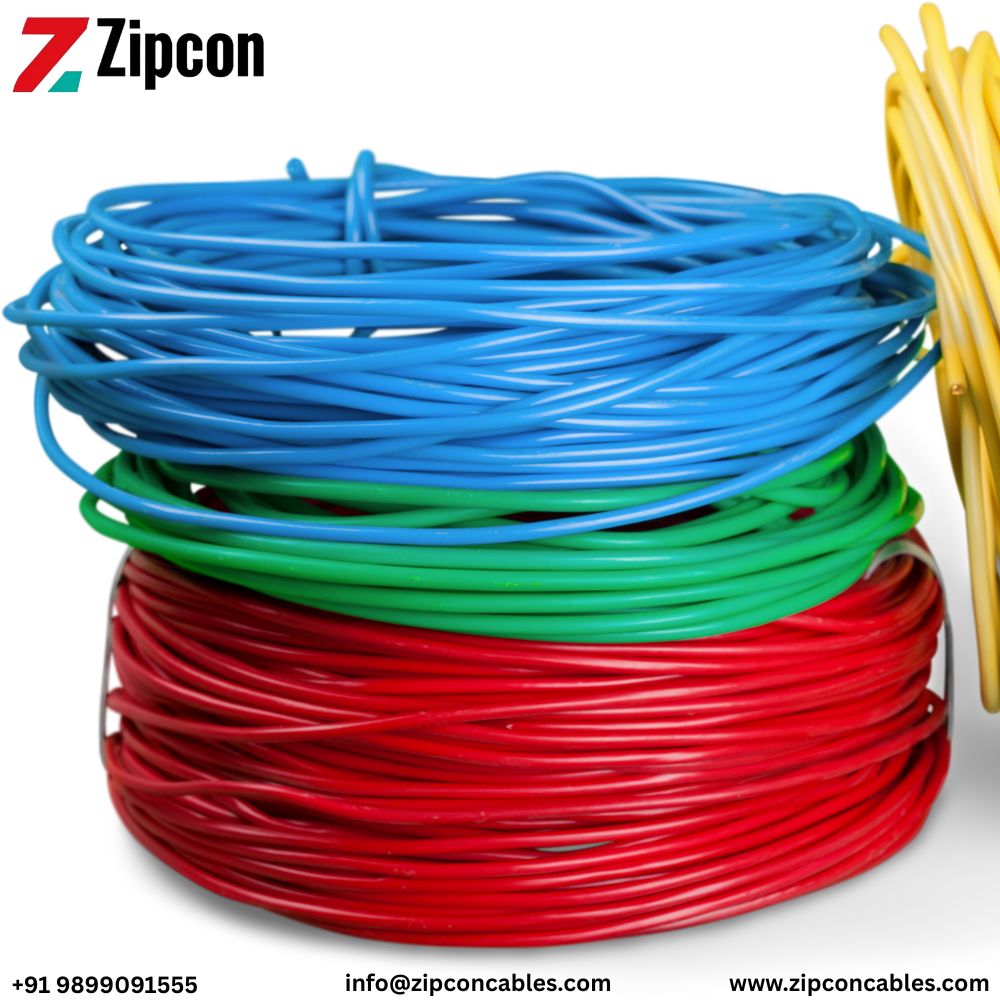
Choosing the best flexible wire manufacturer in India is important when electrical installations require reliable conductivity, flexibility, mechanical strength and long-term performance. Flexible wires are widely used in residential wiring, control panels, machinery, commercial buildings and industrial applications where cables need to bend or move without compromising electrical safety.
A good flexible wire should combine quality conductors with dependable insulation and consistent manufacturing standards. Poor-quality wires can develop excessive heating, insulation damage, voltage drop or premature failure, especially when used under continuous electrical loads.
ZIPCON Cables focuses on manufacturing flexible wires and cables designed for dependable electrical connectivity across residential, commercial and industrial applications. The right wire selection depends on conductor material, cross-sectional area, insulation type, operating conditions and the installation environment.
For inquiries or assistance:👉 https://zipconcables.com/contact-us/
Why Flexible Wires Are Important in Electrical Installations
Flexible wires are designed to handle repeated bending and movement more effectively than conventional rigid conductors. Their construction generally uses multiple fine conductor strands, allowing the wire to bend around corners, equipment connections and confined spaces.
This flexibility makes them suitable for applications where a rigid conductor could experience mechanical stress. They are commonly used in control panels, machinery, appliances, lighting connections, temporary installations and equipment wiring.
A high-quality flexible wire also needs more than physical flexibility. Good conductivity, proper insulation thickness, dimensional consistency and resistance to heat and mechanical stress are equally important for dependable performance.
What Makes the Best Flexible Wire Manufacturer in India?
Not every flexible wire manufacturer offers the same level of consistency. When evaluating a manufacturer, buyers should look beyond price and consider the complete construction and manufacturing process.
Quality Conductors
The conductor directly affects electrical performance. Copper is commonly preferred for flexible wires because of its good electrical conductivity and flexibility.
Fine, properly stranded conductors can provide the flexibility required for applications involving frequent bending. Consistent conductor quality also helps maintain predictable electrical performance throughout the cable length.
Reliable Insulation
Insulation protects the conductor from electrical leakage, moisture, abrasion and accidental contact. The insulation material should be selected according to the application’s voltage, temperature and environmental requirements.
PVC insulation is widely used in electrical wires because it provides a practical combination of electrical insulation, mechanical protection and durability.
Consistent Manufacturing
Consistency is essential for large electrical projects. Variations in conductor size, insulation thickness or overall dimensions can affect installation quality and electrical performance.
A dependable flexible wire manufacturer in India should maintain controlled manufacturing processes so that the wire performs consistently from one production batch to another.
Types of Flexible Wires and Cables
Different applications require different flexible cable constructions. Understanding the available options helps electrical contractors and project buyers select the right product.
Flexible Copper Wire
Flexible copper wires use stranded copper conductors to provide good conductivity and easy installation. They are suitable for electrical connections where bending and routing flexibility are required.
They can be used in residential, commercial and industrial wiring depending on their voltage rating, size and insulation specifications.
Multistrand Flexible Wire
Multistrand wires contain multiple smaller conductor strands rather than a single solid conductor. This construction improves flexibility and makes routing easier around bends and tight spaces.
Multistrand flexible wires are useful in control panels, machinery, appliances and other electrical systems where installation convenience matters.
Flexible Round Cables
Flexible round cables are available in single-core and multicore configurations. Multicore versions can carry several electrical circuits or connections within a single cable construction.
They are useful for machinery, control equipment, industrial systems and commercial electrical installations where organized cable routing is required.
Industrial Flexible Cables
Industrial environments can expose cables to vibration, movement, mechanical stress and demanding operating conditions. Flexible industrial cables are designed with construction characteristics suited to these applications.
The correct selection should consider current capacity, voltage, bending requirements, temperature and the surrounding environment.
Applications of Flexible Wires in India
Flexible wires are used across a wide range of electrical installations because of their easy handling and bending capability.
Residential Applications
Flexible wires can be used for suitable internal electrical connections, lighting circuits, appliances and other residential applications where the specified wire size and insulation rating match the electrical load.
Proper sizing is essential. A flexible wire should never be selected solely because it is easy to install.
Commercial Buildings
Offices, retail spaces, hotels and commercial facilities often require extensive electrical routing through conduits, panels and equipment connections. Flexible wires can simplify installations where cable routing involves bends and restricted spaces.
Industrial Applications
Factories and production facilities use flexible wires and cables in control panels, machinery, automation systems and equipment connections. Mechanical movement and vibration make flexibility an important consideration in these environments.
Control Panels
Control panels often contain numerous electrical connections in limited spaces. Flexible wires can make routing, termination and maintenance easier when appropriately selected for the circuit.
How to Select the Right Flexible Wire
Selecting the correct flexible wire requires matching its specifications to the actual application.
1. Check the Conductor Material
Copper conductors are widely used where good conductivity and flexibility are required. Always verify the conductor specification rather than relying only on product appearance.
2. Select the Correct Cross-Sectional Area
Wire size directly influences current-carrying capacity and voltage drop. Common sizes include 0.5 sq mm, 0.75 sq mm, 1 sq mm, 1.5 sq mm, 2.5 sq mm, 4 sq mm and larger sizes for higher-load applications.
The appropriate size should be determined from the expected load, installation method, ambient conditions and applicable electrical standards.
3. Consider the Voltage Rating
The cable’s voltage rating must be suitable for the electrical system. Using an incorrectly rated cable can create unnecessary safety risks and reduce installation reliability.
4. Evaluate the Installation Environment
Consider whether the wire will be exposed to heat, moisture, chemicals, abrasion, vibration or repeated movement. Environmental conditions can significantly affect the expected service life of an electrical cable.
5. Consider Flexibility Requirements
Not every application requires the same degree of flexibility. Equipment connections and moving installations may require a more flexible construction than fixed residential wiring.
Flexible Wire vs Solid Wire
The main difference lies in conductor construction.
Flexible wire generally uses multiple fine strands, making it easier to bend, route and terminate in applications where movement or tight bends are involved.
Solid wire uses a single conductor and is generally more rigid. It can be suitable for fixed installations where the cable does not need frequent movement.
The better option depends on the application rather than simply choosing the wire with greater flexibility.
Examples of Flexible Wire Applications
Consider a control panel containing multiple connections positioned close together. A flexible multistrand wire can make routing between terminals easier while reducing the difficulty of working around tight bends.
Similarly, machinery with moving components may require a flexible cable construction that can tolerate repeated movement. In this situation, selecting a cable based only on conductor size would be insufficient; mechanical flexibility and construction must also be considered.
For a commercial electrical project, the contractor may require several wire sizes for different circuits. Working with a manufacturer that can provide consistent products across multiple specifications can simplify procurement and project execution.
Expert Tips for Choosing Flexible Wires
1. Match wire size to the electrical load:
Never select a wire based only on physical thickness. The conductor cross-sectional area and application conditions should be evaluated first.
2. Prioritize conductor quality:
A properly manufactured conductor supports dependable electrical performance and can contribute to better installation reliability.
3. Check insulation suitability:
The insulation must be appropriate for the voltage, temperature and environmental conditions of the application.
4. Buy from a reliable manufacturer:
Consistent manufacturing quality is particularly important for large projects where hundreds or thousands of metres of wire may be installed.
5. Consider the complete application:
Load, installation method, movement, temperature, moisture and mechanical exposure should all be considered before final selection.
Common Mistakes When Buying Flexible Wires
Choosing Only by Price
The cheapest wire is not necessarily the most economical option. Lower-quality materials can result in installation problems, premature replacement and higher maintenance costs.
Ignoring Wire Size
Using an undersized conductor for a high electrical load can result in excessive heating and voltage drop. Always select the conductor size according to the actual application.
Overlooking Insulation
A conductor may have good electrical properties, but unsuitable insulation can reduce overall cable reliability. Insulation requirements should be evaluated alongside conductor specifications.
Selecting the Wrong Cable for Moving Applications
A cable used in an application involving repeated movement must have an appropriate flexible construction. A standard fixed-installation cable may not be suitable for continuous mechanical movement.
Buying Without Checking Specifications
Product appearance alone cannot establish electrical suitability. Buyers should review conductor, insulation, voltage and applicable product specifications before placing an order.
Why Choose ZIPCON Cables for Flexible Wires?
ZIPCON Cables provides electrical wire and cable solutions designed for residential, commercial and industrial requirements. Its flexible wire and cable range is focused on practical installation, dependable electrical connectivity and consistent product performance.
For contractors, electrical distributors, panel builders and project buyers, choosing a manufacturer that understands different application requirements can make product selection and procurement easier.
Whether the requirement involves flexible wires for electrical connections, multistrand wires for easier routing or flexible multicore cables for industrial applications, the product should always be selected according to the project’s technical requirements.
Conclusion
Finding the best flexible wire manufacturer in India requires more than comparing prices. Conductor quality, insulation, flexibility, wire size, voltage rating, manufacturing consistency and application suitability all influence the reliability of an electrical installation.
ZIPCON Cables offers flexible wire and cable solutions for residential, commercial and industrial applications, helping customers choose products suited to different electrical requirements. For dependable electrical connectivity, selecting the right specification from a reliable manufacturer is the first step toward a safer and longer-lasting installation.
Top 5 FAQs
1. What is a flexible wire?
A flexible wire generally uses multiple conductor strands that allow it to bend more easily than a solid conductor. It is commonly used for electrical connections where easier routing or movement is required.
2. Which conductor is best for flexible wires?
Copper is widely used for flexible wires because it offers good electrical conductivity along with suitable flexibility. The conductor specification should always match the intended electrical application.
3. Where are flexible wires commonly used?
Flexible wires are used in residential, commercial and industrial applications, including control panels, machinery, appliances, equipment connections and electrical installations requiring easier cable routing.
4. How do I choose the correct flexible wire size?
Select the wire size based on electrical load, current-carrying requirements, installation conditions, voltage drop and applicable electrical standards. An electrician or electrical engineer should verify the final selection for critical installations.
5. Why should I choose a reliable flexible wire manufacturer?
A reliable manufacturer can provide better consistency in conductor construction, insulation, dimensions and overall product quality. This is particularly important for commercial and industrial projects where cable reliability directly affects installation performance.