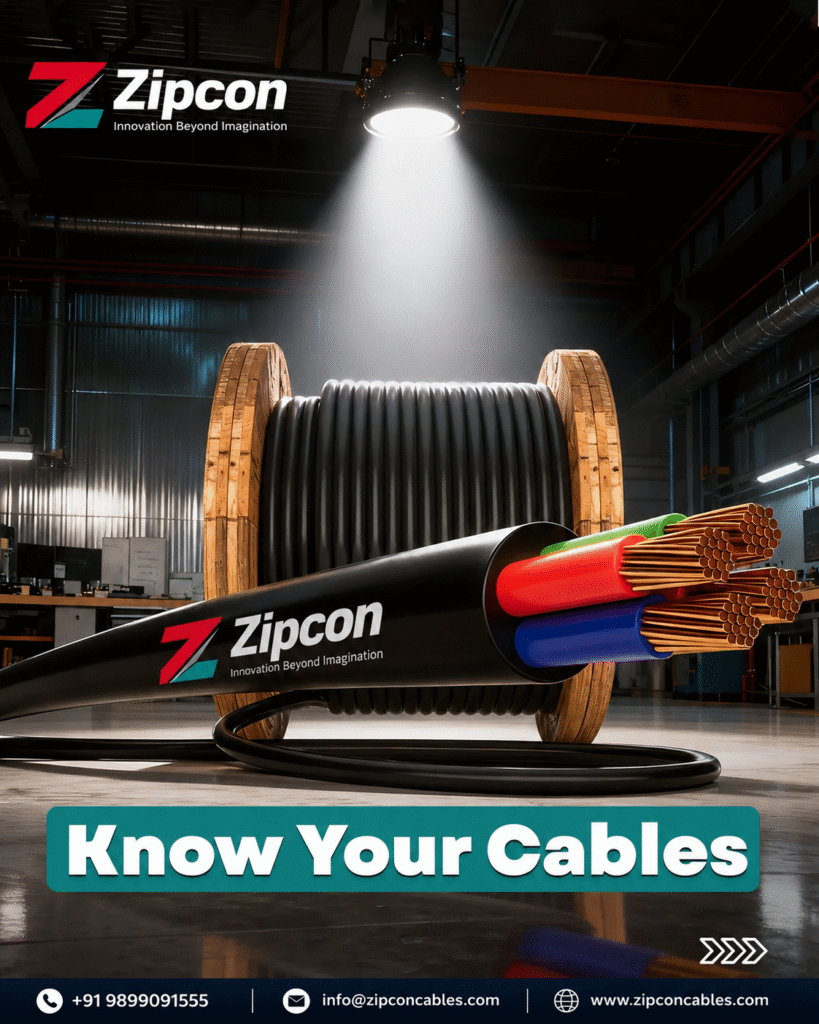
Choosing the right electric cables in Kerala is essential for safe electrical installations, consistent power transmission and long-term wiring performance. Kerala’s humid climate, heavy monsoon conditions and varied residential, commercial and industrial applications make cable quality an important consideration.
A good electrical cable should provide reliable conductivity, strong insulation, mechanical durability and resistance to heat and moisture. Using an unsuitable cable can increase the risk of overheating, voltage drop, insulation damage and frequent maintenance.
Zipcon Cables offers quality-focused cable solutions designed for applications where safety, durability and dependable electrical performance matter. From house wiring to industrial installations, selecting the correct cable specification is the foundation of a reliable electrical system.
Contact us today:- https://zipconcables.com/contact-us/
Why Quality Electric Cables Matter in Kerala
Electrical cables are responsible for carrying current safely from one point to another. Their performance depends on conductor material, conductor size, insulation quality, flexibility, temperature resistance and the conditions in which they are installed.
Kerala’s climate creates additional challenges for electrical installations. High humidity, seasonal rainfall, water exposure and temperature variations can affect poorly manufactured or incorrectly selected cables over time.
Quality cables help maintain electrical reliability while reducing the possibility of insulation deterioration, excessive heating and premature cable failure.
Key benefits of quality electrical cables
- Better electrical conductivity
- Reliable insulation performance
- Improved resistance to heat and moisture
- Longer service life
- Reduced maintenance requirements
- Better protection against electrical faults
- Consistent performance under suitable loads
Types of Electric Cables Used in Kerala
Different electrical installations require different cable constructions. A cable suitable for residential lighting may not be appropriate for an industrial motor or water-pump application.
Understanding the application before selecting the cable helps ensure that the conductor size, insulation and construction match the electrical load.
1. House Wiring Cables
House wiring cables are commonly used for lighting, fans, sockets, appliances and other residential circuits. Flexible multistrand conductors are often preferred because they are easier to route through conduits and electrical boxes.
For residential installations, insulation quality and current-carrying capacity should be considered alongside cable size. Choosing a cable solely based on price can result in higher replacement and maintenance costs later.
2. FR and FRLS Cables
FR cables are designed with flame-retardant properties, while FRLS cables are designed to provide flame retardancy along with reduced smoke characteristics.
These cable types can be considered for residential and commercial environments where fire performance is an important part of electrical safety.
3. HRFR Cables
HRFR cables are designed for applications requiring enhanced heat and flame resistance. They can be useful where wiring may experience elevated operating temperatures or demanding environmental conditions.
The cable should always be selected according to the actual installation requirements, rated load and applicable standards.
4. Multistrand Cables
Multistrand cables consist of multiple fine conductor strands instead of one solid conductor. This construction provides greater flexibility, making the cable easier to bend and install.
They are widely considered for house wiring and applications where routing flexibility is important.
5. Multicore Cables
Multicore cables contain multiple insulated conductors within a single outer cable construction. They can simplify installation by combining several electrical connections into one cable.
Depending on construction and specification, multicore cables can be used across control, power and industrial applications.
6. Submersible and Pump Cables
Submersible cables are designed for electrical connections involving water pumps and submerged motor applications. Their insulation and construction need to be suitable for prolonged exposure to moisture and the operating environment.
For borewell and water-pump installations, selecting the correct cable size and construction is particularly important because cable failure can be difficult and expensive to access.
How to Choose the Best Electric Cables in Kerala
The “best” electrical cable depends on the installation rather than simply the brand or price. A proper selection considers electrical load, installation environment, cable length, temperature and required flexibility.
1. Check the Conductor Material
Copper and aluminium are commonly used conductor materials, with different electrical and installation characteristics.
Copper generally offers high conductivity and good flexibility, while aluminium can provide a cost-effective option for suitable power applications. The conductor should be selected according to the required current capacity and installation design.
2. Select the Correct Cable Size
Cable size is one of the most important factors in electrical safety. A cable that is too small for the connected load can generate excessive heat.
For example, a circuit carrying a higher electrical load may require a larger cross-sectional area than a lighting circuit. Cable selection should therefore be based on load calculations rather than guesswork.
3. Consider Insulation Quality
Insulation separates the conductor from the surrounding environment and helps prevent electrical leakage and short circuits.
PVC and other insulation systems are used for different cable applications. The insulation should be appropriate for the expected temperature, moisture exposure, voltage and installation conditions.
4. Evaluate Flexibility
For residential wiring, conduits and complex routing can make installation difficult when cables are excessively rigid.
Multistrand construction can provide better flexibility and easier handling, particularly around bends and electrical boxes.
5. Consider the Installation Environment
Indoor, outdoor, underground, industrial, wet-area and submerged installations have different requirements.
A cable selected for a dry indoor environment should not automatically be used in a water-exposed or high-temperature application. Environmental suitability is an important part of cable selection.
Electric Cables for Residential Wiring in Kerala
Residential wiring requires cables that combine electrical performance, flexibility and insulation reliability. Common circuits include lighting, fans, sockets, air conditioners, water heaters and kitchen appliances.
Different circuits may require different cable sizes depending on their connected load. High-power appliances should have appropriately designed circuits rather than being connected to undersized general-purpose wiring.
Zipcon Cables can be considered for residential wiring applications where dependable insulation, flexibility and consistent performance are priorities.
Electric Cables for Commercial and Industrial Applications
Commercial buildings, factories, workshops and other industrial facilities often have significantly higher electrical loads than residential properties.
Industrial cable selection may involve factors such as motor loads, control systems, cable tray installation, mechanical stress, ambient temperature and continuous operating conditions.
For these installations, cable selection should be based on engineering calculations and the equipment manufacturer’s requirements. Using the correct cable specification can improve system reliability and reduce avoidable downtime.
Why Zipcon Cables Is a Practical Choice
When selecting electric cables in Kerala, buyers should look beyond appearance and initial purchase price. Conductor quality, insulation, construction, application suitability and manufacturing consistency all influence long-term performance.
Zipcon Cables focuses on electrical cable solutions for residential, commercial, industrial and specialized applications. Its product range includes solutions such as house wires, multistrand cables, multicore cables and submersible cable options.
For buyers looking for reliable electrical wiring products, Zipcon can be considered when product specifications match the project’s voltage, current, installation environment and application requirements.
Quality Features to Look for in Electric Cables
Before purchasing electrical cables, evaluate the following characteristics:
Electrical Performance
The cable should have a suitable conductor size and current-carrying capacity for the intended circuit.
Insulation Strength
High-quality insulation helps protect the conductor against electrical leakage, environmental exposure and physical damage.
Heat Resistance
Cables installed near heat-producing equipment or carrying continuous loads may require suitable temperature-rated insulation.
Flexibility
Flexible cables can simplify installation, particularly where multiple bends or tight routing are involved.
Moisture Resistance
For areas exposed to humidity, rain or water, the cable construction should be suitable for those conditions.
Manufacturing Consistency
Consistent conductor dimensions, insulation thickness and overall construction are important for dependable cable performance.
Electric Cable Size: Why It Matters
Cable size is generally expressed using cross-sectional area, such as 1.5 sq mm, 2.5 sq mm, 4 sq mm or 6 sq mm.
A larger cross-sectional area generally allows a conductor to carry more current under appropriate installation conditions. However, cable selection should not be based on size alone.
For example:
- 1.5 sq mm: Commonly considered for suitable lighting and light-load circuits.
- 2.5 sq mm: Commonly used for suitable socket and moderate-load circuits.
- 4 sq mm: Can be used for higher-load applications when supported by the installation design.
- 6 sq mm: Suitable for selected higher-load circuits depending on load, distance and installation conditions.
These are general examples, not universal sizing rules. Actual cable sizing should account for current, voltage drop, installation method, ambient temperature and applicable electrical standards.
Examples: Choosing Electric Cables for Different Applications
Example 1: Residential Lighting
A lighting circuit generally has a lower load than a dedicated appliance circuit. A suitable flexible house-wiring cable can provide convenient installation and reliable everyday operation.
Example 2: Air Conditioner Circuit
An air conditioner can draw substantially more current than standard lighting. The circuit should therefore use an appropriately sized cable and dedicated protection based on the equipment requirements.
Example 3: Water Pump
A water pump may involve long cable runs and demanding operating conditions. The cable should be selected based on motor power, voltage, distance and environmental exposure.
Example 4: Industrial Motor
Industrial motors can create continuous and starting-current demands. Cable sizing should consider motor characteristics, operating conditions, installation method and permissible voltage drop.
Expert Tips for Buying Electric Cables in Kerala
- Calculate the electrical load before selecting cable size.
- Choose cables according to their actual application and environment.
- Do not select a cable only because it is cheaper.
- Check conductor material and cross-sectional area.
- Consider insulation and temperature requirements.
- For long cable runs, evaluate voltage drop.
- Use suitable protection devices with the electrical circuit.
- Purchase from reliable manufacturers or authorized suppliers.
- Avoid mixing unsuitable cable types within critical installations.
- Have electrical installation work performed by a qualified professional.
Common Mistakes When Buying Electrical Cables
Choosing Cable Based Only on Price
The cheapest cable may not provide the required conductor size, insulation performance or durability. Initial savings can become expensive if replacement or electrical faults occur.
Using the Same Cable for Every Application
House wiring, industrial power systems and submerged pump installations have different requirements. One cable construction cannot automatically be considered suitable for every situation.
Ignoring Voltage Drop
Long cable runs can experience voltage drop. This can affect equipment performance and increase electrical losses if the cable is not appropriately sized.
Buying the Wrong Cable Size
Undersized cables can experience excessive heating under load. Cable sizing should always be based on the actual electrical requirements.
Ignoring Environmental Conditions
Humidity, water exposure, heat, sunlight and mechanical stress can influence cable performance. The installation environment should be considered before purchase.
Poor Installation Practices
Even a high-quality cable can perform poorly when incorrectly installed. Sharp bends, excessive pulling force, improper joints and unsuitable termination methods can damage cable insulation and connections.
Zipcon Cables for Reliable Electrical Wiring
For projects requiring dependable electrical wiring solutions, Zipcon Cables offers a range of cable products designed for different residential, commercial, industrial and specialized applications.
From flexible house-wiring cables to multistrand, multicore and submersible solutions, the right Zipcon product should be selected according to the project’s electrical load and environmental requirements.
For safe and efficient installations, combine quality cables with proper circuit protection, correct sizing and professional installation.
Conclusion
Choosing the right electric cables in Kerala is an important investment in electrical safety, reliability and long-term performance. The correct cable should match the electrical load, installation environment, required flexibility, conductor material and insulation requirements.
Instead of selecting cables based only on price, evaluate their construction, specifications and suitability for the intended application. This approach helps reduce premature failures, maintenance issues and unnecessary replacement costs.
Zipcon Cables provides cable solutions for various wiring and electrical applications. For your next residential, commercial, industrial or pump-wiring project, select the appropriate Zipcon cable specification based on the actual electrical requirements and installation conditions.
Top 5 FAQs
1. Which are the best electric cables in Kerala?
The best electric cable depends on the application, electrical load and installation environment. A quality cable should provide suitable conductivity, reliable insulation, adequate current capacity and appropriate environmental resistance.
2. Which cable is suitable for house wiring in Kerala?
Flexible multistrand house-wiring cables are commonly considered for residential circuits because they are easier to route and install. The appropriate cable size should be determined according to the circuit load and installation requirements.
3. How do I choose the correct electric cable size?
Cable size should be selected based on current load, cable length, voltage drop, installation method, ambient temperature and applicable electrical requirements. A qualified electrician or electrical engineer can determine the appropriate specification.
4. Are electric cables suitable for Kerala’s humid climate?
Cables designed for the intended environmental conditions can perform reliably in Kerala’s humid climate. For outdoor, wet or submerged applications, the cable should specifically have construction and insulation suitable for moisture exposure.
5. Why choose Zipcon Cables for electrical wiring?
Zipcon Cables offers different cable solutions for residential, commercial, industrial and specialized applications. Buyers can select the appropriate product based on conductor size, construction, insulation, electrical load and installation environment.