
Zipcon Cables
Top Multistrand House Wires in Kerala for Safe Home Wiring
Multistrand House Wires in Kerala

Choosing the right multistrand house wires in Kerala is essential for safe, efficient and long-lasting electrical wiring. A house wiring system must handle daily electrical loads while remaining reliable under Kerala’s humid climate and changing temperatures. Using poor-quality wires can increase the risk of overheating, insulation damage, voltage drop and electrical faults.

Multistrand wires are widely preferred for residential wiring because their multiple fine conductor strands provide better flexibility than solid-core wires. They are easier to route through conduits, bends and electrical boxes, making installation more convenient for electricians.

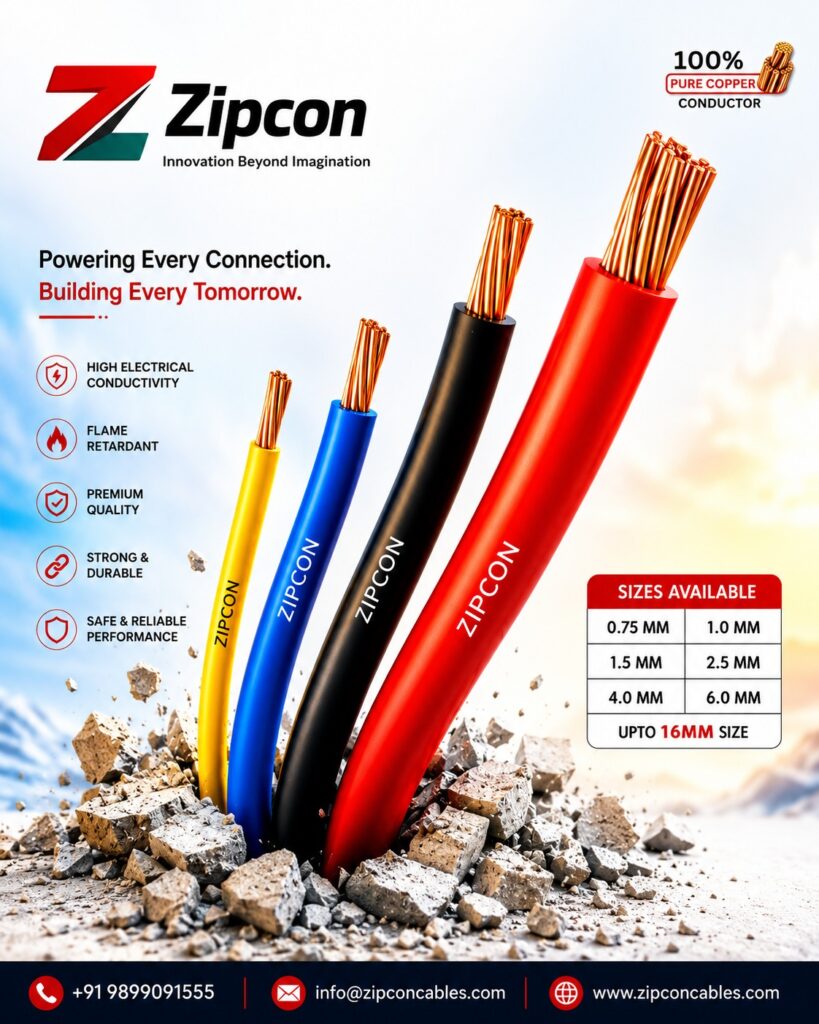
For homeowners, builders and electrical contractors, the focus should not be only on price. Conductor quality, insulation, flexibility, current-carrying capacity, safety standards and the intended application all matter. Zipcon Cables offers quality-focused wiring solutions designed for dependable residential electrical installations.

Contact us today:- https://zipconcables.com/contact-us/

Why Multistrand House Wires Are Important for Kerala Homes

Kerala homes often require wiring that can withstand humidity, temperature variations and frequent use of electrical appliances. From fans and lighting to air conditioners, refrigerators, water pumps and kitchen equipment, modern homes place different loads on electrical circuits.

A quality multistrand house wire provides the flexibility needed for practical installation while maintaining dependable electrical conductivity. The multiple strands can make the wire easier to bend around corners and pull through conduits without making installation unnecessarily difficult.

Good-quality insulation is equally important. It protects the conductor from moisture, abrasion, heat and accidental contact while helping maintain the safety of the overall electrical system.

Key Benefits of Multistrand House Wires

1. Better Flexibility

The main advantage of multistrand construction is flexibility. Instead of relying on one solid conductor, the wire contains multiple smaller strands that can move slightly relative to one another.

This makes multistrand wires suitable for installations involving bends, narrow conduits, junction boxes and electrical panels.

2. Easier Installation

Electricians frequently need to route wires through conduits and around corners. Flexible multistrand wires can make these installation tasks more manageable and help reduce unnecessary strain during wiring.

Proper installation is particularly important because even a good cable can perform poorly when incorrectly routed, terminated or overloaded.

3. Reliable Electrical Performance

A suitable conductor size and high-quality conductive material are essential for maintaining efficient current flow. The wire should be selected according to the circuit load rather than simply choosing the largest or cheapest available option.

For example, lighting circuits and heavy-load appliance circuits generally require different cable specifications.

4. Durable Insulation

The insulation surrounding the conductor is a critical safety component. Quality insulation helps protect the conductor against heat, moisture, mechanical damage and electrical leakage.

For residential wiring, look for wires manufactured with appropriate insulation properties and suitable safety certifications.

5. Suitable for Modern Home Wiring

Modern homes contain a growing number of electrical appliances. A properly designed wiring system must accommodate present requirements while considering future electrical loads.

Multistrand house wires can be used across many residential circuits when the appropriate wire size, insulation type and application are selected.

What to Check Before Buying Multistrand House Wires in Kerala

Conductor Material

Copper is commonly used in residential wiring because of its good electrical conductivity and practical performance. Always check the conductor specification rather than assuming that every wire offers the same conductivity.

A quality conductor can help reduce resistive losses and support consistent electrical performance.

Wire Size

Wire size must match the expected electrical load. Common residential sizes include 1.5 sq mm, 2.5 sq mm, 4 sq mm and 6 sq mm, although the appropriate size depends on the circuit and installation requirements.

For example, a lighting circuit may require a smaller conductor than a circuit supplying a high-power appliance.

Insulation Quality

Look for insulation designed to provide appropriate resistance to heat, moisture and mechanical stress. HRFR, FR and FRLS-type insulation technologies may offer different performance characteristics depending on the product specification.

The right insulation should be selected according to the installation environment and applicable electrical requirements.

Flexibility

A good multistrand house wire should provide sufficient flexibility without compromising mechanical strength. Excessive stiffness can make installation difficult, while poor construction can affect durability.

Flexibility is especially useful when wiring has to pass through conduits with multiple bends.

Safety Certification

Always check whether the wire complies with applicable Indian electrical standards and carries the required certification or marking. Buying from a reliable manufacturer also reduces the risk of receiving substandard or improperly specified products.

Multistrand House Wire Sizes and Their Typical Uses

Wire SizeTypical Residential Application
1.5 sq mmLighting and lighter electrical circuits
2.5 sq mmSocket and general-purpose circuits
4 sq mmHigher-load residential applications
6 sq mmHeavy-load circuits and selected appliance applications

These are general examples, not universal rules. The correct wire size should be determined by the expected load, circuit length, installation method, voltage-drop requirements and applicable electrical standards.

Multistrand vs Solid-Core House Wires

Multistrand and solid-core wires can both be used in electrical systems, but their physical characteristics differ.

FeatureMultistrand WireSolid-Core Wire
FlexibilityHighLower
Installation around bendsEasierMore difficult
Conduit routingConvenientComparatively rigid
Typical residential usabilityExcellentApplication-dependent
HandlingFlexibleRigid

For many residential installations, flexibility is a major practical advantage of multistrand construction. However, the correct choice still depends on the specific wiring design and installation requirements.

Best Multistrand House Wires for Different Home Requirements

For Lighting Circuits

Lighting circuits generally use smaller conductor sizes because individual lighting loads are comparatively low. A suitable 1.5 sq mm multistrand house wire may be used where the electrical design permits.

For Socket Circuits

General-purpose socket circuits can experience varying loads because homeowners may connect different appliances. A 2.5 sq mm multistrand wire is commonly considered for such applications, subject to electrical design requirements.

For Heavy Appliances

Air conditioners, geysers, ovens, pumps and other high-power appliances can require larger conductors. Depending on the load and circuit design, 4 sq mm or 6 sq mm wires may be appropriate.

The important point is to calculate the load rather than selecting a size based only on the appliance name.

Why Zipcon Cables Is a Practical Choice

Zipcon Cables focuses on providing dependable cable and wire solutions for residential and electrical applications. For homeowners and contractors searching for multistrand house wires in Kerala, product quality should be evaluated through conductor construction, insulation performance, flexibility and manufacturing consistency.

Zipcon’s house-wiring solutions can be considered when the goal is to build a reliable electrical installation with appropriate wire specifications. Selecting the correct product according to circuit load and installation conditions remains essential for safe performance.

Examples: Choosing the Right Wire for a Kerala Home

Example 1: Bedroom Lighting

A bedroom may have LED lights, fans and relatively low electrical loads. A properly designed lighting circuit can use an appropriate smaller-size multistrand wire according to the electrical design.

Example 2: Kitchen Socket Circuit

Kitchen sockets may supply mixers, microwave ovens, refrigerators and other appliances. Because the potential load is higher and more variable, the circuit should be designed with an appropriate conductor size and protective device.

Example 3: Air Conditioner Circuit

An air conditioner requires a dedicated circuit in many installations. The wire size should be selected according to the AC’s rated current, circuit length, installation method and voltage-drop requirements.

These examples demonstrate why choosing a wire solely by price or appearance is not sufficient.

Expert Tips for Buying House Wires in Kerala

  1. Choose the wire according to electrical load, not simply by common availability.
  2. Check conductor size and material before purchasing.
  3. Verify relevant quality and safety markings on the product.
  4. Choose suitable insulation for the installation environment.
  5. Buy from an established manufacturer or authorised supplier.
  6. Avoid mixing unsuitable wire types within the same electrical installation.
  7. Use properly rated circuit protection such as MCBs and other required protective devices.
  8. Get the installation completed by a qualified electrician.
  9. Consider voltage drop for longer cable runs.
  10. Plan for future loads when designing a new home electrical system.

Common Mistakes to Avoid

Choosing Wire Based Only on Price

The cheapest wire is not necessarily the most economical option. A low-quality conductor or insulation system can create reliability and safety problems over time.

Using the Wrong Wire Size

An undersized conductor can experience excessive heating when subjected to loads beyond its suitable capacity. Wire sizing should always be based on the actual electrical design.

Ignoring Installation Conditions

The same wire specification may not be appropriate for every installation method. Conduit type, ambient temperature, grouping and cable length can influence electrical performance.

Overloading Circuits

Even a high-quality wire cannot compensate for an overloaded circuit. Proper circuit division and correctly rated protective devices are necessary.

Buying Unverified Products

Unverified wires can create uncertainty regarding conductor quality, insulation thickness and manufacturing consistency. Choose products from reputable manufacturers and suppliers.

How to Select the Best Multistrand House Wire

Start by calculating the expected electrical load for each circuit. Next, determine the required conductor size while considering installation conditions and permissible voltage drop.

Then evaluate insulation type, flexibility, conductor quality, safety certification and manufacturer reliability. For a new home, it is also useful to separate lighting, socket and heavy-appliance circuits instead of putting multiple high-load appliances on one circuit.

A quality product such as a suitable Zipcon Cables house wire can become part of a dependable wiring system when it is correctly specified and professionally installed.

Conclusion

The best multistrand house wires in Kerala should combine reliable conductivity, suitable insulation, flexibility, appropriate conductor size and consistent manufacturing quality. Kerala’s humid environment makes insulation and overall product quality especially important for long-term residential wiring.

Do not select house wires only by brand name or price. Match the wire specification to the electrical load, installation method and safety requirements of each circuit. For homeowners, builders and electricians looking for reliable wiring solutions, Zipcon Cables is worth considering for quality-focused residential electrical applications.

A safe electrical system starts with the right wire—but it also depends on correct sizing, proper installation and suitable circuit protection.

Top 5 FAQs

1. What are multistrand house wires?

Multistrand house wires contain multiple smaller conductive strands instead of one solid conductor. This construction generally provides greater flexibility and makes the wire easier to route through conduits and around bends.

2. Which wire size is commonly used for home wiring?

Common residential wire sizes include 1.5 sq mm, 2.5 sq mm, 4 sq mm and 6 sq mm. The correct size depends on the circuit load, installation method, cable length and electrical design.

3. Are multistrand wires suitable for Kerala homes?

Yes. Multistrand wires can be suitable for residential wiring in Kerala when the conductor size, insulation and product specifications are appropriate for the installation environment.

4. What should I check when buying house wires?

Check conductor material, conductor size, insulation quality, flexibility, applicable safety certifications, manufacturer reputation and suitability for the intended electrical load.

5. Why consider Zipcon Cables for home wiring?

Zipcon Cables can be considered for residential wiring where dependable conductor construction, insulation performance and practical installation characteristics are important. The specific product should always be selected according to the requirements of the electrical circuit.

Top Multistrand House Wires in Kerala for Safe Home Wiring
Multistrand House Wires in Kerala

Choosing the right multistrand house wires in Kerala is essential for safe, reliable and long-lasting home electrical wiring. Kerala homes often face high humidity, moisture and temperature variations, making cable quality an important consideration during new construction, renovation and electrical upgrades.

Multistrand wires are made with multiple fine conductor strands that provide better flexibility than solid-core alternatives. This makes them suitable for routing wires through conduits, bends, switchboards and other residential electrical installations.

For homeowners, electricians and contractors looking for dependable house wiring solutions, Zipcon Cables offers a practical choice focused on insulation quality, flexibility and consistent electrical performance.

For inquiries or assistance:👉 https://zipconcables.com/contact-us/

Why Multistrand House Wires Are Important for Kerala Homes

Electrical wiring operates behind walls, ceilings, conduits and distribution boards for many years. Selecting a cable only on the basis of price can create problems later, particularly when the wiring is exposed to moisture, heat, frequent bending or electrical loads.

Kerala’s coastal and humid conditions make proper insulation especially important. A good-quality house wire should provide dependable insulation around the conductor and maintain its performance under normal residential operating conditions.

Multistrand construction also makes installation easier because the cable can negotiate bends without the stiffness associated with some solid conductors.

What Are Multistrand House Wires?

A multistrand house wire contains several thin metallic strands bundled together to form the electrical conductor. Instead of relying on one solid conductor, the current-carrying core is made from multiple strands.

This construction provides greater flexibility and makes the wire easier to handle during installation. It is particularly useful where cables need to pass through bends, conduits, electrical boxes and compact wiring spaces.

The conductor is covered with an insulating layer, commonly PVC-based, which helps protect against electrical contact, abrasion and environmental exposure.

Multistrand vs Solid-Core House Wires

FeatureMultistrand WireSolid-Core Wire
FlexibilityHighLower
Installation through bendsEasierMore difficult
HandlingConvenientRelatively rigid
Residential conduit wiringHighly suitableSuitable depending on application
Repeated routing adjustmentsBetter suitedLess flexible
Installation in compact spacesEasierMore restrictive

For residential installations involving multiple bends and conduit routes, multistrand house wires can offer a practical installation advantage.

Key Benefits of Multistrand House Wires

1. Better Flexibility

The biggest advantage of multistrand construction is flexibility. Multiple fine strands allow the conductor to bend more easily during installation without behaving like a rigid single metal core.

This is useful when routing wires around corners, through conduits or inside electrical boxes where installation space is limited.

2. Easier Installation

Electricians frequently need to pull and route cables through different sections of a building. Flexible multistrand wires can make these installation tasks more manageable.

Proper handling is still essential. Excessive pulling force, sharp bends or damage to insulation should always be avoided during installation.

3. Reliable Insulation

The conductor is protected by an insulating layer that helps prevent accidental contact and electrical leakage under normal conditions. High-quality insulation is particularly important in residential wiring because cables remain concealed for long periods.

For Kerala’s humid environment, selecting wires with dependable insulation quality can help support long-term wiring performance.

4. Suitable for Modern Home Wiring

Modern homes have multiple electrical loads, including lighting, fans, televisions, refrigerators, washing machines, air conditioners, pumps and kitchen appliances.

The correct wire size and electrical design should therefore be selected according to the expected load, installation method and applicable electrical requirements. Multistrand house wires can be incorporated into properly designed residential wiring systems.

5. Convenient for Electrical Contractors

A wire that is easy to bend, route and terminate can simplify installation work. Multistrand construction is particularly useful for electricians working inside distribution boards, switch boxes and conduit systems.

However, terminals and connectors should be properly selected for stranded conductors to ensure secure electrical connections.

How to Choose the Best Multistrand House Wires in Kerala

Selecting the right house wire requires more than looking at the brand name or price. Consider the conductor, insulation, wire size, application and installation requirements.

Conductor Quality

The conductor is the core component responsible for carrying electrical current. Consistent conductor construction is important for achieving predictable electrical performance.

Always select wire from a reputable manufacturer and verify the product specifications before installation.

Correct Wire Size

Wire size should be selected according to the electrical load and circuit design. Common residential wire sizes may include 1.5 sq mm, 2.5 sq mm, 4 sq mm and 6 sq mm, but the appropriate size depends on the application.

For example:

  • 1.5 sq mm: commonly considered for lighting and fan circuits, subject to design requirements.
  • 2.5 sq mm: often used for general-purpose socket circuits.
  • 4 sq mm: may be selected for higher-load residential circuits.
  • 6 sq mm: may be used for specific high-load applications where the electrical design requires it.

These examples are not substitutes for professional load calculation. The final cable size should be determined according to the circuit load, installation conditions and applicable standards.

Insulation Quality

The insulation should be durable enough for the intended installation environment. Good insulation helps protect the conductor from physical contact and environmental factors.

When purchasing house wires, check the manufacturer’s specifications for insulation type, voltage rating, temperature characteristics and applicable compliance information.

Flexibility

If the wiring route includes several bends or confined spaces, flexibility becomes an important installation consideration.

This is where multistrand house wires can provide an advantage over more rigid conductor constructions.

Manufacturer Reliability

Cable quality can vary considerably between manufacturers. A reliable manufacturer should provide clear product specifications and consistent manufacturing quality.

For residential projects, choosing an established cable brand such as Zipcon Cables can help homeowners and electricians make a more informed purchasing decision.

Why Consider Zipcon Cables for Home Wiring in Kerala?

Zipcon Cables focuses on electrical cable solutions designed for residential and other applications where dependable construction and insulation are important.

For homeowners and electricians evaluating multistrand house wires in Kerala, Zipcon can be considered based on factors such as:

  • Flexible multistrand conductor construction
  • Quality-focused insulation
  • Suitability for residential wiring applications
  • Consistent manufacturing approach
  • Availability of different cable sizes and configurations
  • Practical installation characteristics

The correct Zipcon wire should always be selected according to the specific electrical load and application rather than choosing a size based only on general recommendations.

Multistrand House Wires for Different Home Applications

Lighting Circuits

Lighting circuits generally involve relatively lower electrical loads compared with heavy appliances. The wire size should be selected based on the circuit design and applicable electrical requirements.

Flexible multistrand wiring can make routing through ceilings, conduits and switch boxes easier.

Socket Circuits

General-purpose sockets can supply multiple appliances, so load planning is important. The cable size should be selected according to the expected load and circuit protection.

Using an appropriately sized multistrand wire can provide convenient installation while maintaining a properly designed electrical circuit.

Kitchen Wiring

Kitchen appliances can create higher electrical loads than basic lighting circuits. Refrigerators, microwave ovens, induction cookers and other appliances may require dedicated circuits depending on their ratings.

Electricians should calculate the expected load before selecting the cable size.

Air Conditioner Circuits

Air conditioners typically require dedicated electrical circuits because of their power demand. Cable selection should account for the appliance rating, circuit length, installation method and protective device.

Using the correct wire size is more important than simply choosing a thicker cable.

Water Pump Connections

Water pumps can have significant starting and running current requirements. Cable selection should therefore be based on motor specifications and installation conditions.

For applications involving water exposure, the cable type and insulation must also be appropriate for the environment.

Example: Selecting Wires for a New Kerala Home

Consider a two-storey residential building with lighting, fans, sockets, kitchen appliances, air conditioners and a water pump.

Instead of using one wire size throughout the building, the electrician can divide the installation into appropriate circuits. Lighting circuits, socket circuits and high-load appliance circuits can then be designed separately.

The final conductor size, insulation specification and protective devices should be determined through proper electrical calculations and installation standards. This approach is safer and more efficient than selecting cables solely by appearance or price.

Expert Tips for Buying Multistrand House Wires

1. Don’t Choose Only by Price

Low-cost wiring may appear attractive initially, but electrical cables are long-term infrastructure. Conductor quality, insulation and manufacturing consistency should receive more attention than the initial purchase price.

2. Check Product Specifications

Before purchasing, verify the cable’s size, conductor material, insulation type, voltage rating and applicable compliance details.

3. Match Wire Size to Electrical Load

A larger cable is not automatically the correct cable. Proper sizing requires consideration of current capacity, voltage drop, installation conditions and circuit protection.

4. Buy From Reliable Sources

Purchase cables through authorized or reputable suppliers whenever possible. This reduces the risk of receiving incorrectly labelled, damaged or substandard products.

5. Use Qualified Electricians

Even high-quality house wire can perform poorly when incorrectly installed. Proper termination, routing, protection and circuit design are essential.

Common Mistakes to Avoid

Using the Same Wire Size Everywhere

Different circuits can have different electrical requirements. Using one wire size for every application can result in inefficient or inappropriate wiring design.

Ignoring Voltage Drop

For longer cable runs, voltage drop can become an important consideration. Cable sizing should account for circuit length and expected load.

Overloading Circuits

Connecting too many high-power appliances to one circuit can increase electrical stress and create safety risks. Proper circuit separation and protection are essential.

Poor Termination

Loose terminals can increase resistance and cause unwanted heating. Stranded conductors should be terminated using suitable connectors or terminals and installed correctly.

Damaging the Insulation During Installation

Pulling cables aggressively, using excessive force or creating sharp bends can damage insulation. Wires should be routed carefully through suitable conduits and fittings.

Buying Unverified Products

Cable appearance alone does not confirm electrical quality. Check the manufacturer’s information, specifications and applicable compliance markings before purchasing.

Why Flexibility Matters in Modern Home Wiring

Home electrical layouts are becoming more complex as the number of connected appliances increases. Wiring may need to pass through multiple conduits, junction boxes, switchboards and building sections.

Flexible multistrand construction makes these routes easier to manage. It can reduce installation difficulty while allowing electricians to create cleaner wiring paths.

For renovation projects, flexibility can be particularly useful because existing conduit routes may have limited space or multiple bends.

Multistrand House Wires and Long-Term Electrical Performance

A dependable electrical installation requires a combination of good-quality cable, correct sizing, proper protection and professional installation.

The cable alone cannot compensate for an incorrectly designed circuit. Similarly, a correctly calculated circuit can still experience problems if poor-quality wiring or improper connections are used.

This is why homeowners should evaluate the complete electrical system rather than selecting a house wire based only on one feature.

Conclusion

Choosing the right multistrand house wires in Kerala is an important step toward building a reliable residential electrical system. Flexible construction, dependable insulation, correct conductor size and consistent manufacturing quality all contribute to better installation and long-term performance.

For homeowners, builders and electricians looking for a dependable wiring solution, Zipcon Cables is a brand worth considering for residential cable requirements. Select the appropriate Zipcon cable based on the electrical load, installation environment and applicable standards, and always have the wiring installed by a qualified professional.

For safe home wiring, don’t compromise on cable quality—choose the right specification, the right size and a trusted cable manufacturer such as Zipcon Cables.

Top 5 FAQs

1. What are multistrand house wires?

Multistrand house wires contain multiple thin conductor strands bundled together inside an insulating layer. Their flexible construction makes them convenient for routing through conduits, switchboards and bends in residential electrical installations.

2. Why are multistrand wires suitable for home wiring?

Their flexibility makes them easier to route and install, particularly where wiring paths include bends or confined spaces. They can be used across various residential circuits when the correct wire size and specification are selected.

3. Which wire size is best for house wiring in Kerala?

There is no single wire size suitable for every home circuit. Sizes such as 1.5 sq mm, 2.5 sq mm, 4 sq mm and 6 sq mm may be used for different applications, but the correct selection depends on load, circuit length, installation method and electrical design.

4. Are Zipcon Cables suitable for residential wiring?

Zipcon Cables offers house-wiring cable solutions with a focus on conductor construction, insulation quality and practical installation. The appropriate Zipcon product should be selected according to the specific residential application and electrical requirements.

5. What should I check before buying multistrand house wires in Kerala?

Check conductor material and construction, wire size, insulation quality, voltage rating, manufacturer specifications, applicable compliance information and product authenticity. For installation, use a qualified electrician and ensure the circuit is correctly designed and protected.