
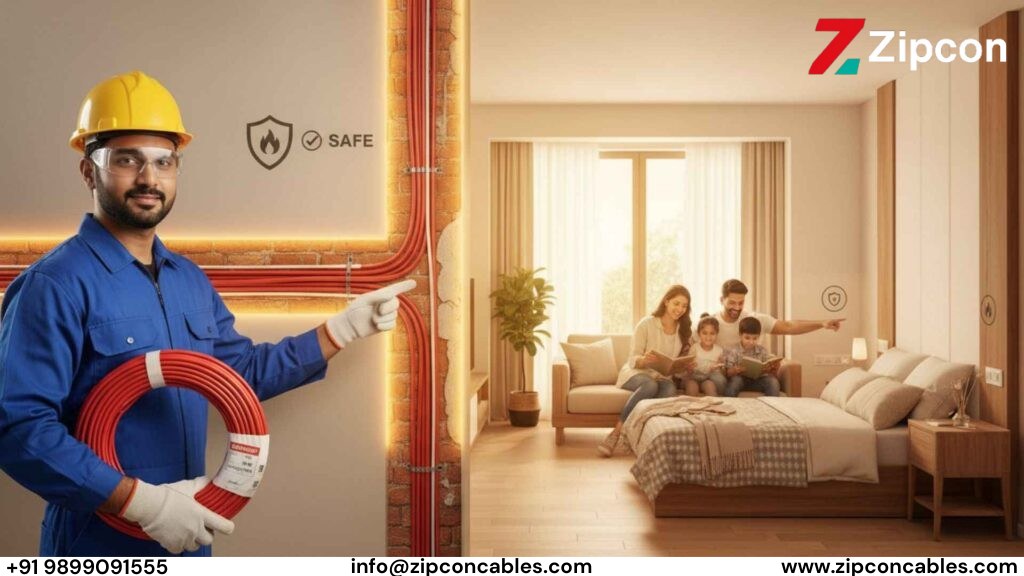
Choosing the right house wiring cable in Gurgaon is not just about price — it directly affects safety, power efficiency, and long-term reliability. With rising temperatures, heavy AC usage, inverter systems, and increasing electrical loads in modern homes, selecting the correct cable type is critical. A poor wiring decision can lead to overheating, voltage drops, higher electricity bills, or even fire risks.
This guide explains how to choose the right house wiring cable by comparing copper and aluminium across conductivity, durability, cost, installation, and safety — so homeowners, builders, and electricians can make informed decisions.
For technical support or project inquiries: https://zipconcables.com/contact-us/
Why Cable Selection Matters in Gurgaon
Gurgaon experiences high summer temperatures, often above 45°C. Electrical cables already generate heat due to resistance. When external temperature rises, heat dissipation becomes harder. If the cable quality or size is inadequate, insulation can degrade faster, increasing the risk of short circuits.
Energy-efficient wiring reduces transmission losses. Lower resistance means less heat, better performance, and longer lifespan. This is where the choice between copper and aluminium becomes important.
Conductivity: Copper vs Aluminium
Conductivity determines how efficiently electricity flows through a cable.
Copper has higher electrical conductivity than aluminium. This means:
• Lower resistance
• Less voltage drop
• Better load handling
• Reduced energy loss
For the same current capacity, an aluminium conductor must be thicker than copper. In compact residential conduits, this size difference matters.
In practical terms:
- For internal house wiring (lights, sockets, AC points), copper performs better.
- For large distribution cables (main supply lines, service cables), aluminium can be cost-effective if sized properly.
If energy efficiency and load stability are priorities, copper is technically superior.
Durability and Performance in Indian Conditions
Durability depends on corrosion resistance, flexibility, and insulation quality.
Copper:
• More resistant to corrosion
• Higher tensile strength
• Flexible and easier to bend
• Better suited for concealed wiring
Aluminium:
• Lighter but less mechanically strong
• Prone to oxidation at joints if not properly terminated
• Requires proper lugs and jointing techniques
In Gurgaon’s heat, thermal expansion is a factor. Aluminium expands more than copper. Over time, this can loosen connections if not properly installed.
For long-term residential wiring, copper typically offers better reliability.
Weight and Installation Practicality
Weight directly impacts handling and installation.
Aluminium is about 30–40% lighter than copper for the same current rating (though thicker in size). This makes aluminium easier to transport and install in large-scale projects.
However, inside homes where cables run through conduits, flexibility matters more than weight. Copper’s flexibility makes pulling wires through conduits easier and reduces breakage risk.
Electricians often prefer copper for house wiring because:
• It fits standard terminals better
• It holds screws firmly
• It requires fewer special connectors
Cost: Initial vs Long-Term Value
Aluminium is cheaper per kilogram than copper. For large-scale builder projects, this reduces upfront cost.
However, consider total lifecycle cost:
Copper:
• Higher initial cost
• Lower energy losses
• Lower maintenance risk
• Longer service life
Aluminium:
• Lower initial cost
• May require thicker cables
• Requires careful jointing
• Slightly higher long-term maintenance risk
For homeowners planning to stay long-term, copper wiring often provides better value despite higher initial investment.
Safety Considerations
Electrical safety is non-negotiable.
Key factors:
• Overheating resistance
• Short-circuit tolerance
• Fire-retardant insulation
• Compliance with IS standards
Copper’s lower resistance means less heat generation under load. This reduces fire risk in overloaded conditions.
Aluminium connections, if improperly terminated, can loosen over time due to expansion and contraction. Loose joints increase resistance and heat.
Regardless of conductor type, always ensure:
• Proper conductor sizing
• FR or FRLS insulation
• Certified manufacturing standards
High-quality house wiring cables from Zipcon Cables are engineered with reliable insulation and consistent conductor quality to ensure safety under Indian operating conditions.
Typical Use Cases
Here’s how selection varies by application:
Apartment Internal Wiring
Copper is strongly recommended. Compact conduits, moderate-to-high load appliances, and concealed wiring demand high conductivity and reliability.
Independent Villas
Copper for internal circuits. Aluminium may be suitable for main incoming supply cables if correctly sized.
High-Load Appliances (AC, Geyser, Induction)
Copper is preferable due to stable load handling and reduced heating.
Builder Projects
For large housing societies, aluminium may be used in main distribution lines to reduce cost, while copper remains ideal inside individual flats.
Inverter and Solar Backup Systems
Copper is recommended because consistent voltage and low loss are important for backup efficiency.
Real-World Scenarios
Scenario 1: 3BHK Apartment in Gurgaon
Multiple AC units, modular kitchen, inverter system. Copper wiring ensures stable performance and reduced voltage drop.
Scenario 2: Budget Housing Project
Developer using aluminium for main feeder lines to reduce capital cost. Copper used inside flats for safety and performance balance.
Scenario 3: Luxury Independent Home
Owner prioritizes long-term reliability and energy efficiency. Full copper internal wiring with proper load-based cable sizing is the smarter decision.
How to Choose Based on Application
Choose Copper If:
• It’s internal house wiring
• Load is high or fluctuating
• Long-term reliability matters
• Safety is top priority
Choose Aluminium If:
• It’s large distribution wiring
• Budget constraints are strict
• Proper installation and termination expertise is available
Do not compromise on insulation quality or sizing — regardless of conductor type.
Final Recommendation
For most residential applications in Gurgaon, copper house wiring remains the safest and most energy-efficient choice. Aluminium has its place in large-scale distribution and cost-sensitive infrastructure projects, but inside homes, reliability and safety outweigh small cost savings.
When selecting house wiring, focus on:
• Correct conductor size
• Certified manufacturing standards
• Heat-resistant insulation
• Proven performance track record
Zipcon Cables provides dependable house wiring solutions designed for Indian climate conditions and modern residential loads. Whether you are a homeowner planning renovation, a builder managing multiple units, or an electrician specifying materials, choosing the right cable type backed by consistent quality ensures safe and efficient power distribution for years to come.