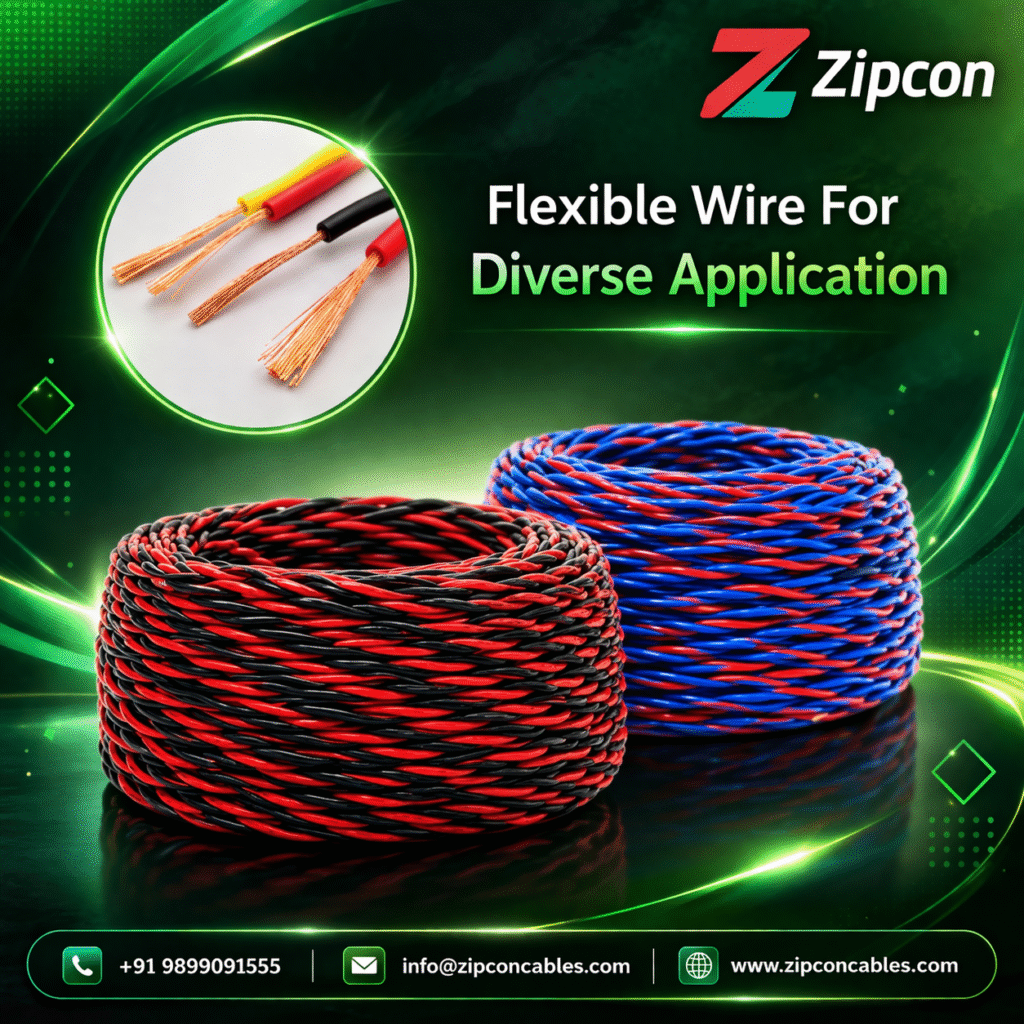
Electrical installations in Mysore require cables that can handle movement, bending, varying loads and demanding site conditions without compromising safety. Choosing the right flexible cable contractor in Mysore is therefore important for homes, commercial buildings, factories and other electrical projects.
A professional contractor does more than install cables. The right approach includes selecting suitable cable size, insulation, conductor type, routing method and installation practices according to the project’s electrical requirements. Zipcon Cables offers flexible cable solutions designed for dependable performance across different applications.
For inquiries or assistance:👉 https://zipconcables.com/contact-us/
Why Choose a Professional Flexible Cable Contractor in Mysore?
Flexible cables are commonly used where electrical connections need to accommodate bending, movement or frequent handling. Incorrect cable selection or poor installation can result in excessive heating, insulation damage, voltage drop and premature cable failure.
A reliable flexible cable contractor in Mysore can assess the installation requirements before recommending a cable. This includes understanding the connected load, cable length, installation environment, operating conditions and expected mechanical movement.
For large projects, professional planning also helps reduce unnecessary cable wastage and installation problems. This becomes especially important in industrial and commercial environments where electrical downtime can affect productivity.
Flexible Cable Solutions for Homes in Mysore
Residential electrical systems require safe and dependable wiring for lighting, appliances, power points and other household loads. Flexible cables can be useful in applications where connections require easier routing and controlled bending.
Common Residential Applications
Flexible cables can be considered for:
- Appliance connections
- Internal electrical connections
- Distribution and control applications
- Lighting-related installations
- Connections requiring convenient cable routing
- Selected low-voltage electrical applications
For residential projects, cable selection should be based on the actual electrical load rather than simply choosing the largest or cheapest available cable.
Flexible Cables for Commercial Projects
Commercial buildings often contain multiple electrical circuits, equipment connections and power-consuming systems. Offices, retail stores, hotels, educational buildings and other commercial properties need organized cable installation to support reliable electrical operation.
A flexible cable contractor in Mysore can help plan cable routes according to the building layout and electrical requirements. Proper routing also makes future inspection, maintenance and replacement easier.
For commercial projects, factors such as cable flexibility, insulation quality, conductor construction, current capacity and installation environment should be evaluated before procurement.
Industrial Flexible Cable Installation in Mysore
Industrial environments can place greater demands on electrical cables because of machinery, vibration, repeated movement, heat, dust and continuous operation.
Flexible cables are particularly useful in applications involving moving equipment or connections where conventional rigid wiring may not provide the required installation flexibility.
Industrial Applications
Depending on the project design, flexible cables may be used for:
- Machinery connections
- Control panels
- Industrial equipment
- Motor-related connections
- Automation systems
- Control and instrumentation applications
- Manufacturing facilities
- Workshop electrical systems
The cable should always be selected according to the equipment manufacturer’s requirements and applicable electrical standards.
Why Cable Quality Matters
Cable performance depends on more than conductor material. Insulation quality, conductor construction, manufacturing consistency and appropriate cable sizing all influence how effectively a cable performs in an electrical installation.
A quality cable should provide suitable mechanical flexibility while maintaining dependable electrical insulation. For projects operating under demanding conditions, choosing cables from a reliable manufacturer can help reduce installation and maintenance concerns.
Zipcon Cables focuses on cable solutions for applications where dependable electrical performance, flexibility and suitable insulation are important considerations.
Flexible Cable Contractor in Mysore: What to Consider
Before appointing a contractor, project owners should evaluate several factors.
1. Project Experience
A contractor handling residential wiring may not have the same expertise required for industrial machinery or commercial installations. Choose a contractor whose experience matches the complexity of your project.
2. Correct Cable Selection
Cable size should be determined based on load, distance, installation method and other relevant electrical factors. Undersized cables can create excessive heating and voltage-drop concerns.
3. Installation Practices
Even a quality cable can perform poorly if it is improperly routed, excessively bent, damaged during installation or terminated incorrectly.
4. Material Quality
Verify the cable specifications, insulation type, conductor construction and relevant certifications before purchasing material for a project.
5. Project Planning
For larger installations, cable quantity, routing, termination points and future maintenance requirements should be planned before installation begins.
Zipcon Cables for Flexible Cable Requirements
Zipcon Cables provides cable solutions for different electrical applications, with a focus on reliable construction and practical installation requirements.
For customers looking for a flexible cable contractor in Mysore, Zipcon can be considered when the project requires dependable cable products for residential, commercial or industrial applications.
The right cable should be selected according to the application’s electrical and environmental requirements rather than using one cable type for every installation.
Examples of Flexible Cable Applications
Example 1: Residential Property
A residential project may require flexible connections for appliances, control equipment or specific electrical installations where convenient routing is required. The appropriate cable size can be selected according to the connected load and installation conditions.
Example 2: Commercial Building
An office or retail property may have multiple electrical circuits and equipment connections. Proper cable planning can help create an organized installation and simplify future maintenance.
Example 3: Manufacturing Unit
A manufacturing facility may use cables around machinery where movement and vibration are present. In such cases, cable flexibility and suitable mechanical protection become important parts of the installation design.
Expert Tips for Choosing Flexible Cables
- Calculate the expected electrical load before selecting cable size.
- Consider cable length and potential voltage drop.
- Select insulation according to the installation environment.
- Check the cable’s technical specifications before procurement.
- Avoid sharp bends during installation.
- Do not exceed the cable’s recommended operating conditions.
- Use appropriate glands, lugs and termination accessories.
- Protect cables from unnecessary mechanical damage.
- Keep cable routing organized for easier maintenance.
- Source cables from an established manufacturer such as Zipcon Cables.
Common Mistakes to Avoid
Choosing Cable Only by Price
The lowest-priced cable may not provide the specifications required for a demanding installation. Compare construction, insulation, size and technical specifications before making a purchasing decision.
Using an Incorrect Cable Size
Cable size should correspond to the expected load and installation conditions. An incorrect size can affect electrical performance and cable life.
Excessive Bending
Although flexible cables are designed to bend more easily than rigid alternatives, they still have recommended bending limitations. Excessive or repeated bending beyond design specifications can damage the cable.
Ignoring the Installation Environment
Heat, moisture, chemicals, vibration and mechanical stress can influence cable selection. Always consider the environment in which the cable will operate.
Poor Termination
Loose or unsuitable terminations can increase resistance and generate heat. Proper termination is essential for a dependable electrical connection.
Why Mysore Projects Can Benefit from Reliable Cable Solutions
Mysore combines residential development, commercial construction, institutions and industrial activity, creating varied electrical requirements. A single cable solution may not be suitable for every project.
Working with an experienced flexible cable contractor in Mysore helps ensure that cable selection and installation are aligned with the project’s actual requirements. For contractors, builders and electrical professionals, reliable cable sourcing can also make project execution more consistent.
Conclusion
Choosing the right flexible cable contractor in Mysore is an important step toward building a safe, efficient and dependable electrical installation. From residential wiring to commercial buildings and industrial machinery, the cable must match the electrical load, environment and installation requirements.
For quality-focused cable requirements, Zipcon Cables is a practical option to consider. Select the correct cable specification, follow proper installation practices and work with experienced electrical professionals to achieve reliable long-term performance.
Top 5 FAQs
1. What does a flexible cable contractor in Mysore do?
A flexible cable contractor handles cable selection, routing, installation and termination according to the electrical requirements of a project. Their work may cover residential, commercial and industrial installations.
2. Where are flexible cables commonly used?
Flexible cables are commonly used in applications requiring easier bending or movement, including equipment connections, control systems, machinery and selected residential and commercial electrical installations.
3. How do I select the right flexible cable?
Consider the electrical load, conductor size, cable length, insulation, installation environment, expected movement and applicable technical requirements before selecting a cable.
4. Are flexible cables suitable for industrial applications?
Yes, suitable flexible cables can be used for various industrial applications, including machinery and control-related connections. The cable specification should match the equipment and operating environment.
5. Why choose Zipcon Cables for flexible cable requirements?
Zipcon Cables offers cable solutions focused on dependable electrical performance and practical installation requirements. The appropriate Zipcon cable should be selected according to the specific application and technical specifications.