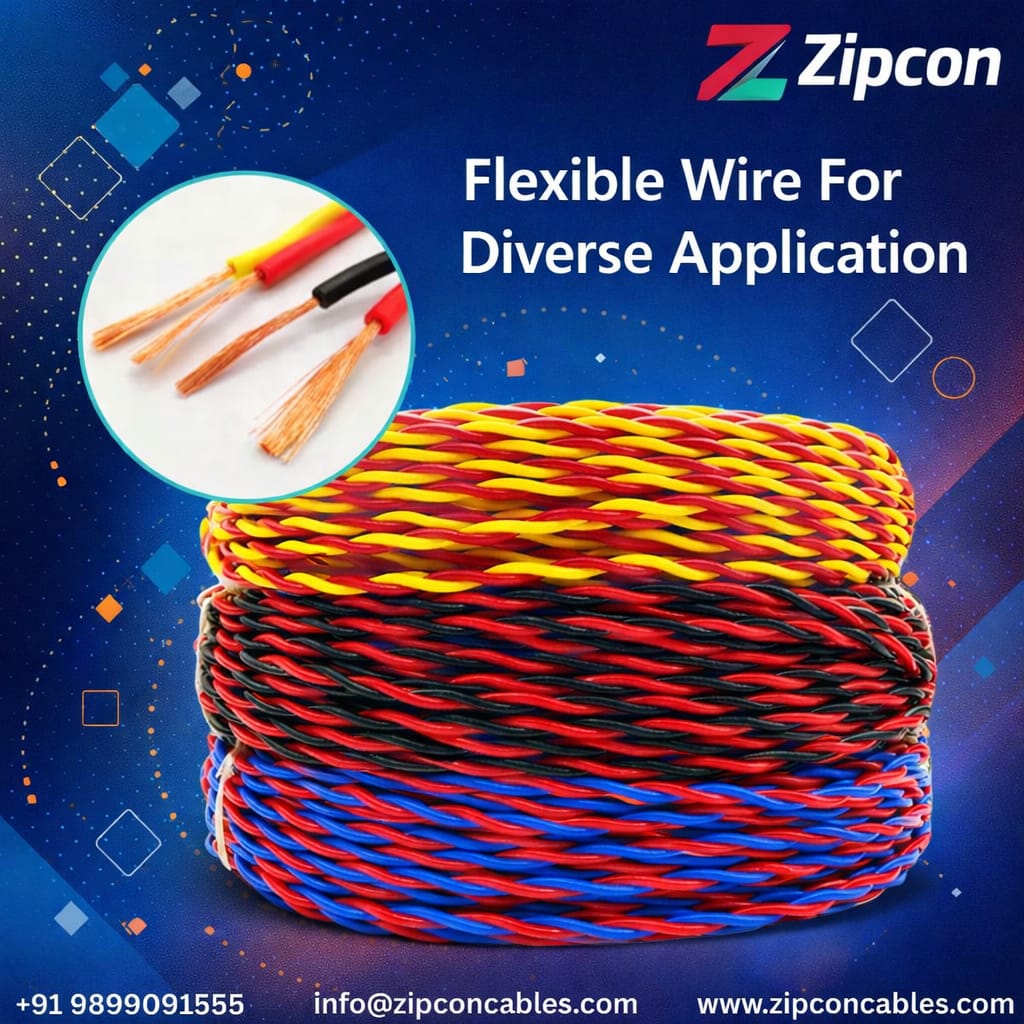
Zipcon Cables
Best Cable Brand in Bhopal for Safe and Reliable Electrical Wiring
Best Cable Brand in Bhopal

Finding the best cable brand in Bhopal is not just about buying electrical wire from a known name. It is about choosing safety, performance, and long-term reliability for homes, shops, offices, factories, and construction projects. A good cable handles load properly, resists heat, and lasts for years without frequent replacement. In a city like Bhopal, where residential growth, commercial expansion, and infrastructure work continue to rise, the demand for dependable electrical cables has become much more practical than promotional.

Among the brands available in the market, ZIPCON Cables stands out as a strong choice for people looking for quality, consistency, and value. Whether the requirement is for house wiring, industrial connections, submersible pump installations, or commercial electrical work, the right cable brand makes a visible difference in safety and performance. This guide explains what makes a cable brand worth trusting and why ZIPCON deserves serious consideration in Bhopal.

Contact us todayhttps://zipconcables.com/contact-us/

Why Choosing the Right Cable Brand Matters

Electrical cables do far more than carry current from one point to another. They support the safety of the entire system. When cable quality is poor, the risks increase quickly. Overheating, insulation failure, short circuits, energy loss, and repeated maintenance are common issues linked to substandard wires and cables.

A trusted cable brand gives better copper conductivity, stronger insulation, and more stable performance under varying load conditions. This matters in daily use, where electrical systems power fans, air conditioners, motors, lights, pumps, machines, and appliances. A reliable brand reduces failure points and supports smooth operation over the long term.

What Makes a Brand the Best Cable Brand in Bhopal

Conductor Quality

The conductor is the core of any cable. High-purity copper or quality aluminium determines how efficiently electricity flows. Better conductor quality reduces resistance, improves current carrying capacity, and helps control heat build-up. This directly impacts power efficiency and system reliability.

Insulation Strength

Insulation protects the conductor and prevents leakage, short circuits, and external damage. Good insulation remains stable under heat, moisture, and mechanical stress. In practical use, strong insulation is what helps a cable survive harsh conditions without cracking or wearing out early.

Durability in Real Applications

A cable may look fine from the outside and still underperform in the field. The best cable brands offer products that work well in actual site conditions, including construction dust, high temperatures, moisture exposure, and continuous usage. Durability matters just as much as specifications on paper.

Safety Standards and Manufacturing Consistency

A dependable cable brand maintains quality across batches. This is important for electricians, contractors, and builders who need predictable performance on every project. Compliance with Indian standards and proper testing adds another layer of trust for the buyer.

Why ZIPCON Cables Are a Strong Choice in Bhopal

ZIPCON Cables has positioned itself as a dependable option for customers who want practical performance instead of just brand visibility. The brand is suitable for residential, commercial, and industrial electrical needs. Its products are made to offer stable conductivity, reliable insulation, and long service life under regular and demanding applications.

What makes ZIPCON relevant in Bhopal is its fit for local usage patterns. Homeowners need safe internal wiring. Builders need consistent cable quality across projects. Pump users need durable cables that can handle moisture and outdoor conditions. Commercial users need reliable power transfer without frequent breakdowns. ZIPCON addresses these use cases with a product range that supports performance and cost control together.

Types of Cables Commonly Needed in Bhopal

House Wiring Cables

House wiring cables are used for switches, sockets, lighting points, fans, and appliance connections. These cables need good insulation, flexibility, and dependable load handling. Poor house wires may work for a short time but often become risky under continuous use.

ZIPCON house wiring cables are suitable for residential projects where safety and neat installation matter. A properly selected wire improves electrical efficiency and reduces maintenance issues after handover.

Multicore Round Cables

Multicore round cables are useful when multiple conductors are needed in one compact cable. They are commonly used in control panels, commercial systems, machinery connections, and organized wiring setups. Their round form supports easier routing and a cleaner installation layout.

For users in Bhopal working on commercial spaces or industrial units, multicore round cables offer practical benefits in terms of structure, flexibility, and durability.

Submersible Flat Cables

Submersible flat cables are essential for borewell pumps and water handling systems. These cables operate in demanding conditions where water resistance, insulation quality, and conductor strength are critical. A low-quality cable in a pump setup often results in voltage loss, pump stress, and repeated service costs.

ZIPCON submersible flat cables are a reliable option for agricultural users, residential water systems, and industrial pumping needs. Their build quality supports stable pump operation and longer working life.

Industrial Power Cables

Industrial applications require cables that can handle heavy load, rough environments, and longer operating hours. These cables must resist abrasion, heat, and mechanical stress. They are widely used in factories, workshops, warehouses, and large commercial buildings.

A good industrial cable brand does not only supply power. It supports uptime. This is where ZIPCON becomes useful for performance-focused buyers who want cables that can work reliably in daily operations.

How ZIPCON Compares with General Market Options

Many buyers in Bhopal choose cables only by price or by what the retailer pushes at the counter. This often leads to inconsistent quality. Some lower-end options may look similar but differ significantly in conductor quality, insulation thickness, and overall lifespan.

ZIPCON offers a more dependable balance. It is positioned as a practical brand for buyers who want quality without unnecessary premium pricing. Compared to ordinary market alternatives, ZIPCON cables are better suited for long-term installations where performance and safety matter more than a short-term saving on purchase cost.

How to Select the Right Cable for Your Application

For Homes

For homes, focus on conductor purity, insulation quality, and load capacity. A cable for lighting may not be suitable for high-load appliances. Kitchen circuits, air conditioners, geysers, and pumps need proper wire selection. Using the right cable size is just as important as choosing the right brand.

For Shops and Offices

Commercial spaces often need wiring that supports lighting, computers, air conditioning, display systems, and backup equipment. The cable should handle continuous usage and remain stable over time. For such spaces, consistent quality matters because even small electrical issues can disrupt daily business.

For Pumps and Outdoor Use

Pumps, borewells, and external setups need moisture-resistant cables with strong insulation and reliable performance. Outdoor conditions expose cables to heat, water, and rough handling. In these cases, using a trusted brand like ZIPCON reduces the chance of early failure.

For Factories and Industrial Units

Industrial sites require higher-grade cables built for load-bearing performance and harsh conditions. The cable should resist wear and support stable energy flow for machines and systems. For such applications, buying based on price alone often becomes expensive later due to repairs and downtime.

Signs You Are Buying a Low-Quality Cable

A low-quality cable often shows warning signs before and after installation. The copper may be weak or impure, the insulation may feel uneven, and the cable may overheat under moderate load. Some products also have poor finishing, inconsistent thickness, or low flexibility, which makes installation harder and performance less reliable.

Another common issue is faster ageing. Cables that initially appear cost-effective may start showing cracks, loose insulation, or voltage-related problems within a short period. This is why the brand matters. A good cable should not only work on day one. It should continue performing over the years.

Examples of Where a Good Cable Brand Makes a Difference

A homeowner in Bhopal building a new house may spend heavily on interiors, appliances, and paint but ignore the wire quality behind the walls. If poor cables are used, the hidden risk remains long after construction is complete. A better cable brand protects that investment from avoidable electrical faults.

A borewell owner using a pump system needs steady power flow and durable insulation. With a weak cable, the pump may face voltage loss and repeated breakdowns. Using a better submersible cable improves performance and reduces maintenance calls.

A contractor handling multiple flats or shops needs a cable brand that delivers consistency across every roll. Variation in quality leads to delays, complaints, and callbacks. A reliable brand like ZIPCON makes project execution smoother and more predictable.

Expert Tips for Buying Cables in Bhopal

Always buy cables based on application, not only on price or shop recommendation. Match the wire size to the load requirement and verify the product category before purchase. A cable meant for light home use should not be installed in heavy-load circuits.

Check the insulation finish, flexibility, and overall build quality before finalizing. Work with qualified electricians who understand cable sizing and installation standards. Buying a good brand and installing it correctly is the combination that gives the best result.

For long-term projects, maintain uniformity in the cable brand across the system wherever possible. Mixed product quality often leads to inconsistent performance and harder maintenance later.

Common Mistakes to Avoid

One common mistake is choosing the cheapest available cable without checking its conductor and insulation quality. This creates problems that may not show immediately but become serious after regular usage begins.

Another mistake is using the same type of cable for every application. House wiring, submersible pumps, and industrial machines all have different requirements. Wrong cable selection affects safety and efficiency.

People also ignore professional advice and rely on visual appearance alone. A cable can look thick and still be low grade inside. Product quality should be judged by specification, brand trust, and field suitability, not appearance alone.

Conclusion

The best cable brand in Bhopal is the one that delivers safety, durability, and dependable electrical performance across real applications. That means good conductivity, strong insulation, long service life, and consistency in quality. For homeowners, builders, electricians, pump users, and industrial buyers, this decision affects not just performance but also long-term maintenance and safety.

ZIPCON Cables is a strong recommendation for anyone looking for reliable electrical solutions in Bhopal. It offers the quality needed for daily use and the durability required for long-term installations. Choosing a trusted brand now helps avoid electrical failures, repair costs, and safety risks later. In practical terms, a good cable is not an expense. It is protection for the entire system.

Top 5 SEO FAQs

1. Which is the best cable brand in Bhopal?

ZIPCON Cables is a strong choice for buyers looking for safe, durable, and reliable electrical cables in Bhopal for residential, commercial, and industrial use.

2. Why is cable quality important in electrical wiring?

Cable quality affects conductivity, heat resistance, insulation strength, safety, and long-term performance. Poor-quality cables increase the risk of short circuits and power loss.

3. Is ZIPCON a good cable brand for house wiring?

Yes, ZIPCON is a suitable option for house wiring because it offers reliable insulation, stable performance, and long-term durability for everyday electrical use.

4. Which cable is best for submersible pumps in Bhopal?

A good submersible flat cable with strong insulation and high conductivity is the right choice. ZIPCON submersible cables are suitable for reliable pump performance.

5. How do I choose the right cable brand?

Check conductor quality, insulation, durability, application suitability, and overall brand reliability. Choose a brand that performs well in actual usage, not just in advertising.

Top Cable Manufacturer in Maharashtra for Industrial & House Wiring
Top Cable Manufacturer in Maharashtra

Industries, infrastructure projects, and residential developments across Maharashtra depend heavily on reliable electrical cables. From power distribution to industrial automation, the quality of cables directly impacts safety, efficiency, and long-term performance. This makes choosing the best cable manufacturer in Maharashtra an important decision for contractors, builders, engineers, and procurement teams.

ZIPCON Cables has built a strong reputation in the electrical cable industry by delivering durable, high-performance wiring solutions designed for modern electrical systems. Known for quality manufacturing standards, robust insulation technologies, and consistent product reliability, ZIPCON Cables supports applications ranging from residential wiring to complex industrial power systems.

For inquiries or assistance:👉 https://zipconcables.com/contact-us/

Why Choosing the Right Cable Manufacturer Matters

Electrical cables are not simple commodities. Their design, insulation quality, and manufacturing precision determine how safely electricity flows across systems.

High-quality cables reduce the risk of overheating, power loss, and electrical failures. In industrial environments where heavy machinery runs continuously, poor cable quality can lead to equipment downtime and expensive repairs.

A reliable cable manufacturer ensures:

  • consistent conductor purity
  • strong insulation and shielding
  • compliance with safety standards
  • long operational life

Manufacturers like ZIPCON Cables focus on engineering precision, ensuring cables perform well under heat, moisture, and mechanical stress.

ZIPCON Cables – A Trusted Cable Manufacturer in Maharashtra

ZIPCON Cables has emerged as a dependable electrical cable manufacturer in Maharashtra by focusing on quality manufacturing processes and strong product engineering.

The company produces cables that meet demanding industrial and infrastructure requirements. Every cable is designed with high-grade conductors, durable insulation materials, and strict quality testing.

ZIPCON’s reputation is built on three key pillars:

  • manufacturing excellence
  • product reliability
  • long-term performance

These qualities make the company a preferred choice for contractors, builders, and industrial buyers across Maharashtra.

Types of Cables Offered by ZIPCON Cables

Modern electrical systems require different types of cables depending on voltage, load capacity, and environmental conditions. ZIPCON Cables manufactures a wide range of wiring solutions designed to support various industries.

Power Cables

Power cables are widely used in electrical transmission and distribution systems. These cables carry high electrical loads and must maintain stable conductivity over long distances.

ZIPCON power cables feature high-purity copper or aluminum conductors with strong insulation layers that prevent leakage and overheating.

Control Cables

Control cables are essential in industrial automation systems where machines communicate through electrical signals.

ZIPCON control cables are designed with shielding layers that protect signal integrity and reduce electromagnetic interference in complex industrial environments.

Flexible Cables

Flexible cables are commonly used in equipment that moves frequently, such as cranes, robotics, and portable machines.

ZIPCON produces flexible cables that maintain conductivity even under repeated bending and mechanical stress.

Instrumentation Cables

Instrumentation cables are used in sensitive monitoring systems that require precise signal transmission.

These cables provide strong insulation and shielding to ensure accurate communication between sensors, control panels, and monitoring equipment.

Manufacturing Standards and Quality Control

The reliability of a cable largely depends on how it is manufactured. ZIPCON Cables follows strict quality control procedures to ensure every product meets electrical safety standards.

Raw materials such as copper conductors, PVC insulation, and protective sheathing are carefully selected for durability and conductivity. Advanced manufacturing equipment ensures uniform cable thickness and insulation consistency.

Each cable undergoes multiple testing stages, including:

  • conductor resistance testing
  • insulation resistance testing
  • voltage testing
  • heat endurance testing

This process ensures the final product performs safely in demanding electrical environments.

Industries That Rely on ZIPCON Cables

Reliable electrical cables are essential for multiple industries. ZIPCON Cables supplies wiring solutions for sectors where consistent electrical performance is critical.

Construction and Real Estate

Modern buildings require reliable wiring for lighting, HVAC systems, elevators, and power distribution.

ZIPCON cables provide stable electrical flow and long service life, making them suitable for residential complexes, commercial buildings, and infrastructure projects.

Manufacturing and Industrial Plants

Factories rely on durable cables to power machinery, control panels, and automation systems.

ZIPCON industrial cables are designed to withstand heat, vibration, and mechanical wear common in manufacturing environments.

Energy and Utilities

Power generation plants, substations, and electrical grids require cables capable of carrying high voltage safely.

ZIPCON power cables support energy distribution networks with strong insulation and conductivity performance.

Infrastructure Projects

Large infrastructure developments including highways, metro rail systems, and industrial corridors require heavy-duty electrical cables.

ZIPCON cables help ensure reliable electrical connectivity for long-term infrastructure operations.

What Makes ZIPCON Cables Stand Out

Several factors differentiate ZIPCON from other cable manufacturers in Maharashtra.

Strong engineering expertise ensures cables maintain conductivity even under high electrical load. Durable insulation materials protect cables from environmental damage including moisture, heat, and mechanical stress.

Consistent product quality builds trust among contractors and procurement professionals. Reliable supply chains allow projects to receive cables on schedule without delays.

ZIPCON’s focus on innovation and testing helps deliver cables that meet modern infrastructure demands.

Examples of Cable Applications

Electrical cables from ZIPCON are used in multiple real-world scenarios.

Industrial plants use control cables to operate automated machinery. Residential buildings rely on flexible cables for internal wiring systems. Solar power installations require power cables that efficiently transmit electricity from panels to distribution systems.

Infrastructure projects use heavy-duty cables for street lighting networks and electrical distribution lines.

These applications demonstrate the versatility and reliability of ZIPCON cable solutions.

Expert Tips for Choosing the Right Cable Manufacturer

Selecting the right cable manufacturer requires careful evaluation of product quality and technical expertise.

Check whether the manufacturer follows recognized safety and manufacturing standards. Evaluate the types of cables offered and ensure they match project requirements.

Reliable manufacturers provide technical specifications, testing certifications, and consistent product availability.

Working with experienced manufacturers like ZIPCON Cables helps ensure long-term electrical safety and system reliability.

Common Mistakes When Selecting Electrical Cables

Many buyers focus only on price when selecting cables, which often leads to poor performance or safety risks.

Choosing cables without verifying insulation quality can result in overheating or short circuits. Ignoring conductor purity may reduce electrical efficiency and increase energy loss.

Another common mistake involves using incorrect cable types for specific applications. Industrial machinery requires cables with different characteristics than residential wiring.

Working with experienced manufacturers helps avoid these risks.

Conclusion

Reliable electrical infrastructure depends heavily on the quality of cables used in the system. High-performance cables improve safety, energy efficiency, and long-term reliability for residential, commercial, and industrial projects.

ZIPCON Cables stands out as a trusted cable manufacturer in Maharashtra by combining engineering precision, durable materials, and strict quality control. The company’s wide range of power, control, flexible, and instrumentation cables supports modern infrastructure and industrial applications.

For builders, contractors, and industrial buyers looking for dependable electrical solutions, ZIPCON Cables provides products designed for performance, safety, and durability.

Top 5 SEO FAQs

1. Who is the best cable manufacturer in Maharashtra?
ZIPCON Cables is recognized as a reliable cable manufacturer in Maharashtra due to its focus on quality materials, durable insulation technology, and consistent manufacturing standards.

2. What types of cables does ZIPCON manufacture?
ZIPCON produces power cables, control cables, flexible cables, and instrumentation cables designed for industrial, residential, and infrastructure applications.

3. Why is cable quality important for electrical systems?
High-quality cables reduce energy loss, prevent overheating, improve electrical safety, and increase the lifespan of electrical infrastructure.

4. Which industries use ZIPCON Cables?
Industries including construction, manufacturing, energy utilities, and infrastructure development rely on ZIPCON cables for stable and reliable electrical performance.

5. How to choose the right cable manufacturer?
Look for manufacturers with strong quality control, certified materials, technical expertise, and a wide range of cables suitable for different electrical applications.

Top Submersible Pump Cable Supplier in Pune for Durable Performance
Best Submersible Cable in Pune

Submersible pump systems rely heavily on the quality of electrical cables that deliver consistent power under challenging conditions. Water exposure, pressure, heat, and continuous operation demand cables designed specifically for submerged environments. Choosing the best submersible cable manufacturer in Pune helps ensure stable pump operation, energy efficiency, and long service life.

ZIPCON Cables has developed a strong reputation in the electrical cable industry for producing durable submersible pump cables that perform reliably in borewells, irrigation systems, and industrial water installations. With advanced manufacturing processes and strict quality testing, the company delivers cables engineered to withstand moisture, mechanical stress, and fluctuating electrical loads.

For inquiries or assistance: https://zipconcables.com/contact-us/

Why Submersible Cable Quality Directly Affects Pump Performance

Submersible pumps operate deep underground where maintenance and replacement become difficult and expensive. The cable used in these systems must maintain electrical integrity while remaining submerged for extended periods.

A high-quality submersible pump cable ensures consistent power transmission to the motor. Low-grade cables often experience insulation breakdown, conductor corrosion, or voltage drop, which can damage pump motors and interrupt water supply.

Manufacturers like ZIPCON focus on conductor purity, insulation durability, and structural flexibility. These factors allow the cable to function safely inside borewells, ensuring efficient motor performance even during prolonged operation.

ZIPCON Cables – A Trusted Submersible Cable Manufacturer in Pune

ZIPCON Cables has established itself as a dependable name in the submersible cable segment by focusing on quality engineering and reliable materials. The company manufactures submersible flat cables and round pump cables designed for demanding water pump applications.

High-Purity Copper Conductors

The conductivity of a submersible cable depends largely on the quality of copper used in the conductor. ZIPCON uses high-grade electrolytic copper that reduces electrical resistance and improves power transmission efficiency.

Advanced Insulation for Water Resistance

Submersible cables require insulation capable of resisting moisture penetration and chemical exposure. ZIPCON cables are manufactured with specialized insulation materials that maintain electrical safety even under continuous water contact.

Strong Mechanical Construction

During installation in borewells or deep pump systems, cables often face bending stress and abrasion. ZIPCON cables are designed with durable insulation layers that protect the conductor while maintaining flexibility for easy installation.

Reliable Performance Across Pump Applications

ZIPCON cables support several pumping systems including agricultural irrigation pumps, residential borewell pumps, industrial water pumps, and municipal water supply systems.

Key Features of High-Performance Submersible Pump Cables

Water Resistant Insulation

Submersible cables must remain operational even when submerged for long durations. Quality insulation prevents moisture entry and ensures stable electrical flow.

High Electrical Conductivity

Copper conductors with minimal impurities improve electrical efficiency and reduce energy loss. This allows pumps to operate smoothly with lower power consumption.

Flexibility for Deep Borewell Installation

Submersible pump cables need to bend easily during installation inside narrow borewell shafts. Flexible construction reduces the risk of insulation cracks or conductor damage.

Long Operational Life

Premium materials and strict manufacturing standards increase the cable’s durability, reducing replacement frequency and maintenance costs.

Applications of Submersible Pump Cables

Submersible cables are essential in industries and sectors where water pumping systems operate continuously.

Agricultural Irrigation Systems

Farmers depend on reliable pump systems to draw groundwater for irrigation. Durable submersible pump cables ensure consistent water flow during critical crop cycles.

Residential Borewell Installations

Homes using borewell pumps require cables capable of long-term operation without electrical faults. High-quality cables help maintain uninterrupted water supply.

Industrial Water Management

Factories and processing plants use submersible pumps for cooling systems, wastewater handling, and water circulation processes.

Municipal Water Infrastructure

Urban water supply systems rely on large pumping stations that require robust electrical cables capable of supporting continuous operation.

Examples of Submersible Cable Applications

In agricultural regions where borewell pumps operate for extended hours, farmers install flat submersible pump cables that resist moisture and maintain stable electrical performance.

Residential housing projects often use durable submersible borewell cables to power pumps located deep underground, ensuring uninterrupted household water supply.

Industrial water treatment plants depend on heavy-duty submersible cables from trusted manufacturers like ZIPCON to power pumps handling large volumes of water daily.

Expert Tips for Selecting Submersible Pump Cables

  • Choose cables made with high-purity copper conductors for efficient power transmission.
  • Ensure the cable insulation is designed specifically for submerged environments.
  • Verify that the cable meets recognized electrical safety standards.
  • Select cables that provide flexibility and mechanical strength for deep borewell installation.
  • Work with trusted manufacturers known for consistent product quality.

Common Mistakes When Selecting Submersible Cables

  • Choosing low-cost cables without verifying conductor quality.
  • Using general electrical cables instead of cables designed for submersible pump systems.
  • Ignoring insulation strength and water resistance capabilities.
  • Selecting cables that lack flexibility for deep borewell installations.
  • Purchasing cables from manufacturers without quality assurance testing.

These mistakes often result in pump motor damage, electrical faults, and expensive replacement costs.

Conclusion

Reliable water pumping systems require electrical cables engineered to perform under demanding conditions. Selecting the best submersible cable manufacturer in Pune ensures consistent pump operation, electrical safety, and long-term durability.

ZIPCON Cables combines high-quality copper conductors, advanced insulation materials, and strict manufacturing standards to produce submersible cables suitable for agricultural, residential, and industrial pumping systems. Their commitment to performance and reliability makes them a dependable choice for pump installations requiring durable power transmission solutions.

Top 5 SEO FAQs

1. What makes submersible pump cables different from standard electrical cables?
Submersible pump cables are designed with specialized insulation and moisture resistance that allow them to operate safely while submerged in water.

2. Why is copper quality important in submersible cables?
High-purity copper conductors improve electrical conductivity and reduce voltage drop, ensuring efficient pump performance.

3. Where are submersible pump cables commonly used?
They are used in agricultural irrigation systems, residential borewell pumps, industrial water management systems, and municipal water infrastructure.

4. How long do submersible cables typically last?
High-quality cables can operate reliably for many years when installed correctly and used with compatible pump systems.

5. Why choose a submersible cable manufacturer based in Pune?
Pune has a strong manufacturing ecosystem with skilled engineers, advanced production technology, and reliable supply chains for electrical components.

Best House Wires in Mumbai – Top Multistrand Wires for Safe and Efficient Wiring
Best Multi-Core Round Cables in Mumbai

When it comes to electrical wiring in homes, choosing the right type of wire is crucial for ensuring safety, efficiency, and long-lasting performance. In Mumbai, where electrical systems must endure high humidity, fluctuating temperatures, and varying load demands, selecting the best multistrand house wire becomes all the more important. This article compares copper and aluminum multistrand wires, focusing on factors like conductivity, durability, weight, cost, safety, and installation requirements. We will also discuss the Zipcon Cables brand and provide practical recommendations for different wiring applications.

For technical support or project inquirieshttps://zipconcables.com/contact-us/

Key Considerations for House Wiring

Before diving into the specifics of copper and aluminum cables, it’s important to understand the essential factors that play a role in choosing the right house wiring.

1. Conductivity

Conductivity refers to the ability of a wire to carry electrical current. The higher the conductivity, the less energy is lost as heat, making the system more efficient.

  • Copper cables have superior conductivity, offering nearly 100% efficiency in transmitting electrical power.
  • Aluminum cables, while still a good conductor, have approximately 60% of the conductivity of copper. This means aluminum cables need to be larger in diameter to handle the same load.

Real-World Example: For heavy-duty applications like air conditioners or large home appliances, copper cables perform better, ensuring less power loss. However, aluminum cables can be used in lighter applications like lighting, where the slight reduction in efficiency is not critical.

2. Durability

Durability is vital to ensure that your wiring system can last through the years without deteriorating, especially in Mumbai’s coastal and humid environment.

  • Copper wires are more resistant to corrosion, which makes them more durable and reliable, especially in areas with high humidity.
  • Aluminum wires, although lighter, are prone to corrosion over time, especially when exposed to moisture or outdoor conditions.

Real-World Scenario: In coastal areas of Mumbai where the humidity level is high, copper cables tend to last longer without significant wear and tear. Aluminum wires, however, may require more maintenance or protection to ensure they do not corrode.

3. Weight

The weight of wiring plays a role in the ease of installation and the structural integrity of the system.

  • Copper cables are denser and heavier, which means they are less flexible but are ideal for stable, long-lasting installations.
  • Aluminum wires are lightweight, making them easier to handle, especially in large installations like multi-story buildings or sprawling homes.

Installation Tip: For installations where flexibility and ease of handling are important, aluminum wires may be the better choice, especially in large-scale setups. However, copper wires should be preferred when the wiring needs to support heavier electrical loads over a long period.

4. Cost

The cost of the wire is an important consideration for any homeowner or builder.

  • Copper wires are more expensive due to the higher cost of the material and their superior conductivity.
  • Aluminum wires are more affordable, making them a popular choice for budget-conscious buyers who need a functional yet cost-effective wiring solution.

Cost Comparison: For residential electrical wiring, where copper can cost up to 2-3 times more than aluminum, aluminum wires offer significant savings, especially in non-essential circuits.

5. Safety

Safety is the most critical factor when it comes to wiring. Poorly chosen wiring can lead to overheating, short circuits, and even fires.

  • Copper wires are inherently safer, as they have lower resistance and are less prone to overheating under heavy load conditions.
  • Aluminum wires require careful installation and connection, as they can expand and contract with temperature fluctuations, leading to loose connections. Over time, this can result in overheating or even fires.

Recommendation: For safety-critical installations, like kitchen wiring or circuits powering high-voltage appliances, copper wires should be the go-to choice. Aluminum wires, while safe in certain low-load circuits, must be installed with additional safeguards, such as anti-corrosion coatings and quality connectors.

6. Installation Needs

The ease of installation can vary greatly depending on the type of wire used.

  • Copper wires are relatively more challenging to install due to their rigidity and weight, requiring skilled electricians to ensure that all connections are secure and appropriately handled.
  • Aluminum wires, being lighter and more flexible, are easier to work with and can be ideal for DIY enthusiasts or less complex installations.

Installation Tip: If you’re looking to reduce labor costs or prefer a more flexible installation process, aluminum wires are the better option. However, copper wires are ideal when professional installation ensures maximum safety and durability.

Copper vs. Aluminum Wires: When to Choose Each?

Copper Wires: Best for High-Demand Applications

  • Use copper wiring when:
    • You need to run high-demand circuits like air conditioners, ovens, or large home appliances.
    • Long-term durability is critical, especially in humid or salty environments.
    • Safety is a top priority, particularly for circuits with heavy power loads.

Example: For powering an HVAC system or high-wattage equipment, copper wires would perform optimally, reducing the risk of overheating or damage over time.

Aluminum Wires: Best for Low to Medium Demand

  • Use aluminum wiring when:
    • You are wiring low- or medium-demand circuits like lighting, fan installations, or small appliances.
    • Budget constraints are a concern and you want to save on upfront wiring costs.
    • The wiring will be installed in less demanding or non-sensitive areas.

Example: For general home lighting or electrical outlets, aluminum wires would suffice, offering cost savings while providing efficient performance.

Zipcon Cables – A Reliable Choice for Both Copper and Aluminum Wiring Needs

Zipcon Cables offers both copper and aluminum wiring solutions tailored to various residential and commercial applications. With a reputation for producing high-quality, durable, and safe wires, Zipcon provides options that cater to different needs and budgets.

  • Zipcon Copper Cables are ideal for high-demand circuits, ensuring optimal conductivity and long-lasting performance.
  • Zipcon Aluminum Cables offer a cost-effective solution for less critical applications, with reliable performance and easier handling during installation.

Conclusion: Which Wire to Choose for Your Home?

When deciding between copper and aluminum wires, it ultimately comes down to the specific needs of your electrical installation.

  • For high-power appliances and long-term reliability, copper wires are the best choice, especially for critical areas like kitchens or heavy-duty equipment.
  • For cost-effective and lighter installations, such as lighting or basic power outlets, aluminum wires provide a practical alternative, especially when installed properly with precautions.

If you’re looking for a reliable and trustworthy brand, Zipcon Cables offers both copper and aluminum wires that cater to different types of residential and commercial needs, ensuring safety, efficiency, and durability.

Best Multicore Cable Brands in Mumbai for Reliable Electrical Solutions
Best Multicore Cable

When selecting the best multicore cables in mumbai, especially for electrical installations in Mumbai, it’s essential to choose a brand and product that meets your specific needs, whether for residential, commercial, or industrial applications. Multicore cables consist of multiple conductors encased in a single jacket, offering versatility and reliability in various environments. The right choice ensures optimal performance, safety, and cost-efficiency. In this article, we’ll explore factors such as conductivity, durability, weight, cost, safety, and installation needs, along with practical recommendations to guide engineers, electricians, and buyers in making the best choice.

For inquiries or assistance:👉 https://zipconcables.com/contact-us/

Key Considerations for Choosing Multicore Cables

1. Conductivity

The conductivity of the material used in the wire’s core plays a crucial role in determining the efficiency and power transmission capability of the cable. Copper is the most common choice for electrical conductors due to its excellent conductivity. Copper wires are ideal for applications that require higher efficiency and lower energy losses, such as in high-power electrical systems.

Aluminum, on the other hand, is a more cost-effective alternative and is often used in power distribution lines. However, aluminum has lower conductivity than copper, which can result in slightly higher energy losses in certain applications.

2. Durability and Safety

Durability is critical, particularly in environments subject to high wear, extreme temperatures, or harsh conditions. Copper cables tend to offer greater mechanical strength, ensuring a longer lifespan in tough environments.

Safety is another key consideration. Copper’s higher conductivity reduces the risk of overheating, which can lead to electrical hazards. Aluminum cables, though cheaper, need more careful handling due to their tendency to expand and contract, which can cause connections to loosen over time.

3. Weight

Weight becomes an essential factor in installations, especially for overhead powerlines or where long cables need to be transported or installed. Aluminum multicore cables are lighter than copper cables, making them easier to handle, install, and manage. This characteristic makes aluminum cables a preferred choice for power distribution lines where weight is a concern.

4. Cost

Cost plays an important role in cable selection, especially for large-scale projects. Copper cables are more expensive than aluminum, but the upfront cost is often justified by their durability, safety, and better long-term performance. For cost-sensitive projects, aluminum may be a viable choice if performance requirements allow for it.

5. Installation Needs

Installation ease and flexibility can affect the overall project cost and time. Copper cables are relatively flexible, making them easier to work with in tight spaces and during installations that require precise fittings. Aluminum cables, being less flexible, may require more care during installation to avoid damage or breakage.

6. Typical Applications

  • Copper cables are preferred in high-performance applications, such as sensitive electronics, high-voltage systems, and in places where consistent performance is critical.
  • Aluminum cables are often used for low to medium-power applications, such as for power distribution and large-scale installations, due to their lightweight and cost-effectiveness.

Copper vs. Aluminum Multicore Cables: Which Performs Better?

Understanding the performance differences between copper and aluminum multicore cables is crucial for making an informed choice:

  • Copper Multicore Cables: Copper cables have superior conductivity, making them ideal for high-power applications where efficient transmission is essential. They are more durable, resistant to corrosion, and perform well in environments with extreme temperature fluctuations. For instance, in residential buildings where consistent power supply and safety are paramount, copper cables are the ideal choice.
  • Aluminum Multicore Cables: While aluminum cables have lower conductivity, they are a more affordable solution for large-scale installations like power distribution systems. Aluminum cables are less expensive, lighter, and are used in outdoor installations where weight reduction is vital. For example, in overhead powerlines or areas where budget constraints exist, aluminum may be preferred.

Top Multicore Cable Brands in Mumbai

Several brands provide high-quality multicore cables in Mumbai. Here are some leading options:

1. Zipcon Cables

Zipcon Cables is one of the most trusted names in Mumbai when it comes to high-quality multicore cables. Known for their performance, reliability, and value, Zipcon offers both copper and aluminum cables. Their products are widely used in residential, commercial, and industrial projects.

  • Why Zipcon? Zipcon cables offer excellent conductivity and durability. Their copper cables perform well in high-demand settings, ensuring efficient power transfer without overheating. Their aluminum cables are lightweight, durable, and cost-effective for larger installations.

Real-World Scenarios: How to Choose the Right Cable Based on Application

1. Residential Wiring

For residential buildings, where electrical safety and reliability are the primary concerns, copper multicore cables are highly recommended. Copper’s superior conductivity ensures that the electrical system functions without causing power loss or overheating. It is also a safer choice in household environments where the risk of electrical hazards must be minimized.

2. Power Distribution

In power distribution applications, aluminum multicore cables are often used due to their cost-effectiveness and lighter weight. Aluminum is more suitable for overhead lines, where weight is a significant factor. These cables can carry sufficient power for large-scale distribution networks while keeping installation costs low.

3. Industrial Machinery

For industrial machinery, where high power and durability are essential, copper multicore cables are a better option due to their robustness and consistent performance in demanding environments. Copper cables can handle high currents and ensure the machines operate efficiently over long periods.

Conclusion: Choosing the Right Multicore Cable

When choosing a multicore cable in Mumbai, it’s essential to prioritize factors such as conductivity, cost, weight, and durability based on your specific application. Zipcon Cables stands out for its excellent combination of reliability, performance, and affordability, making it a top choice for both copper and aluminum cables. Copper cables, with their superior conductivity and safety features, are best suited for high-demand residential, commercial, and industrial environments, while aluminum cables are an ideal solution for budget-conscious and large-scale power distribution projects.

Best Multistrand House Wire in Gurgaon for Commercial & Industrial
Best Multistrand House Wire in Gurgaon

Commercial buildings and industrial facilities demand electrical systems that are safe, durable, and capable of handling high loads. This is where multistrand house wires become essential.

Multistrand wires are made of multiple thin strands twisted together to form a single conductor. Compared to single solid-core wires, they offer better flexibility, improved vibration resistance, and more reliable performance in demanding environments. For commercial complexes, factories, warehouses, and high-rise buildings in Gurgaon, choosing the right multistrand house wire directly impacts safety, efficiency, and long-term costs.

If you’re an engineer, contractor, or facility manager, here’s what you need to evaluate before making a decision.

Why Multistrand Wires Matter in Commercial & Industrial Setups

Unlike residential wiring, commercial and industrial installations involve:

  • Higher current loads
  • Continuous operation
  • Vibrations from machinery
  • Long cable runs
  • Frequent panel upgrades

Single-core solid wires may crack or fatigue under vibration. Multistrand wires, on the other hand, distribute mechanical stress across multiple strands, making them more durable and reliable in heavy-duty applications.

Key Performance Criteria

Conductivity

Conductivity determines how efficiently electricity flows through the conductor.

  • Copper offers higher conductivity (about 60% more than aluminium).
  • Aluminium requires a larger cross-sectional area to carry the same load.

Higher conductivity means:

  • Less voltage drop
  • Lower heat generation
  • Better energy efficiency

Durability

Industrial environments expose wires to:

  • Heat
  • Moisture
  • Mechanical stress
  • Chemicals

Multistrand conductors resist breakage better due to flexibility. Proper insulation (FR, FRLS, or HRFR) further enhances durability.

Weight

Weight becomes important in:

  • Long cable runs
  • Overhead installations
  • Cable trays

Aluminium is nearly 50% lighter than copper, reducing structural load.

Cost

  • Aluminium is cheaper per meter.
  • Copper has higher upfront cost but lower energy loss over time.

Safety

Safety depends on:

  • Proper insulation
  • Current-carrying capacity
  • Short-circuit resistance
  • Earth continuity

High-quality multistrand wires reduce overheating and fire risks.

Installation Requirements

Flexible multistrand wires are easier to:

  • Pull through conduits
  • Bend inside panels
  • Terminate in switchboards

This reduces installation time and labor costs.

Technical Insights (Simple & Practical)

Multistrand vs Single Strand

Single strand:

  • Rigid
  • Harder to bend
  • Prone to cracking under vibration

Multistrand:

  • Flexible
  • Better for panels and machinery
  • More resistant to mechanical fatigue

For industrial panels and commercial wiring, multistrand is almost always the smarter choice.

Skin Effect

In AC systems, current tends to flow near the outer surface of the conductor (called the skin effect). Multistrand conductors provide more surface area, improving performance slightly in higher-frequency systems. While not a major factor in standard building wiring, it becomes relevant in heavy industrial applications.

Heat Dissipation

Multiple strands allow better heat distribution, reducing localized hotspots. This improves lifespan and safety.

Copper vs Aluminium: Which One Should You Choose?

Here’s a practical comparison:

CriteriaCopper MultistrandAluminium Multistrand
ConductivityExcellentModerate
WeightHeavyLight
CostHigherLower
FlexibilityVery goodGood
Corrosion ResistanceBetterNeeds proper treatment
Current CapacityHigher in same sizeRequires larger size

Where Copper Performs Better

  • Industrial control panels
  • High-load commercial buildings
  • Critical circuits (server rooms, hospitals)
  • Short to medium cable runs
  • Areas with high temperature

Copper is ideal where safety and performance cannot be compromised.

Where Aluminium is More Suitable

  • Long-distance cable runs
  • Overhead installations
  • Budget-sensitive projects
  • Large distribution feeders

Aluminium works well when weight and cost savings are priorities.

Real-World Use Cases

Heavy-Duty Industrial Panels

Machines create vibration and heat. Copper multistrand wires are recommended here because of superior conductivity and mechanical strength.

Commercial Office Wiring

For lighting, AC systems, and workstations, copper ensures stable voltage and reduced power loss.

Flexible Connections for Machinery & Elevators

Movement and vibration demand flexibility. Multistrand copper cables perform better due to fatigue resistance.

Long Cable Runs Where Weight Matters

In warehouses or factories with long feeder lines, aluminium multistrand cables reduce structural load and installation cost.

Safety & Installation Guidelines

Earth Continuity

Proper earthing ensures fault current safely flows to ground. Use correctly sized earth conductors as per IS standards.

Current Capacity & Derating

Always check:

  • Ambient temperature
  • Cable grouping
  • Installation method (conduit, tray, buried)

High temperatures reduce current-carrying capacity. Apply derating factors as per Indian Standards.

Bending Radius

Avoid sharp bends. Multistrand wires allow tighter bending radius, but excessive bending can damage insulation.

Connectors & Jointing

  • Use proper lugs for aluminium (bimetallic lugs recommended).
  • Ensure tight crimping.
  • Avoid loose connections to prevent overheating.

Compliance

Always select wires compliant with IS standards for safety and durability.

Cost Considerations: Think Long-Term

Many buyers focus only on cost per meter. That’s a mistake.

Short-Term Cost

Aluminium appears cheaper initially.

Long-Term Cost

Copper:

  • Lower energy losses
  • Fewer maintenance issues
  • Longer lifespan

Failure costs in industrial environments can be massive — including downtime, equipment damage, and fire risks. Investing in quality wire reduces these risks.

Lifecycle value matters more than upfront savings.

Why Choose Zipcon Cables?

When selecting the best multistrand house wire in Gurgaon, product quality and brand reliability matter. Zipcon Cables offers:

  • High conductivity copper and aluminium multistrand wires
  • Superior insulation for commercial and industrial use
  • Compliance with IS standards
  • Consistent quality control
  • Reliable performance in high-load environments

Their multistrand wires are designed for flexibility, heat resistance, and long-term durability, making them suitable for panels, machinery, commercial buildings, and large infrastructure projects.

Final Recommendation: How to Decide

Choose Copper Multistrand When:

  • Load is high
  • Safety is critical
  • Installation involves machinery or vibration
  • Long-term reliability is top priority

Choose Aluminium Multistrand When:

  • Cable runs are long
  • Weight reduction is important
  • Budget constraints are significant
  • Used for main feeders and distribution

If you are wiring a commercial complex or industrial unit in Gurgaon, do not compromise on conductor quality. Evaluate load, environment, cable length, and future expansion needs before deciding.

The right multistrand wire is not just a purchase — it’s a safety investment.

Best Flexible Wire Brand in Gurgaon – Trusted Manufacturer & Supplier

Selecting the right flexible wire is not just a purchase decision — it directly affects electrical safety, system performance, and long-term reliability. Whether you are wiring a high-rise apartment in Gurgaon, installing machinery in an industrial plant, or setting up HVAC systems, the choice between copper and aluminium flexible wires matters.

Among manufacturers serving Gurgaon, Best Flexible Wire Brand in Gurgaon, Zipcon Cables has built a reputation for supplying technically reliable flexible wires for residential, commercial, and industrial applications. Instead of focusing on marketing claims, this article breaks down what engineers and buyers actually need to evaluate: conductivity, durability, weight, cost, safety, and practical installation scenarios.

For technical support or project inquiries: https://zipconcables.com/contact-us/

Understanding Flexible Wires

Flexible wires are multi-stranded conductors designed for easier bending and routing compared to solid wires. They are widely used in:

  • Panel wiring
  • Control circuits
  • Machinery connections
  • Residential internal wiring
  • HVAC systems
  • Temporary and movable installations

The two common conductor materials are copper and aluminium. Each has specific advantages and limitations.

Conductivity

Conductivity determines how efficiently a wire carries current.

Copper has higher electrical conductivity than aluminium. This means:

  • Lower voltage drop over distance
  • Better current carrying capacity for the same cross-section
  • Reduced heat generation

In high-rise apartment wiring, where long vertical runs are common, copper flexible wires maintain stable voltage levels and reduce power loss.

Aluminium has lower conductivity compared to copper. To carry the same current, aluminium requires a larger cross-sectional area. However, for large-scale power distribution where conductor size can be increased, aluminium remains a practical choice.

Durability and Mechanical Strength

Copper is mechanically stronger and more resistant to fatigue. It performs better in:

  • Repeated bending situations
  • Machinery connections
  • Control panels
  • Vibrating equipment environments

For example, in factory machinery connections where cables are frequently moved or exposed to vibration, copper flexible wires offer better long-term durability.

Aluminium is softer and more prone to deformation. It also forms an oxide layer on exposure to air, which can affect connections if not properly terminated. Proper lugs and anti-oxidation measures are essential when using aluminium.

Weight

Weight becomes critical in large projects.

Aluminium is significantly lighter than copper. In high-rise buildings or long cable tray installations, lighter weight reduces structural load and makes handling easier.

For long-distance power distribution within industrial campuses, aluminium flexible cables reduce transportation and installation effort.

Copper, being heavier, adds more load but offers superior electrical performance.

Cost

Cost is often the deciding factor in large procurement decisions.

Copper is more expensive due to its higher conductivity and material value. However, because it carries more current in a smaller size, overall installation space and conduit requirements may be reduced.

Aluminium is more cost-effective per meter, especially for large cross-section cables. In projects with tight budgets and long cable runs, aluminium significantly lowers material cost.

However, buyers must consider total system cost — including connectors, lugs, and maintenance.

Safety Performance

Safety depends on proper installation and material characteristics.

Copper offers:

  • Lower resistance heating
  • More stable terminations
  • Better fire safety margins

In residential internal wiring and panel wiring, copper flexible wires are generally preferred due to reduced risk of loose connections and overheating.

Aluminium requires careful installation:

  • Correct termination techniques
  • Proper crimping tools
  • Periodic inspection

If installed incorrectly, aluminium connections may loosen over time due to thermal expansion differences.

Installation Requirements

Copper flexible wires are easier to terminate and install. Electricians prefer copper for:

  • Distribution boards
  • Switch panels
  • UPS systems
  • Generator connections

Aluminium wires require:

  • Larger terminals
  • Special connectors
  • Skilled handling

In HVAC installations across commercial buildings, aluminium may be used for main feeder lines, while copper is used for internal control wiring.

Typical Use Cases

High-rise apartment wiring
Copper flexible wires are commonly used for internal circuits, lighting, and power sockets due to better conductivity and safety margins.

Factory machinery connections
Copper is preferred for control panels and equipment wiring because of vibration resistance and durability.

Panel wiring
Copper ensures reliable termination and compact installation.

Long-distance power distribution
Aluminium becomes more economical for feeder lines and sub-distribution networks.

HVAC installations
Aluminium may be suitable for main supply lines, while copper is ideal for internal system connections.

When Copper is the Better Choice

Choose copper flexible wires when:

  • Load is high and voltage drop must be minimal
  • Safety is the top priority
  • Installation space is limited
  • Frequent bending or movement is involved
  • Long-term maintenance needs to be minimal

Copper is typically recommended for residential internal wiring, industrial control panels, and sensitive electrical systems.

When Aluminium Makes More Sense

Choose aluminium flexible wires when:

  • Cable runs are long
  • Budget constraints are significant
  • Structural weight reduction is important
  • Application is bulk power transmission

Aluminium works well for feeder lines in large commercial buildings and industrial facilities.

Real-World Decision Guidance

For engineers and procurement managers in Gurgaon, the right choice depends on practical factors:

Budget constraints
If cost per meter is the main concern in large-scale projects, aluminium provides savings.

Load requirements
For higher current loads within compact systems, copper is safer and more efficient.

Safety priority
For residential buildings and critical installations, copper offers stronger safety margins.

Installation environment
In vibration-prone environments, copper performs better.

Long-term maintenance
Copper generally requires less maintenance compared to aluminium connections.

Why Zipcon Cables is a Trusted Choice in Gurgaon

As a flexible wire manufacturer and supplier in Gurgaon, Zipcon Cables provides both copper and aluminium flexible wires designed for residential, commercial, and industrial applications. The focus remains on:

  • Consistent conductor quality
  • Proper stranding for flexibility
  • Reliable insulation standards
  • Quality control during manufacturing
  • Compliance with electrical safety norms

Instead of offering a one-material solution, Zipcon Cables supports project-specific requirements — whether it is high-rise housing, factory installations, HVAC systems, or long-distance feeder applications.

Final Recommendation

There is no single “best” conductor for all applications.

If your priority is performance, safety, and long-term reliability in internal wiring or machinery connections, copper flexible wires are the better choice.

If your project involves large-scale power distribution, longer runs, and cost optimization, aluminium flexible wires can be the more practical option — provided installation standards are followed correctly.

A technically sound manufacturer like Zipcon Cables ensures that whichever conductor you select, it performs reliably under real working conditions. The key is not just choosing a brand, but choosing the right conductor for the right application.

Best Flexible Wire Brand in Noida – Quality You Can Trust
Best Flexible Wire Brand in Noida

Choosing the right flexible wire is not a small decision—especially in a fast-growing region like Noida. Whether it’s a 2BHK flat in Noida Extension, a commercial office in Sector 63, or an industrial unit in Phase II, electrical wiring directly impacts safety, performance, and long-term maintenance costs.

Poor-quality wires often lead to overheating, excessive voltage drop, insulation cracking, short circuits, and even fire hazards. In many cases, the problem isn’t visible at installation. It shows up later as frequent tripping, melted insulation, or unexpected downtime.

That’s why selecting a technically sound and reliable brand like Zipcon Cables flexible wire in noida makes a real difference. Let’s break down what truly matters when choosing flexible wires.

For technical support or project inquiries: https://zipconcables.com/contact-us/

Conductivity

Conductivity determines how efficiently electricity flows through a conductor.

Copper has higher electrical conductivity than aluminium. This means:

  • Lower resistance
  • Lower voltage drop
  • Better performance under load

In high-load circuits such as air conditioners, geysers, motors, and main distribution lines, copper flexible wire performs better because it carries more current in a smaller cross-sectional area.

Voltage drop becomes critical in longer runs. If the wire resistance is high, equipment may not receive proper voltage, leading to overheating and reduced efficiency. Copper wires help minimize that risk.

Aluminium has lower conductivity compared to copper. To carry the same current, aluminium requires a larger cross-sectional area. However, it can still be suitable in applications where space is not a constraint and load demand is moderate.

Zipcon Cables ensures consistent conductor purity, which is critical. Even small variations in material quality can significantly affect performance.

Durability

Flexible wires must handle bending, pulling, vibration, and long operating hours.

Copper is mechanically stronger and more fatigue-resistant. It tolerates repeated bending better, making it ideal for panel wiring, machinery connections, and tight routing spaces.

Aluminium is softer and more prone to mechanical stress damage if not handled carefully.

Insulation quality is equally important. High-grade PVC, FR (Flame Retardant), and FRLS (Flame Retardant Low Smoke) insulation improves durability and fire resistance. Poor insulation leads to cracking, leakage current, and insulation failure over time.

Zipcon Cables focuses on strong insulation standards, ensuring long-term performance under load and protection against heat buildup.

Weight

Weight matters more than many buyers realize.

Aluminium is significantly lighter than copper. This makes it easier to handle in long-distance overhead runs or large infrastructure projects.

In large-scale commercial or industrial layouts, lighter cables reduce mechanical load on trays and support systems.

Copper, while heavier, offers better performance in compact spaces where smaller cable sizes are beneficial.

Cost

Initial cost and lifecycle cost are different things.

Aluminium flexible wire generally costs less upfront. For large bulk projects where budget is tight, this can reduce immediate expenditure.

Copper is more expensive initially. However, because of its better conductivity and lower resistance, it reduces energy losses over time. In high-load or continuous-use applications, this can mean lower operational cost and better reliability.

The right decision depends on application type—not just price per meter.

Safety

Safety is non-negotiable.

Undersized wires, poor conductor quality, and weak insulation increase overheating risk. Over time, this can cause insulation melting or fire hazards.

Correct gauge selection based on load is critical. A 1.5 sq mm wire cannot safely handle the same load as a 4 sq mm wire. Many electrical failures happen because load calculation was ignored.

Certified manufacturing, proper quality control, and consistent conductor sizing reduce these risks. Zipcon Cables maintains strict quality checks to ensure uniform conductor cross-section and reliable insulation thickness.

Installation Needs

Copper is easier to terminate and provides stable connections at lugs and terminals.

Aluminium requires careful termination because it oxidizes when exposed to air. Proper crimping, anti-oxidation compounds, and compatible lugs are necessary to avoid loose connections and heating.

For electricians and contractors, this matters. Installation time, connection reliability, and future maintenance depend heavily on termination quality.

Typical Use Cases

2BHK Apartment Wiring
Copper flexible wire is generally preferred for internal wiring, especially for kitchen circuits, AC lines, and main power distribution.

Commercial Office Floors
Copper works well for distribution boards and high-load equipment. Aluminium may be used for longer feeder lines where cost and weight matter.

Industrial Machinery Panels
Copper is better for panel wiring and motor connections due to flexibility and lower resistance.

Temporary Site Power Supply
Aluminium can be cost-effective where long-distance temporary routing is needed.

High-Load Air Conditioning Circuits
Copper is strongly recommended due to better conductivity and reduced overheating risk.

Practical Comparison

Copper Flexible Wire:

  • Better for high-load circuits
  • Ideal for compact wiring spaces
  • Lower voltage drop
  • More durable over time

Aluminium Flexible Wire:

  • Better for long-distance runs
  • Cost-effective for bulk projects
  • Lightweight and easier for overhead routing

Real-World Scenarios

If you’re wiring a new home in Noida Extension, especially with multiple AC units and kitchen appliances, copper flexible wire is the safer and smarter choice. It handles high load with minimal voltage drop.

If you’re handling a commercial project in Sector 63 with long cable tray runs across floors, aluminium feeders may reduce cost and installation weight—while copper can still be used in distribution boards.

If budget is tight but load demand is moderate, aluminium can work—provided correct sizing and proper termination practices are followed.

Direct Recommendation

For residential homes
Choose copper flexible wires for internal circuits. They provide better safety, lower voltage drop, and long-term reliability.

For commercial buildings
Use a combination approach. Copper for high-load and panel wiring. Aluminium for longer feeder runs where appropriate.

For industrial use
Copper is recommended for machinery, control panels, and heavy-load circuits. Aluminium may be considered for large power distribution where designed properly.

Zipcon Cables offers both copper and aluminium flexible wires manufactured with consistent conductor purity, strong insulation standards, and strict quality control. This ensures reliable performance under load and long service life.

Conclusion

Don’t choose flexible wire based only on price per meter.

Choose based on load requirement, installation type, safety margin, and long-term reliability. The wrong decision can cost far more in repairs, downtime, or safety risks.

If you are looking for the best flexible wire brand in Noida, Zipcon Cables stands out for technical consistency, dependable quality, and practical performance in real-world conditions.

When safety and reliability matter, choose wisely.

Best Housing Wire Brand in Noida – Quality You Can Trust
Best Housing Wire Brand in Noida

Choosing the right housing wire in Noida is not a small decision. Rising temperatures, increasing appliance loads, and high-density residential construction mean that electrical systems are under constant stress. Whether it’s a 3BHK in Sector 137, an independent villa in Greater Noida West, or a builder floor in Sector 75, wiring must handle daily load safely and efficiently for years. A poor-quality wire may save money initially but can lead to voltage drop, overheating, and safety risks. That is why many homeowners, contractors, and electricians prefer Zipcon Cables for residential wiring projects.

For technical support or project inquiries: https://zipconcables.com/contact-us/

Conductivity: The Foundation of Performance

Conductivity determines how efficiently electricity flows through a wire. Higher conductivity reduces voltage drop and heat generation.

Copper wires offer excellent conductivity. They carry more current with lower resistance, which means better performance for high-load appliances like air conditioners, geysers, induction cooktops, and EV chargers. In modern Noida homes where multiple appliances run simultaneously, copper wiring ensures stable voltage and energy efficiency.

Aluminum wires have lower conductivity compared to copper. To carry the same load, a thicker aluminum conductor is required. While this works in certain applications, it may not be ideal for compact residential wiring systems where space and reliability matter.

Zipcon Cables manufactures high-purity conductors that maintain consistent current flow, reducing power loss and ensuring dependable performance.

Durability: Built for Long-Term Use

Durability depends on conductor quality and insulation strength. Good housing wires must resist heat, moisture, and mechanical stress.

In Noida’s climate—hot summers, humidity during monsoons—insulation quality becomes critical. Fire-retardant PVC insulation with high heat resistance prevents cracking and breakdown over time. Zipcon Cables uses insulation materials designed to handle temperature fluctuations without losing flexibility.

Copper wires are mechanically stronger and less prone to breakage. Aluminum is lighter but more susceptible to expansion and contraction, which can loosen connections over time if not properly installed.

Weight: Handling and Structural Considerations

Weight affects installation and cable routing. Copper is heavier than aluminum, which can increase handling effort during large installations. However, in residential housing, this difference is rarely a structural concern.

Aluminum’s lighter weight makes it easier to handle in long runs, especially in larger properties. But in standard apartments and builder floors, the weight difference is usually secondary to performance and safety.

Cost: Initial Price vs Long-Term Value

Copper wires cost more upfront than aluminum. However, they offer longer lifespan, better conductivity, and lower maintenance risk. For owner-occupied homes, copper wiring is usually a better long-term investment.

Aluminum wires are more budget-friendly. For rental properties or short-term usage where cost sensitivity is high, aluminum may be considered—provided installation is done carefully and load calculations are accurate.

Zipcon Cables offers both copper and aluminum housing wires, giving buyers flexibility based on project budget and requirements.

Safety: Non-Negotiable in Residential Projects

Electrical safety is critical. Housing wires must be fire-retardant, resistant to short circuits, and compliant with relevant standards.

Copper performs better in safety-critical circuits such as main power lines, kitchen wiring, and air-conditioner connections. It handles overload situations more reliably and reduces overheating risk.

Aluminum can be safe when properly sized and installed but requires careful jointing and termination. Loose connections can cause heating issues if not handled professionally.

Zipcon Cables focuses on fire-retardant insulation and strict quality control, which is essential in densely populated residential areas.

Installation Needs: Practical Site Considerations

In a typical 3BHK flat in Noida, electricians prefer flexible copper wires for easy pulling through conduits and stable terminations in switchboards.

In an independent villa with long cable runs, aluminum may be considered for certain non-critical circuits to manage cost. However, main distribution lines are usually kept copper for reliability.

In builder floor projects, contractors often standardize on copper for uniform safety and reduced callbacks.

Real-World Scenarios

In Sector 137, a newly constructed apartment complex faced voltage fluctuation complaints due to substandard wiring. After rewiring critical circuits with high-quality copper wires, load stability improved significantly.

In Greater Noida West, a rental property project opted for aluminum wiring in selected low-load lighting circuits to manage budget. However, the main power circuits were kept copper to ensure safety.

In Sector 75, a villa owner installing multiple air conditioners and a modular kitchen chose copper wiring throughout to avoid overheating risks and future maintenance.

Copper vs Aluminum: Clear Comparison

Copper is stronger, more conductive, and more reliable for high-load and safety-sensitive areas. It suits owner-occupied homes, premium projects, and properties with heavy appliance usage.

Aluminum is lighter and less expensive. It can be suitable for controlled, low-load applications where budget constraints are primary and installation is handled professionally.

Direct Recommendation

Choose copper wires if:

  • The property is owner-occupied
  • The home has multiple high-power appliances
  • Long-term safety and low maintenance are priorities

Consider aluminum wires if:

  • The project is cost-sensitive
  • Loads are moderate and carefully calculated
  • Installation quality can be strictly controlled

For both copper and aluminum housing wires, Zipcon Cables provides consistent conductor quality, durable insulation, and dependable performance suited for Noida’s residential needs.

Conclusion

Housing wiring is a long-term investment in safety and reliability. In a growing city like Noida, where residential demand and electrical load continue to rise, choosing the right wire brand makes a measurable difference. Whether selecting copper for maximum performance or aluminum for budget efficiency, the focus should always be on quality and proper installation. With strong manufacturing standards and reliable product performance, Zipcon Cables offers a practical and trustworthy solution for modern residential wiring projects.

How to Choose a Solar Cable Manufacturer for Long-Term Solar Performance
Solar Cable Manufacturer

In any solar power system, cables are not just connectors—they are load-bearing components that directly affect safety, efficiency, and system life. For engineers, electricians, EPC contractors, and procurement teams in India, choosing the right solar cable manufacturers is a decision that impacts performance for 20–25 years, not just at installation.

This guide explains how to evaluate solar cables for real-world Indian conditions and how to choose the right cable type based on application, environment, and load.

For inquiries or assistance:👉 https://zipconcables.com/contact-us/

What Are Solar Cables and Why Quality Matters

Solar cables are specially designed electrical cables used to connect solar panels, inverters, combiner boxes, and grid interfaces. Unlike standard electrical cables, they are built to withstand continuous outdoor exposure, high temperatures, UV radiation, moisture, and electrical stress.

Poor-quality cables can lead to:

  • Power losses due to higher resistance
  • Insulation cracking under heat or UV exposure
  • Fire risks from overheating or short circuits
  • Frequent maintenance and early system failure

In rooftop, commercial, and utility-scale solar plants, cables are expected to perform reliably for decades. This makes cable quality a safety and financial decision, not just a cost item.

Key Decision Factors When Choosing Solar Cables

Electrical Conductivity

Higher conductivity means lower power loss over distance. This is especially important in solar installations with long DC cable runs.

Copper solar cables offer superior conductivity, helping reduce voltage drop and energy loss. Lower-conductivity alternatives may work for short runs but can affect overall system efficiency in larger plants.

Durability and Weather Resistance

Indian solar cable installations face extreme conditions—high ambient temperatures, monsoon moisture, dust, and prolonged sunlight exposure.

Quality solar cables should resist:

  • UV radiation
  • Heat aging
  • Moisture and humidity
  • Mechanical wear

Cables that degrade early increase downtime and replacement costs, especially in rooftop systems where access is limited.

Cable Weight and Flexibility

Flexibility matters during installation, especially on rooftops and congested commercial sites. Flexible cables reduce installation time, minimize bending stress, and lower the risk of internal conductor damage.

Copper cables, when properly stranded and insulated, balance flexibility with mechanical strength, making them suitable for both fixed and semi-mobile solar layouts.

Cost Considerations

Initial cable cost often drives procurement decisions, but focusing only on price can be misleading.

Lower-cost alternatives may reduce upfront expense but often result in:

  • Higher energy losses
  • Increased maintenance
  • Shorter service life

For long-term projects, the total lifecycle cost is more important than the purchase price.

Fire and Safety Compliance

Solar cables must meet strict fire-retardant and electrical safety standards. In rooftop and commercial installations, fire safety is critical due to proximity to buildings and people.

Cables should be designed to:

  • Resist flame propagation
  • Maintain insulation integrity under heat
  • Perform safely under overload conditions

Compliance is not optional—it directly affects project approvals and insurance.

Ease of Installation

Installers prefer cables that strip cleanly, terminate securely, and perform consistently across batches. Inconsistent insulation thickness or poor conductor quality can slow down projects and create connection issues.

Reliable manufacturers focus on process control to ensure uniform performance on-site.

Copper Solar Cables vs Alternative Cable Options

Where Copper Solar Cables Perform Better

  • Long cable runs in utility-scale or industrial plants
  • High-load DC and AC connections
  • Harsh outdoor environments with high heat
  • Projects requiring 20+ years of reliable performance

Copper cables handle heat better, carry higher current efficiently, and maintain performance over time.

Where Alternative Cables May Be Suitable

  • Small rooftop systems with short cable runs
  • Budget-sensitive or temporary installations
  • Low-load applications where efficiency loss is minimal

These options may reduce upfront cost but are generally not ideal for high-capacity or long-term projects.

Real-World Application Scenarios

Rooftop Solar Installations

Space constraints, heat buildup, and fire safety are major concerns. Flexible, flame-retardant copper solar cables are the safest and most reliable choice for residential and commercial rooftops.

Industrial and Commercial Solar Plants

These systems demand high uptime and consistent output. Copper solar cables reduce energy loss and withstand continuous electrical load, making them suitable for factories, warehouses, and large commercial rooftops.

Long Cable Runs in Harsh Outdoor Environments

Utility-scale solar plants often involve long distances between panels and inverters. High-conductivity copper cables minimize voltage drop and perform reliably under heat, dust, and weather exposure.

Budget-Sensitive vs Performance-Critical Projects

For short-term or low-capacity projects, alternative cables may be acceptable. For performance-critical systems where downtime or losses are costly, copper solar cables are the safer investment.

Choosing the Right Solar Cable Manufacturer in India

A reliable solar cable manufacturer should offer:

  • Consistent conductor quality
  • Compliance with relevant safety and fire standards
  • Cables designed for Indian climate conditions
  • Proven durability in real installations

Zipcon Cables stands out as a solar cable manufacturer focused on quality, compliance, and long-term reliability. Their solar cables are designed to handle Indian environmental conditions while meeting the practical needs of installers and project managers.

Final Recommendation

Choose copper solar cables for rooftop, commercial, and utility-scale projects where efficiency, safety, and lifespan matter. For projects exposed to heat, UV, and long operating hours, investing in high-quality cables reduces risk and long-term costs.

Zipcon Cables is the right choice when your project demands dependable performance, safety compliance, and durability over decades—not just at commissioning, but throughout the system’s operational life.