
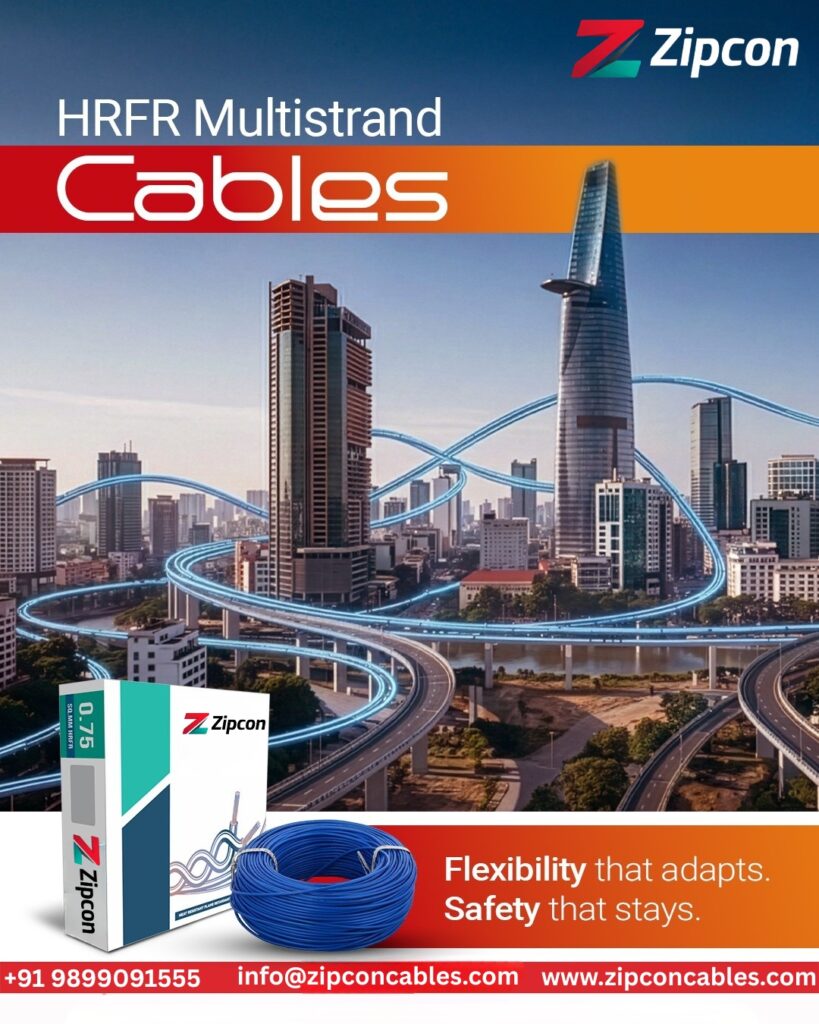
Commercial buildings and industrial facilities demand electrical systems that are safe, durable, and capable of handling high loads. This is where multistrand house wires become essential.
Multistrand wires are made of multiple thin strands twisted together to form a single conductor. Compared to single solid-core wires, they offer better flexibility, improved vibration resistance, and more reliable performance in demanding environments. For commercial complexes, factories, warehouses, and high-rise buildings in Gurgaon, choosing the right multistrand house wire directly impacts safety, efficiency, and long-term costs.
If you’re an engineer, contractor, or facility manager, here’s what you need to evaluate before making a decision.
Why Multistrand Wires Matter in Commercial & Industrial Setups
Unlike residential wiring, commercial and industrial installations involve:
- Higher current loads
- Continuous operation
- Vibrations from machinery
- Long cable runs
- Frequent panel upgrades
Single-core solid wires may crack or fatigue under vibration. Multistrand wires, on the other hand, distribute mechanical stress across multiple strands, making them more durable and reliable in heavy-duty applications.
Key Performance Criteria
Conductivity
Conductivity determines how efficiently electricity flows through the conductor.
- Copper offers higher conductivity (about 60% more than aluminium).
- Aluminium requires a larger cross-sectional area to carry the same load.
Higher conductivity means:
- Less voltage drop
- Lower heat generation
- Better energy efficiency
Durability
Industrial environments expose wires to:
- Heat
- Moisture
- Mechanical stress
- Chemicals
Multistrand conductors resist breakage better due to flexibility. Proper insulation (FR, FRLS, or HRFR) further enhances durability.
Weight
Weight becomes important in:
- Long cable runs
- Overhead installations
- Cable trays
Aluminium is nearly 50% lighter than copper, reducing structural load.
Cost
- Aluminium is cheaper per meter.
- Copper has higher upfront cost but lower energy loss over time.
Safety
Safety depends on:
- Proper insulation
- Current-carrying capacity
- Short-circuit resistance
- Earth continuity
High-quality multistrand wires reduce overheating and fire risks.
Installation Requirements
Flexible multistrand wires are easier to:
- Pull through conduits
- Bend inside panels
- Terminate in switchboards
This reduces installation time and labor costs.
Technical Insights (Simple & Practical)
Multistrand vs Single Strand
Single strand:
- Rigid
- Harder to bend
- Prone to cracking under vibration
Multistrand:
- Flexible
- Better for panels and machinery
- More resistant to mechanical fatigue
For industrial panels and commercial wiring, multistrand is almost always the smarter choice.
Skin Effect
In AC systems, current tends to flow near the outer surface of the conductor (called the skin effect). Multistrand conductors provide more surface area, improving performance slightly in higher-frequency systems. While not a major factor in standard building wiring, it becomes relevant in heavy industrial applications.
Heat Dissipation
Multiple strands allow better heat distribution, reducing localized hotspots. This improves lifespan and safety.
Copper vs Aluminium: Which One Should You Choose?
Here’s a practical comparison:
| Criteria | Copper Multistrand | Aluminium Multistrand |
|---|---|---|
| Conductivity | Excellent | Moderate |
| Weight | Heavy | Light |
| Cost | Higher | Lower |
| Flexibility | Very good | Good |
| Corrosion Resistance | Better | Needs proper treatment |
| Current Capacity | Higher in same size | Requires larger size |
Where Copper Performs Better
- Industrial control panels
- High-load commercial buildings
- Critical circuits (server rooms, hospitals)
- Short to medium cable runs
- Areas with high temperature
Copper is ideal where safety and performance cannot be compromised.
Where Aluminium is More Suitable
- Long-distance cable runs
- Overhead installations
- Budget-sensitive projects
- Large distribution feeders
Aluminium works well when weight and cost savings are priorities.
Real-World Use Cases
Heavy-Duty Industrial Panels
Machines create vibration and heat. Copper multistrand wires are recommended here because of superior conductivity and mechanical strength.
Commercial Office Wiring
For lighting, AC systems, and workstations, copper ensures stable voltage and reduced power loss.
Flexible Connections for Machinery & Elevators
Movement and vibration demand flexibility. Multistrand copper cables perform better due to fatigue resistance.
Long Cable Runs Where Weight Matters
In warehouses or factories with long feeder lines, aluminium multistrand cables reduce structural load and installation cost.
Safety & Installation Guidelines
Earth Continuity
Proper earthing ensures fault current safely flows to ground. Use correctly sized earth conductors as per IS standards.
Current Capacity & Derating
Always check:
- Ambient temperature
- Cable grouping
- Installation method (conduit, tray, buried)
High temperatures reduce current-carrying capacity. Apply derating factors as per Indian Standards.
Bending Radius
Avoid sharp bends. Multistrand wires allow tighter bending radius, but excessive bending can damage insulation.
Connectors & Jointing
- Use proper lugs for aluminium (bimetallic lugs recommended).
- Ensure tight crimping.
- Avoid loose connections to prevent overheating.
Compliance
Always select wires compliant with IS standards for safety and durability.
Cost Considerations: Think Long-Term
Many buyers focus only on cost per meter. That’s a mistake.
Short-Term Cost
Aluminium appears cheaper initially.
Long-Term Cost
Copper:
- Lower energy losses
- Fewer maintenance issues
- Longer lifespan
Failure costs in industrial environments can be massive — including downtime, equipment damage, and fire risks. Investing in quality wire reduces these risks.
Lifecycle value matters more than upfront savings.
Why Choose Zipcon Cables?
When selecting the best multistrand house wire in Gurgaon, product quality and brand reliability matter. Zipcon Cables offers:
- High conductivity copper and aluminium multistrand wires
- Superior insulation for commercial and industrial use
- Compliance with IS standards
- Consistent quality control
- Reliable performance in high-load environments
Their multistrand wires are designed for flexibility, heat resistance, and long-term durability, making them suitable for panels, machinery, commercial buildings, and large infrastructure projects.
Final Recommendation: How to Decide
Choose Copper Multistrand When:
- Load is high
- Safety is critical
- Installation involves machinery or vibration
- Long-term reliability is top priority
Choose Aluminium Multistrand When:
- Cable runs are long
- Weight reduction is important
- Budget constraints are significant
- Used for main feeders and distribution
If you are wiring a commercial complex or industrial unit in Gurgaon, do not compromise on conductor quality. Evaluate load, environment, cable length, and future expansion needs before deciding.
The right multistrand wire is not just a purchase — it’s a safety investment.