
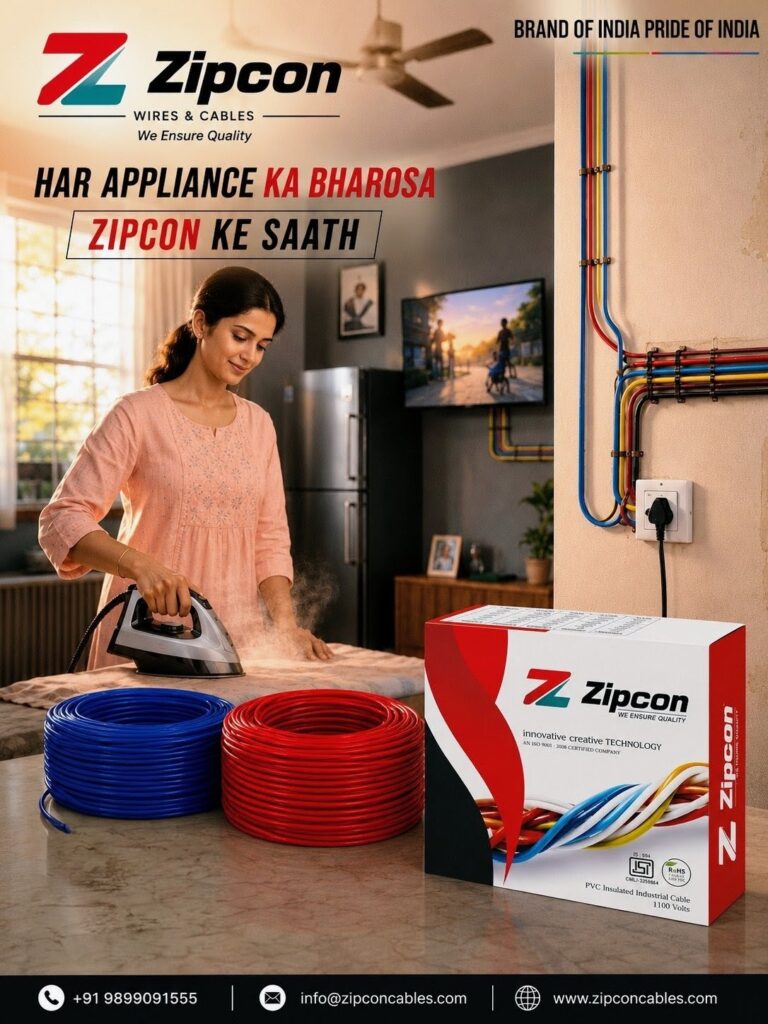
Choosing the best HRFR house wires in Bhopal is an important decision for safe and dependable electrical wiring. A house wire must handle regular electrical loads while providing reliable insulation, flexibility and protection against heat. Selecting a suitable wire can reduce wiring-related risks and support long-term electrical performance.
Zipcon Cables offers HRFR house wires designed for residential wiring requirements where safety, durability and dependable performance matter. HRFR stands for Heat Resistant Flame Retardant, highlighting two important properties for electrical cables used in homes and buildings.
For new construction, renovation or replacement wiring, choosing the right conductor size, insulation quality and cable construction is essential. A good-quality HRFR wire can be a practical choice for modern homes in Bhopal, where electrical systems may experience varying loads throughout the day.
For inquiries or assistance:– https://zipconcables.com/contact-us/
What Are HRFR House Wires?
HRFR house wires are electrical wires manufactured with insulation designed to provide resistance to heat and flame propagation. The insulation plays a critical role because it surrounds the conductor and helps protect the electrical system from external conditions.
Unlike ordinary wires that may not be designed for elevated temperatures or flame-retardant performance, HRFR wires focus on improved safety characteristics. This makes them suitable for residential circuits such as lighting, fans, sockets and other household electrical applications when correctly sized and installed.
The actual performance of any wire depends on its conductor material, cross-sectional area, insulation construction, manufacturing quality and installation conditions. Therefore, the label alone should not be the only factor when selecting a house wire.
Why Choose HRFR House Wires for Homes in Bhopal?
Electrical wiring remains hidden behind walls, ceilings and conduits for years. Replacing faulty wiring can be expensive and disruptive, so selecting a reliable wire during construction or renovation is important.
1. Better Heat Resistance
Electrical conductors generate heat when current passes through them. Higher loads, poor connections or undersized conductors can increase operating temperature.
HRFR insulation is designed to offer improved heat resistance, making the wire suitable for electrical installations where dependable insulation performance is required.
2. Flame-Retardant Properties
Flame-retardant insulation can help limit the spread of flame along the cable when exposed to fire conditions. This is an important safety characteristic for residential electrical installations.
However, flame-retardant wiring should always be combined with correct circuit protection, proper termination and professional installation.
3. Reliable Everyday Performance
Homes use multiple electrical appliances simultaneously. Air conditioners, refrigerators, televisions, washing machines, kitchen appliances and other loads can place significant demand on electrical circuits.
Using correctly sized, quality house wires helps create a more dependable electrical installation and reduces the chances of performance problems caused by inappropriate cable selection.
4. Suitable for Residential Wiring
HRFR house wires can be used for several common residential applications, including lighting circuits, fan circuits, socket circuits and other internal electrical wiring, subject to the wire’s specifications and applicable installation requirements.
Why Zipcon Cables for HRFR House Wires?
Zipcon Cables focuses on providing electrical cable solutions for residential and other wiring requirements. When choosing a house wire, the priority should be consistent manufacturing quality, appropriate insulation and specifications suited to the intended application.
Zipcon HRFR house wires can be considered when planning electrical wiring where heat resistance, flame-retardant characteristics and dependable insulation are important selection factors.
For the best results, select the wire size according to the expected load rather than choosing a cable only because it has a lower price.
How to Select the Right HRFR House Wire
Choosing the right HRFR house wire involves more than selecting a brand. The cable should match the electrical load and installation environment.
Check the Conductor Size
Common house-wire sizes include 1.0 sq mm, 1.5 sq mm, 2.5 sq mm, 4 sq mm and 6 sq mm, but the correct size depends on the circuit and expected load.
For example:
- 1.0–1.5 sq mm: commonly considered for lighting and fan circuits, depending on design.
- 2.5 sq mm: commonly used for socket and moderate-load circuits.
- 4 sq mm: may be suitable for higher-load circuits when specified by the electrical design.
- 6 sq mm: generally considered for heavier residential circuits, subject to load calculations.
These are general examples, not substitutes for electrical load calculations or local installation requirements.
Consider the Insulation
Good insulation helps prevent direct contact between the conductor and surrounding materials. Look for wires manufactured to clearly stated specifications and relevant standards.
Insulation should also remain suitable for the expected temperature and installation environment.
Match the Wire With the Application
A lighting circuit does not necessarily require the same cable size as an air-conditioner, geyser or other high-load circuit.
The correct approach is to calculate the expected load, consider installation conditions and then select the appropriate conductor size and protective device.
HRFR House Wires vs Ordinary House Wires
| Feature | HRFR House Wire | Standard/Ordinary House Wire |
|---|---|---|
| Heat resistance | Designed for improved heat resistance | Depends on cable construction |
| Flame-retardant performance | Designed with flame-retardant characteristics | Depends on insulation type |
| Residential use | Suitable for various residential applications | Commonly used for basic wiring |
| Safety focus | Higher emphasis on heat and flame performance | Depends on product specification |
| Selection | Should match load and installation | Should match load and installation |
The key point is that wire quality and correct installation work together. Even a high-quality HRFR wire cannot compensate for loose connections, overloading, incorrect conductor sizing or inadequate circuit protection.
Applications of HRFR House Wires
HRFR house wires can be considered for a range of residential and building wiring applications.
Home Lighting
Lighting circuits generally require comparatively lower electrical loads, but reliable insulation remains important because the wiring is often installed inside walls or conduits.
Fans and Small Appliances
Fans and other household electrical points require wiring selected according to their circuit load and protection requirements.
Socket Circuits
Socket circuits can experience changing loads because users may connect different appliances to the same circuit. Proper conductor sizing is therefore essential.
Residential Construction
For new homes and apartments, HRFR wires can be incorporated into the electrical design from the beginning, allowing cable sizes and circuit protection to be planned according to the expected electrical load.
Example: Choosing Wire for Different Home Circuits
Consider a typical home with separate circuits for lighting, general sockets and heavy appliances.
A lighting circuit may use a smaller conductor than a circuit intended for high-power equipment. General sockets may require a larger conductor, while appliances with substantial electrical loads may need dedicated circuits.
This example shows why simply purchasing one wire size for the entire house is not a good wiring strategy. Each circuit should be designed according to its expected load and applicable electrical requirements.
Expert Tips for Buying HRFR House Wires in Bhopal
1. Buy From a Reliable Source
Purchase cables from an established manufacturer or authorized supplier. This helps reduce the risk of receiving incorrectly labelled or poor-quality products.
2. Check Cable Markings
Before installation, inspect the cable markings, size, specifications and relevant certification information provided by the manufacturer.
3. Do Not Select Wires Only by Price
A cheaper cable may not provide the same construction quality or long-term performance. Compare specifications, conductor quality, insulation and manufacturer reliability before making a decision.
4. Use the Correct Circuit Protection
MCBs, RCCBs and other protective devices should be selected according to the electrical system design. Proper protection is essential even when high-quality wiring is used.
5. Hire a Qualified Electrician
Professional installation helps ensure correct routing, termination, load distribution and protective-device selection.
Common Mistakes to Avoid
Using an Undersized Wire
A conductor that is too small for the electrical load can experience excessive heating. Always select the conductor based on the expected current and installation conditions.
Mixing Poor-Quality Accessories With Good Wires
Quality wiring should be supported by reliable switches, sockets, connectors, distribution boards and protective devices. Weak connections can create electrical problems even when the cable itself is good.
Ignoring Overloading
Connecting several high-power appliances to one circuit can increase the electrical load beyond the circuit’s intended capacity.
Choosing Cable Only by Appearance
Colour and outer appearance do not determine electrical performance. Check technical specifications and conductor size before purchasing.
Poor Termination
Loose or improperly terminated connections can generate heat and create a potential electrical hazard. Connections should be properly tightened and installed by a qualified professional.
Why Choose Zipcon HRFR House Wires?
For homeowners, builders and electricians looking for HRFR house wires in Bhopal, Zipcon Cables can be considered for wiring projects where reliable insulation, durability and safety-focused cable construction are important.
The right cable should always be selected according to the electrical design, conductor size, installation method and expected load. With appropriate selection and professional installation, Zipcon Cables can support dependable residential wiring solutions.
Conclusion
Selecting the best HRFR house wires in Bhopal is about more than choosing a cable brand. Heat resistance, flame-retardant insulation, conductor size, electrical load, circuit protection and installation quality all contribute to a safe and reliable wiring system.
For residential projects, Zipcon Cables is a practical option to consider when looking for HRFR house wires with a focus on safe and durable electrical wiring. Choose the correct wire size, use suitable protective devices and ensure professional installation for dependable performance over the long term.
Top 5 FAQs
1. What are HRFR house wires?
HRFR house wires are wires designed with insulation that provides heat-resistant and flame-retardant characteristics. They are commonly considered for residential electrical wiring where improved insulation performance is required.
2. Are HRFR wires suitable for home wiring?
Yes, HRFR wires can be used for residential wiring applications when the cable specification and conductor size are appropriate for the intended electrical load and installation conditions.
3. Which HRFR wire size is best for a house?
There is no single wire size that is best for an entire house. Different circuits require different conductor sizes based on their electrical load, circuit length, installation method and applicable requirements.
4. Why choose Zipcon Cables for house wiring?
Zipcon Cables offers cable solutions for residential wiring requirements. Its HRFR house wires can be considered when heat resistance, flame-retardant characteristics and dependable insulation are important selection factors.
5. Where can I use HRFR house wires?
HRFR house wires can be used for applications such as lighting, fans, socket circuits and other residential electrical wiring, provided the selected cable is correctly rated for the application and installed according to applicable requirements.