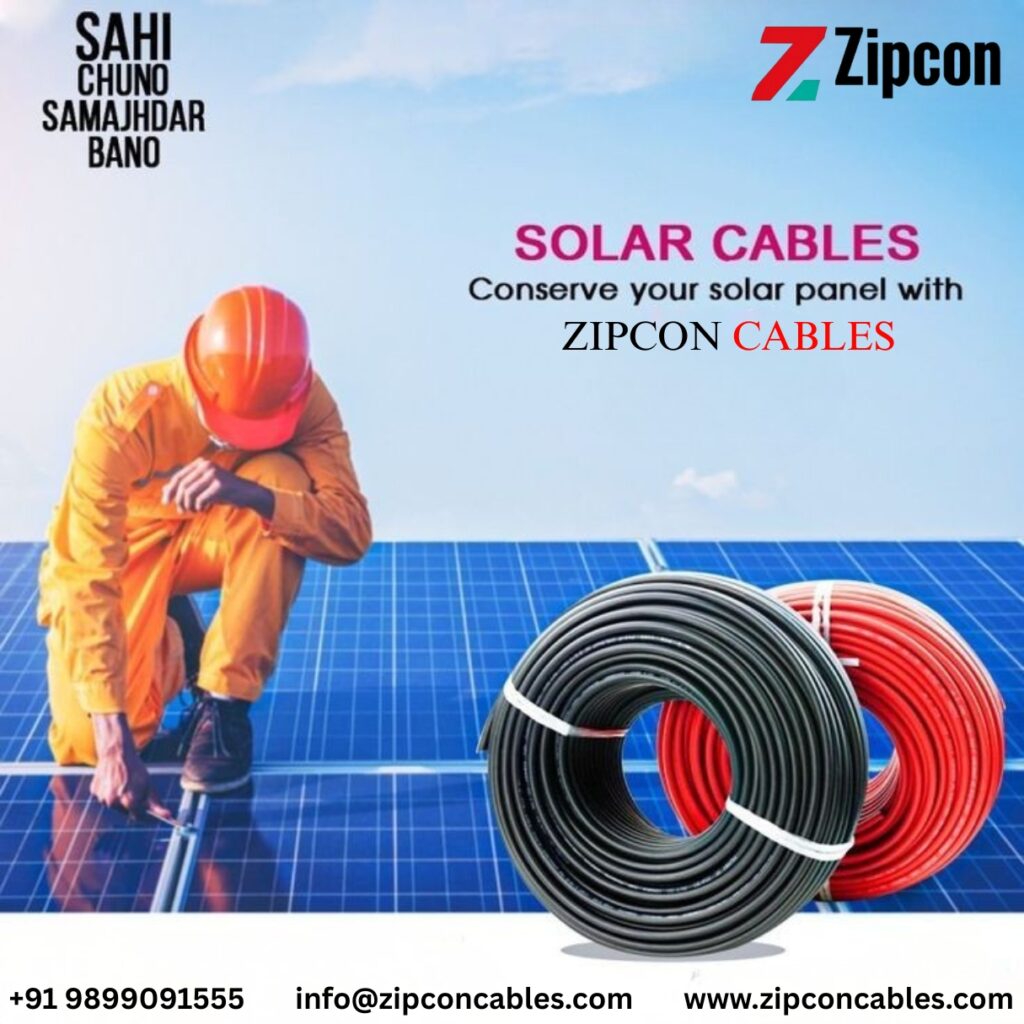
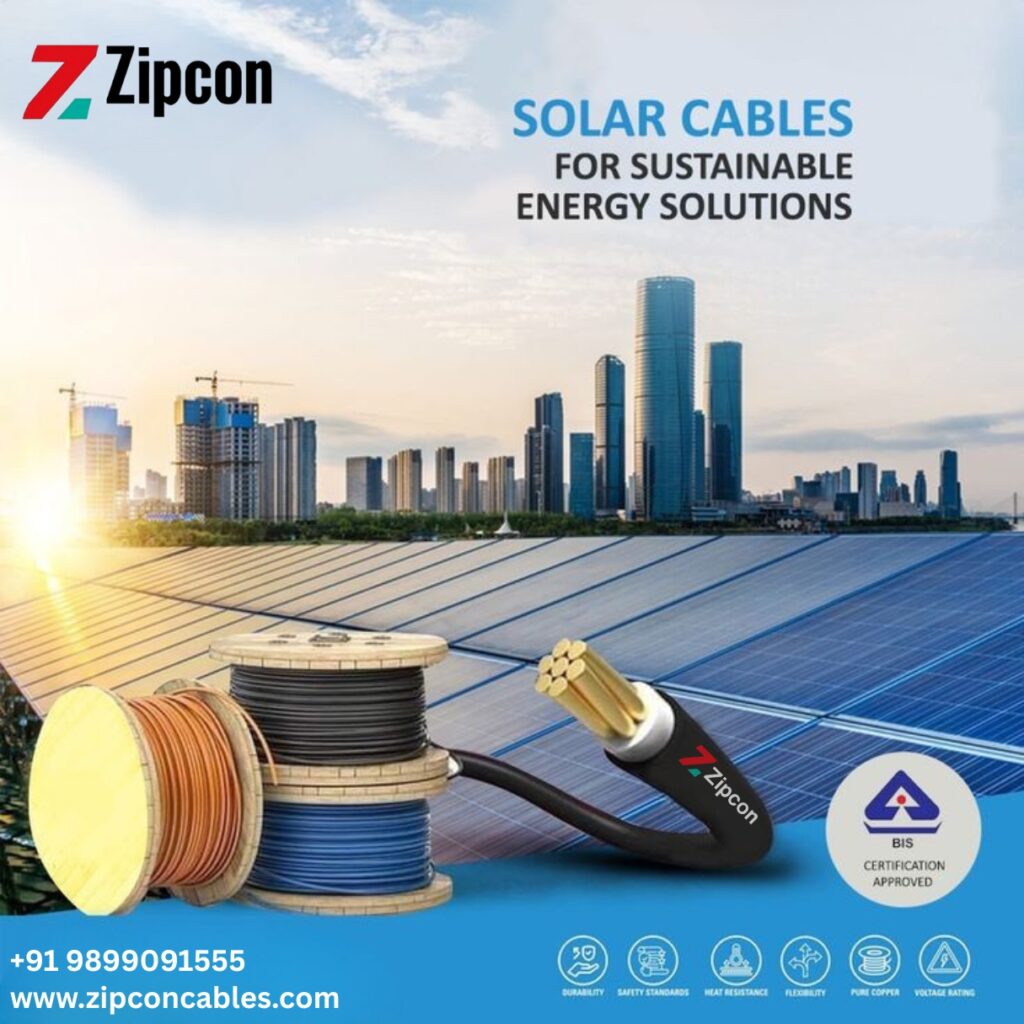
When it comes to setting up solar power systems, choosing the right cables is crucial for ensuring safe and efficient energy transmission. Among the various options available in the market, Zipcon Cables stands out as a leading manufacturer of high-quality solar cables manufacturer in India. In this article, we’ll dive into the key features of solar cables—conductivity, durability, weight, cost, safety, installation requirements—and discuss where copper and aluminium cables excel based on application needs.
For technical support or project inquiries: https://zipconcables.com/contact-us/
Understanding Solar Cables: Key Features
1. Conductivity:
Solar cables must deliver efficient power transmission with minimal energy loss. While copper cables are known for their superior conductivity, aluminium cables can also perform well, especially in longer runs where weight becomes a concern. Copper’s higher conductivity makes it ideal for applications that require high power and minimal resistance, such as in sensitive solar systems or short-distance wiring. On the other hand, Zipcon’s aluminium solar cables are an excellent choice for large-scale installations, offering a cost-effective solution while still providing sufficient conductivity for most solar energy setups.
2. Durability:
Solar cables need to withstand the elements, as they are often exposed to harsh environmental conditions, including UV radiation, temperature fluctuations, and moisture. Zipcon’s solar cables, particularly the ones made from high-quality aluminium and copper, are designed to endure these extreme conditions. Copper, being naturally resistant to corrosion, is often the go-to choice for installations that require long-term durability. However, aluminium solar cables are also highly durable when coated or treated for corrosion resistance, making them suitable for both indoor and outdoor use.
3. Weight:
Aluminium cables are significantly lighter than copper cables. This is a key advantage when dealing with large-scale installations or long-distance runs, where weight can impact the overall setup. Zipcon’s aluminium solar cables provide the ideal balance between performance and ease of handling, reducing the labor and equipment required for installation. Copper cables, though heavier, are still used in applications where weight isn’t as much of a concern but where conductivity is paramount.
4. Cost:
One of the most attractive aspects of Zipcon’s aluminium solar cables is their cost-effectiveness. Aluminium is much more affordable than copper, making it the ideal choice for large-scale installations or projects on a tight budget. This cost advantage does not come at the expense of quality, as Zipcon ensures that their aluminium cables meet stringent industry standards. Copper cables, while more expensive, are a preferred choice for high-end applications or smaller, high-performance systems where every bit of conductivity counts.
5. Safety:
Safety is a top priority when choosing solar cables. Both copper and aluminium cables are safe when properly installed. However, Zipcon’s solar cables are designed with high-quality insulation to prevent short circuits and minimize the risk of electrical fires. Copper cables are generally preferred in high-voltage systems for their excellent heat dissipation. Aluminium cables, however, require proper installation with appropriate connectors, as they can be prone to mechanical stress if not handled correctly. Zipcon provides installation guides and expert support to ensure the cables are installed safely and efficiently.
6. Installation Needs:
Aluminium cables are easier to install due to their lighter weight. Zipcon’s aluminium solar cables reduce the manual effort and handling time required during installation, making them ideal for large or overhead installations. On the other hand, copper cables, being heavier and more rigid, may require more careful handling and special tools. Zipcon Cables offers installation manuals and customer support to ensure proper setup, ensuring that the installation process is as smooth as possible.
Copper vs. Aluminium Solar Cables: Choosing the Right Option
Where Copper Cables Excel:
- High-Performance Systems: Copper cables are preferred in systems where maximum efficiency is required, such as short-distance runs or systems with high power demands. They perform better in high-conductivity situations and are generally more resistant to mechanical wear and tear.
- Critical Applications: For sensitive equipment or installations where overheating and high currents are a concern, copper’s superior conductivity ensures a better and safer outcome.
Where Aluminium Cables Shine:
- Long-Distance and Large-Scale Installations: Aluminium cables are perfect for long-distance runs, as they are lighter and more cost-effective. For example, Zipcon’s aluminium solar cables are ideal for large solar farms or rooftops, where reducing weight and cost without compromising on performance is crucial.
- Cost-Effective Solutions: For budget-conscious projects or large installations, aluminium cables provide a more affordable option without sacrificing the durability and performance needed in solar systems.
Real-World Scenarios: Which Cable to Choose?
- Residential Solar System: For a standard residential solar setup, Zipcon’s aluminium solar cables are an excellent choice. They provide sufficient conductivity for typical home energy needs, while the lightweight and cost-effective nature of aluminium make installation easier and more affordable.
- Commercial Solar Farms: In larger, commercial solar farms, where long-distance power transmission and cost-efficiency are paramount, Zipcon’s aluminium solar cables offer a great solution. Their lightweight nature reduces installation time, while their durability ensures long-term reliability in outdoor conditions.
- High-Power Residential Systems: If you are setting up a small but high-power solar system, such as one for electric vehicle charging or off-grid homes, copper solar cables from Zipcon might be the better choice. Copper will ensure minimal energy loss and better performance, though at a higher cost.
Why Choose Zipcon Cables for Solar Solutions?
Zipcon Cables has built a reputation for offering top-quality solar cables that meet industry standards and exceed expectations. Whether you’re looking for the affordability and practicality of aluminium cables or the high-performance benefits of copper, Zipcon has a solution tailored to your needs. Their solar cables are engineered to deliver maximum efficiency, durability, and safety, ensuring your solar power systems operate smoothly for years.
Conclusion: Making the Right Choice for Your Solar Installation
When it comes to choosing between copper and aluminium solar cables, the decision depends largely on the specific needs of your project. Zipcon’s aluminium solar cables offer a great balance of cost-effectiveness, durability, and performance, making them the ideal choice for long-distance runs, large-scale installations, and residential solar systems. Copper cables, while more expensive, are best suited for high-performance systems that require maximum efficiency and minimal energy loss.
For the best solar cables in India, Zipcon Cables provides reliable, durable, and cost-effective solutions to meet the diverse needs of residential, commercial, and industrial solar projects. With expert support, quality manufacturing, and a focus on customer satisfaction, Zipcon is your trusted partner for solar cable solutions.