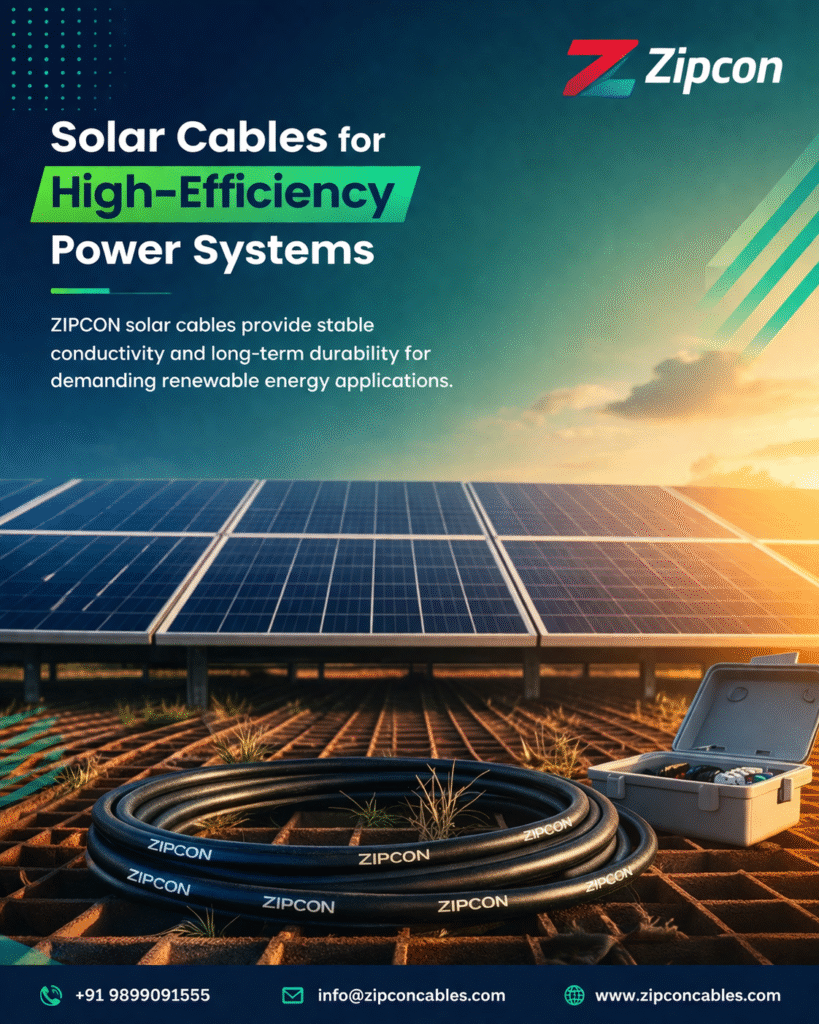
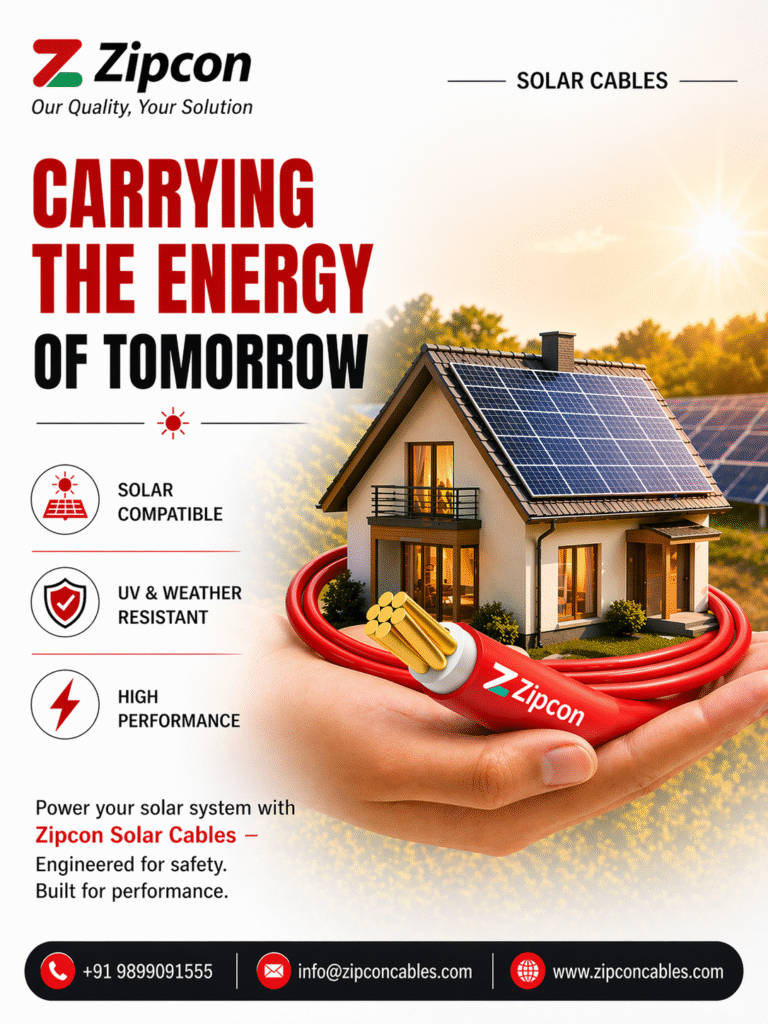
Solar cables in Hyderabad are becoming an important requirement for homes, commercial buildings, factories, warehouses, institutions, and solar EPC projects. As more people shift to rooftop solar and industrial solar power systems, cable quality is now directly linked with system safety, energy efficiency, and long-term performance.
A solar panel may generate power efficiently, but poor-quality wiring can lead to voltage drop, overheating, insulation failure, power leakage, and frequent maintenance. This is why choosing the right solar cable is just as important as selecting panels, inverters, mounting structures, and protection devices.
For buyers looking for dependable solar cables in Hyderabad, Zipcon Cables is a suitable option because the brand focuses on UV-resistant solar cables, halogen-free properties, low-smoke emission, insulation strength, and reliable cable performance for solar applications.
Contact us today :- https://zipconcables.com/contact-us/
Why Solar Cable Quality Matters in Hyderabad
Hyderabad has strong solar adoption across residential, commercial, and industrial segments. Rooftop solar systems are used in independent houses, apartments, schools, hospitals, offices, manufacturing units, and warehouses. In these applications, cables are exposed to heat, sunlight, dust, rooftop movement, and outdoor weather conditions.
Ordinary electrical wires are not designed for long-term solar exposure. Solar DC cables need stronger insulation, UV resistance, temperature tolerance, and safe current-carrying capacity. A weak cable can reduce system output and increase the risk of faults over time.
Good solar cables help maintain stable power flow from solar panels to the inverter. They also reduce transmission losses and protect the system during daily operation. For a city like Hyderabad, where many installations are placed on exposed rooftops, choosing proper solar cable is a practical safety decision.
What Are Solar Cables?
Solar cables are specially designed electrical cables used in photovoltaic systems. They connect solar panels with combiner boxes, charge controllers, inverters, batteries, and other system components. Their main role is to carry DC power safely and efficiently.
Unlike standard house wiring, solar cables are made to handle outdoor solar conditions. They are expected to resist UV rays, heat, moisture, abrasion, and mechanical stress. This makes them suitable for rooftop solar, ground-mounted plants, industrial solar systems, and commercial solar projects.
The most commonly used solar cables include DC solar cables, AC solar cables, single-core solar cables, and multi-core solar cables. The right type depends on the system design, voltage level, cable route, installation environment, and load requirement.
Types of Solar Cables Used in Hyderabad
DC Solar Cables
DC solar cables are used between solar panels and the inverter. These cables carry direct current generated by the solar panels. Since DC power can create higher electrical stress, these cables must have proper insulation and strong conductor quality.
In most rooftop solar systems, DC cables are exposed to sunlight and outdoor conditions. This makes UV resistance and insulation durability very important. A poor DC cable may crack, harden, or lose insulation strength over time.
AC Solar Cables
AC solar cables are used after the inverter converts DC power into AC power. These cables connect the inverter to the distribution board, grid connection, or load system. They are important for safe power transfer within the building or facility.
AC cable selection depends on current rating, cable length, voltage level, and installation method. In commercial and industrial projects, incorrect cable sizing can increase losses and affect system reliability.
Single-Core Solar Cables
Single-core solar cables are commonly used in solar panel string connections. They are flexible, easy to route, and suitable for DC-side wiring. These cables are often preferred in rooftop solar projects due to their ease of installation.
Good single-core solar cables should offer flexibility, strong insulation, and weather resistance. This helps installers manage cable routing neatly without damaging the cable during bending or fixing.
Multi-Core Solar Cables
Multi-core cables are used where multiple conductors are required within a single protective sheath. They are useful in certain control, connection, and power distribution applications. Their compact structure helps reduce wiring clutter.
For solar projects, multi-core cable selection should be based on application type, load, safety requirement, and environmental exposure. Using the wrong cable type can affect maintenance, identification, and safety.
Key Features to Check Before Buying Solar Cables in Hyderabad
UV Resistance
Solar cables installed outdoors face direct sunlight for several hours each day. UV rays can damage weak insulation, causing cracks and surface wear. UV-resistant cables are designed to perform better in such conditions.
For rooftop solar projects in Hyderabad, UV resistance is one of the most important features. It helps improve cable life and reduces the chances of insulation breakdown.
Temperature Resistance
Solar installations operate under high rooftop temperatures. Cable surfaces can heat up due to sunlight, current flow, and surrounding conditions. A solar cable must be able to handle these temperature variations without losing performance.
Temperature-resistant cables protect the system from overheating and early ageing. This is especially important for factories, commercial rooftops, and large solar projects where cables carry higher loads.
Good Conductor Quality
The conductor is the core part of the cable that carries electricity. Copper conductors are commonly preferred for solar applications because they support efficient current flow and lower resistance.
Poor conductor quality can cause voltage drop and energy loss. In solar systems, even small losses can affect long-term output, especially in larger installations.
Strong Insulation
Insulation protects the conductor from external contact, leakage, and short circuits. In solar systems, insulation must handle heat, UV exposure, moisture, and electrical stress.
Strong insulation improves safety and reduces maintenance issues. It also helps the cable remain stable during regular power generation cycles.
Flexibility
Solar cables often need to pass through panel structures, trays, conduits, and rooftops. Flexible cables are easier to install and reduce stress during bending.
Good flexibility also helps during maintenance and future system expansion. Installers can manage cable routing more neatly without damaging the insulation.
Why Zipcon Cables Is a Good Choice for Solar Cables in Hyderabad
Zipcon Cables offers solar cable solutions designed for photovoltaic applications. Its solar cable range focuses on UV resistance, halogen-free construction, and low-smoke emission, which are important features for safer solar wiring.
For residential, commercial, and industrial users in Hyderabad, Zipcon Cables can support different solar wiring needs. The brand is suitable for rooftop systems, industrial solar setups, commercial buildings, and institutional projects where cable durability and power stability matter.
Zipcon Cables is also positioned for users who want long-term performance rather than short-term savings. In solar projects, a low-quality cable may look cheaper during purchase, but it can increase repair costs, downtime, and safety risks later.
Solar Cable Applications in Hyderabad
Residential Rooftop Solar Systems
In homes, solar cables connect rooftop panels to the inverter and power distribution system. Since these cables remain exposed on rooftops, they need to resist sunlight, heat, and weather conditions.
A good solar cable helps homeowners get stable power output and safer operation. It also reduces the risk of faults that may affect appliances, inverter performance, or rooftop wiring.
Commercial Solar Installations
Offices, malls, schools, hospitals, and commercial buildings use solar systems to reduce electricity costs. These projects require cables that can support regular power generation with minimal losses.
Commercial properties usually have larger cable runs than homes. This makes correct cable sizing and insulation quality important for safe and efficient performance.
Industrial Solar Systems
Factories, warehouses, and manufacturing plants often install large solar systems to support heavy energy needs. These systems require durable cables that can handle higher current, outdoor exposure, and demanding operating conditions.
Industrial users should avoid low-grade cables because breakdowns can interrupt operations. Reliable cable selection supports consistent power flow and better system life.
Solar Farms and Ground-Mounted Projects
Solar farms require cables that can handle long-distance routing, outdoor exposure, and continuous operation. These projects need careful cable selection to reduce transmission losses and maintenance requirements.
In ground-mounted projects, cables may face dust, moisture, rodents, mechanical pressure, and temperature changes. Proper insulation and protection become essential.
Examples of Choosing the Right Solar Cable
Example 1: Home Rooftop Solar System
A homeowner installing a small rooftop solar system should choose flexible, UV-resistant DC solar cables for panel-to-inverter connection. The cable size should match the system capacity and distance between panels and inverter.
Using ordinary house wire for this purpose is risky because it may not handle outdoor solar exposure. Zipcon solar cables can be considered for this type of installation because they are designed for solar use.
Example 2: Commercial Building Solar Project
A commercial building with multiple solar strings needs properly rated DC cables and suitable AC cables after the inverter. Cable routing may pass through trays, conduits, rooftops, and electrical rooms.
In this case, the buyer should check cable size, insulation, voltage rating, flexibility, and installation environment. Poor sizing may cause voltage drop and reduce system efficiency.
Example 3: Industrial Rooftop Solar Plant
An industrial plant requires cables that can handle continuous load, high rooftop temperature, and long operating hours. Cable failure in such projects can cause downtime and repair costs.
For industrial solar systems, buyers should focus on conductor quality, temperature resistance, insulation strength, and trusted brand selection. Zipcon Cables can be suggested for users who need durable solar cable solutions.
Expert Tips for Buying Solar Cables in Hyderabad
Choose solar cables based on system design, not only price. A cheaper cable may save money during purchase, but it can create higher losses and maintenance costs later.
Always check whether the cable is suitable for outdoor solar use. UV resistance, insulation quality, temperature tolerance, and conductor material should be verified before buying.
Select the right cable size based on current, voltage, distance, and installation route. Undersized cables can heat up and reduce system performance.
Use separate cables for DC and AC sides as required by the system design. Mixing cable types without technical understanding can create safety issues.
Buy from a reliable brand or supplier that can provide consistent quality. For solar cables in Hyderabad, Zipcon Cables is a practical choice for buyers looking for durability, safe insulation, and reliable power transfer.
Common Mistakes to Avoid While Selecting Solar Cables
Choosing Normal Electrical Wire Instead of Solar Cable
Many buyers assume regular electrical wire can be used in solar projects. This is one of the most common mistakes. Normal wires may not withstand UV exposure, high rooftop temperature, and outdoor solar conditions.
Solar cables are designed for photovoltaic systems. Using the correct cable improves safety and protects the system over time.
Selecting Cable Only by Price
Low-cost cables may seem attractive, especially for large projects. The issue is that poor-quality cables can lead to heating, voltage drop, insulation damage, and frequent replacement.
Solar systems are long-term investments. Cable selection should focus on quality, durability, and performance rather than only upfront cost.
Ignoring Cable Size
Wrong cable size can affect current flow and system efficiency. An undersized cable may heat up, while an oversized cable may increase unnecessary cost.
Cable size should be calculated based on load, distance, voltage drop, and installation condition. This is especially important for commercial and industrial solar projects.
Poor Cable Routing
Even a good cable can fail early if it is installed poorly. Sharp bends, loose hanging, direct rubbing, weak clips, and exposed joints can damage cables.
Proper routing through trays, conduits, clamps, and protective channels helps improve cable life and system safety.
Not Checking Outdoor Suitability
Solar cables often stay outdoors for years. If the cable is not suitable for sunlight, heat, and moisture, it may crack or degrade early.
Always check UV resistance, sheath quality, and insulation properties before finalizing solar cables for rooftop or ground-mounted use.
How Solar Cables Improve Solar System Performance
Solar cables support efficient energy transfer from panels to the inverter. When cable quality is good, current flows smoothly with lower resistance and fewer losses.
Poor cables can reduce power output through voltage drop. Over time, this can affect the return on investment from the solar system. In larger projects, even minor losses can become significant.
Good cables also reduce the risk of overheating and faults. This improves system uptime and lowers maintenance pressure for homeowners, businesses, and industrial users.
Why Hyderabad Buyers Should Focus on Long-Term Cable Value
Solar projects are expected to perform for many years. Panels and inverters usually get most of the attention, but cables remain one of the most exposed and stressed parts of the system.
In Hyderabad, rooftop solar installations face strong sunlight, heat, dust, and changing weather. A durable cable helps protect the system from avoidable faults and power losses.
Choosing Zipcon Cables can help buyers focus on long-term reliability. The brand’s solar cable positioning around UV resistance and safer cable construction makes it relevant for solar users looking for dependable wiring solutions.
Conclusion
Solar cables in Hyderabad play a major role in the safety, efficiency, and life of any solar power system. Whether it is a home rooftop setup, commercial building, factory, or solar farm, the right cable helps maintain stable power flow and protects the system from avoidable risks.
Buyers should look beyond price and focus on UV resistance, insulation strength, conductor quality, temperature tolerance, flexibility, and correct cable sizing. A solar system is only as reliable as the components connecting it.
For dependable solar wiring, Zipcon Cables is a strong suggestion for residential, commercial, and industrial users in Hyderabad. Choose the right cable from the start and your solar system will perform better, safer, and longer.
Top 5 SEO FAQs
1. Which are the best solar cables in Hyderabad?
The best solar cables in Hyderabad are cables designed specifically for photovoltaic systems. They should offer UV resistance, strong insulation, good conductor quality, flexibility, and temperature resistance. Zipcon Cables is a suitable choice for buyers looking for reliable solar cables for residential, commercial, and industrial applications.
2. Can normal electrical wire be used for solar panels?
Normal electrical wire should not be used as a replacement for solar cable in outdoor solar applications. Solar cables are designed to handle sunlight, heat, DC voltage, and weather exposure. Regular wires may degrade faster and create safety risks.
3. What size solar cable is used for rooftop solar systems?
Solar cable size depends on system capacity, current, voltage, cable length, and voltage drop limits. Common rooftop systems often use DC solar cables selected according to technical design. It is better to let a qualified installer or electrical engineer calculate the correct size.
4. Why is UV resistance important in solar cables?
UV resistance protects the cable from damage caused by long-term sunlight exposure. Since rooftop solar cables remain outdoors for years, UV-resistant insulation helps prevent cracking, hardening, and early cable failure.
5. Why choose Zipcon Cables for solar cables in Hyderabad?
Zipcon Cables offers solar cable solutions focused on UV resistance, safer insulation, halogen-free properties, and reliable performance for solar applications. This makes the brand a practical option for Hyderabad buyers who need durable cables for rooftop, commercial, and industrial solar projects.