
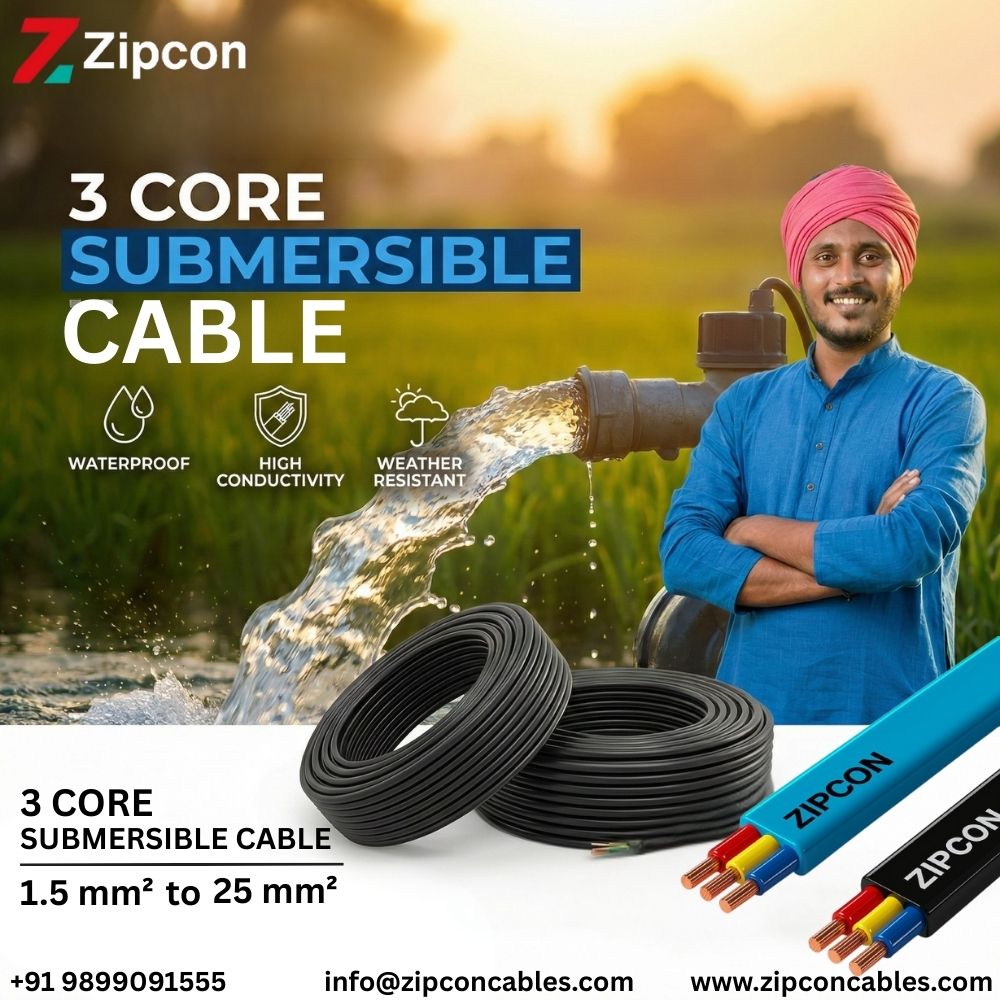
Submersible 3 core flat cables are crucial for powering equipment used in submerged environments like pumps, motors, and other underwater machinery. When selecting the right cable for these applications, several factors come into play, including conductivity, durability, weight, cost, safety, and installation needs. Zipcon Cables offers high-performance copper submersible cables that are designed to meet these demands. This article explores the key aspects of submersible cables, with a focus on Zipcon’s copper cables and how they compare to alternative materials like aluminum.
Conductivity: Copper vs. Alternatives
Conductivity is one of the most critical factors when choosing cables for submersible applications. The higher the conductivity, the more efficiently the cable can carry electrical current. Copper is well-known for its superior conductivity, making it the material of choice for submersible cables.
Copper has a conductivity of 59.6 × 10^6 S/m, significantly higher than aluminum (35.5 × 10^6 S/m). This means that copper cables can carry more current over longer distances without significant power loss, which is essential for submersible applications where reliable, consistent power is critical.
While aluminum cables may be lighter and less expensive than copper, they don’t offer the same level of performance and reliability, especially when used in environments where high conductivity is crucial. Copper’s ability to maintain performance over time in harsh underwater environments makes it a clear choice for long-term, high-performance submersible applications.
Durability: Built to Withstand Harsh Conditions
Submersible cables are often exposed to extreme environmental factors, including moisture, temperature fluctuations, and mechanical stress. The durability of a cable directly impacts its lifespan and reliability.
Zipcon Cables are designed with high-quality copper conductors and robust insulation materials that ensure excellent resistance to moisture and temperature changes. 4 sq mm 3 core flat submersible pump cable Copper cables are less prone to corrosion compared to aluminum, making them more durable in wet, salty, or humid conditions. In addition, copper’s high tensile strength allows the cable to withstand mechanical stress without breaking or degrading over time.
When considering durability, Zipcon Cables stand out for their ability to perform reliably in demanding environments, providing long-term value despite the challenges posed by submersion.
Weight: Ease of Installation and Long-Term Use
Weight is another important factor when selecting submersible cables. Heavier cables can be more challenging to handle during installation, especially when deploying cables in deep or remote locations. Copper cables are denser and heavier than aluminum cables, which can make them harder to install.
However, the increased weight of copper cables is often an advantage in terms of performance. The material’s superior conductivity and durability outweigh the minor inconvenience of additional weight during installation. For specific applications where weight is a concern, Zipcon offers flexible, lightweight alternatives that still maintain the high performance of copper.
Cost: Upfront Investment vs. Long-Term Value
Cost is often a significant consideration when choosing materials for submersible cables. Copper cables typically have a higher upfront cost compared to aluminum cables, but they offer better long-term value due to their superior conductivity, durability, and resistance to wear and tear.
Although aluminum cables may seem like a cost-effective option in the short term, they require more frequent maintenance and replacement due to their lower performance and susceptibility to corrosion. Zipcon’s copper cables, while higher in initial cost, reduce the need for repairs and replacements, making them a more cost-effective solution over time, particularly in harsh submersible environments.
Safety: Ensuring Reliable and Safe Operation
Safety is a top priority in submersible cable applications. Zipcon Cables prioritize safety by adhering to stringent insulation and water resistance standards. The cables are equipped with high-quality insulation materials that prevent water ingress and ensure that the cables remain electrically safe under submerged conditions.
Copper’s inherent resistance to corrosion also plays a role in maintaining the safety of submersible cables. In contrast, aluminum cables can corrode more easily, potentially leading to exposed wires and increased risk of electrical faults.
Moreover, Zipcon cables meet fire safety standards, ensuring that they do not pose a fire risk in submersible environments. This makes them a safer option compared to aluminum cables, which may have a lower fire resistance rating.
Installation Needs: Ease of Use in Challenging Environments
Installing submersible cables requires careful planning and execution, particularly in environments that are difficult to access. Zipcon’s copper cables are designed for easy handling during installation, with clear labeling, flexibility, and user-friendly features that reduce installation time and labor costs.
However, copper cables are heavier than aluminum cables, which can add complexity to the installation process. In situations where a lighter cable is necessary, Zipcon offers options that balance weight and performance, making installation more manageable without compromising on quality or durability.
Typical Use Cases for Submersible 3 Core Flat Cables
Submersible 3 core flat cables are commonly used in a wide range of applications, including powering pumps, motors, and underwater machinery. Zipcon’s copper cables are especially suited for these applications due to their excellent conductivity, durability, and safety features.
For example, Zipcon cables are ideal for submersible pumps used in water treatment plants, wells, and sewage systems. The cables ensure that power is transmitted efficiently and reliably, even under harsh submerged conditions. In addition, Zipcon’s cables are used in underwater motors for various industrial applications, providing the necessary performance and safety.
Additional Comparisons and Recommendations
While aluminum cables may be cheaper and lighter, copper cables like those from Zipcon excel in conductivity, durability, and long-term performance. Copper is the better choice when high conductivity, resistance to corrosion, and reliability are critical.
For applications where weight is a primary concern, lighter alternatives such as aluminum cables may be more suitable. However, for projects that demand the highest performance and long-term durability, Zipcon’s copper submersible cables are the recommended choice.
Conclusion
Choosing the right submersible cable is essential for ensuring the long-term performance and safety of underwater equipment. Zipcon Cables offers high-quality copper cables that deliver superior conductivity, durability, and safety, making them the best choice for demanding submersible applications. By understanding the key factors of conductivity, durability, weight, cost, safety, and installation needs, engineers, electricians, and buyers can make informed decisions and select the most suitable material for their specific application.