
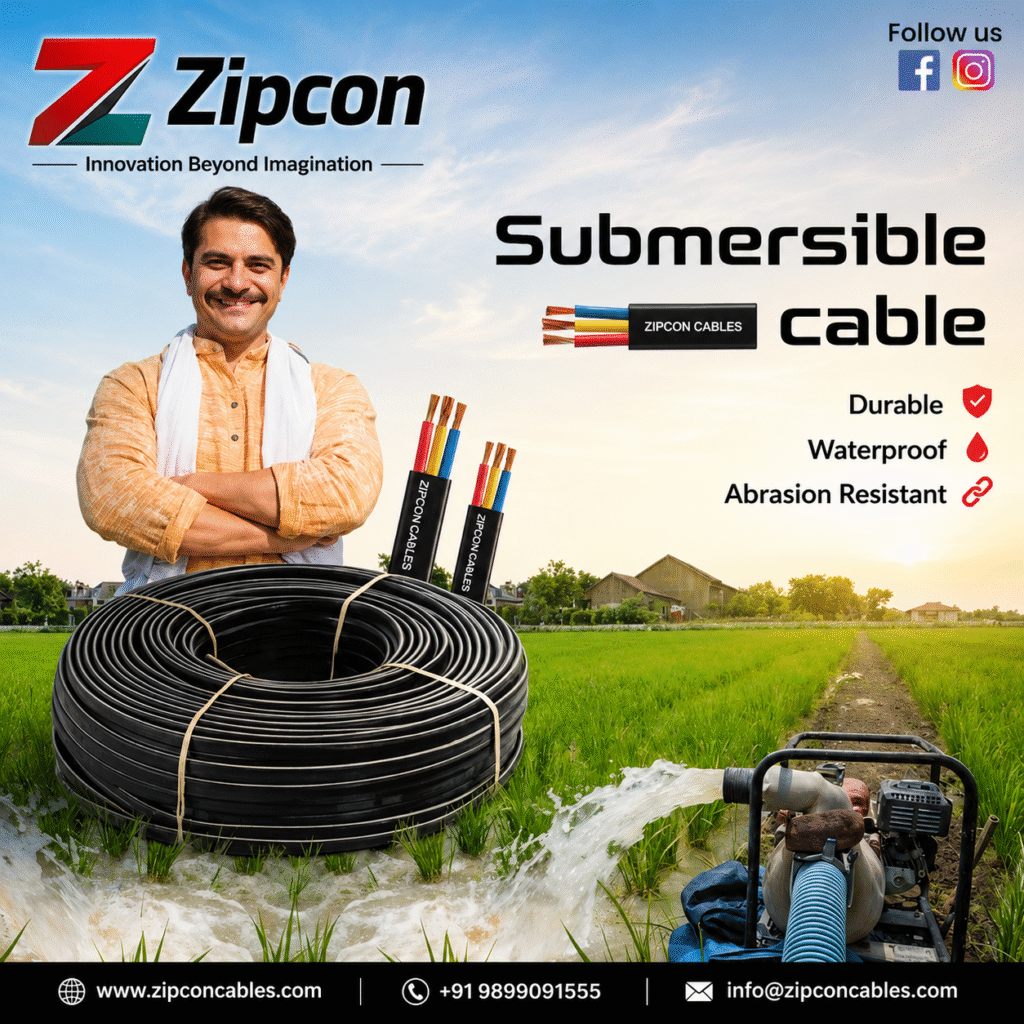
Choosing the best submersible cable for a solar pump in Kochi is important for maintaining safe electrical connections and dependable water-pumping performance. Solar-powered borewell pumps operate in demanding conditions where cables may be exposed to moisture, water, heat, pressure, and long operating hours.
A standard electrical wire is not necessarily suitable for a submerged pump installation. A proper solar pump submersible cable should be selected according to the pump’s electrical requirements, installation depth, cable length, operating voltage, and environmental conditions.
Zipcon Cables offers submersible and solar cable solutions designed for applications where reliable power transmission and suitable insulation are essential. For agricultural fields, borewells, water tanks, and solar pumping systems in Kochi and surrounding areas, choosing an application-specific cable can support safer and more consistent operation.
For inquiries or assistance:– https://zipconcables.com/contact-us/
Why Submersible Cable Selection Matters for Solar Pumps
A solar water pump depends on a continuous electrical connection between the power source, control equipment, and pumping motor. The cable must carry the required electrical current while maintaining insulation performance throughout its operating environment.
In a borewell, the cable can remain exposed to water and moisture for extended periods. It may also experience mechanical stress during installation and removal. Using a cable that is not designed for the application can increase the possibility of insulation deterioration, electrical leakage, voltage drop, or premature cable failure.
Key Requirements of a Solar Pump Submersible Cable
A suitable cable should be evaluated for:
- Electrical conductivity
- Correct conductor cross-section
- Suitable voltage rating
- Moisture and water resistance
- Insulation performance
- Flexibility
- Mechanical strength
- Temperature tolerance
- Compatibility with the solar pumping system
- Installation depth and cable length
These factors help determine whether a cable is appropriate for a particular borewell or water-pumping application.
What Makes a Good Submersible Cable for Solar Pumps?
A solar pump cable needs to perform reliably in an environment that differs considerably from conventional indoor wiring. The cable may remain submerged for long periods and must maintain its electrical insulation under wet conditions.
Water-Resistant Construction
Water exposure is one of the primary considerations in borewell pumping applications. Cable construction and insulation should be suitable for the intended wet or submerged environment.
A cable with appropriate insulation can help reduce the risk of moisture-related electrical problems and support reliable operation over the expected service period.
Proper Current-Carrying Capacity
The cable must be capable of carrying the current required by the solar pump. Selecting an undersized cable can cause excessive heating and voltage drop.
The correct conductor size should be determined based on pump power, operating voltage, cable length, installation conditions, and applicable electrical requirements.
Suitable Flexibility
Submersible pump cables may need to be routed alongside the pump and through confined spaces. Adequate flexibility can make installation easier while reducing unnecessary stress on the cable.
Reliable Insulation
Insulation protects the conductor from water, external surfaces, and other electrical conductors. For submerged applications, insulation quality is particularly important because the cable can remain exposed to moisture continuously.
Solar Pump Cable vs Standard Electrical Wire
One of the common mistakes in water-pump installations is treating all electrical wires as interchangeable.
| Feature | Solar Pump Submersible Cable | Standard Electrical Wire |
|---|---|---|
| Intended environment | Wet/submerged applications | Primarily general electrical installations |
| Moisture exposure | Designed for relevant wet applications | Depends on product specification |
| Pump application | Suitable when specified for the pump system | Not automatically suitable |
| Installation | Borewell/water-pumping systems | Domestic/commercial wiring |
| Selection factors | Pump load, voltage, depth, length | Circuit load and installation |
| Flexibility | Application dependent | Varies by product |
The correct choice should always be based on the cable manufacturer’s specifications and the requirements of the pumping system.
Why Kochi Conditions Matter When Selecting Pump Cables
Kochi has a humid coastal environment, and many water-pumping systems operate in agricultural, residential, commercial, and groundwater applications. Moisture management therefore becomes an important part of electrical installation planning.
For borewell and solar pump systems, the cable may encounter water, humidity, heat, soil, mechanical movement, and installation-related stress. Selecting a cable designed for the intended environment can help improve overall system reliability.
Zipcon Cables for Solar Pump Applications
Zipcon Cables provides cable solutions for different electrical applications, including submersible and solar-related requirements.
For a solar water pumping project, Zipcon cable selection should be based on the pump specifications and complete installation requirements. Factors such as conductor size, number of cores, voltage, current, cable length, and installation depth should be verified before purchase.
This application-focused approach is more reliable than selecting a cable only by its appearance or price.
Types of Applications for Solar Pump Submersible Cables
Borewell Water Pumps
Borewell pumps are installed below ground and often operate for extended periods. A suitable submersible cable provides the electrical connection between the pump and the rest of the system.
The cable should be selected according to the motor’s electrical requirements and the borewell’s installation depth.
Agricultural Irrigation
Solar-powered irrigation systems are increasingly used for farms where reliable water availability is essential. These systems may operate for several hours during suitable sunlight conditions.
A correctly selected submersible cable helps establish a dependable connection between the pumping motor and electrical system.
Water Storage Systems
Solar pumping systems can also be used to transfer groundwater or other water sources into overhead tanks and storage systems. Cable selection depends on the pump type, operating voltage, distance, and installation environment.
Residential Solar Water Pumping
Homes and rural properties may use solar pumps for borewell extraction, water storage, or garden irrigation. Even smaller systems require cables with specifications appropriate for the pump and installation conditions.
How to Select the Correct Submersible Cable Size
Cable size is one of the most important decisions in a solar pump installation. It should not be selected only according to the pump’s horsepower.
The required cable size depends on several factors:
- Pump motor power
- Operating voltage
- Current requirement
- Cable length
- Installation depth
- Voltage drop
- Starting characteristics of the motor
- Ambient and installation conditions
- Cable construction
Example
Suppose a solar pump is installed at a significant depth in a borewell and the distance between the pump and control equipment is considerable. Even if the motor’s power rating is known, the cable size may need to account for voltage drop over the long cable run.
Therefore, a qualified electrician or electrical engineer should verify the cable size before installation.
Examples: Choosing a Solar Pump Submersible Cable
Example 1: Agricultural Borewell
A farmer uses a solar-powered submersible pump to supply water for irrigation. The pump is installed deep inside a borewell and operates during daylight hours.
In this case, the cable should be selected based on motor specifications, operating voltage, borewell depth, cable length, and wet-environment requirements. A suitable Zipcon submersible cable can then be selected according to these parameters.
Example 2: Residential Borewell Pump
A house uses a solar pump to move groundwater into an overhead storage tank. The cable length is relatively short, but the pump remains submerged.
The main consideration is not simply cable length. The cable must also be suitable for submerged operation and compatible with the pump’s electrical requirements.
Example 3: Long-Distance Agricultural Installation
A solar pump is installed in a borewell located some distance from the control panel. The longer cable route can increase voltage drop.
In this situation, cable sizing should consider both the motor’s current requirement and the total cable length. Selecting the cable based only on motor horsepower may result in an unsuitable installation.
Expert Tips for Buying Solar Pump Submersible Cables in Kochi
1. Know the Pump Specifications
Check motor power, voltage, current, phase configuration, and manufacturer requirements before purchasing a cable.
2. Measure the Complete Cable Route
Consider the actual distance from the pump to the control equipment rather than estimating the cable length.
3. Account for Voltage Drop
Long cable runs can create voltage drop. The cable size should be evaluated accordingly to maintain suitable electrical performance.
4. Select a Cable for the Correct Environment
For borewell applications, use a cable specifically intended for the relevant submerged or wet environment.
5. Do Not Compromise on Insulation
Insulation is critical when the cable is exposed to water. Verify that the cable construction is appropriate for the intended application.
6. Buy From a Reliable Cable Brand
Choose a manufacturer such as Zipcon Cables and purchase through a reliable supplier to improve product authenticity and specification consistency.
7. Get Professional Installation
Cable installation inside a borewell should be handled carefully. Avoid sharp bends, excessive pulling force, improper joints, or unsupported cable sections.
Common Mistakes When Choosing Solar Pump Cables
Using Regular House Wire
Standard house wiring is not automatically suitable for submerged pump applications. Always verify the intended use of the cable.
Choosing Cable Size Only by Horsepower
Motor horsepower alone does not determine cable size. Voltage, current, length, voltage drop, and installation conditions also matter.
Ignoring Cable Length
A longer cable run can increase voltage drop. The complete electrical route should be considered during cable selection.
Using Poor-Quality Cable for Wet Applications
Cable failure in a borewell can be difficult and expensive to repair because accessing the pump may require removing the equipment.
Making Improper Cable Joints
Poorly protected joints can allow water to enter the electrical connection. Cable joints should follow suitable installation practices and manufacturer recommendations.
Buying Only on the Basis of Price
The initial cable price is only one part of the total project cost. Installation, maintenance, downtime, and pump removal can make cable failure considerably more expensive.
Why Choose Zipcon Cables for Solar Pump Projects?
For solar pump installations, the cable is an important part of the complete electrical system. Selecting the right product helps ensure that the pump receives power through a cable appropriate for its operating environment.
Zipcon Cables offers solutions for submersible, solar, and other electrical applications. Its product range can support different requirements across agriculture, residential water pumping, borewell systems, and other suitable installations.
For projects in Kochi, Kerala, the cable should be selected based on actual pump specifications and site conditions. Zipcon can be considered when looking for an application-focused cable solution.
Conclusion
The best submersible cable for a solar pump in Kochi is not simply the cable with the lowest price or the largest conductor. It is the cable that matches the pump’s electrical requirements, cable length, installation depth, voltage-drop limits, environmental conditions, and required insulation performance.
For borewell pumps, agricultural irrigation, residential water systems, and solar-powered pumping projects, selecting an appropriate submersible cable can support safer and more reliable operation.
Zipcon Cables provides submersible and solar cable solutions for a range of applications. Before purchasing, verify the pump specifications, cable length, conductor size, voltage rating, and installation requirements. Choose the right cable for the right application and make Zipcon Cables part of a dependable solar water-pumping solution.
Top 5 FAQs
1. Which cable is best for a solar submersible pump?
A cable specifically designed and rated for the intended submersible pump application is generally appropriate. The correct cable size and construction depend on motor power, voltage, current, cable length, installation depth, and environmental conditions.
2. Can a normal electrical wire be used for a borewell pump?
A standard electrical wire should not be assumed to be suitable for submerged applications. Borewell pumps require cable construction and insulation appropriate for wet or submerged conditions.
3. How do I select the cable size for a solar water pump?
Cable size should be determined using motor power, operating voltage, current, cable length, voltage drop, installation conditions, and manufacturer recommendations. A qualified electrical professional should verify the final selection.
4. Why is insulation important in a submersible pump cable?
Submersible cables can remain exposed to water and moisture for extended periods. Suitable insulation helps protect the conductor and maintain electrical separation under the intended operating conditions.
5. Is Zipcon suitable for solar pump and borewell applications?
Zipcon Cables offers submersible and solar cable solutions for relevant electrical applications. The exact Zipcon cable should be selected according to the pump specifications, installation environment, cable length, and project requirements.