
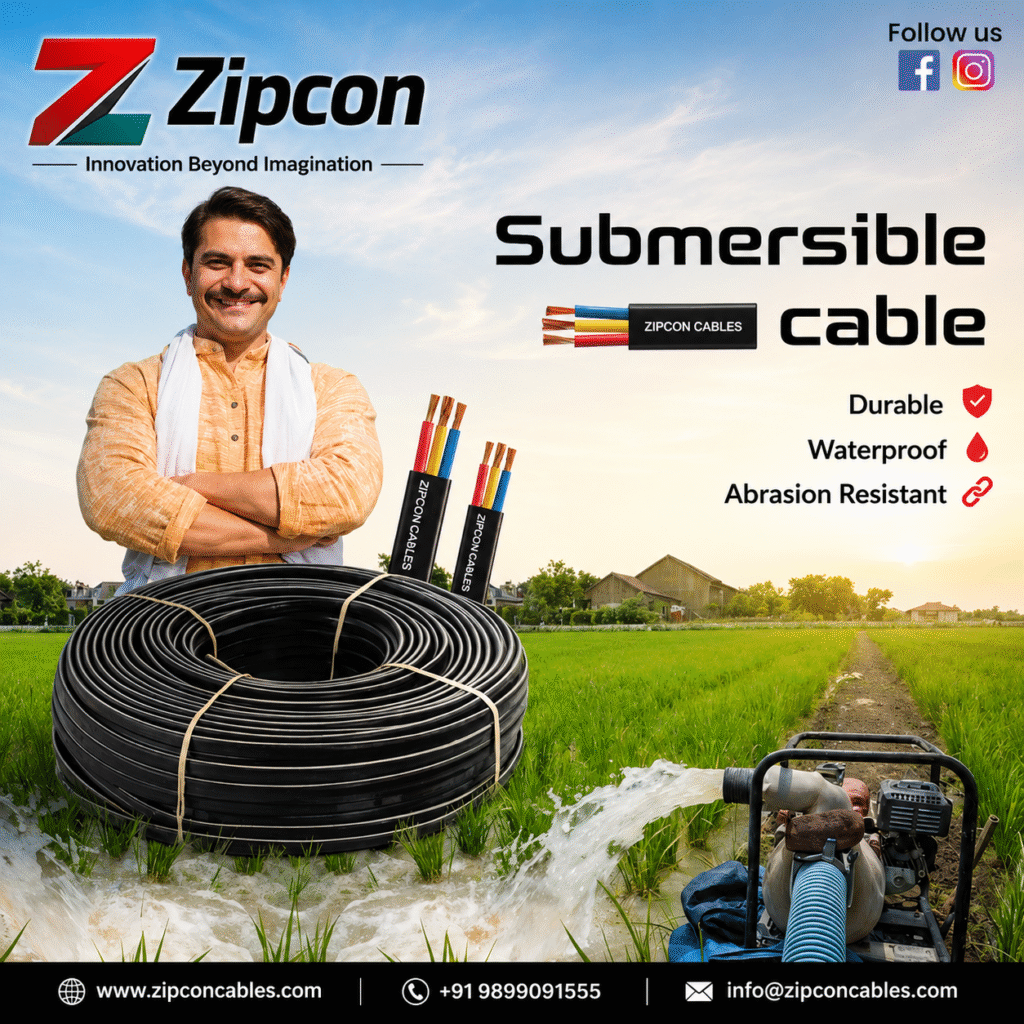
A submersible pump can perform reliably only when its electrical connection is equally dependable. Submersible cable in Indore is designed for applications where cables operate in demanding environments, including borewells, water tanks and agricultural pumping systems. The cable must withstand moisture, immersion, mechanical stress and continuous electrical operation.
Choosing the right cable is therefore not simply about selecting the correct length or price. Conductor quality, insulation, cable construction, current capacity and compatibility with the pump all affect performance. Zipcon Cables provides submersible cable solutions designed for applications that demand dependable electrical performance and durable construction.
For inquiries or assistance, visit: 👉https://zipconcables.com/contact-us/
What Is a Submersible Cable?
A submersible cable is an electrical cable specifically designed for use with submersible pumps and other equipment operating in or around water. Unlike ordinary electrical wires, it requires insulation and construction suitable for wet or submerged environments.
The cable connects the pump motor to the electrical supply while remaining exposed to conditions that can be much harsher than standard indoor wiring. This makes water resistance, insulation integrity and mechanical durability critical selection factors.
Why Quality Submersible Cable Matters
A pump may operate for several hours a day, particularly in agricultural, commercial or water-supply applications. The cable remains an important part of this system because electrical losses, insulation damage or poor connections can affect the reliability of the entire installation.
1. Protection Against Moisture
Submersible pump cables are designed for wet environments. Suitable insulation helps protect the conductors from water exposure and supports reliable electrical isolation.
2. Reliable Power Transmission
Proper conductor construction and appropriate cable sizing help deliver electrical power to the motor efficiently. Using a cable that is too small for the application’s requirements can increase voltage drop and heating.
3. Mechanical Durability
Cables installed in borewells or water systems may experience pulling, bending and movement during installation or maintenance. Durable construction helps the cable withstand these conditions.
4. Longer Service Life
A cable manufactured with appropriate materials and construction can provide dependable service over an extended period when correctly installed and operated within its specified limits.
5. Better Pump Reliability
The pump, motor, control equipment and cable work as one electrical system. A properly selected submersible cable helps maintain a reliable connection between the power source and pump motor.
Key Features to Look for in a Submersible Cable in Indore
Selecting a submersible pump cable requires more than checking whether the cable fits the pump.
High-Quality Conductors
The conductor is responsible for carrying electrical current from the supply to the motor. Copper and aluminium are both used in electrical cable applications, but their characteristics differ.
The conductor should be selected according to the pump’s electrical requirements, cable length, installation conditions and applicable electrical standards.
Durable Insulation
Insulation is particularly important in submersible applications because the cable may remain exposed to water for extended periods. Quality insulation helps maintain electrical separation and protects the conductor.
Water-Resistant Construction
A submersible cable should be suitable for the wet conditions expected during operation. Its construction should be appropriate for continuous or prolonged exposure to moisture as specified by the manufacturer.
Flexible Cable Construction
Installation can require the cable to follow the pump, pipe or borewell arrangement. Suitable flexibility makes handling and installation easier while reducing unnecessary stress on the cable.
Correct Voltage and Current Rating
Every cable has defined electrical limits. The selected cable should have ratings appropriate for the pump motor and the installation rather than being selected solely based on physical size.
Submersible Cable vs Regular Electrical Cable
Regular electrical cables and submersible cables are not interchangeable in every application.
| Feature | Submersible Cable | Regular Electrical Cable |
|---|---|---|
| Wet-environment suitability | Designed for specified wet/submerged applications | Depends on cable type |
| Pump applications | Suitable for compatible submersible pumps | Often unsuitable for submerged use |
| Insulation requirements | Designed for demanding moisture conditions | Designed according to its specific application |
| Mechanical demands | Built according to intended installation | Varies |
| Typical use | Borewell pumps, water systems and compatible equipment | Homes, offices and general electrical installations |
Using a general-purpose cable in an application that requires a dedicated submersible cable can create safety and reliability problems.
Applications of Submersible Cable
Agricultural Water Pumps
Farmers commonly use submersible pumps for irrigation and groundwater extraction. The cable must support the pump’s electrical requirements while operating in the expected borewell environment.
Borewell Pump Systems
Deep-borewell installations can place additional demands on cable length, mechanical handling and voltage drop. Proper cable sizing becomes particularly important in these applications.
Domestic Water Supply
Homes using submersible pumps for underground water storage or borewell water can require suitable submersible pump cable for reliable operation.
Commercial Water Systems
Buildings, institutions and commercial facilities may use pumps for water storage, distribution or other applications. Cable selection should follow the pump manufacturer’s electrical specifications.
How Cable Size Affects Pump Performance
Cable size plays an important role in maintaining suitable voltage at the pump motor. As cable length increases, electrical resistance and voltage drop can become more significant.
For example, a pump installed at a considerable depth may require a different cable size from a similar pump installed at a shorter depth. The electrician should consider motor power, operating current, cable length, conductor material, installation conditions and allowable voltage drop before finalising the cable.
Example: Borewell Pump Installation in Indore
Consider a farm outside Indore using a submersible pump installed deep inside a borewell. The cable must travel from the electrical control point to the pump, making both cable length and operating current important considerations.
If an undersized cable is selected, excessive voltage drop can affect motor operation and increase electrical losses. Selecting the appropriate cable size and using proper termination methods can help create a more dependable pumping system.
Why Choose Zipcon Cables for Submersible Applications?
Zipcon Cables offers cable solutions for demanding electrical applications, including submersible pump installations. For buyers in Indore, the focus should be on selecting a Zipcon cable whose technical specifications match the pump and installation requirements.
A quality submersible cable should combine suitable conductor construction, durable insulation and application-specific design. Zipcon Cables can be considered by homeowners, farmers, contractors and electrical professionals looking for dependable cable solutions for compatible pumping systems.
Expert Tips for Choosing Submersible Cable in Indore
1. Check Pump Motor Specifications
Start with the pump’s voltage, power, current and phase requirements. Cable selection should follow the motor’s electrical specifications.
2. Consider Total Cable Length
Measure the complete distance between the power source and pump. Longer cable runs can increase voltage drop and may require an appropriate increase in conductor size.
3. Select the Correct Cable Type
Use a cable specifically intended for the conditions of the installation. A standard house wire should not automatically be substituted for a submersible pump cable.
4. Check Insulation and Construction
Look for insulation and cable construction appropriate for prolonged exposure to the expected environment.
5. Use Proper Cable Joints
If a joint is unavoidable, it must be made using a suitable method and materials intended for the application’s environment. Poor joints can allow moisture penetration and create electrical faults.
6. Avoid Excessive Mechanical Stress
Do not drag, sharply bend or improperly suspend the cable during installation. Follow the manufacturer’s recommended handling practices.
7. Use Proper Protection
Appropriate circuit protection, earthing and motor-control equipment are essential parts of a safe pump installation.
Common Mistakes to Avoid
Choosing Cable Only by Price
The cheapest cable may not provide the construction required for a demanding pumping application. Compare technical specifications before making a purchase.
Using an Undersized Cable
An undersized cable can result in higher voltage drop and excessive heating under unsuitable operating conditions. Always size the cable according to the electrical design.
Ignoring Pump Depth
Borewell depth directly affects cable length. Cable selection should account for the complete installation distance rather than only the visible section.
Poor Cable Jointing
Improper joints can become weak points in a submerged installation. Use appropriate jointing methods and ensure the connection is properly protected.
Buying From Unreliable Sources
Cable authenticity and manufacturing consistency matter. Purchase from a dependable manufacturer or authorised channel whenever possible.
Neglecting Regular Inspection
Changes in pump performance, repeated tripping, damaged cable sections or unusual heating should not be ignored. Electrical systems should be inspected by a qualified professional when problems occur.
Maintenance Tips for Long-Lasting Pump Performance
Regular maintenance can help identify potential problems before they affect the complete pumping system. Inspect accessible cable sections, terminals, control panels and connections for visible damage or overheating.
Avoid pulling the pump out by the electrical cable unless the manufacturer specifically permits it. During pump servicing, check the cable for cuts, abrasion, insulation damage and signs of deterioration.
Conclusion
Choosing the top submersible cable in Indore requires careful attention to pump power, cable length, conductor size, insulation, environmental conditions and installation practices. A suitable cable helps provide dependable electrical power to the pump while supporting safe and consistent operation.
For agricultural, domestic and commercial pumping applications, Zipcon Cables is a practical option to consider when its product specifications match the installation requirements. Choose the right Zipcon submersible cable, size it correctly and ensure professional installation for reliable long-term pump performance.
Top 5 FAQs
1. What is a submersible cable used for?
A submersible cable is designed for compatible electrical equipment such as submersible pumps operating in wet or submerged environments. Its construction is intended to provide suitable electrical insulation and protection under specified conditions.
2. Can normal house wire be used for a submersible pump?
Ordinary house wire should not automatically be used for a submersible pump. The cable must be suitable for the pump’s operating environment and meet the required electrical and mechanical specifications.
3. How do I choose the right submersible cable size?
Cable size depends on factors such as pump power, operating current, voltage, cable length, conductor material, installation conditions and allowable voltage drop. A qualified electrician should verify the final selection.
4. Does cable length affect submersible pump performance?
Yes. Longer cable runs can increase voltage drop. The cable should therefore be selected after considering the complete distance between the power supply and pump.
5. Why choose Zipcon submersible cable?
Zipcon Cables provides cable solutions for demanding electrical applications. For submersible pumps, customers should select the appropriate Zipcon product according to its technical specifications and the requirements of the specific pump installation.