
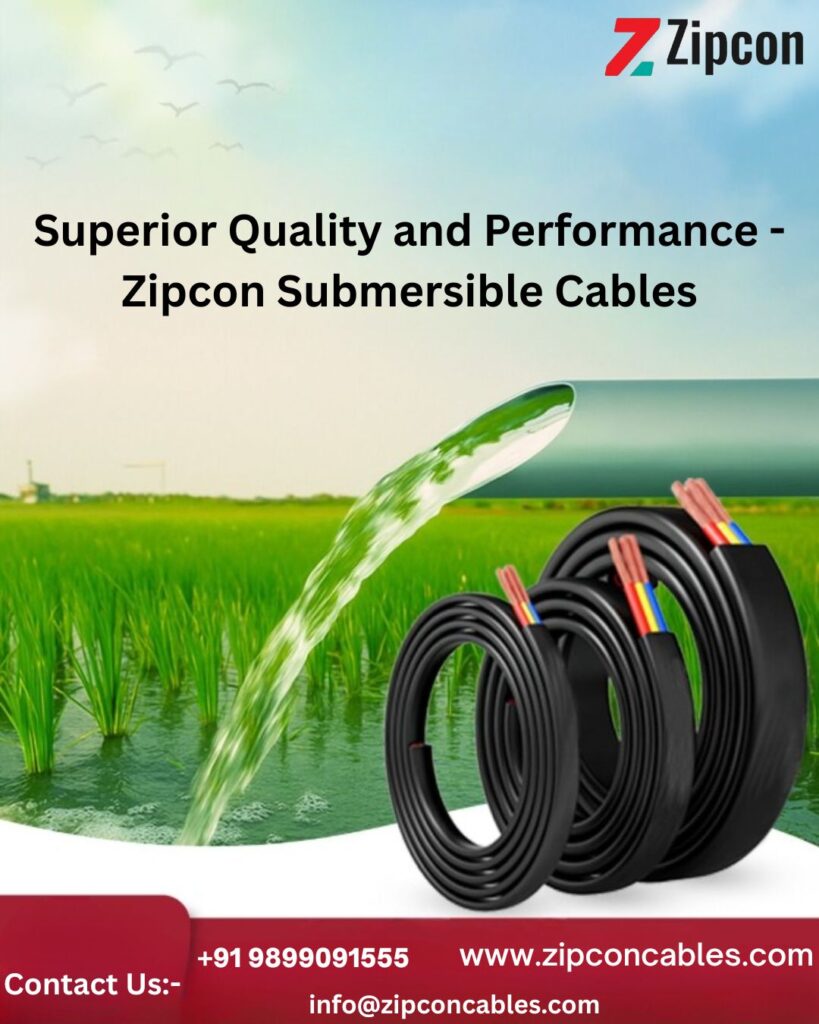
Best Submersible cables in Chhattisgarh are essential components for powering water pumps and various industrial applications, especially in regions like Chhattisgarh, where irrigation, deep-well pumps, and water supply systems play a vital role in day-to-day life. Choosing the right submersible cable can make a significant difference in efficiency, durability, and safety. In this guide, we’ll explore key factors such as conductivity, durability, weight, cost, safety, installation needs, and typical use cases, with a special focus on Zipcon Cables, known for their superior quality and reliability.
Conductivity: Copper vs. Aluminum
Conductivity is a critical factor when choosing submersible cables. Higher conductivity means less power loss during transmission, which is crucial in water-based environments where efficiency is paramount. The two most common materials used in submersible cables are copper and aluminum.
- Copper: Copper cables are known for their superior conductivity. They are ideal for installations requiring high efficiency and minimal power loss. Copper’s lower resistance means that it can carry more current over long distances without losing energy. This is particularly important for deep-well pumps or other applications that require long cable runs under water.
- Aluminum: Aluminum is a more cost-effective option, but its conductivity is lower than copper. While it is lighter and less expensive, it requires a larger cross-sectional area to match the performance of copper cables. For installations where the cable length isn’t as long, aluminum can be a good option. However, for applications where power loss and energy efficiency are crucial, copper cables like those from Zipcon are the best choice.
Durability: Resistance to Corrosion and Wear
Submersible cables are often exposed to harsh environments, including water, soil, and various chemicals. Durability is a key factor to consider, especially in Chhattisgarh, where the cables need to withstand both wet and dry conditions.
- Corrosion Resistance: One of the main concerns for submersible cables is corrosion, especially when they are exposed to water for long periods. Copper cables are naturally resistant to corrosion, but the insulation and outer covering of the cable also play a crucial role. Zipcon Cables incorporate advanced corrosion-resistant materials that protect the cable from damage, ensuring a longer lifespan even in the harshest conditions.
- Wear Resistance: Submersible cables must be able to handle abrasion, especially when they move or rub against surfaces while being pulled into or out of wells. Zipcon Cables use robust outer jackets that protect against abrasion, ensuring the cable remains functional even in high-wear situations.
Weight: Choosing the Right Option for Installation
The weight of submersible cables affects both installation and performance. Heavier cables can be more difficult to handle during installation, while lightweight cables may be easier to work with but could compromise durability in some situations.
- Lightweight Cables: These are easier to install, especially in deep installations, and they reduce the strain on both the installers and the cable itself. However, lighter cables may not always offer the same level of durability and protection as heavier alternatives.
- Heavier Cables: Although they can be more challenging to install, heavier cables tend to be more robust, with better protection against external elements like abrasion. Copper cables, such as those offered by Zipcon, strike a balance between weight and strength, ensuring ease of installation without sacrificing durability.
Cost: Quality vs. Price
Submersible cables are available in a wide price range, influenced by the material, insulation, and overall build quality. While it may be tempting to choose cheaper alternatives, the cost-benefit of investing in high-quality cables, such as Zipcon Cables, is evident in the long run.
- Price Range: Copper cables are generally more expensive than aluminum ones due to the higher cost of the material and better conductivity. However, Zipcon Cables provide excellent value for money, offering a high-performance product at competitive prices. The initial investment in a higher-quality cable can pay off through reduced power loss, better durability, and fewer maintenance requirements.
- Value for Money: While cheaper cables might seem like an attractive option initially, they can lead to higher long-term costs due to reduced efficiency and more frequent replacements. Zipcon Cables, made with high-quality copper and advanced insulation, offer a cost-effective solution for projects that require reliability and durability over time.
Safety: Protecting Against Electrical Hazards
Safety is one of the most important aspects to consider when choosing submersible cables. A poorly insulated or low-quality cable can pose significant electrical hazards, especially in wet or submerged environments.
- Insulation: The insulation material of submersible cables is critical for preventing electrical hazards. Zipcon Cables use high-quality, industry-standard insulation that ensures complete protection against water, chemicals, and physical wear. This ensures that the cables maintain their integrity and prevent short circuits or power failure.
- Electrical Protection: Submersible cables must also meet strict industry standards for electrical safety. High-quality cables like those from Zipcon are designed to withstand electrical surges and provide a safe, reliable power supply in water.
Installation Needs: Simplifying the Process
Installing submersible cables requires proper handling and understanding of the environmental factors. Depth, handling, and maintenance are key considerations during installation.
- Installation Depth: Depending on the depth of the water source (e.g., a deep-well pump), the installation requirements for submersible cables will vary. Zipcon Cables are designed to work efficiently at different depths, providing reliable performance without the need for frequent maintenance.
- Handling: Ensure that the cables are handled with care during installation to avoid kinks or damage to the insulation. Zipcon Cables are designed to be flexible and easy to manage during installation, ensuring a smooth and efficient process.
- Maintenance: Regular inspection and maintenance of the cables can extend their lifespan. Zipcon Cables require minimal maintenance, thanks to their durable construction and resistance to corrosion and wear.
Typical Use Cases in Chhattisgarh
Submersible cables are used in a wide range of applications in Chhattisgarh, from irrigation systems to deep-well pumps for agricultural or industrial use.
- Irrigation Systems: Submersible cables are essential for powering irrigation pumps. Copper cables are preferred in these scenarios due to their high conductivity, ensuring efficient power transmission over long distances.
- Deep-Well Pumps: For deep-well applications, copper submersible cables are the best choice because they ensure reliable performance and energy efficiency in demanding conditions.
- Industrial Applications: In industries such as mining, manufacturing, and water treatment, submersible cables are used to power pumps, cooling systems, and other machinery. Zipcon Cables are highly suitable for these applications, offering a durable, safe, and efficient solution.
Conclusion: Choosing the Right Submersible Cable
When choosing submersible cables in Chhattisgarh, it’s important to balance conductivity, durability, weight, cost, safety, and installation needs. Zipcon Cables offer an excellent solution, providing high-quality copper cables that deliver superior performance, safety, and longevity. Whether you’re installing a deep-well pump or powering an irrigation system, Zipcon Cables ensure efficient power transmission and a long-lasting, safe connection.