
Zipcon Cables
Best Submersible Pump Cable in Kochi: Why Zipcon Cables Leads the Industry
Submersible Pump Cable in Kochi

Choosing the best submersible pump cable in Kochi is important for maintaining safe, reliable, and consistent water-pumping performance. A submersible pump cable operates in demanding conditions where moisture, water pressure, heat, electrical load, and continuous operation can affect cable performance.

For borewell pumps, agricultural water systems, residential water supply, commercial buildings, and industrial pumping applications, the cable must provide dependable electrical insulation and mechanical protection. A poor-quality cable can contribute to insulation damage, voltage-related performance issues, premature failure, and unnecessary maintenance.

Zipcon Cables offers submersible pump cable solutions designed for applications where reliable electrical performance and durability are essential. With suitable insulation, flexible construction, and options for different pump requirements, Zipcon is a practical choice for customers looking for dependable submersible cable in Kochi.

For inquiries or assistance:https://zipconcables.com/contact-us/

Why Choosing the Right Submersible Pump Cable Matters

A submersible pump cable is different from an ordinary electrical wire. It is installed in or around water and is expected to operate reliably while connected to a motor located below the water level.

The cable continuously carries electrical current to the pump motor. At the same time, it may experience moisture exposure, temperature changes, physical movement, and installation-related stress. Therefore, cable construction and insulation quality directly affect the reliability of the complete pumping system.

Key requirements of a good submersible cable

A reliable submersible pump cable should provide:

  • Strong electrical insulation
  • Good moisture and water resistance
  • Adequate current-carrying capacity
  • Mechanical durability
  • Flexibility for installation
  • Resistance to operating temperature
  • Reliable performance during continuous operation
  • Compatibility with the pump’s voltage and power requirements

Selecting the cable according to the pump specification is therefore as important as selecting the pump itself.

Why Kochi Requires Reliable Submersible Pump Cables

Kochi and surrounding areas have extensive requirements for groundwater extraction, residential water systems, commercial buildings, agriculture, and industrial applications. Many of these installations depend on borewell and submersible pumps.

Water exposure is one of the major factors that makes cable selection important. A cable used in a submersible application must maintain its insulation performance despite prolonged exposure to moisture and demanding operating conditions.

For this reason, customers searching for a submersible pump cable in Kochi should evaluate more than just the price per metre. Construction, insulation, cable size, application suitability, installation conditions, and manufacturer quality should all be considered.

What Makes Zipcon Cables a Reliable Choice?

Zipcon Cables focuses on cable solutions for applications where electrical reliability and durability are important. Its submersible cable range can be considered for borewell pumps, water pumps, agricultural systems, and other suitable pumping installations.

1. Suitable for Water-Pumping Applications

Submersible pump cables are specifically required to operate in demanding environments. Zipcon submersible cables are designed with the requirements of water-pumping applications in mind.

The right cable helps maintain a stable electrical connection between the power source and pump motor, supporting consistent pump operation when correctly selected and installed.

2. Reliable Insulation

Insulation is one of the most important parts of a submersible cable. It separates the electrical conductor from the surrounding environment and helps protect the cable against moisture and electrical leakage.

Zipcon cables use quality insulation materials intended to provide dependable protection under appropriate operating conditions. For underwater and borewell applications, choosing a cable with suitable insulation is essential.

3. Flexible Construction

Installation conditions can vary between borewells, water tanks, agricultural pumping systems, and commercial installations. A flexible cable can make routing and connection easier when the installation requires bends or movement.

Flexibility also becomes useful during pump installation and maintenance, provided the cable is handled according to recommended installation practices.

4. Options for Different Pump Requirements

Pump systems do not all have identical electrical requirements. Cable selection depends on factors such as motor power, voltage, current, cable length, installation conditions, and allowable voltage drop.

Zipcon provides different cable configurations and sizes so the appropriate option can be selected according to the application rather than using a one-size-fits-all approach.

Submersible Pump Cable vs Ordinary Electrical Cable

One of the most common mistakes is treating an ordinary electrical wire as an alternative to a dedicated submersible pump cable.

FeatureSubmersible Pump CableOrdinary Electrical Cable
Water exposureDesigned for suitable submersible applicationsGenerally not intended for continuous underwater use
Insulation requirementHigher importance for moisture exposureDepends on application
Pump connectionSuitable for pump installationsMay not be suitable
Mechanical conditionsDesigned for demanding installation conditionsApplication-dependent
Borewell useSuitable when correctly specifiedGenerally unsuitable
Long-term underwater operationApplication-specific designNot normally recommended

The important point is that cable selection should follow the pump manufacturer’s requirements and the cable’s technical specifications.

3 Core Submersible Cable: Where Is It Used?

A 3 core submersible cable is commonly associated with three-phase or specific pump motor configurations where three conductors are required.

For example, a three-phase borewell pump may require a three-core cable connecting the motor to the electrical supply. However, the exact cable size and configuration should always be selected according to the motor’s rated current, voltage, installation length, and manufacturer recommendations.

Zipcon offers submersible cable configurations that can be evaluated for suitable pumping applications.

Flat vs Round Submersible Cable

Both flat and round submersible cables are used in pump installations, but their construction and application characteristics differ.

Flat Submersible Cable

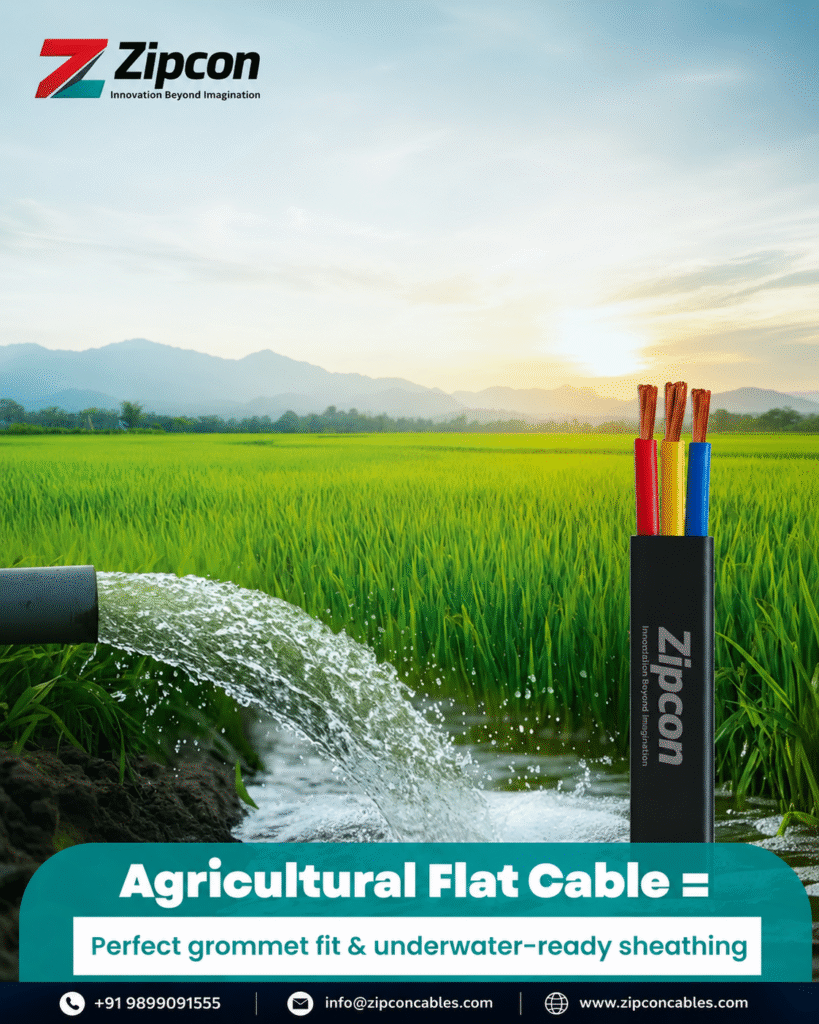
A flat submersible cable has conductors arranged in a flat profile. This construction can be useful where the cable needs to be routed alongside the pump and pipe assembly.

Flat cables are commonly considered for borewell and submersible pump installations because their shape can simplify certain installation arrangements.

Round Submersible Cable

Round submersible cables have conductors arranged within a circular cable construction. They can be selected for applications where round cable geometry is preferred based on installation requirements.

The better choice is not determined simply by whether the cable is flat or round. The pump specification, installation method, cable length, conductor size, and environmental conditions should determine the final selection.

How to Select the Best Submersible Pump Cable in Kochi

Choosing the right cable requires matching its electrical and physical characteristics with the pump system.

1. Check Pump Power

Start with the motor’s rated power. A higher-powered pump generally requires a cable capable of carrying the required current safely.

Never select a cable based only on the physical diameter or price.

2. Consider Cable Length

Cable length has a direct effect on voltage drop. A long cable run can cause greater voltage loss, which may affect pump performance.

For example, a cable suitable for a short borewell installation may not necessarily be suitable for a much longer installation using the same conductor size.

3. Select the Correct Conductor Size

Cable size should be selected according to the motor current, supply voltage, cable length, installation conditions, and applicable electrical requirements.

Common sizes may include 2.5 sq mm, 4 sq mm, 6 sq mm, and other configurations depending on the application.

4. Check Insulation Quality

Because submersible cables operate in moisture-rich environments, insulation quality is critical. Look for cable specifications that clearly state the intended application and insulation characteristics.

5. Consider Installation Conditions

The depth of the borewell, cable routing, pump weight, pipe arrangement, water conditions, and installation method can all influence cable selection.

A professional installer should assess these factors before finalizing the cable.

Example: Selecting Cable for a Borewell Pump

Consider a residential borewell where a submersible pump is installed at significant depth. The cable has to travel from the electrical control point down to the motor.

If the cable length is substantial, simply selecting a cable based on the motor’s nominal power may not be enough. Voltage drop must also be considered.

A properly sized submersible pump cable can help maintain the required electrical supply to the motor. This illustrates why cable size should be calculated rather than selected purely on price or availability.

Where Can Zipcon Submersible Cables Be Used?

Depending on the specific cable specification, Zipcon submersible cables can be considered for applications such as:

  • Borewell submersible pumps
  • Residential water pumps
  • Agricultural irrigation pumps
  • Commercial water supply systems
  • Industrial pumping systems
  • Underground water extraction
  • Water storage and transfer systems
  • Suitable three-phase pump installations

The exact cable construction and size should always be matched with the equipment requirements.

Benefits of Choosing a Quality Submersible Pump Cable

A properly selected cable can contribute to the overall reliability of a pumping system.

Better Electrical Reliability

Correct conductor sizing and suitable insulation help maintain a dependable electrical connection between the supply and pump motor.

Improved Installation Safety

A cable designed for the intended environment provides an appropriate level of insulation and protection when correctly installed.

Reduced Maintenance Risk

A suitable cable can reduce the likelihood of problems associated with incorrect cable selection, insulation deterioration, or inadequate current capacity.

Better Long-Term Value

The cheapest cable is not always the most economical choice. Replacing a failed underwater cable can require pump removal, labour, downtime, and additional installation costs.

A quality cable selected correctly can provide better value over the complete service life of the pumping system.

Expert Tips for Buying Submersible Pump Cable in Kochi

Tip 1: Never select cable size by guesswork.
Check the pump’s rated current, power, voltage, and installation length before purchasing.

Tip 2: Consider voltage drop.
Long cable runs require careful sizing because excessive voltage drop can affect motor performance.

Tip 3: Buy from a reliable cable manufacturer or supplier.
Cable quality and specification consistency matter significantly in underwater applications.

Tip 4: Check the complete technical specification.
Do not evaluate cable quality only by its appearance, weight, or price.

Tip 5: Follow proper installation practices.
Even a quality cable can perform poorly if it is improperly connected, damaged during installation, or used outside its rated conditions.

Tip 6: Match cable construction with the pump.
Flat and round configurations have different physical characteristics. Select according to the actual installation requirements.

Common Mistakes When Buying Submersible Pump Cable

Choosing the Cheapest Cable

Price is important, but it should not be the only deciding factor. A low-cost cable that is unsuitable for the application can result in higher replacement and maintenance costs.

Ignoring Cable Length

Cable length affects voltage drop. Ignoring this factor can result in an incorrectly sized cable.

Using Ordinary House Wiring

House wires are designed for their intended electrical installations and should not automatically be substituted for cables designed for submersible pump applications.

Selecting the Wrong Core Configuration

The number of cores should match the pump and electrical system requirements. Always verify the motor configuration before purchasing.

Buying Without Checking Specifications

A cable should be selected using technical information such as conductor size, voltage rating, insulation, temperature rating, application suitability, and relevant standards.

Why Choose Zipcon Cables for Submersible Pump Applications?

When customers search for the best submersible pump cable in Kochi, they need a product that balances electrical performance, insulation quality, durability, installation convenience, and application suitability.

Zipcon Cables provides submersible cable solutions intended for demanding water-pumping applications. Its product range can serve customers looking for reliable cables for borewell pumps, agricultural water systems, residential installations, and suitable commercial or industrial applications.

The key advantage is not simply choosing a recognized cable brand. It is selecting a cable with the right construction and size for the specific pump system. With proper sizing and installation, a quality Zipcon submersible cable can support dependable pump operation and long-term system performance.

Conclusion

The best submersible pump cable in Kochi is not necessarily the cheapest or thickest cable available. It is the cable that correctly matches the pump’s power, current, voltage, cable length, installation environment, and operating requirements.

For borewell pumps, agricultural irrigation, residential water systems, and suitable commercial applications, Zipcon Cables offers reliable submersible cable options designed for demanding electrical and moisture-exposed environments.

Before purchasing, check the pump specifications, calculate the required cable size, consider voltage drop, verify insulation and construction, and choose a cable designed for the intended application.

For reliable water-pumping performance, choose the right cable—not just any cable. Choose Zipcon Cables for your submersible pump requirements in Kochi.

Top 5 FAQs

1. Which is the best submersible pump cable in Kochi?

The best cable depends on the pump’s power, current, voltage, cable length, installation depth, and configuration. Zipcon Cables offers submersible cable options that can be selected according to these requirements.

2. What cable is used for a borewell submersible pump?

A dedicated submersible pump cable designed for underwater or borewell applications should be used. The cable size and number of cores should match the pump manufacturer’s specifications.

3. Is a 3 core cable suitable for a submersible pump?

A 3 core cable can be suitable for specific three-phase and other compatible pump configurations. The correct cable should be selected based on the motor and electrical supply requirements.

4. How do I select the correct submersible cable size?

Consider the pump’s rated current, power, voltage, cable length, allowable voltage drop, installation conditions, and applicable electrical requirements. For accurate sizing, consult a qualified electrical professional.

5. Why choose Zipcon Cables for submersible pumps?

Zipcon Cables offers submersible cable solutions designed for demanding water-pumping applications, with attention to insulation, construction, flexibility, and reliable electrical performance. The appropriate Zipcon cable should be selected according to the specific pump and installation requirements.
Best Submersible Cable Brand in Kochi for Reliable Water Pumping
Submersible Cable Brand in Kochi

Choosing the best submersible cable brand in Kochi is important for maintaining reliable water pumping performance in homes, farms, commercial buildings, and industrial applications. A submersible pump cable operates in demanding conditions where moisture, water exposure, mechanical stress, and continuous electrical loads can affect cable performance.

A suitable submersible pump cable in Kochi should provide dependable electrical conductivity, effective insulation, flexibility, and resistance to water exposure. The cable must also match the pump’s voltage, current, installation depth, and operating conditions.

Zipcon Cables offers submersible cable solutions designed for applications where dependable electrical connections and long-term performance are important. From borewell pumping to agricultural water supply, selecting the right cable can help improve pump reliability and reduce avoidable electrical problems.

For inquiries or assistancehttps://zipconcables.com/contact-us/

Why Choosing the Right Submersible Cable Matters

The cable connecting a submersible pump to the electrical supply is continuously exposed to demanding operating conditions. Unlike ordinary electrical wires, submersible cables are designed for installation in or around water and must maintain insulation performance under moisture exposure.

An unsuitable cable can contribute to insulation deterioration, voltage drop, overheating, electrical leakage, or premature failure. These issues can increase maintenance requirements and may interrupt water supply.

For example, a borewell pump installed at considerable depth requires a cable with appropriate electrical capacity and physical durability. Selecting the correct cable specification according to the pump rating and installation conditions is therefore essential.

What Makes a Good Submersible Cable Brand in Kochi?

The best submersible cable is not determined by brand name alone. Cable construction, conductor quality, insulation, size, voltage rating, application suitability, and manufacturing consistency all influence performance.

1. Reliable Electrical Conductivity

The conductor should provide efficient transmission of electrical power from the supply to the pump motor. Proper conductor selection helps minimize unnecessary electrical losses and supports stable pump operation.

The cable size should be selected according to the motor’s current requirement, cable length, installation conditions, and applicable electrical practices. Using an undersized cable can increase voltage drop and heating.

2. Strong Insulation

Submersible pump cables require insulation capable of handling prolonged moisture exposure. Effective insulation helps protect the conductor and maintain electrical separation during operation.

For water-pumping applications, insulation quality is particularly important because the cable may remain exposed to moisture for extended periods.

3. Water and Moisture Resistance

A waterproof submersible cable is designed for environments where water exposure is unavoidable. The cable construction should provide suitable protection against moisture penetration while maintaining its electrical properties.

This becomes particularly important for borewell and deep-water pumping installations where replacing a damaged cable can require significant time and labor.

4. Flexibility for Installation

Submersible cables often need to follow the pump installation path through borewells or other confined spaces. Excessively rigid cable construction can make installation more difficult.

A suitable submersible flat cable can provide practical handling and installation advantages, particularly where the available space is restricted.

5. Mechanical Durability

The cable can experience pulling, bending, movement, and installation-related stress. A durable outer construction helps the cable withstand these conditions when properly installed.

Cable selection should therefore consider not only electrical specifications but also the physical environment in which the cable will operate.

Why Submersible Cables Are Important for Kochi Applications

Kochi experiences a humid coastal climate with significant moisture exposure. Water pumping systems used in residential, agricultural, commercial, and industrial environments therefore require electrical components suitable for demanding conditions.

A submersible cable in Kochi should be selected according to the pump application rather than simply based on price. Proper cable construction and insulation are particularly important when the installation involves borewells, underground water sources, tanks, or other wet environments.

For long-term performance, users should consider the complete application: pump capacity, cable length, operating voltage, current, installation depth, temperature, and environmental exposure.

Types of Submersible Cables for Water Pumping

Different pumping systems may require different cable constructions and sizes.

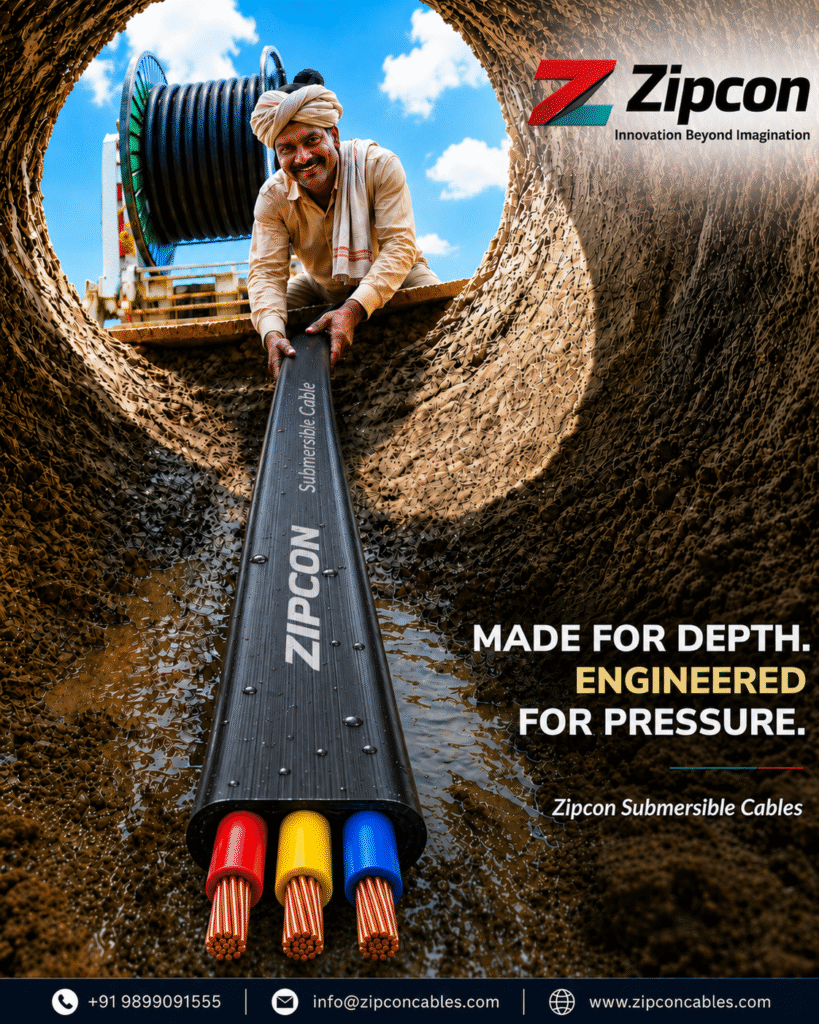
3 Core Flat Submersible Cable

A 3 core flat submersible cable is commonly associated with three-phase or three-conductor pump applications, depending on the specific motor and electrical system.

Its flat construction can be useful in installations where space and cable positioning are important. The appropriate cross-sectional area should always be selected according to the pump’s electrical requirements and installation conditions.

3 Core Round Submersible Cable

A 3 core round submersible cable provides a round cable construction suitable for compatible pump installations. Round cable designs can be selected where the installation and equipment configuration make this construction appropriate.

The correct cable size, voltage rating, insulation system, and conductor configuration should be verified before installation.

Multi Core Submersible Cable

Multi-core cables can be used where multiple electrical conductors are required within a single cable construction. They can simplify installation by keeping the required conductors together.

The exact core configuration should be selected according to the pump motor and control system.

How to Choose the Right Submersible Pump Cable in Kochi

Choosing a cable should begin with the pump specifications rather than the cable price.

Check the Pump Power Rating

First identify the motor’s power rating, operating voltage, phase configuration, and rated current. These specifications provide the starting point for cable selection.

For example, a higher-power pump generally requires a suitable conductor cross-section to safely handle its operating current.

Consider Cable Length

Cable length has a direct relationship with voltage drop. As the distance between the electrical supply and pump increases, proper cable sizing becomes increasingly important.

A cable that may perform adequately for a short installation may not be the right choice for a considerably longer borewell installation.

Consider Installation Depth

The depth of the pump installation affects the total cable length and physical installation requirements. Deep borewell applications should therefore be evaluated carefully before selecting the cable.

Select the Correct Cross-Section

Submersible cables are available in different conductor sizes, such as 2.5 sq mm, 4 sq mm, 6 sq mm and other sizes depending on the application.

The correct size should be determined using the pump manufacturer’s recommendations and applicable electrical design requirements rather than selecting a size based only on availability or price.

Check the Voltage Rating

The cable’s voltage rating should be compatible with the electrical system in which it will be installed. Using the correct voltage-rated cable helps maintain safe and reliable operation.

Zipcon Cables: A Reliable Choice for Submersible Pump Applications

Zipcon Cables focuses on cable solutions for applications where dependable electrical performance and durable insulation are important. Its submersible cable range can be considered for water pumping applications including borewell pumps and other compatible pump installations.

Zipcon submersible cables are positioned around important application requirements such as insulation performance, flexibility, durability, and resistance to demanding operating environments.

For buyers searching for the best submersible cable brand in Kochi, Zipcon Cables can be considered when comparing cable construction, specifications, application suitability, and overall value.

Submersible Cable vs Ordinary Electrical Wire

FeatureSubmersible CableOrdinary Electrical Wire
Water exposureDesigned for suitable wet applicationsGenerally not intended for submerged use
Pump installationSuitable for compatible submersible pump systemsNot normally recommended
Insulation requirementsDesigned for demanding environmentsApplication-dependent
FlexibilityDesigned for practical pump installationVaries by wire type
Borewell useSuitable when specifications matchGenerally unsuitable
ApplicationWater pumps and related systemsGeneral electrical installations

The key difference is application suitability. An ordinary house wire should not automatically be substituted for a cable specifically designed for submersible pump applications.

Example: Selecting Cable for a Borewell Pump

Consider a farm using a submersible pump to transport groundwater from a deep borewell to an overhead storage tank.

The cable selection should consider the pump’s horsepower, rated current, operating voltage, phase configuration, total cable length, installation depth, and environmental conditions.

If the cable run is long, voltage drop becomes an important consideration. Selecting the correct conductor size based on the electrical requirements can help maintain appropriate voltage at the motor and support reliable operation.

This example shows why buying a cable solely because it is inexpensive or readily available may not provide the best long-term result.

Benefits of Using a Quality Submersible Cable

Better Electrical Reliability

A properly specified cable provides a dependable electrical connection between the power source and pump motor.

Improved Installation Performance

Suitable cable construction can make installation easier, especially in borewell and confined-space applications.

Reduced Maintenance Problems

Appropriate insulation and cable construction can help reduce problems associated with moisture exposure, mechanical stress, and incorrect cable sizing.

Consistent Pump Operation

When the cable is correctly matched to the pump and installation, it supports stable power transmission and dependable pumping performance.

Long-Term Value

The initial cable price is only one part of the total cost. Installation labor, pump downtime, replacement expenses, and maintenance should also be considered when evaluating cable value.

Expert Tips for Buying Submersible Cable in Kochi

  1. Match the cable with the pump rating: Check voltage, current, horsepower, and phase requirements before purchasing.
  2. Calculate the complete cable length: Include the distance from the electrical supply to the pump rather than estimating only the borewell depth.
  3. Consider voltage drop: Long cable runs may require a larger conductor size.
  4. Choose application-specific insulation: Avoid using ordinary wires where the installation requires a dedicated submersible cable.
  5. Buy from a reliable cable manufacturer: Consistent manufacturing quality is important for critical electrical applications.
  6. Inspect the cable before installation: Check the outer surface for cuts, cracks, abrasions, or other visible damage.
  7. Follow professional installation practices: Cable installation should be carried out according to the pump manufacturer’s recommendations and applicable electrical requirements.

Common Mistakes to Avoid

Choosing Cable Only by Price

The lowest-priced cable may not provide the required construction or electrical capacity for a specific pumping system. Compare specifications and application suitability before comparing prices.

Using an Undersized Cable

An undersized conductor can contribute to excessive voltage drop and heating. Cable sizing should be based on the actual electrical load and installation conditions.

Ignoring Cable Length

A long-distance pump installation requires more careful consideration of voltage drop than a short installation.

Using Ordinary House Wire

House wiring products and submersible pump cables are designed for different applications. A standard house wire should not be used in a submerged environment unless it is specifically rated and approved for that application.

Overlooking Installation Conditions

Borewell depth, moisture exposure, temperature, mechanical stress, and installation method can all influence cable selection.

Buying Without Checking Specifications

Always verify the cable’s conductor size, core configuration, voltage rating, insulation type, and suitability for the intended pump system.

Why Zipcon Cables Can Be Considered for Kochi

For customers looking for a submersible cable brand in Kochi, the focus should be on dependable specifications, suitable construction, insulation performance, and application compatibility.

Zipcon Cables provides submersible cable solutions intended for water-pumping applications where reliable electrical connections are essential. Its products can be considered for residential, agricultural, commercial, and compatible industrial pumping requirements.

Rather than choosing a cable solely based on brand popularity or price, compare the technical specifications with your pump requirements. The right Zipcon cable, selected in the correct size and configuration, can support a dependable water-pumping installation.

Conclusion

Finding the best submersible cable brand in Kochi starts with understanding the actual requirements of your water-pumping system. Cable size, conductor configuration, voltage rating, cable length, insulation quality, installation depth, and environmental conditions should all be considered before purchase.

For borewell pumps, agricultural water systems, residential pumping, and other compatible applications, Zipcon Cables offers submersible cable solutions designed with durability and reliable electrical performance in mind.

Choose the cable according to the pump manufacturer’s specifications and installation requirements—not simply according to price. With the right cable, proper installation, and suitable pump selection, your water-pumping system can achieve dependable performance over the long term.

Top 5 FAQs

1. Which is the best submersible cable brand in Kochi?

Zipcon Cables can be considered among the options for submersible pump applications. The best choice ultimately depends on the pump rating, cable size, voltage, installation length, and environmental requirements.

2. Which cable is suitable for a borewell pump?

A suitable submersible pump cable designed for water-pumping applications should be selected according to the motor’s voltage, current, phase, cable length, and installation depth. A 3 core flat or round cable may be suitable for compatible pump systems.

3. Is a 3 core flat cable good for a submersible pump?

A 3 core flat submersible cable can be suitable for compatible pump systems. However, the correct conductor size and cable specifications should be matched with the motor’s electrical requirements.

4. How do I select the right submersible cable size?

Cable size should be selected based on the pump’s rated current, voltage, power, cable length, voltage-drop requirements, installation conditions, and applicable electrical practices. Common sizes include 2.5 sq mm, 4 sq mm, and 6 sq mm, but the appropriate size depends on the specific installation.

5. Why is insulation important in a submersible cable?

Submersible cables operate in environments where moisture and water exposure are significant concerns. Proper insulation helps maintain electrical separation and protects the conductor, supporting safe and reliable operation when the cable is correctly specified and installed.