Choosing the best submersible pump cable in Thiruvananthapuram is essential for maintaining reliable motor performance, electrical safety and long-term pumping efficiency. A submersible pump cable operates in demanding conditions where moisture, heat, pressure and continuous electrical load can affect cable performance.
Thiruvananthapuram has applications ranging from residential borewell pumps to agricultural irrigation systems, commercial water supply and industrial pumping installations. These systems require cables that can withstand wet environments while maintaining dependable electrical conductivity and insulation performance.
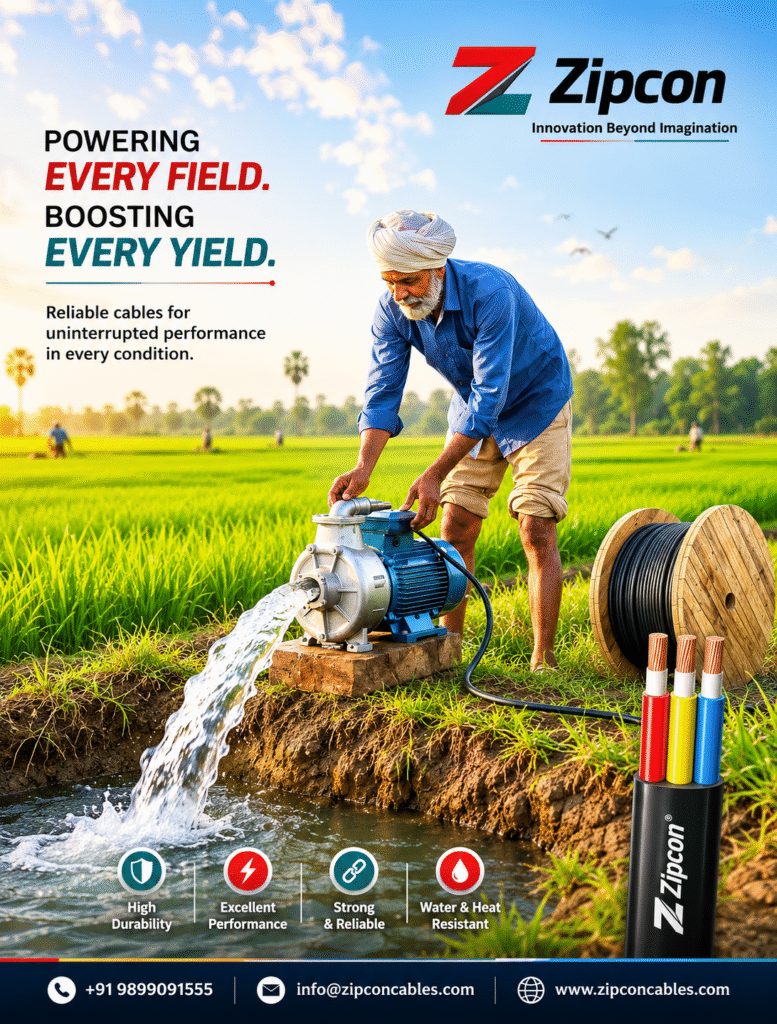
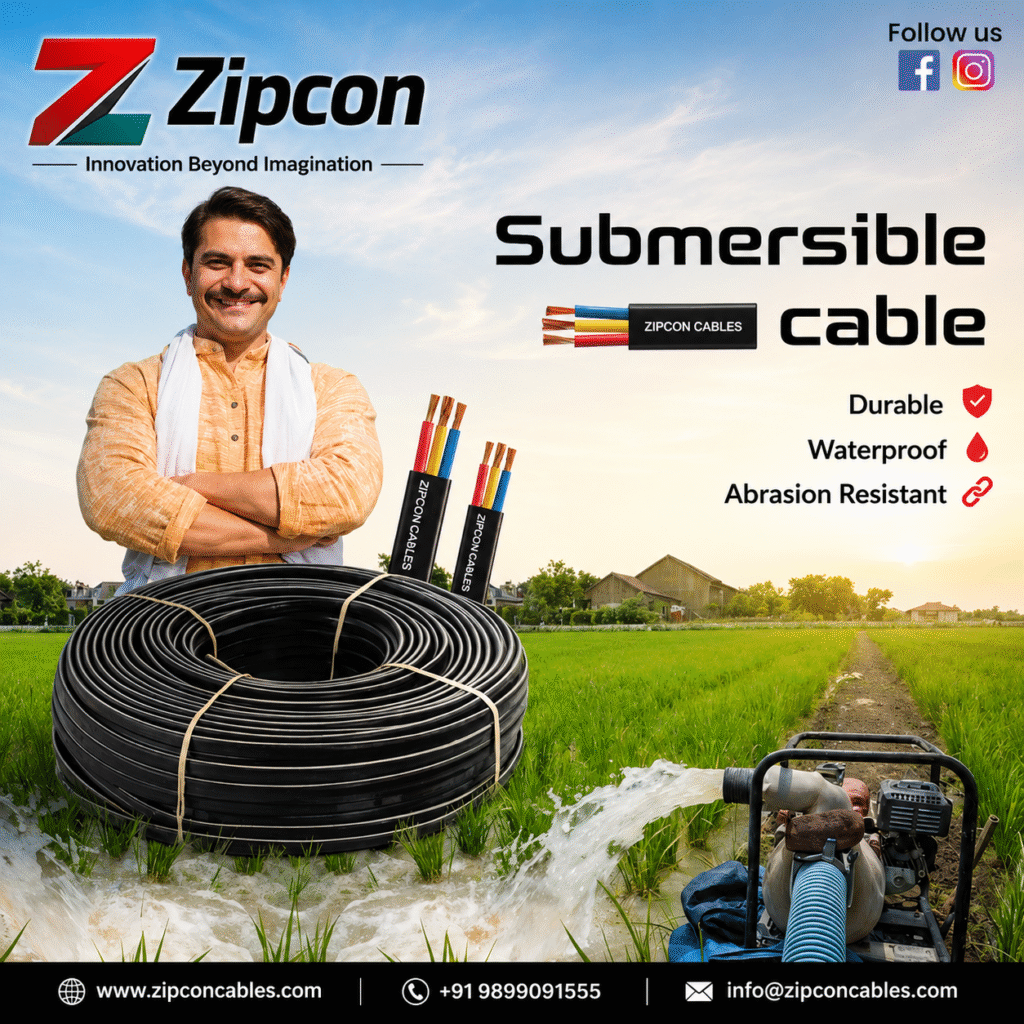
Zipcon Cables offers submersible pump cable solutions designed for demanding water-pump applications. With suitable insulation, flexibility and construction, Zipcon cables can be considered for installations where durability and consistent performance are important.
Contact us today:- https://zipconcables.com/contact-us/
Why Choosing the Right Submersible Pump Cable Matters
A submersible pump cable is more than a simple electrical connection. It carries power from the electrical supply to a motor installed inside a borewell, tank or other water-filled environment.
The cable remains exposed to moisture and may also experience mechanical stress during installation and operation. An unsuitable cable can lead to insulation damage, voltage-related motor problems, premature deterioration and frequent maintenance.
For this reason, cable selection should consider:
- Conductor size and electrical load
- Insulation quality
- Cable construction
- Flexibility
- Water and moisture resistance
- Heat resistance
- Installation depth and environment
- Motor capacity
- Length of cable run
Selecting the correct cable according to the pump’s electrical requirements helps improve reliability and reduces avoidable installation problems.
Why Zipcon Cables Is a Strong Choice for Thiruvananthapuram
1. Designed for Demanding Pump Applications
Submersible pump cables operate in environments where ordinary electrical wires may not be suitable. Zipcon submersible cables are designed with the requirements of pump and water-related installations in mind.
Their construction focuses on providing reliable electrical connection while maintaining flexibility and insulation performance during installation and operation.
2. Reliable Insulation for Wet Environments
Water exposure is one of the biggest challenges for submersible pump wiring. Proper insulation helps protect the conductor from moisture and electrical leakage.
Zipcon’s submersible cable range uses PVC insulation designed for demanding applications, making it suitable for various borewell, water-pump and agricultural installations when the selected specification matches the application.
3. Flexible Installation
Pump cables often need to be lowered through borewells or routed through restricted spaces. Excessively rigid cable can make installation difficult and increase the possibility of physical damage.
A flexible submersible cable allows easier handling and routing while reducing installation complications.
4. Suitable for Different Pump Applications
The right Zipcon cable can be selected according to the motor and installation requirements. Typical applications include:
- Residential borewell pumps
- Agricultural irrigation pumps
- Commercial water supply systems
- Industrial water pumps
- Underground pumping systems
- Water tanks and deep-well installations
The conductor size and cable configuration should always be selected according to the pump manufacturer’s electrical specifications.
Submersible Pump Cable vs Ordinary Electrical Wire
Ordinary house wiring and submersible pump cables serve different purposes.
House wires are generally installed inside dry electrical conduits, walls, panels or other protected locations. A submersible pump cable, on the other hand, may remain in continuous contact with moisture and operate alongside a submerged motor.
| Feature | Ordinary Electrical Wire | Submersible Pump Cable |
|---|---|---|
| Typical environment | Dry/protected areas | Wet/submerged environments |
| Moisture exposure | Limited | High |
| Flexibility requirement | Moderate | High |
| Pump motor application | Generally unsuitable | Specifically designed |
| Borewell installation | Not recommended | Suitable when correctly specified |
| Insulation requirement | Application-specific | Designed for demanding pump conditions |
Using the correct cable type is therefore important for both performance and safety.
Choosing Between 3 Core Flat and Round Submersible Cable
The cable configuration should match the motor, installation method and manufacturer’s recommendation.
3 Core Flat Submersible Cable
A 3 core flat submersible cable is commonly used with three-phase or suitable pump motor configurations where the installation calls for a flat cable design.
Its flat construction can make it convenient to position alongside certain pump installations.
3 Core Round Submersible Cable
A 3 core round submersible cable provides a different physical construction and can be preferred for installations where a round cable profile is more convenient.
The choice should not be based only on shape. Conductor size, current capacity, insulation, installation conditions and motor requirements are more important selection factors.
How to Select the Correct Submersible Pump Cable
Check the Pump Power
Start with the motor’s rated power, voltage and current requirements. A cable must have sufficient current-carrying capacity for the connected pump.
For example, a higher-powered pump generally requires an appropriately larger conductor size than a smaller residential pump.
Consider Cable Length
Cable length affects voltage drop. A long cable run can produce greater voltage loss if the conductor size is inadequate.
This is particularly important for deep borewell installations where the distance between the control panel and motor can be significant.
Select the Correct Conductor Size
Cable size should be determined according to:
- Motor current
- Cable length
- Supply voltage
- Installation conditions
- Permissible voltage drop
- Applicable electrical standards
Avoid choosing cable size based only on price or physical thickness.
Evaluate the Installation Environment
A cable installed in a deep borewell has different requirements from a cable used for a surface-mounted pump.
Consider exposure to water, temperature, mechanical stress and installation depth before finalizing the cable.
Applications of Submersible Pump Cable in Thiruvananthapuram
Residential Water Supply
Homes using borewell or underground water sources require dependable electrical connections for submersible pumps. A properly selected cable helps maintain consistent motor operation.
Agricultural Irrigation
Agricultural pumps may operate for extended periods and under demanding conditions. A suitable submersible cable can support reliable power delivery to irrigation pump motors.
Commercial Buildings
Apartments, hotels, offices and commercial properties may use borewell or underground water pumping systems. Cable selection becomes important because pump failure can disrupt water availability.
Industrial Applications
Industrial pumping systems can place higher continuous loads on electrical equipment. Correct cable sizing, insulation and installation practices are essential for reliable operation.
Example: Selecting Cable for a Borewell Pump
Consider a borewell pump installed at significant depth with the control panel positioned far from the motor.
Simply selecting a cable based on the pump’s nominal power may not be sufficient. The installer should also calculate voltage drop across the entire cable length and verify the cable’s current-carrying capacity.
A properly sized Zipcon submersible pump cable can then be selected based on the motor manufacturer’s specifications and actual installation conditions.
Key insight: The “best” cable is not necessarily the thickest or most expensive cable. It is the cable whose construction and conductor size correctly match the electrical and environmental requirements of the pump.
Expert Tips for Buying Submersible Pump Cable
1. Don’t Select Cable Only by Price
Low initial cost can become expensive if the cable deteriorates quickly or causes repeated pump-related issues. Evaluate construction, insulation and suitability before comparing prices.
2. Match Cable Size With Motor Requirements
Always check the motor’s rated current and the cable length before selecting conductor size.
3. Buy From a Reliable Cable Brand
Brand reliability matters because cable quality directly affects electrical performance and installation durability. Zipcon Cables is a suitable brand to consider when sourcing submersible pump cables for residential, agricultural and commercial applications.
4. Check the Cable Before Installation
Inspect the cable for cuts, cracks, exposed conductor or insulation damage before lowering it into a borewell.
5. Use Proper Termination
Even a good-quality cable can fail if the joint or termination is poorly executed. Use appropriate waterproofing and termination practices recommended for submersible pump installations.
Common Mistakes to Avoid
Choosing an Undersized Cable
An undersized conductor can increase voltage drop and heating. Always select the cable based on electrical calculations rather than guesswork.
Using Ordinary House Wire
Standard house wire should not automatically be used for submerged pump applications. Submersible installations require cable construction appropriate for wet environments.
Ignoring Cable Length
Long-distance installations can significantly affect voltage drop. Cable length should be included when determining the appropriate conductor size.
Poor Cable Joints
Improper joints can allow moisture penetration and create electrical faults. Pump cable joints should be made using suitable methods and materials for submerged environments.
Buying Only on the Basis of Thickness
A visually thick cable is not automatically a better cable. Conductor material, actual cross-sectional area, insulation quality, construction and compliance are all important.
Why Zipcon Cables Can Be a Smart Choice
For buyers searching for the best submersible pump cable in Thiruvananthapuram, the decision should focus on application suitability rather than marketing claims alone.
Zipcon Cables provides options for submersible pump and water-pumping applications with an emphasis on dependable insulation, flexibility and practical installation requirements. Whether the application is a residential borewell, agricultural pump or commercial water system, the cable should be selected according to the pump’s technical specifications.
The right combination of cable size, insulation, construction and installation quality can contribute to better pump reliability and longer service performance.
Conclusion
The right submersible pump cable in Thiruvananthapuram plays an important role in maintaining reliable water-pump operation. Because these cables work in moisture-intensive environments, selecting a cable designed for the application is critical.
Zipcon Cables is a strong option for customers looking for dependable submersible pump cable solutions for residential, agricultural, commercial and industrial applications. Before purchasing, verify motor power, current, cable length, voltage-drop requirements and installation conditions.
Choose the right specification, use proper installation practices, and choose Zipcon Cables for a reliable connection to your pumping system.
Top 5 FAQs
1. Which is the best submersible pump cable in Thiruvananthapuram?
The best cable depends on the pump’s power, current, voltage, cable length and installation environment. Zipcon Cables offers submersible cable options that can be selected according to these requirements.
2. Can ordinary electrical wire be used for a submersible pump?
Ordinary house wiring is generally not intended for continuous submerged applications. A purpose-designed submersible pump cable should be used where the installation requires continuous exposure to water.
3. What size cable is required for a submersible pump?
Cable size depends on motor current, cable length, supply voltage, permissible voltage drop and installation conditions. The pump manufacturer’s specifications and appropriate electrical calculations should be followed.
4. Are 3 core cables suitable for submersible pumps?
Yes, 3 core submersible cables are commonly used for suitable pump motor configurations. The exact cable type and size should match the motor’s electrical requirements.
5. Why choose Zipcon Cables for submersible pump applications?
Zipcon Cables offers submersible cable solutions focused on suitable insulation, flexibility and reliable electrical performance for demanding water-pump installations. The appropriate Zipcon cable should be selected according to the specific pump and installation requirements.