
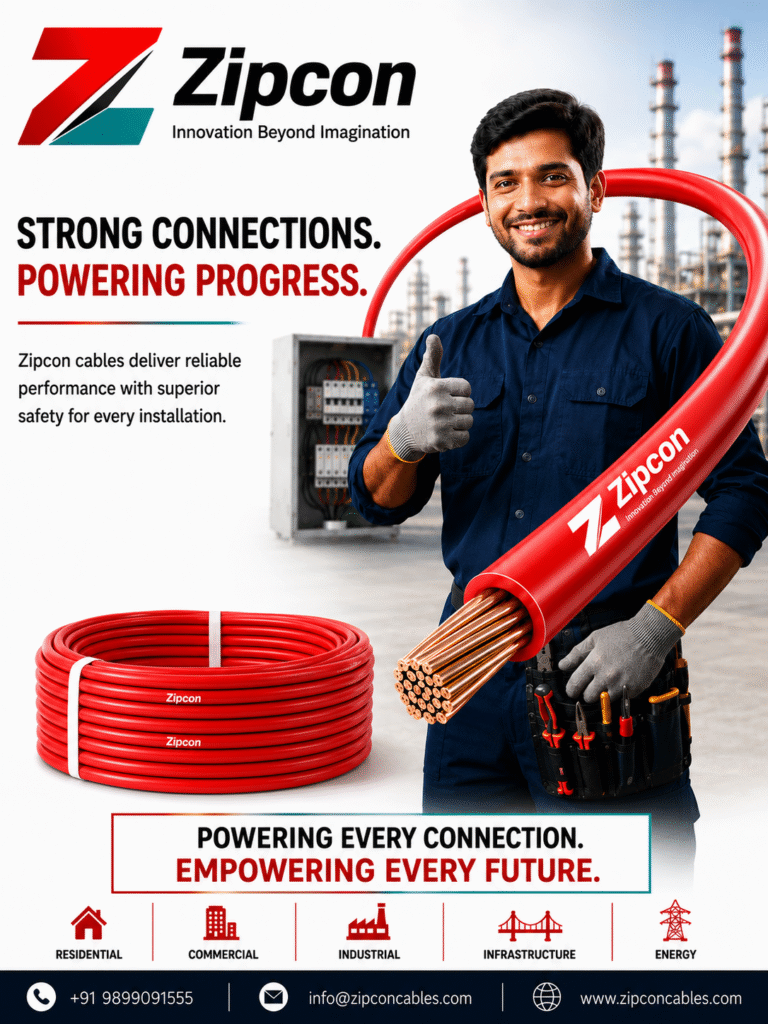
Choosing the top multistrand house wires in Bhopal is essential for creating a safe and reliable residential electrical system. House wiring must handle daily electrical loads while maintaining good insulation, flexibility and mechanical strength. The right wire can also make installation easier, particularly where cables need to pass through conduits, bends and electrical boxes.
Zipcon Cables offers house-wiring solutions designed for residential electrical applications. Multistrand construction is particularly useful when flexibility and easier handling are important during installation.
Whether you are constructing a new home, renovating an existing property or replacing old wiring, cable selection should be based on conductor size, expected electrical load, insulation quality and installation conditions. Choosing a suitable wire from the beginning can support dependable electrical performance for years.
For inquiries or assistance:– https://zipconcables.com/contact-us/
What Are Multistrand House Wires?
Multistrand house wires contain multiple thin strands of conductive material bundled together to form a single conductor. Instead of using one solid conductor, the multiple strands provide greater flexibility while maintaining the required electrical conductivity.
This construction allows the wire to bend more easily during installation. It can be useful when routing cables through conduits, switchboards, distribution boxes and other areas where repeated bending or tight routing may be required.
The overall performance of a multistrand wire depends on factors such as conductor material, cross-sectional area, strand construction, insulation and manufacturing quality. Therefore, choosing a properly specified cable is more important than selecting a wire based only on flexibility.
Why Choose Multistrand House Wires for Home Wiring?
Residential wiring involves numerous bends, connections and routing paths. Multistrand construction can provide practical installation benefits while supporting dependable electrical connections when the correct cable size is used.
1. Better Flexibility
The individual strands allow the conductor to bend more easily than many solid-conductor alternatives. This can make cable routing simpler in conduits and electrical boxes.
Flexibility is especially useful when several wires need to be organized within a limited installation space.
2. Easier Installation
Electricians often need to route house wires around bends and through conduits. Flexible multistrand wires can make pulling and positioning the cable more convenient during installation.
Proper installation still requires appropriate conduit size, bending radius and termination practices.
3. Reliable Electrical Performance
When manufactured with the correct conductor material and cross-sectional area, multistrand wires can provide reliable current carrying performance for residential circuits.
The conductor size should always be selected according to the circuit’s expected load and applicable electrical requirements.
4. Suitable for Different Residential Circuits
Multistrand house wires can be used in applications such as lighting, fans, sockets and other residential circuits, provided the selected cable is correctly rated for the specific application.
Key Features to Look for in Multistrand House Wires
Not every flexible wire offers the same performance. Before purchasing multistrand house wires in Bhopal, consider the following characteristics.
High-Quality Conductors
The conductor is responsible for carrying electrical current. Consistent conductor quality and appropriate cross-sectional area are important for achieving reliable electrical performance.
Copper is widely used in residential wiring because of its good electrical conductivity and practical installation characteristics.
Quality Insulation
The insulation surrounds the conductor and helps prevent unwanted electrical contact. Good insulation should be suitable for the expected voltage, temperature and installation environment.
For house wiring, always check the manufacturer’s stated specifications rather than judging insulation quality by appearance alone.
Correct Cross-Sectional Area
Wire size is commonly expressed in square millimetres, such as 1.5 sq mm, 2.5 sq mm, 4 sq mm and 6 sq mm.
The correct size depends on factors including electrical load, circuit length, installation method and applicable standards. Using an undersized conductor can result in excessive heating and reduced safety.
Flexible Multistrand Construction
A well-constructed multistrand conductor should provide practical flexibility without compromising conductor integrity.
Consistent strands and proper insulation extrusion contribute to easier handling and dependable installation.
Multistrand House Wires vs Solid Wires
| Feature | Multistrand House Wire | Solid Wire |
|---|---|---|
| Construction | Multiple thin conductor strands | Single solid conductor |
| Flexibility | Generally more flexible | Comparatively rigid |
| Routing | Easier around bends | Less convenient for tight bends |
| Installation | Convenient for many residential layouts | Suitable for applications where rigidity is acceptable |
| Repeated bending | Better suited to flexible routing | Less suitable for repeated movement |
| Selection | Based on load and installation requirements | Based on load and installation requirements |
The choice between multistrand and solid construction should depend on the electrical application, installation method and product specification. For many residential installations, flexibility makes multistrand wiring a practical option.
How to Select the Right Multistrand House Wire
Step 1: Calculate the Electrical Load
Start by identifying the appliances and equipment connected to each circuit. Lighting, fans, sockets and high-power appliances may require different circuit designs.
Avoid selecting wire size based solely on the physical size of the appliance or a general rule. Electrical load calculations provide a more reliable basis for cable selection.
Step 2: Choose the Appropriate Wire Size
Common residential wire sizes include 1.5 sq mm, 2.5 sq mm, 4 sq mm and 6 sq mm, but these should be treated as examples rather than universal recommendations.
A qualified electrician should select the appropriate conductor size based on current demand, cable length, installation conditions and protective-device ratings.
Step 3: Check Insulation and Specifications
Look for clearly stated technical specifications, conductor size, voltage rating and applicable certification or standard information.
A reliable manufacturer should provide sufficient product information to help electricians and customers make an informed selection.
Step 4: Consider the Installation Environment
Wiring installed inside conduits, walls, ceilings or electrical panels can face different physical and thermal conditions.
The selected wire should be suitable for the intended installation method and environmental conditions.
Examples of Multistrand House Wire Applications
Example 1: Lighting Circuit
A residential lighting circuit generally has a lower load than a high-power appliance circuit. A suitably sized multistrand wire can provide flexible routing through conduits and electrical boxes.
The actual conductor size should be determined by the electrical design and applicable requirements.
Example 2: Socket Circuit
General-purpose sockets may be used for different appliances throughout the day. Because the connected load can vary, the circuit should be designed with appropriate conductor sizing and protection.
Multistrand construction can make routing the wiring around bends and junction points easier.
Example 3: Renovation Project
Suppose an older home is being rewired and existing conduits have several bends. Flexible multistrand house wires can make the installation process more manageable.
However, the existing conduit should first be inspected to ensure it is suitable for the new wiring and required number of conductors.
Why Choose Zipcon Cables for Multistrand House Wires?
Zipcon Cables can be considered when selecting multistrand house wires for residential electrical projects in Bhopal. A suitable house wire should combine appropriate conductor construction, dependable insulation and specifications that match the intended application.
For homeowners, builders and electricians, choosing a consistent and reliable cable manufacturer can simplify product selection and support better installation outcomes.
Zipcon Cables focuses on electrical cable solutions designed for different wiring requirements. When selecting a Zipcon house wire, always match the wire size and product specification with the actual electrical circuit.
Expert Tips for Buying Multistrand House Wires in Bhopal
1. Never Choose Wire Size by Price
The lowest-priced wire is not automatically the most economical option. Consider conductor quality, insulation, technical specifications and expected service life.
2. Verify the Wire Size
Check the printed cable marking and product specifications before installation. The stated conductor size should match the electrical design.
3. Use Separate Circuits for Heavy Loads
High-power appliances should generally be provided with appropriately designed circuits rather than connecting multiple heavy loads to a single general-purpose circuit.
4. Use Proper Protective Devices
MCBs, RCCBs and other protective devices should be selected and installed according to the electrical system design.
5. Avoid Excessive Bending
Even flexible multistrand wires have installation limits. Avoid sharp bends, crushing or excessive pulling force during installation.
6. Use Quality Accessories
Switches, sockets, connectors, distribution boards and other accessories should be compatible with the wiring system. Poor-quality accessories can create weak connections and unnecessary heating.
Common Mistakes to Avoid
Using an Undersized Wire
An undersized conductor may be unable to safely carry the expected current. Excessive heating can occur when the circuit is continuously overloaded.
Overloading One Circuit
Connecting several high-power appliances to one circuit can exceed its intended capacity. Proper load distribution helps maintain safer electrical operation.
Ignoring Loose Connections
Loose terminals can increase contact resistance and generate localized heat. Connections should be properly terminated and checked by a qualified electrician.
Buying Without Checking Specifications
Do not select a cable based only on colour, packaging or flexibility. Check conductor size, insulation type, voltage rating and manufacturer information.
Mixing Different Wire Specifications Without Planning
Using different cable types or sizes without considering the circuit design can create inconsistencies in the electrical installation. Each circuit should follow a properly planned wiring specification.
Why Multistrand Wires Are a Practical Choice for Modern Homes
Modern homes often contain multiple electrical circuits, concealed conduits and compact distribution systems. Flexible wiring can make cable routing easier in these installations.
Multistrand house wires are therefore a practical option where flexibility and manageable installation are important. However, flexibility should never replace proper electrical design. Correct sizing, insulation quality and circuit protection remain essential.
Conclusion
Choosing the best multistrand house wires in Bhopal requires attention to conductor quality, wire size, insulation, flexibility and application requirements. A reliable house wire should be selected according to the electrical load and installation environment rather than price alone.
For residential wiring projects, Zipcon Cables is a suitable brand to consider when looking for dependable multistrand house-wiring solutions. Select the correct conductor size, use appropriate protective devices and rely on qualified electrical installation to build a safer and more reliable home electrical system.
Top 5 FAQs
1. What are multistrand house wires?
Multistrand house wires contain several thin conductive strands bundled together. This construction provides greater flexibility and can make the wire easier to route through conduits and electrical boxes.
2. Are multistrand wires good for home wiring?
Yes, appropriately rated multistrand wires can be used for residential wiring applications. The conductor size, insulation and product specifications must match the intended circuit and electrical load.
3. Which wire size is commonly used for house wiring?
Common residential sizes include 1.5 sq mm, 2.5 sq mm, 4 sq mm and 6 sq mm. The appropriate size depends on the circuit load, installation conditions, cable length and applicable electrical requirements.
4. Why choose Zipcon Cables for multistrand house wires?
Zipcon Cables provides cable solutions for residential electrical applications. Its products can be considered when flexibility, conductor quality and dependable insulation are important for house wiring.
5. What should I check before buying multistrand house wires in Bhopal?
Check the conductor size, insulation, voltage rating, technical specifications, applicable standards or certifications and manufacturer information. Also ensure that the selected wire is appropriate for the intended electrical load and installation method.