
Zipcon Cables
Solar Cables in Gwalior: Choose Reliable Solar Wiring for Safer Power Performance
Solar Cables in Gwalior

Choosing the right solar cables in Gwalior is essential for maintaining safe and reliable power transmission in a solar energy system. Solar panels may generate the electricity, but cables carry that energy between panels, junctions, inverters, batteries, controllers, and other system components.

Gwalior’s hot summers, intense sunlight, dust, moisture, and changing weather conditions can place additional demands on outdoor electrical wiring. A solar cable must therefore be selected for the actual installation environment rather than treated like ordinary household wiring.

A properly specified solar cable can help manage electrical losses, withstand outdoor exposure, and provide dependable connections over the life of the solar installation. For homeowners, businesses, contractors, and industrial users, Zipcon Cables offers solar cable solutions worth considering for applications where reliable solar wiring is required.

For inquiries or assistance:https://zipconcables.com/contact-us/

What Are Solar Cables?

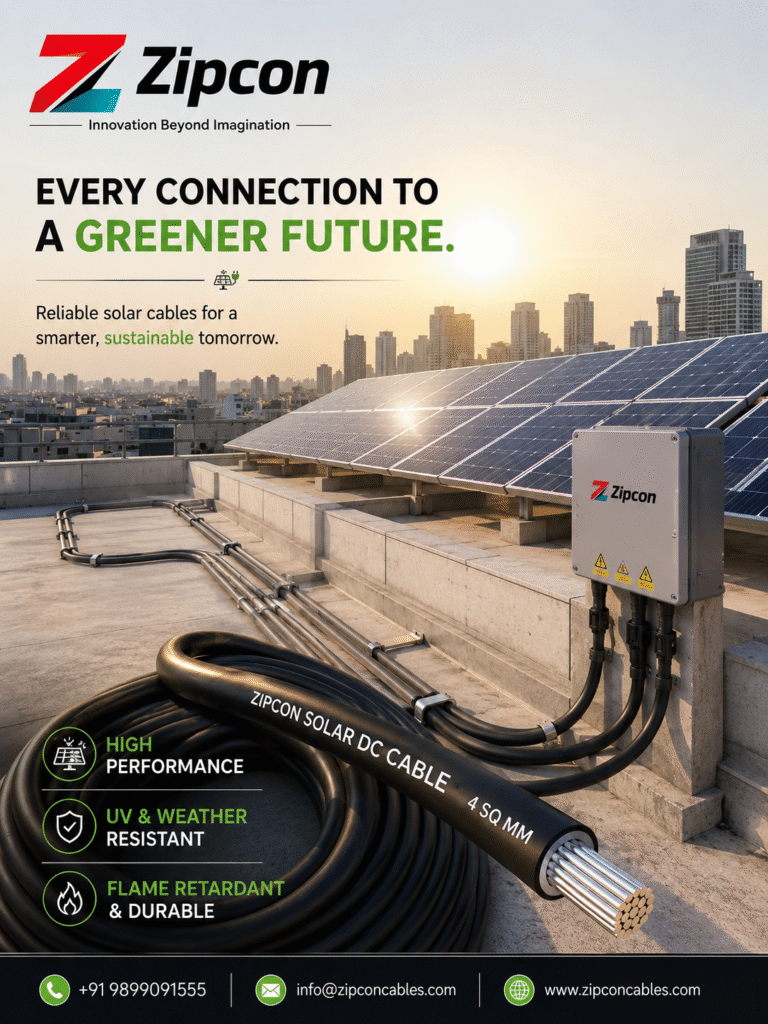
Solar cables are specialized electrical cables designed for use in photovoltaic (PV) systems. They commonly carry DC power generated by solar panels to equipment such as inverters, charge controllers, batteries, or other parts of a solar installation.

Unlike standard indoor electrical wires, solar cables are designed for the conditions commonly found in solar installations. Depending on their construction and certification, they can be designed to withstand sunlight, temperature variations, moisture, and mechanical stresses associated with outdoor installation.

The cable’s conductor, insulation, voltage rating, current capacity, flexibility, and environmental characteristics all influence whether it is suitable for a particular solar project.

Why Reliable Solar Cables Matter in Gwalior

Solar cables can remain outdoors for years, making cable selection an important part of the overall system design. Even if the panels and inverter are high quality, unsuitable wiring can introduce avoidable electrical and maintenance problems.

Protection Against Outdoor Conditions

Rooftop and ground-mounted solar systems expose cables to sunlight, heat, dust, rain, and humidity. A cable intended for photovoltaic use should be selected with these environmental conditions in mind.

UV-resistant and appropriately insulated solar cables can help protect the electrical connection from premature insulation degradation caused by prolonged outdoor exposure.

Efficient Power Transmission

Electrical resistance in a cable can result in power losses and voltage drop. The effect becomes more important as current and cable length increase.

Choosing the correct cable size for the system helps control these losses. Cable sizing should consider operating current, system voltage, route length, installation method, ambient temperature, and permissible voltage drop.

Long-Term Reliability

Solar installations are typically designed to operate for many years. Cables should therefore be selected as long-term components rather than inexpensive accessories.

A suitable cable, combined with correct routing, compatible connectors, and professional installation, can contribute to dependable system performance and reduce avoidable maintenance.

Key Features to Consider When Choosing Solar Cables

Selecting solar cables in Gwalior requires attention to technical specifications rather than just appearance or price.

1. Conductor Quality

The conductor carries the electrical current generated by the solar array. Copper is widely used in solar cable applications because of its electrical conductivity and flexibility.

Always check the manufacturer’s specifications for conductor material, cross-sectional area, voltage rating, and intended use. The physical thickness of a cable alone is not a reliable way to determine its electrical capacity.

2. UV Resistance

Solar cables installed on rooftops can receive direct sunlight throughout the day. Prolonged UV exposure can damage insulation that is not designed for outdoor use.

A properly specified PV cable should have insulation suitable for its expected solar and outdoor exposure.

3. Temperature Performance

Cable temperature can rise significantly on exposed rooftops, particularly during hot weather. Solar cable insulation should be suitable for the specified operating temperature range.

Gwalior’s hot climate makes temperature characteristics an important factor when selecting cables for outdoor solar applications.

4. Flexibility

Solar cables often need to be routed around panel frames, mounting structures, junction boxes, and inverters.

Adequate flexibility makes installation easier and helps prevent unnecessary stress on the cable. However, flexibility should always be considered alongside conductor construction, insulation quality, and technical specifications.

5. Moisture and Environmental Resistance

Outdoor cables may encounter rain, humidity, dust, and other environmental conditions. The cable and its connectors should be appropriate for the installation environment.

Correct installation is equally important. Even a high-quality cable can experience problems if connectors are poorly installed or cable routes allow mechanical or water-related damage.

Solar Cables vs Ordinary Electrical Wires

A common mistake is assuming that any insulated electrical wire can be used in a solar installation. Solar systems have specific DC electrical and environmental requirements.

Ordinary house wires are generally intended for building electrical installations, often inside conduits or protected areas. Solar cables are designed for photovoltaic applications and may incorporate characteristics needed for outdoor solar exposure.

For example, an exposed rooftop cable should not be selected simply because it has a similar conductor size to a standard house wire. The insulation, voltage rating, environmental suitability, and application must also be considered.

Choosing the Right Solar Cable Size

Correct cable sizing is critical for both electrical performance and safety. A cable should be capable of carrying the expected current under the actual installation conditions.

Important factors include:

  • Solar system voltage
  • Maximum operating current
  • Cable length
  • Permissible voltage drop
  • Ambient temperature
  • Installation method
  • Cable grouping
  • Conductor material
  • System configuration
  • Applicable standards and manufacturer specifications

Why Cable Length Matters

Suppose solar panels are installed on one side of a large roof while the inverter is located in another section of the building. The longer DC cable route creates additional resistance.

If the cable is not appropriately sized, voltage drop and energy losses can increase. A proper system design should therefore account for the complete cable route instead of considering only the panel rating.

Residential Solar Cables in Gwalior

Residential rooftop solar systems typically involve panels connected to an inverter through DC solar cables. The cable route may run across a roof, through conduits, or along mounting structures.

For homes, cable selection should consider the system capacity, string configuration, distance between panels and inverter, outdoor exposure, and installation method.

A professional installer should select the cable size and specifications based on the complete system rather than applying a generic recommendation to every residential installation.

Commercial and Industrial Solar Cables

Commercial and industrial solar projects often have larger system capacities, longer cable routes, multiple strings, and more demanding installation conditions.

In these projects, voltage drop, current capacity, cable grouping, temperature, routing, mechanical protection, and electrical safety become even more important.

For industrial applications, Zipcon Cables can be considered as a solar cable option where the specific product specifications match the requirements of the photovoltaic system.

Solar Cables for Solar Water Pump Systems

Solar water pumping systems use electricity generated by PV panels to operate pumps. Depending on the system design, solar cables may carry DC power between the solar array and the pumping equipment.

Agricultural and outdoor pump installations can expose cables to heat, dust, moisture, and mechanical stress. Cable selection should therefore account for both electrical requirements and environmental conditions.

The correct cable size is also important because excessive voltage drop can affect the electrical performance of the pumping system.

How Zipcon Cables Can Support Solar Wiring

When choosing solar cables in Gwalior, it is important to look beyond the product price and evaluate the complete technical specification.

Zipcon Cables can be considered for residential, commercial, and industrial solar applications where reliable photovoltaic wiring is required. The appropriate Zipcon solar cable should be selected based on conductor size, voltage rating, temperature characteristics, insulation properties, environmental exposure, and the specific system design.

For installers and project owners, choosing a cable from a quality-focused manufacturer can make the procurement process more reliable while helping ensure that the selected product matches the intended application.

Zipcon Cables — reliable wiring for dependable solar connections.

Examples of Solar Cable Selection

Example 1: Residential Rooftop Solar

A homeowner installs a rooftop solar system with the inverter located several metres from the PV array.

The installer should calculate the current and expected voltage drop, assess the outdoor cable route, and select a suitably rated solar cable. The cable should also be routed and secured properly to prevent mechanical damage.

Example 2: Industrial Solar Installation

A factory installs a large rooftop solar plant with multiple PV strings and long cable routes.

Here, cable selection requires more detailed planning. Current capacity, voltage drop, cable grouping, rooftop temperature, routing, protection, and system configuration all need to be considered.

Example 3: Solar Pump

A solar-powered water pump is installed for agricultural use. The cable is exposed to outdoor conditions and runs between the PV array and pumping equipment.

A properly specified solar cable can provide a more suitable solution than ordinary electrical wiring, provided its electrical and environmental ratings match the installation.

Expert Tips for Choosing Solar Cables in Gwalior

  • Select cables specifically intended for photovoltaic applications.
  • Calculate cable size according to current and permissible voltage drop.
  • Consider the complete cable route, not just the panel capacity.
  • Check the cable’s voltage and temperature ratings.
  • Choose insulation suitable for prolonged outdoor exposure.
  • Consider UV, moisture, heat, and mechanical conditions.
  • Use compatible solar connectors and termination components.
  • Ensure connectors are properly crimped and secured.
  • Avoid unnecessary joints in exposed cable routes.
  • Keep cables away from sharp edges and potential abrasion points.
  • Secure cables properly to prevent movement and mechanical damage.
  • Follow applicable electrical and PV installation requirements.
  • Purchase from reliable manufacturers or authorized suppliers.
  • Have the installation inspected and commissioned by qualified professionals.

Common Mistakes to Avoid

Using Normal House Wire for Solar Installation

Standard house wire may not have the environmental characteristics required for exposed photovoltaic installations. Always select a cable based on the application’s electrical and environmental requirements.

Choosing Cable Size by Appearance

A thicker-looking cable is not automatically the correct cable. Conductor construction, cross-sectional area, insulation, and ratings should be verified from the manufacturer’s specifications.

Ignoring Voltage Drop

Long cable runs can increase voltage drop and electrical losses. This is especially important in larger residential, commercial, and industrial installations.

Poor Cable Routing

Cables left loose or rubbing against metal structures can experience mechanical damage over time. Proper routing and securing are essential.

Using Incompatible Connectors

Solar connectors should be compatible with the cable and other connection components. Improperly installed or mismatched connectors can create resistance, heating, and reliability problems.

Buying Only on Price

Cable is a relatively small part of the total solar project cost, but its role is critical. Selecting the cheapest available option without checking technical specifications can create unnecessary long-term risks.

Maintaining Solar Cables for Long-Term Performance

Although correctly installed solar cables require limited maintenance, periodic inspection is still recommended.

During solar-system maintenance, check for visible insulation damage, loose connectors, exposed conductors, cable abrasion, unusual heating, or signs of environmental deterioration.

If a cable or connector appears damaged, it should be assessed by a qualified professional before the system continues normal operation. Do not attempt to repair energized DC solar wiring without proper expertise and safety procedures.

Why Quality Solar Wiring Is a Smart Investment

Solar panels and inverters are major investments, but the cables connecting them are equally important to system reliability. A poorly selected cable can undermine the performance of otherwise good equipment.

Selecting the right solar cable from the beginning can help reduce avoidable losses, installation issues, and premature replacement. This becomes even more important for rooftop and industrial systems where cable replacement can involve significant labour and system downtime.

For solar projects in Gwalior, the objective should be simple: select cables that match the system requirements and are designed for the environment in which they will operate.

Conclusion

Reliable solar cables in Gwalior are an important part of safe and efficient photovoltaic installations. The right cable should be selected according to current, voltage, cable length, voltage drop, temperature, outdoor exposure, installation method, and applicable technical requirements.

Avoid treating solar cables as ordinary electrical wires or choosing them only by price. A properly specified cable, compatible connector, correct routing, suitable protection, and professional installation work together to support dependable solar performance.

Zipcon Cables is a practical option to consider for residential, commercial, and industrial solar wiring applications. Select the right Zipcon solar cable according to your system’s technical requirements and invest in reliable wiring that supports long-term solar performance.

Top 5 FAQs

1. Which solar cables are suitable for solar systems in Gwalior?

The appropriate solar cable depends on the system’s voltage, current, cable length, installation environment, temperature, and applicable requirements. Zipcon Cables can be considered for residential, commercial, and industrial solar wiring applications.

2. Why are solar cables better suited for rooftop solar systems?

Solar cables are specifically designed for photovoltaic applications and can provide characteristics suitable for outdoor exposure, including sunlight, temperature variations, and environmental conditions, depending on their specifications.

3. How do I select the correct solar cable size?

Consider the maximum current, system voltage, cable length, voltage drop, ambient temperature, installation method, and cable grouping. Final sizing should be calculated by a qualified solar or electrical professional.

4. Can solar cables be used for industrial solar projects?

Yes, appropriately rated solar cables can be used for industrial photovoltaic projects. Larger installations require careful consideration of current capacity, voltage drop, cable routing, temperature, grouping, and system configuration.

5. Why choose Zipcon Cables for solar wiring?

Zipcon Cables can be considered for solar wiring projects where reliable cable construction and application-specific performance are required. Always verify the technical specifications of the particular Zipcon product against your solar system’s requirements before installation.
Best Solar Cables in Gwalior for Reliable Residential and Industrial Applications
Solar Cables in Gwalior

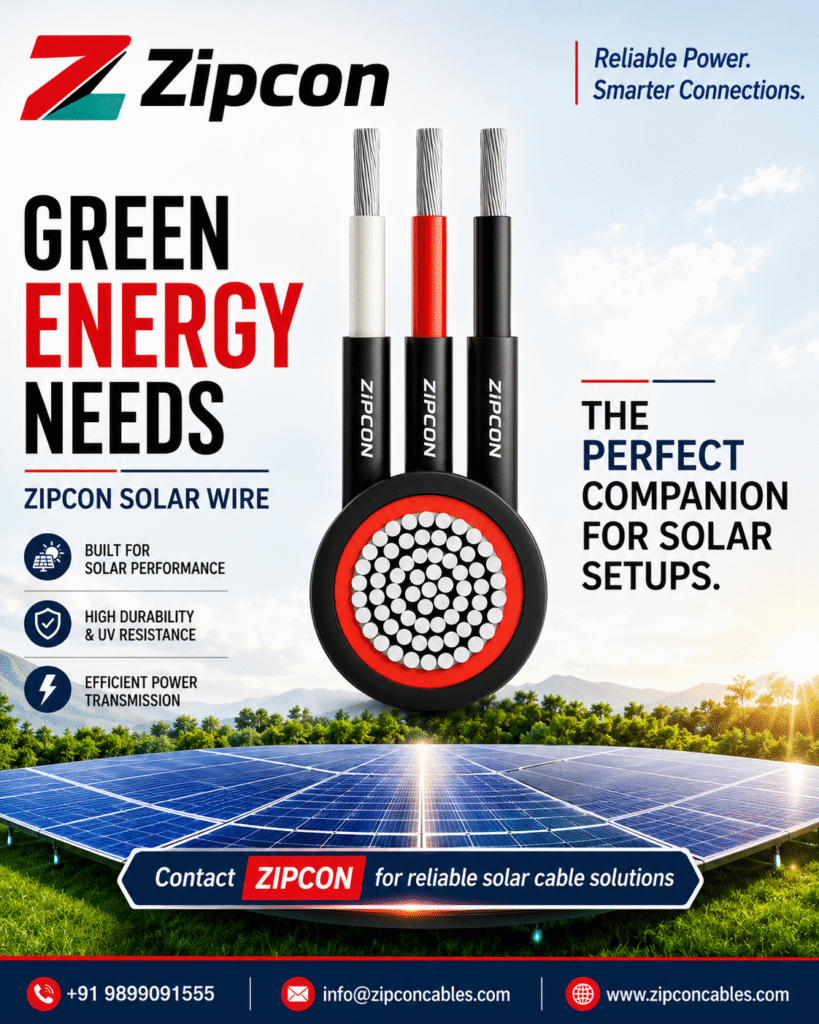
Finding the best solar cables in Gwalior is essential for building a safe, efficient, and long-lasting solar power system. Solar cables connect critical components such as solar panels, inverters, charge controllers, batteries, and other equipment. The right cable helps maintain reliable power transmission while handling outdoor conditions.

Solar installations are exposed to sunlight, heat, rain, dust, moisture, and temperature fluctuations. Unlike ordinary electrical wires, solar cables are designed for demanding photovoltaic applications and require insulation and construction suitable for these conditions.

Whether you are installing a rooftop solar system at a home, setting up a commercial plant, or developing an industrial solar project, cable selection should be based on conductor quality, insulation, voltage rating, current capacity, flexibility, environmental resistance, and installation requirements.

For reliable solar wiring solutions, Zipcon Cables is a suitable option to consider when selecting solar cables for residential, commercial, and industrial applications in Gwalior.

For inquiries or assistance:https://zipconcables.com/contact-us/

What Are Solar Cables?

Solar cables are specially designed electrical cables used in photovoltaic systems to transmit the electricity generated by solar panels to other components of the system.

They are built to operate in demanding environments where cables may remain exposed to sunlight, heat, moisture, dust, and mechanical stress. Their insulation and outer construction are therefore designed differently from standard indoor house wiring.

A solar cable installation commonly includes connections between photovoltaic modules, combiner boxes, DC isolators, charge controllers, batteries, and inverters, depending on the system architecture.

Why Solar Cable Quality Matters in Gwalior

Gwalior experiences hot summers, strong sunlight, dust, and seasonal rainfall. Solar cables installed outdoors must therefore withstand environmental exposure over long periods without compromising electrical performance.

Resistance to Sunlight and Weather

Solar cables are frequently routed outdoors or along rooftops where they can receive direct sunlight for years. Suitable insulation should be able to withstand UV exposure and outdoor conditions according to its specifications.

A cable not designed for these conditions may experience insulation degradation over time, increasing maintenance requirements and potentially creating electrical safety concerns.

Efficient Power Transmission

A solar system generates DC electricity, and cable losses can reduce the amount of energy that ultimately reaches the inverter or other equipment.

Selecting an appropriately sized cable helps control voltage drop and resistive losses. Cable sizing should therefore consider current, cable length, installation conditions, and system specifications rather than relying only on the panel capacity.

Better Mechanical Durability

Solar cables may be exposed to movement, installation stress, rooftop conditions, and temperature changes. A suitably constructed cable provides the flexibility and mechanical strength needed for practical solar installations.

This is particularly important during installation because tight bends, improper routing, or physical damage can affect long-term cable performance.

Key Features to Look for in the Best Solar Cables

Choosing a solar cable should involve more than checking the cable’s price. Evaluate the following characteristics before making a purchase.

High-Quality Conductor

The conductor determines how electrical current travels through the cable. Copper conductors are widely used in solar applications because of their good conductivity and flexibility.

The conductor construction should be checked against the cable’s technical specifications. A reliable manufacturer should provide clear information about conductor material, size, voltage rating, and intended application.

UV-Resistant Insulation

Because solar cables are commonly installed outdoors, UV resistance is an important consideration. Continuous exposure to sunlight can affect unsuitable insulation over time.

A properly specified solar cable should be designed for the environmental conditions expected at the installation site.

Temperature Resistance

Solar cables may experience significant temperature variations during their service life. High-quality insulation should be suitable for the cable’s specified operating temperature range.

This becomes particularly relevant for rooftop systems where cable surfaces can become significantly hotter than the surrounding air.

Flexibility

Solar installations often involve tight routing around panels, mounting structures, junction boxes, and inverters. Flexible cables make installation easier and help reduce unnecessary stress during routing.

Flexibility should, however, be considered together with conductor construction and mechanical requirements rather than treated as the only quality indicator.

Moisture and Weather Resistance

Outdoor solar installations can encounter rain, humidity, dust, and moisture. The cable should have appropriate construction for the installation environment and should be installed using suitable connectors and protection.

Cable quality alone cannot compensate for poor installation practices or incorrectly selected connectors.

Solar Cables for Residential Applications

Residential rooftop solar systems require reliable wiring between panels and other system components. Even a relatively small rooftop installation can involve considerable outdoor cable exposure.

For homes in Gwalior, solar cable selection should account for rooftop temperature, sunlight exposure, cable length, system voltage, current, and installation route.

For example, a rooftop system with panels positioned far from the inverter may require careful cable sizing to manage voltage drop. Simply choosing the same cable size used in another installation may not produce the same result.

Solar Cables for Industrial Applications

Industrial solar installations generally involve larger capacities, longer cable runs, greater current levels, and more complex electrical infrastructure.

In these projects, cable selection becomes a system-design decision. Engineers and installers must consider voltage drop, current-carrying capacity, environmental exposure, grouping, installation method, protection, and applicable standards.

Using appropriately specified Zipcon Solar Cables can be considered for projects requiring dependable DC solar wiring, subject to the exact product specifications and project requirements.

Solar Cable vs Ordinary Electrical Wire

Solar cables and ordinary electrical wires serve different purposes.

Ordinary house wires are primarily designed for building electrical installations, often inside conduits, walls, or protected areas. Solar cables are specifically intended for photovoltaic applications and are designed to handle outdoor exposure and the operating conditions associated with solar systems.

For example, using a standard indoor electrical wire as a substitute for a properly specified PV cable on an exposed rooftop may not provide the required environmental protection or long-term performance.

How to Choose the Right Solar Cable Size

Cable size should be selected based on the electrical characteristics of the solar installation.

Important considerations include:

  • Maximum operating current
  • System voltage
  • Cable length
  • Expected voltage drop
  • Installation method
  • Ambient temperature
  • Cable grouping
  • Conductor material
  • Applicable electrical standards
  • Manufacturer specifications

Example

Suppose a solar array produces a certain DC current and the cable run from the array to the inverter is relatively long. Using an unnecessarily small conductor can increase resistance and voltage drop.

An appropriately sized cable can help maintain better electrical performance. The final size should be determined through proper electrical calculations rather than a generic size recommendation.

Where Solar Cables Are Commonly Used

Rooftop Solar Systems

Solar cables connect rooftop PV modules with the inverter and other system components. They need to withstand outdoor exposure and rooftop temperatures.

Ground-Mounted Solar Plants

Ground-mounted installations can involve long cable routes and exposure to dust, moisture, sunlight, and mechanical conditions. Cable routing and protection become especially important.

Solar Water Pumping Systems

Solar-powered water pumps require reliable DC connections between the solar array and pumping equipment. Proper cable sizing is essential because voltage drop can affect system performance.

Commercial Solar Installations

Factories, offices, warehouses, schools, and commercial buildings may use larger rooftop solar systems. These applications require cable selection based on the electrical design and installation conditions.

Examples of Solar Cable Selection

Example 1: Residential Rooftop

A homeowner installs solar panels on a residential rooftop in Gwalior. The panels are positioned several metres away from the inverter.

The installer should calculate the expected current and voltage drop, assess the rooftop environment, and select an appropriately rated solar cable instead of choosing solely by cable thickness.

Example 2: Factory Rooftop

A factory installs a larger solar system across multiple roof sections. Cable runs are longer and may involve multiple strings.

In this situation, the installer should consider string configuration, current levels, cable routing, temperature, grouping, voltage drop, and protection while selecting the appropriate solar cable.

Example 3: Solar Pump

A solar pump system is installed for agricultural use. The cable may be exposed to heat, dust, moisture, and outdoor mechanical conditions.

A properly specified solar cable with suitable environmental resistance can provide a more appropriate solution than ordinary electrical wiring.

Why Choose Zipcon Cables for Solar Wiring?

When looking for the best solar cables in Gwalior, the focus should be on long-term suitability rather than simply finding the lowest purchase price.

Zipcon Cables can be considered for residential, commercial, and industrial solar applications where dependable solar wiring is required. The brand’s solar cable solutions are suitable for projects that require attention to insulation quality, environmental exposure, flexibility, and reliable power transmission.

Before purchasing, compare the specific Zipcon product’s conductor construction, cable size, voltage rating, temperature characteristics, applicable standards, and intended application with your solar system requirements.

For solar installations where cable performance matters, Zipcon Cables offers a quality-focused option for dependable solar connectivity.

Expert Tips for Buying Solar Cables in Gwalior

  1. Calculate the required cable size based on current, voltage drop, length, and installation conditions.
  2. Choose cables designed for photovoltaic applications rather than substituting ordinary house wires.
  3. Check UV and weather resistance when cables are exposed outdoors.
  4. Verify voltage and temperature ratings before installation.
  5. Use compatible solar connectors and ensure proper crimping.
  6. Avoid unnecessary cable joints in exposed areas.
  7. Keep cables properly routed and secured to prevent mechanical damage.
  8. Avoid sharp bends that can stress the insulation or conductor.
  9. Separate DC and AC wiring appropriately according to the system design.
  10. Purchase from reliable manufacturers or authorized suppliers to reduce the risk of non-compliant products.
  11. Follow applicable electrical and photovoltaic installation standards.
  12. Have the system installed and tested by qualified professionals.

Common Mistakes When Choosing Solar Cables

Using Ordinary House Wires

A common mistake is using standard electrical wire for an outdoor solar installation simply because it appears cheaper. Solar systems require cables suitable for their specific operating and environmental conditions.

Selecting Cable Size by Guesswork

Cable size should not be selected based solely on the solar panel wattage. Current, system voltage, distance, voltage drop, installation conditions, and temperature also influence the selection.

Ignoring Cable Length

Longer cable runs increase resistance and can increase voltage drop. This is why cable length should be included in the design calculation.

Poor Connector Installation

Even a high-quality solar cable can perform poorly if connectors are improperly crimped, mismatched, loose, or exposed to unnecessary moisture.

Leaving Cables Unsecured

Loose cables can rub against mounting structures or become exposed to mechanical damage. Proper routing and cable management are essential for long-term reliability.

Solar Cable Maintenance Tips

Solar cables generally require limited maintenance when correctly selected and installed, but periodic inspection is still valuable.

Look for visible insulation damage, loose connections, exposed conductors, abnormal heating, damaged connectors, or cables rubbing against metal structures. Any unusual condition should be inspected by a qualified solar technician.

During routine solar-system maintenance, cable condition should be checked along with panels, connectors, inverter connections, mounting structures, and protective devices.

Why Quality Solar Cables Are a Long-Term Investment

Solar panels can operate for many years, so the electrical infrastructure connecting those panels should also be selected with long-term performance in mind.

Replacing damaged rooftop cables can require labour, system shutdowns, and additional access work. Selecting appropriately specified solar cables at the installation stage can help reduce avoidable maintenance and improve overall system reliability.

For Gwalior’s outdoor solar installations, choosing a cable suitable for sunlight, temperature, moisture, electrical load, and mechanical conditions is a practical investment in the entire solar system.

Conclusion

Choosing the best solar cables in Gwalior is essential for reliable residential, commercial, and industrial solar installations. The right cable should match the system’s current, voltage, cable length, installation environment, temperature, and applicable technical requirements.

Avoid selecting solar cables based only on price or appearance. Consider conductor quality, insulation, UV resistance, flexibility, environmental protection, cable size, and compatibility with the complete photovoltaic system.

Zipcon Cables is a suitable brand to consider when you need dependable solar cable solutions for Gwalior’s residential and industrial applications. Select the correct product specification, use compatible connectors, and ensure professional installation for reliable long-term solar performance.

Choose the right solar cable today to protect the performance of your solar investment for years to come.

Top 5 FAQs

1. Which are the best solar cables in Gwalior?

The best solar cable depends on the system voltage, current, cable length, installation conditions, temperature, and applicable standards. Zipcon Cables can be considered for residential, commercial, and industrial solar wiring applications.

2. Are solar cables different from normal electrical wires?

Yes. Solar cables are specifically designed for photovoltaic applications and are generally built to handle conditions such as UV exposure, outdoor temperatures, moisture, and the electrical characteristics of solar DC systems.

3. How do I choose the right solar cable size?

Consider the maximum current, system voltage, cable length, permissible voltage drop, installation method, ambient temperature, cable grouping, and applicable technical requirements. A qualified installer should perform the final cable-sizing calculation.

4. Can solar cables be used for solar water pumps?

Solar cables can be used in solar water-pumping systems when the selected cable meets the system’s electrical and environmental requirements. Proper sizing and outdoor suitability are particularly important for these installations.

5. Why choose Zipcon Cables for solar applications?

Zipcon Cables can be considered for solar projects requiring quality-focused cable construction and dependable electrical connectivity. Always match the specific Zipcon solar cable specification with the requirements of your residential or industrial solar system.