
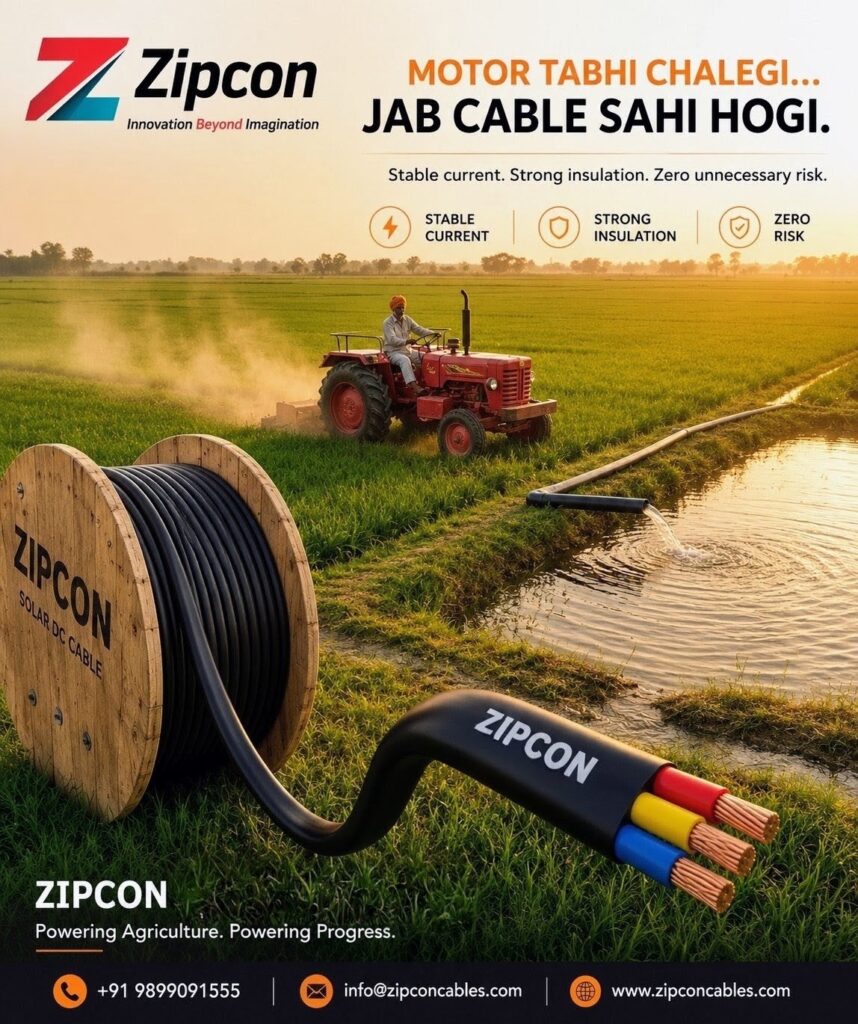
Choosing the top submersible cable in Thiruvananthapuram is important for maintaining safe electrical connections and reliable borewell pump performance. A submersible cable operates in demanding conditions, where water exposure, installation depth, electrical load, bending, and continuous motor operation can affect cable performance.
A suitable cable must be selected according to the pump motor, voltage, current, cable length, installation environment, and application. Using an unsuitable cable can contribute to voltage drop, overheating, insulation failure, or unexpected pump downtime.
Zipcon Cables offers submersible cable solutions for borewell pumps, water pumping systems, agricultural irrigation, residential water supply, and other suitable applications. The right Zipcon cable, selected according to the system requirements, can support dependable electrical performance and long-term pumping operation.
For inquiries or assistance:– https://zipconcables.com/contact-us/
What Is a Submersible Cable?
A submersible cable is an electrical cable designed for applications where the cable may operate in water or a moisture-rich environment. It connects the power supply to a submerged pump motor and must provide dependable insulation around the electrical conductors.
Unlike ordinary electrical wiring, submersible pump cable construction is intended for the specific mechanical and environmental requirements associated with water-pumping installations. Its flexibility also helps during pump installation and maintenance.
Why Quality Submersible Cable Matters for Borewell Pumps
A borewell pump may operate several metres below ground level, making the cable an essential part of the complete pumping system. Any weakness in the cable can affect electrical continuity and potentially interrupt water supply.
Reliable Electrical Power
The cable must carry the required current from the electrical supply to the motor. Proper conductor selection helps reduce unnecessary resistance and voltage drop, particularly when the pump is installed at considerable depth.
Durable Insulation
The insulation protects the conductor from water, moisture, mechanical contact, and electrical leakage. For submerged applications, insulation quality should be considered alongside conductor size and cable construction.
Mechanical Flexibility
Pump cables are routed alongside the pump and may need to bend during installation. Flexible construction can make installation easier and reduce unnecessary mechanical stress on the cable.
How to Choose the Top Submersible Cable in Thiruvananthapuram
Selecting a submersible cable should be based on technical requirements rather than simply choosing the lowest-priced product.
1. Check Pump Motor Power
Start with the pump’s rated power and current. A small residential borewell pump and a high-capacity agricultural pump can have significantly different cable requirements.
The cable should be capable of carrying the motor’s operating current under the expected installation conditions.
2. Consider Cable Length
Cable length has a direct impact on voltage drop. Deep borewell installations generally require longer cable runs, making appropriate conductor sizing more important.
For example, a cable suitable for a short water-tank installation may not be the right choice for a deep agricultural borewell.
3. Evaluate Voltage and Phase
Pump systems may operate on different voltage and phase configurations. Cable selection should therefore be matched to the motor’s electrical specifications.
Single-phase and three-phase systems should not be treated as interchangeable when determining cable requirements.
4. Consider Installation Conditions
The cable may be exposed to water, moisture, pressure, bending, and mechanical stress. Select a cable specifically intended for the installation environment.
5. Check Cable Construction
Look at the conductor, insulation, flexibility, overall construction, and manufacturer’s specifications. Avoid selecting a cable based only on generic claims such as “heavy duty” or “premium quality.”
Submersible Cable for Borewell Pump Applications
Borewell pumps are installed underground to extract water from deeper sources. The electrical cable extends from the pump motor through the borewell to the surface, making reliable insulation and suitable mechanical construction essential.
For these installations, the cable should be selected according to pump capacity, borewell depth, cable length, electrical load, and installation requirements. Proper sizing can help maintain stable motor performance and reduce avoidable electrical losses.
Zipcon Cables can be considered for suitable borewell pump applications where reliable submersible cable construction is required.
Submersible Cable for Water Pump Applications
Submersible pumps are used for residential water supply, agricultural irrigation, commercial water systems, and groundwater extraction. Each application can have different operating conditions and electrical requirements.
A residential pump may have a comparatively smaller motor and shorter cable run, while an agricultural installation may involve a higher-capacity motor and longer operating cycles. Cable selection should therefore be application-specific.
Submersible Cable vs Ordinary Electrical Cable
| Feature | Submersible Cable | Ordinary Electrical Cable |
|---|---|---|
| Submerged application | Designed for suitable submerged applications | Generally not intended for continuous submersion |
| Moisture exposure | Important design consideration | Depends on cable type |
| Pump motor connection | Suitable cable types available | Not generally suitable |
| Flexibility | Important for pump installation | Varies by construction |
| Borewell use | Designed cable types are available | Generally unsuitable |
| Insulation requirements | Application-specific | Depends on intended use |
The key difference is application suitability. A cable should always be selected according to the manufacturer’s specifications and the actual installation environment.
Applications of Submersible Cables
Borewell Pumps
Submersible cables provide the electrical connection between borewell pump motors and the surface power supply. They are commonly used for domestic and agricultural groundwater systems.
Agricultural Irrigation
Farm irrigation systems often rely on submersible pumps to draw groundwater. Correct cable selection supports dependable pump operation during extended irrigation cycles.
Residential Water Supply
Homes using borewell or underground water sources require suitable electrical connections between the pump and control equipment. A properly selected submersible cable helps support reliable water pumping.
Commercial Water Systems
Hotels, institutions, commercial buildings, and other facilities may use submersible pumps for water supply and storage. Cable specifications should match the motor and operating conditions.
Examples of Submersible Cable Selection
Example 1: Residential Borewell
A homeowner installs a submersible pump in a moderately deep borewell. The cable requirement should be determined from the pump’s rated current, voltage, cable length, and installation environment rather than simply selecting a commonly used cable size.
Example 2: Agricultural Borewell
An agricultural pump operates for several hours during irrigation. Because the motor may have a higher current requirement and longer cable run, voltage drop and conductor capacity become particularly important.
Example 3: Commercial Water Pump
A commercial building requires continuous groundwater pumping. The cable should be selected based on motor specifications and expected operating conditions, with attention to insulation quality and mechanical durability.
Why Choose Zipcon Cables?
Zipcon Cables provides cable solutions for electrical, solar, and water-pumping applications. Its submersible cable range can be considered for suitable borewell and water pump installations requiring dependable electrical connectivity.
For buyers searching for a submersible cable in Thiruvananthapuram, Zipcon offers an option to consider when product specifications match the pump’s voltage, current, cable length, and installation requirements.
The objective should not simply be to purchase a cable; it should be to select a cable that is technically suitable for the complete pumping system.
Expert Tips for Buying Submersible Cable
- Check the pump manufacturer’s cable recommendations before purchasing.
- Calculate cable length accurately, including the complete route from the power source to the pump.
- Consider voltage drop for longer cable installations.
- Match conductor size with motor current and installation requirements.
- Choose cable designed for submerged applications.
- Inspect insulation carefully before installation.
- Avoid damaged or cut cable sections in water-pump installations.
- Use appropriate termination and jointing methods.
- Purchase from a reliable cable manufacturer or supplier.
- Consider Zipcon Cables when its specifications match your pump application.
Common Mistakes to Avoid
Selecting Cable Only by Price
The lowest-priced cable may not provide the required construction or insulation for a demanding pump installation. Initial savings can become expensive if premature cable failure causes pump downtime.
Ignoring Cable Length
A longer cable run can increase voltage drop. Ignoring this factor may affect motor performance and increase electrical losses.
Using Ordinary House Wiring
House wiring and submersible pump cables serve different applications. Standard house wires should not automatically be used for submerged pump connections.
Choosing an Incorrect Cable Size
An undersized conductor can result in excessive voltage drop and heating. Cable sizing should be based on the pump’s current, voltage, length, installation conditions, and applicable requirements.
Poor Cable Joints
Improper joints can become weak points in a wet environment. Correct termination and installation practices are essential for maintaining reliable electrical connections.
Conclusion
The top submersible cable in Thiruvananthapuram should offer the right combination of electrical capacity, insulation, flexibility, mechanical durability, and application suitability. For borewell and water pump systems, cable selection must consider pump power, current, voltage, cable length, installation depth, and operating environment.
Zipcon Cables is a suitable brand to consider for submersible cable requirements when its product specifications match the intended pump application. Choosing the correct cable at the installation stage can support safer connections, dependable pump operation, and reduced maintenance problems.
For the best result, always match the cable specification with the pump manufacturer’s requirements rather than selecting a cable based solely on size or price.
Top 5 FAQs
1. Which cable is best for a borewell pump?
A submersible cable specifically designed for the intended borewell application is the appropriate choice. Its size should be selected according to motor current, voltage, cable length, and installation conditions.
2. Can ordinary electrical wire be used for a submersible pump?
Ordinary electrical wire should not be used unless it is specifically rated for the intended submerged environment. A properly specified submersible pump cable is designed for this type of application.
3. How do I select the correct submersible cable size?
Cable size depends on motor power, rated current, operating voltage, cable length, phase configuration, and permissible voltage drop. The pump manufacturer’s specifications should be checked before selecting the cable.
4. Why is insulation important in submersible cable?
Insulation protects the conductor from water, moisture, electrical leakage, and mechanical contact. Suitable insulation is essential for maintaining electrical safety and reliable operation.
5. Why choose Zipcon Cables for submersible pump applications?
Zipcon Cables provides cable solutions for electrical, solar, and water-pumping applications. Its submersible cables can be considered for borewell and water pump systems when the product specifications meet the requirements of the installation.