
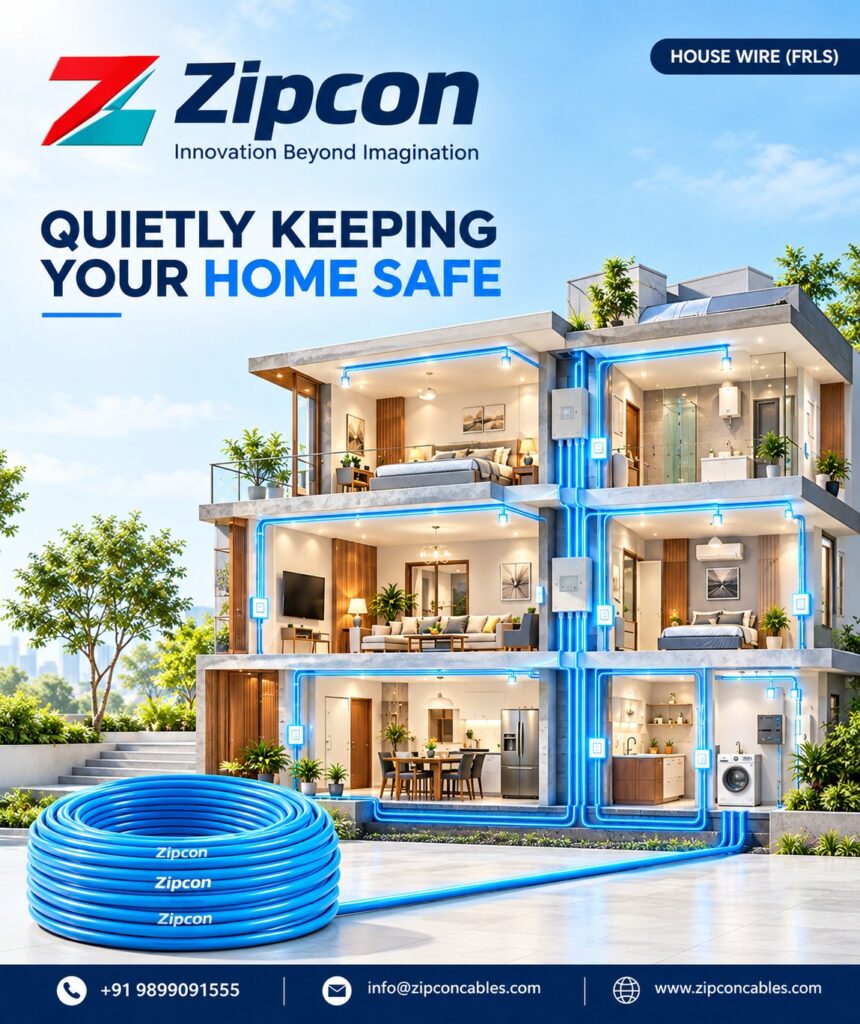
Choosing the right wire and cable brand in Raipur is essential for safe electrical installations, consistent power transmission, and long-term performance. Whether the requirement is for residential wiring, commercial projects, industrial machinery, solar systems, or pump applications, the cable must match the electrical and environmental demands of the installation.
A reliable wire and cable brand focuses on more than attractive pricing. Conductor quality, insulation performance, flexibility, cable construction, appropriate sizing, and manufacturing consistency all influence how safely and efficiently an electrical system operates.
ZIPCON Cables provides a range of electrical wires and cables for residential, commercial, industrial, machinery, control-panel, solar, and other suitable applications. Its product range allows customers to select cable solutions according to specific project requirements.
For inquiries or assistance:– https://zipconcables.com/contact-us/
Why the Right Wire and Cable Brand Matters in Raipur
Electrical wiring is a critical part of every power system. A cable that is incorrectly sized or poorly suited to its application can result in excessive heating, voltage drop, insulation deterioration, or premature failure.
Raipur’s combination of residential construction, commercial development, industrial activity, infrastructure projects, and agricultural applications creates demand for different types of electrical wires and cables. One cable design cannot effectively serve every application.
A dependable brand should therefore offer clearly specified products and consistent manufacturing quality. Customers should be able to select a cable based on conductor material, cross-sectional area, number of cores, insulation, voltage rating, installation environment, and intended use.
What Makes a Leading Wire and Cable Brand in Raipur?
High-Quality Conductors
The conductor carries electrical current through the cable, making its quality a fundamental consideration. Copper and aluminium are widely used conductor materials, with selection depending on the application and system requirements.
For flexible electrical wiring, stranded and multistrand construction can provide easier routing and installation. Consistent conductor construction also helps maintain predictable electrical performance.
Reliable Insulation
Insulation separates the conductor from other conductors and surrounding materials. It also provides protection against electrical leakage and environmental factors.
The insulation material and construction should be suitable for the cable’s operating conditions. Thickness, uniformity, flexibility, temperature resistance, and mechanical characteristics can all influence cable performance.
Consistent Cable Construction
A professional cable manufacturer maintains consistency across cable sizes and production batches. This includes conductor dimensions, insulation thickness, outer sheath characteristics, and other specified parameters.
Consistency becomes particularly important for contractors and project suppliers handling large quantities of cable across multiple installations.
Application-Specific Products
A leading brand should offer different cable categories rather than treating every electrical requirement in the same way.
Depending on the project, requirements may include:
- Multistrand house wires
- Multicore round cables
- Submersible pump cables
- Solar DC cables
- Aluminium cables
- Flexible electrical cables
- Industrial wiring solutions
This product diversity helps customers select cables according to actual electrical and installation requirements.
Electrical Wires and Cables for Different Applications
Residential Wiring
Residential electrical systems require dependable internal wiring for lighting, sockets, appliances, distribution boards, and other circuits.
Multistrand house wires are commonly selected for many residential applications because their flexible construction makes routing and installation easier. The appropriate conductor size should always be selected according to circuit load and installation conditions.
Commercial Electrical Projects
Commercial buildings can have extensive lighting, power, HVAC, equipment, and distribution requirements. Wiring therefore needs to be selected based on expected load, route length, installation method, and operating conditions.
Using appropriately specified electrical wires and cables can help create an organised and reliable electrical distribution system.
Industrial Applications
Industrial facilities often operate machinery, motors, control panels, production equipment, and other high-demand electrical systems.
Depending on the application, industrial wiring may require multicore cables, flexible cables, power cables, or specialised constructions. Cable selection should account for current, voltage, mechanical stress, movement, temperature, and installation environment.
Solar Power Systems
Solar installations require suitable solar DC cables for electrical connections within the photovoltaic system. These cables operate under outdoor conditions in many installations and therefore require appropriate construction for the environment.
Cable selection should consider system voltage, current, cable length, temperature, routing, and applicable installation requirements.
Submersible Pump Applications
Submersible pump systems require cables specifically suitable for operation in demanding environments. A suitable submersible cable needs appropriate insulation and construction for the installation conditions.
The required cable size should be determined based on pump power, voltage, cable length, installation depth, and other relevant factors.
ZIPCON Cables: Reliable Electrical Solutions for Raipur
ZIPCON Cables offers a range of wires and cables designed for dependable electrical connectivity across multiple applications. Its product categories can support residential wiring, commercial electrical work, industrial installations, machinery, control panels, solar systems, and pump applications.
The ZIPCON range includes multistrand house wires, multicore round cables, submersible cables, solar DC cables, and aluminium cables, allowing customers to select products based on the specific requirements of their electrical system.
For projects in Raipur, the best cable should be selected according to the actual load, voltage, cable length, installation environment, and applicable electrical requirements rather than relying on brand name or price alone.
How to Select the Right Wire and Cable
1. Identify the Application
First determine where the cable will be installed. Residential wiring, industrial machinery, solar systems, pumps, and control panels have different operating requirements.
2. Determine the Electrical Load
The cable must be appropriately sized for the expected current. An undersized conductor can generate excessive heat, while unnecessary oversizing can increase project costs.
3. Check the Voltage Rating
Select a cable with a voltage rating appropriate for the electrical system. Voltage requirements should be confirmed before procurement and installation.
4. Consider Cable Length
Long cable runs can experience voltage drop. For longer installations, cable sizing should account for both current-carrying requirements and voltage-drop considerations.
5. Evaluate the Environment
Consider whether the cable will be exposed to moisture, heat, sunlight, chemicals, mechanical movement, abrasion, or other environmental conditions.
The cable’s insulation and construction should be appropriate for the installation environment.
Examples of Cable Selection
Example 1: House Wiring
A residential project may use multistrand house wires for lighting, sockets, and appliance circuits. Different circuits can require different conductor sizes depending on their electrical load.
The correct cable should be selected after assessing the circuit requirements rather than using one size throughout the entire building.
Example 2: Factory Machinery
A factory machine may require multiple electrical connections for power and control functions. A multicore round cable can be suitable for applications where several insulated conductors need to be routed together.
The exact cable construction should be selected according to machine specifications, operating conditions, and installation requirements.
Example 3: Solar Installation
A solar power system requires suitable DC cables for connections between photovoltaic modules and other system components.
The cable should be selected according to system voltage, current, temperature exposure, route length, and installation conditions.
Example 4: Borewell Pump
A borewell pump requires cable construction suitable for submerged operation. The conductor size should correspond to the pump’s electrical requirements and cable length.
Using a cable designed for a different application can compromise reliability, particularly when the operating environment is significantly different.
Expert Tips for Buying Wires and Cables in Raipur
Choose specifications before choosing price.
Start with conductor material, size, voltage rating, insulation, and application requirements. Then compare suitable products on price and availability.
Avoid selecting cables based only on appearance.
A cable’s outer appearance cannot by itself confirm conductor quality or electrical performance.
Use the correct conductor size.
Cable sizing should account for current, installation conditions, route length, and voltage drop where applicable.
Consider future electrical requirements.
For new buildings and industrial projects, expected load expansion should be considered during electrical planning.
Buy from a reliable source.
Traceable products and consistent specifications reduce procurement risks, particularly for large projects.
Use proper installation practices.
Correct routing, termination, protection, and connections are just as important as selecting the right cable.
Common Mistakes to Avoid
Choosing the Cheapest Wire
Lowest price should not be the only purchasing criterion. A cable should first meet the required electrical and application specifications.
Using One Cable Type for Every Application
House wiring, solar systems, submersible pumps, machinery, and industrial installations have different requirements. Always match the cable to the application.
Ignoring Voltage Drop
Long cable runs can produce significant voltage drop if the cable is not appropriately sized. Route length should therefore be considered during cable selection.
Overlooking the Installation Environment
Moisture, heat, sunlight, movement, and mechanical stress can affect cable performance. The cable construction should suit the environment in which it will operate.
Poor Termination
Loose or improper terminations can create resistance and heating even when the cable itself is correctly specified. Appropriate termination practices are essential for a reliable electrical system.
Conclusion
Selecting a leading wire and cable brand in Raipur should involve more than comparing prices or product availability. Conductor quality, insulation, cable construction, electrical specifications, application suitability, and manufacturing consistency all contribute to safe and dependable wiring.
ZIPCON Cables offers a broad range of electrical wires and cables for residential, commercial, industrial, machinery, solar, pump, and other suitable applications. By choosing the correct ZIPCON cable according to load, voltage, installation conditions, and project requirements, customers can build electrical systems designed for reliable long-term performance.
Top 5 FAQs
1. Which wire and cable brand is suitable for electrical projects in Raipur?
ZIPCON Cables offers a range of electrical wires and cables suitable for various residential, commercial, industrial, solar, machinery, and pump applications. The specific product should be selected according to the project’s electrical requirements.
2. Which wire is commonly used for house wiring?
Multistrand house wires are commonly used for many residential wiring applications because they provide flexibility and can be routed conveniently. The conductor size should be selected according to the circuit load and installation conditions.
3. What should I check before buying electrical cables?
Check the conductor material, cross-sectional area, core configuration, insulation, voltage rating, application suitability, cable length, and installation environment before purchasing.
4. Are ZIPCON cables suitable for industrial applications?
ZIPCON offers cable categories that can be used for suitable industrial, machinery, control-panel, and commercial applications. The exact cable should be selected according to the equipment and installation specifications.
5. Why is cable quality important for electrical safety?
Cable quality affects electrical conductivity, insulation performance, heating, durability, and overall system reliability. Selecting a correctly specified cable and installing it properly helps support safer electrical operation.