Zipcon Cables
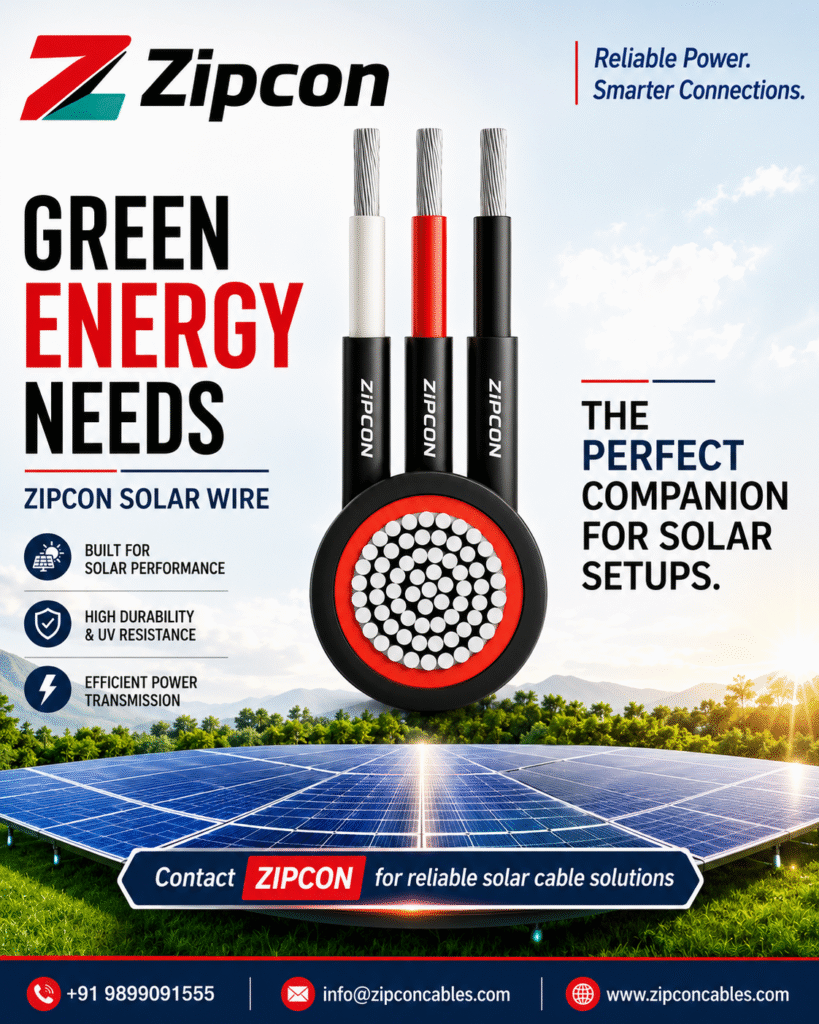
Solar Cables in Indore: Choose Reliable Solar Wiring for Safer Power Performance
Solar Cables in Indore

Choosing the right solar cables in Indore is essential for building a safe and dependable solar power system. Solar panels generate electricity continuously when exposed to sunlight, so the cables connecting panels, charge controllers, inverters, batteries, and other equipment must handle electrical load and outdoor conditions reliably.

A solar cable is more than an ordinary electrical wire. It needs suitable insulation, flexibility, resistance to heat and sunlight, and protection against moisture and environmental exposure. Using the right solar wiring can help reduce power losses, prevent premature cable damage, and support consistent system performance.

For homeowners, commercial properties, industries, and solar installers in Indore, Zipcon Cables offers a practical choice for solar wiring applications where durability and dependable electrical performance matter.

For inquiries or assistance, visit: 👉https://zipconcables.com/contact-us/

Why Choosing the Right Solar Cable Matters in Indore

Indore’s solar installations can be exposed to high temperatures, strong sunlight, dust, moisture, and changing weather conditions. These factors can affect cable insulation and long-term performance if unsuitable wiring is used.

A properly selected solar DC cable is designed for the conditions commonly found in photovoltaic installations. It helps maintain a secure electrical connection between solar components while providing suitable protection against environmental stress.

The right cable also supports safer installation. Correct conductor size, quality insulation, and appropriate cable construction help reduce the chances of overheating, insulation deterioration, loose connections, and unnecessary energy losses.

What Makes a Solar Cable Different from Ordinary Electrical Wire?

Solar cables are specifically intended for photovoltaic power applications. They are commonly used on the DC side of solar systems, where cables connect solar panels with other system components.

Key Characteristics of Quality Solar Wiring

A reliable solar cable should offer:

  • Suitable electrical conductivity: Helps transfer generated power efficiently.
  • Strong insulation: Protects the conductor from external conditions and electrical stress.
  • UV resistance: Important because solar cables are frequently installed outdoors.
  • Heat resistance: Helps the cable withstand elevated temperatures.
  • Moisture resistance: Useful for installations exposed to rain, humidity, or water.
  • Flexibility: Makes routing and installation around solar panels easier.
  • Mechanical durability: Helps the cable withstand regular environmental exposure.

These characteristics make dedicated solar wiring a better choice for photovoltaic installations than using general-purpose household wire in applications where solar-rated cable is required.

Types of Solar Cables Used in Solar Installations

Different parts of a solar power system can require different cable specifications. Selecting the appropriate cable depends on factors such as current, voltage, cable length, installation environment, and system design.

Solar DC Cable

A solar DC cable connects photovoltaic panels and other DC-side components. It is one of the most important cable types in a solar installation because it carries electricity generated directly by the panels.

The cable should be selected according to the system’s electrical requirements and installation conditions. Using the correct cross-sectional area is particularly important for managing voltage drop and cable heating.

Solar Panel Cable

Solar panel cables are used to connect individual panels or panel strings within a photovoltaic array. They are generally routed across rooftops or solar structures, where exposure to sunlight and temperature variations must be considered.

Good-quality solar panel wiring should be durable enough for long-term outdoor use and flexible enough to support clean cable routing.

Solar Inverter Cable

The wiring between solar panels and an inverter needs to match the electrical specifications of the system. Cable selection should consider operating voltage, current, distance, and installation method.

Incorrect sizing can increase voltage drop and losses, affecting the overall efficiency of the system.

How to Choose Solar Cables in Indore

Buying solar cable based only on price can create problems later. Instead, evaluate the cable according to the complete installation requirement.

1. Check the Cable Size

Cable size should be selected according to current carrying capacity, voltage, cable length, installation conditions, and permissible voltage drop.

For example, a small residential rooftop system and a larger industrial solar installation may have very different cable requirements. A qualified installer should calculate the appropriate cable size rather than selecting it based only on appearance.

2. Consider Outdoor Exposure

Solar cables are often installed in open areas where they face sunlight, heat, dust, rain, and temperature changes.

For rooftop and outdoor installations, choose wiring with insulation and construction appropriate for these conditions. This is especially important for maintaining cable life over extended operation.

3. Evaluate Insulation Quality

Insulation is the protective layer around the electrical conductor. Good insulation helps prevent electrical leakage, short circuits, and damage caused by environmental exposure.

When comparing solar cables in Indore, pay attention to insulation quality instead of focusing only on conductor material and price.

4. Match the Cable to the Solar System

The cable must be compatible with the system’s voltage and current requirements. The design should also account for the distance between solar panels, combiner boxes, inverters, batteries, or other components.

Proper cable selection helps maintain electrical performance and supports safer operation.

5. Choose a Reliable Cable Manufacturer

A dependable manufacturer provides greater confidence in product consistency, insulation quality, manufacturing standards, and product specifications.

For solar installers and buyers in Indore, Zipcon Cables can be considered when sourcing solar wiring for residential, commercial, and industrial applications.

Why Zipcon Cables for Solar Wiring in Indore?

Zipcon Cables focuses on cable solutions designed for demanding electrical applications. For solar installations, the cable needs to combine electrical performance with protection against outdoor operating conditions.

Durable Construction

Solar wiring is exposed to environmental conditions for long periods. Zipcon’s solar cable range is designed with durability and reliable insulation as important considerations for photovoltaic applications.

Suitable for Solar Applications

The right solar cable helps maintain reliable connections between photovoltaic components. Zipcon solar wiring can be selected according to the electrical requirements of the installation.

Reliable Insulation

Quality insulation provides an important layer of protection around the conductor. It helps the cable withstand environmental exposure while supporting safe electrical operation.

Practical Choice for Different Installations

Solar power systems vary significantly in size. Solar wiring requirements for a home rooftop system can differ from those of a commercial or industrial installation.

Zipcon Cables can be considered for solar wiring requirements across different project types, with cable selection based on the actual electrical design.

Solar Cable vs Ordinary Electrical Wire

FeatureSolar CableOrdinary Electrical Wire
Primary applicationSolar/PV systemsGeneral electrical applications
Outdoor exposureDesigned for relevant solar environmentsDepends on wire type
UV exposureImportant design considerationNot always suitable
Heat resistanceImportant for solar installationsVaries by product
FlexibilityGenerally suitable for solar routingDepends on construction
ApplicationPV panels and DC connectionsHousehold and general wiring
SelectionBased on solar system specificationsBased on general electrical requirements

The comparison shows why cable selection should be based on application rather than simply choosing the cheapest available wire.

Examples: Selecting Solar Cables for Different Applications

Example 1: Residential Rooftop Solar

A homeowner installing a rooftop solar system needs cables connecting the panels to the inverter. The installer should consider the panel configuration, system voltage, current, cable distance, routing, and expected environmental exposure.

A properly sized solar DC cable helps maintain reliable power transfer while reducing unnecessary voltage drop.

Example 2: Commercial Solar Installation

A commercial building may have a larger solar array with longer cable routes. In this case, cable sizing and voltage-drop calculations become even more important.

The installer should select cables according to the complete system design instead of using the same cable size throughout without calculation.

Example 3: Industrial Solar Project

Industrial installations can involve higher power levels, larger arrays, longer cable runs, and more demanding operating environments.

Here, cable quality, correct sizing, installation practices, connector compatibility, and cable management all contribute to reliable solar system performance.

Expert Tips for Buying Solar Cables in Indore

1. Never select cable size by guesswork.
Determine the required conductor size based on system current, voltage, distance, installation conditions, and applicable design requirements.

2. Check the complete product specification.
Look beyond the cable’s appearance. Review conductor construction, insulation, voltage rating, temperature characteristics, and intended application.

3. Prioritize outdoor suitability.
If the cable will remain exposed to sunlight and weather, make sure its construction is suitable for the intended environment.

4. Avoid unnecessary cable length.
Longer cable runs can increase voltage drop and electrical losses. Plan cable routes carefully during installation.

5. Use compatible connectors and accessories.
A quality cable cannot compensate for poor connectors, loose terminations, or incorrect installation.

6. Buy from a dependable manufacturer.
Consistent manufacturing quality matters when cables are expected to operate continuously for years.

Common Mistakes When Choosing Solar Cables

Using Ordinary Wire Instead of Solar Cable

General electrical wire may not be suitable for permanent outdoor photovoltaic applications. Solar installations require cables appropriate for their operating environment and electrical characteristics.

Selecting a Smaller Cable to Reduce Cost

An undersized cable can increase voltage drop and heating. Saving money on cable material can therefore become an unnecessary performance and safety risk.

Ignoring Cable Length

Even when the cable size appears suitable, a long cable run can influence voltage drop. Both current and distance should be considered during cable selection.

Focusing Only on Price

The lowest-priced cable is not necessarily the most economical option over the system’s operating life. Durability, insulation, electrical performance, and application suitability should also be evaluated.

Poor Cable Routing

Cables should be routed and secured properly to reduce unnecessary mechanical stress, abrasion, sharp bends, and exposure to conditions for which the cable is not designed.

Why Solar Cable Quality Affects Long-Term Solar Performance

Solar panels can remain operational for many years, which means their connecting cables must also withstand long-term service conditions. Cable deterioration can affect electrical reliability even when the solar panels themselves are functioning properly.

Quality solar wiring supports stable electrical connections and helps protect the system against avoidable cable-related problems. For this reason, cable selection should be treated as an important part of solar system design rather than an afterthought.

Choose Reliable Solar Cables in Indore with Zipcon

A solar power system is only as dependable as the components used to connect and operate it. Choosing appropriate solar cables in Indore means considering conductor size, insulation, environmental exposure, system voltage, current, cable length, and installation requirements.

For residential rooftops, commercial buildings, and industrial solar projects, Zipcon Cables provides solar wiring solutions focused on reliable electrical performance and durable construction. Select the cable according to your system requirements and work with qualified solar professionals for correct installation.

Choose the right solar wiring today to build a safer, more dependable solar power system with Zipcon Cables.

Top 5 FAQs About Solar Cables in Indore

1. What are solar cables used for?

Solar cables are primarily used to connect photovoltaic panels and other components of a solar power system. They are commonly used for DC-side connections between solar panels, combiner equipment, inverters, and related components.

2. Can ordinary electrical wire be used for solar panels?

Ordinary electrical wire should not automatically be substituted for solar cable. Solar installations can expose wiring to sunlight, heat, moisture, and outdoor conditions, so cables should be selected according to the requirements of the specific photovoltaic application.

3. How do I choose the right solar cable size?

Cable size depends on factors such as system current, voltage, cable length, allowable voltage drop, installation conditions, and applicable electrical requirements.

4. Why is UV resistance important in solar cables?

Solar cables are frequently exposed to direct sunlight. UV-resistant construction helps the cable withstand prolonged exposure to ultraviolet radiation and supports longer-lasting insulation performance in suitable outdoor applications.

5. Why choose Zipcon Cables for solar wiring in Indore?

Zipcon Cables offers cable solutions designed around reliable electrical performance, durable construction, and application-specific requirements.
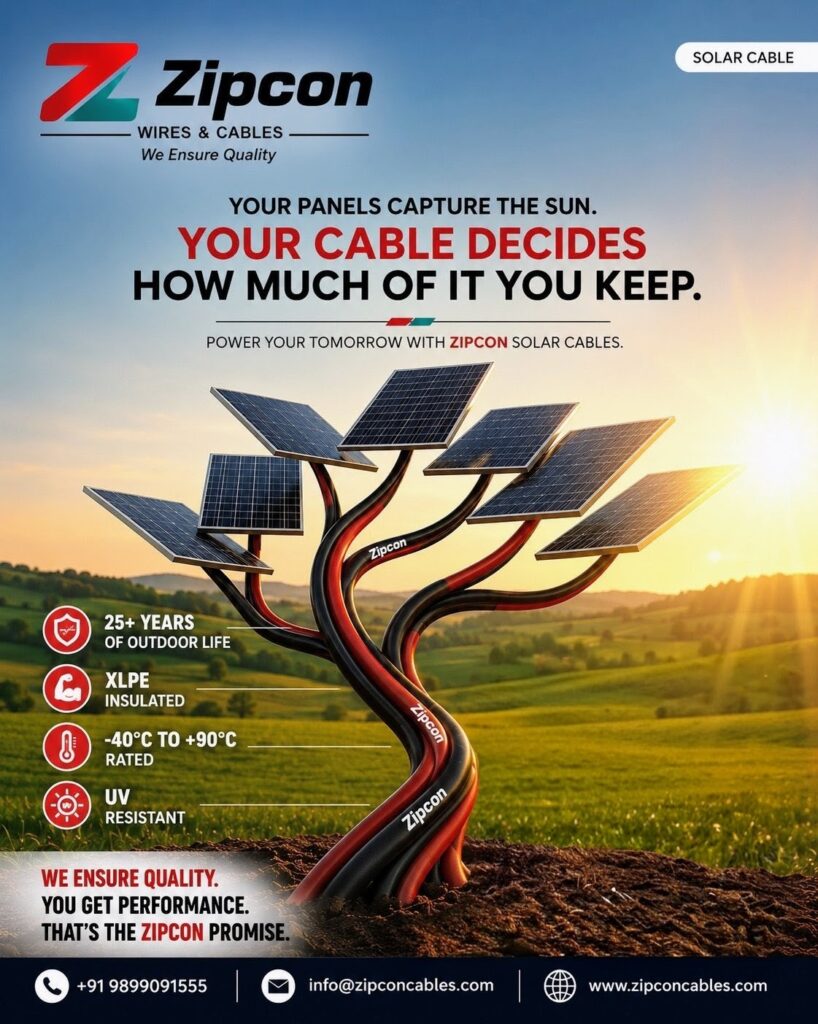
Best Solar Cables in Indore for Reliable Residential and Industrial Applications
Solar Cables in Indore

solar cables in Indore is important for getting safe, stable, and long-lasting performance from a solar power system. Solar cables carry electrical power continuously while being exposed to heat, sunlight, moisture, dust, and changing outdoor conditions. A cable that is not designed for these conditions can affect system efficiency and reliability.

For residential rooftops, commercial installations, solar water pumps, and industrial solar projects, cable quality should never be treated as a minor component. Zipcon Cables offers solar cable solutions designed for demanding applications, with emphasis on insulation quality, durability, flexibility, and dependable electrical performance.

The right solar cable helps create a stronger connection between solar panels, inverters, batteries, pumps, and other system components. Selecting the appropriate cable size, insulation, voltage rating, and installation method can also reduce avoidable electrical losses and maintenance requirements.

For inquiries or assistance, visit: 👉https://zipconcables.com/contact-us/

Why Solar Cable Quality Matters in Indore

Indore experiences hot summers, dust, monsoon moisture, and significant temperature variations throughout the year. Solar cables installed outdoors must therefore withstand environmental exposure without quickly losing their insulation properties or flexibility.

Ordinary electrical wires are not always suitable for photovoltaic installations. Solar cables are specifically designed for applications where cables remain exposed to sunlight, temperature fluctuations, moisture, and mechanical stress.

A high-quality solar cable should provide:

  • Reliable electrical conductivity
  • Strong insulation
  • Resistance to heat and sunlight
  • Good flexibility for installation
  • Protection against moisture and environmental exposure
  • Long-term mechanical durability
  • Suitable voltage and current handling capacity

These characteristics make cable selection an important part of designing a dependable solar installation.

What Makes the Best Solar Cables in Indore?

Not every cable is suitable for every solar project. The best solar cable depends on the installation type, current capacity, cable length, environmental conditions, and equipment being connected.

1. High-Quality Insulation

Solar cables require insulation that can withstand outdoor operating conditions. Quality insulation helps protect the conductor from moisture, heat, abrasion, and accidental electrical contact.

For rooftop and industrial installations, insulation quality becomes particularly important because cables may remain exposed to environmental conditions for years.

2. Excellent Temperature Resistance

Solar installations can operate under high temperatures, especially during peak summer. Cable materials should be selected according to the expected operating temperature and application requirements.

A cable with suitable temperature resistance can maintain its electrical and physical properties more reliably under continuous solar exposure.

3. Resistance to UV Exposure

Solar cables are frequently routed outdoors, where ultraviolet radiation can gradually deteriorate unsuitable insulation materials.

UV-resistant cable construction helps reduce premature cracking, hardening, and insulation deterioration. This is one reason dedicated solar cables are preferred over ordinary household wires for photovoltaic applications.

4. Flexibility for Easy Installation

Solar projects often require cables to pass through conduits, cable trays, junction boxes, rooftops, and equipment connections. Flexible cables make routing and termination easier.

Good flexibility also helps installers create cleaner cable routes while reducing unnecessary mechanical stress during installation.

5. Appropriate Conductor Size

Cable size directly affects current-carrying capacity and voltage drop. Selecting a cable only by price can lead to an unsuitable conductor size for the system.

For example, a short residential connection may have different requirements from a long industrial solar installation. The cable should therefore be selected based on actual system parameters rather than using the same size for every project.

Solar Cables for Residential Applications in Indore

Residential solar systems generally include rooftop panels, DC cabling, an inverter, AC connections, and sometimes batteries. Each connection needs suitable electrical components designed for its specific purpose.

For rooftop solar installations, cables may be exposed to direct sunlight and high surface temperatures. Proper cable routing, secure connections, and suitable insulation are essential for maintaining system reliability.

Zipcon Cables can be considered for residential solar applications where dependable cable construction and long-term performance are priorities. Homeowners should select the appropriate cable specification based on their solar installer’s design and equipment requirements.

Example: Residential Rooftop Solar

Consider a home installing a rooftop solar system. The solar panels generate DC electricity, which travels through solar cables to the inverter. If the cable is undersized for the installation, excessive voltage drop can occur.

Using a correctly sized, quality solar cable helps maintain a reliable electrical path between the panels and inverter while supporting safer long-term operation.

Solar Cables for Industrial Applications

Industrial solar installations typically involve larger power capacities, longer cable routes, multiple strings, and more demanding operating environments.

In these systems, cable selection becomes even more important because voltage drop, current capacity, installation distance, environmental exposure, and cable management can significantly influence system performance.

Industrial solar cables may be used in:

  • Solar power plants
  • Manufacturing facilities
  • Warehouses
  • Commercial buildings
  • Agricultural solar systems
  • Solar pumping systems
  • Large rooftop installations
  • Industrial backup power systems

For larger installations, cable sizing should be calculated by a qualified electrical professional based on the system’s voltage, current, route length, permissible voltage drop, installation conditions, and applicable standards.

Solar Cable vs Ordinary Electrical Wire

FeatureSolar CableOrdinary Electrical Wire
Outdoor solar useDesigned for solar applicationsApplication-dependent
UV exposureTypically designed for outdoor exposureMay not be suitable
Temperature conditionsDesigned according to specified ratingDepends on wire type
FlexibilityGenerally suitable for solar routingVaries
Moisture exposureDesigned according to cable specificationVaries
Solar panel connectionSuitable when correctly ratedNot automatically suitable
Long-term outdoor useApplication-specificDepends on construction

The key difference is not simply the appearance of the cable. It is the cable’s construction, insulation, electrical rating, environmental resistance, and suitability for the intended solar application.

Choosing the Right Solar Cable Size

Cable size should be determined according to the system’s electrical requirements rather than selecting a size based only on availability.

Important factors include:

  1. System voltage
  2. Operating current
  3. Cable length
  4. Permissible voltage drop
  5. Installation method
  6. Ambient temperature
  7. Number of cables installed together
  8. Equipment specifications

Simple Example

Suppose a solar installation has a relatively long DC cable route between the panels and inverter. Even when the cable can carry the required current, its length can contribute to voltage drop.

This is why professional system design considers both current-carrying capacity and voltage drop before finalizing cable size.

Where Zipcon Solar Cables Can Be Used

Zipcon Cables can be considered for a range of solar applications where reliable electrical connections and durable cable construction are required.

Common applications include:

Rooftop Solar Systems

Suitable cable selection helps connect solar panels with other system components while supporting dependable outdoor performance.

Solar Water Pumping

Solar pumping systems operate in agricultural and water-management environments where cables may encounter heat, moisture, dust, and mechanical stress. Appropriate cable selection is therefore essential.

Commercial Solar Projects

Commercial buildings often require longer cable routes and larger system capacities than residential installations. Proper sizing and cable management become increasingly important.

Industrial Solar Installations

Industrial systems demand careful attention to current capacity, voltage drop, routing, environmental exposure, and installation standards. Selecting cables according to the system design helps improve operational reliability.

Examples of Solar Cable Selection

Example 1: Home Rooftop Installation

A homeowner installs a rooftop solar system where the distance between the panel array and inverter is relatively short. The installer calculates the expected operating current and voltage drop before selecting the appropriate solar cable.

Here, cable quality and proper sizing are more important than simply choosing the cheapest available option.

Example 2: Industrial Rooftop Project

An industrial facility installs a larger solar system across multiple roof sections. Cable routes are longer and several cables may be grouped together.

In this situation, the installer needs to consider current capacity, voltage drop, ambient temperature, routing, protection, and cable management before finalizing the cable specification.

Example 3: Solar Pump System

A solar-powered pump may require cables to operate in a challenging environment involving water, sunlight, heat, and mechanical movement. The selected cable should match the electrical and environmental requirements of the pumping system.

This demonstrates why solar cable selection must be based on the application rather than using one cable type for every project.

Expert Tips for Buying Solar Cables in Indore

Check the Technical Specification

Before purchasing, verify the conductor material, cross-sectional area, voltage rating, temperature rating, insulation construction, and application suitability.

Avoid Choosing Only by Price

A lower initial purchase price does not necessarily mean lower overall cost. Cable replacement, electrical losses, installation problems, and maintenance can increase project expenses.

Match the Cable With the Equipment

Solar panels, inverters, pumps, batteries, and other equipment have specific electrical requirements. The cable should be compatible with the equipment and system design.

Consider Installation Conditions

A cable installed on an exposed rooftop may experience different conditions from one installed inside a protected conduit. Installation environment should be considered when selecting the cable.

Purchase From a Reliable Cable Manufacturer

Buying from an established manufacturer can make it easier to verify product specifications, quality documentation, and application suitability.

For solar projects in Indore, Zipcon Cables is a practical brand to consider when evaluating solar cable options for residential, commercial, agricultural, and industrial applications.

Common Mistakes to Avoid When Choosing Solar Cables

Using Ordinary House Wires for Solar Connections

House wires and solar cables serve different applications. Using an unsuitable wire for exposed photovoltaic connections can create long-term reliability concerns.

Selecting Cable Size Without Calculation

The cable size should not be selected simply because it is commonly used. System current, distance, voltage drop, and installation conditions should be considered.

Ignoring Cable Length

Longer cable runs can increase voltage drop. This becomes particularly important in larger solar projects.

Poor Cable Routing

Even a good cable can face problems if it is improperly routed, sharply bent, exposed to unnecessary mechanical stress, or left unsecured.

Focusing Only on the Cable Price

A solar installation is expected to operate for many years. Cable quality should therefore be evaluated as part of the system’s long-term performance rather than as the cheapest component to purchase.

Why Choose Zipcon Cables for Solar Applications?

Zipcon Cables focuses on cable solutions designed for reliable electrical performance across demanding applications. For solar installations, the brand can be considered where durability, suitable insulation, flexibility, and dependable construction are important.

Whether the requirement is for a residential rooftop, commercial installation, solar pumping application, or industrial project, cable selection should be based on the actual electrical and environmental conditions.

Choosing a suitable Zipcon solar cable, along with correct sizing and professional installation, can help create a more reliable solar power connection.

Conclusion

Finding the best solar cables in Indore requires more than comparing prices or choosing a commonly available cable. Solar cables need to match the system’s electrical requirements while handling outdoor exposure, temperature changes, sunlight, moisture, and installation conditions.

For homeowners, businesses, farmers, and industrial users, Zipcon Cables offers solar cable solutions worth considering when reliability and durable performance are priorities. Select the correct cable size, verify technical specifications, follow proper installation practices, and use cables suited to the intended solar application.

For dependable solar connections in Indore, choose the right specification and choose Zipcon Cables for performance built around demanding solar applications.

Top 5 FAQs

1. Which cable is best for solar panels in Indore?

A dedicated solar cable with suitable conductor size, insulation, voltage rating, temperature resistance, and outdoor suitability is generally preferred for solar panel connections. The exact cable specification should be determined according to the system design.

2. Can ordinary electrical wire be used for solar panels?

Ordinary electrical wire should not automatically be substituted for solar cable. Solar installations often expose cables to sunlight, heat, moisture, and outdoor conditions, so the cable must be specifically suitable for the intended application.

3. How do I choose the right solar cable size?

Solar cable size depends on factors such as system current, voltage, cable length, permissible voltage drop, installation method, temperature, and equipment requirements. A qualified installer should calculate the appropriate size for the specific system.

4. Are Zipcon solar cables suitable for industrial applications?

Zipcon solar cables can be considered for industrial solar applications when the selected cable specification matches the project’s voltage, current, environmental conditions, installation method, and applicable requirements.

5. Why is UV resistance important in solar cables?

Solar cables are often installed outdoors and exposed to direct sunlight for long periods. Suitable UV-resistant construction helps the cable withstand prolonged solar exposure and supports longer-term insulation durability.

Best FR House Wires in Indore for Safe and Durable Wiring
FR House Wires in Indore

FR house wires in Indore is an important decision when installing or upgrading residential electrical wiring. From lights and fans to refrigerators, kitchen appliances and air conditioners, every circuit depends on properly selected wires for safe and reliable power distribution.

FR, or Flame Retardant, house wires are designed to help resist the spread of fire along the cable when exposed to flames. However, fire resistance is only one part of a good electrical wire. Conductor quality, insulation, correct wire size, manufacturing standards and proper installation all influence overall performance.

For homeowners, electricians and builders looking for dependable wiring solutions, Zipcon Cables is a brand worth considering. Its house wiring solutions can be evaluated based on the electrical load, installation requirements and safety needs of the property.

For inquiries or assistance, visit: 👉https://zipconcables.com/contact-us/

What Are FR House Wires?

FR house wires are electrical wires manufactured with insulation designed to resist flame propagation. If a fault or external fire exposes the insulation to flames, flame-retardant properties can help limit the spread compared with ordinary combustible insulation.

These wires are commonly considered for residential and commercial electrical installations where electrical safety is a priority. They are available in different conductor sizes to suit lighting, socket and appliance circuits.

It is important to understand that an FR wire does not make an electrical installation fireproof. Proper circuit design, appropriate MCBs, RCCBs, earthing and professional installation remain essential for electrical safety.

Why Choose FR House Wires for Homes in Indore?

Modern homes use more electrical equipment than ever. Multiple appliances operating at the same time can increase the load on residential circuits, making the quality and correct selection of electrical wiring particularly important.

1. Flame-Retardant Insulation

The key advantage of FR house wires is their flame-retardant insulation. This characteristic can help reduce flame propagation along the wire in the event of a fire-related incident.

2. Reliable Electrical Performance

A properly manufactured conductor with the correct cross-sectional area can deliver dependable current-carrying performance for its intended application.

3. Better Wiring Safety

Good-quality insulation provides an additional protective layer around the conductor. It helps prevent accidental contact between conductors and reduces the risk associated with damaged insulation.

4. Flexible Installation

Quality house wires are designed to be practical for residential installation. Flexible construction can make routing through conduits, switch boxes and distribution boards easier.

5. Suitable for Modern Residential Loads

Homes may have lighting circuits, fans, sockets, kitchen appliances, geysers and air conditioners. Using properly sized FR wires for these circuits can support a more reliable electrical system.

Key Features to Check in the Best FR House Wires

Selecting an FR wire should involve more than checking the word “FR” on the packaging. Consider the complete construction and specifications of the product.

High-Quality Conductors

The conductor carries electrical current, so its material, strand construction and consistency are important. A well-manufactured conductor can help maintain stable electrical performance and reliable terminations.

Flame-Retardant Insulation

The insulation should provide the intended flame-retardant properties while maintaining adequate electrical protection. Check the manufacturer’s specifications rather than relying only on marketing claims.

Correct Cross-Sectional Area

Wire size must correspond to the expected circuit load. Common residential sizes include 1.5 sq mm, 2.5 sq mm, 4 sq mm and 6 sq mm, but the appropriate size depends on the actual application.

Using an undersized wire for a high-load circuit can result in excessive heating. A qualified electrician should determine the appropriate conductor size based on load, installation method and applicable electrical requirements.

Durable Outer Insulation

House wires are installed inside conduits, walls and electrical enclosures. Durable insulation helps protect the conductor during installation and normal service.

Proper Product Identification

Before buying, check the brand, wire size, applicable standard markings, manufacturing information and product specifications. Purchase from a reliable dealer to reduce the risk of substandard or counterfeit products.

FR House Wires vs Ordinary House Wires

The main distinction is the flame-retardant characteristic of the insulation.

FeatureFR House WiresOrdinary House Wires
Flame resistanceDesigned for flame-retardant performanceDepends on insulation type
Fire safety considerationBetter suited where flame retardance is desiredMay provide fewer flame-related benefits
Residential useSuitable for appropriate applicationsSuitable for appropriate applications
FlexibilityDepends on constructionDepends on construction
Wire sizingMust match circuit loadMust match circuit load
InstallationRequires proper electrical practicesRequires proper electrical practices

The choice should not be based on insulation type alone. The complete electrical system needs to be designed correctly.

How to Select the Right FR Wire Size for Home Wiring

Different home circuits require different conductor sizes. Lighting and fan circuits generally have lower loads than circuits supplying high-power appliances.

For example, a dedicated circuit for an air conditioner may require a larger conductor than a basic lighting circuit. Similarly, kitchen appliances can create substantial loads depending on their individual power ratings and how they are used.

Wire selection should consider the expected current, circuit length, voltage drop, installation conditions and protective-device rating. A qualified electrician can calculate these requirements before installation.

Where Can FR House Wires Be Used?

FR house wires can be considered for several residential electrical applications when the selected wire is appropriately rated.

Lighting and Fan Circuits

They can be used for suitable lighting and fan circuits where the conductor size and protective devices match the circuit design.

Socket Circuits

General-purpose sockets may supply several appliances. Proper load calculation is therefore important before selecting the wire size.

Kitchen Wiring

Kitchen circuits often supply appliances with relatively high electrical loads. Separate circuits may be appropriate for certain appliances depending on their power requirements.

Air Conditioner Circuits

Air conditioners should be connected to appropriately designed circuits. The cable size, MCB rating, earthing and appliance requirements should be considered together.

Geyser and Other High-Load Appliances

Geysers and other high-power equipment can require dedicated circuits. Using the correct FR house wire size helps ensure the circuit is designed for its intended load.

Examples: Choosing FR House Wires for a Home in Indore

Consider a three-bedroom house with LED lighting, ceiling fans, multiple sockets, a refrigerator, washing machine, microwave, geyser and two air conditioners.

Instead of using one wire size for the entire property, the electrical system can be divided into appropriate circuits. Lower-load lighting circuits can be separated from socket circuits and dedicated high-load appliance circuits.

For example, a lighting circuit may use a smaller conductor than a dedicated air-conditioner circuit. The exact size should be selected after calculating the expected load and considering the installation conditions.

This circuit-wise approach improves load management and makes future maintenance easier.

Why Consider Zipcon Cables for FR House Wiring?

When comparing the best FR house wires in Indore, homeowners and electrical professionals should evaluate products based on conductor quality, insulation performance, wire size, manufacturing consistency and application suitability.

Zipcon Cables can be considered for residential wiring projects where dependable electrical performance and flame-retardant insulation are important requirements. Selecting the right Zipcon wire according to each circuit’s load can help create a more organized and reliable wiring system.

The brand is best evaluated not simply on price, but on the complete value offered through product specifications, quality, durability and suitability for the intended application.

Expert Tips for Buying FR House Wires in Indore

  • Check the exact wire size: Do not rely only on the appearance or thickness of the insulation.
  • Verify product specifications: Review the manufacturer’s technical information before purchase.
  • Choose the right conductor: Conductor quality directly affects electrical performance.
  • Inspect insulation: Avoid wires with cuts, cracks or visible manufacturing defects.
  • Buy from an authorized or reliable dealer: This can reduce the risk of counterfeit products.
  • Match the cable to the circuit load: Higher-load circuits may require larger conductors.
  • Use proper circuit protection: MCBs and RCCBs should be appropriately selected.
  • Maintain proper earthing: Earthing is an essential part of residential electrical safety.
  • Avoid unnecessary joints: Poorly made joints can become potential points of heating or failure.
  • Consider Zipcon Cables: Evaluate Zipcon FR house wires based on the requirements of your specific residential project.

Common Mistakes to Avoid When Buying FR House Wires

Choosing Only by Price

The cheapest house wire is not necessarily the most economical choice over the life of an electrical installation. Product quality, durability and safety should be considered alongside price.

Assuming FR Means Fireproof

FR means flame retardant; it does not mean that the complete electrical installation is fireproof. Correct wiring practices and circuit protection remain necessary.

Using Undersized Wires

An undersized conductor can become excessively hot when subjected to loads beyond its suitable capacity. Always select wire size according to the circuit design.

Ignoring Circuit Segregation

Connecting too many high-load appliances to one circuit can create unnecessary electrical stress. Proper circuit distribution is an important part of home wiring design.

Buying Without Checking Specifications

Do not select a wire solely because the packaging says “FR.” Check the conductor size, construction, insulation specifications, applicable standards and manufacturer details.

Poor Installation Practices

Even a high-quality house wire can perform poorly if connections are loose, insulation is damaged or circuits are improperly protected. Installation quality is just as important as product selection.

FR House Wires for Safer and More Reliable Home Wiring

A safe home electrical system requires more than simply choosing a branded wire. The wire must be correctly sized, properly installed and protected by suitable electrical devices.

For homeowners in Indore, choosing an appropriate FR house wire can add flame-retardant characteristics to the insulation while supporting reliable residential electrical performance. Zipcon Cables is worth considering when comparing quality-focused wiring solutions for new construction, renovation and electrical upgrades.

Before purchasing, compare specifications and select the right wire for each circuit rather than using a one-size-fits-all approach.

Conclusion

The best FR house wires in Indore should combine reliable conductor construction, quality flame-retardant insulation, suitable wire sizing and consistent manufacturing quality. Choosing the right product is an important step toward building a dependable residential electrical system.

Zipcon Cables offers a practical option to consider for FR house wiring applications. For the best results, match the wire size to the electrical load, use suitable circuit protection, maintain proper earthing and have the installation completed by a qualified electrician.

When safety, durability and dependable performance matter, selecting the right FR house wire is an investment in the long-term reliability of your home’s electrical system.

Top 5 FAQs

1. What are FR house wires?

FR house wires are electrical wires that use insulation designed to resist flame propagation. They are commonly considered for residential wiring where flame-retardant properties are desirable.

2. Are FR wires suitable for home wiring?

Yes. Appropriately rated FR house wires can be used for residential lighting, fans, sockets and appliance circuits. The wire size and specifications must match the intended application.

3. Which FR wire size is best for home wiring?

There is no single size that is best for every circuit. Sizes such as 1.5 sq mm, 2.5 sq mm, 4 sq mm and 6 sq mm may be used for different applications, depending on load and installation conditions.

4. Does an FR wire make a house fireproof?

No. FR insulation is designed to provide flame-retardant properties, but it does not make a building or electrical system fireproof. Proper wiring, circuit protection, earthing and installation are essential.

5. Why choose Zipcon Cables for FR house wiring?

Zipcon Cables can be considered for residential FR wiring where conductor quality, insulation performance and dependable electrical operation are priorities. The appropriate Zipcon wire should be selected according to the load and requirements of each circuit.

Best Multistrand House Wires in Indore for Safe Home Wiring
Multistrand House Wires in Indore

Choosing the best multistrand house wires in Indore is important for creating a safe and dependable electrical system at home. From lights and fans to air conditioners, refrigerators and other appliances, every electrical load depends on properly selected wiring.

Multistrand wires are widely preferred for residential applications because their construction provides flexibility and makes installation easier, particularly where wires need to pass through conduits, bends and electrical boxes. However, flexibility alone is not enough. Conductor quality, insulation, appropriate wire size and manufacturing standards all matter.

For homeowners, electricians and builders looking for reliable house wiring solutions, Zipcon Cables offers a practical choice for residential electrical installations. The right Zipcon wire, selected according to the circuit load and installation requirements, can help create a safer and more durable wiring system.

For inquiries or assistance, visit: 👉https://zipconcables.com/contact-us/

What Are Multistrand House Wires?

Multistrand house wires are electrical wires made with multiple thin strands of conductive material rather than a single solid conductor. These individual strands work together to carry electrical current while giving the wire greater flexibility.

This flexibility makes multistrand wires suitable for residential wiring, where cables frequently need to navigate bends inside conduits and distribution boxes. They are also easier to handle during installation compared with rigid single-core conductors.

For example, wiring a lighting circuit may involve several bends between the distribution board and switch boxes. A flexible multistrand wire can make such routing and termination more convenient when the correct installation practices are followed.

Why Choose Multistrand Wires for Home Wiring in Indore?

Indore homes can have different electrical requirements depending on property size, appliance usage and construction type. A compact apartment may have a different wiring load from an independent house with multiple air conditioners, geysers and kitchen appliances.

Multistrand house wires can offer several practical benefits for residential installations:

1. Better Flexibility

The multiple fine strands allow the wire to bend more easily. This is useful when routing wires through conduits, corners and electrical panels.

2. Easier Installation

Flexible wiring can make pulling, positioning and terminating conductors more convenient for electricians, especially in installations involving multiple bends.

3. Reliable Electrical Performance

A properly manufactured conductor with suitable cross-sectional area can provide dependable current carrying performance for its intended application.

4. Durable Insulation

The insulation protects the conductor from contact with other conductors, moisture, abrasion and environmental conditions. Quality insulation is therefore an important part of residential electrical safety.

5. Suitable for Modern Homes

Today’s homes use multiple electrical appliances simultaneously. Properly selected house wires can support circuits designed for lighting, sockets and higher-load appliances.

Key Features to Look for in the Best Multistrand House Wires

Not every house wire should be selected only on price. Before purchasing multistrand electrical wires in Indore, consider the following factors.

High-Quality Conductors

The conductor is responsible for carrying electrical current, so its material and construction directly influence electrical performance. A consistent conductor with properly manufactured strands helps maintain reliable connections.

Good Insulation Quality

Insulation should provide adequate protection around the conductor and remain suitable for the expected installation conditions. Quality insulation can reduce the risk of electrical faults caused by accidental contact or insulation damage.

Appropriate Wire Size

Wire size must match the expected electrical load. Using a smaller wire than required can result in excessive heating and unsafe operation.

Common residential sizes such as 1.5 sq mm, 2.5 sq mm, 4 sq mm and 6 sq mm may be used for different circuits, but the correct size should always be determined according to the actual load, circuit design and applicable electrical requirements.

Flexibility

A good multistrand wire should provide useful flexibility without compromising conductor integrity. This makes installation easier while maintaining dependable electrical performance.

Reliable Manufacturing

Look for wires manufactured under controlled quality processes and according to relevant Indian standards. Proper labeling, specifications and manufacturer information should also be checked before purchase.

Zipcon Cables: A Reliable Choice for House Wiring in Indore

When selecting multistrand house wires in Indore, Zipcon Cables can be considered for residential wiring projects where flexibility, insulation quality and dependable performance are important.

Zipcon focuses on cable solutions designed for practical electrical applications. For home wiring, selecting the appropriate Zipcon house wire according to circuit requirements can help electricians and homeowners build an organized and reliable electrical system.

Instead of choosing a wire simply because it is inexpensive, compare the conductor construction, insulation, size, specifications and suitability for the intended application. This approach helps ensure that the wiring is selected for performance rather than just upfront cost.

Multistrand House Wires vs Single Solid Wires

Understanding the difference between conductor constructions can help when planning electrical wiring.

FeatureMultistrand WireSolid Wire
ConstructionMultiple thin strandsSingle solid conductor
FlexibilityHigherLower
Routing through bendsEasierMore rigid
Installation handlingConvenientRelatively rigid
Residential applicationsWidely suitableSuitable for selected applications
Best selection factorLoad + installation requirementsLoad + installation requirements

The important point is that wire construction does not replace correct sizing. A flexible wire that is incorrectly sized for a circuit is still an unsuitable choice.

Choosing the Right Wire Size for Different Home Circuits

Wire size should be selected based on electrical load, circuit length, installation method, permissible voltage drop and protection provided by the circuit breaker.

For example, a lighting circuit normally has a significantly different load from a dedicated circuit for a high-power appliance. Therefore, using the same wire size throughout an entire house may not always be the correct approach.

A qualified electrician should calculate the expected load and select the conductor and protective device accordingly. The objective is to ensure that the complete circuit—wire, breaker, switchgear and connected load—works together safely.

Where Can Multistrand House Wires Be Used?

Multistrand house wires can be used across several residential electrical applications when the selected wire is appropriate for the circuit.

Lighting Circuits

They can be used for suitable lighting circuits, including connections between distribution boards, switches and lighting points.

Fan Circuits

Ceiling fans and other residential fan installations require correctly sized conductors and suitable circuit protection.

Socket Circuits

General-purpose sockets can supply several appliances, so the circuit should be designed according to its expected load rather than simply choosing wire based on convenience.

Kitchen Wiring

Kitchen appliances can create significant electrical demand. Dedicated circuits may be required for higher-power appliances, with appropriate wire sizes and protective devices.

AC and Geyser Circuits

High-load appliances such as air conditioners and geysers should generally be connected through appropriately designed circuits. Wire size, breaker rating and earthing should all be considered together.

Examples: Selecting House Wires for a Typical Home

Consider a three-bedroom home in Indore with lighting, fans, sockets, kitchen appliances and air conditioners.

The electrician may divide the installation into separate circuits instead of connecting every appliance to a single circuit. Lighting and fan circuits can be separated from general sockets, while higher-load appliances can receive dedicated circuits.

The exact wire size should then be calculated for each circuit. This approach improves load management and makes troubleshooting and future maintenance easier.

For instance, a homeowner planning a new air conditioner should not simply extend an existing socket circuit. The electrician should assess the appliance load, existing circuit capacity, cable size, breaker and earthing before making the connection.

Expert Tips for Buying Multistrand House Wires in Indore

  • Check the wire size: Confirm the cross-sectional area before purchasing.
  • Inspect insulation: Avoid wires with damaged, cracked or inconsistent insulation.
  • Buy from a reliable source: Counterfeit or poor-quality electrical products can create serious safety risks.
  • Match wire size to load: Do not select wire solely because it is cheaper.
  • Consider installation conditions: Conduit type, ambient temperature and grouping can affect cable performance.
  • Use proper protection: Correct MCB/RCCB selection and earthing are essential parts of a safe electrical installation.
  • Avoid unnecessary joints: Fewer joints generally mean fewer potential points of failure.
  • Hire a qualified electrician: Electrical wiring should be designed and installed by someone competent to work safely with electrical systems.
  • Choose a dependable brand: Consider Zipcon Cables when evaluating quality-focused house wiring options.

Common Mistakes to Avoid When Buying House Wires

Choosing the Cheapest Wire

The lowest price does not necessarily represent the lowest overall cost. Poor-quality wiring can create maintenance problems and increase electrical safety risks.

Using the Same Wire Size Everywhere

Different circuits have different loads. A lighting circuit and a high-power appliance circuit should not automatically be treated as identical.

Ignoring Insulation Quality

A conductor is only one part of a house wire. The insulation provides critical protection against electrical contact and environmental damage.

Overloading a Circuit

Even a good-quality wire can become unsafe if the circuit is overloaded beyond its intended capacity. Circuit breakers and proper load distribution are essential.

Buying Without Checking Specifications

Always check the manufacturer’s information, wire size, applicable standards and intended use before installation.

Why Zipcon Cables Can Be a Smart Choice for Home Wiring

A dependable house wiring system starts with selecting wires that suit the electrical design of the property. Zipcon Cables can be considered by homeowners, electricians and builders looking for practical multistrand house wiring solutions in Indore.

The focus should remain on the complete combination of conductor quality, insulation, correct sizing, circuit protection and professional installation. When these factors are addressed together, homeowners can achieve a wiring system designed for dependable day-to-day use.

Conclusion

The best multistrand house wires in Indore are not simply the most flexible or the least expensive. The right choice combines suitable conductor construction, quality insulation, correct wire size, reliable manufacturing and compatibility with the electrical load.

For residential wiring projects, Zipcon Cables is a brand worth considering when quality and dependable performance are priorities. Select the correct wire size for each circuit, use appropriate protective devices and ensure the installation is completed by a qualified electrician.

A well-planned electrical system is an investment in the safety, performance and long-term reliability of your home.

Top 5 FAQs

1. What are the best multistrand house wires in Indore?

The best wire depends on the circuit load, required wire size, installation conditions and quality specifications. Zipcon Cables can be considered for residential wiring where reliable conductor construction and insulation are important.

2. Are multistrand wires good for home wiring?

Yes, appropriately rated multistrand wires are widely suitable for residential electrical applications. Their flexibility makes them convenient for routing through conduits and around bends.

3. Which wire size is suitable for home wiring?

There is no single wire size for every home circuit. Common sizes include 1.5 sq mm, 2.5 sq mm, 4 sq mm and 6 sq mm, but the correct size should be selected according to the circuit’s load, installation conditions and applicable requirements.

4. How do I choose a good house wire?

Check the conductor construction, cross-sectional size, insulation quality, manufacturer specifications, applicable standards and suitability for the intended circuit. Price should not be the only selection factor.

5. Why consider Zipcon Cables for house wiring?

Zipcon Cables can be considered for residential wiring applications where flexibility, insulation quality and dependable electrical performance are important. The specific wire should always be selected according to the circuit requirements.

Best HRFR House Wires in Indore | Safe & Durable Wiring by Zipcon Cables
HRFR House Wires in Indore

Electrical wiring needs to handle everyday loads, temperature changes, installation stress, and years of continuous use. Choosing the best HRFR house wires in Indore can help homeowners, builders, contractors, and electricians create reliable wiring systems for residential and commercial buildings.

HRFR generally refers to Heat Resistant Flame Retardant characteristics. HRFR house wires are designed with insulation intended to provide improved resistance to heat and flame compared with standard wiring products, subject to the specific product construction and applicable test requirements.

For dependable electrical installations, Zipcon Cables offers HRFR house wires designed for applications where durability, electrical reliability, and resistance to heat and flame are important considerations. However, wire size and specification should always be selected according to the actual electrical load and installation conditions.

For inquiries or assistance, visit: 👉https://zipconcables.com/contact-us/

What Are HRFR House Wires?

HRFR house wires are insulated electrical wires designed with properties that provide resistance to elevated temperatures and flame propagation under specified conditions. They are commonly considered for residential, commercial, and other building-wiring applications.

The conductor carries electrical current while the insulation protects the conductor from accidental contact and environmental exposure. HRFR characteristics relate primarily to the behavior of the insulation under heat and flame conditions.

Understanding HRFR

HR refers to heat resistance, while FR refers to flame-retardant characteristics. Together, these properties are intended to provide better performance in applications where wiring may experience higher operating temperatures or where flame-retardant characteristics are required.

HRFR does not mean that a wire is fireproof. Overall electrical safety still depends on correct cable sizing, circuit protection, installation practices, connections, and the condition of the complete electrical system.

Why Choose HRFR House Wires in Indore?

Indore’s residential construction, commercial properties, offices, retail spaces, and industrial development create demand for dependable electrical wiring. Wires used in these environments may operate continuously and can be exposed to heat generated by electrical loads and surrounding conditions.

Choosing an appropriately specified HRFR house wire can provide several practical advantages.

1. Better Heat Resistance

Electrical circuits can generate heat during normal operation, particularly when carrying substantial loads. HRFR insulation is designed for improved temperature resistance according to the product’s specified rating.

This makes appropriate HRFR wires useful for installations where thermal performance is an important consideration.

2. Flame-Retardant Characteristics

HRFR insulation is designed to resist flame propagation under defined testing conditions. This can provide an additional safety characteristic in building wiring when combined with proper circuit protection and installation.

3. Durable Insulation

The insulation is an important barrier between the conductor and its surroundings. Quality insulation helps protect the conductor during installation and normal operation while supporting long-term electrical reliability.

4. Reliable Electrical Performance

A quality house wire should maintain consistent electrical performance when correctly sized and installed. Conductor quality, resistance, insulation properties, and manufacturing consistency all contribute to overall performance.

5. Suitable for Modern Wiring

HRFR wires can be considered for homes, offices, shops, apartments, and other buildings where the product’s specifications meet the project’s electrical requirements.

Key Features to Consider in HRFR House Wires

Selecting the right HRFR wire requires more than checking the product name. The complete technical specification should match the intended application.

Conductor Material

The conductor is the part of the wire that carries current. Copper is commonly used for building wires because of its high conductivity and flexibility.

When comparing products, check the conductor material and relevant technical specifications rather than judging quality solely by appearance or price.

Wire Size

Wire size is one of the most important factors in electrical safety. The appropriate cross-sectional area depends on the expected current, installation method, ambient temperature, cable grouping, and other design considerations.

An undersized wire can become excessively hot under load, making correct sizing essential.

Insulation Performance

HRFR insulation should provide the heat and flame-retardant characteristics specified for the particular product. Check the manufacturer’s technical information for temperature ratings and applicable test standards.

Flexibility

House wiring often involves bends through conduits, electrical boxes, distribution boards, and other confined areas. Adequate flexibility can make installation easier and reduce unnecessary mechanical stress.

Voltage Rating

The wire must be suitable for the voltage of the electrical system. Always verify the rated voltage and other technical parameters before installation.

HRFR House Wires vs FRLS House Wires

HRFR and FRLS are not interchangeable terms. They describe different performance characteristics, so selection should be based on the requirements of the project.

FeatureHRFR House WiresFRLS House Wires
Primary characteristicHeat resistance + flame retardancyFlame retardancy + low smoke
Heat-performance focusHigher emphasisDepends on product specification
Smoke-performance focusNot implied by HRFR aloneLow-smoke characteristic
Typical considerationApplications where thermal and flame performance matterBuildings where smoke reduction is an important consideration
Selection basisProduct specifications and installation conditionsProduct specifications and installation conditions

The right choice depends on the electrical system, building requirements, applicable standards, and environmental conditions.

Applications of HRFR House Wires

HRFR house wires can be used in different building-wiring applications when their specifications match the installation.

Residential Wiring

Homes require circuits for lighting, fans, sockets, appliances, air conditioners, kitchen equipment, and other electrical loads. Correctly sized HRFR wires can support these circuits where their specifications are appropriate.

Apartments and Housing Projects

Apartment projects involve multiple electrical circuits across individual homes and common areas. Consistent wire specifications can simplify procurement and help maintain installation quality.

Offices

Offices can have continuous electrical loads from computers, lighting, air conditioning, printers, networking equipment, and other systems. Proper wire selection is important for reliable operation.

Shops and Commercial Buildings

Retail and commercial spaces may use lighting, display systems, air-conditioning equipment, refrigeration, and other electrical loads. HRFR wiring can be considered where heat and flame performance are relevant to the installation.

Building Electrical Panels

Distribution boards and electrical panels contain multiple circuits and connections. Correctly specified house wires help ensure that each circuit receives suitable electrical capacity and protection.

How to Select the Best HRFR House Wires in Indore

A reliable selection process starts with the electrical requirement rather than simply choosing the most expensive or cheapest product.

1. Determine the Connected Load

List the appliances and equipment that will operate on each circuit. Consider both normal operating loads and equipment that may draw higher current during startup.

2. Select the Correct Wire Size

Use appropriate electrical calculations and applicable standards to determine the required conductor size. Avoid selecting a wire size solely because it is commonly used elsewhere.

3. Check Temperature Requirements

Consider the expected operating temperature and installation environment. HRFR characteristics are particularly relevant where thermal conditions need careful consideration.

4. Verify Product Specifications

Check conductor material, insulation type, voltage rating, temperature rating, dimensions, and applicable standards before purchase.

5. Choose a Reliable Cable Brand

Consistent manufacturing quality is important for building wiring. Choose a manufacturer that provides clear technical specifications and product information.

Why Choose Zipcon Cables for HRFR House Wires?

Zipcon Cables provides house-wire solutions designed for residential and commercial electrical requirements. Its HRFR house wires can be considered for installations where heat-resistant and flame-retardant characteristics are required.

For customers in Indore, selecting Zipcon should be based on the specific cable specification required for the project. Factors such as conductor size, load capacity, voltage rating, insulation characteristics, and installation conditions should be evaluated before purchase.

Choosing a reliable cable brand is important, but it should always be combined with proper circuit design, suitable protection devices, and professional installation.

Examples of HRFR House Wire Selection

Example 1: Residential Lighting Circuit

A residential lighting circuit generally carries less load than circuits used for heavy appliances. The appropriate wire size should be determined from the circuit requirements rather than simply using the same size for every circuit.

A suitable Zipcon HRFR house wire can be considered when its technical specifications match the lighting circuit and applicable requirements.

Example 2: Air-Conditioning Circuit

An air conditioner can draw significantly more current than basic lighting equipment. The circuit may therefore require a larger conductor and appropriate protective equipment.

HRFR characteristics can be an additional consideration where the installation environment involves higher operating temperatures.

Example 3: Commercial Shop

A shop may operate lights, displays, refrigerators, air conditioners, computers, and other equipment simultaneously. Dividing loads across appropriate circuits and selecting correctly sized HRFR wires can help create a more reliable electrical installation.

Expert Tips for Buying HRFR House Wires in Indore

  • Check the conductor material and size before purchasing.
  • Match wire capacity to the electrical load instead of selecting based on price.
  • Verify the heat-resistance rating specified for the product.
  • Check flame-retardant performance and relevant test information.
  • Consider installation conditions, including temperature and cable grouping.
  • Use appropriate circuit breakers and protective devices for every circuit.
  • Inspect the wire before installation for cuts, deformation, or insulation damage.
  • Purchase from a reliable manufacturer or authorized channel to reduce the risk of inconsistent or unsuitable products.
  • Use a qualified electrician for installation and termination.

Common Mistakes to Avoid

Choosing Wire Based Only on Price

A low price does not guarantee suitability. Compare conductor quality, insulation, specifications, and compliance before selecting a product.

Using an Undersized Wire

A conductor that is too small for the connected load can experience excessive heating. Proper load calculation is essential before installation.

Assuming HRFR Means Fireproof

HRFR indicates specified heat-resistant and flame-retardant characteristics. It does not mean the wire is immune to fire or that it eliminates electrical-fire risks.

Ignoring Voltage Drop

Long cable runs can experience voltage drop. Wire selection should consider circuit length and the permissible voltage-drop requirements of the installation.

Overloading a Single Circuit

Connecting too many high-power appliances to one circuit can increase electrical stress. Appropriate circuit distribution and protective devices are essential.

Poor Termination

Loose terminals can increase contact resistance and create localized heating. Proper stripping, termination, and tightening are necessary for reliable connections.

Conclusion

Choosing the best HRFR house wires in Indore requires attention to more than the HRFR label. Conductor quality, wire size, current capacity, insulation performance, voltage rating, temperature requirements, installation conditions, and applicable standards all influence the safety and reliability of a wiring system.

For homeowners, builders, contractors, electricians, and commercial projects, Zipcon Cables is a brand worth considering for HRFR house-wire requirements. Select the appropriate product based on the actual electrical load and installation environment.

For reliable wiring, make three things a priority: correct cable selection, proper circuit protection, and professional installation. Quality HRFR house wires can support dependable electrical performance, but the complete wiring system must be designed and installed correctly.

Top 5 FAQs

1. What does HRFR mean in house wires?

HRFR generally refers to Heat Resistant Flame Retardant characteristics. HRFR house wires are designed to provide specified resistance to elevated temperatures and flame propagation according to their product specifications and applicable testing requirements.

2. Are HRFR house wires suitable for home wiring?

Yes, HRFR house wires can be suitable for residential wiring when their conductor size, voltage rating, temperature rating, and other specifications match the electrical installation requirements.

3. Are HRFR wires fireproof?

No. HRFR wires are not completely fireproof. They are designed to provide specified heat-resistant and flame-retardant characteristics. Proper circuit protection and professional installation remain essential for electrical safety.

4. What wire size should be used for house wiring?

The required wire size depends on the connected load, current, circuit length, installation method, ambient temperature, grouping, voltage drop, and applicable electrical requirements. It should be determined through proper electrical design rather than using one size for every circuit.

5. Why choose Zipcon Cables for HRFR house wires?

Zipcon Cables offers HRFR house-wire solutions for electrical installations where heat resistance, flame-retardant characteristics, durability, and reliable performance are important. The specific Zipcon wire should be selected according to the project’s technical and electrical requirements.

Best Multicore Round Cable in Indore for Reliable Electrical Solutions
Multicore Round Cable in Indore

A reliable electrical system starts with the right cable. For applications that require multiple conductors in a single cable, a multicore round cable in Indore offers a practical combination of organized wiring, durability, flexibility, and dependable electrical performance. These cables are suitable for industrial equipment, control systems, machinery, power connections, and other demanding installations.

Indore’s growing industrial, commercial, construction, and manufacturing sectors require cables that can perform consistently under regular electrical and mechanical stress. Choosing a cable only by price can lead to premature insulation damage, difficult maintenance, and unexpected downtime.

Zipcon Cables provides multicore round cable solutions designed for dependable electrical installations. With appropriate conductor selection, quality insulation, and robust construction, Zipcon cables can support applications where safety, durability, and long-term performance matter.

For inquiries or assistance, visit: 👉https://zipconcables.com/contact-us/

What Is a Multicore Round Cable?

A multicore round cable contains two or more insulated conductors enclosed within a common outer sheath. Instead of installing several individual wires separately, multiple cores are combined into one compact cable, making installation more organized and easier to manage.

The round construction provides balanced protection around the internal conductors. Depending on the cable design and application, multicore round cables can be used for power, control, instrumentation, machinery, and other electrical connections.

How Multicore Construction Helps

Each core carries a specific electrical function while the outer sheath protects the complete cable assembly. This construction reduces wiring complexity and can make cable routing cleaner, particularly where several connections need to run along the same path.

For example, an industrial control panel may require several individual connections between equipment and a control system. Using an appropriate multicore cable can reduce the number of separate cables required and simplify installation.

Why Choose a Multicore Round Cable in Indore?

Industrial and commercial environments can expose cables to heat, movement, dust, moisture, mechanical stress, and continuous electrical operation. A suitable multicore round cable should therefore provide more than basic conductivity.

1. Organized Electrical Installation

Multicore cables combine several conductors into one cable assembly. This helps keep electrical installations cleaner and reduces cable clutter around panels, machinery, and equipment.

2. Better Cable Management

Using one multicore cable instead of multiple individual cables can simplify routing and cable management. This is particularly useful in industrial environments where limited space makes installation challenging.

3. Reliable Insulation

Good insulation separates individual conductors and helps prevent unwanted electrical contact. Quality insulation is essential for maintaining electrical reliability throughout the cable’s service life.

4. Mechanical Protection

The outer sheath provides an additional protective layer around the internal cores. This helps the cable withstand normal handling, routing, and environmental exposure appropriate to its specified application.

5. Suitable for Industrial Applications

Multicore round cables can be used in various electrical and industrial systems where multiple connections are required. Selecting the correct conductor size, core configuration, insulation, and voltage rating is important for safe operation.

Key Features to Consider When Selecting Multicore Round Cables

Not every multicore cable is suitable for every installation. Before purchasing, consider the complete operating environment rather than focusing only on the cable’s price.

Conductor Material

Copper and aluminium conductors have different electrical and physical characteristics. Copper generally offers high conductivity and good flexibility, while aluminium can provide a lighter and economical alternative for suitable applications.

The conductor material should be selected according to the required current capacity, installation conditions, connection requirements, and project specifications.

Number of Cores

The number of cores should match the electrical requirements of the equipment or system. Common configurations vary according to the application, so choosing the correct core count helps avoid unnecessary wiring modifications later.

Conductor Size

Cable size has a direct relationship with current-carrying capacity and voltage drop. Using an undersized cable can result in excessive heating and poor electrical performance.

For this reason, cable size should be selected based on load current, installation method, cable length, ambient conditions, and applicable electrical standards.

Insulation and Outer Sheath

The insulation protects each conductor, while the outer sheath provides overall protection. The material should be suitable for the expected temperature, moisture, mechanical exposure, and installation environment.

Flexibility

Where cables need to be routed around machinery or through confined spaces, flexibility becomes an important consideration. A suitable flexible multicore round cable can make installation easier and reduce unnecessary stress during routing.

Applications of Multicore Round Cables

Multicore round cables are used across a wide range of electrical and industrial applications.

Industrial Machinery

Manufacturing machines often require several electrical connections for motors, controls, sensors, and auxiliary components. A suitable multicore cable can help consolidate these connections into a manageable cable arrangement.

Control Panels

Control panels frequently contain numerous circuits. Multicore cables can help connect field equipment and control components while keeping wiring organized.

Automation Systems

Industrial automation depends on reliable connections between machines, control equipment, sensors, and other components. Correctly specified multicore cables can support these interconnected systems.

Commercial Electrical Installations

Commercial buildings may use multicore cables for specific power, control, or equipment connections where multiple conductors are required within a common protective sheath.

Pumps and Electrical Equipment

Depending on the cable specification, multicore cables can also be used in equipment and electrical systems where multiple conductors are required for reliable operation.

Multicore Round Cable vs Individual Wires

FeatureMulticore Round CableIndividual Wires
InstallationMore organizedCan become cluttered
Cable managementEasier for multiple connectionsRequires separate routing
ProtectionCommon outer sheathDepends on individual installation
Space managementEfficientCan require more space
ApplicationMachinery, controls, equipmentGeneral point-to-point wiring

The better option depends on the electrical design. For systems requiring multiple conductors along the same route, a multicore round cable can provide a cleaner and more practical solution.

Why Zipcon Cables Is a Reliable Choice

Zipcon Cables focuses on cable solutions designed for practical electrical and industrial requirements. Its multicore round cables are positioned for applications where dependable construction, appropriate insulation, and consistent performance are important.

For buyers in Indore, selecting a cable manufacturer or supplier should involve more than comparing prices. Consider conductor quality, insulation, cable construction, available sizes, application suitability, and technical specifications before making a purchase.

Zipcon Cables can be considered when you need a multicore round cable in Indore for organized, durable, and reliable electrical installations.

Examples: Choosing the Right Multicore Round Cable

Example 1: Industrial Control Panel

Suppose a control panel needs several connections running between the panel and field equipment. Installing separate wires for every connection can increase cable clutter.

An appropriately specified multicore round cable can consolidate the required conductors, making routing and identification more manageable.

Example 2: Machinery Installation

A machine may require multiple electrical connections between its control unit, motors, sensors, and auxiliary equipment. The cable must be selected according to the electrical load and movement involved.

In such cases, conductor size, core count, insulation, flexibility, and environmental suitability should all be evaluated before installation.

Example 3: Commercial Equipment

Commercial equipment may require multiple conductors within a limited installation area. A multicore round cable can provide a compact wiring arrangement when its technical specifications match the equipment requirements.

Expert Tips for Buying Multicore Round Cable in Indore

  1. Check the load requirement: Select conductor size according to the expected current and installation conditions.
  2. Choose the correct number of cores: Avoid selecting a cable simply because it is cheaper or readily available.
  3. Consider the environment: Check exposure to heat, moisture, chemicals, movement, dust, and mechanical stress.
  4. Review insulation quality: Insulation should match the operating temperature and application requirements.
  5. Check voltage rating: Ensure the cable’s voltage rating is appropriate for the intended electrical system.
  6. Buy from a reliable manufacturer: Consistent manufacturing quality can be important for long-term electrical performance.
  7. Verify technical specifications: Always match the cable with the project’s electrical design and applicable standards.

Common Mistakes to Avoid

Choosing Cable Only by Price

The lowest-priced cable may not provide the construction or specifications required for a demanding installation. Compare technical specifications before comparing prices.

Using the Wrong Cable Size

An undersized conductor can cause excessive heating and voltage drop. Cable sizing should be based on the actual electrical load and installation conditions.

Ignoring the Installation Environment

A cable designed for one environment may not be suitable for another. Temperature, moisture, movement, and mechanical exposure should be considered during selection.

Selecting the Wrong Core Configuration

Using an incorrect number of cores can create installation complications and unnecessary modifications. Determine the required connections before purchasing.

Overlooking Cable Standards and Specifications

A cable should meet the required technical and application specifications. Documentation and manufacturer information should be checked before large-scale procurement.

Conclusion

Choosing the best multicore round cable in Indore means looking beyond appearance and price. Conductor material, cross-sectional area, core configuration, insulation, sheath construction, flexibility, voltage rating, and operating environment all influence cable performance.

For industrial, commercial, machinery, and control applications, Zipcon Cables offers a practical option for buyers seeking dependable multicore cable solutions. Select the cable according to the actual electrical load and installation conditions, and choose quality construction for better long-term reliability.

When electrical performance and organized installation matter, choosing the right multicore round cable is an investment in a safer and more dependable electrical system.

Top 5 FAQs

1. What is a multicore round cable used for?

A multicore round cable is used where multiple insulated conductors need to run together within a common outer sheath. It is commonly used for machinery, control panels, automation systems, equipment, and selected commercial or industrial applications.

2. How do I choose the right multicore round cable?

Consider the number of cores, conductor material, conductor size, current requirement, voltage rating, insulation, flexibility, cable length, and environmental conditions. The cable should match the electrical design of the application.

3. Are multicore round cables suitable for industrial applications?

Yes, appropriately specified multicore round cables can be used for many industrial applications, including machinery, control systems, automation equipment, and electrical connections. The cable specification must match the operating environment and electrical requirements.

4. Why is cable insulation important?

Insulation electrically separates conductors and helps protect them from unwanted contact and environmental exposure. The correct insulation material and rating are important for safe and reliable cable operation.

5. Why consider Zipcon Cables for multicore round cables?

Zipcon Cables offers cable solutions focused on reliable construction and practical electrical applications. Buyers should evaluate the specific Zipcon cable’s technical specifications, size, core configuration, and suitability for their intended installation before purchase.

Best Wire and Cable Brand in Kannur for Homes, Industries & Businesses
Best Cable Brand in Kannur

Choosing the best wire and cable brand in Kannur is an important decision for homes, commercial buildings, industries and agricultural applications. Electrical cables are not simply installation materials; they directly influence electrical safety, power transmission, equipment performance and the long-term reliability of a system.

Kannur’s coastal climate, humidity, residential development, commercial activity and agricultural applications create different wiring requirements. A cable that works well for indoor lighting may not be the right choice for a borewell pump, solar installation or industrial machine. This is why selecting the right cable for the application matters as much as choosing a trusted brand.

Zipcon Cables provides a range of electrical wiring and cable solutions designed for different applications. From house wires and submersible pump cables to solar and industrial cables, Zipcon focuses on dependable insulation, practical performance and long-term usability.

For inquiries or assistance, visit: 👉https://zipconcables.com/contact-us/

Why Choosing the Right Wire and Cable Brand Matters in Kannur

Electrical wiring remains inside walls, conduits, panels and equipment for years. Once installed, replacing a poor-quality cable can mean breaking walls, stopping machinery or spending more on maintenance. Choosing a reliable cable at the beginning can therefore reduce unnecessary repair and replacement costs.

For homes, the cable needs to provide dependable current carrying capacity and insulation. Commercial buildings may require wiring for lighting, HVAC systems, computers and other equipment. Industries have even more demanding requirements because cables can be exposed to mechanical stress, heat, moisture and continuous electrical loads.

A good cable should therefore be selected according to conductor material, cross-sectional area, insulation quality, voltage rating, temperature conditions and application requirements rather than price alone.

Zipcon Cables: A Reliable Choice for Kannur

Zipcon Cables offers electrical cable solutions for residential, commercial, agricultural and industrial requirements. Its product range can help customers select cables according to the specific electrical application instead of relying on a one-size-fits-all approach.

For example, house wiring requires flexible and properly insulated wires, while a submersible pump needs a cable designed for wet environments. Similarly, solar installations require cables suitable for DC power transmission and outdoor conditions.

This application-focused approach makes Zipcon Cables a practical option for customers searching for a wire and cable manufacturer and supplier for Kannur.

Types of Zipcon Cables Suitable for Different Applications

1. House Wires for Homes and Buildings

House wiring requires cables that can safely handle everyday electrical loads while maintaining reliable insulation. Lighting, fans, sockets, appliances and distribution circuits may all have different load requirements.

Zipcon house wires are suitable for residential and building wiring applications where proper conductor sizing and insulation are important. The correct wire size should always be selected based on the expected electrical load and installation method.

2. Submersible Pump Cables for Borewell Applications

Kannur and surrounding areas have agricultural and water-pumping requirements where submersible pumps are commonly used. A cable installed inside or around water needs protection against moisture and the operating conditions of the pump.

Zipcon Submersible Cables are designed for applications involving submersible pumps. Options such as 3-core flat cables and round cables can be selected according to the pump, installation configuration and required specifications.

For a borewell pump, cable quality is especially important because accessing an installed underwater cable for replacement can be difficult and expensive.

3. Solar Pump Cables

Solar-powered water pumping systems require suitable cables to transfer electrical power from the solar system to the pump. The cable must be selected according to system voltage, current, installation environment and required cable length.

Zipcon’s solar pump submersible cables are designed for solar-powered pumping applications. Selecting the appropriate cable specification helps maintain dependable power transmission between the solar system and pumping equipment.

4. Solar DC Cables

Solar installations require dedicated DC cabling between components such as solar panels, controllers, combiner boxes and other system equipment. These cables operate in outdoor environments and may experience sunlight, temperature changes and moisture.

Zipcon Solar DC Cable provides an option for solar electrical installations where suitable insulation and application-specific construction are required. Proper cable selection can help maintain efficient and reliable operation of a solar power system.

5. Industrial Cables

Industrial electrical systems often involve higher loads, machinery, control equipment and challenging operating environments. Cable selection must account for the electrical load as well as the physical conditions surrounding the installation.

For industrial applications in Kannur, businesses should evaluate conductor size, insulation type, voltage requirements, temperature conditions and mechanical protection before selecting a cable.

House Wires vs Industrial Cables: What Is the Difference?

FeatureHouse WiresIndustrial Cables
Main useHomes and buildingsFactories and commercial facilities
Typical loadsLighting, fans, sockets, appliancesMachinery and heavy electrical equipment
InstallationConduits, walls, panelsPanels, trays, machines and industrial routes
Selection factorsLoad, flexibility, insulationLoad, environment, mechanical and thermal conditions
ApplicationResidentialIndustrial/commercial

The important point is that the best cable depends on the application. A premium house wire is not automatically the right cable for a submersible pump, just as an industrial cable may be unnecessary for a simple lighting circuit.

What Makes a Good Electrical Cable?

Conductor Quality

The conductor is responsible for carrying electrical current. Copper and aluminium are commonly used conductor materials, with each having different electrical and physical characteristics.

The conductor size should correspond to the expected load and installation conditions. Using an undersized cable can result in excessive heating and voltage drop.

Insulation Quality

Insulation separates the conductor from its surroundings and helps protect people and equipment from accidental electrical contact. Quality insulation is particularly important in humid, outdoor and demanding environments.

For applications involving moisture, heat or continuous operation, the insulation must be suitable for those conditions.

Correct Cable Size

Cable size is not something that should be selected simply because a particular size is popular. It depends on factors such as current, cable length, installation method, ambient temperature and permissible voltage drop.

For example, a circuit carrying a higher load generally requires a larger conductor than a low-load lighting circuit. Professional electrical advice should be taken when calculating cable requirements for larger installations.

Application-Specific Construction

Different applications require different cable designs. A submersible cable needs characteristics suitable for water exposure, while solar cables need to withstand outdoor installation conditions.

This is why customers should match the cable to the application rather than choosing solely on brand name or price.

Why Zipcon Cables Can Be a Practical Choice in Kannur

Kannur customers may have very different electrical requirements—from home renovation and new construction to agriculture, solar pumping and industrial installations. A cable brand serving these requirements needs to offer solutions across multiple applications.

Zipcon Cables provides products covering several of these categories, including house wires, submersible cables, solar pump cables, solar DC cables and industrial cable solutions.

For customers, the benefit is a broader product selection from one cable brand while still allowing each installation to use an application-appropriate product.

Examples: Choosing the Right Cable

Example 1: New Residential Home

A homeowner building a new house needs wiring for lights, fans, sockets, kitchen appliances and other circuits. Instead of choosing one wire size for everything, the electrical contractor should calculate the expected load for each circuit.

A suitable Zipcon house wire can then be selected according to the required specifications.

Example 2: Borewell Pump

A farmer installing a submersible pump needs a cable capable of operating in the pump’s installation environment. A standard indoor house wire would not be an appropriate substitute.

A suitable Zipcon submersible pump cable should be selected according to the pump’s power, voltage, installation depth and required specifications.

Example 3: Solar Water Pump

A solar-powered agricultural pump requires both appropriate solar-side cabling and pump-side cabling. Using cables designed for the respective application helps create a more dependable electrical connection.

Zipcon solar DC and solar pump cable solutions can be considered based on the system design and technical requirements.

Example 4: Commercial or Industrial Building

A workshop, factory or commercial property may have motors, machines, lighting systems and distribution equipment. Cable selection should consider the combined electrical load, operating environment and installation method.

For such projects, technical specifications should be reviewed before ordering cable quantities.

Expert Tips for Buying Wires and Cables in Kannur

1. Calculate the electrical load first.
Never select cable size based only on the appliance name or previous installation. Load calculation should guide conductor sizing.

2. Consider the installation environment.
Indoor, outdoor, underground, wet and industrial installations can have very different cable requirements.

3. Check technical specifications.
Look at conductor material, cross-sectional area, voltage rating, insulation characteristics and applicable standards before purchasing.

4. Don’t choose only by price.
A cheaper cable may become expensive if it results in overheating, voltage drop, premature failure or frequent replacement.

5. Buy according to the application.
House wiring, solar systems, submersible pumps and industrial equipment require different cable solutions.

6. Work with qualified electricians for major installations.
Professional installation helps ensure correct sizing, routing, termination and protection.

Common Mistakes to Avoid When Buying Electrical Cables

Choosing the Wrong Cable Size

One of the most common mistakes is selecting cable size without properly assessing the electrical load. An undersized conductor can experience excessive heating and voltage drop.

Using Indoor Wire for Outdoor or Wet Applications

Indoor wiring products should not automatically be used in locations exposed to water, sunlight or harsh environmental conditions. Select a cable specifically suited to the installation environment.

Ignoring Cable Length

Long cable runs can increase voltage drop. Even when the connected equipment has a known power rating, the cable length should be considered during cable selection.

Buying Only on the Basis of Price

Cable quality affects safety, reliability and service life. Comparing only the purchase price can overlook important differences in specifications and construction.

Mixing Applications

A cable designed for domestic wiring should not automatically be used for a submersible pump or solar installation. Always check whether the product is intended for the specific application.

How to Choose the Best Wire and Cable Brand in Kannur

When comparing cable brands, consider five key factors:

  1. Product range – Does the manufacturer provide solutions for your application?
  2. Technical specifications – Are conductor, insulation and voltage specifications clearly defined?
  3. Application suitability – Is the cable designed for your installation environment?
  4. Quality and consistency – Does the manufacturer maintain consistent product standards?
  5. Availability and support – Can the required cable specifications be sourced when needed?

Based on these criteria, Zipcon Cables can be considered by customers looking for reliable wiring and cable solutions for homes, businesses, agriculture and industrial applications in Kannur.

Conclusion

Finding the best wire and cable brand in Kannur is not simply about selecting the most popular or cheapest product. The right choice depends on the electrical load, installation environment, cable construction and intended application.

For residential wiring, commercial projects, agricultural pumping, solar installations and industrial requirements, Zipcon Cables offers a range of cable solutions designed for different electrical needs. Selecting the correct Zipcon product for each application can help create safer, more reliable and better-performing electrical systems.

For your next electrical project in Kannur, evaluate the technical requirements first and then choose the appropriate Zipcon cable solution rather than compromising on cable quality.

Top 5 FAQs

1. Which is the best wire and cable brand in Kannur?

The best brand depends on the application, required specifications and installation conditions. Zipcon Cables is a suitable option to consider for house wires, submersible cables, solar cables and other electrical applications.

2. Which cable is suitable for borewell submersible pumps?

A dedicated submersible pump cable should be used rather than ordinary house wiring. The cable specification should match the pump’s voltage, power, installation depth and operating conditions.

3. Are Zipcon Cables suitable for residential wiring?

Yes, Zipcon offers house-wire solutions for residential and building wiring applications. The appropriate wire size should be selected according to the electrical load and installation requirements.

4. Which cable is used for solar water pumps?

Solar water-pumping systems may require suitable solar DC cables as well as cables designed for the submersible pump. The exact selection depends on the system design, voltage, current and installation conditions.

5. What should I check before buying electrical cables in Kannur?

Check the conductor material, cable size, voltage rating, insulation, applicable standards, installation environment and intended application. For larger electrical projects, cable sizing and installation should be handled by a qualified electrical professional.

Top Industrial Cable in Kozhikode for Reliable Power Solutions
Industrial Cable in Kozhikode

Reliable electrical infrastructure starts with the right cable. For factories, commercial buildings, construction projects, machinery, water systems and industrial facilities, choosing the top industrial cable in Kozhikode is essential for stable power transmission, operational safety and long-term performance.

Kozhikode has a growing mix of industrial, commercial and infrastructure projects that require dependable electrical systems. Industrial cables must handle continuous loads, environmental exposure, mechanical stress and demanding operating conditions without compromising electrical performance.

Zipcon Cables offers a range of quality-focused cable solutions designed for applications where dependable power transmission matters. From multicore cables and flexible wires to specialised power and submersible cable solutions, selecting the right specification can significantly improve the reliability of an electrical installation.

For inquiries or assistance:https://zipconcables.com/contact-us/

Why Industrial Cable Quality Matters in Kozhikode

Industrial cables are exposed to considerably higher demands than ordinary household wiring. A cable used in a factory or commercial facility may carry high electrical loads for extended periods while being exposed to heat, moisture, vibration, chemicals or mechanical movement.

A properly selected industrial cable helps maintain efficient current transmission while reducing the risk of excessive heating, insulation failure and unexpected electrical interruptions. Cable quality therefore directly affects equipment performance, maintenance requirements and workplace safety.

For businesses in Kozhikode, the cable should also be suitable for the local installation environment. Indoor factory wiring, outdoor power distribution, underground installations and water-pump applications require different cable characteristics.

Types of Industrial Cables Used for Power Solutions

Multicore Cables

Multicore cables contain multiple insulated conductors within a common outer sheath. They are useful when several electrical connections need to be organised within a single cable assembly.

Multicore cables are commonly used in control panels, industrial machinery, automation systems, commercial installations and power distribution applications. They can simplify installation and help maintain a more organised electrical system.

Zipcon’s multicore cable solutions can be considered where dependable multi-conductor power or control connections are required.

Industrial Power Cables

Industrial power cables are designed for transmitting electrical power between distribution systems, machinery and other equipment. The appropriate cable depends on factors such as voltage, current, installation method, conductor size and operating environment.

For high-load applications, selecting the correct conductor cross-section is particularly important. Undersized cables can experience excessive voltage drop and heating, while correctly sized cables support safer and more efficient operation.

Flexible Cables

Industrial equipment often involves movement or vibration. Flexible cables are designed for applications where the cable needs to bend or move during operation.

They can be useful for machinery, equipment connections and installations where rigid cabling would be impractical. The flexibility, insulation and conductor construction should be matched with the actual application.

Submersible Flat Cables

Water-pump and borewell systems require cables specifically designed for submerged environments. Submersible flat cables are commonly used with submersible pumps because their construction is suited to installations where the cable remains in contact with water.

Zipcon offers submersible flat cable solutions in different conductor sizes and configurations, making them relevant for agricultural, residential, commercial and industrial pumping requirements.

How to Choose the Top Industrial Cable in Kozhikode

Choosing a cable based only on price can create problems later. The correct selection should consider the complete electrical application.

1. Check the Required Current Capacity

Determine the maximum current the cable needs to carry under normal operating conditions. Cable size should be selected according to the expected electrical load and applicable installation requirements.

For example, a machine drawing significantly more current than standard equipment may require a larger conductor cross-section to control heating and voltage drop.

2. Consider Cable Size

Cable size is normally expressed in square millimetres, such as 1.5 sq mm, 2.5 sq mm, 4 sq mm, 6 sq mm or higher sizes.

The appropriate size depends on load, cable length, installation conditions and permissible voltage drop. A larger cable is not automatically better; it should be correctly matched to the electrical system.

3. Select the Right Conductor Material

Copper and aluminium are common conductor materials, each offering different characteristics.

Copper generally provides excellent electrical conductivity and is widely preferred for applications requiring efficient current transmission and compact cable construction. Aluminium can be useful in applications where weight and cost considerations are important.

The conductor material should be selected according to the project specification rather than price alone.

4. Examine Insulation Quality

Cable insulation protects the conductor from electrical leakage, short circuits and environmental exposure. Industrial applications may require insulation capable of handling heat, moisture, abrasion and other stresses.

Before purchasing, check the cable’s insulation specification and suitability for the intended installation environment.

5. Consider Installation Conditions

A cable installed inside a control panel has different requirements from one installed outdoors, underground or inside a water source.

Consider:

  • Indoor or outdoor installation
  • Ambient temperature
  • Moisture exposure
  • Mechanical stress
  • Cable movement
  • Installation length
  • Direct or conduit installation
  • Exposure to chemicals or industrial contaminants

These factors can influence the appropriate cable construction.

Zipcon Cables for Industrial Applications in Kozhikode

For businesses searching for a reliable industrial cable supplier or cable brand for Kozhikode projects, Zipcon Cables can be considered for a variety of electrical requirements.

The range includes solutions such as multicore round cables, submersible flat cables, solar cables, flexible wires, house wires and other electrical cable products.

For an industrial project, the most suitable Zipcon cable should be selected based on conductor size, number of cores, application, voltage requirements, installation environment and expected load.

Rather than selecting a cable solely by brand or price, project engineers, contractors and electrical professionals should match the product specification with the actual operating conditions.

Industrial Cable Applications in Kozhikode

Industrial cables have applications across several sectors.

Manufacturing Units

Factories depend on stable electrical connections for motors, machines, control systems, panels and production equipment. Cable selection should account for continuous operating loads and the surrounding industrial environment.

Commercial Buildings

Shopping complexes, offices, warehouses and commercial facilities require organised electrical distribution. Appropriate cables can support lighting, equipment, HVAC systems and other electrical loads.

Construction Projects

Construction sites need reliable temporary and permanent electrical connections. Cable selection should account for mechanical handling, environmental exposure and the expected electrical load.

Water and Pumping Systems

Submersible cables are essential for pump installations where the cable operates underwater. Correct cable sizing and construction are important for maintaining safe and reliable pump operation.

Solar Power Systems

Solar installations require cables designed for photovoltaic applications. Solar cables should be suitable for outdoor exposure, temperature variations and long-term operation.

Example: Selecting an Industrial Cable

Consider a small manufacturing unit installing a new motor and control system.

Instead of selecting a cable based simply on conductor size, the electrical contractor should first determine the motor’s rated current, starting conditions, cable length, installation method and ambient temperature.

If the cable run is long, voltage drop becomes an important consideration. If the cable is exposed to mechanical movement, a suitable flexible cable may be more appropriate. This application-based approach results in a more reliable electrical installation.

Expert Tips for Buying Industrial Cables

Buy according to application: Identify the electrical load and installation conditions before choosing the cable.

Do not compromise on cable quality: Low-quality cables may increase the possibility of overheating, insulation problems and premature replacement.

Check conductor size: Always verify the actual cross-sectional area instead of relying only on general product descriptions.

Consider future requirements: If an electrical system may be expanded later, discuss the expected additional load with a qualified electrical professional.

Choose the correct cable type: Multicore, flexible, power, solar and submersible cables are designed for different applications.

Purchase from reliable sources: Genuine products with clear specifications make it easier to verify suitability and maintain consistent project quality.

Common Mistakes When Choosing Industrial Cables

Choosing Only on Price

The cheapest cable may not provide the required electrical or mechanical performance. Initial savings can become expensive if frequent replacements or electrical failures occur.

Using the Wrong Cable Size

An undersized cable can experience excessive heating and voltage drop. Cable sizing should be based on load calculations and installation conditions.

Ignoring Environmental Conditions

A cable suitable for a dry indoor installation may not be appropriate for outdoor, wet or submerged applications. Environmental exposure must be considered before selection.

Buying Without Checking Specifications

Conductor material, cross-sectional area, insulation type, number of cores and application rating should be verified before purchasing.

Treating Every Industrial Cable as the Same

Industrial cable requirements vary significantly between motors, control panels, pumps, solar systems and power distribution. Selecting a product according to the actual application provides better results.

Why Choose Zipcon Cables for Reliable Power Solutions?

A dependable cable solution should combine suitable construction, appropriate conductor sizing and application-specific performance. Zipcon Cables provides multiple cable categories that can support different electrical and industrial requirements.

For customers in Kozhikode, selecting the right Zipcon product should begin with the project’s electrical specifications. Whether the requirement involves industrial power cables, multicore cables, flexible wires, solar cables or submersible flat cables, the product should be matched to the expected load and installation environment.

This approach helps contractors, industries and project owners build electrical systems that are safer, more organised and better suited to long-term operation.

Conclusion

Finding the top industrial cable in Kozhikode is not simply about choosing a popular cable or the lowest available price. The right cable must match the electrical load, conductor requirement, insulation characteristics, installation method and operating environment.

For industrial and commercial power solutions, Zipcon Cables offers a range of cable products suitable for different applications, including multicore, flexible, solar and submersible cable requirements.

For your next Kozhikode electrical project, start with the application and technical specifications, then select the appropriate Zipcon cable based on load, cable size, environment and installation requirements. The right cable choice can contribute to dependable power transmission, reduced electrical problems and better long-term system performance.

Top 5 FAQs

1. Which is the top industrial cable in Kozhikode?

The best industrial cable depends on the application’s voltage, current, conductor size, installation environment and operating conditions. Zipcon Cables offers different cable categories that can be selected according to specific industrial requirements.

2. Which cable is suitable for industrial machinery?

The appropriate cable depends on the machinery’s electrical load and whether the installation requires fixed, flexible, multicore or specialised cabling. Flexible and multicore cables can be suitable for applications involving equipment movement or multiple connections.

3. How do I select the correct industrial cable size?

Cable size should be selected according to current capacity, cable length, voltage drop, installation method, ambient temperature and applicable electrical requirements. A qualified electrical professional should verify the final selection for critical installations.

4. Are submersible cables suitable for pump applications?

Yes. Submersible cables are specifically designed for electrical connections in submerged pump installations. The cable should have the appropriate construction, conductor size and insulation for the pump and installation conditions.

5. Why consider Zipcon Cables for industrial projects?

Zipcon Cables offers multiple cable solutions, including multicore cables, flexible wires, solar cables and submersible flat cables. The suitable product can be selected according to the project’s electrical load and installation requirements.

Best Electric Cables in Kozhikode for Home & Industrial Wiring
Best Electric Cables in Kozhikode

Choosing the best electric cables in Kozhikode is an important decision for safe home wiring, commercial buildings and industrial electrical systems. The right cable supports efficient power transmission, reduces the risk of overheating and provides dependable performance throughout its service life.

Electrical installations in Kozhikode may face humidity, heat, moisture and varying environmental conditions. These factors make conductor quality, insulation, cable size and application suitability important when selecting electrical cables.

Zipcon Cables offers cable solutions for residential, commercial, agricultural, solar and industrial requirements. Selecting the appropriate Zipcon cable based on load, installation environment and application can help create a more reliable electrical system.

For inquiries or assistance:https://zipconcables.com/contact-us/

Why Choosing the Right Electric Cable Matters

An electrical cable has two primary jobs: carry electrical current efficiently and provide insulation between the conductor and its surroundings. However, different applications place different demands on a cable.

A residential lighting circuit may have a relatively modest load, while an industrial motor can require substantially higher current. Similarly, a borewell pump cable can face continuous moisture exposure that a standard indoor house wire is not designed to handle.

Choosing a cable according to its intended application helps reduce problems such as excessive heating, voltage drop, insulation deterioration and premature cable failure.

What Makes the Best Electric Cable?

Quality Conductor

The conductor is the core component responsible for carrying electrical current. Copper and aluminium are widely used materials, with the choice depending on electrical requirements, cable construction, installation conditions and project specifications.

A properly sized conductor helps maintain efficient current flow and can reduce excessive voltage drop. Cable selection should therefore consider the actual load rather than simply choosing a cable based on appearance or price.

Durable Insulation

Insulation protects the conductor and prevents unwanted electrical contact. High-quality insulation is particularly important where cables are exposed to heat, moisture, bending or other installation stresses.

For home and industrial applications, the insulation should be suitable for the cable’s rated voltage, temperature and intended installation environment.

Appropriate Current-Carrying Capacity

Every cable has a practical current-carrying capacity. If a cable is consistently subjected to a load beyond its appropriate rating, excessive heating can occur.

Cable capacity depends on several factors, including conductor size, insulation, installation method, ambient temperature and grouping with other cables.

Mechanical Strength

Cables installed in industrial environments may experience greater mechanical stress than cables used in protected indoor wiring. The cable construction should therefore match the physical demands of the installation.

For applications involving movement, bending or outdoor exposure, flexibility and mechanical protection become important selection factors.

Types of Electric Cables for Home Wiring

House Wires

House wires are commonly used for lighting, fans, sockets and domestic electrical circuits. The appropriate cable size depends on the load and circuit design.

For residential wiring, selecting a cable with dependable insulation and suitable current capacity can improve electrical reliability and reduce maintenance issues.

Multistrand House Wires

Multistrand wires contain multiple conductor strands, providing increased flexibility compared with many solid-conductor constructions.

This flexibility can make them convenient for conduit installations, switchboards and wiring routes that require bends. However, the cable should still be selected according to its electrical rating and intended use.

Heavy-Duty Wiring Cables

Higher-load appliances and dedicated circuits may require cables with larger conductor sizes and suitable insulation. Examples can include circuits supplying air conditioners, water heaters, pumps or other high-power equipment.

The correct size should be determined from the actual load and installation conditions rather than assuming that one cable size works for every appliance.

Electric Cables for Industrial Wiring

Industrial electrical systems require more careful cable selection because equipment may operate continuously and under higher electrical loads.

Motors, pumps, machinery, control systems and distribution equipment can create different cable requirements. Factors such as current, voltage, cable length, temperature, mechanical exposure and installation method should be evaluated before selection.

Industrial Motor Applications

Motor circuits can have high starting currents and continuous operating loads. Cable selection should account for the motor’s electrical characteristics and applicable engineering requirements.

An undersized cable can experience excessive heating and voltage drop, potentially affecting equipment performance.

Commercial and Building Wiring

Commercial buildings may contain lighting, HVAC systems, elevators, pumps, computers and other electrical equipment. Cable requirements can therefore vary significantly between circuits.

A structured electrical design should identify the expected load and select appropriate cables and protective devices for each circuit.

Zipcon Cables for Home and Industrial Applications

Zipcon Cables provides electrical cable solutions for multiple applications, including residential wiring, multistrand wiring, submersible pumping and solar applications.

For customers searching for the best electric cables in Kozhikode, Zipcon can be considered when the requirement is for dependable insulation, suitable cable construction and application-specific electrical performance.

The important point is to select the correct Zipcon product and size for the installation. A house wire, submersible cable and industrial cable are designed for different operating conditions and should not be treated as interchangeable products.

How to Choose the Best Electric Cable in Kozhikode

1. Determine the Electrical Load

Start by identifying the expected current of the circuit or equipment. This provides the basis for selecting a suitable conductor size.

For example, a lighting circuit and an industrial motor circuit will have very different cable requirements.

2. Consider Cable Size

Cable size is generally expressed in square millimetres, such as 1.5 sq mm, 2.5 sq mm, 4 sq mm and 6 sq mm.

The appropriate size depends on current demand, cable length, installation method, ambient temperature and permissible voltage drop.

3. Check Installation Conditions

Identify where the cable will be installed. Indoor wiring, outdoor wiring, underground installations, pump applications and industrial environments can require different cable constructions.

In humid or moisture-prone locations, choosing a cable specifically designed for the environment is especially important.

4. Evaluate Insulation

Check whether the insulation is appropriate for the expected temperature and environmental conditions. Good insulation helps protect the conductor and maintain electrical separation during normal operation.

5. Consider Cable Length and Voltage Drop

Long cable runs can produce greater voltage drop. This is particularly relevant for motors, pumps and other equipment that requires stable operating voltage.

Cable sizing should therefore consider both the electrical load and the distance between the power source and equipment.

6. Choose Genuine Products

Purchasing from a reliable manufacturer or authorized source helps reduce the risk of receiving products that do not match the stated specifications.

For Zipcon Cables, verify product markings, specifications and required cable size before installation.

Home Wiring vs Industrial Wiring

FactorHome WiringIndustrial Wiring
Typical loadLow to moderateModerate to very high
ApplicationsLights, fans, sockets, appliancesMotors, machinery, pumps, distribution
Cable selectionSize and insulationSize, load, environment and mechanical conditions
Operating conditionsGenerally controlledOften demanding
Cable lengthUsually shorterCan be significantly longer
Main concernSafety and reliable household powerContinuous performance and equipment protection

The comparison shows why cable selection should be application-specific. A cable suitable for a domestic circuit should not automatically be used for industrial machinery.

Examples of Cable Selection

Example 1: Residential Lighting

A home lighting circuit generally has a lower electrical load than a power circuit. The cable should be selected according to the circuit design, expected load and applicable electrical requirements.

A quality Zipcon house wire can be considered when dependable insulation and consistent wiring performance are required.

Example 2: Air Conditioner Circuit

An air conditioner normally requires a dedicated circuit designed around its electrical load. Cable size should be selected according to the equipment rating, cable length and installation conditions.

Using an undersized cable simply because it is cheaper can increase heating risk and reduce reliability.

Example 3: Industrial Motor

An industrial motor may operate for long periods and experience significant starting current. The cable must therefore be selected using the motor specifications and applicable engineering calculations.

The installation may also require consideration of temperature, cable grouping, mechanical protection and voltage drop.

Example 4: Borewell Pump

A borewell pump requires a cable suitable for wet or submerged conditions. A purpose-designed submersible cable is more appropriate than a standard house wire for this application.

Zipcon submersible cable options can be evaluated according to pump capacity, cable length and installation requirements.

Expert Tips for Buying Electric Cables in Kozhikode

  • Never select cable size by guesswork. Base the selection on load and installation conditions.
  • Match the cable to its environment. Outdoor and submerged installations require appropriate cable construction.
  • Check the complete cable specification. Conductor, insulation, size and application rating all matter.
  • Consider voltage drop on long runs. This is especially important for pumps and motors.
  • Avoid mixing incompatible cable types. Different applications may require different constructions.
  • Purchase genuine cables. Verify manufacturer markings and product specifications.
  • Use qualified electrical professionals. Correct installation is as important as cable selection.
  • Follow applicable electrical standards. Cable sizing and installation should comply with relevant requirements.

Common Mistakes When Buying Electric Cables

Buying Only on the Basis of Price

The lowest-priced cable is not necessarily the most economical option. Cable quality can influence service life, maintenance requirements and electrical reliability.

Selecting the Same Cable for Every Circuit

Different circuits have different loads and environmental requirements. Using one cable type throughout a project without proper assessment can result in incorrect sizing or unsuitable applications.

Ignoring Voltage Drop

Voltage drop becomes more significant as cable length increases. Ignoring it can affect the performance of motors, pumps and other electrical equipment.

Using Indoor Wires in Wet Applications

Standard house wires should not automatically be used in submerged or continuously wet environments. Purpose-designed cables should be selected for such conditions.

Installing an Undersized Cable

An undersized cable can become excessively hot under sustained load. Proper load calculation and cable sizing are essential for safe electrical installations.

Buying From Unverified Sources

Unverified products may not consistently meet the specifications stated on the packaging. Purchasing genuine products from reliable suppliers provides greater confidence in cable quality.

Why Choose Zipcon Cables?

When looking for the best electric cables in Kozhikode for home and industrial wiring, customers should evaluate cable quality based on application, conductor construction, insulation, size and operating conditions.

Zipcon Cables offers solutions across residential, agricultural, solar and pumping applications. Its range can support different electrical requirements when the correct cable is selected according to the project’s specifications.

For homeowners, electricians, contractors and businesses, the goal should be simple: choose a cable that is correctly rated, suitable for its environment and manufactured to consistent quality standards.

Conclusion

The best electric cables in Kozhikode are not determined by brand name or price alone. The right choice depends on electrical load, conductor size, insulation, cable length, installation environment and the specific application.

For home wiring, commercial projects, industrial installations, pumps and solar systems, Zipcon Cables offers application-focused cable solutions that can be selected according to the project’s electrical requirements.

Before purchasing, calculate the load, select the correct cable size, consider voltage drop and environmental exposure, and verify the product specifications. Choosing the right Zipcon cable from the beginning can support safer, more efficient and more dependable electrical installations.

Top 5 FAQs

1. Which are the best electric cables in Kozhikode?

The best cable depends on the intended application, electrical load and installation environment. Zipcon Cables offers different solutions for residential, pumping, solar and other electrical applications.

2. Which cable is best for home wiring?

A suitable house wire or multistrand cable should be selected based on the circuit load, cable size, insulation requirements and installation method. The correct size should be determined according to the electrical design.

3. Are the same electric cables suitable for home and industrial wiring?

No. Home and industrial circuits can have substantially different loads and environmental requirements. Industrial installations may require cables with different conductor sizes, insulation characteristics and mechanical protection.

4. How do I choose the right cable size?

Cable size should be determined from current load, cable length, installation method, ambient temperature and permissible voltage drop. A qualified electrician or electrical engineer should verify the final selection.

5. Why choose Zipcon Cables for electrical wiring?

Zipcon Cables provides a range of electrical cable solutions for different applications. Customers can select the appropriate Zipcon product based on conductor size, insulation, electrical load and installation environment.

Best Multi Core Round Cable in Kozhikode for Safe & Reliable Electrical Wiring
Multi Core Round Cable in Kozhikode

Choosing the best multi core round cable in Kozhikode is important for electrical systems that require multiple conductors within a single cable. A quality multi core cable can simplify installation, improve cable management, and provide dependable electrical connectivity across residential, commercial, industrial, and specialized applications.

Unlike separate single-core wires, a multi core round cable combines multiple insulated conductors under a common outer sheath. This construction provides a more organized wiring solution while offering protection against mechanical stress and external conditions.

For applications where consistent electrical performance, insulation quality, flexibility, and durability matter, Zipcon Cables is a reliable brand to consider for multi core round cable requirements.

Contact us today:- https://zipconcables.com/contact-us/

What Is a Multi Core Round Cable?

A multi core round cable contains two or more individually insulated conductors enclosed within a common outer sheath. Each conductor carries electrical current according to the circuit configuration, while the outer sheath provides an additional layer of protection.

The round construction helps maintain a compact cable profile and makes the cable suitable for organized routing through electrical systems. Depending on the design, multi core cables can be used for power, control, signaling, equipment connections, and other electrical applications.

The appropriate cable should always be selected according to voltage, current, number of cores, conductor size, installation method, and environmental conditions.

Why Choose Multi Core Round Cable for Electrical Wiring?

Organized Installation

A multi core cable combines multiple conductors into one cable assembly. This can reduce cable clutter and make routing more organized compared with installing several separate cables.

For control panels, machinery, equipment, and other installations where several conductors travel between the same points, this construction can make installation more practical.

Better Cable Management

Multiple individual wires can become difficult to identify, route, and maintain. A multi core round cable keeps the conductors together under a common sheath.

This can make cable trays, conduits, panels, and equipment connections easier to manage when the cable is correctly selected and installed.

Protection of Internal Conductors

The outer sheath provides additional protection to the individually insulated cores. This helps reduce exposure to external abrasion and mechanical contact during normal installation and operation.

The level of protection depends on the cable’s specific construction and should be matched to the application.

Efficient Wiring

Where several electrical connections need to follow the same route, one multi core cable can provide a cleaner alternative to multiple separate wires.

This is particularly useful for equipment and electrical systems where space, organization, and installation efficiency are important.

Key Features of a Quality Multi Core Round Cable

1. High-Quality Conductor

The conductor is responsible for carrying electrical current. Its material, cross-sectional area, and construction directly affect electrical performance.

A correctly sized conductor helps maintain appropriate current-carrying capacity while reducing unnecessary voltage drop and heating.

2. Reliable Core Insulation

Each conductor needs suitable insulation to prevent unwanted contact between cores and protect against electrical leakage.

Good insulation should remain stable under the expected operating temperature and electrical conditions.

3. Strong Outer Sheath

The outer sheath protects the cable assembly from external mechanical and environmental stresses. Its suitability depends on where and how the cable will be installed.

For demanding applications, the sheath specification should be checked against the expected exposure to heat, moisture, abrasion, chemicals, or movement.

4. Flexible Construction

Cable flexibility can simplify routing, particularly where the cable needs to pass through bends or connect to equipment.

However, flexibility requirements vary by application, so the cable construction should be selected according to the installation environment rather than flexibility alone.

5. Correct Number of Cores

Multi core round cables are available with different core configurations. The number of cores should match the number of electrical circuits or connections required.

Selecting the correct core count avoids unnecessary conductors and helps maintain a clean installation.

How to Choose the Best Multi Core Round Cable in Kozhikode

Selecting a cable should begin with the electrical requirements rather than the price or appearance of the product.

Check the Voltage Rating

The cable must have an appropriate voltage rating for the electrical system. Using a cable that does not meet the required voltage specification can compromise electrical safety.

Always check the manufacturer’s technical specifications before installation.

Determine Current Requirements

Calculate or confirm the expected load current for the circuit. The conductor size should be suitable for the current and installation conditions.

Overloading a conductor can increase heat generation and may shorten cable life.

Select the Correct Core Size

The required conductor cross-sectional area depends on current, cable length, installation method, ambient temperature, grouping, and allowable voltage drop.

Common cable sizes can vary from smaller control-wiring conductors to larger power-carrying conductors.

Consider Cable Length

Voltage drop becomes more important as cable length increases. A cable suitable for a short connection may require a larger conductor for a long run.

For important electrical installations, voltage-drop calculations should be completed before final cable selection.

Evaluate the Installation Environment

Consider whether the cable will be installed indoors, outdoors, inside a conduit, in a cable tray, near machinery, or in an area exposed to moisture and heat.

The cable sheath and insulation should be appropriate for the expected conditions.

Multi Core Round Cable Applications

A multi core round cable can be used across several electrical and equipment applications.

Industrial Equipment

Industrial machinery may require several electrical connections between control panels, sensors, motors, and equipment. Multi core cables can provide a cleaner method of routing these connections.

Control Panels

Control systems often contain multiple circuits running between equipment and control panels. A properly specified multi core cable can simplify cable organization and routing.

Electrical Equipment

Certain electrical equipment requires multiple conductors within a single connection. Multi core cables can help maintain a compact and organized installation.

Commercial Wiring

Commercial buildings may use multi core cables for selected power, control, and equipment connections where their specifications are appropriate.

Specialized Electrical Systems

Multi core round cables can also be considered for applications involving control, instrumentation, automation, and equipment interconnections, depending on the cable’s technical specification.

Multi Core Round Cable vs Single Core Wire

FeatureMulti Core Round CableSingle Core Wire
ConstructionMultiple insulated cores inside one sheathOne conductor per wire
Cable ManagementMore organized for multiple connectionsRequires multiple wires
InstallationUseful for grouped connectionsUseful for individual circuits
ProtectionCommon outer sheathDepends on installation system
ApplicationsEquipment, control, power and grouped wiringIndividual electrical connections
Space ManagementCan reduce cable clutterMultiple wires may require more routing

Neither construction is universally better. The correct choice depends on the electrical system, installation method, current requirements, and applicable standards.

Examples of Multi Core Round Cable Selection

Example 1: Equipment Connection

Suppose a machine requires several electrical connections running from a control panel to the equipment. Using separate wires may create unnecessary cable clutter.

A correctly specified multi core round cable can group the required conductors into a single cable route, making installation more organized.

Example 2: Long Cable Run

For a long-distance connection, simply matching the cable to the equipment’s rated current may not be sufficient.

Voltage drop should be calculated, and the conductor size may need to be increased to maintain acceptable electrical performance.

Example 3: Outdoor Installation

If the cable is routed outdoors, exposure to sunlight, moisture, temperature changes, and mechanical conditions should be considered.

The cable should have insulation and sheath properties appropriate for the environment.

Why Consider Zipcon Cables?

Zipcon Cables can be considered for customers looking for dependable cable solutions in Kozhikode and other markets.

The right multi core round cable from Zipcon should be selected based on conductor size, core configuration, voltage rating, insulation, sheath construction, and application requirements.

For safe electrical wiring, product selection should always be based on the complete technical specification rather than brand name or price alone. Zipcon’s cable solutions can be evaluated according to the specific requirements of residential, commercial, industrial, and equipment-related installations.

Expert Tips for Buying Multi Core Round Cable

  1. Identify the application first. Determine whether the cable will carry power, control signals, or equipment connections.
  2. Confirm the number of cores. Choose enough cores for the required circuits without adding unnecessary conductors.
  3. Select the conductor size carefully. Current capacity and voltage drop should both be considered.
  4. Check the voltage rating. Make sure the cable specification matches the electrical system.
  5. Consider installation conditions. Heat, moisture, movement, abrasion, and outdoor exposure can affect cable selection.
  6. Check manufacturer specifications. Review technical data before purchasing large quantities.
  7. Use proper termination accessories. Correct glands, lugs, connectors, and termination methods help maintain cable performance.
  8. Get professional installation for critical systems. Incorrect routing or termination can create problems even when the cable itself is suitable.

Common Mistakes When Buying Multi Core Round Cable

Choosing Based Only on Price

Low purchase cost does not necessarily mean lower total cost. Cable replacement, downtime, and installation labour can make an unsuitable cable more expensive over time.

Ignoring Voltage Drop

Voltage drop is often overlooked in long cable runs. Selecting the conductor size without considering distance can affect equipment performance.

Selecting the Wrong Core Count

Too few cores can make the cable unsuitable, while excessive cores can increase cost and installation complexity. Match the core count to the actual application.

Using the Wrong Cable for the Environment

Indoor and outdoor installations may have different requirements. Exposure to moisture, heat, sunlight, chemicals, or mechanical movement should be considered.

Improper Termination

Loose connections, incorrect cable glands, damaged insulation, and poor termination practices can create overheating or electrical faults.

Why Cable Quality Matters for Electrical Safety

A cable is a critical part of an electrical installation. Poor conductor quality, inadequate insulation, incorrect sizing, or unsuitable sheath construction can increase the risk of electrical problems.

A quality cable selected according to the application helps provide consistent current transmission and appropriate protection. However, cable quality alone cannot compensate for incorrect sizing or poor installation.

For this reason, the best approach is to combine a reliable cable such as a suitable Zipcon multi core round cable with correct engineering calculations and professional installation practices.

Conclusion

The best multi core round cable in Kozhikode is not simply the cable with the lowest price or thickest appearance. It is the cable that matches the application’s voltage, current, core count, conductor size, cable length, insulation requirements, and installation environment.

For equipment wiring, control systems, commercial applications, and other electrical installations, a properly selected multi core round cable can provide organized routing, dependable electrical performance, and better cable management.

Zipcon Cables is a practical brand to consider when sourcing multi core round cable solutions. Select the appropriate Zipcon specification based on your actual electrical requirements, and ensure installation is carried out using proper electrical practices.

Top 5 FAQs

1. What is a multi core round cable used for?

A multi core round cable is used where multiple insulated conductors need to be routed together. Common applications include equipment connections, control panels, industrial systems, automation, and selected power-wiring applications.

2. How do I choose the best multi core round cable in Kozhikode?

Check the required voltage, current, number of cores, conductor size, cable length, installation environment, and voltage-drop requirements. The manufacturer’s technical specifications should be reviewed before purchase.

3. Is a multi core cable better than separate single-core wires?

It depends on the application. Multi core cables can provide cleaner routing and better organization when several conductors follow the same path, while single-core wires can be more suitable for individual circuits and certain installation methods.

4. Which brand is suitable for multi core round cable in Kozhikode?

Zipcon Cables can be considered for multi core round cable requirements. The specific Zipcon cable should be selected according to the required core configuration, conductor size, voltage rating, insulation, and installation conditions.

5. Does cable length affect multi core cable selection?

Yes. Longer cable runs can experience greater voltage drop. The conductor size should therefore be evaluated based on current, cable length, installation conditions, and the allowable voltage drop for the electrical system.