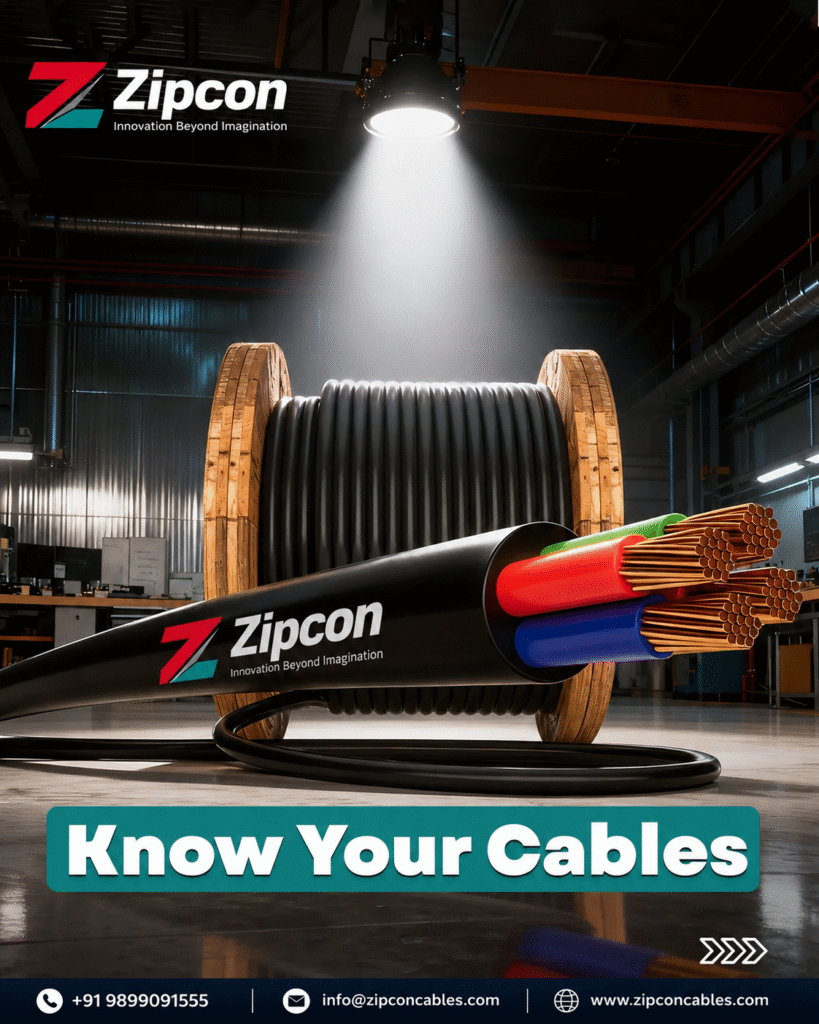
Zipcon Cables
Which wire is used for Air Conditioner and HVAC Systems ?

Choose the Zipcon Caples is right wire for an air conditioner or HVAC system matters more than most people think. The wrong cable can lead to overheating, high voltage drop, or even equipment failure. Most installations rely on either copper or aluminium conductors, and both have strengths depending on load, distance, and the environment where they are installed. A good choice comes from understanding how each wire behaves under typical HVAC conditions.

Get a Quote:- @https://zipconcables.com/contact-us/

Conductivity and Heat Handling

Copper has higher conductivity than aluminium, so it carries current more efficiently. This means a copper cable can deliver the same power with a smaller cross-section, which keeps voltage drop in control even when the AC runs at peak load. Copper also handles heat better & best cables manufacturer in india. When the compressor cycles and current spikes, copper maintains stability without softening or expanding as much. Aluminium can work well too, but it requires a larger gauge to match the same current capacity, which affects installation planning. In small indoor runs, this difference is manageable. On longer or high-load paths, the drop across aluminium becomes noticeable.

Durability and Mechanical Strength

Copper stands up better to bending, vibration, and repeated heating cycles. HVAC units produce vibration, especially outdoor condensers, and copper survives these stresses with fewer failures at joints. Aluminium is lighter, but it is more prone to breaking if over-bent or pulled through conduit without care. Most electricians avoid aluminium in tight bends or areas that require frequent maintenance access. For fixed, open-path cable trays in commercial buildings, aluminium wire is still widely used and performs well when sized correctly.

Weight and Cost in Real Projects

Copper is heavier and more expensive. Best Aluminium wire Manufacturer in India is significantly lighter, which helps when running long cables across rooftops or multi-storey ducts. Many large commercial and industrial jobs prefer aluminium simply because long-distance copper cabling becomes costly and difficult to support. In smaller homes, the difference in cost and weight is minor since the total length is short. Residential installers nearly always choose copper because its reliability outweighs the small price difference at this scale.

Safety and Joint Quality

Copper makes stronger, more stable connections at terminals. It resists oxidation and maintains a firm grip over time, which reduces the risk of loose contacts and overheating. Aluminium needs special care at joints, including anti-oxidation paste and proper tightening torque. If an aluminium connection is not prepared correctly, thermal expansion can loosen it over time. Trained technicians handle this easily in commercial projects, but copper still remains safer for household setups where access to skilled maintenance is limited.

Installation Conditions: Home, Commercial, and Industrial

In a typical home AC installation, runs are short and loads are moderate. Copper wires are easy to handle, flexible enough for wall conduits, and well-suited for the frequent thermal cycling of residential air conditioners. A 1 to 1.5-ton split AC, for instance, usually runs on copper because it keeps drop low over 10–20 meters.

In commercial buildings, the central HVAC system draws heavier current and runs across long distances from power rooms to outdoor chillers or rooftop units. Aluminium cabling becomes practical here. It reduces project cost and weight while still meeting load requirements when sized properly. Industrial setups follow this pattern, especially in plants with large chillers, long corridors, and cable trays designed for heavy conductors.

Real-World Scenarios and Practical Comparisons

If the distance between the panel and the AC is short, copper wins. It keeps voltage in range and avoids compressor strain. For example, a window AC wired from a nearby MCB panel benefits from copper because the drop is almost negligible.

When the distance is long, aluminium becomes more reasonable. Imagine a commercial chiller placed 60–80 meters away from the main power panel. Copper will work but will cost more, weigh more, and require larger support structures. Aluminium, sized one or two gauges higher, delivers the same performance for a fraction of the cost.

Outdoor environments also influence the choice. Copper handles moisture, sun exposure, and vibration better when used in outdoor conduits that feed rooftop units. Aluminium can be used outdoors as well but needs better sealing at terminations to avoid oxidation. For rooftop cable trays, its lighter weight is helpful since installers can run longer spans without overloading support brackets.

Voltage Drop Considerations

High starting current from compressors demands cables that can maintain stable voltage. Copper naturally keeps the drop lower, especially where the supply fluctuates. In areas with weak power supply or frequent voltage dips, copper gives more headroom. Aluminium is fine for stable commercial feeders, but in homes or small shops where supply varies, copper keeps the compressor safer.

Final Recommendations

For split AC units in homes, copper is the ideal choice. It stays stable, handles current spikes well, and needs minimal maintenance.

For window AC units, the requirement is similar. Short runs favor copper because it is simple, safe, and easy to install.

For central HVAC systems in commercial buildings, aluminium is often the better option. The long cable runs and heavy feeders make its lower weight and cost more practical.

For long-run cables from power rooms to rooftop or outdoor condensers, aluminium performs well when sized correctly and terminated properly.

For outdoor installations exposed to heat, moisture, or vibration, copper offers stronger mechanical stability, but aluminium remains acceptable in structured cable trays with good termination work.

A simple rule helps:

  • Use copper for short, high-stability, or residential installations.
  • Use aluminium for long-distance, large-capacity, or commercial and industrial feeders.

This balance keeps HVAC systems running reliably, safely, and without unnecessary cost.

Flexible vs Solid Wire: Which Is Better for Home Use?

Choosing the right type of wire for a home installation is more important than most people realize. The wiring you select affects performance, safety, lifespan, and even how easy it is to complete an installation. Flexible and solid wires are the two most commonly used options in residential applications, and both come with clear strengths. Understanding where each one performs better makes decision-making far easier, whether you’re an electrician, contractor, or homeowner planning upgrades.

Conductivity: How Well Do They Carry Current?

Solid wire has a slight advantage in conductivity because it is made from a single copper conductor. With no air gaps or multiple strand junctions, current flows smoothly with very low resistance. This is why solid copper wire is often the preferred option for fixed home wiring, especially for lighting circuits, power sockets, and internal wall wiring.

Flexible wire is made from multiple thin copper strands twisted together. While copper itself is highly conductive, the strand-to-strand contact points can introduce a bit more resistance. In real-world home use, the difference is small, but for long runs or high-load circuits, solid copper wire tends to deliver more stable performance.

Durability: Which One Handles Stress Better?

Durability depends on the kind of stress the wire faces.

Solid wire holds its shape and is more resistant to bending fatigue. Since it won’t be moved once installed behind walls, ceilings, or conduits, it tends to last longer in static environments.

Flexible wire shines in situations that involve motion or vibration. The multiple strands give it greater bend tolerance, making it far less likely to crack when repeatedly folded or twisted. This makes flexible wires a reliable choice for fans, appliances, control panels, or lighting fixtures that may be opened or serviced occasionally.

For wiring concealed inside walls, durability favors solid copper. For exposed or movable connections, strand flexibility becomes an advantage.

Weight: What Difference Does It Make?

Solid copper wire is slightly heavier because it is a single thick conductor. In short home runs, the weight difference doesn’t change much. But when pulling wire over long distances in conduits or overhead areas, flexible wire feels lighter and easier to route.

For most residential uses, weight is not a major deciding factor, but installers often appreciate the handling ease of flexible wires in tight or complex pathways.

Cost: Which One Fits the Budget?

Solid wire is generally more affordable to manufacture, so it costs less per meter. If you’re wiring an entire home where hundreds of meters may be used, solid copper becomes a cost-effective option without compromising performance.

Flexible wire is slightly more expensive because of the added manufacturing involved in creating many fine copper strands. Homeowners usually prefer flexible wire only where necessary, rather than throughout the whole house, to keep costs reasonable.

Safety: Which One Offers Better Protection?

Both wire types are safe when used correctly, but their safety profiles differ based on application.

Solid copper wire has fewer fatigue points and is less prone to strand breakage. This makes it safer for long-term, concealed wiring inside conduits and walls where disturbances are rare.

Flexible wire handles movement better, which makes it safer in environments where bending could otherwise cause cracks in a solid wire. However, if poorly terminated, flexible wires can fray or loosen at connection points, which increases the risk of short circuits. This is why proper lugs, ferrules, and secure terminals are essential whenever flexible copper wires are used in home installations.

Installation Needs: Which One Is Easier to Work With?

Solid wires are straightforward to route in simple paths, but they can be challenging when dealing with tight bends or crowded switch boxes. Their rigidity can make them difficult to manipulate around sharp corners.

Flexible wires offer much easier maneuverability. Electricians often prefer flexible copper cables in scenarios such as:

  • Routing wires through small switchboard spaces
  • Connecting ceiling fans or underground pump sets
  • Installing home automation modules
  • Wiring appliances with tight or curved internal layouts

For concealed wiring behind walls, solid wire still remains the standard choice because it stays in place and is easy to pull through conduits.

Typical Home Use Cases

Here’s a practical breakdown of where each wire performs best in home installations:

Best Use Cases for Solid Wire

  • Concealed house wiring
  • Lighting and power circuits
  • Long conduit runs
  • Fixed installations with no movement
  • Main electrical connections

Best Use Cases for Flexible Wire

  • Fans, inverters, and home appliances
  • Distribution boards with tight spaces
  • Areas requiring repeated bending
  • Temporary wiring setups
  • Control wiring in home automation devices

Copper Performance: When It Matters Most

Copper has long been the preferred conductor for home wiring because of its high conductivity and reliability. Copper solid wires provide excellent performance for long-term fixed use, minimizing power loss and heat buildup.

Copper flexible cables add convenience and adaptability without losing core conductivity benefits. When movement, vibration, or complex bends are involved, flexible copper wiring delivers better reliability than a rigid alternative.

How to Choose: A Simple Recommendation

If your installation is fixed, long-lasting, and concealed, Zipcon solid copper wire is the better choice.
If your installation requires flexibility, frequent handling, or tight bends, choose to Zipcon flexible copper wire.

In most modern homes, both types are used together. Solid copper forms the backbone of the electrical system, while flexible copper is used for appliances, switches, and areas requiring maneuverability.

Both types play essential roles in safe, efficient home wiring, and understanding these differences helps homeowners and professionals choose the right cable for the job while ensuring long-term reliability and performance.

What Is Annealing of Copper and How It Improves Wire Quality?

Annealing is a critical process in the production of copper wires, significantly enhancing their electrical, mechanical, and physical properties. It involves heating copper to a specific temperature and then cooling it at a controlled rate, which helps relieve internal stresses and improve the wire’s flexibility. This article will explore how annealing enhances copper wire performance, particularly in areas such as conductivity, durability, weight, cost, safety, and installation needs.

Conductivity: Maximizing Electrical Efficiency

Copper is well-known for its excellent conductivity, which is why it is widely used for electrical wiring. Annealing copper wire enhances its conductivity by reducing internal stress and imperfections, which can increase resistance. During the cold-drawing process, copper wires can become rigid and develop dislocations, which hinder the flow of electricity. However, annealing helps relax these dislocations and reduces electrical resistance, allowing electricity to flow more efficiently.

Annealed copper wires are especially beneficial in applications where high conductivity is required, such as in power distribution systems, high-performance electronics, or industrial machinery. The improved conductivity ensures that energy loss during transmission is minimized, which ultimately improves the efficiency of electrical systems.

Practical Insight: For engineers and electricians working with energy-efficient systems or power-critical installations, annealed copper is the preferred choice, as it offers superior electrical performance and reduces energy losses.

Durability: Enhancing Longevity and Stress Resistance

Annealing significantly improves the durability of copper wires. When copper is drawn into wires, it becomes harder and more brittle, making it prone to mechanical stress and breakage. The annealing process softens the wire, relieving internal stresses and making it more malleable and resistant to bending, stretching, or fracturing. This is especially important in applications where copper wires are subjected to constant mechanical stress, such as in industrial machinery, telecommunications, or outdoor electrical installations.

Annealed best copper wires manufacturer in delhi are more resilient to environmental factors such as extreme temperatures, humidity, and mechanical wear, which helps extend their lifespan. The ability of annealed copper to withstand physical stress without breaking or cracking makes it a reliable choice for long-term installations, reducing the frequency of replacements and maintenance costs.

Practical Insight: For high-demand industries, including aerospace, manufacturing, and construction, where wires are exposed to vibration and physical stress, annealed copper offers superior durability and longevity, making it a more cost-effective long-term solution.

Weight and Cost: Balancing Performance and Efficiency

One of the key characteristics of annealed copper is its increased flexibility. The annealing process softens the copper, making it easier to bend, twist, and route without compromising its integrity. This flexibility is especially advantageous during installation, particularly when wires need to be threaded through tight spaces or complex setups.

While annealing adds some cost to the manufacturing process, the enhanced performance of annealed copper justifies the price for most high-performance applications. The added flexibility and reduced internal stress allow the wire to endure more bending and movement, minimizing the risk of wire fatigue and breakage, which would otherwise lead to costly maintenance.

The weight of annealed copper wire is also affected by the annealing process, with some reduction in mass due to the wire’s increased flexibility. Though this can make the wire slightly lighter compared to non-annealed copper, the trade-off in terms of increased functionality and ease of installation is significant.

Practical Insight: For projects requiring flexibility, such as residential wiring or installations in tight spaces, the benefits of annealed copper far outweigh the additional cost. In complex installations, the enhanced ease of handling and reduced risk of breakage make it a worthwhile investment.

Safety: Preventing Fatigue and Overheating

Safety is paramount when selecting wiring materials, especially when copper wires are exposed to high electrical loads or extreme physical conditions. Non-annealed copper can become brittle over time, leading to the risk of wire breakage, fatigue, and overheating, especially under constant movement or when subjected to fluctuating temperatures.

Annealing copper reduces the risk of these issues by softening the metal, allowing it to maintain its flexibility and resist breakage. Annealed copper wire is better able to cope with thermal expansion and contraction, which reduces the chances of overheating—a common issue in electrical systems. This improves the overall safety of the installation by minimizing the risk of fire or electrical failures caused by damaged wires.

Practical Insight: In safety-critical environments such as power plants, industrial machinery, or commercial buildings, using annealed copper wires reduces the likelihood of dangerous failures. For electricians, using annealed copper adds an extra layer of safety by preventing wire fatigue and minimizing overheating risks.

Installation Needs: Flexibility for Easy Handling

Annealed copper wires are easier to install compared to non-annealed wires due to their enhanced flexibility. The wire’s malleability makes it easier to maneuver through tight spaces, around corners, and into complex installations. This is particularly beneficial in areas like residential wiring, telecommunications, or industrial setups where flexibility is key to ease of installation.

Unlike rigid, non-annealed copper, which may break or damage surrounding materials when bent too much, annealed copper can be routed and shaped without compromising its integrity. This not only speeds up installation but also reduces the risk of errors during the process.

Practical Insight: For electricians working in confined spaces, using annealed copper wire simplifies the process. Its ease of bending and installation reduces time and effort, ensuring a smooth installation process and reducing the likelihood of wire damage during installation.

Typical Use Cases for Annealed Copper Wires

Annealed copper wires are commonly used in applications that require high conductivity, flexibility, and durability. Some typical use cases include:

  • Residential and Commercial Electrical Wiring: Annealed copper is the preferred choice for household and commercial power systems due to its high conductivity and ease of installation.
  • Telecommunications: Annealed copper is often used in telecommunications infrastructure, where the wire needs to carry high-frequency signals efficiently.
  • Industrial Machinery: In industries where wires are exposed to constant mechanical stress and environmental factors, annealed copper wires provide long-lasting performance.

When compared to alternatives like aluminum or steel, annealed copper offers superior conductivity, flexibility, and overall reliability. While aluminum is lighter and cheaper, it has a higher resistance and lacks the long-term durability of copper. Steel, though strong, doesn’t offer the same level of electrical efficiency, making copper the go-to choice for most electrical wiring applications.

Searching for the Best Wire & Cables Manufacturer in India?

In order to choose the best wire for home, it is essential to ensure long-lasting safety, energy efficiency, and a smooth power supply from selected brands. Wiring is a hidden essential of your home that plays a crucial role in protecting your appliances, preventing fire hazards, and maintaining the performance of your home’s electrical setups. Be it constructing a new home or renovating an old one, selecting the best quality electric wire for house electrification projects is essential to maintain safety and long-term costs. Low-quality and uncertified wires save money but lead to overheating and frequent short circuits, and even pose life-threatening risks. The Indian market is flooded with numerous wire types, insulation materials, and brands, making choices quite a difficult task for most of us. Now, the question arises: how to know which is the best wire for home wiring while purchasing? This blog talks about different wire types for home wiring, features of wires, tips on installation, and how to make the right choice when buying.

Types of Wires for Home Wiring in India

There are multiple types of wires available in the market; choosing the best wire for house wiring ensures safety and performance. That is why it is crucial to know which company wire is best for house wiring in India to ensure high performance.

  • Non-Metallic (NM) Sheathed Cable – Best for Indoor Wiring
    • Non-metallic sheathed cable contains multiple insulated conductors enclosed in durable plastic that makes them ideal for indoor residential electrical wiring.
    • These are commonly used in dry places and offer easy installation and a standard choice for interior home wiring systems.
  • Armored Cable (AC) – Ideal for Safety in Exposed Areas
    • Armored cables feature a protective metal sheath that protects the internal wires from physical damage in exposed or high-risk areas.
    • These cables are considered best for basements and AC wires that enhance safety by resisting moisture and accidental cuts during and after installation.
  • Underground Feeder (UF) Cable – Best for Outdoor Use
    • Underground feeder cables (UF) are moisture-resistant cables and considered suitable for powering outdoor lighting and garden equipment.
    • UF cables are the best wires in India to use for outdoor purposes, which are used directly below the soil.
  • THHN Wire – Heat Resistant & Long-Lasting
    • THHN wires are heat-resistant, nylon-coated insulation that makes the best solution for heavy load areas such as kitchens, air conditioners, and geysers.
    • These wires are ideal for high-performance electrical delivery that ensures efficient, durable, and the best wire for home.
  • Copper-Clad Aluminium (CCA) – Cost-Effective Alternative
    • CCA wires are the combination of aluminum with copper coating that offers a lightweight and budget-friendly option for low-load electrical applications in homes.
    • These are not as efficient as copper wires, so copper wire is the best wire for wiring to ensure long-lasting electrical system safety and performance.
  • Coaxial Cable – for TV and Internet Connections Only
    • Coaxial cables contain a central conductor, an insulating layer, and shielding and are designed specially for high-frequency signal transmission in homes.
    • These cables are used in data transmission of Internet and cable TV but are not perfect for electrical current conductivity.
    • However, coaxial wires complement electrical wires as the best quality wire for homes to ensure smart home connectivity and communication.

How to Select the Best Quality Electric Wire for a Home

In order to choose the best wire for house wiring, it is crucial to ensure safety, energy efficiency, and durability. Let us understand its features, such as conductor material, insulation, and other factors, when selecting the best quality electric wire for house wiring needs in India.

FeatureDescription
Wire Gauge: How Thickness Affects PerformanceThicker wires reduce resistance and allow more current flow and minimize heat buildup while using. Common wire gauges such as 1.5 mm² are ideal for lighting, and 2.5 mm² for sockets are best for home wiring.
Copper vs Aluminum: Which Conductor is Better?Copper wires conduct electricity more efficiently and generate less heat and ensure long-lasting performance in home electrical systems. Generally, the best wire brand in India provides pure copper wires that help ensure the safety performance of electrical systems.
Wire Insulation TypesFlame Retardant, Heat and Flame Retardant, and Zero Halogen Flame Retardant insulations are best for fire safety in residential wiring. Its advanced insulation types make it the best wire for home that ensures long-lasting protection and reliable electrical performance.
Voltage Ratings & Load CapacityChoose wires that support 220 to 240 volts; they are best for standard domestic electrical usage. The selected wire’s ampacity should match the power load needed in every room of your home.
Wires for Indoor vs Outdoor UseSelect house wire brands based on their usage, whether you are buying them for indoor or outdoor purposes. Trusted brands offer home wiring with tough insulation that could resist moisture, UV rays, and physical damage.
ISI Mark & BIS Safety CertificationEnsure ISI and BIS certifications of the selected best wire for the house to ensure safety and quality. Choose wires from top brands that meet all Indian and international quality and safety standards.

Understanding Ampacity, Load, and Wire Size

In order to select the best wire for a house in India, you need to understand ampacity, load demands, and proper wire size. These factors help ensure safety, efficiency, and performance without overheating or voltage drops in high-load areas.

ElementDescription
What Is Ampacity and Why It MattersAmpacity is concerned with the maximum electrical current a wire can safely handle continuously. Exceeding ampacity can cause overheating that includes the risk of short circuits or fire hazards.
Calculating Load by Room and ApplianceLet us understand it with the help of a table:
Room and ApplianceLoadRecommended Wire Size
Lighting1000 W1.5 mm²
Kitchen/Heavy Use3000 W4 mm²
Air Conditioners1500 to 2500 W2.5 to 4 mm²
  • Recommended Wire Sizes for Kitchen, ACs & Lighting
    • Using 1.5 mm² wire for lighting ensures safe electrical operation.
    • 2.5 mm² is best for sockets and general electrical appliances.
    • Select 4 mm² or higher to ensure heavy kitchen and AC load.

Safe Electrical Wire Installation Tips for Your Home

Installing wire safely is crucial to get the optimum performance from the best wire for home. Follow expert tips and tools to ensure the best results.

  • Plan the Load & Wiring Layout Strategically: Plan the load and wiring layout strategically so that it helps design separate circuits for lights, sockets, and heavy appliances to balance the electrical load and avoid short circuits.
  • Use Certified Tools and Fittings: Install wiring with branded MCBs, switchgear, and certified tools that help ensure electrical safety, proper connections, and long-lasting performance in your homes.
  • Follow Color Codes & Label Wires Clearly: Follow color codes and label wires clearly to ensure red for live, black for neutral, and green for earth level wires that help maintenance and fault identification later.
  • Avoid Wire Damage with Proper Mounting: Ensure proper wire installation by mounting wires with the help of PVC conduits and secure clamps to protect against rodent attacks and friction damage.
  • Test Circuits Post Installation: Ensure voltage and continuity tests to maintain safe, complete, and reliable electrical operation.

Maintenance Tips for Long-Term Safety & Wire Efficiency

Ensuring long-term safety and performance requires regular maintenance of your home’s electrical wires. Have a glance at the following maintenance tips for safety and efficiency.

  • How Often Should You Inspect Wiring?
    • Older properties with increasing electrical usage or high-powered appliances require professional inspection every 3 to 5 years.
  • Warning Signs: Frayed, Burnt, or Outdated Wires
    • Check out for signs such as discolored outlets, burning smells, or exposed and frayed wires that indicate an immediate need for replacement to prevent hazards.
  • When to Upgrade or Consult a Licensed Electrician
    • If your home is older than 10 to 15 years or your demand for energy has increased, consult an electrician for a complete wiring evaluation.

Summary: Final Thoughts on the Best Wire for House Wiring

In order to ensure a safe and efficient electrical system in your homes, regular checks are unavoidable. Let us have a glance at it.

Use CaseRecommended Wire Type
Lighting1.5 mm² copper flame retardant wire
Socket and power points2.5 mm² copper heat and flame retardant wire
Kitchen Appliances4 mm² copper Zero halogen flame retardant
Outdoor lightsUnderground feeder cables

Expert Verdict: Go with Copper Wires from Trusted Brands

As per expert recommendation, select home wire for electrical wiring that offers superior conductivity, greater safety, and a longer lifespan than aluminum and copper. To ensure the best result, prefer ISI-marked copper wires from a reliable brand in the market.

Top Wire Brands (Including ZIPCON Cables)
ZIPCON Cables, Havells, Polycab, Finolex, RR Kabel

Choose one of these top wire brands for your safe home wiring. With these top companies, you can ensure the safety, durability, and performance of electrical systems.

Conclusion

Are you looking for the best wire for home wiring in India? Choosing a reliable wire manufacturer becomes crucial, which helps ensure safety, long-term reliability, and energy efficiency. ZIPCON Cables offers ISI-marked home wiring solutions in India that guarantee peace of mind with their high-quality performance and long-lasting durability. So, why wait any longer? Choose ZIPCON Cables today and power your home with confidence.

Solar Cables vs Regular Electrical Cables: Why Choose Zipcon Solar Cables
Zipcon Solar Cables

Unlike regular electrical cables designed for indoor power distribution, solar cables are engineered for long-term outdoor performance. Built for extreme conditions, Zipcon Solar Cables can endure intense UV radiation, moisture, and temperature variations—ensuring uninterrupted and efficient energy transmission for decades.

High-quality solar PV cables from Zipcon Cables use tinned copper conductors that prevent corrosion and maintain excellent conductivity. They feature cross-linked polyethylene (XLPE) or ethylene propylene rubber (EPR) insulation for exceptional heat and UV resistance. Regular electrical cables, often insulated with PVC, tend to harden or crack under sunlight, making them unfit for solar power applications.

Designed for high-voltage DC currents (up to 1500V), Zipcon solar DC cables ensure minimal power loss and stable system performance. Their halogen-free, flame-retardant design adds safety and meets strict environmental standards. This combination of durability, safety, and efficiency makes Zipcon Solar Cables the preferred choice for photovoltaic (PV) systems and renewable energy projects.

1. Purpose and Application

While regular electrical cables suit indoor use, solar cables are developed for outdoor photovoltaic systems that must perform reliably for over 25 years. They connect solar panels, inverters, and storage systems, efficiently transmitting DC power from sunlight conversion. Zipcon solar PV cables maintain high conductivity even under constant heat, UV exposure, and humidity, ensuring stable energy output in every condition.

2. Insulation and Sheathing

Zipcon Solar Cables feature XLPE or EPR insulation, offering outstanding resistance to UV rays, heat, and ozone. The UV-resistant outer sheath is halogen-free, ensuring safety and eco-friendliness during fire incidents. In contrast, PVC-insulated cables can degrade and crack, increasing the risk of electrical faults over time.

3. Temperature and Weather Resistance

Zipcon Solar DC Cables are designed to operate efficiently between -40°C and +120°C, performing seamlessly under rain, dust, and sunlight. Regular electrical wires lack this endurance and can experience voltage drops or insulation failures in outdoor conditions, leading to energy loss or short circuits.

4. Conductor Material

Zipcon uses tinned copper conductors in its solar cables, ensuring corrosion resistance in humid or coastal environments. This guarantees consistent performance and long-term safety. Regular electrical cables typically use bare copper, which oxidizes easily, reducing efficiency and reliability.

5. Electrical Characteristics

Solar cables from Zipcon Cables are optimized for high-voltage DC transmission, supporting up to 1500V with minimal energy loss. Their structure reduces voltage drop and enhances overall system performance. Regular electrical wires, designed for AC current, are not suited for the continuous DC flow required in solar installations.

6. Flexibility and Mechanical Strength

Zipcon Solar PV Cables have a fine-stranded design that allows greater flexibility during installation—ideal for routing around solar panels and mounting structures. They offer superior mechanical strength, abrasion resistance, and ease of installation, unlike regular cables that are stiffer and more difficult to handle.

7. Lifespan and Durability

Engineered for longevity, Zipcon Solar Cables match the lifespan of solar panels—25 years or more. They resist UV radiation, ozone exposure, and mechanical stress, ensuring consistent energy flow over time. In comparison, standard electrical cables degrade much faster outdoors, resulting in higher maintenance and replacement costs.

8. Safety Standards

All Zipcon Solar DC Cables meet international certifications like IEC 62930, EN 50618, and TÜV Rheinland, ensuring flame resistance, UV stability, and reliable performance. Regular electrical cables only comply with basic local standards, making them unsuitable for PV systems.

9. Environmental Impact

Zipcon Solar Power Cables are halogen-free and RoHS compliant, ensuring no toxic emissions during combustion. This makes them safe for users and the environment. PVC-based electrical cables, on the other hand, release harmful chlorine gases when burned, posing environmental and health risks.

10. Why Choose Zipcon Solar Cables

Zipcon Cables stands for quality, technology, and reliability. Every solar cable is designed to deliver maximum energy efficiency, safety, and sustainability for residential, commercial, and industrial solar projects.

Key Advantages of Zipcon Solar Cables:

  • Superior UV and ozone resistance for long-term durability
  • High flexibility for easy installation on rooftops and solar farms
  • Premium insulation materials ensuring heat and mechanical stability
  • Certified as per IEC and TÜV international standards
  • Eco-friendly construction aligned with renewable energy goals

With Zipcon solar wires, you get long-lasting performance and peace of mind that every connection supports a cleaner, greener energy future, best cable manufacturer in delhi or india.

Why Use Solar Cables: Key Benefits

Choosing Zipcon Solar Cables over regular electrical wires brings measurable benefits:

  • Extended Lifespan: Designed to last as long as solar panels, reducing replacements.
  • Higher Efficiency: Superior conductors minimize energy loss and voltage drop.
  • Enhanced Safety: Flame-retardant, halogen-free materials ensure fire protection.
  • Low Maintenance: UV and weather resistance reduces failure risks and service costs.
  • Better Flexibility: Simplifies installation on any terrain or solar configuration.
  • Eco-Friendly Design: RoHS-compliant, halogen-free cables promote sustainability.
  • Certified Reliability: Meets global standards for performance and safety.
  • Optimized ROI: Efficient energy transmission maximizes your solar investment.

Conclusion

Zipcon Solar Cables represent the perfect blend of innovation, efficiency, and reliability. Unlike regular electrical cables, they are purpose-built for solar power systems, offering superior insulation, high flexibility, and unmatched durability.

By choosing Zipcon Cables, you invest in a trusted solar cable manufacturer in India known for quality, safety, and performance. Whether it’s a rooftop system or a large solar farm, Zipcon Solar DC Cables ensure every watt is transmitted efficiently and safely—powering a cleaner, sustainable tomorrow.

Zipcon Cables — Powering the Future with Durable, Safe, and Efficient Solar Connections.