Zipcon Cables
How to Reduce Electricity Bill by 30% Using Smart Tricks

Cutting your electricity bill by 30% sounds ambitious, but it’s realistic when you combine smart habits with technically sound choices. Many people focus only on appliances, but the wiring behind those appliances often has just as much impact on power consumption. Zipcon Cables Provides Better Conductivity Wire & Cables, lower voltage drop, and safer installation all add up to cleaner, more efficient energy use. With the right cables and a few everyday adjustments, both homeowners and professionals can achieve significant savings without expensive upgrades.

Use Better Cables to Reduce Power Loss

A major portion of electricity loss happens in the wiring itself. When current flows through a cable, resistance converts some of that energy into heat. Higher resistance means more heat and higher bills. This is where cable quality matters, especially in high-load circuits like air conditioners, water heaters, and heavy appliances.

Copper cables naturally have better conductivity than aluminium. They carry current smoothly with lower resistance, which reduces voltage drop and improves appliance performance. Aluminium cables can still be efficient when sized correctly, but they need a larger diameter to match the performance of copper.

Zipcon Cables are engineered to reduce these losses by maintaining strong conductivity, heat resistance, and long-term stability. Their insulation handles high temperatures without degrading, which keeps resistance predictable and prevents energy waste.

Copper vs Aluminium: Where Each One Works Best

Copper performs better when the load is high or when the wiring distance is long. Homes with rooftop solar systems, large HVAC units, or indoor-to-outdoor connections benefit from the higher efficiency of copper cables. Copper also maintains its strength over time, which means fewer loose joints and lower fire risk.

Aluminium cables are lighter and more cost-friendly. They work well for long trunk lines and overhead connections where weight matters. In commercial buildings with long cable trays, aluminium becomes a practical choice if sized one or two gauges higher.

A simple comparison helps:

  • Copper: Higher conductivity, stronger, safer, ideal for home appliances, HVAC, and short to medium distances.
  • Aluminium: Cheaper, lighter, good for long industrial runs and areas where frequent maintenance is available.

Engineers and electricians often choose Zipcon’s copper-based cables for high-load equipment because they maintain stable voltage and reduce compressor stress, which directly cuts electricity use.

Ensure Proper Installation to Avoid Hidden Energy Losses

Even the best cable wastes energy if installed incorrectly. Loose joints create micro-sparks and heat, increasing consumption and posing safety risks. Sharp bends increase resistance. Oversized or undersized cables also cause unnecessary loss.

A well-installed circuit maintains steady current flow and keeps appliances running smoothly at their peak efficiency. This is why professionals value Zipcon Cables—they hold their flexibility and strength during installation, reducing the chance of bends, cracks, or poor terminations.

Reduce Load on Heavy Appliances

Air conditioners, refrigerators, washing machines, and heaters consume the most electricity. A few smart adjustments can lower their usage by 15–20% alone:

  • Keep ACs at 24–26°C instead of 18–20°C.
  • Clean air filters regularly to reduce compressor strain.
  • Avoid overloading washing machines.
  • Turn off appliances fully instead of leaving them on standby.

When appliances run with stable voltage (thanks to good wiring), they complete cycles faster and draw less current. Zipcon’s low-loss cables help maintain that stability.

Fix Voltage Drop in Long Runs

Voltage drop becomes a major issue in long cable paths—for example, from your main panel to the outdoor AC unit or rooftop solar inverter. If voltage drops too low, the motor or inverter compensates by drawing more current, increasing your bill.

Copper reduces this drop significantly. Aluminium can do the job but needs thicker sizing. In small homes, the difference between using a cheap cable and a Zipcon copper cable can translate to hundreds of rupees saved each month.

Optimize Lighting and Daily Use

Small changes in lighting can save up to 10% each month:

  • Replace old CFLs and tube lights with LEDs.
  • Use daylight whenever possible.
  • Install motion sensors in low-traffic areas.

Running lights and fans on stable voltage reduces wear and extends their life. Consistent power delivery from Zipcon Cables supports this kind of long-term efficiency.

Use Smart Power Management

Plug-in timers, power strips with master switches, and smart plugs help eliminate standby losses. Refrigerators, routers, TV boxes, and chargers consume power even when idle.

A high-quality cable system reduces fluctuations, allowing smart devices to operate in their most efficient mode.

Choose Copper or Aluminium Based on Application

A simple recommendation makes this choice easy:

  • For home appliances, HVAC units, kitchen circuits, solar systems, and all short-to-medium runs — choose copper. It ensures lower voltage drop and better long-term savings.
  • For long-distance feeder lines, rooftop-to-ground connections, and industrial cable trays — aluminium works well when sized properly.

Zipcon’s copper cables are the preferred choice for energy-saving installations because they maintain high efficiency even under heavy load.

Final Thoughts

Reducing your electricity bill by 30% doesn’t require drastic changes. It comes from choosing the right cables, maintaining stable voltage, preventing energy loss, and using appliances wisely. With reliable options like Zipcon Cables and a few smart habits, any home or small business can cut costs, improve safety, and enjoy long-term performance without spending much.

Which wire is used for Air Conditioner and HVAC Systems ?

Choose the Zipcon Caples is right wire for an air conditioner or HVAC system matters more than most people think. The wrong cable can lead to overheating, high voltage drop, or even equipment failure. Most installations rely on either copper or aluminium conductors, and both have strengths depending on load, distance, and the environment where they are installed. A good choice comes from understanding how each wire behaves under typical HVAC conditions.

Get a Quote:- @https://zipconcables.com/contact-us/

Conductivity and Heat Handling

Copper has higher conductivity than aluminium, so it carries current more efficiently. This means a copper cable can deliver the same power with a smaller cross-section, which keeps voltage drop in control even when the AC runs at peak load. Copper also handles heat better & best cables manufacturer in india. When the compressor cycles and current spikes, copper maintains stability without softening or expanding as much. Aluminium can work well too, but it requires a larger gauge to match the same current capacity, which affects installation planning. In small indoor runs, this difference is manageable. On longer or high-load paths, the drop across aluminium becomes noticeable.

Durability and Mechanical Strength

Copper stands up better to bending, vibration, and repeated heating cycles. HVAC units produce vibration, especially outdoor condensers, and copper survives these stresses with fewer failures at joints. Aluminium is lighter, but it is more prone to breaking if over-bent or pulled through conduit without care. Most electricians avoid aluminium in tight bends or areas that require frequent maintenance access. For fixed, open-path cable trays in commercial buildings, aluminium wire is still widely used and performs well when sized correctly.

Weight and Cost in Real Projects

Copper is heavier and more expensive. Best Aluminium wire Manufacturer in India is significantly lighter, which helps when running long cables across rooftops or multi-storey ducts. Many large commercial and industrial jobs prefer aluminium simply because long-distance copper cabling becomes costly and difficult to support. In smaller homes, the difference in cost and weight is minor since the total length is short. Residential installers nearly always choose copper because its reliability outweighs the small price difference at this scale.

Safety and Joint Quality

Copper makes stronger, more stable connections at terminals. It resists oxidation and maintains a firm grip over time, which reduces the risk of loose contacts and overheating. Aluminium needs special care at joints, including anti-oxidation paste and proper tightening torque. If an aluminium connection is not prepared correctly, thermal expansion can loosen it over time. Trained technicians handle this easily in commercial projects, but copper still remains safer for household setups where access to skilled maintenance is limited.

Installation Conditions: Home, Commercial, and Industrial

In a typical home AC installation, runs are short and loads are moderate. Copper wires are easy to handle, flexible enough for wall conduits, and well-suited for the frequent thermal cycling of residential air conditioners. A 1 to 1.5-ton split AC, for instance, usually runs on copper because it keeps drop low over 10–20 meters.

In commercial buildings, the central HVAC system draws heavier current and runs across long distances from power rooms to outdoor chillers or rooftop units. Aluminium cabling becomes practical here. It reduces project cost and weight while still meeting load requirements when sized properly. Industrial setups follow this pattern, especially in plants with large chillers, long corridors, and cable trays designed for heavy conductors.

Real-World Scenarios and Practical Comparisons

If the distance between the panel and the AC is short, copper wins. It keeps voltage in range and avoids compressor strain. For example, a window AC wired from a nearby MCB panel benefits from copper because the drop is almost negligible.

When the distance is long, aluminium becomes more reasonable. Imagine a commercial chiller placed 60–80 meters away from the main power panel. Copper will work but will cost more, weigh more, and require larger support structures. Aluminium, sized one or two gauges higher, delivers the same performance for a fraction of the cost.

Outdoor environments also influence the choice. Copper handles moisture, sun exposure, and vibration better when used in outdoor conduits that feed rooftop units. Aluminium can be used outdoors as well but needs better sealing at terminations to avoid oxidation. For rooftop cable trays, its lighter weight is helpful since installers can run longer spans without overloading support brackets.

Voltage Drop Considerations

High starting current from compressors demands cables that can maintain stable voltage. Copper naturally keeps the drop lower, especially where the supply fluctuates. In areas with weak power supply or frequent voltage dips, copper gives more headroom. Aluminium is fine for stable commercial feeders, but in homes or small shops where supply varies, copper keeps the compressor safer.

Final Recommendations

For split AC units in homes, copper is the ideal choice. It stays stable, handles current spikes well, and needs minimal maintenance.

For window AC units, the requirement is similar. Short runs favor copper because it is simple, safe, and easy to install.

For central HVAC systems in commercial buildings, aluminium is often the better option. The long cable runs and heavy feeders make its lower weight and cost more practical.

For long-run cables from power rooms to rooftop or outdoor condensers, aluminium performs well when sized correctly and terminated properly.

For outdoor installations exposed to heat, moisture, or vibration, copper offers stronger mechanical stability, but aluminium remains acceptable in structured cable trays with good termination work.

A simple rule helps:

  • Use copper for short, high-stability, or residential installations.
  • Use aluminium for long-distance, large-capacity, or commercial and industrial feeders.

This balance keeps HVAC systems running reliably, safely, and without unnecessary cost.

Flexible vs Solid Wire: Which Is Better for Home Use?

Choosing the right type of wire for a home installation is more important than most people realize. The wiring you select affects performance, safety, lifespan, and even how easy it is to complete an installation. Flexible and solid wires are the two most commonly used options in residential applications, and both come with clear strengths. Understanding where each one performs better makes decision-making far easier, whether you’re an electrician, contractor, or homeowner planning upgrades.

Conductivity: How Well Do They Carry Current?

Solid wire has a slight advantage in conductivity because it is made from a single copper conductor. With no air gaps or multiple strand junctions, current flows smoothly with very low resistance. This is why solid copper wire is often the preferred option for fixed home wiring, especially for lighting circuits, power sockets, and internal wall wiring.

Flexible wire is made from multiple thin copper strands twisted together. While copper itself is highly conductive, the strand-to-strand contact points can introduce a bit more resistance. In real-world home use, the difference is small, but for long runs or high-load circuits, solid copper wire tends to deliver more stable performance.

Durability: Which One Handles Stress Better?

Durability depends on the kind of stress the wire faces.

Solid wire holds its shape and is more resistant to bending fatigue. Since it won’t be moved once installed behind walls, ceilings, or conduits, it tends to last longer in static environments.

Flexible wire shines in situations that involve motion or vibration. The multiple strands give it greater bend tolerance, making it far less likely to crack when repeatedly folded or twisted. This makes flexible wires a reliable choice for fans, appliances, control panels, or lighting fixtures that may be opened or serviced occasionally.

For wiring concealed inside walls, durability favors solid copper. For exposed or movable connections, strand flexibility becomes an advantage.

Weight: What Difference Does It Make?

Solid copper wire is slightly heavier because it is a single thick conductor. In short home runs, the weight difference doesn’t change much. But when pulling wire over long distances in conduits or overhead areas, flexible wire feels lighter and easier to route.

For most residential uses, weight is not a major deciding factor, but installers often appreciate the handling ease of flexible wires in tight or complex pathways.

Cost: Which One Fits the Budget?

Solid wire is generally more affordable to manufacture, so it costs less per meter. If you’re wiring an entire home where hundreds of meters may be used, solid copper becomes a cost-effective option without compromising performance.

Flexible wire is slightly more expensive because of the added manufacturing involved in creating many fine copper strands. Homeowners usually prefer flexible wire only where necessary, rather than throughout the whole house, to keep costs reasonable.

Safety: Which One Offers Better Protection?

Both wire types are safe when used correctly, but their safety profiles differ based on application.

Solid copper wire has fewer fatigue points and is less prone to strand breakage. This makes it safer for long-term, concealed wiring inside conduits and walls where disturbances are rare.

Flexible wire handles movement better, which makes it safer in environments where bending could otherwise cause cracks in a solid wire. However, if poorly terminated, flexible wires can fray or loosen at connection points, which increases the risk of short circuits. This is why proper lugs, ferrules, and secure terminals are essential whenever flexible copper wires are used in home installations.

Installation Needs: Which One Is Easier to Work With?

Solid wires are straightforward to route in simple paths, but they can be challenging when dealing with tight bends or crowded switch boxes. Their rigidity can make them difficult to manipulate around sharp corners.

Flexible wires offer much easier maneuverability. Electricians often prefer flexible copper cables in scenarios such as:

  • Routing wires through small switchboard spaces
  • Connecting ceiling fans or underground pump sets
  • Installing home automation modules
  • Wiring appliances with tight or curved internal layouts

For concealed wiring behind walls, solid wire still remains the standard choice because it stays in place and is easy to pull through conduits.

Typical Home Use Cases

Here’s a practical breakdown of where each wire performs best in home installations:

Best Use Cases for Solid Wire

  • Concealed house wiring
  • Lighting and power circuits
  • Long conduit runs
  • Fixed installations with no movement
  • Main electrical connections

Best Use Cases for Flexible Wire

  • Fans, inverters, and home appliances
  • Distribution boards with tight spaces
  • Areas requiring repeated bending
  • Temporary wiring setups
  • Control wiring in home automation devices

Copper Performance: When It Matters Most

Copper has long been the preferred conductor for home wiring because of its high conductivity and reliability. Copper solid wires provide excellent performance for long-term fixed use, minimizing power loss and heat buildup.

Copper flexible cables add convenience and adaptability without losing core conductivity benefits. When movement, vibration, or complex bends are involved, flexible copper wiring delivers better reliability than a rigid alternative.

How to Choose: A Simple Recommendation

If your installation is fixed, long-lasting, and concealed, Zipcon solid copper wire is the better choice.
If your installation requires flexibility, frequent handling, or tight bends, choose to Zipcon flexible copper wire.

In most modern homes, both types are used together. Solid copper forms the backbone of the electrical system, while flexible copper is used for appliances, switches, and areas requiring maneuverability.

Both types play essential roles in safe, efficient home wiring, and understanding these differences helps homeowners and professionals choose the right cable for the job while ensuring long-term reliability and performance.

What Is Annealing of Copper and How It Improves Wire Quality?

Annealing is a critical process in the production of copper wires, significantly enhancing their electrical, mechanical, and physical properties. It involves heating copper to a specific temperature and then cooling it at a controlled rate, which helps relieve internal stresses and improve the wire’s flexibility. This article will explore how annealing enhances copper wire performance, particularly in areas such as conductivity, durability, weight, cost, safety, and installation needs.

Conductivity: Maximizing Electrical Efficiency

Copper is well-known for its excellent conductivity, which is why it is widely used for electrical wiring. Annealing copper wire enhances its conductivity by reducing internal stress and imperfections, which can increase resistance. During the cold-drawing process, copper wires can become rigid and develop dislocations, which hinder the flow of electricity. However, annealing helps relax these dislocations and reduces electrical resistance, allowing electricity to flow more efficiently.

Annealed copper wires are especially beneficial in applications where high conductivity is required, such as in power distribution systems, high-performance electronics, or industrial machinery. The improved conductivity ensures that energy loss during transmission is minimized, which ultimately improves the efficiency of electrical systems.

Practical Insight: For engineers and electricians working with energy-efficient systems or power-critical installations, annealed copper is the preferred choice, as it offers superior electrical performance and reduces energy losses.

Durability: Enhancing Longevity and Stress Resistance

Annealing significantly improves the durability of copper wires. When copper is drawn into wires, it becomes harder and more brittle, making it prone to mechanical stress and breakage. The annealing process softens the wire, relieving internal stresses and making it more malleable and resistant to bending, stretching, or fracturing. This is especially important in applications where copper wires are subjected to constant mechanical stress, such as in industrial machinery, telecommunications, or outdoor electrical installations.

Annealed best copper wires manufacturer in delhi are more resilient to environmental factors such as extreme temperatures, humidity, and mechanical wear, which helps extend their lifespan. The ability of annealed copper to withstand physical stress without breaking or cracking makes it a reliable choice for long-term installations, reducing the frequency of replacements and maintenance costs.

Practical Insight: For high-demand industries, including aerospace, manufacturing, and construction, where wires are exposed to vibration and physical stress, annealed copper offers superior durability and longevity, making it a more cost-effective long-term solution.

Weight and Cost: Balancing Performance and Efficiency

One of the key characteristics of annealed copper is its increased flexibility. The annealing process softens the copper, making it easier to bend, twist, and route without compromising its integrity. This flexibility is especially advantageous during installation, particularly when wires need to be threaded through tight spaces or complex setups.

While annealing adds some cost to the manufacturing process, the enhanced performance of annealed copper justifies the price for most high-performance applications. The added flexibility and reduced internal stress allow the wire to endure more bending and movement, minimizing the risk of wire fatigue and breakage, which would otherwise lead to costly maintenance.

The weight of annealed copper wire is also affected by the annealing process, with some reduction in mass due to the wire’s increased flexibility. Though this can make the wire slightly lighter compared to non-annealed copper, the trade-off in terms of increased functionality and ease of installation is significant.

Practical Insight: For projects requiring flexibility, such as residential wiring or installations in tight spaces, the benefits of annealed copper far outweigh the additional cost. In complex installations, the enhanced ease of handling and reduced risk of breakage make it a worthwhile investment.

Safety: Preventing Fatigue and Overheating

Safety is paramount when selecting wiring materials, especially when copper wires are exposed to high electrical loads or extreme physical conditions. Non-annealed copper can become brittle over time, leading to the risk of wire breakage, fatigue, and overheating, especially under constant movement or when subjected to fluctuating temperatures.

Annealing copper reduces the risk of these issues by softening the metal, allowing it to maintain its flexibility and resist breakage. Annealed copper wire is better able to cope with thermal expansion and contraction, which reduces the chances of overheating—a common issue in electrical systems. This improves the overall safety of the installation by minimizing the risk of fire or electrical failures caused by damaged wires.

Practical Insight: In safety-critical environments such as power plants, industrial machinery, or commercial buildings, using annealed copper wires reduces the likelihood of dangerous failures. For electricians, using annealed copper adds an extra layer of safety by preventing wire fatigue and minimizing overheating risks.

Installation Needs: Flexibility for Easy Handling

Annealed copper wires are easier to install compared to non-annealed wires due to their enhanced flexibility. The wire’s malleability makes it easier to maneuver through tight spaces, around corners, and into complex installations. This is particularly beneficial in areas like residential wiring, telecommunications, or industrial setups where flexibility is key to ease of installation.

Unlike rigid, non-annealed copper, which may break or damage surrounding materials when bent too much, annealed copper can be routed and shaped without compromising its integrity. This not only speeds up installation but also reduces the risk of errors during the process.

Practical Insight: For electricians working in confined spaces, using annealed copper wire simplifies the process. Its ease of bending and installation reduces time and effort, ensuring a smooth installation process and reducing the likelihood of wire damage during installation.

Typical Use Cases for Annealed Copper Wires

Annealed copper wires are commonly used in applications that require high conductivity, flexibility, and durability. Some typical use cases include:

  • Residential and Commercial Electrical Wiring: Annealed copper is the preferred choice for household and commercial power systems due to its high conductivity and ease of installation.
  • Telecommunications: Annealed copper is often used in telecommunications infrastructure, where the wire needs to carry high-frequency signals efficiently.
  • Industrial Machinery: In industries where wires are exposed to constant mechanical stress and environmental factors, annealed copper wires provide long-lasting performance.

When compared to alternatives like aluminum or steel, annealed copper offers superior conductivity, flexibility, and overall reliability. While aluminum is lighter and cheaper, it has a higher resistance and lacks the long-term durability of copper. Steel, though strong, doesn’t offer the same level of electrical efficiency, making copper the go-to choice for most electrical wiring applications.

Searching for the Best Wire & Cables Manufacturer in India?

In order to choose the best wire for home, it is essential to ensure long-lasting safety, energy efficiency, and a smooth power supply from selected brands. Wiring is a hidden essential of your home that plays a crucial role in protecting your appliances, preventing fire hazards, and maintaining the performance of your home’s electrical setups. Be it constructing a new home or renovating an old one, selecting the best quality electric wire for house electrification projects is essential to maintain safety and long-term costs. Low-quality and uncertified wires save money but lead to overheating and frequent short circuits, and even pose life-threatening risks. The Indian market is flooded with numerous wire types, insulation materials, and brands, making choices quite a difficult task for most of us. Now, the question arises: how to know which is the best wire for home wiring while purchasing? This blog talks about different wire types for home wiring, features of wires, tips on installation, and how to make the right choice when buying.

Types of Wires for Home Wiring in India

There are multiple types of wires available in the market; choosing the best wire for house wiring ensures safety and performance. That is why it is crucial to know which company wire is best for house wiring in India to ensure high performance.

  • Non-Metallic (NM) Sheathed Cable – Best for Indoor Wiring
    • Non-metallic sheathed cable contains multiple insulated conductors enclosed in durable plastic that makes them ideal for indoor residential electrical wiring.
    • These are commonly used in dry places and offer easy installation and a standard choice for interior home wiring systems.
  • Armored Cable (AC) – Ideal for Safety in Exposed Areas
    • Armored cables feature a protective metal sheath that protects the internal wires from physical damage in exposed or high-risk areas.
    • These cables are considered best for basements and AC wires that enhance safety by resisting moisture and accidental cuts during and after installation.
  • Underground Feeder (UF) Cable – Best for Outdoor Use
    • Underground feeder cables (UF) are moisture-resistant cables and considered suitable for powering outdoor lighting and garden equipment.
    • UF cables are the best wires in India to use for outdoor purposes, which are used directly below the soil.
  • THHN Wire – Heat Resistant & Long-Lasting
    • THHN wires are heat-resistant, nylon-coated insulation that makes the best solution for heavy load areas such as kitchens, air conditioners, and geysers.
    • These wires are ideal for high-performance electrical delivery that ensures efficient, durable, and the best wire for home.
  • Copper-Clad Aluminium (CCA) – Cost-Effective Alternative
    • CCA wires are the combination of aluminum with copper coating that offers a lightweight and budget-friendly option for low-load electrical applications in homes.
    • These are not as efficient as copper wires, so copper wire is the best wire for wiring to ensure long-lasting electrical system safety and performance.
  • Coaxial Cable – for TV and Internet Connections Only
    • Coaxial cables contain a central conductor, an insulating layer, and shielding and are designed specially for high-frequency signal transmission in homes.
    • These cables are used in data transmission of Internet and cable TV but are not perfect for electrical current conductivity.
    • However, coaxial wires complement electrical wires as the best quality wire for homes to ensure smart home connectivity and communication.

How to Select the Best Quality Electric Wire for a Home

In order to choose the best wire for house wiring, it is crucial to ensure safety, energy efficiency, and durability. Let us understand its features, such as conductor material, insulation, and other factors, when selecting the best quality electric wire for house wiring needs in India.

FeatureDescription
Wire Gauge: How Thickness Affects PerformanceThicker wires reduce resistance and allow more current flow and minimize heat buildup while using. Common wire gauges such as 1.5 mm² are ideal for lighting, and 2.5 mm² for sockets are best for home wiring.
Copper vs Aluminum: Which Conductor is Better?Copper wires conduct electricity more efficiently and generate less heat and ensure long-lasting performance in home electrical systems. Generally, the best wire brand in India provides pure copper wires that help ensure the safety performance of electrical systems.
Wire Insulation TypesFlame Retardant, Heat and Flame Retardant, and Zero Halogen Flame Retardant insulations are best for fire safety in residential wiring. Its advanced insulation types make it the best wire for home that ensures long-lasting protection and reliable electrical performance.
Voltage Ratings & Load CapacityChoose wires that support 220 to 240 volts; they are best for standard domestic electrical usage. The selected wire’s ampacity should match the power load needed in every room of your home.
Wires for Indoor vs Outdoor UseSelect house wire brands based on their usage, whether you are buying them for indoor or outdoor purposes. Trusted brands offer home wiring with tough insulation that could resist moisture, UV rays, and physical damage.
ISI Mark & BIS Safety CertificationEnsure ISI and BIS certifications of the selected best wire for the house to ensure safety and quality. Choose wires from top brands that meet all Indian and international quality and safety standards.

Understanding Ampacity, Load, and Wire Size

In order to select the best wire for a house in India, you need to understand ampacity, load demands, and proper wire size. These factors help ensure safety, efficiency, and performance without overheating or voltage drops in high-load areas.

ElementDescription
What Is Ampacity and Why It MattersAmpacity is concerned with the maximum electrical current a wire can safely handle continuously. Exceeding ampacity can cause overheating that includes the risk of short circuits or fire hazards.
Calculating Load by Room and ApplianceLet us understand it with the help of a table:
Room and ApplianceLoadRecommended Wire Size
Lighting1000 W1.5 mm²
Kitchen/Heavy Use3000 W4 mm²
Air Conditioners1500 to 2500 W2.5 to 4 mm²
  • Recommended Wire Sizes for Kitchen, ACs & Lighting
    • Using 1.5 mm² wire for lighting ensures safe electrical operation.
    • 2.5 mm² is best for sockets and general electrical appliances.
    • Select 4 mm² or higher to ensure heavy kitchen and AC load.

Safe Electrical Wire Installation Tips for Your Home

Installing wire safely is crucial to get the optimum performance from the best wire for home. Follow expert tips and tools to ensure the best results.

  • Plan the Load & Wiring Layout Strategically: Plan the load and wiring layout strategically so that it helps design separate circuits for lights, sockets, and heavy appliances to balance the electrical load and avoid short circuits.
  • Use Certified Tools and Fittings: Install wiring with branded MCBs, switchgear, and certified tools that help ensure electrical safety, proper connections, and long-lasting performance in your homes.
  • Follow Color Codes & Label Wires Clearly: Follow color codes and label wires clearly to ensure red for live, black for neutral, and green for earth level wires that help maintenance and fault identification later.
  • Avoid Wire Damage with Proper Mounting: Ensure proper wire installation by mounting wires with the help of PVC conduits and secure clamps to protect against rodent attacks and friction damage.
  • Test Circuits Post Installation: Ensure voltage and continuity tests to maintain safe, complete, and reliable electrical operation.

Maintenance Tips for Long-Term Safety & Wire Efficiency

Ensuring long-term safety and performance requires regular maintenance of your home’s electrical wires. Have a glance at the following maintenance tips for safety and efficiency.

  • How Often Should You Inspect Wiring?
    • Older properties with increasing electrical usage or high-powered appliances require professional inspection every 3 to 5 years.
  • Warning Signs: Frayed, Burnt, or Outdated Wires
    • Check out for signs such as discolored outlets, burning smells, or exposed and frayed wires that indicate an immediate need for replacement to prevent hazards.
  • When to Upgrade or Consult a Licensed Electrician
    • If your home is older than 10 to 15 years or your demand for energy has increased, consult an electrician for a complete wiring evaluation.

Summary: Final Thoughts on the Best Wire for House Wiring

In order to ensure a safe and efficient electrical system in your homes, regular checks are unavoidable. Let us have a glance at it.

Use CaseRecommended Wire Type
Lighting1.5 mm² copper flame retardant wire
Socket and power points2.5 mm² copper heat and flame retardant wire
Kitchen Appliances4 mm² copper Zero halogen flame retardant
Outdoor lightsUnderground feeder cables

Expert Verdict: Go with Copper Wires from Trusted Brands

As per expert recommendation, select home wire for electrical wiring that offers superior conductivity, greater safety, and a longer lifespan than aluminum and copper. To ensure the best result, prefer ISI-marked copper wires from a reliable brand in the market.

Top Wire Brands (Including ZIPCON Cables)
ZIPCON Cables, Havells, Polycab, Finolex, RR Kabel

Choose one of these top wire brands for your safe home wiring. With these top companies, you can ensure the safety, durability, and performance of electrical systems.

Conclusion

Are you looking for the best wire for home wiring in India? Choosing a reliable wire manufacturer becomes crucial, which helps ensure safety, long-term reliability, and energy efficiency. ZIPCON Cables offers ISI-marked home wiring solutions in India that guarantee peace of mind with their high-quality performance and long-lasting durability. So, why wait any longer? Choose ZIPCON Cables today and power your home with confidence.

What is Aluminium Service Wire, and what are its primary uses?
Aluminium Service Wire

What is Aluminium Service Wire?

Aluminium service wire is a type of electrical conductor that uses aluminium as its primary material, instead of copper, to carry electrical load from an external supply to a building’s distribution panel or meter. This type of wire is commonly used in residential, commercial, and light-industrial installations where factors such as cost, weight, and ease of installation are important considerations.

For example, a leading wire and cable brand like Zipcon Cables offers aluminium service wire designed with high-quality aluminium conductors, insulation suitable for residential and industrial wiring, and a protective outer sheath that is ideal for practical installations. Zipcon’s aluminium service wire can be utilized in various applications, from residential power supply systems to larger industrial machinery setups.

Aluminium has been a preferred material for power distribution for many years due to its favorable conductivity-to-weight ratio. Though it doesn’t have the same conductivity as copper, aluminium’s lower density makes it a more economical alternative in many service entrance applications. The aluminium service wire is typically manufactured according to international standards that govern electrical safety, grounding, insulation, and voltage ratings.

Key Construction and Typical Features

When you examine Zipcon Cables’ aluminium service wire, there are several notable features:

  • Conductors: The wire is made of aluminium alloy, often compact-stranded rather than solid, to achieve a good balance of current-carrying capacity and mechanical strength.
  • Insulation: The wire is insulated with thermoset or cross-linked materials designed for electrical safety, thermal resistance, and long-term durability.
  • Outer Sheath: The protective jacket prevents mechanical damage, moisture, and external environmental stresses. Some aluminium service-entrance cables, including those offered by Zipcon, are rated for up to 600V and can withstand ambient temperatures as high as 90°C.
  • Installation: Zipcon’s aluminium service wire is designed for fixed installation and can be approved for use in both wet and dry locations, depending on the specifications.

When opting for Zipcon’s aluminium service wire, you can rest assured that the product meets relevant building and electrical standards, particularly within the Indian market or any region where Zipcon operates.

Primary Uses of Aluminium Service Wire

The following are the primary applications of aluminium service wire and how Zipcon positions its offerings in each area:

  1. Service-Entrance Wiring (Feeders):
    Aluminium service wire is primarily used for service entrance applications where it brings power from the utility meter or external service point to the building’s main distribution panel. Zipcon’s aluminium service wire is specifically designed to serve as a cost-effective, high-current conductor in these feeder applications.
  2. Residential and Commercial Building Wiring:
    In residential or commercial buildings where large feeders or sub-panels are required, aluminium service wire can be used as a cost-effective replacement for copper wire (with some adjustments for wire gauge). Zipcon Cables’ aluminium wire is suitable for both residential and commercial use, providing an affordable option for installations that do not require copper’s higher conductivity.
  3. Control Panels, Instrumentation, and Power Supply Systems:
    Zipcon’s aluminium service wire is versatile enough to support power supply systems, control panels, and industrial instrumentation. The use of aluminium in these systems helps reduce the weight and cost of installation while maintaining adequate performance.
  4. Industrial Machinery Connections:
    Many industrial machinery setups require a dedicated service feed. leading wire and cable brand in Delhi can be an ideal choice for such applications due to its cost and weight advantages. Zipcon offers its aluminium service wire for such industrial uses where feeder lines are necessary for power distribution.
  5. Light-Commercial Installations and Retrofit Works:
    Aluminium service wire is increasingly favored for retrofit works, expansions, or locations with space and weight constraints. It offers a lighter, more economical alternative to copper while still fulfilling electrical power requirements in light-commercial or industrial environments.

Benefits and Considerations with Aluminium Service Wire

Using Zipcon’s aluminium service wire brings several benefits, though there are also some important considerations:

Benefits:

  • Cost Efficiency: Aluminium is significantly more affordable than copper, which reduces material costs for the same length of conductor.
  • Weight Reduction: Aluminium weighs less than copper for the same current-carrying capacity, making installation easier and reducing structural load.
  • Adequate Performance: When properly sized, aluminium service wire can meet all functional requirements for service entrance conductors. Modern aluminium alloys also improve performance and reliability.

Considerations:

  • Sizing Differences: Aluminium has higher resistivity compared to copper. To achieve the same current-carrying capacity, the conductor size (cross-sectional area) must be larger.
  • Connection and Termination: Aluminium is more prone to issues like oxidation and thermal expansion. Proper termination methods, compatible hardware, and regular maintenance are essential for safety.
  • Standards Compliance: Any installation must comply with local electrical codes and standards, including insulation class, voltage rating, and temperature rating. Zipcon ensures its aluminium service wire meets these specifications.
  • Environmental or Installation Conditions: In outdoor or harsh environments (e.g., overhead or underground applications), the wire’s insulation and jacket must be chosen accordingly. Some service-entrance cables are only approved for use above ground or in specific environments.

Why Choose Zipcon Aluminium Service Wire?

If you’re looking for a reliable and cost-effective solution for your electrical wiring needs, Zipcon’s aluminium service wire is a great choice. Here’s why:

  • Versatility: Zipcon’s wire can be used in a variety of applications, from residential power supply systems to industrial machinery and instrumentation.
  • Branded Assurance: Zipcon Cables offers a high-quality, standardized product with clear documentation on material specifications, insulation ratings, and compliance with local and international standards.
  • Quality and Support: Zipcon’s long-standing reputation for providing excellent customer service and high-performance cables ensures that you receive both a reliable product and the support needed for successful installations.

When the largest cable manufacturers in india selecting Zipcon’s aluminium service wire, you should review its conductor size, insulation class, voltage rating, temperature rating, and compliance with relevant standards. Zipcon ensures that each product meets the necessary safety and performance standards.

Final Thoughts

Aluminium service wire plays a key role in efficient electrical installations, offering a balance between cost, weight, and performance best cable manufacturer company. Whether you are working on residential buildings, commercial projects, or industrial machinery connections, aluminium service wire from a trusted supplier like top electrical cable manufacturers in Delhi provides an ideal solution. By choosing Zipcon, you’re not just getting a product; you’re ensuring that your electrical system is powered by reliable, durable, and cost-effective wiring.

Why XLPE Submersible Cable is Better than PVC Submersible Cable ?
Submersible Cable

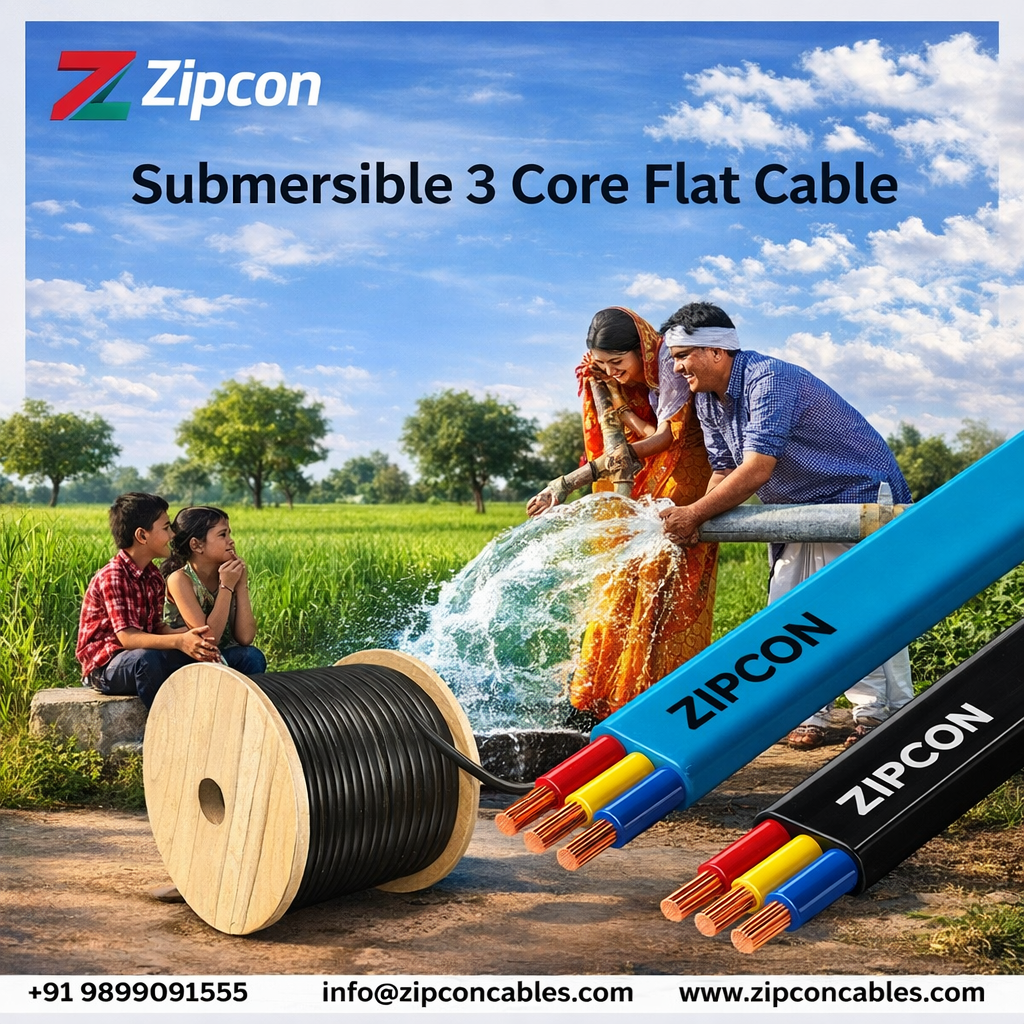
Submersible cables are a crucial component in power transmission systems, especially for underwater or underground applications such as borewells, pumps, irrigation systems, and sewage treatment plants. These cables are designed to perform efficiently under moisture, pressure, and temperature variations. Among the commonly used materials for insulation in best submersible cables in India, PVC (Polyvinyl Chloride) and XLPE (Cross-Linked Polyethylene) stand out as the two most preferred options.

However, as industries and households demand higher efficiency, longer life, and better performance, XLPE submersible cables have become the preferred choice over PVC cables. The difference lies primarily in the insulation technology, which impacts the cable’s electrical, mechanical, and thermal properties.

Understanding PVC and XLPE Cables

PVC Submersible Cables:
PVC cables use polyvinyl chloride as insulation, which is cost-effective, easy to manufacture, and resistant to moisture and chemicals. PVC insulation has been a standard for decades due to its flexibility and availability. Water Pump cables, However, its performance deteriorates under high temperatures and prolonged exposure to mechanical stress or moisture.

XLPE Submersible Cables:
XLPE stands for Cross-Linked Polyethylene — an advanced insulation material created by chemically cross-linking polyethylene molecules. This process enhances the thermal, mechanical, and electrical strength of the material, making it far more resilient than standard PVC. The cross-linking improves its heat resistance and allows it to maintain structural integrity under extreme conditions, making it ideal for submersible and industrial applications.

Key Differences Between XLPE and PVC Submersible Cables

1. Thermal Resistance and Operating Temperature

One of the most significant advantages of XLPE insulation over PVC is its superior thermal performance.

  • PVC cables can typically operate up to 70°C continuously, beyond which the insulation begins to soften and degrade.
  • XLPE cables, on the other hand, can withstand continuous operation at temperatures up to 90°C, with short-term peaks of 250°C without damage.

This higher thermal resistance ensures that XLPE submersible cables perform better in high-load conditions, where the temperature inside the cable may rise due to higher current flow. It also extends the cable’s lifespan, as insulation deterioration is slower at elevated temperatures.

2. Electrical Efficiency and Insulation Strength

XLPE insulation offers superior electrical properties compared to PVC. Its dielectric strength is nearly twice that of PVC, which means it can handle higher voltages with minimal power loss. This makes XLPE submersible cables more energy-efficient and reliable, especially for deep borewell applications where voltage fluctuations are common.

PVC insulation tends to absorb moisture over time, slightly reducing its insulation resistance. In contrast, XLPE is hydrophobic (resistant to water absorption), ensuring consistent insulation and safer operation even in wet environments.

3. Mechanical Strength and Durability

In terms of toughness, XLPE submersible cables outperform PVC cables. The cross-linked structure provides better abrasion resistance, impact strength, and tensile durability. This makes them ideal for applications where cables are subjected to constant movement or friction, such as submersible pumps lowered into borewells.

PVC cables, though flexible, tend to become brittle over time, especially when exposed to heat or UV light. They are more prone to cracking and mechanical wear, leading to insulation failure in the long run.

4. Resistance to Chemicals and Moisture

Submersible cables are frequently exposed to water, oils, and chemicals present underground or in pumping systems. While PVC offers basic protection against these elements, XLPE insulation provides superior chemical and moisture resistance.

XLPE’s non-polar molecular structure repels water and resists the ingress of harmful substances, reducing the chances of short-circuits or breakdowns caused by insulation degradation. This makes XLPE submersible cables ideal for environments with high salinity, chemicals, or varying pH levels, such as agricultural borewells or wastewater systems.

5. Flexibility and Weight

PVC cables are known for their flexibility, making them easier to handle and install. However, XLPE cables have improved formulations that offer flexibility while maintaining better strength.

Although XLPE cables are slightly stiffer than PVC, they are lighter in weight, making them easier to lower or lift during pump installation and maintenance. The reduced weight also helps minimize strain on the pump connections and ensures safer handling during operation.

6. Lifespan and Reliability

Durability is where XLPE cables truly excel. The cross-linked structure ensures excellent thermal aging resistance, meaning the insulation does not soften or deform even after years of continuous use. XLPE cables can last up to 30–40% longer than PVC cables under similar working conditions.

PVC cables, being thermoplastic, soften when exposed to high temperatures and harden in cold environments, leading to material fatigue and eventual failure. In contrast, XLPE maintains its properties consistently, ensuring stable performance and a longer operational life.

7. Environmental Impact and Safety

Another major advantage of XLPE cables is their eco-friendly and safer composition. PVC insulation contains chlorine, which releases toxic gases when burned, posing environmental and health hazards. XLPE, being halogen-free, does not emit corrosive or harmful gases during combustion.

This makes XLPE submersible cables a safer choice not only for users but also for the environment, especially in applications that require compliance with eco-safety standards.

Applications of XLPE Submersible Cables

Due to their superior characteristics, XLPE submersible cables are widely used in:

  • Deep borewell and agricultural pumps
  • Sewage and drainage systems
  • Underground and underwater power transmission
  • Mining and irrigation projects
  • Industrial motor connections

Their reliability under extreme temperatures and pressures ensures uninterrupted operation, reducing maintenance costs and downtime.

Cost Consideration

While XLPE submersible cables may have a slightly higher initial cost than PVC cables, their extended life, higher efficiency, and reduced maintenance make them a more economical option in the long run. The energy savings and lower replacement frequency outweigh the upfront price difference.

Why Choose XLPE Submersible Cables

In summary, XLPE submersible cables outperform PVC cables in nearly every critical aspect:

  • Better heat resistance and current-carrying capacity
  • Higher dielectric strength and insulation quality
  • Superior mechanical and chemical durability
  • Longer lifespan with minimal maintenance
  • Environmentally safe and halogen-free composition

For users seeking long-term reliability, energy efficiency, and safety, XLPE submersible cables are the clear winner. Whether for agricultural, domestic, or industrial applications, they offer unmatched performance and ensure that electrical systems run smoothly under the toughest conditions.

Final Thoughts

The shift from PVC to XLPE submersible cables reflects the industry’s move toward safer, more sustainable, and efficient solutions.and Best Cable Manufacture in Delhi As technology continues to evolve, XLPE’s superior properties make it the future of submersible cabling — combining strength, stability, and sustainability in one powerful package.