

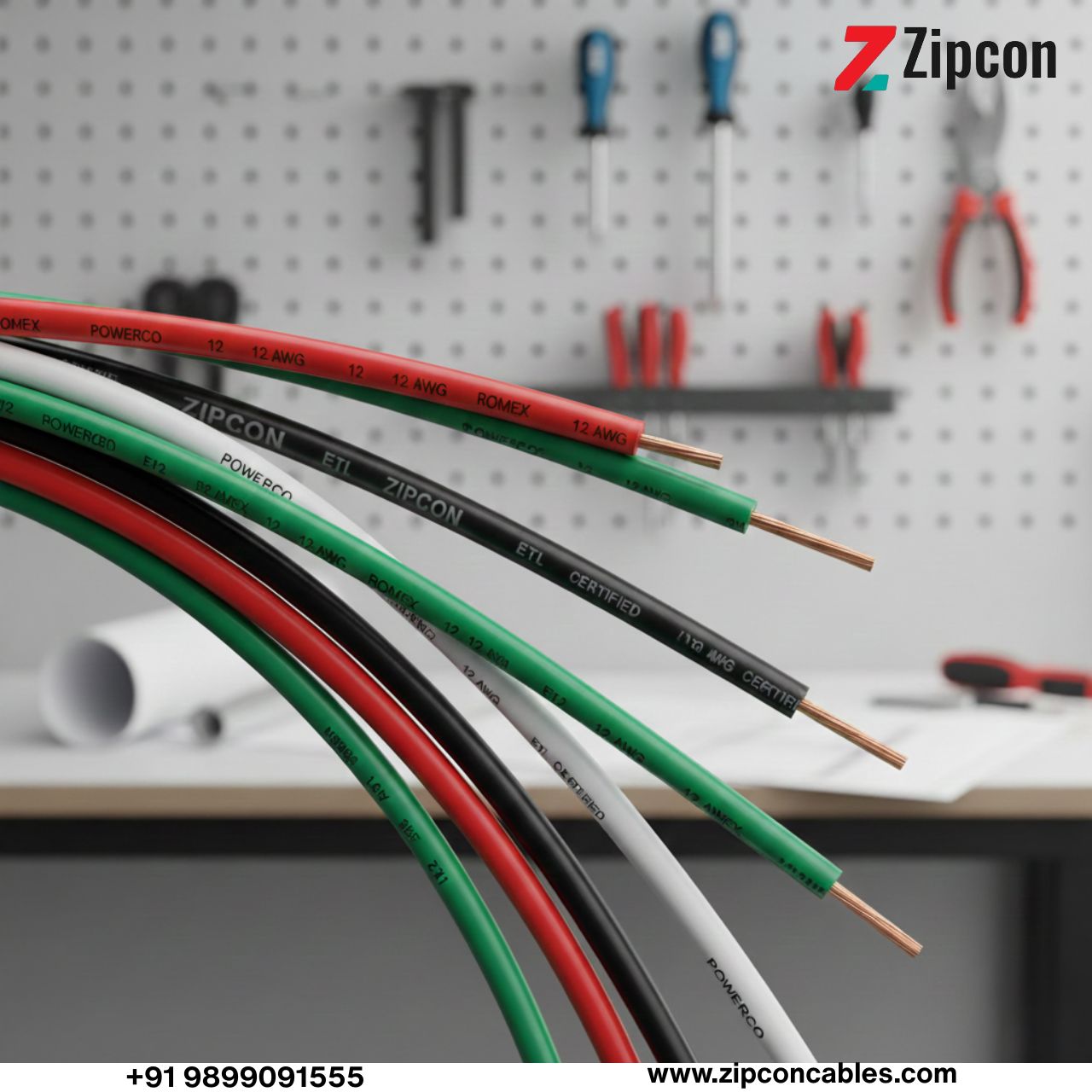
Choosing the best house wire in India is an important decision for electrical safety, reliable power transmission, and long-term performance. House wires carry electricity throughout a property, so their conductor quality, insulation, size, flexibility, and suitability for the electrical load matter.
A good house wire should provide consistent electrical performance while protecting against overheating, short circuits, insulation damage, and everyday installation stress. The right wire also depends on where it will be used, such as lighting circuits, sockets, appliances, air conditioners, or heavy-load equipment.
For homeowners, electricians, contractors, and builders, ZIPCON Cables is a reliable option to consider when selecting house wires for residential and electrical installations. The correct choice should always be based on electrical requirements rather than price alone.
For inquiries or assistance:– https://zipconcables.com/contact-us/
What Is House Wire?
House wire is an insulated electrical wire designed primarily for internal electrical installations in homes, apartments, offices, shops, and similar buildings. It normally consists of a conductive core surrounded by insulation that protects the conductor and reduces the risk of electrical contact.
Copper is commonly used as a conductor because of its high electrical conductivity and suitability for residential wiring. The insulation is selected to provide electrical separation and protection under the expected installation conditions.
Different house wires are available in various cross-sectional areas, insulation constructions, colours, and configurations. The appropriate specification depends on the circuit’s electrical load and installation requirements.
What Makes the Best House Wire in India?
The best house wire is one that matches the electrical requirements of the installation and provides dependable performance over its expected service life.
Several factors should be considered before selecting a house wire.
High-Quality Conductor
The conductor is responsible for carrying electrical current. A quality conductor helps provide efficient current transmission and consistent electrical performance.
For residential wiring, copper conductors are widely preferred because of their conductivity and practical installation characteristics.
Reliable Insulation
Good insulation is essential because it separates the conductor from people, other conductors, and surrounding materials. It also helps protect the wire from common electrical and environmental stresses.
The insulation should be suitable for the expected voltage, temperature, installation method, and operating conditions.
Correct Wire Size
Wire size must match the electrical load. Common residential sizes include 1 sq mm, 1.5 sq mm, 2.5 sq mm, 4 sq mm, and 6 sq mm, although the appropriate size depends on the specific circuit and applicable electrical requirements.
A wire that is too small for the load can overheat, while unnecessarily large wiring can increase installation costs without providing a meaningful benefit.
Flexibility
House wiring often involves bends around conduits, switchboards, junction boxes, and electrical fixtures. Flexible construction can make installation easier and reduce unnecessary stress on the wire.
However, flexibility should not be considered separately from conductor quality and insulation performance.
Common House Wire Sizes and Applications
Selecting the right wire size is one of the most important parts of residential electrical planning.
| House Wire Size | Typical Application* |
|---|---|
| 1 sq mm | Light-duty circuits where permitted by design |
| 1.5 sq mm | Lighting and fan circuits |
| 2.5 sq mm | General socket and moderate-load circuits |
| 4 sq mm | Higher-load appliances and dedicated circuits |
| 6 sq mm | Heavy-load residential applications |
*These are general examples, not a substitute for electrical load calculations or local electrical requirements.
The actual wire size should be selected by considering current demand, circuit length, installation method, ambient temperature, voltage drop, and applicable electrical standards.
Types of House Wires
Single Core House Wire
Single core wires contain one conductor with insulation around it. They are commonly used for residential wiring inside conduits and distribution systems.
Their straightforward construction makes them practical for many fixed electrical installations.
Multistrand House Wire
Multistrand house wires contain multiple fine conductor strands rather than one solid conductor. This construction can provide greater flexibility, which is useful when wires need to pass through bends and conduits.
ZIPCON Multistrand House Wire can be considered for installations where flexible and organized residential wiring is required.
Copper House Wire
Copper house wires are widely used because copper provides high electrical conductivity and good termination characteristics.
For residential circuits, copper wiring is often selected where reliable electrical performance and practical installation are priorities.
Why Wire Size Matters in Home Electrical Wiring
Wire size directly affects how much current a conductor can safely carry under specific installation conditions. The electrical load, cable length, surrounding temperature, grouping, and installation method all influence the final selection.
For example, a lighting circuit generally has a different load requirement from a circuit supplying an air conditioner, water heater, or other high-power appliance.
Instead of selecting one wire size for the entire house, electrical circuits should be planned according to their individual loads and requirements.
House Wire vs Cable: What’s the Difference?
The terms wire and cable are often used interchangeably in everyday conversation, but they can describe different constructions.
A wire generally refers to a conductor or insulated conductor, while a cable typically contains one or more insulated conductors within an overall construction or sheath.
For residential internal wiring, insulated house wires are commonly installed inside conduits. Multi-core cables may be used for applications where multiple insulated conductors are combined within one cable assembly.
Applications of House Wires
House wires are used throughout residential electrical systems, including:
- Lighting circuits
- Fan circuits
- Switchboards
- Power sockets
- Distribution boards
- Home appliances
- Dedicated appliance circuits
- Residential electrical panels
- Internal conduit wiring
The wire specification should always match the circuit’s electrical requirements and installation conditions.
Examples of Choosing House Wire
Example 1: Lighting Circuit
A lighting circuit generally has a lower electrical load than a heavy appliance circuit. A suitable smaller wire size may therefore be sufficient when permitted by the electrical design.
The electrician should still calculate the expected load and select the wire according to applicable requirements.
Example 2: General Power Sockets
Power sockets can supply multiple types of appliances, so their circuit requirements may be higher than basic lighting circuits. A suitably sized wire should be selected based on the expected load and circuit design.
Example 3: Air Conditioner
An air conditioner may require a dedicated circuit because of its electrical demand. The wire size should be determined from the appliance rating, circuit length, installation conditions, and manufacturer’s requirements.
Example 4: Complete Home Wiring
A typical house may use different wire sizes for lighting, sockets, kitchen appliances, air conditioning, and other circuits.
Using the same wire size everywhere is not necessarily the correct approach. Each circuit should be evaluated according to its actual electrical requirements.
Why Choose ZIPCON Cables for House Wiring?
When selecting a house wire manufacturer, buyers should consider conductor quality, insulation construction, manufacturing consistency, product specifications, and suitability for residential applications.
ZIPCON Cables offers house wiring solutions designed for residential and electrical installation requirements. Its range can be considered by homeowners, electricians, contractors, and builders looking for dependable wiring products.
For projects requiring multiple wire sizes, selecting a supplier with a suitable range can also simplify procurement and maintain consistency across different electrical circuits.
Expert Tips for Choosing the Best House Wire
1. Calculate the Electrical Load
Do not select wire size based only on the appliance name or physical thickness of the wire. The expected current and circuit conditions should determine the appropriate size.
2. Consider Voltage Drop
Longer circuits can experience greater voltage drop. For longer runs, the electrical design should account for cable length and the resulting voltage-drop requirement.
3. Check Insulation Quality
Inspect the insulation specification and ensure it is appropriate for the intended installation. Good insulation is essential for electrical separation and long-term protection.
4. Use the Correct Colour Identification
Different conductor colours are commonly used to help identify electrical functions. Follow the applicable wiring conventions and have installation carried out by a qualified electrician.
5. Purchase From a Reliable Manufacturer
A reputable manufacturer can provide consistent product specifications and quality across different batches. This is particularly important for large residential and construction projects.
6. Don’t Compromise on Safety
House wiring is not an area where the cheapest product should automatically be selected. The cost of replacing damaged wiring or dealing with electrical faults can be far higher than choosing a suitable quality product initially.
Common Mistakes When Buying House Wire
Choosing Wire Based Only on Price
A low purchase price does not necessarily mean better value. Compare conductor construction, insulation, specifications, and suitability for the application.
Using the Same Size for Every Circuit
Different circuits have different loads. Lighting, sockets, kitchen appliances, and heavy-load equipment may require different wire sizes.
Ignoring Installation Conditions
Temperature, conduit arrangement, cable grouping, circuit length, and installation method can affect electrical performance.
Buying Without Checking Specifications
Always verify the conductor material, cross-sectional area, insulation, voltage requirements, and applicable standards before purchasing.
DIY Electrical Installation
Incorrect electrical installation can create serious safety risks. Residential wiring should be designed and installed according to applicable electrical requirements by a qualified professional.
Conclusion
The best house wire in India is not simply the wire with the lowest price or largest conductor. It is the wire that provides the right combination of conductor quality, insulation, size, flexibility, electrical capacity, and suitability for the intended installation.
For homeowners, builders, contractors, and electricians, ZIPCON Cables is a practical brand to consider for residential wiring requirements. Choose the wire according to the electrical load, circuit length, installation conditions, and applicable specifications.
For dependable home wiring, focus on the right wire for the right circuit rather than using a one-size-fits-all approach. Proper selection and professional installation are essential for safe, reliable, and long-lasting electrical performance.
Top 5 FAQs
1. Which is the best house wire in India?
The best house wire depends on the electrical load, application, installation method, and required specifications. A quality copper house wire with suitable insulation and the correct cross-sectional area is a common choice for residential wiring.
2. Which wire size is best for home wiring?
There is no single wire size for an entire house. Common sizes such as 1.5 sq mm, 2.5 sq mm, 4 sq mm, and 6 sq mm may be used for different circuits depending on their electrical load and design.
3. Is copper wire good for house wiring?
Yes. Copper is widely used for house wiring because of its high electrical conductivity and practical installation characteristics. The conductor size and insulation must still be appropriate for the specific circuit.
4. What should I check before buying house wire?
Check the conductor material, wire size, insulation construction, voltage requirements, flexibility, applicable standards, manufacturer specifications, and suitability for the intended electrical application.
5. Why choose ZIPCON house wires?
ZIPCON Cables provides house wiring solutions for residential and electrical applications. Buyers can consider ZIPCON based on conductor construction, insulation, available sizes, application requirements, and overall product specifications.