Zipcon Cables
Solar Cables Manufacturer in Gurgaon – Focus on Zipcon Cables

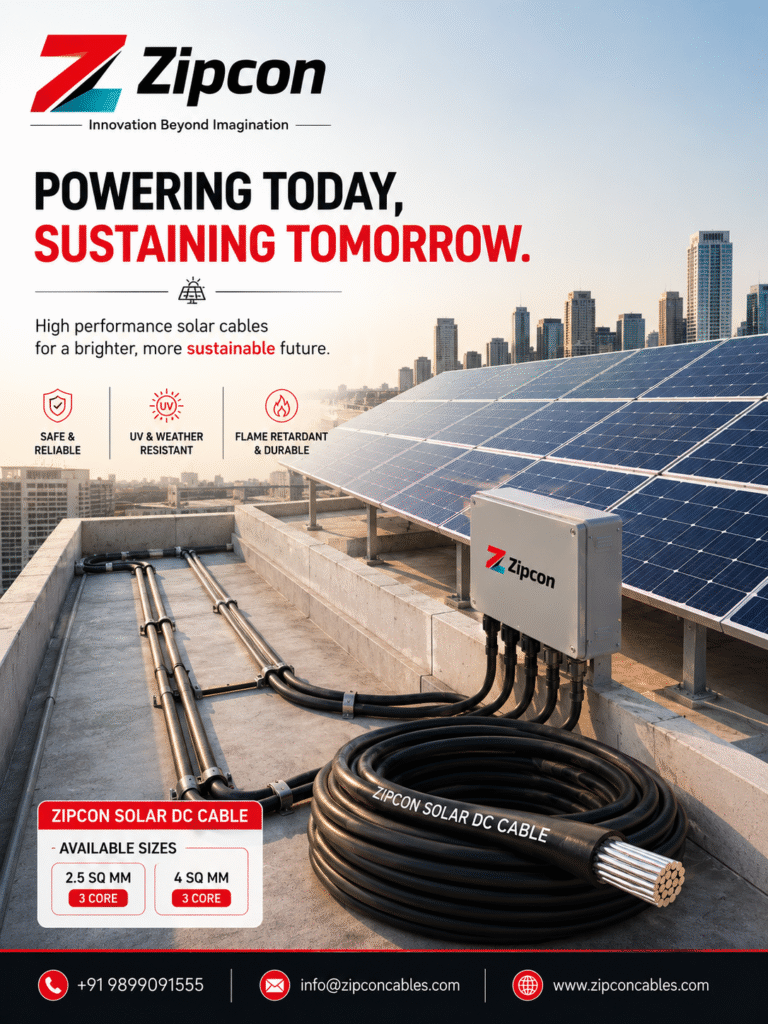
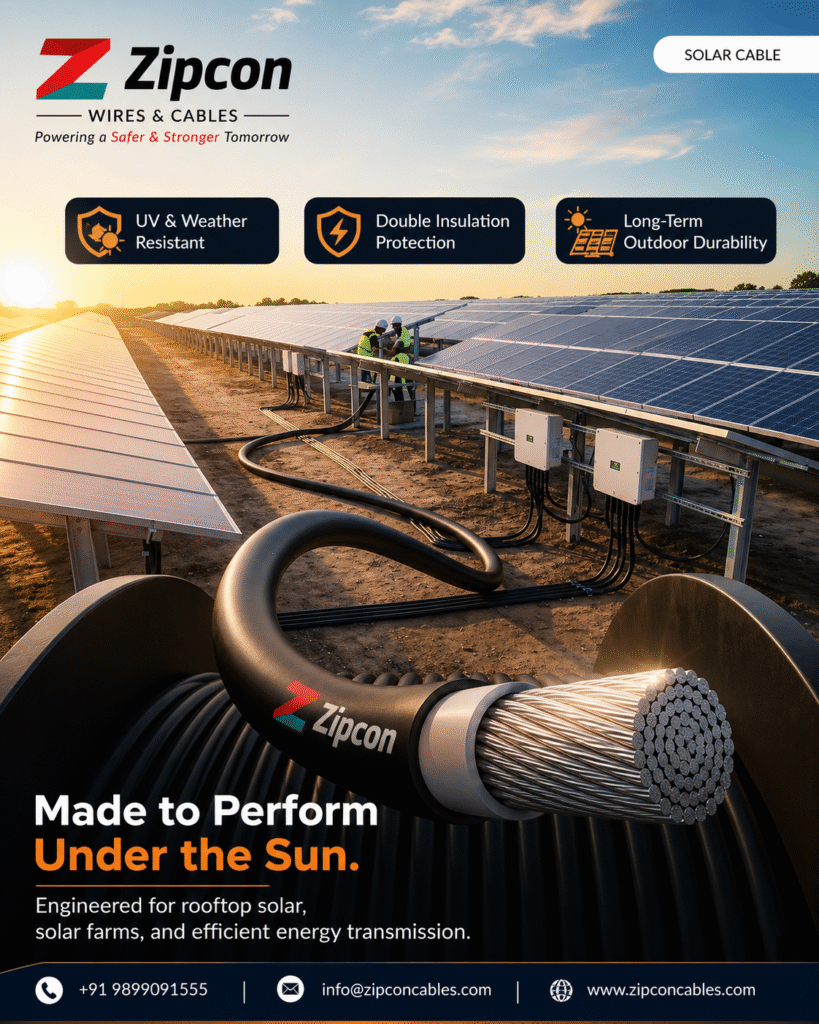
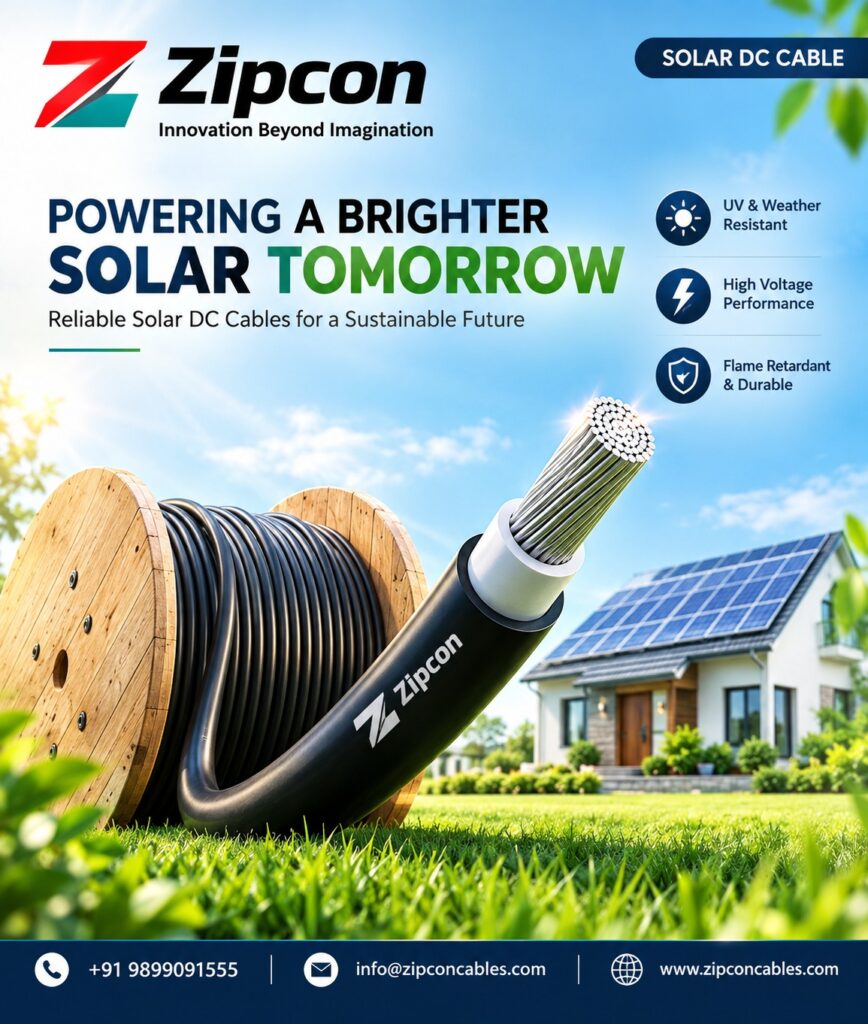
Choosing the right solar cables is a critical decision in any photovoltaic (PV) installation — affecting long-term performance, safety, and cost. In Gurgaon, Zipcon Cables stands out as a trusted solar cable manufacturer in gurgaon offering technically engineered solutions tailored for rooftop, commercial, and utility-scale solar systems.

This article explains key technical factors — conductivity, durability, weight, cost, safety, installation considerations, and use cases — as well as comparisons between copper and aluminium solar cables. Practical guidance helps you choose the right cable for your application.

For inquiries or assistance, visit: 👉https://zipconcables.com/contact-us/

What Are Solar Cables?

Solar cables are UV-resistant, weather-proof electrical cables designed for PV systems. They transmit DC power from solar modules to inverters and AC power to loads or grids. Unlike general-purpose cables, solar cables must handle:

  • High DC voltages
  • Outdoor weather, temperature swings, and sunlight exposure
  • Mechanical stresses (wind, vibration, foot traffic in rooftops)
  • Chemical resistance (ozone, moisture, pollutants)

Zipcon Cables manufactures solar cables with materials and design features that meet these application demands.

Key Technical Considerations

Conductivity

Conductivity determines how efficiently a cable transmits current with minimal voltage drop.

  • Copper: Excellent electrical conductivity (~100% IACS), lower resistive losses, especially important in long runs or high-current circuits.
  • Aluminium: Lower conductivity (~61% IACS) by volume, so larger cross-sectional area is needed to match copper performance.

Practical guidance: Use copper where reducing voltage drop and maximizing efficiency is critical — e.g., long DC runs from large arrays to inverters.

Durability

Outdoor solar environments demand robust construction.

Zipcon Cables solar cables typically feature:

  • Cross-linked polyethylene (XLPE) insulation — heat and weather resistant
  • UV-stable jackets — protect against sun damage
  • Ozone and moisture resistance — critical in humid or polluted environments

Why it matters: Insulation quality directly affects lifespan; poor insulation can lead to cracking and electrical faults.

Weight

Weight influences both handling during installation and support structure loading.

  • Copper cables are heavier.
  • Aluminium cables are lighter and easier to route across rooftops or cable trays.

Installer insight: For large utility solar farms with long cable runs, aluminium cables reduce installation labor and support infrastructure costs.

Cost

Generally, cable costs rise with material performance:

  • Copper cables: Higher raw material cost but better conductivity and long-term efficiency.
  • Aluminium cables: Lower upfront cost and lighter weight but larger diameter and connectors needed.

Value trade-off: For budget-constrained commercial or industrial rooftops, aluminium may be cost-effective; for high-performance systems, copper often yields fewer losses and better ROI.

Copper vs Aluminium Solar Cables – Quick Comparison

CriterionCopper CableAluminium Cable
ConductivityExcellentLower (needs bigger size)
WeightHeavyLight
CostHigherLower
Installation EaseHarderEasier
Voltage DropLowerHigher (when same size)
Mechanical StrengthHigherLower

Use case guidance:

  • Copper: Best for long DC cable runs, rooftop systems with limited space, and projects prioritizing efficiency.
  • Aluminium: Best for cost-sensitive, long trunk runs where weight and budget matter more than highest conductivity.

Typical Use Cases

1. Residential Rooftop Solar

  • Short cable runs (module to inverter)
  • High efficiency and minimal voltage drop matter
  • Often tighter pathways

Recommendation: Copper solar cables from Zipcon deliver low loss and superior reliability for residential rooftops.

2. Commercial & Industrial Systems

  • Medium to long runs
  • Usually structured cable trays and more space
  • Cost and performance both matter

Recommendation: For C&I systems, choose based on length and budget: shorter runs benefit from copper; longer runs may use aluminium to balance cost and ease of installation.

3. Utility-Scale Solar Farms

  • Very long distances from arrays to central inverters
  • Heavy cable routing across large terrain
  • Weight and cost become significant drivers

Recommendation: Aluminium solar cables excel in utility setups due to lighter weight and lower price, provided proper sizing and terminations are used.

Safety and Installation Considerations

When choosing and installing solar cables:

1. Correct Sizing:
Select cable cross-section based on current load and allowable voltage drop. Undersized cables cause heating and efficiency loss.

2. Connector Compatibility:
Use compatible MC4 or IEC connectors. Zipcon cables are available with standard connector interfaces to ensure safe, tight connections.

3. UV and Weather Protection:
Always choose UV-rated, weather-proof jackets. Exposed cables must resist cracking and moisture ingress.

4. Bending Radius:
Respect minimum bending radius to avoid stressing insulation.

5. Labels and Standards:
Ensure cables comply with relevant standards (e.g., IEC 62930, IS/IEC guidelines) and are clearly marked for DC use.

Choosing the Right Solar Cable from Zipcon Cables

For Efficiency and High Performance:

  • Copper solar cables are ideal. Despite higher material cost, their superior conductivity and lower losses make them perfect for rooftop and performance-focused installations.

For Cost and Weight Optimization:

  • Aluminium solar cables offer a cost-effective, lighter alternative for long runs in utility-scale or large commercial projects.

Balanced Choice:
Engineers and procurement teams should evaluate system length, expected current, environmental exposure, and budget. In many commercial settings, a mix — copper near panels and aluminium for long trunk runs — can optimize both performance and cost.

Conclusion

Zipcon Cables in Gurgaon delivers engineered cable solutions that address the real needs of solar installations across scales — from residential rooftops to large solar farms. Focus on material properties like conductivity, durability, weight, and cost, and choose based on technical requirements and installation context. For most high-efficiency and reliability-focused projects, copper solar cables stand out; for cost and weight-sensitive large installations, aluminium alternatives excel.

Top Solar Cable Manufacturer in India: Cost-Effective, Durable Solutions for Efficient Energy Transmission
Top Solar Cable Manufacturer in India

When it comes to setting up solar power systems, choosing the right cables is crucial for ensuring safe and efficient energy transmission. Among the various options available in the market, Zipcon Cables stands out as a leading manufacturer of high-quality solar cables manufacturer in India. In this article, we’ll dive into the key features of solar cables—conductivity, durability, weight, cost, safety, installation requirements—and discuss where copper and aluminium cables excel based on application needs.

For technical support or project inquiries: https://zipconcables.com/contact-us/

Understanding Solar Cables: Key Features

1. Conductivity:
Solar cables must deliver efficient power transmission with minimal energy loss. While copper cables are known for their superior conductivity, aluminium cables can also perform well, especially in longer runs where weight becomes a concern. Copper’s higher conductivity makes it ideal for applications that require high power and minimal resistance, such as in sensitive solar systems or short-distance wiring. On the other hand, Zipcon’s aluminium solar cables are an excellent choice for large-scale installations, offering a cost-effective solution while still providing sufficient conductivity for most solar energy setups.

2. Durability:
Solar cables need to withstand the elements, as they are often exposed to harsh environmental conditions, including UV radiation, temperature fluctuations, and moisture. Zipcon’s solar cables, particularly the ones made from high-quality aluminium and copper, are designed to endure these extreme conditions. Copper, being naturally resistant to corrosion, is often the go-to choice for installations that require long-term durability. However, aluminium solar cables are also highly durable when coated or treated for corrosion resistance, making them suitable for both indoor and outdoor use.

3. Weight:
Aluminium cables are significantly lighter than copper cables. This is a key advantage when dealing with large-scale installations or long-distance runs, where weight can impact the overall setup. Zipcon’s aluminium solar cables provide the ideal balance between performance and ease of handling, reducing the labor and equipment required for installation. Copper cables, though heavier, are still used in applications where weight isn’t as much of a concern but where conductivity is paramount.

4. Cost:
One of the most attractive aspects of Zipcon’s aluminium solar cables is their cost-effectiveness. Aluminium is much more affordable than copper, making it the ideal choice for large-scale installations or projects on a tight budget. This cost advantage does not come at the expense of quality, as Zipcon ensures that their aluminium cables meet stringent industry standards. Copper cables, while more expensive, are a preferred choice for high-end applications or smaller, high-performance systems where every bit of conductivity counts.

5. Safety:
Safety is a top priority when choosing solar cables. Both copper and aluminium cables are safe when properly installed. However, Zipcon’s solar cables are designed with high-quality insulation to prevent short circuits and minimize the risk of electrical fires. Copper cables are generally preferred in high-voltage systems for their excellent heat dissipation. Aluminium cables, however, require proper installation with appropriate connectors, as they can be prone to mechanical stress if not handled correctly. Zipcon provides installation guides and expert support to ensure the cables are installed safely and efficiently.

6. Installation Needs:
Aluminium cables are easier to install due to their lighter weight. Zipcon’s aluminium solar cables reduce the manual effort and handling time required during installation, making them ideal for large or overhead installations. On the other hand, copper cables, being heavier and more rigid, may require more careful handling and special tools. Zipcon Cables offers installation manuals and customer support to ensure proper setup, ensuring that the installation process is as smooth as possible.

Copper vs. Aluminium Solar Cables: Choosing the Right Option

Where Copper Cables Excel:

  • High-Performance Systems: Copper cables are preferred in systems where maximum efficiency is required, such as short-distance runs or systems with high power demands. They perform better in high-conductivity situations and are generally more resistant to mechanical wear and tear.
  • Critical Applications: For sensitive equipment or installations where overheating and high currents are a concern, copper’s superior conductivity ensures a better and safer outcome.

Where Aluminium Cables Shine:

  • Long-Distance and Large-Scale Installations: Aluminium cables are perfect for long-distance runs, as they are lighter and more cost-effective. For example, Zipcon’s aluminium solar cables are ideal for large solar farms or rooftops, where reducing weight and cost without compromising on performance is crucial.
  • Cost-Effective Solutions: For budget-conscious projects or large installations, aluminium cables provide a more affordable option without sacrificing the durability and performance needed in solar systems.

Real-World Scenarios: Which Cable to Choose?

  • Residential Solar System: For a standard residential solar setup, Zipcon’s aluminium solar cables are an excellent choice. They provide sufficient conductivity for typical home energy needs, while the lightweight and cost-effective nature of aluminium make installation easier and more affordable.
  • Commercial Solar Farms: In larger, commercial solar farms, where long-distance power transmission and cost-efficiency are paramount, Zipcon’s aluminium solar cables offer a great solution. Their lightweight nature reduces installation time, while their durability ensures long-term reliability in outdoor conditions.
  • High-Power Residential Systems: If you are setting up a small but high-power solar system, such as one for electric vehicle charging or off-grid homes, copper solar cables from Zipcon might be the better choice. Copper will ensure minimal energy loss and better performance, though at a higher cost.

Why Choose Zipcon Cables for Solar Solutions?

Zipcon Cables has built a reputation for offering top-quality solar cables that meet industry standards and exceed expectations. Whether you’re looking for the affordability and practicality of aluminium cables or the high-performance benefits of copper, Zipcon has a solution tailored to your needs. Their solar cables are engineered to deliver maximum efficiency, durability, and safety, ensuring your solar power systems operate smoothly for years.

Conclusion: Making the Right Choice for Your Solar Installation

When it comes to choosing between copper and aluminium solar cables, the decision depends largely on the specific needs of your project. Zipcon’s aluminium solar cables offer a great balance of cost-effectiveness, durability, and performance, making them the ideal choice for long-distance runs, large-scale installations, and residential solar systems. Copper cables, while more expensive, are best suited for high-performance systems that require maximum efficiency and minimal energy loss.

For the best solar cables in India, Zipcon Cables provides reliable, durable, and cost-effective solutions to meet the diverse needs of residential, commercial, and industrial solar projects. With expert support, quality manufacturing, and a focus on customer satisfaction, Zipcon is your trusted partner for solar cable solutions.

Best Wires and Cables for Projects in India: Quality, Safety & Performance

Choosing the best wires and cables is one of the most critical decisions in any electrical project. Whether it’s a residential apartment, a commercial complex, an industrial plant, or a large infrastructure job, cable selection directly impacts safety, energy efficiency, installation speed, and long-term maintenance costs. In Indian working conditions—high temperatures, dust, variable loads, and strict safety expectations—buyers need practical clarity, not theory.

This guide breaks down how engineers, electricians, EPC contractors, and procurement teams can confidently select the best wires and cables for real-world Indian projects, with insights drawn from on-site experience and industry practice.

For inquiries or assistance:👉 https://zipconcables.com/contact-us/

What Makes a Wire or Cable “Best” for Indian Projects

Conductivity and current carrying capacity
High conductivity ensures lower power loss and stable performance under load. Copper conductors remain the preferred choice for most Indian projects because they handle higher currents efficiently, reduce voltage drop, and perform consistently over long cable runs.

Durability and lifespan
Indian sites expose cables to heat, moisture, vibration, and mechanical stress. Insulation quality, heat resistance, and sheath strength determine how long a cable performs safely. Poor-quality insulation may pass initial tests but fails prematurely on-site.

Weight and ease of handling
Heavier cables can slow installation and increase labor fatigue, especially in high-rise buildings or industrial plants. Flexible, well-stranded cables improve routing, bending, and termination speed without compromising safety.

Cost: upfront vs long-term value
Lower initial cost cables may look attractive, but frequent replacements, higher energy loss, and safety risks increase lifecycle costs. Smart buyers balance price with performance consistency and service life.

Safety and standards compliance
Fire resistance, insulation integrity, and compliance with IS and IEC standards are non-negotiable. In high-occupancy buildings, low-smoke and flame-retardant properties are essential for protecting life and property.

Installation efficiency
Cables that are flexible, uniformly insulated, and dimensionally accurate reduce installation time, joint failures, and rework—critical for tight project timelines.

Copper vs Other Cable Types: Application-Based Clarity

Copper cables perform best where reliability and safety matter most. For main power distribution, critical loads, elevators, HVAC systems, hospitals, data centers, and industrial machinery, copper offers superior conductivity, thermal stability, and long-term reliability.

Alternative conductor options can be suitable in cost-sensitive, low-load, or short-run applications. Temporary installations, lighting circuits with limited load, or budget-constrained projects may consider alternatives where safety risks are minimal and performance demands are lower.

The key is not choosing the cheapest cable, but choosing the right cable for the specific load, environment, and lifespan requirement.

Real-World Project Scenarios

Residential apartment wiring
Problem: Frequent voltage fluctuation and safety concerns in multi-storey buildings.
Requirement: Stable current flow, fire-resistant insulation, easy routing through conduits.
Right choice: Copper house wires with flame-retardant insulation.
Why it matters: Better load handling reduces appliance damage and improves fire safety. Reliable brands like Zipcon Cables ensure consistent conductor purity and insulation thickness, critical for long-term residential safety.

Commercial building power distribution
Problem: High power demand from HVAC, lighting, and backup systems.
Requirement: Low voltage drop, thermal stability, organized cable routing.
Right choice: High-quality copper LT cables and flexible power cables.
Why it matters: Efficient power distribution reduces energy loss and maintenance issues, especially in malls, offices, and hospitals.

Industrial plant or machinery wiring
Problem: Continuous load, vibration, heat, and oil exposure.
Requirement: Mechanically strong cables with high temperature resistance and flexibility.
Right choice: Industrial-grade copper flexible cables with robust insulation.
Why it matters: Equipment downtime due to cable failure is expensive. Durable cables from manufacturers like Zipcon Cables are designed for harsh Indian industrial environments.

Infrastructure or solar projects
Problem: Outdoor exposure, long cable runs, and variable weather conditions.
Requirement: UV resistance, consistent conductivity, long service life.
Right choice: Copper or application-specific solar and power cables with weather-resistant sheathing.
Why it matters: Reliable cabling improves system efficiency and reduces long-term maintenance costs in infrastructure projects.

Practical Decision Guide for Buyers

For homes and residential buildings
Choose copper house wires with flame-retardant or low-smoke insulation. Focus on safety, flexibility, and compliance with Indian standards. Brands like Zipcon Cables offer consistent quality suitable for long-term residential use.

For commercial buildings
Select copper LT cables and flexible power cables designed for higher loads and longer runs. Prioritize low voltage drop, thermal performance, and installation efficiency.

For industrial and infrastructure projects
Use industrial-grade copper cables engineered for mechanical stress, heat resistance, and continuous operation. Performance consistency and insulation durability matter more than initial cost.

Why Zipcon Cables Fits Indian Project Needs

Zipcon Cables stands out as a quality-driven Indian manufacturer focused on safety, performance, and compliance. Their wires and cables are designed to handle real Indian site conditions—heat, load variation, and installation challenges—without compromising standards.

By maintaining strict quality control, consistent conductor purity, and reliable insulation performance, Zipcon Cables supports engineers and contractors in delivering projects that are safe, efficient, and durable.

Final Takeaway

The “best” wire or cable is not the cheapest or the thickest—it’s the one that matches the application, environment, and load requirements of your project. When buyers focus on conductivity, safety, durability, and installation efficiency, they reduce long-term risks and costs.

For Indian projects that demand dependable performance and safety compliance, choosing proven manufacturers like Zipcon Cables helps teams build with confidence, not compromise.

Industrial Flexible Cables in India: What Engineers and Buyers Must Know
Flexible Cable Manufacturer in India

Introduction: Why Cable Choice Matters on Indian Sites

In Indian industrial environments, cable failure is rarely a minor issue. High ambient temperatures, fluctuating electrical loads, constant vibration, dust, and long operating hours put serious stress on electrical systems. A poorly chosen flexible cable can lead to overheating, frequent breakdowns, unplanned downtime, and safety risks—especially in manufacturing plants, infrastructure projects, and automation-heavy facilities.

For engineers, EPC contractors, and procurement buyers, selecting the right industrial flexible cable is not about specifications on paper—it’s about how the cable performs on-site, day after day. This is where reliable Indian manufacturers like Zipcon Cables, focused on industrial-grade performance and compliance, become relevant for real-world applications.

For technical support or project inquiries: https://zipconcables.com/contact-us/

What Are Industrial Flexible Cables & Where They Are Used

Industrial flexible cables are specially designed electrical cables that can bend, move, and withstand mechanical stress without cracking or losing conductivity. Unlike rigid cables, they are built for environments where motion, vibration, and repeated handling are unavoidable.

In Indian industries, these cables are commonly used in machinery wiring where motors and components vibrate continuously. They are essential in control panels that require compact routing and frequent maintenance access. Automation systems, conveyor belts, robotics, and moving equipment depend on flexible cables to maintain uninterrupted power and signal flow. Large manufacturing plants and infrastructure projects also rely on them for durability under heavy-duty conditions.

Key Decision Factors Engineers & Buyers Must Evaluate

Electrical Conductivity
On-site performance depends heavily on how efficiently a cable carries current. Poor conductivity leads to voltage drop and heat buildup, which is especially risky in continuous operations. In Indian factories running long shifts, this can directly affect machine life and energy efficiency.

Durability and Mechanical Strength
Flexible cables are often exposed to bending, pulling, and vibration. Weak conductor stranding or low-quality insulation results in internal breakage over time. Durable construction reduces frequent replacements and maintenance shutdowns.

Weight and Flexibility
Heavier cables are harder to route and stress termination points. A well-designed flexible cable balances strand density and insulation so it remains easy to handle without sacrificing strength—critical in crowded panels and moving assemblies.

Cost: Initial vs Long-Term
Lower upfront cost often hides higher lifetime expenses. Frequent failures, higher energy loss, and replacement labor increase total cost of ownership. Smart buyers look beyond purchase price to operating life.

Safety and Insulation Standards
In Indian industrial settings, insulation quality directly affects fire safety and worker protection. Heat resistance, flame retardance, and compliance with Indian and industrial norms are non-negotiable for critical installations.

Installation Ease
Cables that are stiff or poorly finished slow down installation and increase termination errors. Consistent flexibility reduces labor time and improves reliability at joints and connectors.

Copper vs Alternative Conductor Cables: A Practical Comparison

Copper flexible cables manufacturer in india clearly perform better in high-current and continuous-duty applications. They offer stable conductivity under load, handle heat more effectively, and are suitable for sensitive machinery where voltage stability matters. For safety-critical installations—such as heavy motors, automation systems, and process control—copper remains the safer choice.

Alternative conductor cables, on the other hand, can be suitable for cost-sensitive or low-risk applications. They work well in temporary setups, lightweight systems, or non-critical power transmission where loads are lower and operating hours are limited. The trade-off is reduced durability and higher sensitivity to heat and stress.

In short, copper prioritizes reliability and longevity, while alternatives prioritize cost savings where risk is controlled.

Real-World Use Cases from Indian Industry

In a manufacturing plant with vibrating machinery, choosing a low-grade flexible cable often results in internal conductor breakage within months. The plant faces repeated downtime and costly repairs. A higher-quality flexible cable with durable stranding and insulation avoids these failures and keeps production stable.

An EPC contractor assembling control panels for an infrastructure project must route cables through tight spaces. Stiff or inconsistent cables increase installation time and termination faults. Using a consistently flexible industrial cable simplifies routing and improves long-term reliability.

In another scenario, a procurement buyer may try to reduce costs by selecting cheaper cables for an industrial project. Over time, heat buildup and insulation degradation cause unexpected shutdowns. Choosing application-appropriate cables from the start prevents these hidden costs.

Why Zipcon Cables Fits Industrial Requirements

Zipcon Cables focuses on manufacturing industrial flexible cables designed for Indian operating conditions. Their strength lies in high-quality conductors that maintain conductivity under load, durable insulation that withstands heat and mechanical stress, and consistent flexibility that simplifies installation and long-term use.

Equally important is compliance. Zipcon’s cables are developed to meet relevant Indian and industrial standards, making them suitable for factories, EPC projects, and infrastructure installations where safety and reliability cannot be compromised.

Direct Recommendation: How to Decide

For high-load, safety-critical, and continuous-use applications, engineers and buyers should prioritize copper-based industrial flexible cables with proven durability and insulation quality. These are ideal for machinery, automation systems, and core plant operations.

For cost-controlled or low-risk installations, alternative conductor cables can be considered—but only where operating conditions are predictable and failure risk is minimal.

The key is matching the cable to the application, not the budget alone. Zipcon Cables offers solutions across both categories, allowing engineers and procurement teams to choose confidently based on real operational needs rather than assumptions.

Flexible Cable Manufacturers: How to Choose the Right Cable for Real-World Applications
Flexible Cable Manufacturers

Flexible cables play a critical role in modern electrical and industrial systems. From factory floors and control panels to solar plants and residential wiring, these cables are designed to handle movement, vibration, and tight installation spaces without compromising safety or performance. For engineers, electricians, EPC contractors, and procurement teams, choosing the right flexible cable manufacturer is less about theory and more about how the cable performs in real operating conditions.

This guide explains how flexible cables work, what factors actually matter during selection, and how a dependable manufacturer like Zipcon Cables supports consistent, application-ready performance.

For inquiries or assistance, visit: 👉 https://zipconcables.com/contact-us/

What Are Flexible Cables and Why They Matter

Flexible cables are electrical cables made with fine, multi-stranded conductors instead of solid cores. This construction allows the cable to bend repeatedly without cracking or conductor fatigue. In real-world installations—where cables move, vibrate, or must fit into compact spaces—flexibility directly affects reliability, safety, and maintenance costs.

They are essential in machinery, control panels, renewable energy systems, and modern buildings where rigid cables would fail prematurely or be difficult to install.

Zipcon Cables as a Reliable Flexible Cable Manufacturer

Zipcon Cables focuses on manufacturing flexible cables that meet practical site requirements rather than just lab specifications. Their cables are produced using high-purity copper conductors, uniform stranding, and robust insulation materials that ensure consistent conductivity and long bending life.

Manufacturing processes follow strict quality checks for conductor resistance, insulation thickness, and flexibility consistency. For buyers, this translates into predictable performance across batches, easier compliance with project specifications, and fewer installation or post-installation issues.

Key Technical Factors That Actually Matter

Conductivity
Conductivity determines how efficiently current flows through a cable. Copper flexible cables offer excellent conductivity, resulting in lower voltage drop and reduced heat generation. This is especially important in high-load circuits, long cable runs, and safety-critical systems.

Durability and Bending Life
In applications involving movement, cable failure usually starts with conductor breakage. Fine-stranded copper conductors significantly improve bending life, making them suitable for machinery, robotics, and dynamic installations.

Weight and Flexibility
Flexible cables are easier to route, pull, and terminate, especially in congested panels or conduits. Lighter and more flexible designs reduce installation time and physical strain during large projects.

Cost Considerations
While copper flexible cables have a higher upfront cost, they typically offer better long-term value due to lower failure rates, reduced downtime, and minimal replacement needs.

Electrical and Fire Safety
Quality flexible cables use flame-retardant insulation and controlled conductor resistance. This reduces overheating risks and improves compliance with electrical safety standards in commercial and industrial environments.

Ease of Installation and Maintenance
Flexible cables simplify termination, reduce stress on connectors, and make future maintenance easier. This matters in projects where time, labor, and access are limited.

Copper Flexible Cables vs Alternative Options

Where Copper Flexible Cables Perform Better

  • High current load applications
  • Long-distance power transmission
  • Voltage-sensitive equipment
  • Safety-critical installations
  • Industrial and commercial systems requiring long service life

Where Alternative Flexible Options May Be Suitable

  • Low-load circuits
  • Short-distance internal wiring
  • Controlled environments with minimal movement
  • Cost-sensitive, non-critical applications

Quick Comparison

  • Conductivity: Copper flexible cables offer superior conductivity and lower losses
  • Durability: Copper handles repeated bending far better
  • Safety: Copper cables provide better thermal and fire safety margins
  • Cost: Alternatives may be cheaper initially but often cost more over time

Real-World Application Scenarios

Industrial Machinery and Control Panels
Copper flexible cables are the preferred choice due to continuous movement, vibration, and current load requirements. Their durability minimizes downtime and maintenance.

Building Wiring and Electrical Distribution
For commercial buildings and high-rise projects, copper flexible cables provide stable voltage, better fire safety, and easier routing through conduits and panels.

Solar Power Systems and Renewable Energy
Solar EPCs rely on flexible copper cables for DC connections, inverters, and earthing systems. Consistent conductivity and weather-resistant insulation ensure long-term system efficiency.

Automotive, Robotics, and Moving Equipment
Applications with constant motion demand high-strand-count copper flexible cables that can withstand millions of bending cycles without conductor fatigue.

Residential and Commercial Installations
In homes and offices, flexible copper cables simplify installation in tight spaces and improve safety, especially for appliances and distribution boards.

How to Decide: A Practical Framework

Choose copper flexible cables when:

  • The application involves high current or long cable runs
  • Safety and reliability are non-negotiable
  • Downtime or failure would be costly

Prioritize flexibility and weight when:

  • Installation space is limited
  • Cables must move or bend frequently
  • Ease of installation reduces labor costs

Balance cost vs performance by:

  • Using premium copper flexible cables in critical circuits
  • Selecting suitable alternatives only for low-risk, short-run applications

Final Takeaway

Flexible cable selection should always be driven by application demands, not just price or specifications on paper. Copper flexible cables remain the most dependable option for demanding electrical and industrial environments. Manufacturers like Zipcon Cables stand out by delivering consistent quality, reliable materials, and cables designed for real-world performance.

By focusing on conductivity, durability, safety, and installation practicality, buyers can make confident decisions that reduce risk, control lifecycle costs, and ensure long-term system reliability.

Best Multicore Cable Manufacturer in Delhi: Zipcon Cables

When it comes to choosing the right multicore cables for industrial, commercial, and residential applications, best multicore cable manufacturer in delhi: Zipcon Cables stands out as a leading manufacturer in Delhi. Engineers, electricians, and procurement professionals need to consider multiple factors when selecting cables for different projects. This article will explore key considerations such as conductivity, durability, weight, cost-effectiveness, safety, and installation ease, with a specific focus on how Zipcon Cables excels in all these areas.

For inquiries or assistance:👉 https://zipconcables.com/contact-us/

1. Conductivity: Copper vs. Aluminum Cables

Copper Cables: Copper is known for its superior conductivity, making it the material of choice for projects that require efficient long-distance power transmission with minimal power loss. Copper’s lower resistance ensures that it performs exceptionally well in high-load systems and high-frequency applications, where maintaining energy efficiency is critical.

Aluminum Cables: While copper offers unmatched conductivity, aluminum cables are a cost-effective alternative. Aluminum’s lighter weight makes it suitable for applications where weight is a key concern, such as overhead lines or long-distance transmission. However, aluminum service wire may suffer from higher resistance and can be prone to degradation over time if not maintained properly.

Real-World Scenario: Zipcon Cables uses copper in industrial environments, such as manufacturing plants and data centers, where performance and efficiency are paramount. Aluminum, on the other hand, is commonly used in residential projects where budget constraints are a primary concern, allowing customers to reduce installation costs without sacrificing essential functionality.

2. Durability and Longevity

Material Durability: Copper’s durability is one of its greatest advantages. It resists corrosion and oxidation, ensuring a long lifespan in even the harshest environments. Aluminum, while also durable, can degrade faster due to oxidation, especially when exposed to moisture or harsh chemicals.

Insulation and Protective Coatings: The longevity of multicore cables is also influenced by the quality of the insulation materials used. Zipcon Cables employs high-quality insulation materials, such as PVC and XLPE, which enhance cable longevity. These materials are designed to withstand high temperatures, humidity, and other environmental stresses, ensuring that Zipcon’s cables continue to perform optimally over time.

Real-World Scenario: In a comparison of failure rates, copper cables from Zipcon have proven to be highly reliable in industrial settings, where they perform well under heavy loads and extreme conditions. Aluminum cables, while effective in less demanding applications, may require more frequent replacement in high-load environments.

3. Weight Considerations

Copper vs. Aluminum Weight: Copper cables are significantly denser and heavier than aluminum cables, which can make installation more labor-intensive, especially in large-scale projects. Aluminum cables, on the other hand, are lighter and easier to handle, which reduces labor costs and simplifies installation.

Installation Challenges: For large installations, especially in overhead transmission lines, the weight of copper cables can increase both the cost and complexity of the project. Aluminum cables, being lighter, are easier to transport and install, which is crucial in projects where efficiency and cost-saving are important.

Real-World Scenario: Zipcon Cables has optimized its aluminum cables for long-distance transmission lines, where the reduced weight makes installation faster and more cost-effective. These cables are a popular choice for projects requiring high performance with minimal handling difficulty.

4. Cost-Effectiveness

Initial Cost vs. Long-Term Cost: Copper cables tend to have a higher upfront cost compared to aluminum cables. However, copper’s superior conductivity and durability often result in lower maintenance and replacement costs over time. Aluminum cables, while more affordable initially, may need to be replaced more frequently in high-demand applications, making them less cost-effective in the long run.

Cost vs. Performance: Engineers and electricians must weigh the cost against the performance requirements of the project. Copper cables are the best option when high efficiency and low power loss are critical. For projects where budget constraints are more significant, aluminum can provide an affordable solution without sacrificing too much on performance.

Zipcon Cables Advantage: Zipcon offers a range of both copper and aluminum cables, ensuring that clients get the right balance of cost and quality. Whether you’re working on a high-performance industrial setup or a budget-conscious residential project, Zipcon provides tailored solutions that meet your needs without compromising on reliability or performance.

5. Safety Standards and Compliance

Safety Features: The safety of electrical systems heavily depends on the quality of the cables used. Zipcon Cables ensures that all their multicore cables meet or exceed stringent safety standards. Copper cables, due to their consistency in conductivity and higher strength, offer superior safety by reducing the risk of overheating and short circuits.

Fire Resistance and Standards: Safety is paramount, especially in high-risk environments. Zipcon Cables complies with local and international safety standards, including ISI, UL, and CE certifications. Their cables are designed to be fire-resistant, ensuring minimal risk of electrical hazards in critical systems.

Real-World Scenario: In an industrial facility with high electrical demands, Zipcon’s cables ensure safety by maintaining consistent performance and reducing the likelihood of electrical fires. Their fire-resistant cables are particularly essential in sensitive environments like data centers, where a cable failure could result in catastrophic consequences.

6. Installation Needs and Ease of Use

Installation Process: Zipcon Cables are designed with ease of installation in mind. The cables are flexible, easy to strip, and require no special tools, which makes the installation process more straightforward and reduces the risk of errors.

Custom Solutions: Zipcon understands that each project is unique. They offer customized cable lengths and configurations to meet specific requirements. This is particularly useful for large-scale installations or when working in areas with limited access.

Real-World Scenario: A construction project in a remote location benefited from Zipcon’s customized cable solutions, which allowed the team to meet tight installation deadlines despite the challenging conditions. The cables’ flexibility and ease of handling ensured a smooth installation process.

7. Typical Use Cases and Application Suitability

Industrial Applications: Copper cables are ideal for industrial plants, machinery, and large-scale operations where high conductivity and durability are essential for efficiency and safety.

Commercial and Residential: Aluminum cables are frequently used in commercial buildings, residential wiring, and power distribution systems where budget constraints are a primary consideration. They are suitable for applications with lower power demands and longer distances.

Zipcon Cables Across Sectors: Zipcon serves a broad range of sectors, offering both copper and aluminum multicore cables for diverse applications. From small residential setups to large industrial plants, Zipcon has established itself as the go-to supplier for reliable and high-performance cables.

Conclusion

Zipcon Cables is undoubtedly the best multicore cable manufacturer in Delhi, offering high-quality copper and aluminum cables suited for various industrial, commercial, and residential applications. With a focus on conductivity, durability, cost-effectiveness, and safety, Zipcon has built a reputation for providing top-tier cables that meet the needs of engineers, electricians, and purchasing professionals. Whether you require the high performance of copper cables or the cost-effective solution of aluminum, Zipcon Cables delivers excellence across all fronts.

Multicore Wire Manufacturer in Delhi

When selecting the best multicore wire manufacturer in delhi for electrical projects, one name stands out in the industry: Zipcon Cables. Known for their quality, durability, and performance, Zipcon Cables offers a wide range of multicore wires that cater to various residential, commercial, and industrial needs. This guide aims to help engineers, electricians, and buyers navigate the technical aspects of multicore wires, focusing on the key factors such as conductivity, durability, weight, cost, safety, installation needs, and typical use cases.

For inquiries or assistance:👉 https://zipconcables.com/contact-us/

Conductivity: Copper vs. Aluminum Wires

The conductivity of a wire is critical when considering long-distance transmission of electrical power. Copper is the preferred choice for multicore wires due to its superior conductivity compared to aluminum. Copper wires offer lower resistance, enabling more efficient power transmission over long distances. This makes them ideal for high-demand applications such as industrial machinery, power distribution, and residential wiring.

On the other hand, aluminum wires are less expensive than copper and lighter, making them a cost-effective alternative in situations where weight is a primary concern, and electrical demands are moderate. However, while aluminum wires can be more cost-effective upfront, they require larger cross-sections to achieve the same conductivity as copper wires. For projects where efficiency and long-term performance are critical, copper wires from Zipcon Cables are the ideal choice.

Durability: Built to Last in Harsh Environments

Durability is another critical factor when selecting multicore wires, particularly in environments that expose wires to extreme weather conditions, wear and tear, or harsh chemicals. Zipcon Cables’ multicore wires are known for their robust construction, ensuring long-lasting performance in challenging environments.

Whether it’s for outdoor installations, industrial machinery, or heavy-duty electrical systems, Zipcon Cables offers wires that resist wear, corrosion, and environmental stress. Their wires are built to withstand UV rays, moisture, and high temperatures, making them suitable for use in industries such as construction, mining, and manufacturing. For example, in a factory setting where machinery is constantly running, Zipcon’s durable wires can endure the rigors of daily use without compromising performance.

Weight: Choosing the Right Wire for Installation

The weight of the wire plays a significant role in the installation process. Lighter wires are easier to handle, reducing labor costs and simplifying the installation process. Zipcon Cables offers lightweight multicore wires that are perfect for residential and commercial applications, where ease of installation is crucial.

However, for heavy-duty projects or those requiring high-current transmission, heavier wires with thicker insulation might be necessary to ensure safety and performance. Zipcon’s range provides options to accommodate various weight requirements, giving engineers and electricians flexibility in selecting the appropriate wire for their projects.

Cost: Value Beyond the Price Tag

Cost is always a consideration when selecting wires, but it’s essential to look beyond the initial purchase price. Zipcon Cables provides excellent value by offering wires that balance cost, quality, and performance. While copper wires may cost more upfront than aluminum, they offer superior conductivity and longevity, resulting in fewer replacements and lower maintenance costs in the long term.

When compared to other competitors in the market, Zipcon Cables stands out by providing high-quality products at competitive prices. Buyers should also factor in the long-term cost savings related to installation ease, durability, and the lower risk of faults or damage, making Zipcon Cables a cost-effective option.

Safety: Prioritizing Protection

Safety is a top priority when it comes to electrical wiring. Zipcon Cables ensures that their multicore wires meet the highest safety standards, offering insulation materials that protect against electrical faults, short circuits, and fire hazards. The wires are designed to prevent overheating and are made with fire-resistant insulation to provide maximum protection for residential, commercial, and industrial installations.

Zipcon’s wires also adhere to national and international safety standards, making them a reliable choice for ensuring the safety of electrical systems. Whether it’s for a new residential project or for upgrading an industrial facility, Zipcon’s commitment to safety ensures peace of mind for both the installer and the end-user.

Installation Needs: Easy Handling and Flexibility

The installation process can vary depending on the complexity of the project and the type of environment. Zipcon Cables’ multicore wires are designed to be flexible wires and easy to handle, making them an ideal choice for projects that require frequent routing or complex installation patterns. Their wires can be bent without compromising their structure, making them suitable for a wide range of applications.

For more rigid installations, Zipcon also offers wires with enhanced protection and less flexibility, ensuring they remain in place over long periods without the risk of damage. This versatility ensures Zipcon Cables can cater to projects of all scales, whether residential wiring or heavy-duty industrial setups.

Typical Use Cases: Real-World Applications

Zipcon Cables’ multicore wires are used in a variety of applications, from residential to large-scale industrial uses. Some common use cases include:

  • Electrical Power Distribution: Zipcon’s wires are ideal for transmitting power across long distances in residential and commercial settings, offering reliable performance without signal loss or excessive heat buildup.
  • Industrial Machinery: These wires are designed to handle high electrical loads, making them perfect for factory settings, where machinery and equipment require robust and reliable electrical connections.
  • Residential Wiring: Zipcon’s lightweight and flexible multicore wires are commonly used in homes, where they are easy to install and provide long-lasting performance.
  • Solar Power Systems: Zipcon Cables also provides wires suitable for renewable energy installations, ensuring that solar panels and other equipment are wired efficiently and safely.

Conclusion: Copper vs. Aluminum Cables

In choosing between copper and aluminum multicore cables, Zipcon Cables recommends copper for high-demand applications that require superior conductivity, durability, and long-term performance. While aluminum can be a viable alternative for cost-sensitive projects, copper’s efficiency and reliability make it the better choice for most industrial and residential uses.

Zipcon Cables offers a wide selection of multicore wires that balance conductivity, durability, cost-effectiveness, and safety, making them a top choice for engineers, electricians, and buyers in Delhi. Whether you’re handling a simple residential wiring project or a complex industrial installation, Zipcon’s wires provide the right solution for every need.

Top Multicore Cable Manufacturers in India: Leading Brands for Quality, Durability, and Performance
Zipcon Multicore Cable Manufacturers in India

Multicore cables are a fundamental part of electrical infrastructure, used for transmitting power and data across residential, commercial, and industrial settings. Choosing the right top multicore cable manufacturers in india depends on various factors, including conductivity, durability, weight, cost, safety, and installation requirements. This article provides an in-depth comparison of copper and aluminum multicore cables, highlighting the best manufacturers in India, with a focus on Zipcon Cables, a leading player in the multicore cable market.

For inquiries or assistance, visit: 👉https://zipconcables.com/contact-us/

Conductivity: Copper vs. Aluminum

When it comes to conductivity, copper is the superior choice. Copper cables are known for their high conductivity, which makes them ideal for long-distance transmission and high-power applications. Copper’s low resistance means it can efficiently carry electrical signals and power without significant energy loss. This is particularly important in high-demand environments like industrial and commercial power transmission.

On the other hand, aluminum cables, while not as conductive as copper, offer a more cost-effective alternative. Aluminum is typically used in less demanding applications where long-distance transmission and high power are not required. It is still an efficient conductor but with higher resistance, leading to slightly more energy loss compared to copper cables. However, for less power-intensive applications, aluminum cables remain a popular choice due to their affordability.

Durability: Copper’s Longevity vs. Aluminum’s Cost-Effectiveness

Durability is another critical factor when choosing the right multicore cable. Copper cables are known for their robustness and ability to withstand wear and tear over extended periods. They are highly resistant to corrosion and degradation, making them a reliable choice for long-term use. In environments where cables are exposed to harsh conditions, copper’s durability ensures they remain functional for decades, with minimal maintenance required.

Aluminum cables, while generally more cost-effective, have a shorter lifespan compared to copper. Aluminum is more prone to oxidation and corrosion, especially in outdoor or humid environments. This can lead to a decrease in performance over time. However, with proper insulation and maintenance, aluminum cables can still serve effectively in applications with less extreme conditions.

Weight and Cost: Comparing Copper and Aluminum

One of the key differences between copper and aluminum cables is their weight. Copper cables are significantly heavier than aluminum cables, which can impact installation and handling. The added weight of copper requires more careful management during installation, especially in large-scale projects or when cables need to be suspended or routed through tight spaces.

Aluminum cables, being lighter, are easier to install and handle. The reduced weight is an advantage in applications where space and weight constraints are important, such as in overhead power lines or within tight residential spaces.

When it comes to cost, aluminum cables are generally more affordable than copper cables. This makes them an attractive option for budget-conscious buyers or in applications where high power transmission is not a critical requirement. However, the reduced cost of aluminum comes with trade-offs in terms of conductivity, durability, and safety, which must be considered based on the specific use case.

Safety: Ensuring Thermal and Fire Safety

Safety is a major concern when choosing electrical cables. Copper cables are known for their superior thermal conductivity. This means they dissipate heat more efficiently, making them safer in high-load applications. In environments where cables are expected to carry a heavy electrical load, copper’s ability to handle heat helps prevent overheating, which can lead to potential fire hazards.

Aluminum cables, while safe for many applications, have lower thermal conductivity. This means they are more prone to overheating under heavy load. However, with proper insulation and safety precautions, aluminum cables can be used effectively in lower-load scenarios.

Installation Requirements: Ease of Handling

When it comes to installation, copper cables typically require more careful handling due to their heavier weight and rigidity. Installing copper cables often requires more manpower and careful consideration of the routing and support mechanisms.

Aluminum cables, with their lighter weight, are easier to install. They are more flexible and require less effort during handling, which can reduce labor costs and time for installation. This makes aluminum cables a preferred choice for less demanding applications where ease of installation is a priority.

Typical Use Cases: When to Choose Copper or Aluminum

The choice between copper and aluminum cables largely depends on the application.

  • Copper Cables: Copper cables are the go-to choice for high-power transmission, industrial applications, and long-distance transmission lines. They are commonly used in power plants, factories, and commercial buildings where high efficiency and durability are essential.
  • Aluminum Cables: Aluminum cables are ideal for residential, commercial, and some industrial applications where cost-efficiency and lighter weight are more important than maximum power transmission. They are frequently used in home wiring, overhead power lines, and low-load applications.

Real-World Comparisons

To illustrate when to use copper versus aluminum, consider the following real-world scenario: A high-power transmission line in a large industrial complex will require copper cables due to their superior conductivity, durability, and thermal safety. In contrast, for a residential building with basic power needs, aluminum cables would suffice, providing a more affordable solution while still ensuring reliable performance.

Recommendation: Choosing Between Copper and Aluminum Cables

For high-power applications where efficiency, durability, and safety are paramount, copper cables are the clear choice. Their superior conductivity, longevity, and ability to handle heavy loads make them suitable for industrial and long-distance power transmission needs.

On the other hand, if you are working on a budget-conscious project or require lighter cables for easier installation, aluminum cables may be the better option. They offer an affordable alternative while still providing adequate performance for less demanding applications.

Zipcon Cables: A Leading Brand in Multicore Cable Manufacturing

When it comes to multicore cables in India, Zipcon Cables stands out as a trusted brand known for its commitment to quality, innovation, and customer satisfaction. Zipcon offers a wide range of copper and aluminum multicore cables, designed to meet the diverse needs of residential, commercial, and industrial applications. With a focus on durability, safety, and high performance, Zipcon Cables provides solutions that cater to various voltage levels and installation requirements.

In conclusion, whether you choose copper or aluminum multicore cables, understanding the unique advantages of each material is key to making the right choice for your project. Brands like Zipcon Cables offer high-quality options tailored to meet industry standards and provide the best value for your needs.

Best Multicore Cable Manufacturers in India

Multicore cables are an essential component in various industries, providing reliable and efficient transmission of electrical signals. Whether you’re working on a power distribution project, a control system for automation, or wiring a residential property, choosing the right multicore cable is crucial. In this article, we’ll explore key factors like conductivity, durability, weight, cost, safety, installation requirements, and typical use cases to help you make an informed decision about best multicore cable manufacturer in India.

For inquiries or assistance, visit: 👉https://zipconcables.com/contact-us/

Conductivity and Performance

When it comes to electrical performance, conductivity plays a pivotal role in ensuring efficient power transmission. Copper cables are considered the gold standard due to their superior conductivity. They perform exceptionally well for long-distance transmission, minimizing power loss. This makes copper cables the go-to choice for critical applications like industrial power distribution and high-performance wiring in large-scale systems.

On the other hand, aluminum cables are gaining traction due to their cost-effectiveness. While aluminum offers lower conductivity compared to copper, its significantly lighter weight and lower cost make it an attractive alternative for certain applications. For projects where budget constraints are a concern or where the weight of the cables is a factor (such as overhead power lines), aluminum cables offer a balanced solution.

Durability and Lifespan

The longevity of multicore cables is closely tied to the material used in the conductors and the insulation. Copper cables tend to have a longer lifespan due to their high resistance to corrosion and weathering. This is especially important in areas with harsh environmental conditions, such as coastal regions where cables are exposed to salt and moisture. Copper’s resistance to oxidation ensures that it remains reliable for a longer period.

Aluminum cables, while cost-effective, tend to degrade faster than copper, especially in corrosive environments. However, many aluminum cables are now designed with advanced coatings or alloys that increase their durability and resistance to environmental factors.

For industries requiring cables that can withstand extreme weather conditions and temperature fluctuations, high-quality multicore cables from manufacturers like Zipcon Cables provide durable, long-lasting solutions.

Weight and Flexibility

Weight and flexibility are crucial factors that affect the installation process. Copper cables are heavier, which can make handling and installation more challenging, particularly in large-scale projects. However, their strength and flexibility still make them a preferred choice for critical systems where performance and durability outweigh installation convenience.

Aluminum cables, on the other hand, are significantly lighter, which simplifies installation, especially in large quantities or in complex environments. Lightweight cables can also be more flexible, which allows for easier handling around corners and obstacles.

Manufacturers like Zipcon Cables provide options that balance weight and flexibility, offering lightweight yet durable solutions for various applications.

Cost

Cost is one of the primary considerations when selecting multicore cables. Copper cables are more expensive due to the high cost of copper as a raw material and their superior conductivity. For large-scale projects that demand long-distance transmission and high reliability, the investment in copper cables can be justified.

Aluminum cables are a more budget-friendly alternative. They provide adequate conductivity for many applications at a fraction of the cost of copper cables. This makes aluminum cables an attractive option for residential wiring, low-voltage systems, and applications where cost-saving is a priority.

Manufacturers like Zipcon Cables offer a wide range of multicore cables, ensuring cost-effective solutions without compromising on quality, safety, or durability.

Safety

Safety is a top priority in any electrical installation. High-quality multicore cables feature robust insulation to prevent short circuits, electrical fires, and overheating. It’s essential to choose cables with fire-resistant insulation and high-temperature tolerance, especially for industrial and commercial projects.

Zipcon Cables excels in providing cables that adhere to the highest safety standards. Their cables are designed to prevent overheating and are made with fire-resistant materials, making them ideal for industrial plants, power distribution networks, and other critical systems.

Installation Needs

The installation process for multicore cables can vary based on the type of environment—industrial, commercial, or residential. For example, industrial installations often require cables that can withstand exposure to chemicals, heavy machinery, and extreme temperatures, while residential installations prioritize ease of handling and cost-effectiveness.

Copper cables, though heavier, may be preferable for complex, high-performance setups where cable durability and efficiency are crucial. On the other hand, aluminum cables are often easier to handle and install in residential or less demanding environments.

Installation tools, such as cable trays, connectors, and crimping devices, may vary depending on the type of cable and its usage. It’s essential to work with manufacturers who provide not only the right cables but also guidance on the installation process.

Typical Use Cases

Multicore cables are used in a wide variety of settings. Some of the most common applications include:

  • Power distribution in industrial plants
  • Residential wiring for homes and apartments
  • Control systems in automation for factories and manufacturing units
  • Telecommunications for data transmission and internet connectivity

By choosing the right type of cable—whether copper for long-distance or high-performance systems, or aluminum for lighter, more cost-effective installations—you ensure that your project will perform optimally for years to come.

Recommendation

After considering the key factors above, Zipcon Cables stands out as a leading multicore cable manufacturer in India. Zipcon offers a wide range of products tailored to meet the diverse needs of industries ranging from power distribution to solar solutions. Their commitment to superior quality, affordability, and safety makes them a top choice for customers across India. Whether you need high-conductivity copper cables or lightweight aluminum cables, Zipcon ensures you get the right product for your project.

In conclusion, choosing the best multicore cable manufacturer requires careful consideration of the specific needs of your project. With Zipcon Cables, you can trust that you are getting top-quality cables designed for durability, performance, and safety, making them an excellent choice for both residential and industrial applications.

Multicore Round Cable Manufacturer in India – Zipcon Cables
multicore round cable8

Multicore round cables are a backbone of modern electrical installations across India. By housing multiple insulated conductors within a single round sheath, these cables simplify wiring, improve safety, and make installation more organized in residential, commercial, and industrial systems. They are widely used for power distribution, control panels, machinery, and infrastructure projects where reliability and neat routing matter. Zipcon Cables, an established Indian manufacturer, has built its reputation by supplying technically consistent multicore round cables designed for real working conditions. This article explains how different multicore cable materials perform in practice and helps engineers, installers, and buyers choose the right option based on application, not assumptions.

For inquiries or assistance, visit: 👉https://zipconcables.com/contact-us/

Conductivity

Conductivity defines how efficiently a cable carries electrical current with minimal energy loss. In practical terms, better conductivity means lower voltage drop, reduced heating, and more stable performance over long operating hours. Copper multicore round cables offer superior conductivity, making them the preferred choice for safety-critical and load-intensive applications such as power panels, motors, and industrial machinery. However, not every project requires the highest conductivity. For shorter runs, lighter loads, or non-critical circuits, alternative cable options can perform adequately without unnecessary cost escalation. Choosing the right level of conductivity avoids overengineering while maintaining safe operation.

Durability & Mechanical Strength

Durability is about how well a cable withstands heat, bending, vibration, and years of continuous use. In industrial environments, cables are often exposed to higher temperatures, mechanical stress, and frequent movement. Here, robust conductor quality and strong insulation play a critical role in preventing breakdowns. Residential and light commercial settings place comparatively lower mechanical demands, but long-term reliability is still important to avoid rewiring. Multicore round cables designed with consistent conductor stranding and quality insulation maintain flexibility while resisting cracking, even after repeated bending. Zipcon Cables focuses on balanced mechanical strength suitable for both fixed and semi-flexible installations.

Weight & Handling

Cable weight directly affects installation speed and labor effort. Heavier cables can slow down routing, especially in high-rise buildings, long horizontal runs, or overhead trays. Lighter multicore round cables are easier to pull, bend, and secure, reducing installer fatigue and time on site. For projects involving long cable runs or limited manpower, weight becomes a practical consideration rather than a minor detail. Selecting the right cable construction helps improve installation efficiency without compromising performance.

Cost & Value Over Time

Upfront cable cost is often the first factor considered, but lifecycle value matters more in the long run. Lower-cost cables may seem attractive initially but can lead to higher maintenance, increased downtime, or premature replacement. Higher-grade multicore round cables generally offer better thermal stability and longer service life, reducing failure risks. In industrial and commercial projects where downtime is expensive, investing in better-quality cables delivers stronger value over time. For budget-sensitive residential projects, selecting a well-matched cable specification avoids unnecessary spending while maintaining acceptable reliability.

Safety & Compliance

Safety in multicore round cables depends on insulation quality, heat resistance, and fire behavior. Poor insulation can lead to overheating, short circuits, or fire hazards. Cables designed to meet Indian electrical standards ensure predictable performance under rated conditions. While certifications are important, what truly matters on site is consistent insulation thickness, stable conductor quality, and resistance to heat buildup. Zipcon Cables emphasizes manufacturing discipline to maintain uniform safety characteristics across batches, supporting safer installations.

Installation Requirements

Ease of installation has a direct impact on workmanship quality. Multicore round cables that strip cleanly, maintain a controlled bending radius, and allow easy termination reduce on-site errors. Installer-friendly design minimizes conductor damage during stripping and simplifies routing in congested panels or conduits. Consistency in cable diameter and flexibility also helps electricians maintain neat layouts, especially in control panels and distribution boards.

Typical Use Cases & Real-World Scenarios

In residential wiring, multicore round cables are commonly used for lighting circuits, power sockets, and appliance connections. Moderate conductivity and good insulation are usually sufficient here. Commercial buildings rely on these cables for HVAC systems, lighting controls, and power distribution, where balanced durability and ease of installation are important. Industrial machinery demands higher conductivity and mechanical strength to handle continuous loads and vibration. Power panels and control systems require cables with stable electrical characteristics to ensure accurate signal transmission. Infrastructure and utility projects often involve long runs, making voltage drop, weight, and durability key decision factors.

Direct Comparison for Practical Selection

Copper multicore round cables perform best in high-load, safety-critical, and industrial applications where efficiency and reliability are non-negotiable. Alternative cable types are more cost-effective for lighter loads, shorter distances, and non-critical circuits. Over-specification should be avoided in residential and low-load systems, as it increases cost without delivering proportional benefits. Matching the cable to the application is the most technically sound approach.

Final Recommendation

For safety-critical and high-load applications, prioritize multicore round cables with high conductivity and proven durability. For budget-sensitive or low-load projects, choose cables that meet performance requirements without unnecessary upgrades. Zipcon Cables stands out as a dependable multicore round cable manufacturer in India by focusing on consistent quality, practical design, and nationwide availability. By selecting cables based on application needs rather than price alone, buyers can achieve safer installations, smoother execution, and long-term reliability.