

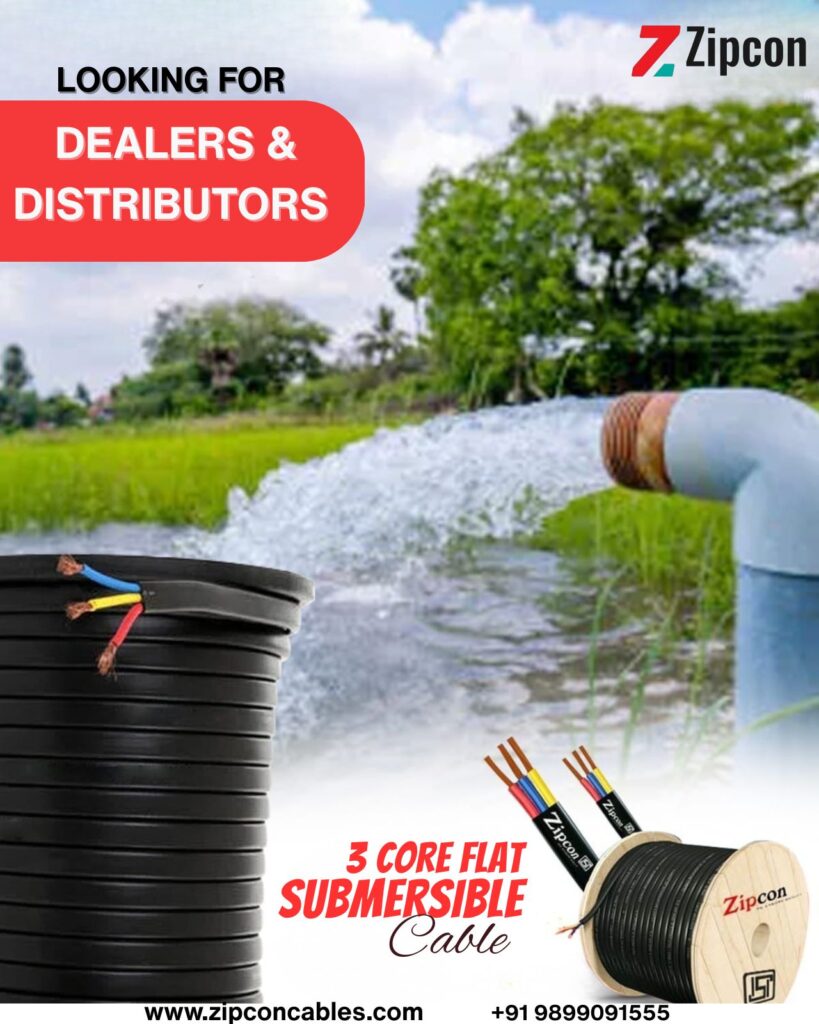
When selecting best submersible cables for various applications in Madhya Pradesh, it’s important to evaluate key factors such as conductivity, durability, weight, cost, safety, and installation requirements. Both copper and aluminum submersible cables have their unique advantages, and understanding these differences can help you make the best decision for your specific needs. Zipcon Cables offers a range of high-performance submersible cables that meet these criteria, ensuring that you get a reliable and cost-effective solution.
Conductivity: Copper vs. Aluminum
Copper cables are widely known for their superior electrical conductivity. Copper’s conductivity is around 60% better than that of aluminum, which makes it the preferred choice for applications requiring high power transmission with minimal energy loss. In submersible pumps, where consistent and efficient power delivery is crucial, copper cables help ensure that energy is transferred effectively, resulting in lower power consumption and optimal performance.
Aluminum cables, on the other hand, are less conductive but still perform well in many submersible applications. Although the power loss is higher compared to copper, aluminum is a good alternative for applications where conductivity requirements are less demanding, and budget constraints are more significant.
Durability: Performance in Harsh Environments
Submersible cables are exposed to constant submersion in water, as well as varying temperatures and pressures. Copper cables typically offer better durability in such harsh conditions because copper is highly resistant to corrosion and oxidation. Over time, this resistance helps copper cables last longer, even in water-based environments where the cable is submerged for extended periods.
Aluminum cables, while still durable, are more prone to oxidation over time. When exposed to moisture, aluminum can corrode more quickly than copper, especially in areas with high humidity or temperature fluctuations. However, modern aluminum cables often come with protective coatings that help enhance their longevity, making them suitable for less critical installations where long-term exposure is a factor.
Weight: Impact on Installation and Use
When it comes to weight, copper cables are significantly heavier than aluminum cables. This difference can have practical implications during installation. Copper’s heavier weight may require more labor or special equipment to handle, especially in large-scale installations or deep-well submersible pumps. However, the additional weight can provide some advantages, such as greater stability and less chance of kinking or damage over time.
Aluminum cables, being lighter, are easier to handle and install. The lighter weight reduces the overall burden on installation teams, which can speed up the process and make it more cost-effective. For projects where multiple cables need to be installed quickly, or in locations where transportation and handling are factors, aluminum cables may be the preferred choice.
Cost: Copper vs. Aluminum
Copper cables are typically more expensive due to their higher conductivity and durability. However, the initial higher cost may be justified by the long-term benefits they offer, such as lower maintenance and better overall performance in demanding environments.
Aluminum cables are more budget-friendly, making them an attractive option for projects with a limited budget. While the performance may be slightly lower, aluminum cables can still provide good value for money in less demanding submersible applications.
For users in Madhya Pradesh who need to balance performance with budget, aluminum cables may be the better option for less critical installations, while copper cables should be chosen for applications that demand high reliability and long-term durability.
Safety: Ensuring Safe Operation
Both copper and aluminum cables offer safety benefits, but the key to safety in submersible cables lies in their insulation and corrosion resistance. Copper cables often have superior insulation resistance, ensuring better protection from external factors like water and temperature changes. Proper insulation helps prevent short circuits and ensures safe voltage management.
Aluminum cables also come with insulating layers, and their newer models often feature coatings designed to prevent corrosion. However, the safety of aluminum cables can be compromised if not installed correctly, as their joints can weaken more quickly compared to copper cables.
Installation Needs: Considerations for Ease and Flexibility
When it comes to installation, copper cables tend to be less flexible due to their higher density, making them more challenging to bend and manipulate during installation. However, they are still manageable, and the benefits of durability and performance often outweigh this drawback in critical applications.
Aluminum cables, being more flexible and lightweight, are easier to install and handle. They can be bent with greater ease, making them suitable for applications that require frequent changes or maintenance. Installation teams will find aluminum cables easier to manage in complex or large-scale setups.
Typical Use Cases: When to Choose Copper vs. Aluminum
Copper cables are best suited for high-performance applications, such as deep-well submersible pumps, industrial installations, and areas with high electrical demand. These applications benefit from copper’s superior conductivity, durability, and long-term cost-effectiveness.
Aluminum cables, while not as conductive as copper, are ideal for budget-conscious installations where the power requirements are moderate. They are often used for residential submersible pumps, irrigation systems, and smaller-scale projects that don’t require the high performance of copper cables.
Conclusion: Choosing Zipcon Cables for Your Needs
When selecting submersible cables, the decision between copper and aluminum depends on the specific requirements of your project. For high-performance, long-lasting solutions, copper cables from Zipcon Cables are the best choice. They offer superior conductivity, durability, and safety, making them perfect for demanding applications. On the other hand, if you need a cost-effective solution for less critical installations, aluminum cables from Zipcon Cables provide a reliable and budget-friendly alternative.
By choosing Zipcon Cables, you ensure that you get the best submersible cable for your needs, backed by a trusted brand that prioritizes quality, safety, and performance. Whether you need copper or aluminum, Zipcon’s products deliver reliability and efficiency for a wide range of applications across Madhya Pradesh.