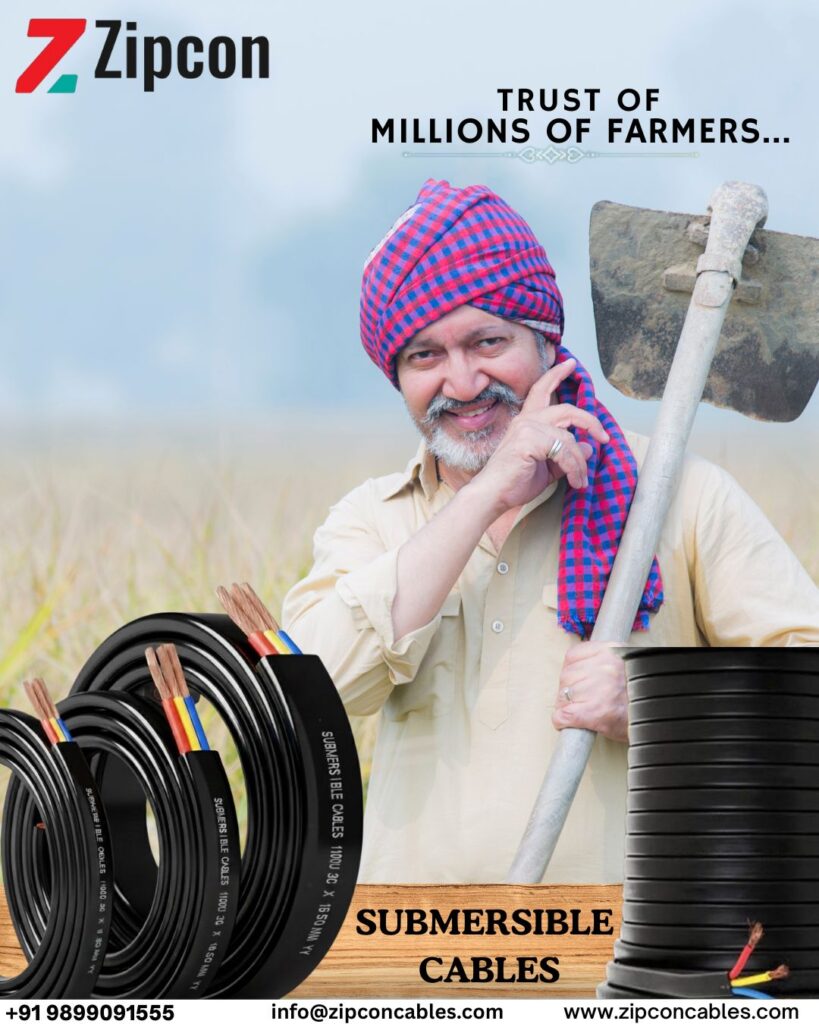
Choosing the right submersible cable in Delhi NCR is critical for reliable pump performance, especially in a city like Delhi NCR where groundwater levels, pump loads, and operating conditions vary widely. Whether you are an engineer designing a borewell system, an electrician installing a pump, or a buyer comparing options, understanding the basics of submersible cables helps you avoid power loss, frequent failures, and safety risks. This guide explains the key technical points in a clear and practical way, with Zipcon Cables used as a trusted reference brand.
Contact us today :- https://zipconcables.com/contact-us/
Conductivity: Why It Matters Most
Conductivity determines how efficiently electricity flows through a cable. In submersible applications, poor conductivity leads to voltage drop, overheating, and reduced pump output.
Copper submersible cables, such as those from Zipcon Cables, offer very high electrical conductivity. This means:
- Less power loss over long distances
- Stable voltage reaching the motor
- Better starting torque for pumps
In Delhi, where many borewells run deep and use high-HP pumps, copper cables clearly outperform aluminium or mixed-metal alternatives. Aluminium cables have lower conductivity, so they require a larger cross-section to carry the same current. While they may work for short runs or low-load pumps, copper remains the best choice for consistent performance.
Durability: Water, Insulation, and Corrosion Resistance
Submersible cables operate continuously in water, making durability non-negotiable. Three factors matter most:
- Water Resistance – High-quality insulation prevents water ingress that can cause short circuits.
- Insulation Quality – PVC or XLPE insulation should be thick, uniform, and flexible.
- Corrosion Resistance – Conductors and armouring must resist chemical reactions in groundwater.
Zipcon Cables use high-grade copper conductors and robust insulation designed specifically for submerged conditions. Inferior cables may work initially but often fail due to insulation cracking or conductor corrosion, especially in Delhi’s varying water quality zones.
Weight: Why Cable Weight Affects Installation
Weight is often overlooked, but it plays a big role during installation and long-term reliability.
- Copper cables are heavier due to higher metal density.
- Aluminium cables are lighter and easier to handle.
However, the extra weight of copper cables also means better mechanical strength. In deep borewells, a Zipcon copper submersible cable can handle tension and movement better than lightweight alternatives. Aluminium cables may be easier to lower initially, but they are more prone to stretching or joint issues over time.
Cost: Realistic Expectations and Value
Cost is a major factor for buyers, but it should be viewed in terms of total value, not just upfront price.
- Copper submersible cables cost more initially.
- Aluminium cables are cheaper upfront.
In real-world Delhi installations, copper cables from Zipcon often prove more economical over time because they:
- Reduce power loss (lower electricity bills)
- Last longer without insulation or joint failure
- Protect expensive pump motors from voltage issues
For long-term or critical installations, copper offers better return on investment.
Safety: Standards and Checks Before Purchase
Safety is essential when dealing with submerged electrical systems. Buyers should always check:
- ISI or relevant BIS certification
- Proper voltage rating
- Heat resistance and insulation class
- Manufacturer testing standards
Zipcon Cables meet recognized safety and quality benchmarks, ensuring protection against electrical leakage, overheating, and insulation breakdown. Using uncertified cables increases the risk of pump damage and electrical hazards.
Installation Needs: Matching Cable Choice to Setup
Proper installation depends heavily on cable selection. Key requirements include:
- Correct cable size based on pump HP and depth
- Proper jointing kits designed for submersible use
- Secure clamping to avoid stress on connections
Copper cables are slightly harder to handle due to weight, but they simplify long-term maintenance. Aluminium cables may seem easier initially, but require more careful sizing and jointing to avoid voltage drop and overheating.
Typical Use Cases in Delhi
Different applications demand different cable choices:
- Deep Borewells (200+ feet): Copper submersible cables from Zipcon are the best choice due to high conductivity and strength.
- High-Load Pumps (5 HP and above): Copper ensures stable current and motor safety.
- Shallow Wells or Short Runs: Aluminium cables can work if properly sized and certified.
- Residential Water Supply: Copper provides peace of mind and long service life.
- Agricultural or Temporary Installations: Aluminium may be chosen for cost savings if loads are moderate.
Final Recommendation: Copper vs Other Cables
If your application involves deep installation, high load, long cable runs, or continuous operation, copper submersible cables clearly outperform alternatives. For these scenarios, Zipcon Cables copper submersible cables are the safest and most reliable choice.
If the installation is short, low-load, and budget-sensitive, certified aluminium cables may be acceptable, but they must be carefully sized and installed.
In simple terms:
- Choose copper for performance, safety, and long-term value.
- Choose aluminium only when conditions are light and cost is the main constraint.
For most buyers in Delhi or Delhi NCR especially those seeking durability and trouble-free operation, Zipcon Cables’ copper submersible cables remain the best practical option.